You've launched a campaign, refreshed your website, or started posting regularly. Now you're checking analytics every morning, wondering when the leads will start flowing. It's the question every business owner asks eventually: how long does marketing take to actually work? The short answer is it depends. The more useful answer involves understanding what's realistic for each channel, how momentum builds, and what you can control while you wait. Marketing isn't a light switch. It's more like planting seeds, then watering them consistently until something grows.
The Honest Timeline Across Different Channels
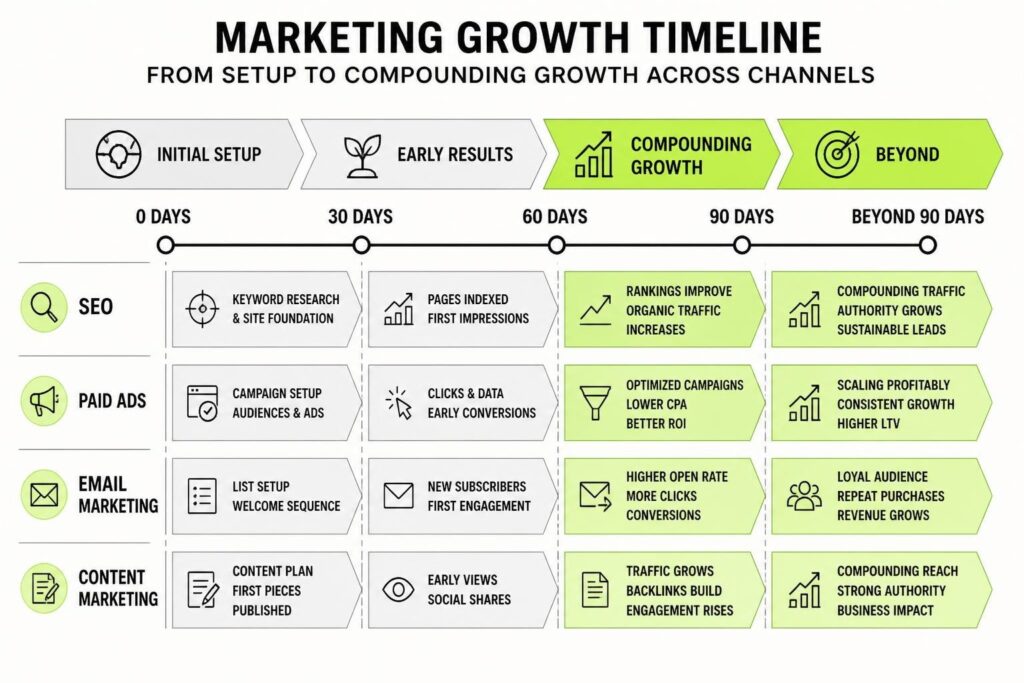
Not all marketing moves at the same pace. Some channels deliver quick feedback, while others require months of groundwork before you see meaningful returns.
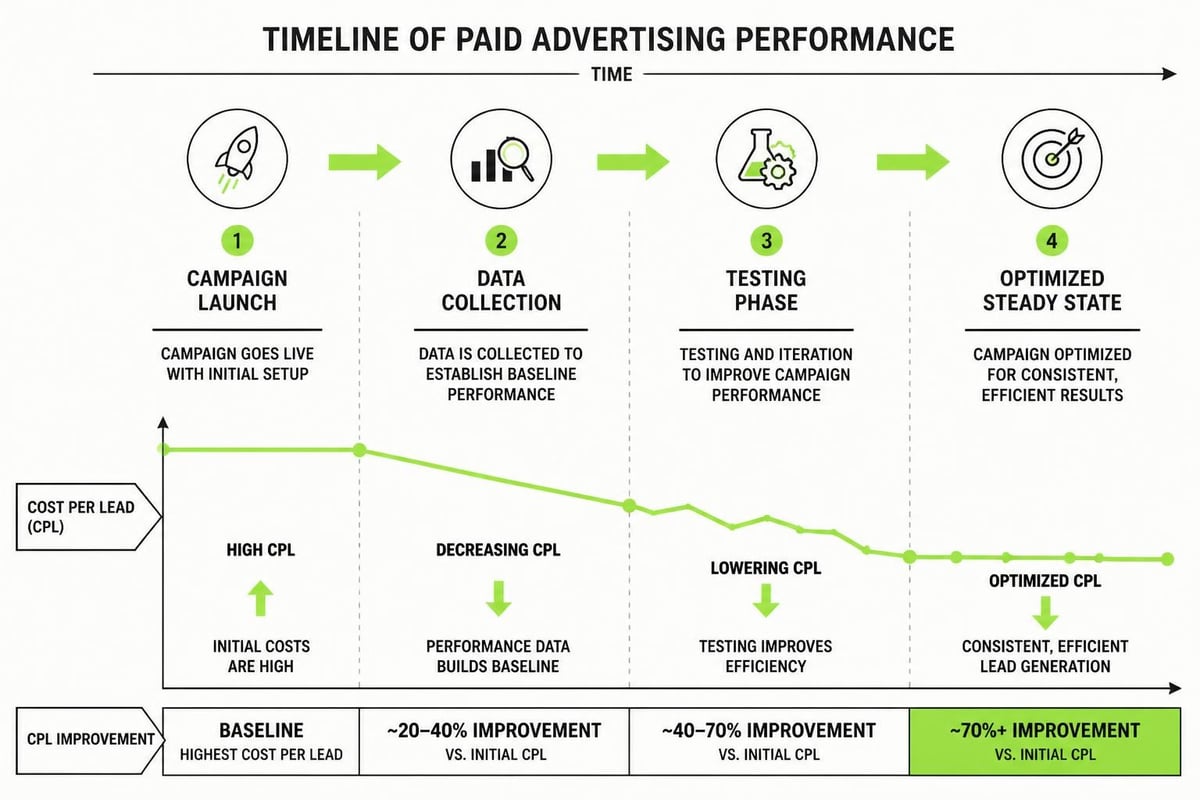
Paid Advertising: Days to Weeks
Paid ads are the fastest channel to test. You can launch a campaign today and have data tomorrow.
- Setup and approval: 1-3 days for most platforms
- Initial data: 7-14 days to gather enough clicks and conversions
- Optimization phase: 30-60 days to refine targeting, creative, and messaging
- Consistent performance: 90+ days once you've dialed in your offer and audience
The speed doesn't mean it's easy. You're paying for every click, so mistakes cost money. Budget, offer quality, and landing page experience all determine whether those fast results are good or terrible.
SEO and Organic Content: Months to Years
Search engine optimization is the opposite end of the spectrum. When people ask how long does marketing take for SEO specifically, the timeline stretches much longer.
Google needs to crawl your site, index new pages, and decide where you rank relative to competitors. Fresh domains take longer than established ones. Competitive keywords take longer than niche phrases.
| SEO Activity | Typical Timeline | What's Happening |
|---|---|---|
| Technical fixes | 2-4 weeks | Google recrawls and reindexes pages |
| New content ranking | 3-6 months | Gradual climb for low-competition terms |
| Authority building | 6-12 months | Backlinks, trust signals accumulate |
| Competitive keywords | 12-24+ months | Sustained effort against established sites |
You might see small wins earlier. A blog post ranks for a long-tail keyword. A service page starts appearing in local search. But meaningful traffic that converts into leads? That's a 6-12 month play minimum, often longer if you're starting from scratch.
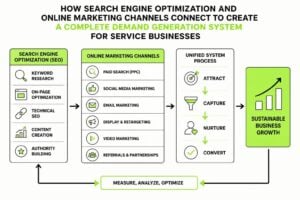
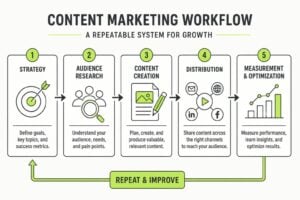
The payoff is that organic traffic compounds. Once you rank, you keep getting clicks without paying for each one. It's why businesses that commit to building a marketing funnel focused on content and SEO often see exponential growth after the initial lag.
Email Marketing: Weeks to Months
Email sits in the middle. You can send a campaign today and get opens tomorrow, but building a list worth emailing takes time.
List building phase: 3-6 months to grow a meaningful subscriber base (depending on traffic and opt-in offers)
Engagement and trust: 2-3 months of consistent sends before people recognize your name and open reliably
Conversion optimization: 6-12 months to understand what offers resonate and how often to send
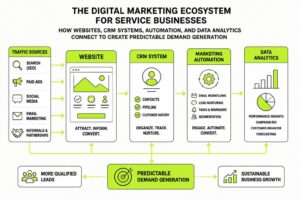
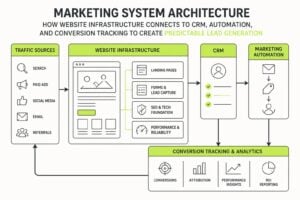
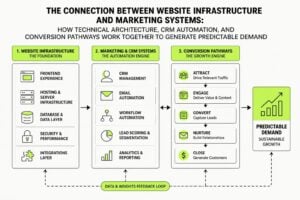
The systems underneath matter more than the sends themselves. A CRM that tracks behavior, segments properly, and automates follow-up can cut months off the learning curve. Without that infrastructure, you're guessing in the dark.
What Actually Slows Marketing Down
Understanding how long does marketing take also means recognizing the bottlenecks that add unnecessary months to your timeline.
Weak Positioning and Messaging
If your offer isn't clear, no amount of traffic fixes it. You'll get clicks, maybe even some inquiries, but conversion rates stay low and cost per acquisition climbs.
Spending time upfront on positioning, who you serve, what problem you solve, and why you're different, saves months of campaign tweaking later. Vague messaging wastes budget and patience.
Broken Lead Infrastructure
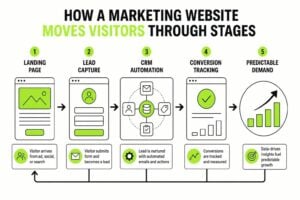
Traffic without a system to capture and nurture it is just expensive data. If leads hit your inbox and sit there, or fall into a CRM no one checks, the timeline stretches indefinitely.
- Missing or poorly designed opt-in offers
- No automated follow-up sequences
- Inquiry forms that don't trigger alerts or workflows
- Sales processes that rely on memory instead of systems
Fixing infrastructure isn't glamorous, but it's the difference between 90 days to first revenue and 6 months of confusion.
Inconsistent Execution
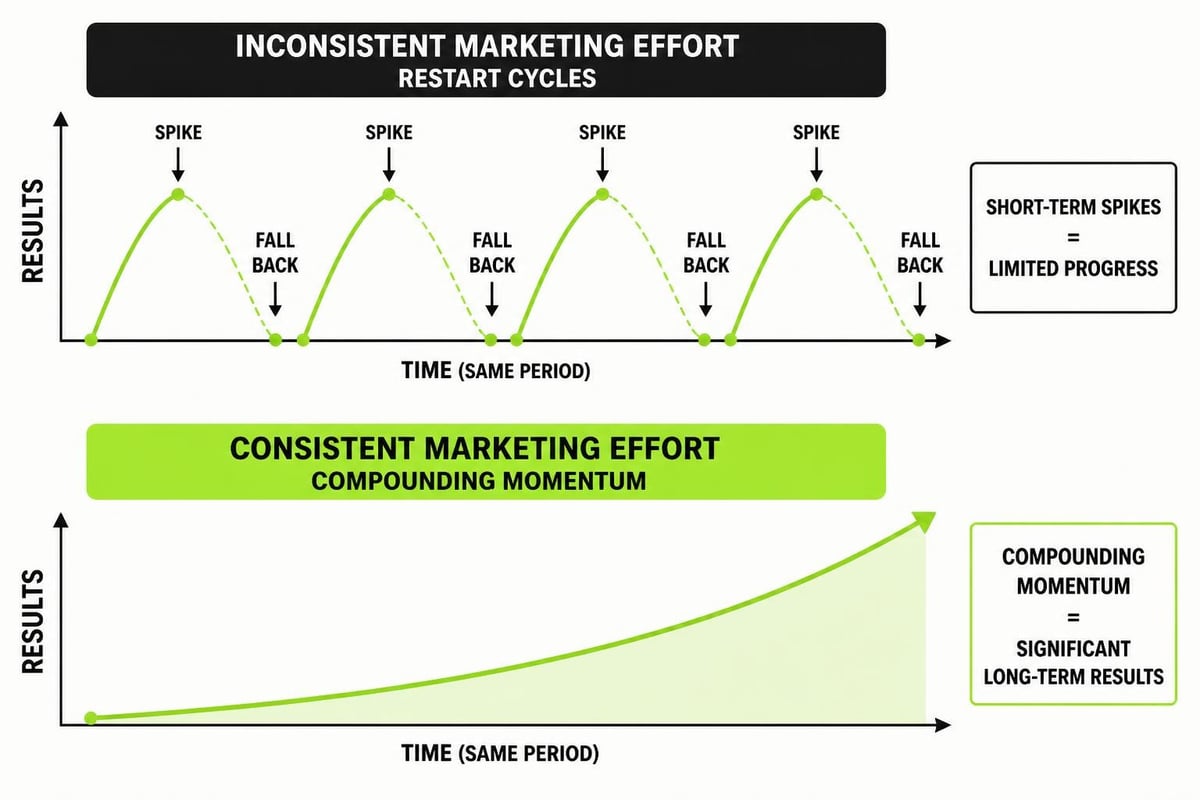
Marketing needs repetition to work. One blog post won't rank. One email won't convert. One ad won't optimize itself.
The businesses that see results inside realistic timelines are the ones that show up consistently. Weekly content. Regular email sends. Daily budget on ads. Monthly reviews of what's working.
Stop-start execution resets the clock every time you pause.
How to Build Momentum Faster
You can't skip the fundamentals, but you can avoid wasting time on things that don't move the needle.
Start With One Channel Done Well
Spreading thin across five channels means none of them get the attention needed to succeed. Pick one based on where your buyers actually are, and commit for at least 90 days.
If you're B2B services targeting business owners, LinkedIn and email might beat Instagram. If you're local, Google Business Profile and local SEO beat TikTok. Match the channel to the buyer, not the trend.
Layer Channels Strategically
Once one channel is producing predictable results, add a second that feeds it.
- Paid ads to grow email list faster
- SEO content to reduce paid ad dependence over time
- Email to re-engage website visitors who didn't convert
Each new channel should compound the previous one, not compete for attention. When people ask how long does marketing take to scale, the answer often depends on how well channels support each other rather than running in parallel silos.
A structured approach like a 7-step marketing plan helps you see how these pieces connect and avoid the trap of random tactics that never build on each other.

Measure Leading Indicators, Not Just Revenue
Revenue lags everything else. If you're only watching sales, you're flying blind until month three or four.
Track the inputs that predict revenue:
- Traffic: Are people finding you?
- Opt-ins: Are visitors giving you permission to follow up?
- Engagement: Are leads opening emails, clicking, responding?
- Conversations: Are inquiries turning into sales calls?
- Conversion rate: Are calls turning into clients?
When one metric stalls, you know exactly where to focus instead of guessing why revenue isn't moving.
The Compounding Effect Nobody Tells You About
Here's what shifts once you get past the initial timeline: marketing starts feeding itself.
Month 1-3: The Grind
Everything is manual. You're writing content, launching ads, testing offers, tweaking copy. Results are sporadic. The effort feels disproportionate to the output.
Month 4-6: Early Patterns
Things start clicking. You know which headlines work. Which ads convert. Which email sequences get responses. You're still working hard, but less randomly.
Month 7-12: Systems Emerge
Automation handles follow-up. Retargeting captures visitors who didn't convert the first time. Organic content starts ranking. Referrals come from happy clients. The same effort produces more output.
Month 13+: Compounding
Old content still ranks and drives leads. Email sequences run on autopilot. Ad audiences are refined. Word of mouth kicks in. You're not working harder, you're benefiting from months of accumulated trust and data.
This is why digital marketing and content marketing timelines feel frustrating early but rewarding later. The systems you build now keep working long after you build them.
What's Realistic for Service-Based Businesses in 2026
If you're running a service business, consulting, agency, coaching, the timeline looks different than ecommerce or SaaS.
First lead: 2-4 weeks with paid ads or active outreach, 2-3 months with organic content
First client: 1-3 months depending on sales cycle length and offer complexity
Predictable pipeline: 6-9 months with consistent execution across at least two channels
Sustainable growth: 12-18 months once systems, messaging, and optimization are dialed in
Those numbers assume you're not starting from zero. If you have an existing network, past clients, or any brand recognition, things move faster. If you're launching cold, add time.
The question of how long does marketing take becomes less anxious once you accept that the early months are investment, not instant return. You're building an asset that pays dividends later.
Common Mistakes That Add Months to Your Timeline
Even businesses doing most things right can stall out by missing a few critical details.
Ignoring the Sales Conversation
Marketing gets leads to raise their hand. Sales closes them. If your sales process is slow, inconsistent, or reliant on the lead chasing you, marketing timelines stretch indefinitely.
- Respond to inquiries within an hour, not a day
- Have a clear next step after every conversation
- Follow up persistently without being annoying
- Track where deals stall and fix that part of the process
Changing Strategy Too Soon
Three weeks into a campaign, results look flat, so you scrap it and try something new. Another three weeks, same thing. Six months later, you've tested six strategies for three weeks each instead of one strategy for six months.
Most channels need 60-90 days minimum to show whether they'll work. Changing creative, offers, or targeting within that window is fine. Changing the entire channel isn't.
Not Investing in Infrastructure First
Launching ads without a CRM is like hiring salespeople with no phone system. The leads come in, then fall through cracks.
Businesses that build the infrastructure first, CRM, email sequences, lead scoring, nurture workflows, see results faster because nothing gets wasted. Businesses that bolt systems on later spend months cleaning up the mess.
This is where branding and digital marketing infrastructure pays off. The unsexy backend work that no one sees is what makes the front-end marketing actually convert.
How to Set Expectations With Stakeholders
If you're reporting to a boss, board, or business partner, managing timeline expectations prevents frustration and premature strategy changes.
Break It Into Phases
Instead of "marketing takes 6 months," frame it as:
- Phase 1 (Month 1-2): Setup, testing, initial data collection
- Phase 2 (Month 3-4): Optimization based on early results
- Phase 3 (Month 5-6): Scaling what works, cutting what doesn't
Each phase has measurable goals. This keeps everyone aligned on what success looks like at each stage, not just the finish line.
Benchmark Against Industry Standards, Not Competitors
Your competitor might have a head start, bigger budget, or longer timeline already invested. Comparing yourself to them creates false expectations.
Industry benchmarks give you a realistic comparison. Average conversion rates. Typical cost per lead. Standard email open rates. When you're tracking at or above industry average, you're doing fine even if a competitor seems ahead.
Celebrate Small Wins
First opt-in. First inquiry from organic search. First conversion from an email sequence. These aren't revenue yet, but they're proof the system works. Celebrating these milestones keeps morale up during the lag between effort and results.
The Real Answer to How Long Marketing Takes
There's no universal timeline. A business with strong positioning, clear offers, and solid infrastructure will see results in 60-90 days. A business starting from scratch with weak messaging might need 12-18 months to gain traction.
What's consistent across every timeline is this: the businesses that treat marketing as a system, not a campaign, win. They build infrastructure, execute consistently, measure what matters, and let momentum compound.
The question isn't really how long does marketing take. It's whether you're willing to do the work required to make it work, then stay consistent long enough to see the payoff. Most quit right before things click. The ones who don't end up with marketing that runs whether they're watching it or not.
Marketing timelines feel long when you're in the weeds, but they compress dramatically once systems are in place and momentum builds. If you're ready to remove the chaos, protect your leads, and build marketing infrastructure that compounds over time, MDO Digital helps service-based businesses create structured growth without the guesswork. Let's build something that works.