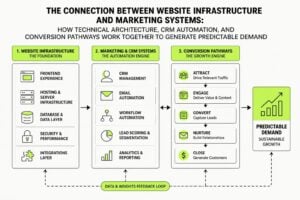
Most e-commerce stores fail not because of product quality or pricing, but because they look and feel like every other drop shipper on the internet. Branding e commerce properly isn’t about having a pretty logo or choosing the right Instagram filter. It’s about building a system of trust that makes someone hand over their credit card details without second-guessing. In 2026, when consumers are more skeptical than ever and competition is one scroll away, your brand is the only moat you truly control. This article breaks down how service-based businesses and online retailers can structure their branding to remove chaos, build recognition, and create predictable growth.
Why Branding E Commerce Matters More Than Your Product Range
Your product might be excellent, but if your branding doesn’t communicate that within three seconds, you’ve already lost. E-commerce branding is the framework that connects what you sell to why someone should buy it from you specifically.
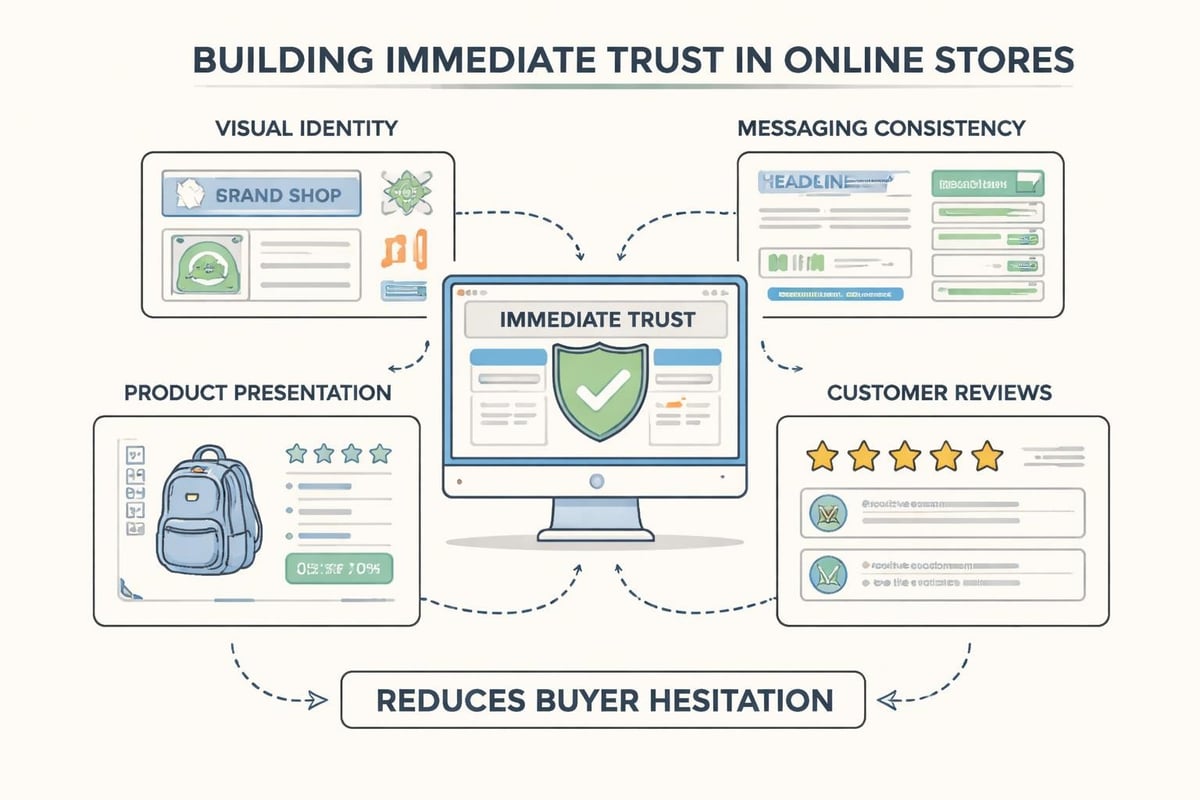
Strong branding e commerce creates shortcuts in the buyer’s mind. When they land on your site, they should immediately understand:
- Who you serve (and who you don’t)
- What problem you solve (not just what you sell)
- Why you’re different (without reading a manifesto)
- Whether they can trust you (the deciding factor)
Without this clarity, you’re competing purely on price. And there’s always someone willing to go cheaper. Effective branding contributes to e-commerce success by creating differentiation that price alone cannot deliver.
The Trust Gap in Online Shopping
People buying online can’t touch the product, can’t speak to a salesperson, and can’t walk out with their purchase. That’s three major trust barriers your branding needs to overcome.
Your visual identity, tone of voice, and user experience either build confidence or trigger doubt. A professional, consistent brand presence signals operational competence. Messy branding suggests messy fulfillment, dodgy customer service, and potential fraud.
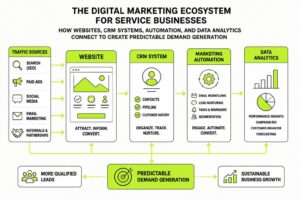
This is where building structured marketing systems becomes critical. Your branding isn’t separate from your operations. It’s the front door to your entire business infrastructure.
Building Your Brand Foundation Before You Scale
Too many e-commerce operators try to scale before they’ve nailed their brand fundamentals. That’s like pouring fuel on a fire you haven’t contained yet. You’ll burn money faster, but you won’t get better results.
Define Your Brand Position First
Your positioning isn’t your tagline. It’s the specific spot you occupy in your customer’s mind relative to alternatives. Answer these clearly:
- Who is your primary customer? (Demographics and psychographics)
- What job are they hiring your product to do? (Functional and emotional outcomes)
- What category do you compete in? (How customers mentally file you)
- What makes you meaningfully different? (Not just better, but different)
Write this down. Lock it in. Every branding decision from here flows from this foundation.
Crafting a positioning statement helps focus your messaging and ensures consistency across all customer touchpoints.
Build Your Visual Identity System
Your visual identity isn’t just aesthetics. It’s a functional system that reduces decision fatigue and builds recognition over time.
| Element | Purpose | Application |
|---|---|---|
| Logo | Quick recognition marker | All touchpoints, minimum 3 variations |
| Color palette | Emotional association and consistency | Primary (2-3), secondary (2-3), neutrals |
| Typography | Readability and personality | Headings, body, UI (max 2-3 fonts) |
| Photography style | Product presentation and lifestyle context | Product shots, lifestyle, user-generated content |
| Graphics and icons | Visual shorthand for features | UI elements, infographics, social content |
This system should be documented in a brand style guide, even if it’s just a simple PDF. Consistency compounds. Random design choices create cognitive friction that costs sales.
Creating Brand Consistency Across Every Touchpoint
Branding e commerce isn’t about your website alone. It’s every place a potential customer interacts with your business. Each touchpoint either reinforces your brand or dilutes it.
Map Your Customer Journey Touchpoints
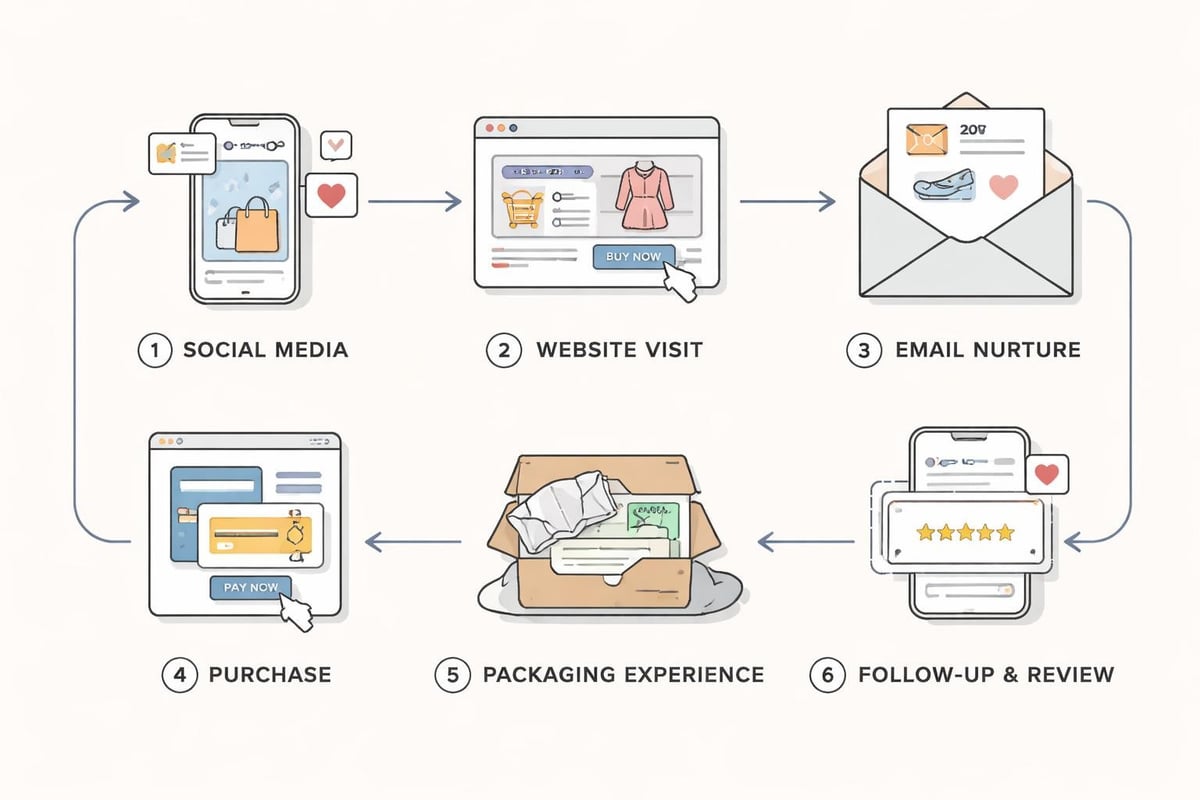
Start by listing every place someone might encounter your brand:
- Social media (organic posts, ads, profile)
- Google Shopping results
- Email campaigns (welcome, cart abandonment, post-purchase)
- Product packaging and inserts
- Customer service interactions
- Marketplace listings (if you sell on Amazon, eBay, etc.)
- Retargeting ads
- Review sites and third-party mentions
For each touchpoint, audit whether your branding is consistent. Same voice, same visual treatment, same value proposition.
The Voice and Tone Framework
Your brand voice is your personality. It stays consistent. Your tone adjusts based on context, like how you’d speak differently at a funeral versus a pub, but you’re still you.
Define your voice across 3-4 dimensions:
- Formal vs casual (Where do you sit? Stay there.)
- Serious vs playful (Can you joke, or is everything earnest?)
- Respectful vs irreverent (Do you challenge norms or honor them?)
- Technical vs simple (Jargon or plain English?)
Document examples of what you sound like and what you don’t. This helps anyone writing for your brand stay on track, whether it’s product descriptions, email campaigns, or social captions. Learn more about creating consistent brand voice across your marketing.
Branding E Commerce Through Strategic Content
Content isn’t just blog posts. It’s everything you publish, from product descriptions to FAQ pages to checkout microcopy. Every word is a branding opportunity.
Product Descriptions That Build Brand
Most product descriptions are spec sheets with no personality. That’s wasted real estate. Your descriptions should:
- Open with the outcome or benefit (not the feature)
- Include your brand voice naturally
- Address objections preemptively
- Use formatting for scannability (bullets, bold, short paragraphs)
- End with a clear next step
Example: Instead of “100% cotton fabric, machine washable,” try “Soft enough for all-day wear, tough enough to survive toddler chaos. Chuck it in the wash, it’ll come out looking proper.”
The second version tells you this brand understands real life, has a casual Australian tone, and doesn’t take itself too seriously. That’s branding through copywriting.
Educational Content as Brand Building
Educational content positions you as the expert worth buying from. This works particularly well for higher consideration purchases or categories with confused buyers.
Create content that:
- Solves common problems your product addresses
- Educates on selection criteria (even if it helps competitors)
- Demonstrates expertise without being salesy
- Incorporates your brand perspective on the topic
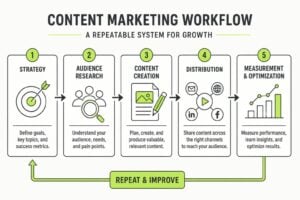
This content lives on your blog, in email nurture sequences, and across your social channels. It’s not about going viral. It’s about being genuinely useful to your specific audience. Building a comprehensive marketing system helps you structure this content strategically, creating a repeatable process that moves prospects from awareness to purchase.
User-Generated Content and Social Proof
Your customers’ content is your most powerful branding asset. It’s third-party validation that money can’t buy (well, not obviously).
Actively encourage and collect:
- Product photos from real customers in real situations
- Video testimonials showing product use and results
- Reviews that mention specific outcomes and features
- Social mentions and tags you can repurpose
Feature this content on product pages, in email campaigns, and across social media. It builds trust while reinforcing your brand community. Leveraging user-generated content is one of the most cost-effective branding strategies available in 2026.
Technical Branding: Website and CRM Infrastructure
Branding e commerce isn’t just creative work. The technical infrastructure either supports your brand promise or undermines it.
Website Design That Reflects Brand Values
Your website is your primary branding asset. Every design choice communicates something about your business.
Fast load times say “we respect your time.” Slow sites say “we’re amateur hour.”
Clear navigation says “we make this easy.” Confusing menus say “good luck finding what you need.”
Mobile optimization says “we know how you shop.” Desktop-only design says “it’s 2010.”
Professional photography says “we invest in quality.” Stock photos say “we couldn’t be bothered.”
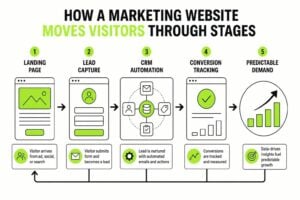
Work with developers and designers who understand that website development and marketing aren’t separate disciplines. Your site should be built to convert, with brand identity baked into every element.
CRM and Email Automation
Your CRM is where branding meets database. Every automated email, every segment name, every tag should reflect your brand thinking.
Welcome sequences should onboard customers into your brand world, not just push products. Share your story, set expectations, deliver value before asking for the sale.
Cart abandonment emails should feel helpful, not desperate. Remind them why they were interested, remove friction, and offer assistance.
Post-purchase sequences should extend the brand experience beyond the transaction. Educate on product use, ask for feedback, build community.
This is systematic branding. It runs while you sleep, turning one-time buyers into repeat customers and advocates. Explore how marketing systems create structured growth that compounds over time.
Branding Through Packaging and Unboxing Experience
For physical product e-commerce, your packaging is a crucial brand moment. It’s the first physical interaction customers have with your business.
Packaging as Brand Extension
Your packaging should be:
- Consistent with your visual identity (colors, logo, typography)
- Functional and protective (damaged goods kill brand trust)
- Memorable in some way (texture, insert, personal note)
- Shareable (worth photographing for social media)
- Sustainable where possible (brand value alignment)
You don’t need expensive custom boxes to create a branded unboxing experience. Even simple kraft boxes with branded stickers, tissue paper in your brand colors, and a handwritten thank you note create a moment worth remembering.
The Insert Strategy
Package inserts are direct marketing gold. You’ve already made the sale, shipping costs are covered, and you have their full attention. Use this real estate wisely:
| Insert Type | Purpose | Branding Opportunity |
|---|---|---|
| Thank you card | Appreciation and personal touch | Handwritten notes, founder message |
| Product guide | Education and value delivery | Branded layout, helpful content |
| Discount code | Encourage repeat purchase | Exclusive offer, VIP language |
| Social follow prompt | Build community | Branded hashtag, UGC encouragement |
| Referral program | Word-of-mouth activation | Share the brand story with friends |
Each insert should look and sound like your brand. This isn’t the place for generic templates.
Measuring Brand Impact in E Commerce
Branding feels fuzzy compared to performance marketing, but it’s absolutely measurable if you track the right indicators.
Key Brand Metrics for E Commerce
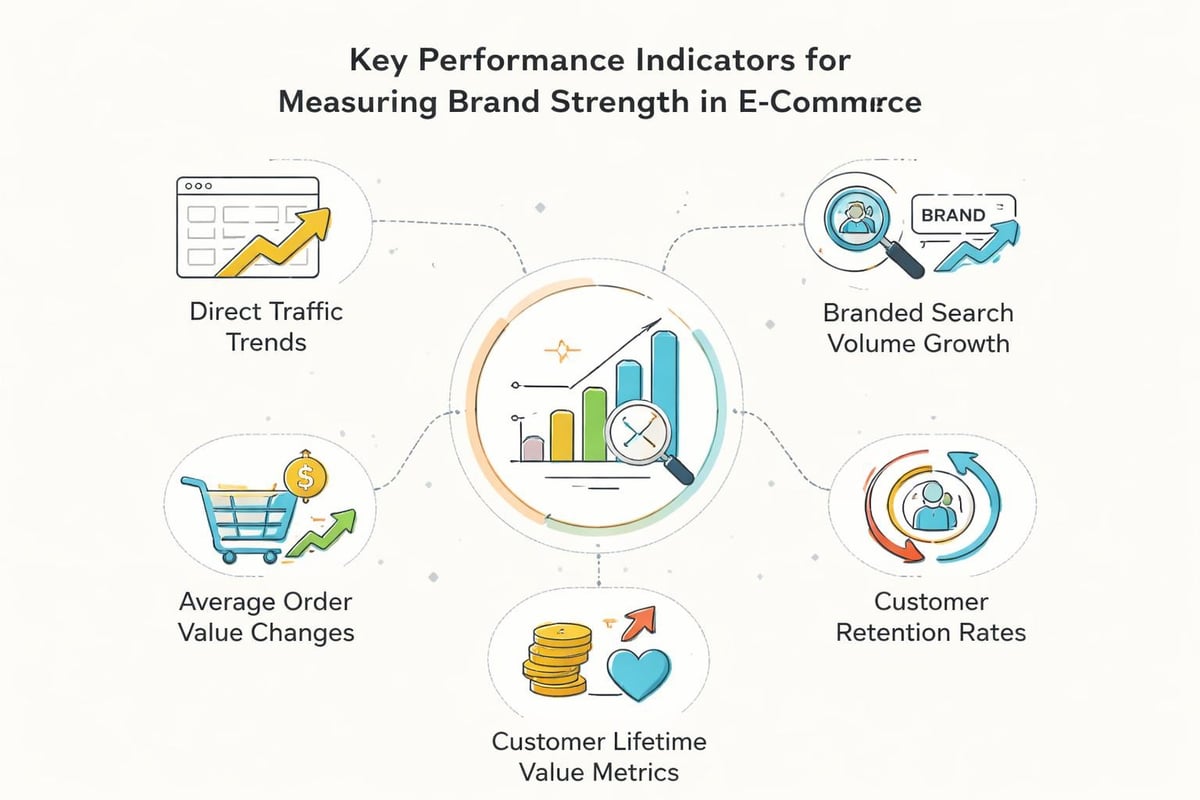
Track these over time to see if your branding efforts are working:
- Direct traffic percentage (people coming straight to your URL)
- Branded search volume (people searching your business name)
- Return customer rate (brand loyalty indicator)
- Average order value (strong brands command premium)
- Cart abandonment rate (trust impacts completion)
- Email engagement rates (brand affinity shows in opens/clicks)
- Social media engagement (not followers, but actual interaction)
- Customer lifetime value (the ultimate brand metric)
Compare these quarterly. Branding is a compounding game. Small improvements create exponential returns over time.
Attribution and Brand Contribution
Most attribution models undervalue branding because they focus on last-click conversion. Someone might see your Instagram ad, Google your brand name, read reviews, then buy three days later via a retargeting ad.
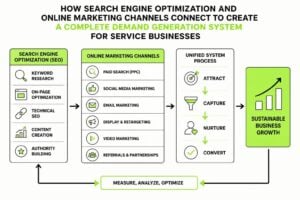
Traditional attribution gives all credit to the retargeting ad. In reality, every touchpoint contributed. That’s why understanding how marketing channels work together matters for accurate measurement.
Use Google Analytics 4’s data-driven attribution model or implement multi-touch attribution to better understand how branding touchpoints influence conversions across the full customer journey.
Common Branding E Commerce Mistakes to Avoid
Even experienced operators make these mistakes. Avoid them and you’re ahead of 80% of your competition.
Copying competitor branding. You’ll always be second choice. Find your own position or you’re just adding noise to an already crowded market.
Inconsistent execution. Posting one brand voice on Instagram and another in emails confuses people. Confusion kills conversions.
Neglecting mobile branding. Most e-commerce traffic is mobile. If your brand doesn’t translate to small screens, you don’t have a brand.
Ignoring customer service as brand touchpoint. Your support team is your brand in conversation. Train them on voice, values, and how to solve problems on-brand.
Changing brand identity too frequently. Consistency builds recognition. Constant rebrand attempts make you forgettable. Pick a direction and commit for at least 2-3 years.
Prioritizing aesthetics over clarity. Beautiful design that confuses people is just expensive decoration. Clear brand communication always beats pretty ambiguity.
Building Brand in a Crowded Market
Every category feels saturated in 2026. Breaking through requires strategic differentiation, not just louder marketing.
Find the Underserved Niche
Broad markets are crowded. Specific niches have space. Instead of “activewear,” go “activewear for professional women over 40 who hate gym culture.” Instead of “coffee,” try “single-origin coffee for home baristas who want cafe quality without the pretension.”
The narrower your focus, the clearer your branding can be. You’ll speak directly to a specific person with specific needs, making your message infinitely more resonant.
Lead with Values, Not Just Features
Feature-based branding is a race to the bottom. Someone will always copy your features or do them cheaper.
Values-based branding creates emotional connection that’s harder to replicate. Are you:
- Radically transparent about sourcing and pricing?
- Committed to environmental sustainability beyond greenwashing?
- Building products for underserved communities?
- Challenging industry norms that rip customers off?
Lead with that. People buy from brands whose values align with their own, especially younger demographics. Creating a strong visual identity and clear brand values differentiates you in ways competitors can’t easily match.
Create a Brand Community, Not Just Customers
Transactional relationships are fragile. Community creates loyalty.
Build spaces where your customers can connect with each other, not just with you:
- Private Facebook groups or Discord servers
- User-generated content campaigns with branded hashtags
- Customer spotlight features on social media
- Events (virtual or physical) bringing customers together
- Loyalty programs that reward engagement, not just spending
When customers identify as part of your brand community, they become evangelists. That’s when branding e commerce becomes a genuine competitive advantage.
Scaling Brand While Maintaining Identity
Growth tests brand consistency. As you expand product lines, enter new markets, or increase ad spend, maintaining brand coherence gets harder.
Document Everything
Create systems before you need them. Your brand style guide should include:
- Visual identity standards (logos, colors, fonts, imagery)
- Voice and tone guidelines with examples
- Messaging hierarchy (core message, supporting points, proof)
- Photography and content standards
- Partner and collaboration guidelines
- Approval processes for brand applications
When you hire new team members, bring on contractors, or work with agencies, this documentation ensures everyone builds your brand the same way.
Scale Systems, Not Just Spend
Throwing more money at ads without systematic branding just amplifies inconsistency. Scale the infrastructure:
- Template systems for consistent content creation
- Approval workflows for brand quality control
- CRM automation that maintains brand voice at volume
- Training programs for team members on brand standards
- Regular brand audits across all touchpoints
Structured marketing systems create growth that compounds predictably because quality stays consistent regardless of volume.
When to Evolve Your Brand
Brands should evolve, not change completely. Evolution maintains equity while staying relevant. Complete rebrand risks alienating existing customers.
Consider evolution when:
- Your target market has genuinely shifted
- Your product offering has expanded beyond original scope
- Market positioning requires adjustment to stay competitive
- Visual identity feels dated (but keep core elements recognizable)
Never rebrand just because you’re bored with your current look. Your customers barely remember your current brand yet. Give it time to compound.
Integrating Paid and Organic Branding
Branding e commerce works best when paid advertising and organic efforts reinforce each other. They’re not separate strategies.
Paid Ads as Brand Building
Performance marketers often forget that every ad impression is a branding opportunity, even if it doesn’t convert immediately.
Your ads should:
- Look distinctly like your brand (not generic templates)
- Use your brand voice in copy
- Reinforce your positioning and values
- Create pattern recognition over time
- Build mental availability through repeated exposure
Someone might see five of your Facebook ads before they buy. Each one builds brand familiarity that reduces friction when they finally click through. Maintaining consistent cross-channel branding ensures that whether someone finds you organically or through paid channels, they experience the same brand.
Organic Content as Conversion Support
Organic content, SEO, and social presence support paid conversions by answering questions, building trust, and creating multiple touchpoints.
When someone clicks your ad, they’ll often:
- Google your brand name (better have good search results)
- Check your Instagram (better look professional and consistent)
- Read reviews (better have a response strategy)
- Browse your website (better have clear brand messaging)
Your organic presence validates your paid claims. Weak organic branding tanks paid conversion rates because you can’t close the trust loop. Learn more about integrated marketing approaches that align paid and organic efforts.
Branding e commerce isn’t about following trends or copying what worked for someone else. It’s about building a coherent system that creates trust at every customer touchpoint, removes chaos from your operations, and gives you pricing power in competitive markets. If you’re ready to build marketing infrastructure that turns attention into predictable demand, MDO Digital can help you structure growth that actually compounds over time.