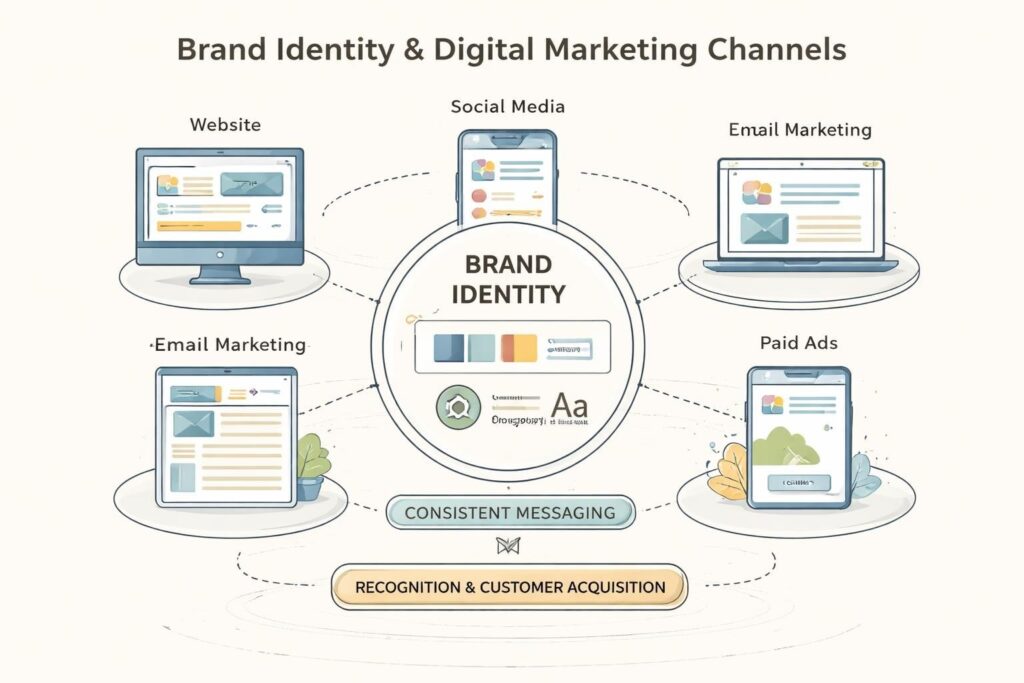
Most service businesses treat branding and digital marketing as separate jobs. One's about how you look, the other's about getting leads. But they're not independent. They're two parts of the same system, and when they're out of sync, you waste money, confuse your audience, and leave revenue on the table. Good branding makes your marketing work harder. Strong marketing gives your brand room to grow. Get both right, and you build something that compounds.
Why Branding and Digital Marketing Need Each Other
Your brand is the promise you make before someone becomes a client. Your marketing is how you deliver that promise to the right people at the right time. Neither works properly without the other.
A strong brand without marketing is invisible. You might have clarity, positioning, and a visual identity that resonates, but if no one sees it, you're not growing. On the flip side, marketing without a clear brand burns budget. You'll generate clicks, maybe even leads, but they won't convert because there's no trust, no coherence, no reason to choose you over anyone else.
The Trust Problem
According to Nielsen’s research on digital advertising and brand perception, consumers are increasingly sceptical of brands that don't maintain consistency across touchpoints. When your website says one thing, your ads say another, and your emails feel like they're from a different company, people notice. And they leave.
Trust isn't built through clever copy or a single campaign. It's built through repetition, consistency, and delivering on what you promise. That's where branding and digital marketing intersect. Your brand sets the standard. Your marketing proves you can meet it.
What Branding Actually Does in a Digital Context
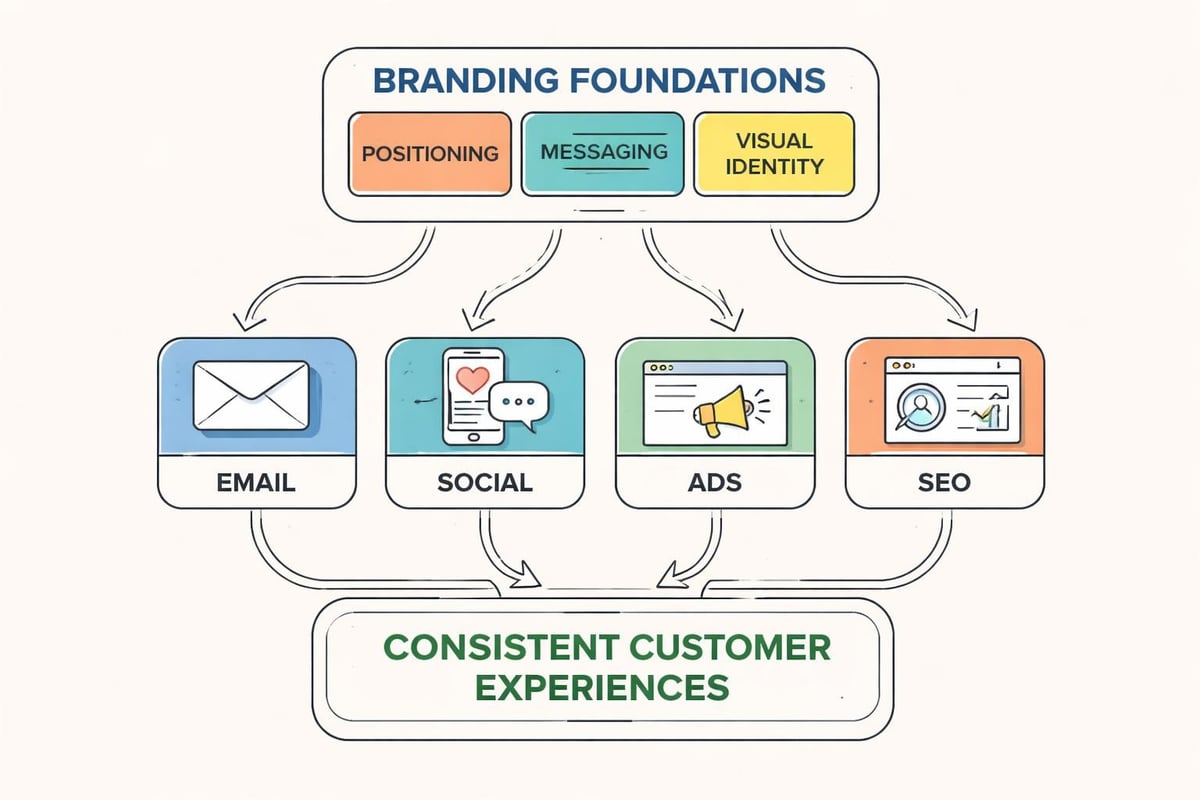
Branding isn't your logo or colour palette, though those matter. It's the entire system of perception you build around your business. In a digital environment, that system shows up everywhere.
Your branding includes:
- Positioning: Who you serve, what problem you solve, and why you're different
- Messaging: The language, tone, and promises you make consistently
- Visual identity: Logos, typography, colours, imagery style
- Customer experience: How people feel at every touchpoint, from first click to post-purchase
When this system is clear, your digital marketing becomes easier to execute. You're not starting from scratch every time you write an ad, design a landing page, or post on social. You're working from a foundation that already makes sense.
Brand Consistency Across Channels
CMO highlights the importance of brand consistency across digital platforms, and it's not just about aesthetics. It's about reducing friction. When someone sees your ad on LinkedIn, clicks through to your website, and then gets an email, they should feel like they're dealing with the same business. Same voice. Same values. Same promise.
This isn't about rigid templates. It's about having a clear brand framework that guides every execution, whether you're writing a subject line or designing a landing page. Our work at MDO Digital starts here, because without it, everything downstream gets harder.
How Digital Marketing Amplifies a Strong Brand
Marketing is the engine that puts your brand in front of people who need what you offer. But the quality of your brand determines how efficiently that engine runs.
A weak brand means higher cost per click, longer sales cycles, and lower conversion rates. A strong brand does the opposite. It pre-qualifies leads, shortens decision time, and increases lifetime value. Your ads perform better. Your content gets shared more. Your emails get opened.
| Brand Strength | Marketing Impact |
|---|---|
| Weak or unclear | High acquisition cost, low trust, price-driven decisions |
| Moderate | Competitive performance, some differentiation |
| Strong and consistent | Lower cost per lead, faster conversions, premium positioning |
Platform Selection and Brand Fit
Not every platform suits every brand. If you're a B2B consultancy, TikTok probably isn't your channel. If you're selling to enterprise clients, LinkedIn and targeted search make more sense. Your brand positioning should dictate where you show up, not the other way around.
The mistake most businesses make is trying to be everywhere. That dilutes your brand and spreads your budget thin. Better to dominate two channels that align with your audience than to have a weak presence across six.
Building a Marketing System That Reflects Your Brand
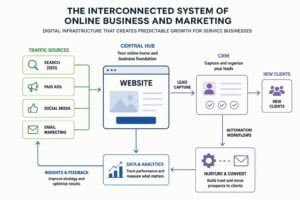
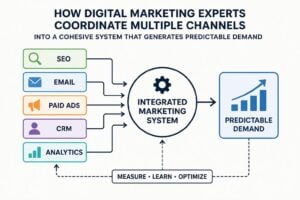
Systems beat campaigns. A campaign has a start and an end. A system keeps running, improving, and compounding. When branding and digital marketing are aligned, you're not just running ads or posting content. You're building infrastructure.
That infrastructure includes:
- A brand messaging framework that guides all copy and creative
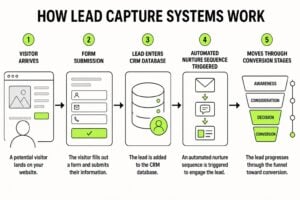
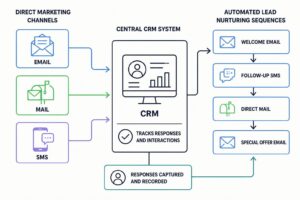
- A CRM that captures and nurtures leads in a way that reflects your brand voice
- Content and campaigns that reinforce positioning consistently
- Data tracking that tells you what's working and where to double down
Each of these pieces should feel like part of the same whole. Your email nurture sequence should sound like your website. Your ads should promise what your landing page delivers. Your follow-up should feel personal, not automated.
The Role of Automation in Brand Delivery
Automation doesn't mean robotic. Done right, it lets you deliver a branded experience at scale. A well-built CRM can send the right message to the right person at the right time, all while sounding like it came from you.
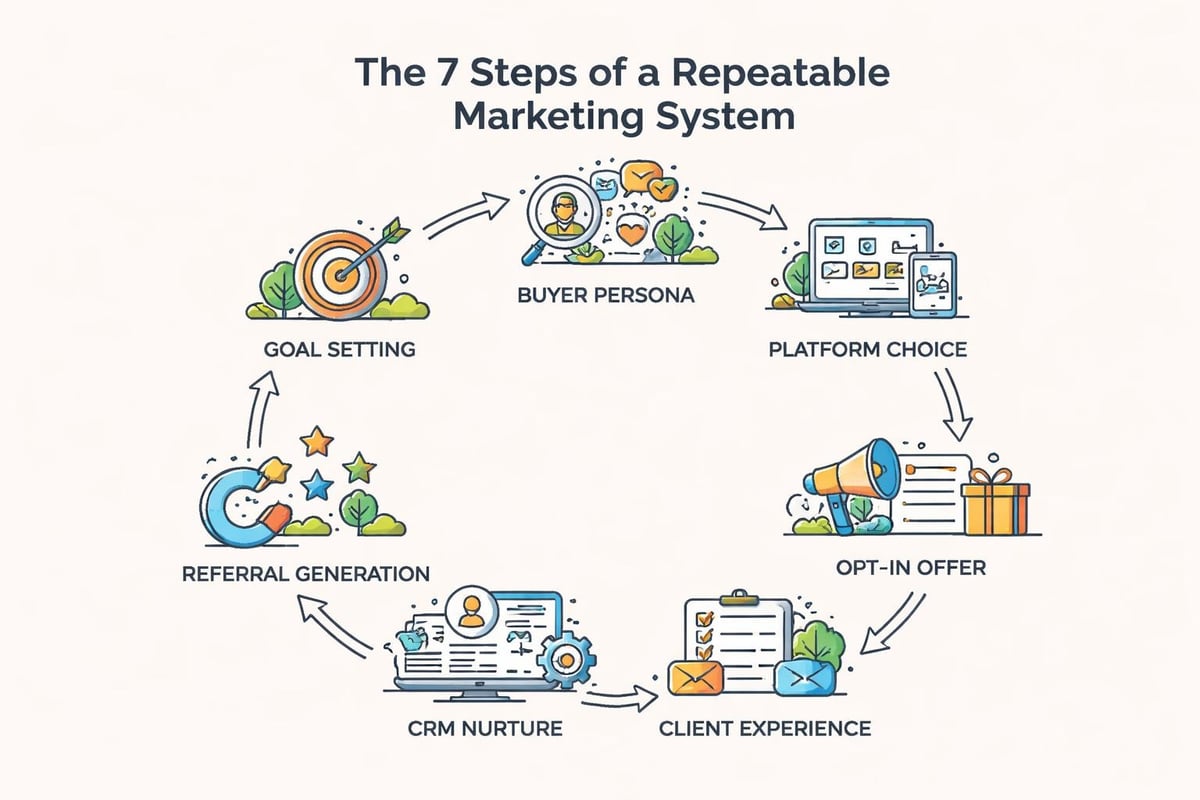
The 7-Step Marketing Plan framework is built around this idea. It's not just about generating leads. It's about creating a repeatable system where every step, from platform choice to referral generation, reinforces your brand and moves people closer to a decision.

Common Mistakes That Break the Brand-Marketing Connection
Even businesses with solid brands make tactical errors that undermine their marketing. Here are the ones we see most often.
Inconsistent Messaging
Your homepage talks about innovation. Your ads focus on affordability. Your emails lean on customer service. Pick one core message and let it run through everything. You can have supporting themes, but your main positioning should be unmistakable.
Ignoring the Experience After the Click
You can have the best ad in the world, but if your landing page is slow, confusing, or off-brand, you've wasted that click. The path from ad to conversion should feel seamless. Same language. Same promise. Same design sensibility.
Treating Channels as Silos
Your social media team shouldn't operate independently from your email team or your paid ads team. Data from Statista on consumer engagement shows that customers expect a unified experience, regardless of where they interact with you. That requires coordination, shared messaging frameworks, and a brand system everyone follows.
Measuring the Wrong Things
Vanity metrics (likes, impressions, followers) don't tell you if your branding and digital marketing are working. What matters is pipeline. Are you generating qualified leads? Are they converting? What's the cost per acquisition, and is it sustainable?
If your brand is strong and your marketing is aligned, these numbers improve over time. If they're not, something's broken.
How to Align Branding and Digital Marketing in Practice
This isn't theoretical. You can start fixing the disconnect today, even if you're mid-campaign.
Step 1: Audit Your Current Messaging
Go through your website, ads, emails, and social posts. Write down the main message of each. Do they all say roughly the same thing? If not, you've found the problem.
Step 2: Define Your Core Positioning
In one sentence, write down who you serve, what you do, and why it matters. This becomes the anchor for everything. Every piece of marketing should tie back to this sentence in some way.
Step 3: Build a Messaging Matrix
Create a simple table with your core message, supporting themes, tone of voice, and proof points. Share it with anyone who touches marketing or client communication. This keeps everyone aligned without needing constant oversight.
Step 4: Map the Customer Journey
Write out every step someone takes from first hearing about you to becoming a client. Identify where your brand shows up and where it doesn't. Fix the gaps.
Step 5: Integrate Your Tools
Your CRM, email platform, website, and ad accounts should talk to each other. Data should flow between them. This lets you personalise experiences at scale while keeping your brand voice consistent. If you're working with fragmented tools, you'll struggle to maintain coherence.
Content Marketing as a Brand and Demand Driver
Content is where branding and digital marketing overlap most visibly. A blog post, video, or guide can position your brand, educate your audience, and generate demand all at once.
But only if it's done with intention. Random content won't move the needle. Strategic content, built around your positioning and designed to answer the questions your audience is already asking, compounds over time.
SEO and Brand Authority
Organic search isn't just about rankings. It's about being the answer when someone looks for what you do. When your content ranks well, it signals authority. When it's well-written and on-brand, it builds trust before the first sales conversation.
Our branding content marketing approach treats every piece of content as part of a larger system. Each article, each page, each asset reinforces positioning and moves people through the funnel.
The Long Game: Compounding Brand Equity Through Marketing
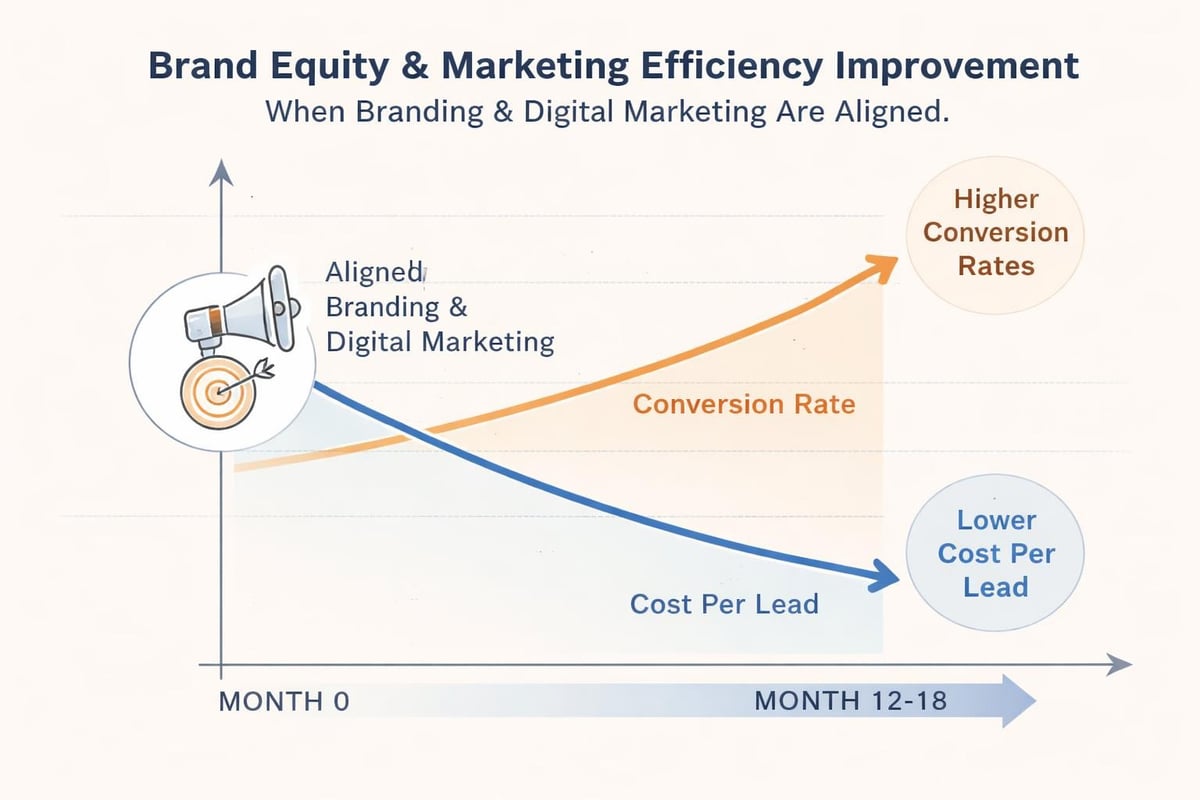
Branding and digital marketing aren't quick wins. They're infrastructure. The real payoff comes six, twelve, eighteen months down the track when your brand is recognised, your cost per lead has dropped, and your sales cycle has shortened.
This is what compounding looks like:
- Your ads get cheaper because your click-through rate improves
- Your conversion rate increases because people already trust you
- Your referrals go up because your brand is memorable
- Your pricing power grows because you're not competing on cost
None of this happens by accident. It's the result of consistent execution across both brand and marketing, with each reinforcing the other.
When to Invest in Both Simultaneously
If you're just starting out, nail your positioning first. You don't need a full rebrand, but you do need clarity on who you serve and why you're different. Once that's clear, start building your marketing engine around it.
If you've been in business for a while but growth has plateaued, the problem is usually misalignment. Your brand might have evolved, but your marketing hasn't caught up. Or you've been running campaigns without a clear brand foundation, and now everything feels scattered.
Either way, the fix is the same. Align them. Make sure your brand positioning is clear, then make sure every marketing decision reinforces it.
Practical Tools and Frameworks
You don't need a massive budget to get this right. You need clarity, consistency, and a willingness to cut what isn't working.
Brand Brief Template
A one-page document that includes:
- Target audience (specific, not broad)
- Core positioning statement
- Key messages (3-5 supporting points)
- Tone and voice guidelines
- Visual identity summary
Marketing Execution Checklist
Before launching any campaign, asset, or piece of content, check:
- Does this align with our core positioning?
- Does the language match our brand voice?
- Does the design reflect our visual identity?
- Does it move people toward a clear next step?
If the answer to any of these is no, fix it before it goes live.
Measuring Brand-Marketing Alignment
You can't improve what you don't measure. Track these metrics to see if your branding and digital marketing are working together:
| Metric | What It Tells You |
|---|---|
| Cost per lead | Are people responding to your message? |
| Conversion rate (lead to client) | Does your brand build trust? |
| Time to close | Are you shortening the decision cycle? |
| Net promoter score | Do clients feel aligned with your brand? |
| Organic traffic growth | Is your content positioning you as an authority? |
If these numbers improve over time, your brand and marketing are aligned. If they stagnate or get worse, something's off.
Final Thoughts on Execution
Branding and digital marketing aren't separate disciplines. They're two sides of the same coin. Your brand is the foundation. Your marketing is the amplification. When they're aligned, everything gets easier. Leads cost less. Conversions go up. Clients stay longer.
But alignment doesn't happen by accident. It requires intentionality, systems, and a willingness to say no to anything that doesn't fit. Most businesses don't fail because they lack ideas. They fail because they lack coherence.
The fix is simpler than you think. Get clear on who you are, who you serve, and what makes you different. Then make sure every piece of marketing you do reinforces that clarity. Over time, it compounds. And that's when growth stops feeling like a grind and starts feeling inevitable.
Branding and digital marketing work best when they're built as one integrated system, not two separate efforts. If you're tired of scattered campaigns and unclear positioning, MDO Digital can help. We build marketing systems and brand infrastructure that remove chaos, protect leads, and create the kind of structured growth that actually lasts. Let's talk about what's possible for your business.