Most businesses think they have to choose between building a brand and running ads that convert. That's a false choice. Branding advertising works when you understand that every ad you run either strengthens or dilutes how people perceive you. The goal isn't to separate brand work from performance marketing. It's to make them reinforce each other so every dollar spent builds equity and drives action at the same time.
What Branding Advertising Actually Means
Branding advertising is the practice of running paid campaigns that build recognition and trust while simultaneously driving measurable actions. It's not just awareness. It's not just conversion. It's the strategic middle ground where your brand identity shows up consistently across every paid touchpoint.
Here's what makes it different from standard advertising:
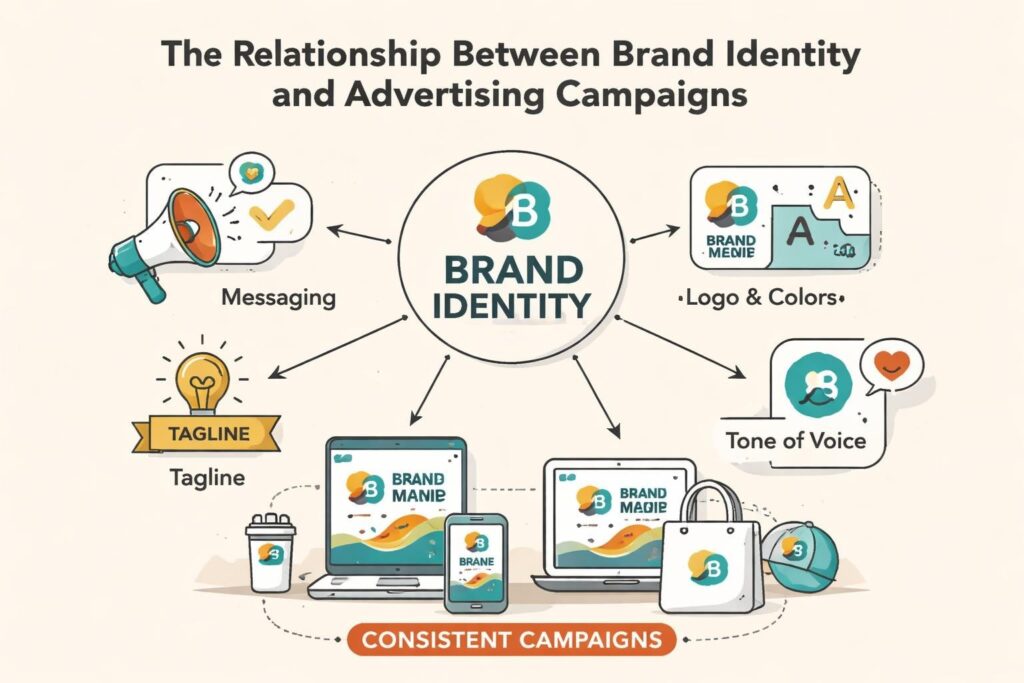
- Every ad reflects your visual identity, tone, and positioning
- Campaigns prioritize long-term recognition alongside short-term results
- Creative decisions are guided by brand strategy, not just testing
- Messaging stays consistent across channels and formats
The confusion happens when businesses treat branding and advertising as separate functions. Brand marketing works best when it's integrated into every campaign you run, not siloed into its own budget line.
The Components That Make It Work
You need three things working together: a clear brand foundation, consistent creative execution, and measurement that tracks both immediate response and long-term lift.
| Component | What It Includes | Why It Matters |
|---|---|---|
| Brand Foundation | Positioning, voice, visual system, messaging hierarchy | Gives creative teams clear guardrails |
| Creative Execution | Ad formats, copywriting, design, channel adaptation | Makes your brand recognizable across touchpoints |
| Measurement | Attribution, brand lift studies, incrementality testing | Shows what's working beyond last-click metrics |
Most service businesses skip the foundation work and jump straight to running ads. That's why their campaigns feel generic. Without clear positioning and brand guidelines, every ad becomes a guessing game.
How Branding and Direct Response Work Together
You don't need separate campaigns for brand building and lead generation. You need campaigns designed to do both. Start with a strong offer that solves a real problem. Wrap it in creative that reflects your brand. Run it consistently enough that people start to recognize you.
Building Recognition While Driving Clicks
The best branding advertising creates mental availability and physical availability at the same time. Mental availability means people think of you when they have a problem. Physical availability means your ad shows up when they're ready to act.
Practical ways to balance both:
- Use brand colors and fonts in every ad, even performance campaigns
- Lead with value, not just your logo or tagline
- Keep messaging consistent across retargeting and prospecting
- Test creative variations without abandoning brand guidelines
Service businesses often think brand work is just for big companies with massive budgets. Not true. Understanding the difference between branding and advertising helps you make smarter decisions regardless of spend.
When you're working with a marketing systems agency like MDO Digital, the goal is to build campaigns that compound over time. Each impression should reinforce the last one. That only happens when your branding advertising follows a system, not random creative ideas.
Building a Branding Advertising System
A system means repeatable processes that produce consistent results. For branding advertising, that starts with documenting your brand assets and decision-making criteria before you launch a single campaign.
Step 1: Document Your Brand Foundation
Before you spend a dollar on ads, write down your positioning statement, core messaging pillars, visual guidelines, and tone of voice. This becomes the filter for every creative decision.
What to include:
- One-sentence positioning statement
- Three to five core message themes
- Approved color palette and typography
- Voice and tone guidelines with examples
- Competitor differentiation points
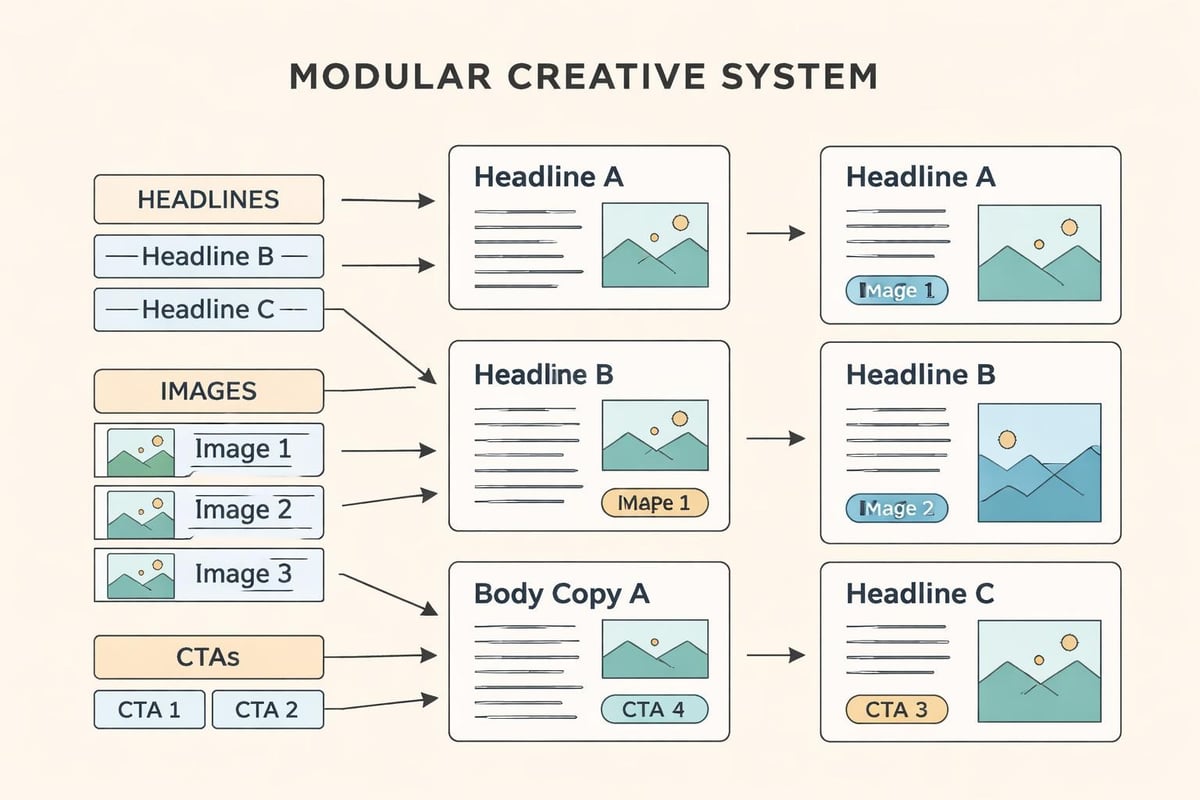
Step 2: Create Modular Creative Assets
Instead of designing one-off ads, build a library of modular components that can be mixed and matched. Headlines, body copy blocks, images, calls to action. When everything follows the same system, you can test variations without losing brand consistency.
This is where advertising aesthetics matter more than you think. Visual consistency builds trust. People make snap judgments about credibility based on design quality and coherence.
Step 3: Map Channels to Brand Touchpoints
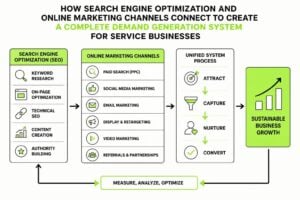
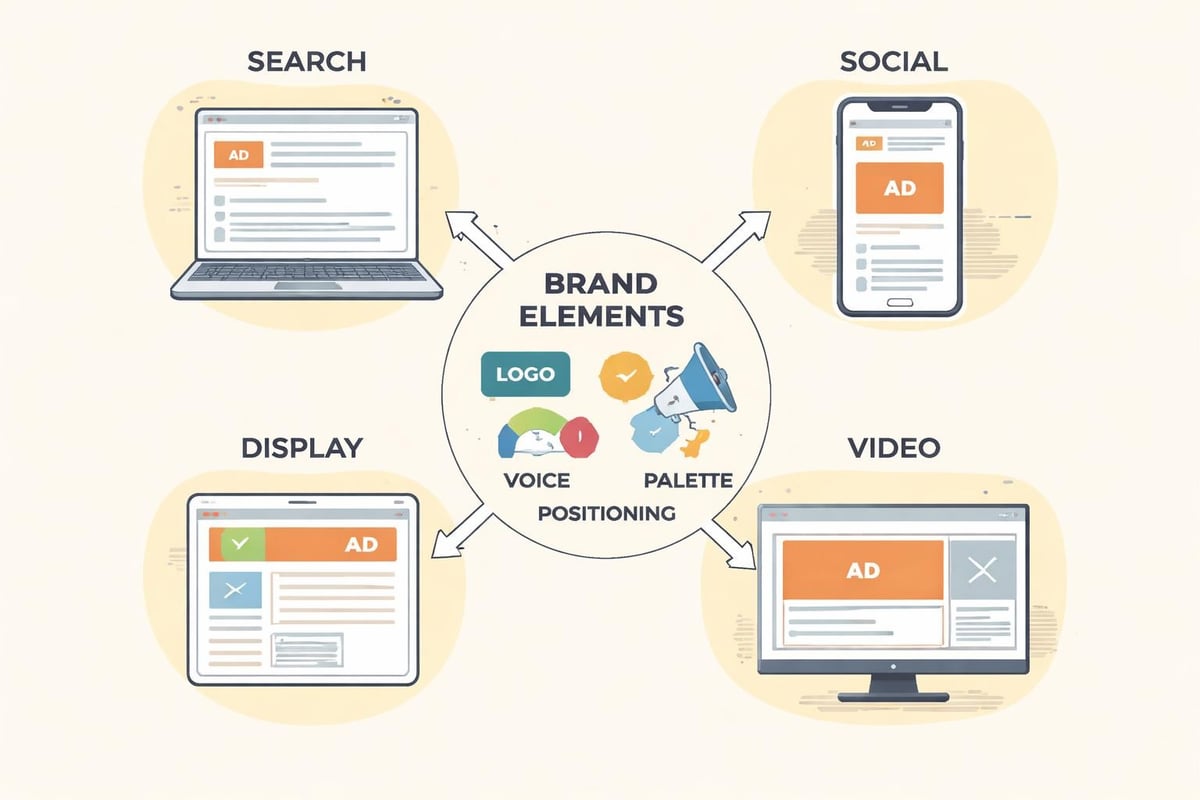
Not every channel serves the same purpose. Search ads catch intent. Social builds awareness. Display and video reinforce recognition. Your branding advertising strategy should acknowledge these differences while maintaining visual and message consistency.
| Channel | Primary Goal | Brand Application |
|---|---|---|
| Search | Capture intent | Consistent landing pages, branded ad extensions |
| Social | Build awareness | On-brand creative, community voice |
| Display | Reinforce recognition | Visual consistency, frequency management |
| Video | Tell stories | Brand storytelling, educational content |
The mistake is treating each channel as its own island. Your digital branding solutions should create a cohesive experience regardless of where someone encounters you.
Step 4: Measure Beyond Last Click
Branding advertising requires different measurement. You still track conversions, but you also monitor brand lift, aided and unaided awareness, consideration metrics, and how campaigns influence the full customer journey.
Tools like brand lift studies, incrementality testing, and multi-touch attribution help you understand what's actually working. Most small businesses don't have access to sophisticated measurement, but you can start with surveys, direct traffic trends, and branded search volume.
Common Mistakes That Waste Budget
The biggest mistake is inconsistency. Running six different creative approaches across six campaigns doesn't build a brand. It confuses people. Every new campaign should build on the last one, not start from scratch.
Other budget killers:
- Changing creative before you have statistical significance
- Copying competitor ads without understanding your differentiation
- Ignoring brand guidelines to chase trending formats
- Optimizing for clicks without tracking conversion quality
- Running awareness campaigns with no plan to convert interest
Another issue is treating branded content and traditional advertising as separate strategies. The line is blurring. Your ads should provide value, not just interrupt. Educational content, useful tools, and entertaining formats all count as branding advertising when they're tied to your strategic positioning.
Creating Campaigns That Build Equity
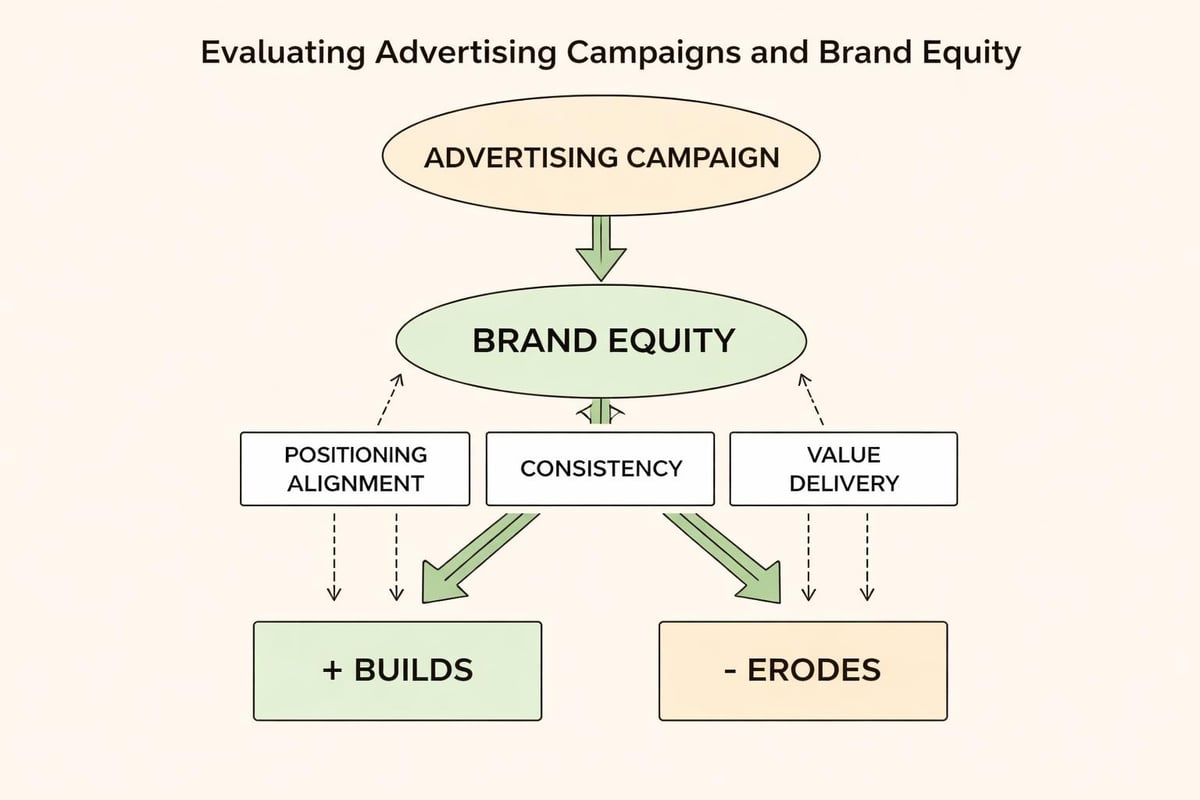
Every campaign is a deposit into your brand equity account or a withdrawal from it. The goal is to make deposits. That means thinking beyond the immediate conversion and asking whether this campaign makes your brand stronger.
Questions to Ask Before Launch
- Does this creative reflect our positioning?
- Will someone recognize this as our brand without seeing the logo?
- Does the messaging align with our core themes?
- Are we solving a real problem or just making noise?
- Would we be proud to show this in six months?
Native advertising works because it provides value in the format people already consume. Apply that thinking to all your paid work. Match the platform, but don't abandon your brand voice.
The Role of Repetition
People need to see your message multiple times before it sticks. That's not a weakness of your creative. It's how memory works. The challenge is maintaining consistency through that repetition without boring your audience.
Vary the execution, not the core message. Different headlines, formats, and entry points, but the same underlying positioning and visual system. This is where modular creative assets pay off. You can test without fragmenting your brand.
Integrating Branding Advertising Into Your Growth System
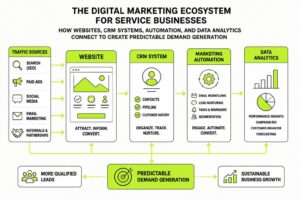
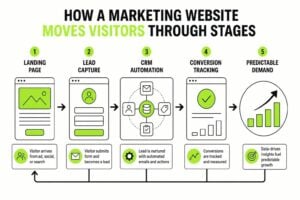
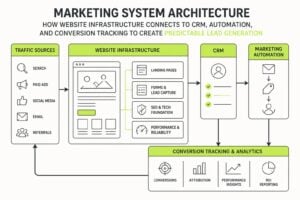
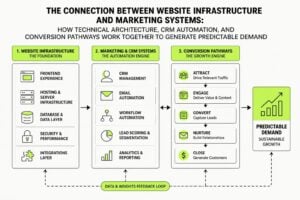
For service businesses, branding advertising isn't a separate initiative. It's part of your complete marketing systems infrastructure. The ads drive traffic. Your website converts it. Your CRM captures it. Your nurture sequences close it. Everything needs to reflect the same brand.
Connecting Paid Media to the Full Funnel
Most businesses have a disconnect between their ads and what happens after the click. The ad promises one thing. The landing page says something different. The follow-up email sounds like it came from a different company.
Fix this by:
- Using the same messaging hierarchy across ads, landing pages, and emails
- Maintaining visual consistency from first impression to closed deal
- Training your sales team on brand positioning and voice
- Ensuring your CRM templates reflect brand guidelines
- Reviewing customer touchpoints for brand consistency quarterly
When you work with an agency focused on online marketing and branding, they should be connecting these dots. If your ads are beautiful but your confirmation emails look generic, you're losing trust at every handoff.
Building Recognition in Crowded Markets
Every market feels crowded until you find your angle. Branding advertising helps you own a position that competitors can't easily copy. That's not about being clever. It's about being clear and consistent.
Differentiation Through Execution
You probably offer similar services to your competitors. The differentiation comes from how you show up. Your perspective, your process, your guarantees, your style. All of that can show up in your advertising without requiring a revolutionary product.
Strong branding advertising makes people choose you even when alternatives exist. It builds preference, not just awareness. The key is repetition around a distinctive position. Brand ambassadors help, but your advertising is often the first ambassador most people meet.
When to Invest More in Brand vs Performance
The answer isn't either/or. It's both, calibrated to your business stage and market maturity. New businesses need to prove they can generate customers profitably. That means heavier emphasis on direct response. Established businesses need to protect market share and justify premium pricing. That means more brand investment.
General guidelines:
- Early stage: 80% performance, 20% brand consistency
- Growth stage: 60% performance, 40% brand building
- Mature stage: 50/50 split with heavy brand reinforcement
These aren't rules. They're starting points. Adjust based on your competitive dynamics and customer acquisition efficiency. The important thing is never running performance campaigns that ignore your brand, and never running brand campaigns that can't tie to business outcomes.
Making Branding Advertising Practical
Theory doesn't help if you can't execute. Here's what practical implementation looks like for a service business with limited resources.
Start with three campaigns: one targeting bottom-of-funnel intent (branded search, competitor terms), one building awareness in your target market (social, display), and one nurturing previous visitors (retargeting). Make sure all three follow your brand guidelines.
Minimum viable branding advertising stack:
- Brand guidelines document (10-15 pages)
- Template library for each ad format you use
- Quarterly creative refresh process
- Basic brand tracking (survey or search volume)
- Monthly review of creative consistency
You don't need a fancy brand book or expensive photoshoots. You need clarity about who you are and discipline to maintain it. The value of consistent branding ads compounds over time, but only if you stick with it long enough to see the effect.
The businesses that win with branding advertising treat it as infrastructure, not a campaign. It's the foundation that makes all your other marketing more efficient. Better click-through rates because people recognize you. Higher conversion rates because you've built trust. Lower acquisition costs because brand awareness creates intent.
Branding advertising works when you stop treating brand building and performance marketing as separate jobs. Every ad should strengthen recognition while driving action. That requires a system that documents your brand, creates consistent creative, and measures beyond the last click. If you need help building that infrastructure, MDO Digital specializes in marketing systems that connect branding, advertising, and automation into predictable growth engines for service businesses. We remove the chaos and build the structure that makes your ad spend compound over time.