Most service businesses run marketing like they're making it up as they go. A Facebook ad here. An email there. Maybe a LinkedIn post when someone remembers. It feels busy, but nothing compounds. Code marketing flips that script. Instead of random acts of promotion, you build systems that work the same way every time. Predictable inputs, measurable outputs, and processes you can hand off without everything falling apart. It's not about writing software. It's about treating your marketing like infrastructure instead of improvisation.
What Code Marketing Actually Means
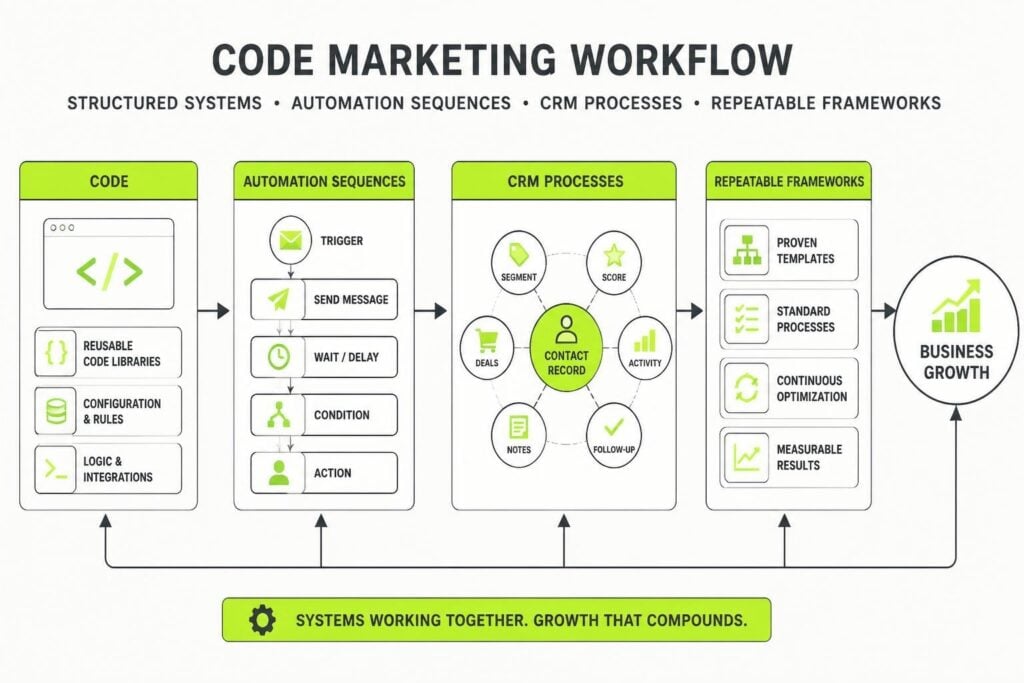
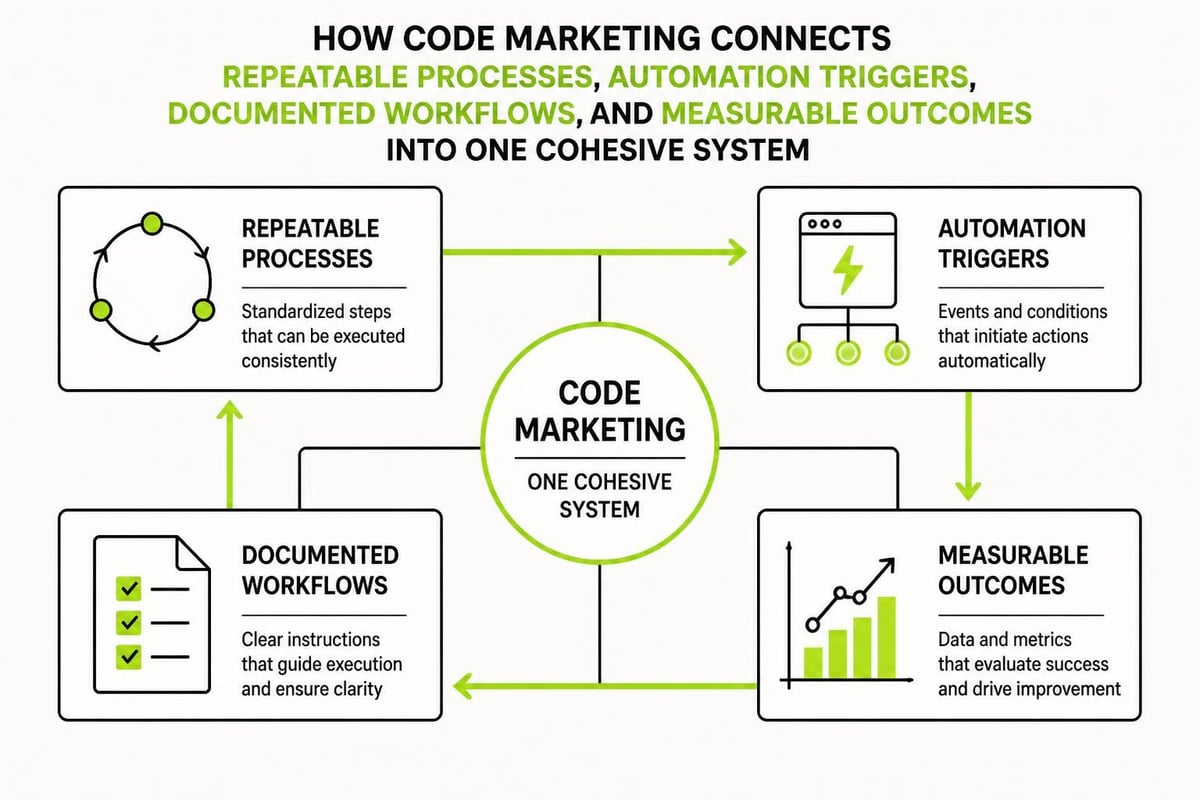
Code marketing isn't technical jargon for developers. It's the practice of building marketing systems with the same logic programmers use to write code: clear inputs, defined processes, and expected outcomes.
When you code your marketing, you create repeatable frameworks that run independently of who's executing them. You document what works, automate what's tedious, and measure what matters. The result is a system that scales without constant intervention.
The core principles include:
- Repeatability: Every campaign follows a documented process
- Logic flow: Each step triggers the next automatically where possible
- Error handling: You plan for what happens when leads don't convert or campaigns underperform
- Version control: You track what changed and when, so you know what's working
This approach removes the chaos that kills most marketing efforts. Instead of reinventing your process every quarter, you refine existing systems based on data.
Why Service Businesses Need Structured Systems
Service based businesses run on trust and relationships, which makes many owners think marketing should feel personal and spontaneous. But personal delivery and systematic acquisition aren't opposites.
Your client experience can be completely tailored while your lead generation runs like clockwork. In fact, structured systems free up time for the personalisation that actually matters.
Without code marketing, you're stuck in a cycle:
- You get busy with client work
- Marketing stops
- Pipeline dries up
- Panic sets in
- You scramble to fill the gap
- Repeat
Structured systems break that pattern. When your marketing infrastructure runs independently, leads flow regardless of how busy you are. You build momentum instead of constantly restarting.
The Difference Between Activity and Systems
Most businesses confuse marketing activity with marketing systems. Activity is posting on Instagram twice a week. A system is a content calendar tied to your CRM, where each post includes a specific call to action that feeds into an automated nurture sequence.
| Marketing Activity | Marketing System |
|---|---|
| Random social posts | Content calendar with defined CTAs |
| One-off email sends | Automated nurture sequences |
| Ad campaigns when you remember | Evergreen funnels with planned budgets |
| Hoping referrals happen | Structured referral process with triggers |
Systems compound. Activity just fills time.
Building Your First Code Marketing Framework
Start with one process and make it bulletproof. Don't try to systematise everything at once.
Pick the channel that currently generates your best leads. For most service businesses, that's either referrals, organic search, or paid ads. Choose one and build the full system around it.
Map the Complete Journey
Document every step from first contact to closed deal:
- Where does the lead first hear about you?
- What action do they take to express interest?
- What happens in the first 24 hours after they opt in?
- How many touchpoints occur before they book a call?
- What information do they receive at each stage?
- What triggers the next step in the sequence?
Write this down in painful detail. If someone else had to run this process tomorrow with zero context, could they?
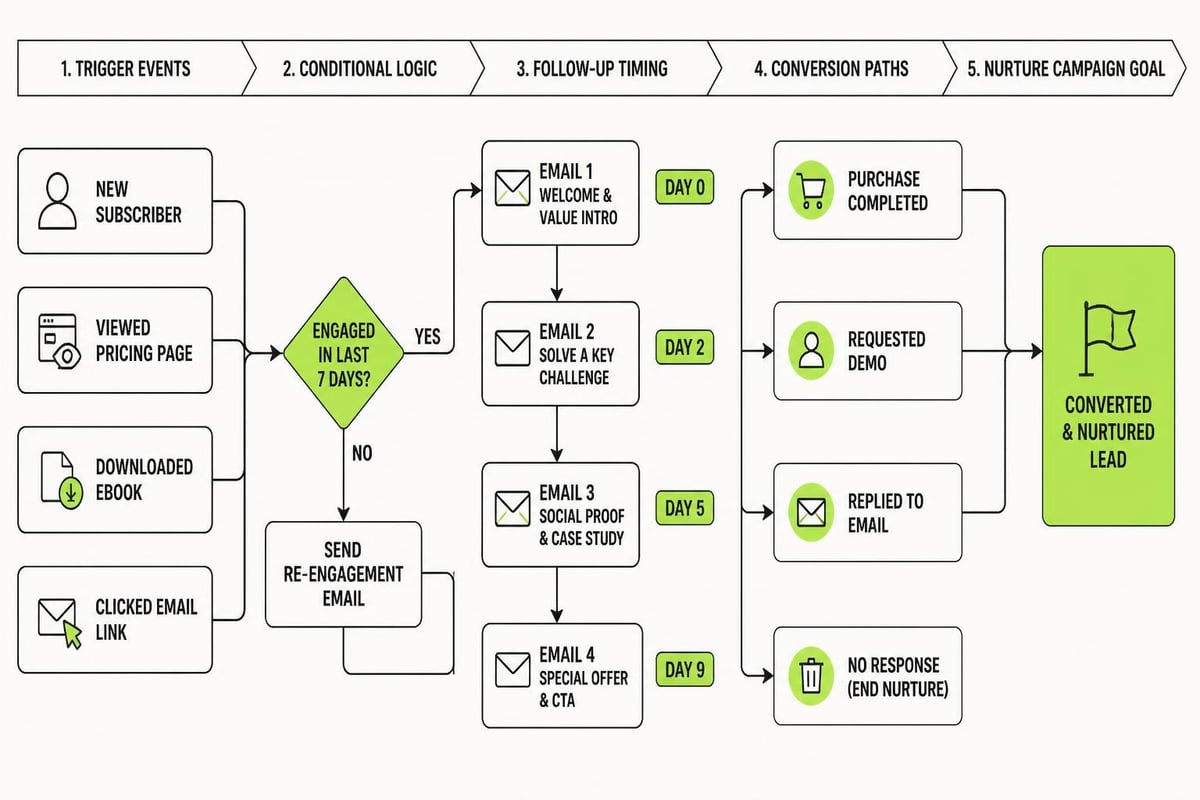
Identify Automation Opportunities
Look for repetitive tasks that happen the same way every time. These are prime candidates for automation:
Common automation wins:
- Welcome emails that send immediately after opt-in
- Follow-up sequences triggered by specific actions
- Lead scoring based on engagement behaviour
- Task creation when leads hit certain stages
- Internal notifications when hot leads need attention
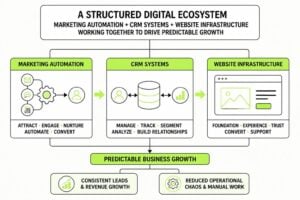
You don't need fancy tools. Most CRM platforms handle basic automation. The key is mapping the logic first, then finding the tool that executes it.
Document the Process Like a Recipe
Write standard operating procedures for every marketing function. This isn't bureaucracy. It's the difference between systems that survive when people leave and chaos that collapses.
Your documentation should include:
- Exact steps in order
- Tools and logins required
- Decision points and how to handle them
- Examples of finished work
- Common mistakes and how to avoid them
When your marketing runs from documented processes rather than institutional knowledge, you can delegate without disaster. That's how you scale.
Code Marketing in Practice: Real Scenarios
Let's walk through how code marketing applies to common service business situations.
Scenario One: The Referral System
Most businesses treat referrals as luck. Code marketing makes them deliberate.
You build a system that triggers at specific points:
- Client completes first milestone (automated satisfaction check-in)
- System sends referral request template with easy sharing options
- Referred leads enter tagged sequence in CRM
- Original client receives thank-you and progress updates
- Conversion data feeds back to identify best referral sources
Each step is programmed. Nothing requires you to remember or manually intervene. The system runs because you coded the logic once.
If you're building reliable marketing funnels, referrals should be one automated stage, not an afterthought.
Scenario Two: The Content Engine
Content marketing dies when it depends on inspiration. Code marketing makes it systematic.
You create a production framework:
| Stage | Action | Timeline | Owner |
|---|---|---|---|
| Research | Keyword analysis, topic selection | Week 1 | Marketing |
| Outline | Structure with H2/H3, key points | Week 2 | Marketing |
| Draft | Full article, examples, links | Week 3 | Writer |
| Edit | Review, fact-check, optimise | Week 4 | Editor |
| Publish | CMS upload, social posts, email | Week 4 | Marketing |
| Measure | Traffic, leads, engagement | Week 5+ | Marketing |
Every piece follows the same path. You batch similar tasks, reduce decision fatigue, and create consistency that search engines reward.
When marketing becomes predictable, you can plan inventory months ahead instead of scrambling for topics each week.
Measuring What Matters in Code Marketing
Systems without metrics are just organised guesswork. Code marketing demands clear measurement at every stage.
Track inputs and outputs separately:
- Inputs: Ad spend, content published, emails sent, calls made
- Outputs: Leads generated, opportunities created, deals closed, revenue
This separation shows you exactly where systems break. If inputs are high but outputs are low, the problem is conversion, not volume. If both are low, you need more activity within the existing framework.
The Dashboard Approach
Build one view that shows system health at a glance:
- Lead volume by source (weekly)
- Cost per lead by channel (monthly)
- Conversion rate by stage (ongoing)
- Time to close (by quarter)
- Customer lifetime value (rolling)
Update these metrics on a fixed schedule. Monthly is usually enough. The point isn't real-time obsession. It's consistent visibility into what's working and what needs adjustment.
Code marketing measurement showing lead sources, conversion rates by stage, cost per acquisition, and customer value tracking across multiple channels
Common Code Marketing Mistakes
Even with good intentions, businesses botch systematisation. Here's what typically goes wrong.
Over-Automation Before Validation
You can't automate something that doesn't work manually. If your sales process converts at 5%, automating it just scales failure faster.
Test everything as a manual process first. When you've proven it works, then systematise it. Code marketing accelerates what's already effective.
No Flexibility for Exceptions
Rigid systems that can't handle edge cases create frustration, not efficiency. Build in escape hatches.
Your automation should include:
- Manual override options when needed
- Alerts for unusual behaviour that needs human review
- Ways to tag and route special cases differently
The goal is structured flexibility, not robotic inflexibility.
Forgetting to Update as You Learn
Systems built once and never revised become obsolete. Code marketing requires version control, meaning you track changes and improvements over time.
When you discover a better approach, update the system and document what changed. Your Q4 2026 process should be measurably better than Q1 2026, with clear records of why.
Integrating Code Marketing with Strategy
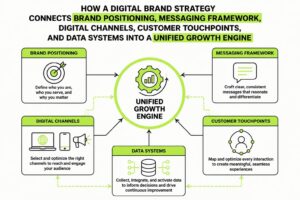
Systems without strategy is just efficient aimlessness. Code marketing works best when it executes a clear digital brand strategy.
Your strategy defines who you serve, what problem you solve, and how you're positioned differently. Code marketing translates that strategy into repeatable actions.
Strategy answers:
- Who are we targeting?
- What's our core message?
- Which channels matter most?
- What does success look like?
Code marketing answers:
- How do we reach them consistently?
- What's the exact sequence of touchpoints?
- How do we automate without losing quality?
- How do we measure and improve?
Both are essential. Strategy without execution is theory. Execution without strategy is chaos with better spreadsheets.
Building Your Marketing Operating System
Think of code marketing as your business's marketing operating system. Just like macOS or Windows runs your computer's functions reliably, your marketing OS should run your growth functions predictably.
That operating system needs clear modules:
- Lead Generation: How new contacts enter your world
- Lead Nurture: How you build trust before the sale
- Conversion: How leads become paying clients
- Delivery: How you fulfil and exceed expectations
- Retention: How you keep clients coming back
- Referral: How clients bring others
Many service businesses have built strong systems using frameworks like the 7-Step Marketing Plan. It walks through setting goals, defining your buyer persona, choosing platforms, creating opt-in offers, building CRM infrastructure, delivering exceptional experiences, and generating systematic referrals. Each step feeds the next, creating momentum that compounds.

Each module should function independently but connect seamlessly to the others. When someone opts in for your lead magnet (module 1), they automatically enter your nurture sequence (module 2) without manual intervention.
The Technology Stack Question
You don't need expensive tools to practice code marketing. You need clear thinking first, tools second.
Start with:
- A CRM that handles contact management and basic automation
- Email marketing platform (often built into your CRM)
- Project management tool for workflow documentation
- Analytics to track what matters
As you scale, you might add:
- Advanced automation platforms for complex sequences
- Integrated marketing suites that connect channels
- Attribution tools to track multi-touch conversion paths
But fancy software won't fix unclear processes. Get the logic right first, then find tools that execute it.
Making Code Marketing Part of Your Culture
The hardest part isn't building systems. It's maintaining them when things get busy.
Code marketing only works when your team treats documented processes as living infrastructure, not one-time projects. That requires culture shift.
Embed these habits:
- Every campaign gets documented, not just executed
- Process improvements are suggested and reviewed regularly
- New team members onboard through systems, not shadowing
- Metrics reviews happen on schedule, not when someone remembers
When systems thinking becomes how you operate, growth stops feeling like gambling. You know what to expect because you've coded the outcomes you want.
Code marketing transforms service businesses from chaotic hustle to predictable growth. When you treat marketing as infrastructure built on repeatable systems, automation, and clear metrics, you create momentum that compounds instead of constantly restarting. If you're ready to remove chaos, protect leads, and build structured growth, MDO Digital helps service businesses design the marketing systems and automation infrastructure that turn attention into predictable demand.