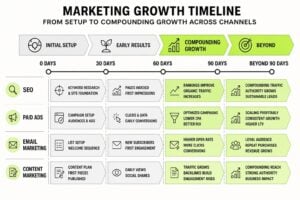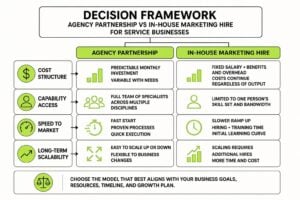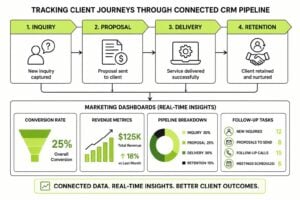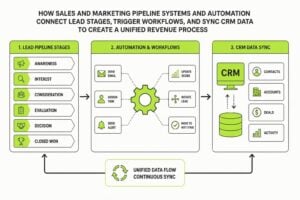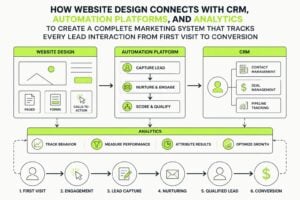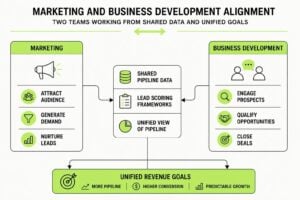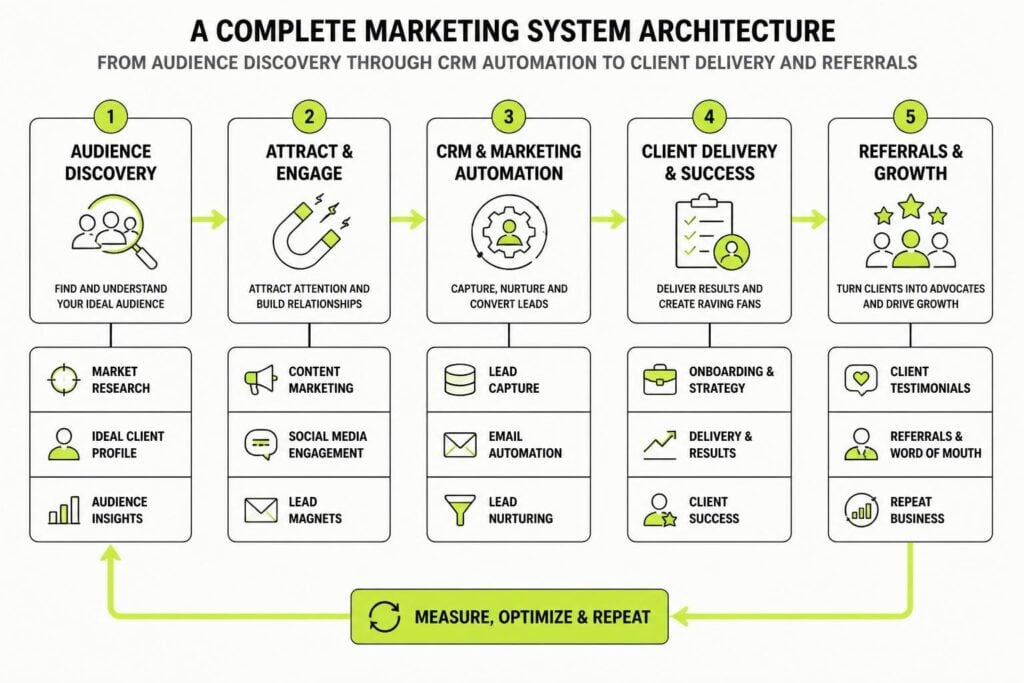
Most service businesses don't have a marketing problem. They have a systems problem. You might get leads one week and nothing the next. Campaigns feel like guesswork. Data sits in different tools that don't talk to each other. The work happens, but nothing compounds. Understanding how to build a marketing system changes that equation entirely. A proper system turns random activity into repeatable outcomes, protects every lead that comes through, and creates the infrastructure for growth that doesn't rely on you showing up with fresh ideas every Monday morning.
What a Marketing System Actually Is
A marketing system isn't a campaign. It's not a social media schedule or a list of tactics you read about on LinkedIn.
A marketing system is the complete infrastructure that moves someone from stranger to client, then keeps them engaged long after the sale. It includes your data layer, your automation rails, your content engine, your attribution model, and the processes that tie them together.
Think of it as plumbing. When it works, leads flow predictably. Data gets captured. Follow-ups happen automatically. Nothing leaks. The system does the heavy lifting while you focus on delivery and strategy.
Most businesses skip this step. They jump straight to tactics because systems feel boring. But tactics without systems create chaos. You can't scale chaos. You can only get louder, work harder, and burn out faster.
The Core Components That Make It Work
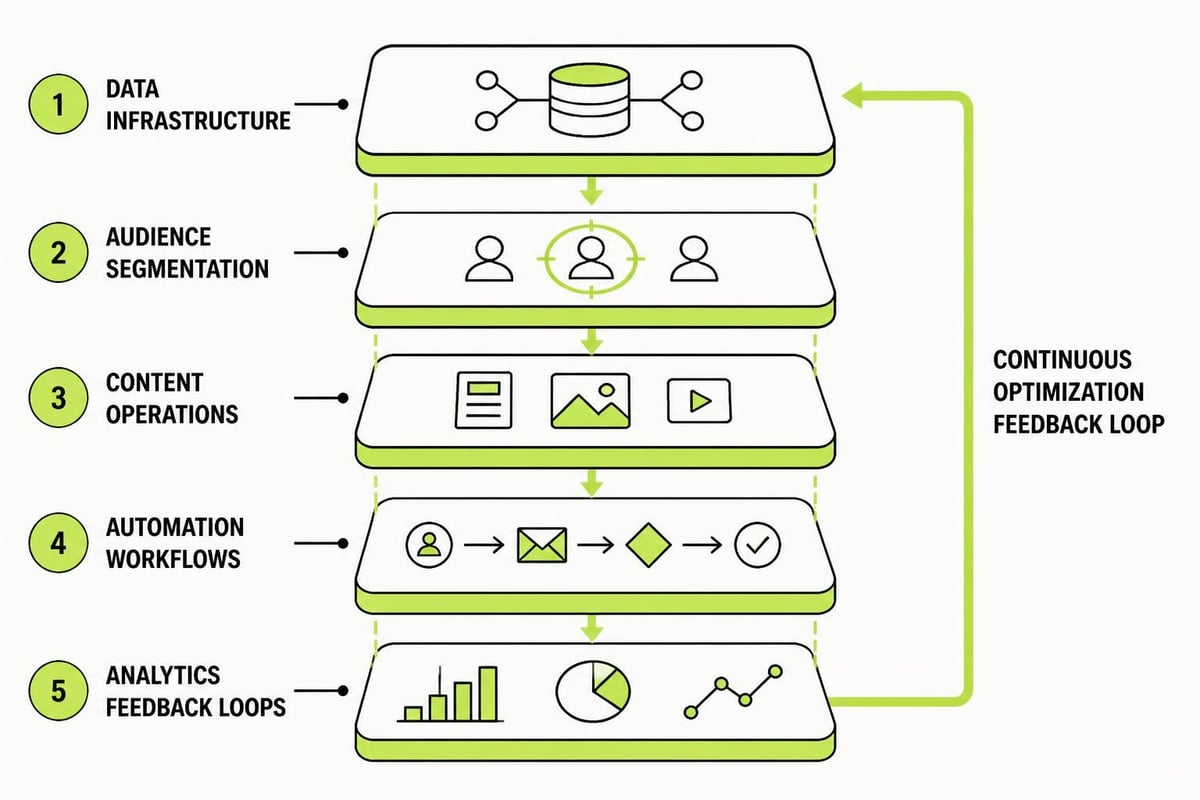
Every functional marketing system needs five layers working together:
- Data capture and storage so nothing falls through the cracks
- Audience segmentation so you speak to the right people at the right time
- Content and messaging that matches where someone sits in their journey
- Automation and workflows that move people forward without manual effort
- Measurement and feedback loops so you know what's working and what isn't
Miss one layer and the whole thing buckles. You might generate leads but lose half of them because your CRM isn't set up properly. Or you've got great content but no way to track who's engaging. The system only works when all five layers connect.
How to Build a Marketing System From the Ground Up
Building how to build a marketing system starts with your foundation, not your tactics. Get the bones right first.
Start With Your Data Layer
Before you worry about ads or content, sort out where data lives and how it moves.
Pick a CRM that can grow with you. It should handle contacts, track interactions, segment audiences, and integrate with the tools you actually use. HubSpot, ActiveCampaign, and Keap all work for service businesses at different scales.
Once your CRM is in place, map every touchpoint where someone interacts with your business. Your website, landing pages, email, phone calls, social platforms. Each one needs to feed data back into your central system.
Set up proper tracking from day one. Install analytics correctly. Use UTM parameters on every external link. If you're running any paid media, configure server-side tracking so you're not relying entirely on browser cookies. Google’s GA4 Measurement Protocol gives you options to capture events even when client-side tracking fails.
| Data Layer Element | Purpose | Common Tools |
|---|---|---|
| CRM | Central contact database, lifecycle tracking | HubSpot, ActiveCampaign, Keap |
| Analytics | Traffic, behaviour, conversion tracking | GA4, Plausible, Matomo |
| Attribution | Source tracking, campaign performance | UTM parameters, attribution software |
| Privacy & Consent | GDPR/CCPA compliance, consent management | OneTrust, Cookiebot, custom solutions |
The foundation also includes compliance. Understand what data you're collecting, get proper consent, and document it. Marketing privacy isn’t optional anymore, especially if you operate across jurisdictions.
Define Your Buyer Journey and Touchpoints
You can't build a system without knowing the path people take.
Map the stages from awareness to decision. For most service businesses, it looks something like this:
- Awareness: They discover the problem or opportunity
- Consideration: They research solutions and evaluate options
- Decision: They choose a provider and take action
- Delivery: They experience your service
- Advocacy: They refer others or buy again
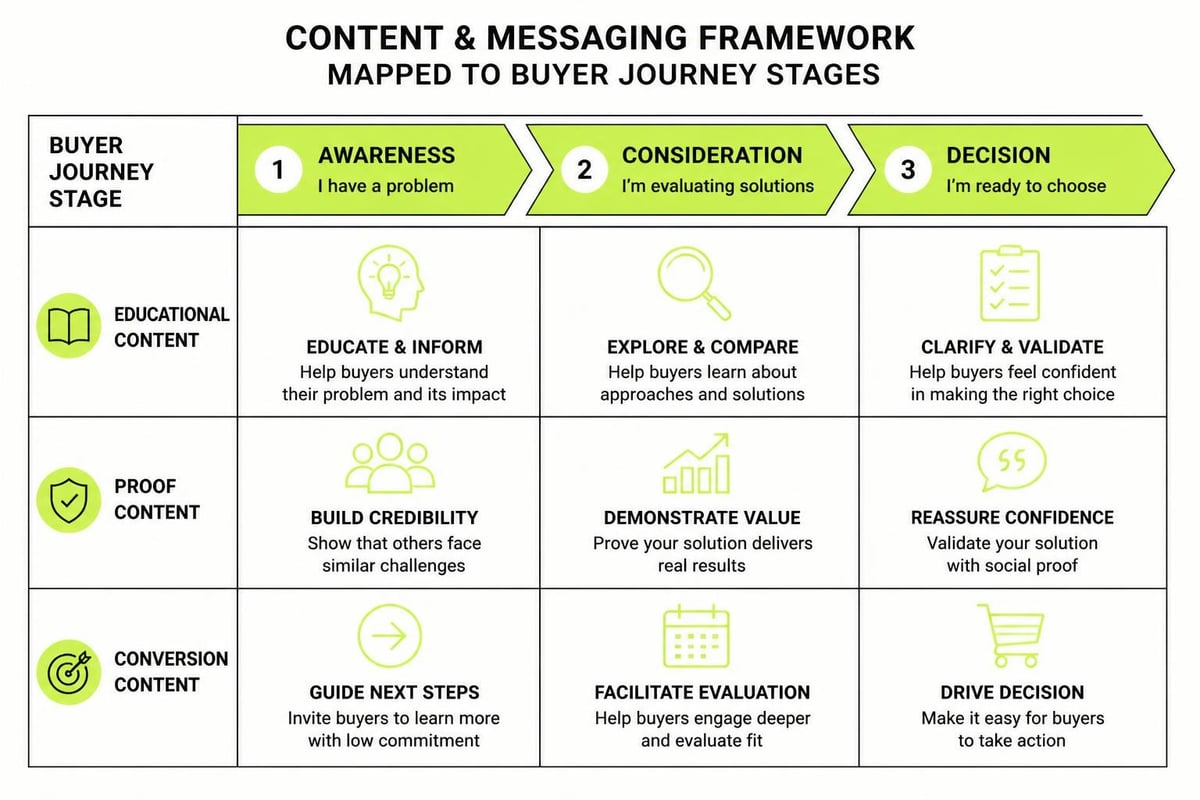
Each stage needs different content, different messaging, and different automation. Someone just discovering the problem doesn't need a sales pitch. They need education. Someone ready to decide doesn't need a white paper. They need proof and a clear next step.
Write out every touchpoint in your current setup. Website visit, lead magnet download, email sequence, discovery call, proposal, onboarding. Then ask what happens at each one. Is it manual? Is it consistent? Does anything get missed?
This is where most systems break. The front end looks polished, but leads hit a manual bottleneck and half of them never get followed up. If you're still copying email addresses into spreadsheets or forgetting to send proposals on time, you don't have a system yet.
Build Your Content and Messaging Framework
Content isn't just blog posts. It's every message your system delivers, from ads to email sequences to onboarding docs.
Start by defining your core message. What problem do you solve? Who do you solve it for? What makes your approach different? This becomes the backbone of everything else.
Then create content for each stage of the buyer journey. Top-of-funnel content answers questions and builds trust. Middle-of-funnel content demonstrates your process and expertise. Bottom-of-funnel content removes objections and makes the decision easy.
Building a solid content plan means thinking beyond individual posts. You need a calendar, a distribution strategy, and a way to repurpose core ideas across multiple formats.
Your system should deliver the right content automatically based on behaviour. Someone who downloads a guide about CRM setup gets a different email sequence than someone who reads three blog posts about branding. Segmentation and automation make that happen without you manually sorting people into lists.
Set Up Automation That Actually Works
Automation gets a bad rap because most people do it badly. They automate the wrong things or build workflows that feel robotic.
Good automation handles repetition so you can focus on the work that matters. It doesn't replace human connection. It protects it.
Here's what to automate first:
- Lead capture and tagging so every new contact gets logged and categorised
- Welcome sequences that introduce your business and set expectations
- Nurture campaigns that deliver value over time without manual emails
- Task reminders so follow-ups and internal processes don't rely on memory
- Lead scoring so your CRM flags hot prospects automatically
Start simple. One welcome sequence. One nurture campaign. One task automation. Test it, refine it, then add the next one.
The goal isn't to automate everything. It's to automate the repeatable parts so you can focus on strategy, relationships, and delivery. If you're spending two hours a week manually sending the same emails, that's two hours you could spend improving your offer or talking to clients.
Many businesses look at frameworks like the 7-Step Marketing Plan to understand how each piece connects. It walks through setting goals, defining your buyer persona, choosing platforms, creating opt-in offers, building CRM workflows, delivering great experiences, and generating referrals. Each step feeds into the next, creating a flywheel instead of a patchwork of tactics.
Measure, Test, and Improve Continuously
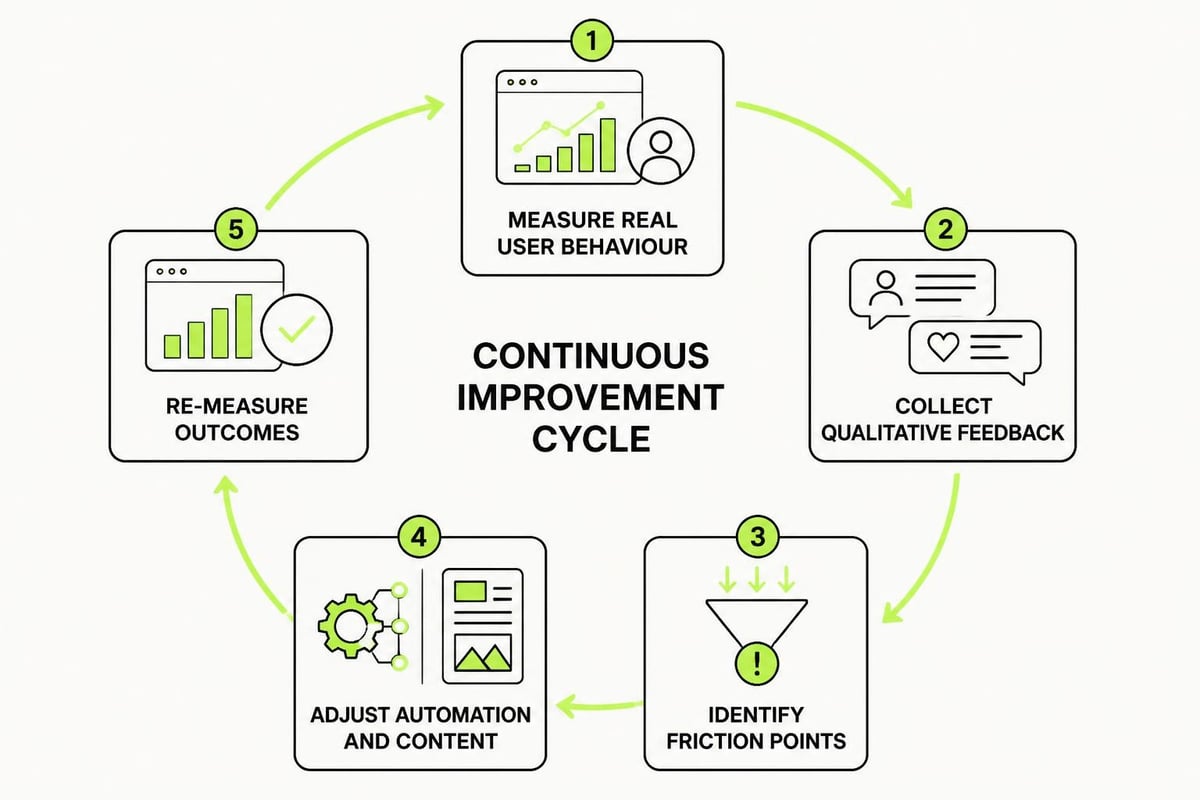
A system without feedback loops is just expensive guesswork.
Decide what you're measuring before you launch anything. Not vanity metrics like impressions or followers. Real numbers tied to outcomes. Leads generated. Conversion rates. Cost per acquisition. Customer lifetime value.
Set up dashboards that show those numbers at a glance. Your CRM should track pipeline and conversion rates. Your analytics should track traffic sources and behaviour. Your ad platforms should feed cost and performance data back into a central view.
Run regular audits. Monthly at minimum. Look at what's working and what isn't. If email open rates drop, test new subject lines. If a landing page converts poorly, change the headline or the offer. If a lead source dries up, shift budget.
The businesses that win long term aren't the ones with perfect systems out of the gate. They're the ones that build, measure, adjust, and repeat. Systems thinking means treating your marketing like infrastructure, not a one-off project.
| Metric Type | What to Track | Why It Matters |
|---|---|---|
| Acquisition | Traffic, leads, cost per lead | Shows if you're reaching the right people efficiently |
| Conversion | Lead-to-client rate, sales cycle length | Reveals how well your system turns interest into revenue |
| Retention | Repeat purchase rate, churn, LTV | Measures long-term value and system sustainability |
| Efficiency | Time saved, manual tasks eliminated | Proves the system is working as infrastructure, not overhead |
Common Mistakes When Building a Marketing System
Even when you understand how to build a marketing system, execution trips people up. Here are the mistakes that derail most attempts.
Trying to Automate Before You Have a Process
Automation doesn't fix broken processes. It just scales the mess.
Before you automate anything, run it manually and refine it. Send the email sequence by hand. Test different versions. See what people respond to. Once the process works and you've done it ten times, then automate it.
Automating too early locks in mediocrity. You end up with workflows that don't convert and you don't know why.
Picking Tools Before You Know What You Need
The tool doesn't matter if you don't know what problem you're solving.
Start with the outcome. What do you need the system to do? Then pick tools that deliver that outcome with the least complexity. The fanciest CRM won't help if you only need basic email automation and contact tagging.
Most service businesses can build a solid system with a good CRM, a website with proper tracking, and a few integrated tools. You don't need a full marketing technology stack on day one. You need something that works and grows with you.
Ignoring Data Quality and Hygiene
A system full of bad data is worse than no system at all.
Clean your lists. Remove duplicates. Fix formatting. Merge records. Tag contacts properly. If your CRM is full of half-complete records with missing information, your segmentation and automation will fail.
Customer data platforms (CDPs) exist to solve this problem at scale, especially for businesses juggling multiple data sources. Forrester’s research on CDPs highlights how centralising and cleaning customer data pays off over time, though smaller service businesses often don't need a full CDP yet. A well-managed CRM does the job.
Set rules for data entry. Make fields mandatory. Train your team. Audit your database quarterly. Data hygiene isn't glamorous, but it's the difference between a system that works and one that frustrates everyone who touches it.
Building in Isolation Without Feedback
Your system exists to serve real people. If you build it in a vacuum, you'll miss what actually matters.
Talk to your clients. Ask what they need at each stage. Find out where they get stuck. Look at support tickets and questions that come up repeatedly. Use that feedback to shape your content, your automation, and your processes.
The best systems evolve based on real behaviour, not assumptions. If people keep asking the same question after signing up, add it to your onboarding sequence. If a common objection kills deals, address it earlier in the nurture campaign. Let the data and the feedback guide the build.
What a Finished System Looks Like in Practice
When you've built it right, the system hums in the background and does most of the work.
A new lead comes in through your website. They download a resource and get tagged based on what they showed interest in. An automated welcome sequence starts, delivering value over the next two weeks while your CRM scores their engagement.
If they open every email and click through to case studies, your system flags them as high intent and alerts your sales team. If they go quiet, they stay in a longer nurture campaign until they engage again.
You're not manually sorting leads or wondering who to follow up with. The system handles that. You focus on the conversations that matter and the strategic decisions that move the business forward.
When someone becomes a client, the system doesn't stop. It shifts them into a delivery workflow, sends onboarding material, and sets reminders for check-ins. After the project wraps, it prompts them to leave a review and stays in touch with ongoing value so they think of you when the next opportunity comes up.
This isn't theoretical. It's how branding and marketing infrastructure operates when built intentionally. The system supports growth without adding headcount. It removes chaos and creates predictability.
Why Systems Beat Tactics Every Time
Tactics are easy to copy. Systems are hard to replicate.
A competitor can run the same ad you're running. They can write similar content. They can use the same tools. What they can't copy is your data, your processes, and the way your system adapts based on what you've learned.
A system compounds over time. Every lead that flows through improves your understanding. Every conversion teaches you what works. Every bit of automation frees up capacity to do more strategic work. It's a flywheel, not a one-off campaign.
That's the difference between businesses that plateau and businesses that scale. The ones that scale have systems. The ones that plateau keep chasing tactics and wondering why growth is so hard.
When you know how to build a marketing system properly, you stop relying on hustle and start relying on infrastructure. You build something that works whether you're online or not, awake or asleep. You create leverage.
Building a marketing system removes guesswork and creates the foundation for sustainable growth. It's not about more tools or more tactics. It's about designing infrastructure that captures attention, protects leads, and turns effort into predictable outcomes. If you're ready to stop patching together campaigns and start building systems that scale, MDO Digital can help you design the CRM, automation, and data infrastructure that moves your business from chaos to clarity.