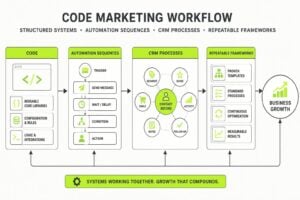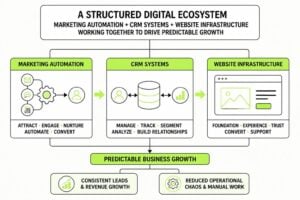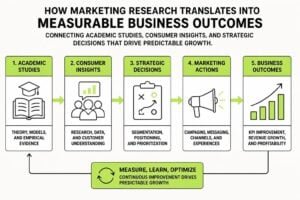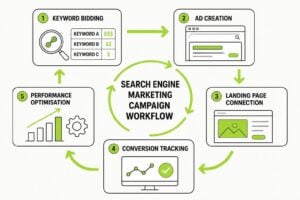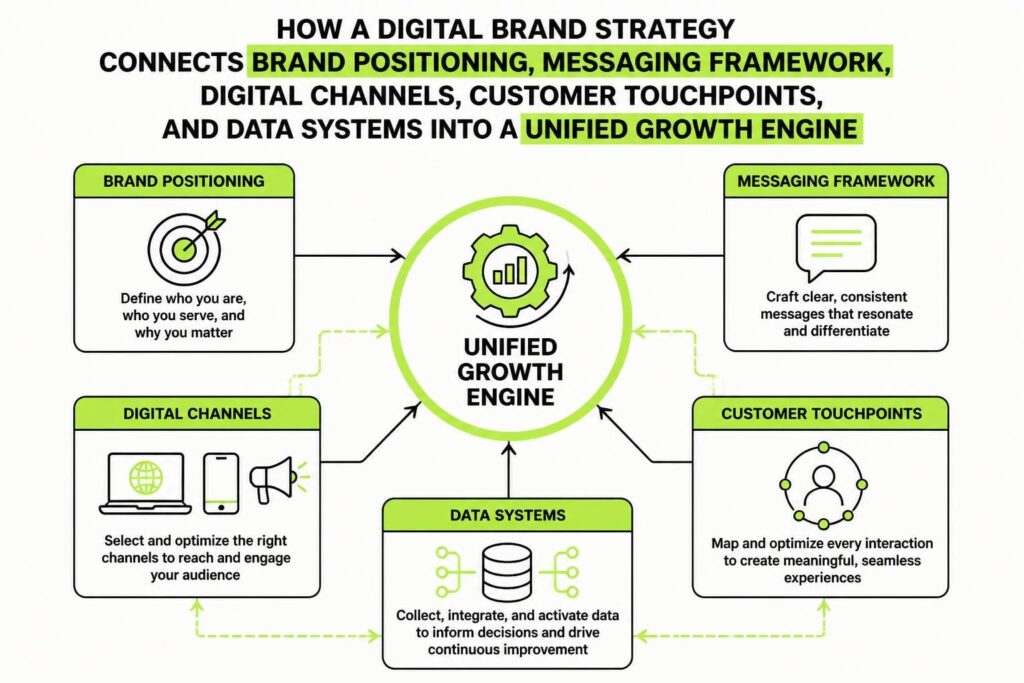
A digital brand strategy isn't a logo refresh or a new Instagram grid. It's the system that connects what you stand for with how you show up online, what you say, where you say it, and how you measure whether any of it matters. For service businesses in 2026, the stakes are higher. Attention is fragmented. Trust is earned slowly. And if your brand doesn't work as hard as your CRM, you're leaving predictable growth on the table.
The best digital brand strategies don't chase trends. They build infrastructure. They align messaging, platforms, automation, and data so every touchpoint reinforces the same promise. This article walks through what that actually looks like, how to build it, and where most businesses go wrong.
What Digital Brand Strategy Actually Means
Digital brand strategy is the framework that governs how your brand behaves, communicates, and delivers value across every digital channel. It's not just marketing. It's the connective tissue between your positioning, your customer experience, your content, and your systems.
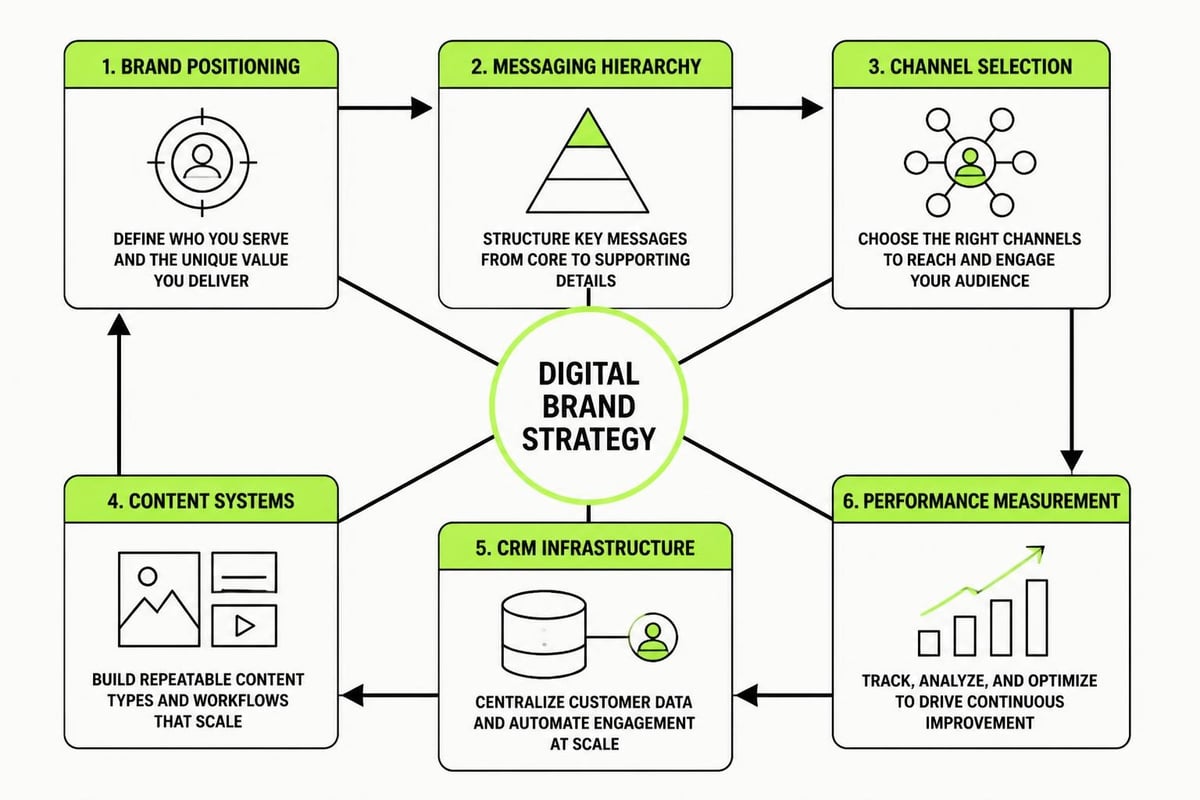
A strong digital brand strategy includes:
- Clear positioning that differentiates you in a crowded market
- Messaging architecture that speaks to real problems and outcomes
- Channel strategy that prioritises platforms where your buyers actually are
- Content systems that build trust over time
- CRM and automation infrastructure that protects leads and nurtures relationships
- Measurement frameworks that tie brand activity to revenue
Too many businesses treat digital brand work as cosmetic. They update the website, tweak the tagline, and assume the work is done. But branding without systems is just decoration. Strategy without execution is just a deck.
Why Digital Trust Is the New Brand Equity
In 2026, trust isn't a nice-to-have. It's the currency. According to the World Economic Forum’s research on digital trust, transparency, privacy, and reliability are the pillars that determine whether customers engage with a brand long term. If your digital presence feels inconsistent, generic, or extractive, people bounce.
Digital trust is built through:
- Consistency across touchpoints so your brand feels reliable, not random
- Transparency in how you operate including pricing, process, and what you actually do
- Data respect meaning you don't harvest emails just to spam people
- Proof such as case studies, testimonials, and outcomes that show you've done the work before
Service businesses have an advantage here. You're not selling widgets. You're selling expertise, process, and results. If your digital brand strategy reflects that, instead of hiding behind stock photos and vague value props, you win.
Building the Foundation: Positioning and Messaging
Before you pick platforms or design campaigns, you need to know what you're saying and why it matters. Positioning defines the space you own in the market. Messaging translates that into language your buyers understand.
Positioning: What You Stand For
Your positioning answers three questions:
- Who do you serve?
- What problem do you solve better than anyone else?
- Why should someone choose you over the alternatives?
If you can't answer those in one sentence, your digital brand strategy will drift. Every piece of content, every ad, every CRM email needs to ladder back to a clear position. Otherwise, you're just making noise.
| Positioning Element | Weak Example | Strong Example |
|---|---|---|
| Audience | "Small businesses" | "Service businesses doing $500K–$2M who need systems to scale" |
| Problem | "Marketing challenges" | "Leads fall through the cracks because there's no CRM or follow-up process" |
| Differentiator | "We care about results" | "We build marketing systems that protect every lead and create predictable demand" |
The stronger your positioning, the easier everything else becomes. You know what content to create. You know which channels to prioritise. You know what to say no to.
Messaging Architecture: How You Say It
Messaging architecture is the hierarchy of what you communicate. It usually includes:
- Brand promise (the core outcome you deliver)
- Pillar messages (the 3–5 key themes that support the promise)
- Proof points (specific examples, data, case studies)
- Tone and voice guidelines (how you sound, what language you avoid)
This isn't copywriting. It's the system that makes copywriting consistent. When your website, ads, emails, and social posts all reinforce the same pillars, your brand starts to stick. When every channel says something different, you confuse people.
Building a marketing funnel becomes far easier when your messaging is tight. You're not reinventing the wheel every time you write an email or launch a campaign.
Choosing and Owning Your Digital Channels
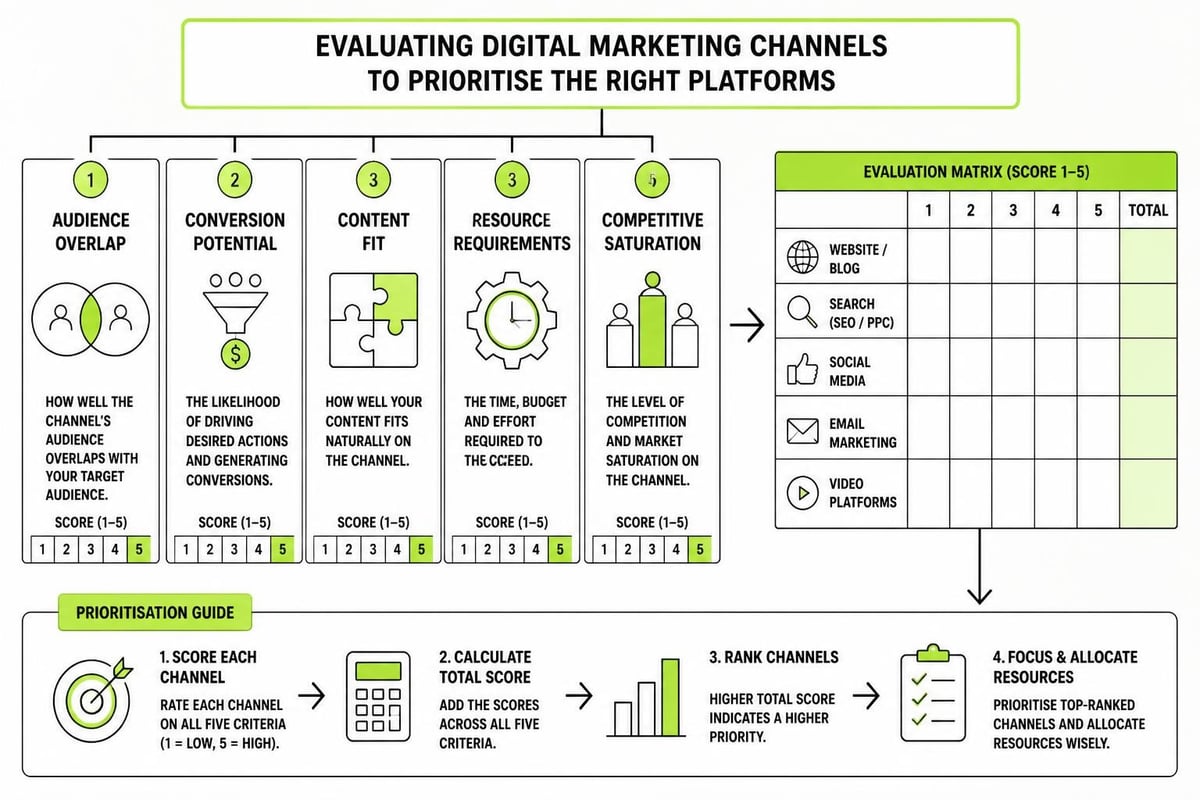
You can't be everywhere. And you shouldn't try. A digital brand strategy picks the channels where your buyers are and commits to showing up consistently, not sporadically.
The Channel Audit
Start with where your current leads and customers actually find you. Pull the data from your CRM, Google Analytics, and ad platforms. Look at:
- Which sources drive the most qualified traffic
- Which channels convert best
- Where your audience spends time (not where you wish they spent time)
- Which platforms align with your content strengths
For most service businesses in 2026, the core channels are:
- Your website (the hub where everything connects)
- Search (organic and paid, because people are actively looking for solutions)
- Email (the highest ROI channel if you have a CRM and nurture system)
- LinkedIn (B2B buyers are here, and it rewards consistency over virality)
- Industry-specific platforms (depends on your niche, but often underutilised)
You don't need TikTok if your buyers are CFOs. You don't need a podcast if you can't commit to 52 episodes. Pick three channels, own them, and expand only when you've built a system that works.
Content as a Multiplier, Not a Checkbox
A digital brand strategy treats content as infrastructure, not output. Every piece of content should:
- Reinforce your positioning
- Address a specific stage in the buyer journey
- Be designed to work across multiple channels (one blog post becomes an email, a LinkedIn post, a lead magnet)
- Drive a measurable next step (visit a page, book a call, download a resource)
Content Types That Build Digital Brands:
- Educational blog posts that show expertise and drive search traffic
- Case studies that prove you've done the work
- Lead magnets that qualify prospects and start the nurture process
- Email sequences that educate, build trust, and move people toward a decision
- Video walkthroughs that humanise your process
The 7-Step Marketing Plan offers a practical framework for turning content into a repeatable system. It walks through setting goals, defining your buyer persona, choosing platforms, creating opt-in offers, building CRM nurture campaigns, delivering great experiences, and generating referrals. Each step feeds the next, so you're not just creating content in a vacuum.

Connecting Brand to Systems: CRM and Automation
Here's where most digital brand strategies fall apart. The messaging is sharp. The website looks good. The content is consistent. But there's no system to capture, nurture, or convert the attention you're generating.
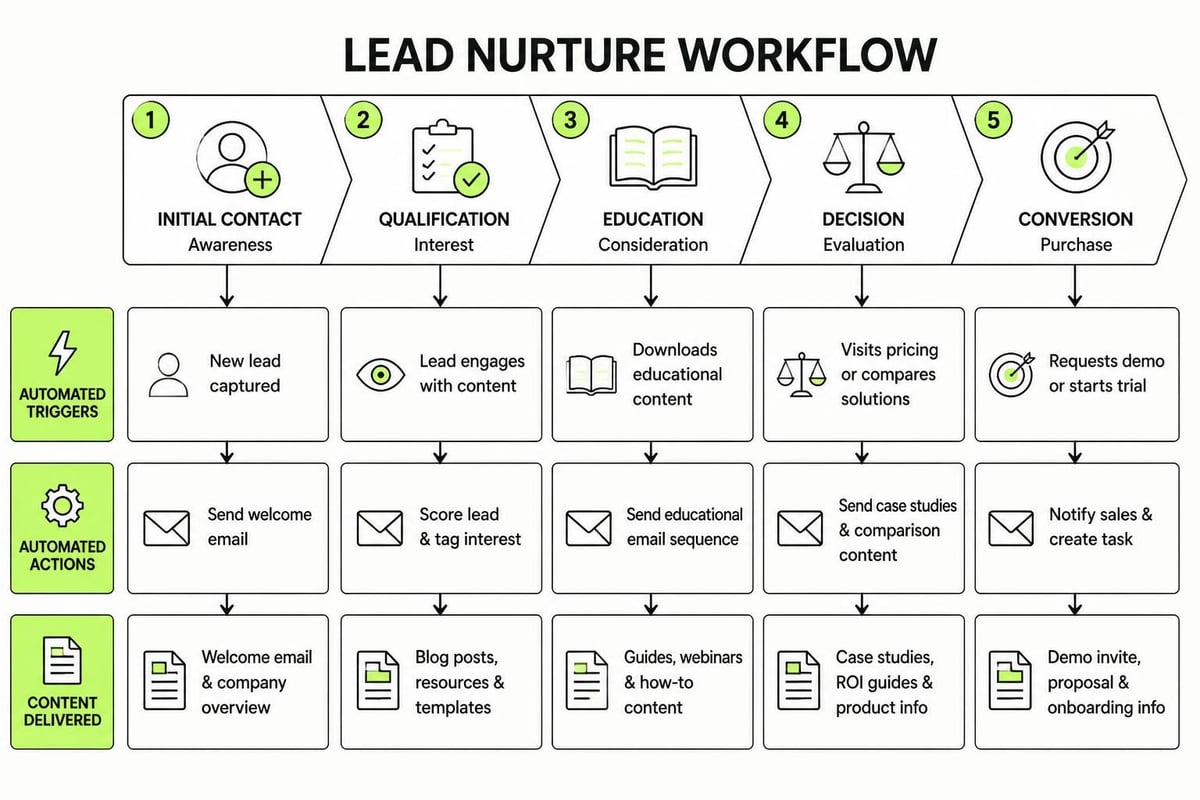
A digital brand strategy in 2026 must include the infrastructure that protects leads and moves them through a structured journey. That means:
- CRM setup so every lead is tagged, tracked, and assigned to a workflow
- Automated nurture sequences that keep prospects engaged until they're ready to buy
- Lead scoring so you prioritise the right conversations
- Attribution tracking so you know which channels and campaigns are actually driving revenue
Without this, your brand is just shouting into the void. You might get awareness, but you won't get predictable demand.
The Role of Data in Digital Brand Strategy
Brand used to be soft. Digital brand strategy makes it measurable. According to Nielsen’s 2024 Annual Marketing Report, brand equity and consistency directly affect marketing ROI. The businesses that track brand metrics alongside performance metrics win.
What to Measure:
| Metric | What It Tells You |
|---|---|
| Brand search volume | Are people looking for you by name? |
| Time on site / pages per session | Is your content engaging or are people bouncing? |
| Email open and click rates | Is your messaging resonating? |
| Lead-to-customer conversion rate | Is the nurture process working? |
| Customer acquisition cost (CAC) | Are your channels efficient or expensive? |
| Lifetime value (LTV) | Are you attracting the right customers? |
If you're not measuring, you're guessing. And guessing doesn't scale.
Common Digital Brand Strategy Mistakes
Even businesses with good intentions trip over the same issues. Here are the most common ones and how to avoid them.
Mistake 1: Treating Brand and Performance as Separate
Brand builds trust. Performance drives conversions. They're not opposing forces. They're two parts of the same system. Your brand messaging should inform your ad copy. Your CRM workflows should reflect your brand promise. If your brand team and your growth team aren't talking, you're wasting budget.
Mistake 2: Chasing Vanity Metrics
Follower counts, impressions, and likes don't pay the bills. A digital brand strategy optimises for outcomes, such as qualified leads, booked calls, and closed deals. Track engagement if it correlates with pipeline. Otherwise, ignore it.
Mistake 3: Ignoring Search and SEO
Your website is your most valuable digital asset. If it doesn't rank for the problems you solve, you're invisible. Google’s SEO starter guide offers practical, up-to-date guidance on content structure, technical optimisation, and how to build authority. Pair that with a content strategy that targets buyer intent, and you build a channel that compounds over time.
Mistake 4: No Follow-Up System
You ran ads. Someone visited your site. Maybe they even filled out a form. Then… nothing. No email. No call. No nurture. That's not a strategy, that's negligence. Every lead that enters your ecosystem should trigger a sequence. If it doesn't, you're burning money.
Aligning Your Digital Brand Strategy with Business Goals
Your digital brand strategy should exist to drive business outcomes, not just to look good. That means tying every brand activity to a measurable goal.
Start with Revenue Goals
If your goal is to add $500K in revenue this year, work backwards:
- How many new clients does that require?
- What's your average close rate?
- How many qualified leads do you need?
- How many website visitors or ad impressions does that take?
Now you have targets for each stage. Your digital brand strategy becomes the system that fills the pipeline at the top and nurtures leads through to close.
Align Content, Campaigns, and Systems
Once you know your targets, map your tactics:
- Content calendar aligned to buyer journey stages
- Ad campaigns targeting specific personas and pain points
- CRM workflows that nurture based on behaviour and engagement
- Sales enablement assets like case studies, ROI calculators, and proposals
When everything works together, you create a flywheel. Traffic drives leads. Leads enter nurture sequences. Nurture converts to sales. Customers generate referrals and reviews. The cycle repeats, and each turn gets easier.
According to Forrester’s 2024 planning guide for digital business and strategy, businesses that align brand investment with experience and data infrastructure outperform those that treat brand as a standalone initiative.
Evolving Your Digital Brand Strategy Over Time
A digital brand strategy isn't static. Markets shift. Buyer behaviours change. New platforms emerge. Your strategy needs to adapt without losing consistency.
Quarterly Reviews
Every quarter, review:
- Which channels are driving the best ROI
- Which content is resonating (traffic, time on page, conversions)
- Where leads are dropping off in the funnel
- What competitors are doing (not to copy, but to stay aware)
Use that data to refine your messaging, reallocate budget, and experiment with new tactics. But don't chase every trend. Deloitte’s analysis of 2024 creative and marketing trends shows that consistency still wins, even in a fast-moving landscape.
Test and Learn
Set aside 10–15% of your budget for experiments:
- New ad formats
- Different content types
- Emerging platforms
- Messaging variations
If something works, scale it. If it doesn't, kill it and move on. The goal isn't to be first. It's to be smart.
Protect the Core
As you evolve, protect what's working. If your email nurture sequence converts at 20%, don't break it to try something shiny. Layer new tactics on top of proven systems. Growth compounds when you build on a solid foundation.
The Role of Trust and Credibility
Public trust in online information is fragile. Pew Research Center’s findings on trust in news and social media show that people are more skeptical than ever. That skepticism extends to brands.
If your digital presence feels slick but hollow, people notice. If your promises don't match your delivery, you lose credibility. A strong digital brand strategy builds trust by:
- Being specific about what you do and who you serve
- Showing your work through case studies, process breakdowns, and transparent pricing
- Admitting what you don't do so expectations are clear
- Following through on every promise, from email replies to project delivery
Trust isn't built in a single campaign. It's earned over time through hundreds of small, consistent actions. Your digital marketing should reflect that reality.
A digital brand strategy is only as good as the systems that support it. When your positioning, messaging, content, channels, and CRM work together, you create a machine that turns attention into predictable demand. If you're ready to build that infrastructure, MDO Digital helps service businesses design high-trust websites, implement CRM and automation systems, and run data-driven marketing that scales with clarity. Let's remove the chaos and build something that compounds.