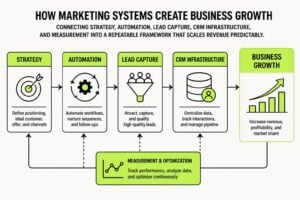
Most automotive workshops run on chaos. Phones ring, bookings come in through three different channels, customer details live on sticky notes, and follow-up happens only when someone remembers. You're busy, so marketing feels like something you'll get to later. But without a proper system, you're leaving money on the workshop floor. Marketing systems for automotive workshops aren't about flashy campaigns or viral posts. They're about building infrastructure that captures leads, nurtures relationships, and turns one-time customers into repeat clients. The workshops that grow aren't just good with spanners. They're good at systems.
Why Most Workshop Marketing Fails
Most automotive businesses treat marketing as an event, not a process. You run a Facebook ad when things are quiet, offer a discount when you need cash flow, or hope word of mouth keeps the bays full. That approach works until it doesn't.
The problem isn't effort. It's structure. Without a system, every lead is handled differently. One customer books through your website, another calls during lunch, a third messages on Facebook at 9pm. Half get followed up, half fall through the cracks. You have no idea which marketing channel actually works because nothing's measured.
Marketing systems for automotive workshops solve three core problems:
- Lead leakage (losing potential customers because there's no process to capture them)
- Inconsistent follow-up (some customers get great service, others get forgotten)
- No visibility into what's working (you're spending money but can't track results)
When you build a system, marketing becomes predictable. You know where leads come from, how they're handled, and what percentage convert. That's when growth stops feeling random.
The Core Components of a Workshop Marketing System
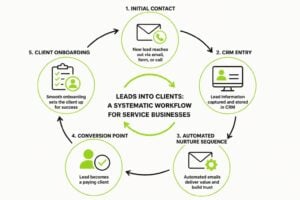
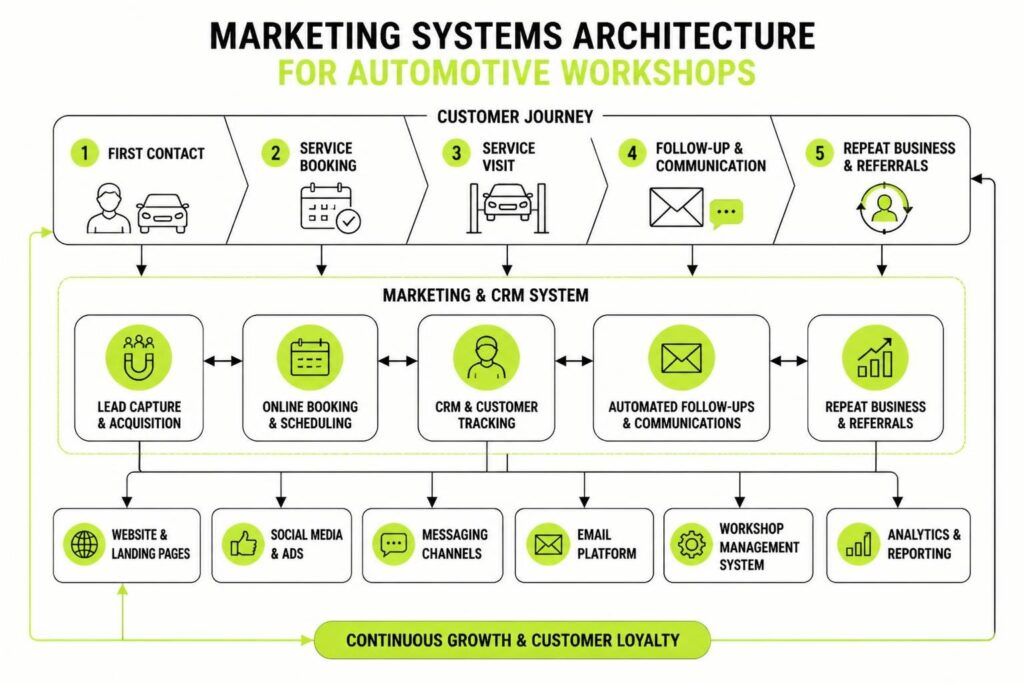
A proper marketing system for automotive workshops has five parts that work together. Miss one and the whole thing leaks.
1. Lead Capture Infrastructure
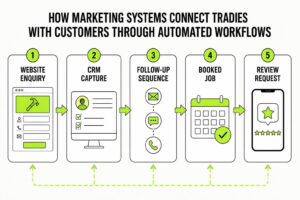
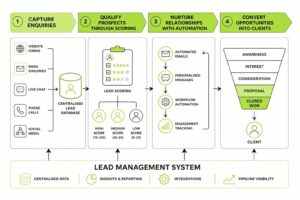
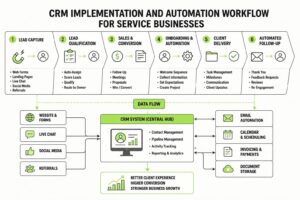
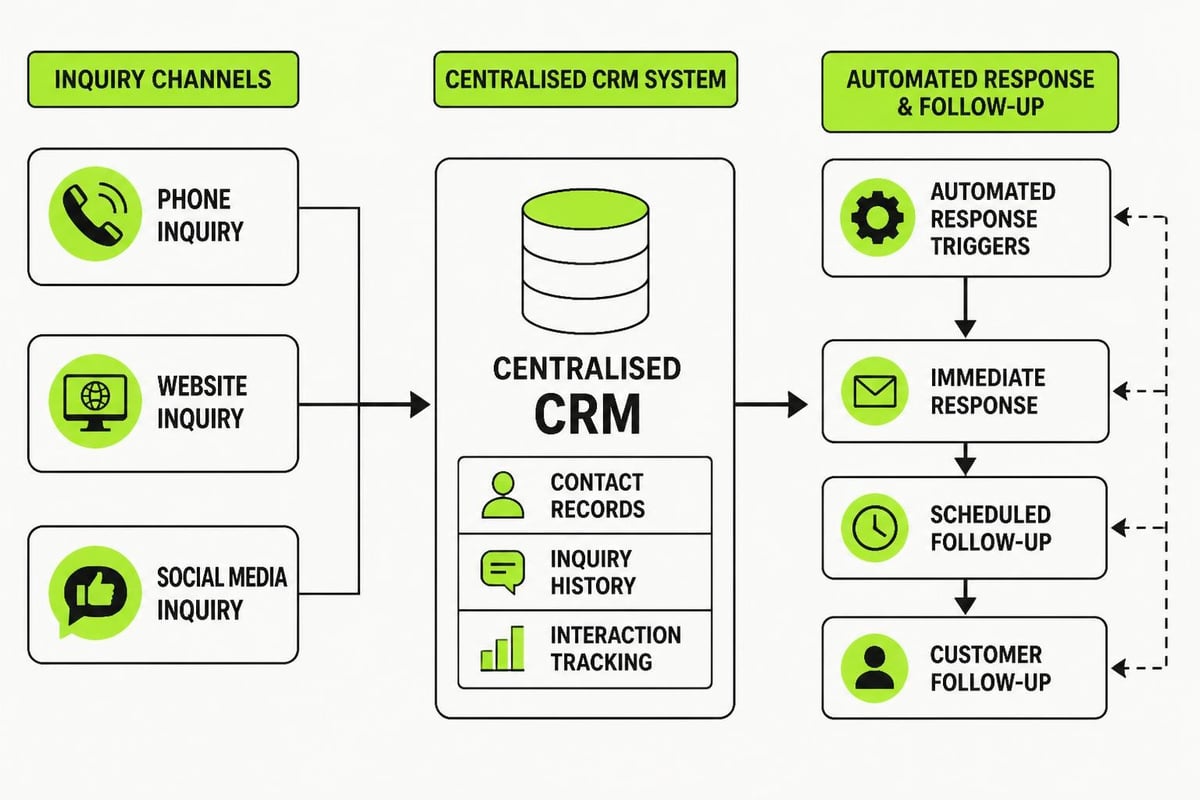
You need a single place where every inquiry lands, no matter where it comes from. Phone calls, website forms, Google Business messages, Facebook inquiries. All of it needs to flow into one system.
This usually means a CRM built for service businesses. Not a spreadsheet. Not your inbox. A proper database that tracks every interaction with every customer. Building a marketing funnel starts with making sure nothing falls through the gaps.
Your lead capture needs to handle:
- Phone call logging (manual or automated)
- Website form submissions
- Social media inquiries
- Walk-ins and drop-bys
- Referrals from existing customers
Every lead gets tagged with a source so you know what's actually bringing people in. Google Ads? Local SEO? That sign on the main road? Data tells you where to double down.
2. Automated Response and Booking
Speed matters. If someone fills out a form at 7pm and doesn't hear back until 10am the next day, they've already called your competitor. Auto repair shop marketing strategies that prioritise quick response times consistently win more business.
Set up automated responses that acknowledge the inquiry immediately, even if it's just a text saying "Got your message, we'll call you tomorrow at 9am." Better yet, link them straight to online booking if your system supports it.
Modern customers expect convenience. If they can book a table at a restaurant in three taps, they'll expect the same from your workshop. Friction kills conversions.
3. Service Reminders and Nurture Campaigns
This is where most workshops leave the most money on the table. You do a great job on a service, the customer drives off happy, and then… nothing. No follow-up. No reminder when their next service is due. No reason to come back to you instead of the workshop closer to their new office.
Marketing systems for automotive workshops need automated nurture sequences:
- Thank you message after service (builds goodwill)
- Review request 3-5 days later (when they're still happy)
- Service reminder based on time or kilometres (brings them back)
- Seasonal campaigns (winter checks, summer road trip prep)
- Reactivation campaigns for customers who haven't booked in 12+ months
| Campaign Type | Timing | Goal |
|---|---|---|
| Thank You | Immediately after service | Build relationship |
| Review Request | 3-5 days post-service | Generate social proof |
| Service Reminder | Based on vehicle needs | Drive repeat booking |
| Seasonal | Quarterly | Stay top of mind |
| Win-Back | 12+ months since last visit | Reactivate lapsed customers |
Set these up once and they run forever. Every customer who comes through gets the same experience, automatically.
4. Review Generation System
Online reviews are the new word of mouth. When someone Googles "mechanic near me," they're picking based on star ratings and review count. Marketing trends for auto repair shops show that review volume directly correlates with booking rates.
Your system needs to make it dead simple for happy customers to leave reviews. That means:
- Asking at the right time (right after a positive service experience)
- Removing friction (send a direct link, not instructions to "find us on Google")
- Following up if they don't respond (one polite reminder)
Don't ask everyone. Ask the customers who just told you they're happy. Read the room. Someone who just paid $3,000 for a transmission rebuild probably isn't in review mode, even if you did great work.
5. Performance Tracking and Reporting
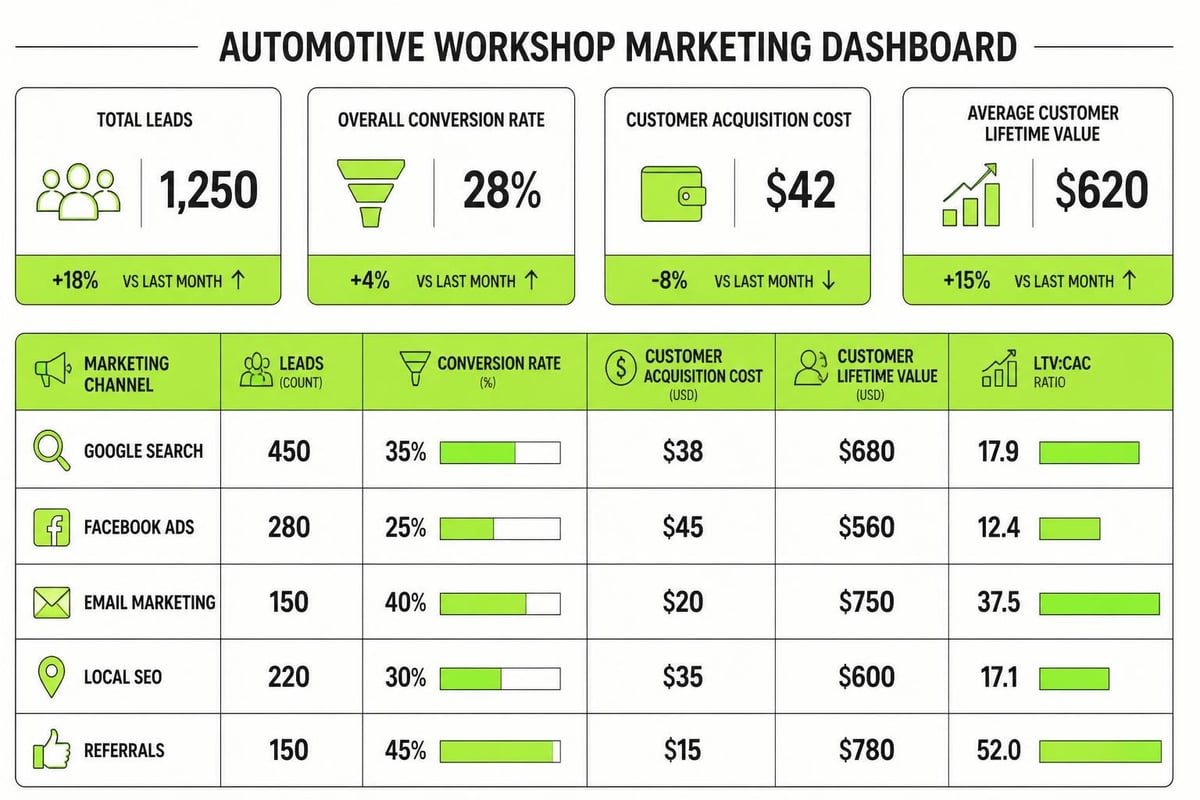
If you can't measure it, you can't improve it. Your marketing system needs dashboards that show:
- Lead volume by source (where are inquiries coming from?)
- Conversion rate by source (which channels bring quality leads?)
- Cost per acquisition (what are you paying for each new customer?)
- Lifetime value by source (which channels bring customers who stick around?)
- Campaign performance (what's working, what's burning money?)
This data tells you where to invest. If Google Ads costs $80 per lead but those customers spend $2,000 annually, that's a good trade. If Facebook brings cheap leads that never book, cut the budget and reallocate.
Building Your First Marketing System
Start simple. You don't need to automate everything on day one. Here's a practical rollout plan that won't overwhelm your operation.
Month 1: Centralise Lead Capture
Get all inquiries flowing into one place. Set up a basic CRM or service business platform. Train your team to log every call, form, and walk-in. The goal is visibility. You can't fix what you can't see.
Month 2: Implement Automated Responses
Set up instant acknowledgment for web forms and after-hours inquiries. Even a simple "Thanks for reaching out, we'll call you within 24 hours" beats silence. Add SMS notifications if your platform supports it. Most people check texts faster than email.
Month 3: Launch Review Generation
Create a simple process for asking happy customers to review you. This could be as basic as a text message with a direct review link sent three days after service. Track your review volume weekly.
Month 4: Build Service Reminder Campaigns
Set up automated reminders based on service type and vehicle requirements. A car serviced in January probably needs another check in July. Your system should track that automatically and send a reminder at the right time.
Month 5: Add Nurture Sequences
Create a welcome series for new customers and seasonal campaigns for your full list. Keep it simple. Four emails per year is infinitely better than zero.
Month 6: Implement Tracking and Optimisation
Now that you have data flowing through the system, start measuring what works. Which lead sources convert best? Which campaigns drive bookings? Double down on winners, cut the losers.
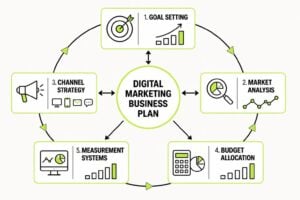
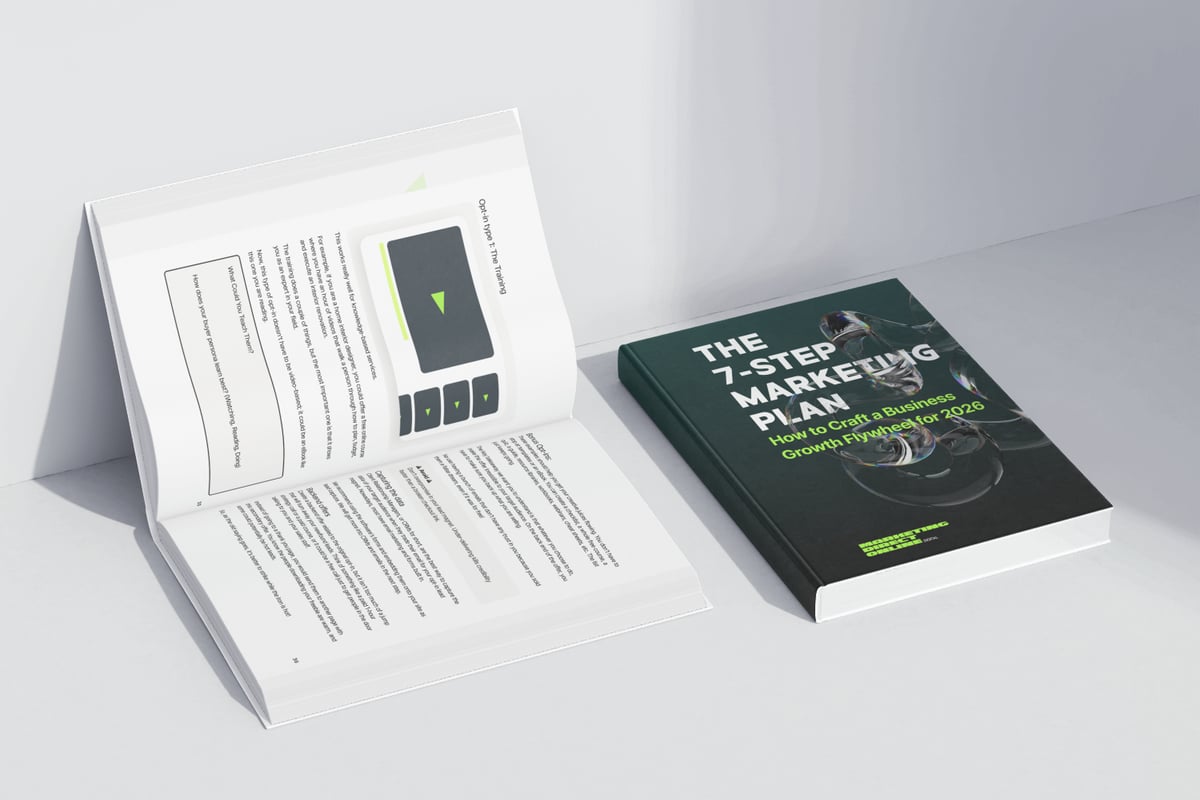
The 7-Step Marketing Plan provides a framework for building this kind of repeatable system. It walks through setting goals, defining your ideal customer, choosing platforms, creating opt-in offers, building nurture campaigns, delivering great experiences, and generating referrals. Each step builds on the last.
Common Mistakes to Avoid
Overcomplicating from the Start
You don't need a enterprise-grade marketing stack. You need something you'll actually use. Start with the basics: capture leads, respond fast, follow up consistently. Fancy features can wait.
Ignoring Mobile Experience
Most people search for mechanics on their phone, often from the side of the road. If your website or booking process doesn't work perfectly on mobile, you're losing half your potential customers. Test everything on a phone first.
Not Training Your Team
The best marketing system in the world fails if your team doesn't use it. Invest time in training. Make it simple. Show them why it matters. When they see leads converting faster, they'll buy in.
Forgetting to Measure
Install tracking from day one. Google Analytics on your website. UTM parameters on your ads. Source tags in your CRM. If you launch campaigns without tracking, you're flying blind. Digital marketing plans built without measurement infrastructure waste money.
Treating Email Like Spam
Your customers gave you their contact details because they trust you. Don't abuse that by sending them promotional garbage every other day. Send valuable, relevant stuff. Service reminders. Seasonal tips. Educational content. The occasional offer is fine, but lead with value.
Integration with Existing Tools
Most workshops already have some systems in place. A booking platform, maybe accounting software, possibly a basic website. Marketing systems for automotive workshops work best when they connect to what you already use.
| System Type | Integration Goal | Benefit |
|---|---|---|
| Booking Software | Sync appointments to CRM | Complete customer history |
| Accounting Platform | Link invoices to customer records | Track revenue per customer |
| Email/SMS Platform | Automate campaigns from CRM data | Personalised communication |
| Review Sites | Monitor and respond to reviews | Protect reputation |
| Analytics Tools | Connect lead sources to conversions | Measure ROI accurately |
API integrations sound technical, but modern platforms make this relatively painless. The goal is to eliminate double entry and create a single source of truth for customer data.
What Good Looks Like
When your marketing system is humming, this is what happens:
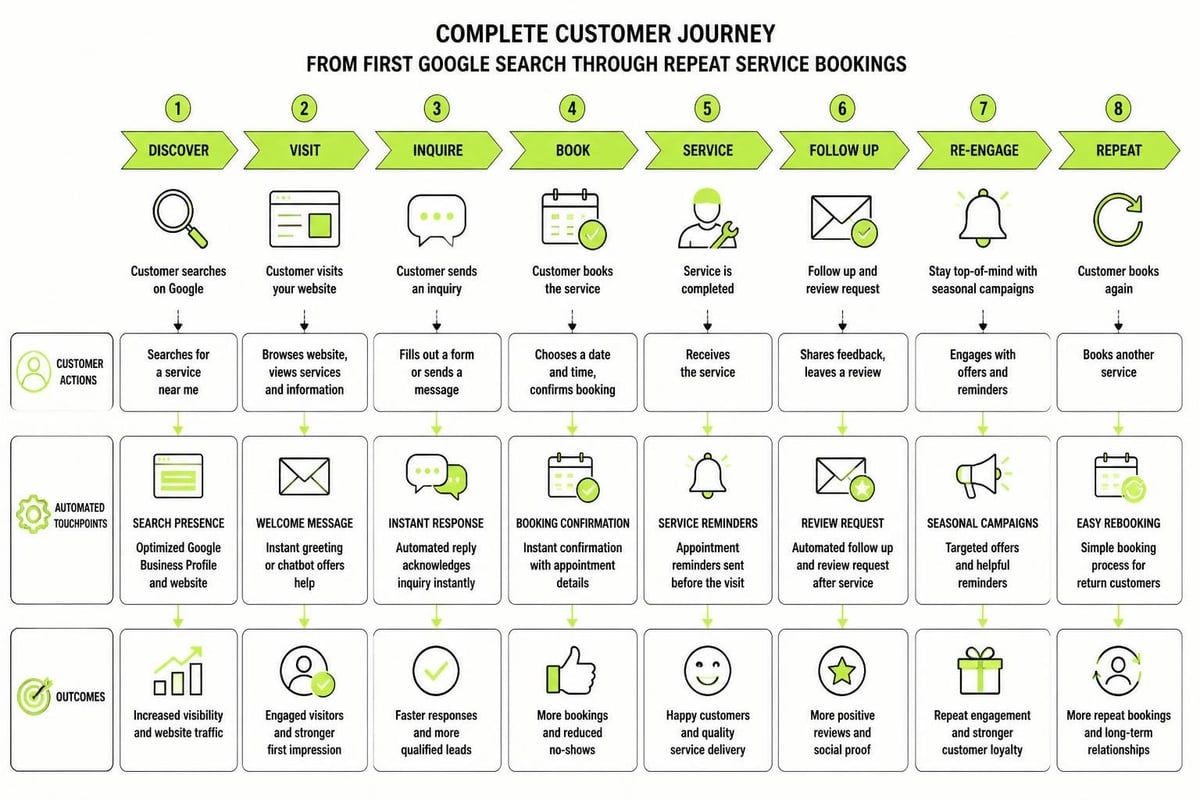
A potential customer Googles "car service [your suburb]" at 8pm. They find your Google Business Profile, read five-star reviews, click through to your website, and fill out a booking form. They get an instant SMS confirmation and a link to choose their preferred time slot.
Three days after their service, they receive a text thanking them and asking for a review. They leave a five-star rating in two taps. Six months later, they get an automated reminder that their next service is due, with a one-click booking option. They book again.
Eighteen months in, they're part of your regular customer base. They get seasonal tips about preparing their car for summer road trips and winter driving. When they need major work, you're the only workshop they consider because you've stayed in touch, added value, and made everything easy.
That's the compound effect of a proper system. Marketing systems that prioritise customer experience create sustainable growth.
Choosing the Right Platform
You've got options. Too many, honestly. Here's how to think about it.
For workshops under $500k revenue:
Look for all-in-one platforms built for service businesses. You want CRM, booking, payment processing, and basic automation in one place. Trying to connect five different tools is a nightmare at this scale. Auto repair shop marketing ideas often emphasise starting with Google Business Profile and a solid booking system before expanding.
For workshops $500k-$2m revenue:
You can justify more sophisticated tools. A proper CRM (HubSpot, Pipedrive, or similar), connected to marketing automation (Mailchimp, ActiveCampaign), with good analytics and reporting. You've got the volume to make complex automation worthwhile.
For workshops over $2m revenue:
Consider custom builds or enterprise platforms. At this scale, you're probably running multiple locations and need centralised control with location-level flexibility. Integration with franchise systems or dealer networks becomes important.
Key features to prioritise:
- Mobile-friendly interface (your team needs to use it from the workshop floor)
- SMS capability (Australians respond better to texts than emails)
- Review management (monitoring and requesting reviews in one place)
- Appointment scheduling (ideally with online booking)
- Automated workflows (set it and forget it campaigns)
- Reporting dashboards (see what's working at a glance)
Don't get sold features you won't use. A platform that does five things brilliantly beats one that does twenty things poorly.
The ROI of Marketing Systems
Let's get specific. What does this actually deliver?
Scenario: Suburban workshop, 3 bays, $800k annual revenue
Before system implementation:
- 40 inquiries per month
- 50% conversion rate (20 new customers)
- Average job value: $350
- No repeat customer tracking
- 15% of customers return within 12 months
After system implementation (6 months in):
- 40 inquiries per month (same traffic)
- 70% conversion rate (28 new customers, +8 per month)
- Average job value: $350 (unchanged)
- 35% of customers return within 12 months (automated reminders work)
- 45% more Google reviews (better local visibility)
Monthly impact:
- 8 additional new customers x $350 = $2,800
- Increased repeat rate on existing base of ~200 customers = additional $2,100/month
- Total monthly increase: ~$4,900
- Annual increase: ~$59,000
System costs (conservative estimate):
- CRM and automation platform: $300/month
- Setup and training: $2,000 one-time
- Annual cost: ~$5,600
ROI: Over 10:1 in year one
Those numbers are conservative. Many workshops see better results, especially as the compound effects kick in. Marketing strategies for auto repair shops consistently show that systematic follow-up and review generation deliver outsized returns.
What About Traditional Marketing?
Marketing systems for automotive workshops don't replace traditional channels. They make them work harder.
You can still run local newspaper ads, sponsor the junior footy team, or put signs on roundabouts. But now those activities feed into a system that captures the lead, follows up automatically, and tracks whether they converted.
The workshop with great systems beats the workshop with a bigger ad spend. Every time.
Scaling Beyond Your Local Area
Most workshops serve a tight geographic radius. But marketing systems create options.
Fleet and commercial work: Your CRM can segment business customers differently, with procurement cycles and contract renewal reminders. The same system, different automation.
Specialist services: If you do something niche (performance tuning, European cars, diesel), your system can nurture leads nationally. Someone in Brisbane might drive to Sydney for specialist work if you've built the relationship through content and expertise.
Multiple locations: Open a second workshop? Your system scales. Same processes, same customer experience, centralised reporting. Marketing and business development strategies that work in one location can be replicated efficiently when you have proper infrastructure.
Making It Stick
Systems fail when people don't use them. Here's how to make it part of your culture.
Start with why: Show your team how the system helps them. Less time chasing leads means more time doing actual work. Better customer data means they can provide better service.
Make it easy: If logging a lead takes ten steps, it won't happen. Design workflows that match how your team already works, then gradually optimise.
Celebrate wins: When the system generates a booking or a great review, acknowledge it. "This customer came back because of our automated reminder" builds belief.
Review regularly: Monthly team meetings to look at the numbers. What's working? What's not? What can we improve? Make it a conversation, not a lecture.
The Long Game
Marketing systems for automotive workshops aren't a quick fix. You won't install a CRM on Monday and have fifty new customers by Friday. But six months in, you'll have a machine that generates predictable demand. Twelve months in, you'll wonder how you ever operated without it.
The workshops that thrive over the next decade won't just be good at fixing cars. They'll be good at systems. Good at data. Good at staying in front of customers without being pushy. Good at making everything easy.
Build the infrastructure now, and it compounds. Every customer who flows through the system becomes more valuable. Every review makes the next lead cheaper. Every automation gives you back time to work on the business instead of in it.
That's the real value. Not just more customers. More control.
Marketing systems transform workshops from reactive businesses to proactive ones. When you build proper infrastructure around lead capture, follow-up, and customer retention, growth becomes predictable instead of chaotic. If you're ready to move beyond ad hoc marketing and build something that actually compounds over time, MDO Digital specialises in creating these exact systems for service businesses. We'll help you remove the chaos, protect every lead, and build marketing infrastructure that works while you focus on the spanners.