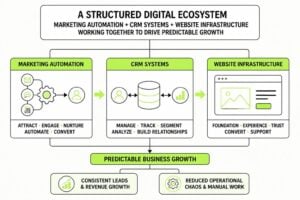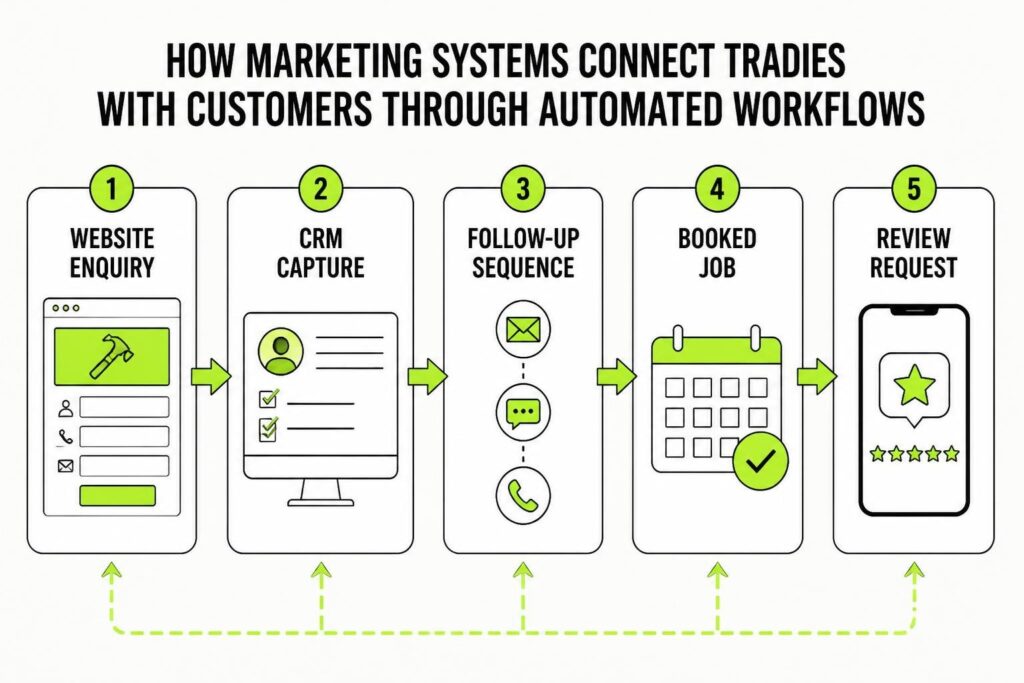
Most tradies and home service businesses don't have a marketing problem. They have a systems problem. You're already good at what you do. Jobs get finished, customers are happy, and word spreads. But then what? The phone goes quiet, you scramble for the next job, and half the enquiries that came through last month just vanished because there was no process to catch them. That's not a skills issue. It's the absence of marketing systems for tradies and home services that work whether you're on the tools or not.
Why Most Tradie Marketing Fails Before It Starts
You've probably tried something. Facebook ads. Google. A mate's cousin who does websites. Maybe you even spent a few grand and got nothing back except a login you've forgotten and a sense that marketing is a bit of a rort.
The issue isn't the platform. It's that marketing without a system is just expensive noise.
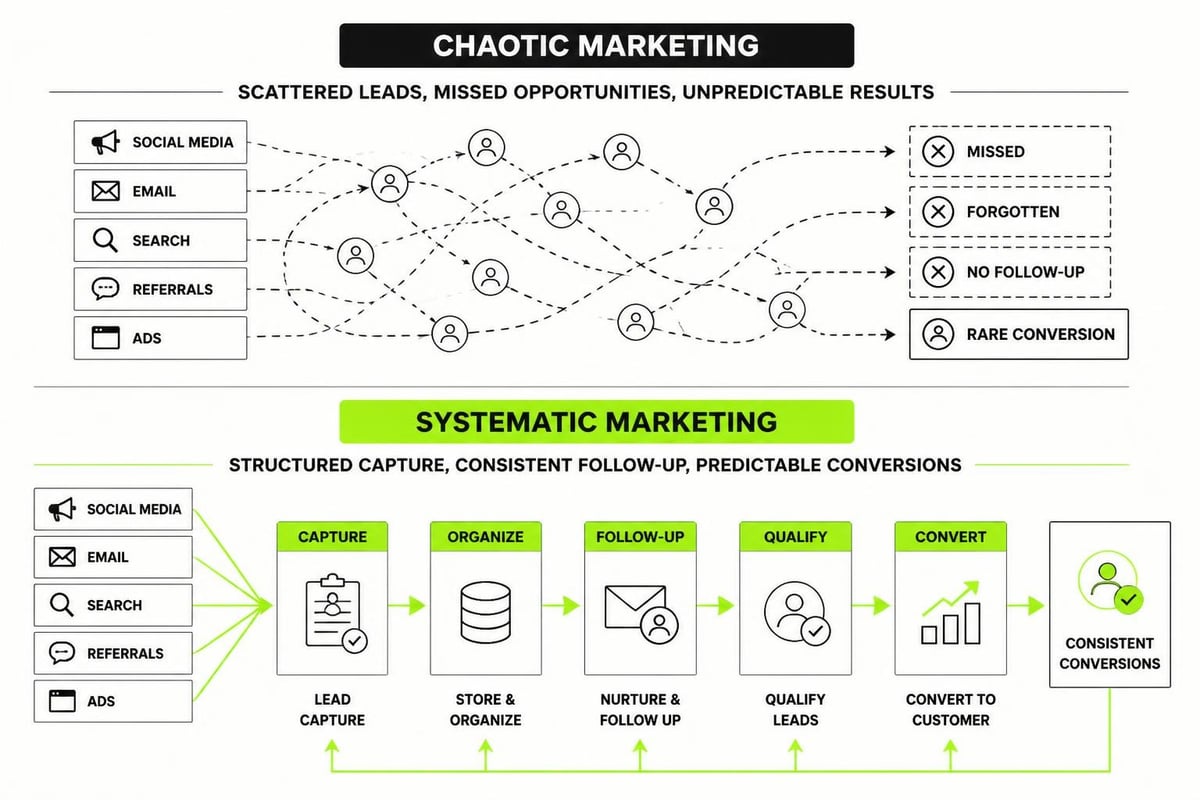
Here's what happens without a proper system:
- Leads come in through multiple channels with no single place to track them
- You respond when you remember, usually too late
- Follow-up happens in your head, not in a process
- You have no idea which jobs came from where
- When you're busy, marketing stops. When you're quiet, you're starting from zero again.
That's chaos. And chaos doesn't scale. It just gets louder and more expensive as you grow.
What separates a tradie who's always chasing work from one with a steady pipeline is structure. Marketing systems for tradies and home services create that structure. They turn random activity into repeatable results.
The Core Components Every System Needs
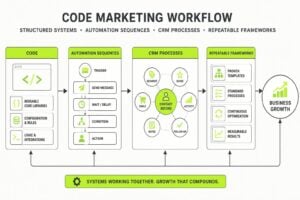
A proper marketing system isn't one thing. It's a series of connected parts that work together to move someone from stranger to paying customer, then back again as a repeat client or referral source.
Lead Capture That Actually Works
Your website, your Google listing, your Facebook page. These aren't marketing systems. They're just doors. What matters is what happens when someone walks through.
Every lead capture point needs:
- A clear way to contact you (phone, form, chat)
- An immediate response, even if automated
- A single place where that lead gets stored, not your memory or a random text thread
Most tradies lose 30-40% of leads simply because there's no system to catch them. Someone fills out a form at 9pm. You see it at lunch the next day. They've already called two other blasters, plumbers, or electricians by then.
The fix isn't working faster. It's automating the first touchpoint so speed happens without you.
CRM Infrastructure You'll Actually Use
CRM sounds corporate. It's not. It's just a structured way to know who enquired, when, what they wanted, and what happened next.
You don't need Salesforce. You need something simple that tracks:
| What You Need to Know | Why It Matters |
|---|---|
| Contact details | So you can actually reach them |
| Source of enquiry | To know what marketing works |
| Job type and value | To prioritise properly |
| Status of conversation | So nothing falls through |
| Next action required | So follow-up happens |
The best CRM is the one you'll use. That might be a proper platform like HubSpot or Pipedrive. It might be a well-structured spreadsheet. What matters is that every lead goes in, every time, without fail.
Marketing systems for tradies and home services only work when the data flows into one place. If you're juggling texts, emails, voicemails, and Facebook messages across four apps, you don't have a system. You have a liability.
Automated Follow-Up That Feels Human
Here's the truth most tradies don't want to hear: you're not going to follow up manually. You'll mean to. You'll want to. But when the day runs late and you're covered in dust or grease, that enquiry from Tuesday isn't getting a call.
Automation fixes this. Not with robot spam, but with structured, useful touchpoints that happen whether you remember or not.
A basic follow-up sequence might include:
- Immediate auto-response confirming you received their enquiry
- SMS or email within an hour with next steps
- Personal follow-up call or message within 24 hours
- Check-in after 3 days if no response
- Final follow-up after a week, then move to a nurture list
This isn't pushy. It's professional. And it converts more enquiries into actual jobs because it removes the friction of waiting and wondering.
The beauty of automation is that it runs in the background. You still do the personal stuff (the quote, the conversation, the actual work), but the system makes sure nothing gets forgotten.
Choosing the Right Marketing Channels
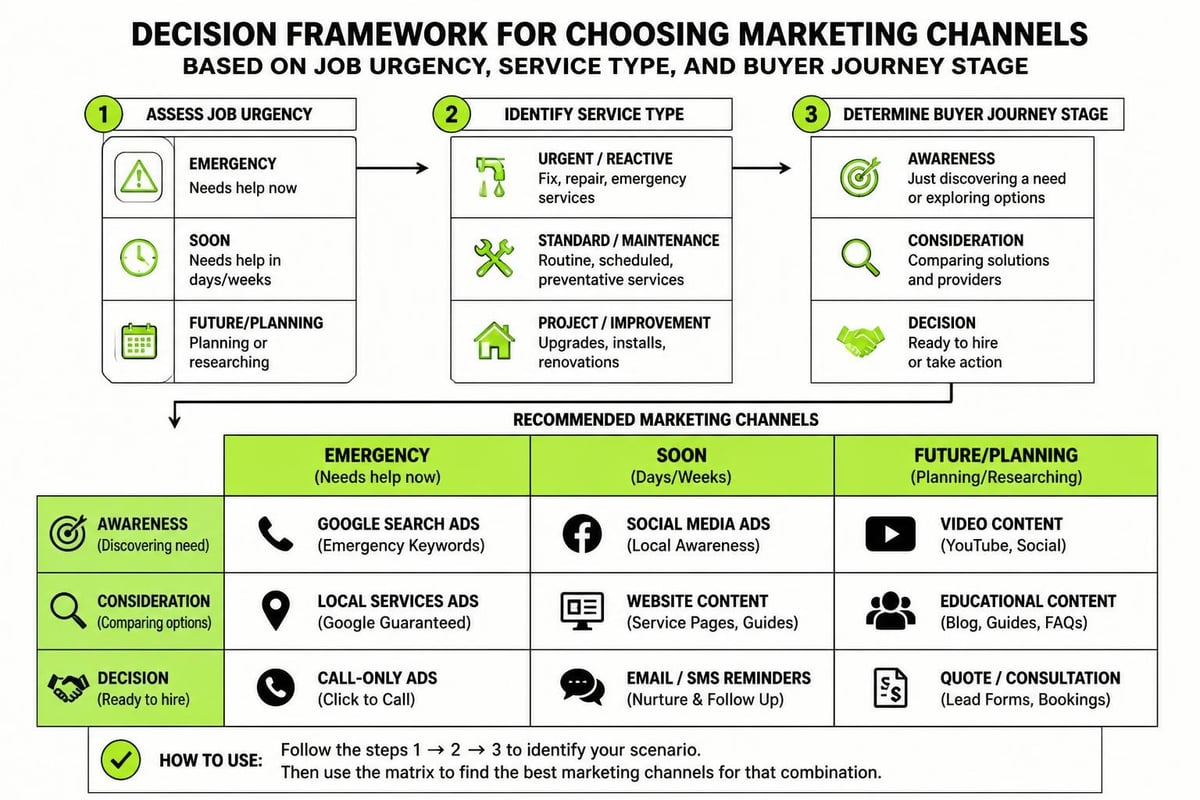
Not every platform suits every trade. A plumber responding to emergencies needs different marketing systems for tradies and home services than a landscaper booking projects months in advance.
Google My Business and Local SEO
If someone's searching for a sparky in their suburb right now, you want to show up. Google My Business is non-negotiable for local trades.
What actually matters:
- Accurate business info (name, phone, hours, service area)
- Regular posts and updates
- Consistent reviews from real customers
- Photos of your work, your team, your vehicles
This isn't sexy, but it works. Local SEO is one of the highest-converting channels for home services because the intent is already there. They need help. You provide it. The system just connects the two.
Paid Ads That Don't Burn Cash
Google Ads and Facebook Ads can work brilliantly for tradies. They can also drain your account with nothing to show for it if there's no system behind them.
Before you spend a dollar on ads, you need:
- A landing page or website that's clear about what you do and where you do it
- A CRM to capture the leads that come through
- A follow-up process so those leads actually convert
- Tracking so you know which ads produce jobs, not just clicks
The most common mistake is turning on ads without infrastructure. Leads come in. You miss half of them. The ones you do contact don't convert because there's no process. You blame the ads and turn them off. The ads weren't the problem.
Content and Email Nurture
Not every enquiry is ready to buy today. Someone might be researching deck builders in winter for a spring project. A homeowner might be comparing bathroom renovation quotes over six weeks.
If you only follow up once, you lose these people. A nurture system keeps you front of mind without being annoying.
Simple nurture content for tradies includes:
- Seasonal maintenance tips (gutter cleaning before storm season, air con servicing before summer)
- Project case studies showing before and after
- Pricing guides or explainer content that builds trust
- Special offers for past customers or people on your list
This doesn't need to be daily. A monthly email to your list with something genuinely useful is enough. The system is what makes it happen consistently.
A structured marketing plan that connects these touchpoints ensures nothing falls through the cracks and every lead gets the attention it deserves, even when you're flat out.
Building a 7-Step Marketing System That Compounds
The best marketing systems for tradies and home services follow a clear, repeatable structure. Each step feeds the next, creating a cycle that gets stronger the longer it runs.
Here's how it works:
- Set clear goals. Revenue target, number of jobs, types of projects. Vague hopes don't drive decisions.
- Define your ideal customer. Suburb, property type, job size, urgency. The tighter this is, the less you waste on the wrong leads.
- Choose your platform. Google for high intent. Facebook for awareness. Local partnerships for trust. Pick based on where your buyer actually is.
- Create an opt-in offer. Free quote, project guide, maintenance checklist. Something valuable enough to exchange for contact details.
- Build a CRM and nurture sequence. Capture every lead. Follow up automatically. Stay in touch until they're ready.
- Deliver an outstanding experience. The marketing system gets them in. Your work keeps them and turns them into referrals.
- Generate reviews and referrals. Ask every happy customer. Make it easy. Feed those reviews back into your marketing.
This framework removes guesswork. It's a flywheel. Each job done well creates reviews, which attract more leads, which convert into more jobs. The system handles the mechanics so you can focus on the work.
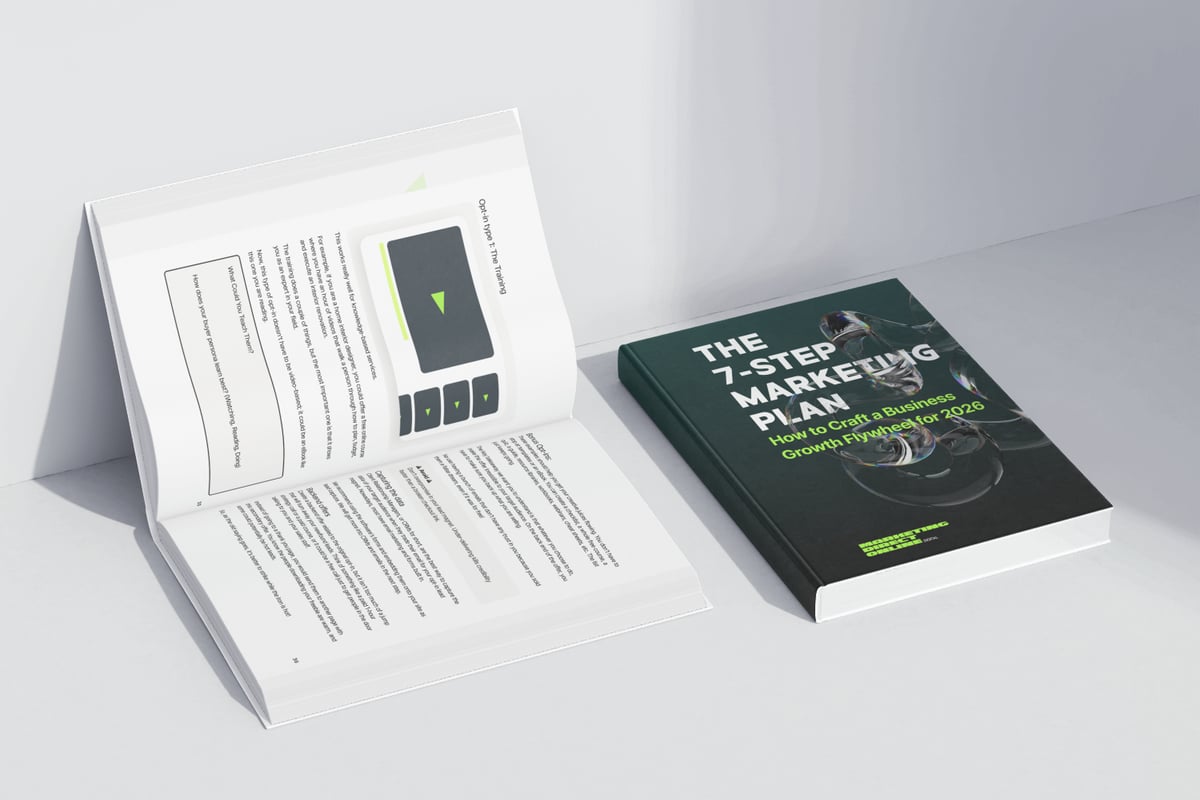
If you want a practical guide that walks through this step by step, the 7-Step Marketing Plan lays it out with clear actions at every stage.
Common Mistakes That Kill Tradie Marketing Systems
Even with good intentions, most systems fail because of a handful of repeated errors.
Treating Marketing as a Project, Not a Process
You run ads for a month. They work. You turn them off because you're busy. Two months later, the pipeline's dry and you start again from scratch.
Marketing isn't a tap you turn on and off. It's a system that runs continuously at a level that matches your capacity. If you're booked out, dial it back but don't stop. If you're quiet, ramp it up. But it never stops entirely.
No Single Source of Truth
Leads in your email. Jobs in a notebook. Customer details in your phone. Quotes in a folder somewhere.
If your business data lives in five places, you don't have a system. You have a ticking time bomb. One lost phone or crashed laptop and you're starting over.
Pick one CRM, one calendar, one file system. Use it religiously. Make it the only place that matters.
Ignoring the Data
You're spending money on ads, time on content, effort on follow-up. But you've got no idea what's actually working.
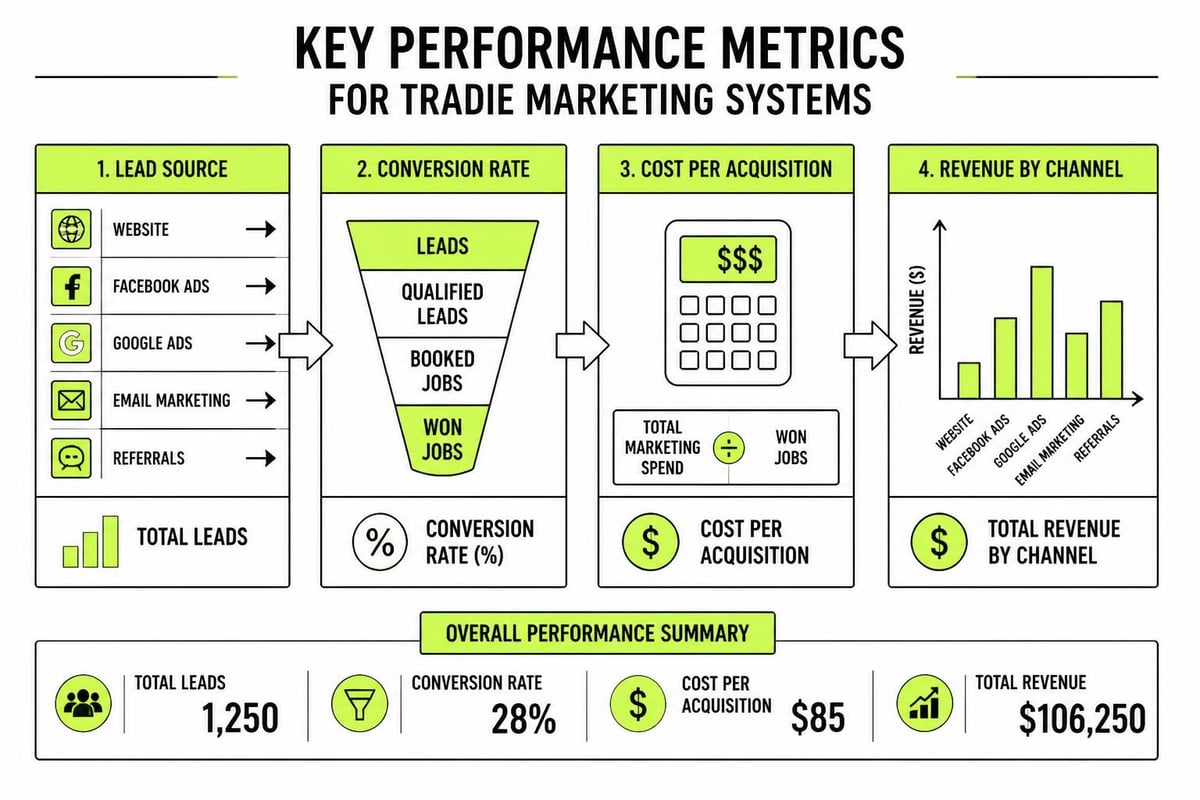
Marketing systems for tradies and home services need measurement. Not obsessive tracking, just basic visibility into what produces results. Methods like marketing analytics provide structured approaches to understanding which channels and tactics drive real outcomes, not just activity.
Track at minimum:
- Source of each enquiry (Google, Facebook, referral, repeat customer)
- Conversion rate from enquiry to quote to job
- Average job value by source
- Cost per lead and cost per job for paid channels
This isn't about dashboards and graphs. It's about knowing where to put your effort and money.
Integration with Your Actual Business Operations
A marketing system that sits separate from how you run jobs is pointless. The system has to flow into your scheduling, quoting, invoicing, and project management.
From Lead to Booked Job
The handoff matters. A lead comes in through your CRM. It triggers a follow-up. You have a conversation. They want a quote.
If that quote then lives in a different system, you're adding friction. The best setups link marketing, sales, and operations in one flow.
Ideal integration includes:
- CRM captures lead and tracks conversation
- Quote tool pulls contact details from CRM
- Accepted quote moves to scheduling system
- Completed job triggers review request and follow-up sequence
This doesn't require expensive software. It requires thinking through the full journey and designing a process that removes unnecessary steps.
Post-Job Follow-Up as a System
The job's done. Payment's in. Most tradies stop there. That's leaving money on the table.
A system asks for a review, offers a referral incentive, adds them to a maintenance reminder list, and checks in six months later.
This turns one-off customers into repeat clients and referral sources. Over time, this is the most valuable part of your marketing. No ad spend required.
Building Systems That Scale With You
The system you need at $200k revenue isn't the same one you need at $1M. But the principles stay the same.
Start simple. A basic CRM, a clear follow-up process, one or two marketing channels done properly. That alone puts you ahead of 80% of tradies who are winging it.
As you grow, layer in more automation, better tracking, additional channels. But always keep the core intact: capture every lead, follow up every time, measure what works, improve what doesn't.
Marketing systems for tradies and home services aren't about being fancy. They're about being reliable. They remove the chaos, protect the leads you've paid for, and create predictable demand instead of feast-or-famine cycles. Digital branding and marketing become far more effective when they're supported by solid operational infrastructure.
The system is what lets you step off the tools without the business falling apart. It's what makes growth possible without burning out. And it's what separates tradies who are always hustling from those who have a business that runs whether they're on site or not.
What Good Looks Like in Practice
A sparky runs Google Ads targeting emergency callouts and planned rewires in three suburbs. Every enquiry lands in his CRM. An automated SMS goes out within minutes. If it's an emergency, the system tags it urgent and sends him a notification. If it's a quote request, it goes into a follow-up sequence.
He calls quote requests within 24 hours. If they don't answer, the system tries again in three days with an email. Accepted quotes move to his scheduling tool. Completed jobs trigger a review request and a six-month maintenance reminder.
He knows exactly how many leads came from Google last month, how many converted, and what his cost per job was. When he's fully booked, he drops his daily ad spend. When winter's quiet, he ramps it back up and runs a maintenance offer to past customers.
That's a system. It's not complicated, but it's structured. And it works whether he's on the tools or taking a week off.
Marketing systems for tradies and home services remove the randomness that keeps most businesses stuck in survival mode. When you capture every lead, follow up without fail, and measure what actually drives revenue, marketing stops being a cost and starts being an asset. If you're ready to build infrastructure that turns attention into predictable demand, MDO Digital helps service-based businesses design systems that remove chaos and create structured growth that compounds over time.