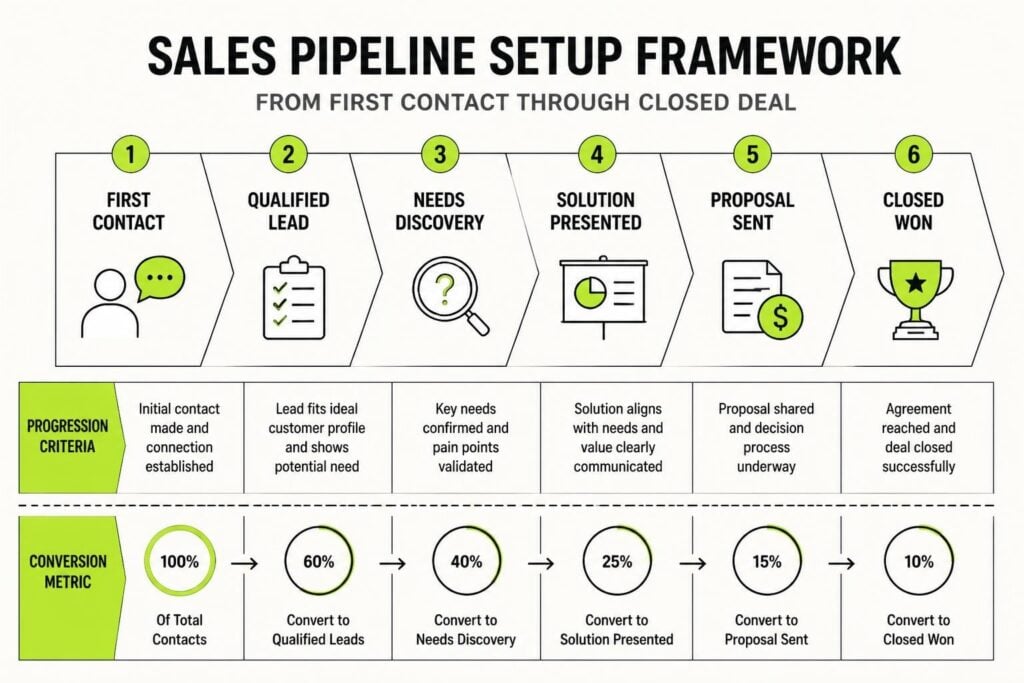
A sales pipeline setup is the difference between hoping deals close and knowing they will. Most service businesses lose revenue not because they lack leads, but because they lack structure. Without a proper pipeline, opportunities slip through cracks, follow-ups get forgotten, and forecasting becomes guesswork. A well-designed sales pipeline setup transforms scattered conversations into a repeatable system that compounds over time. It shows you exactly where each prospect sits, what action comes next, and which deals deserve your attention right now.
Why Sales Pipeline Setup Matters More Than You Think
The chaos you feel when managing deals isn't a skill problem. It's a systems problem.
A proper sales pipeline setup solves three critical issues:
- Visibility: You see every opportunity in one place, not scattered across emails, notebooks, and memory
- Consistency: Each prospect moves through the same proven process, regardless of who's handling them
- Predictability: You forecast revenue based on actual data, not optimism
Without structure, you're flying blind. With it, you make decisions backed by real patterns. Building a sales pipeline gives you control over the one thing that matters most: converting interest into closed business.
Many businesses confuse activity with progress. They track calls made and emails sent but can't tell you conversion rates at each stage. A sales pipeline setup forces clarity. It reveals bottlenecks, highlights where prospects stall, and shows which stage needs attention.
Define Your Pipeline Stages Based on Real Buyer Behaviour
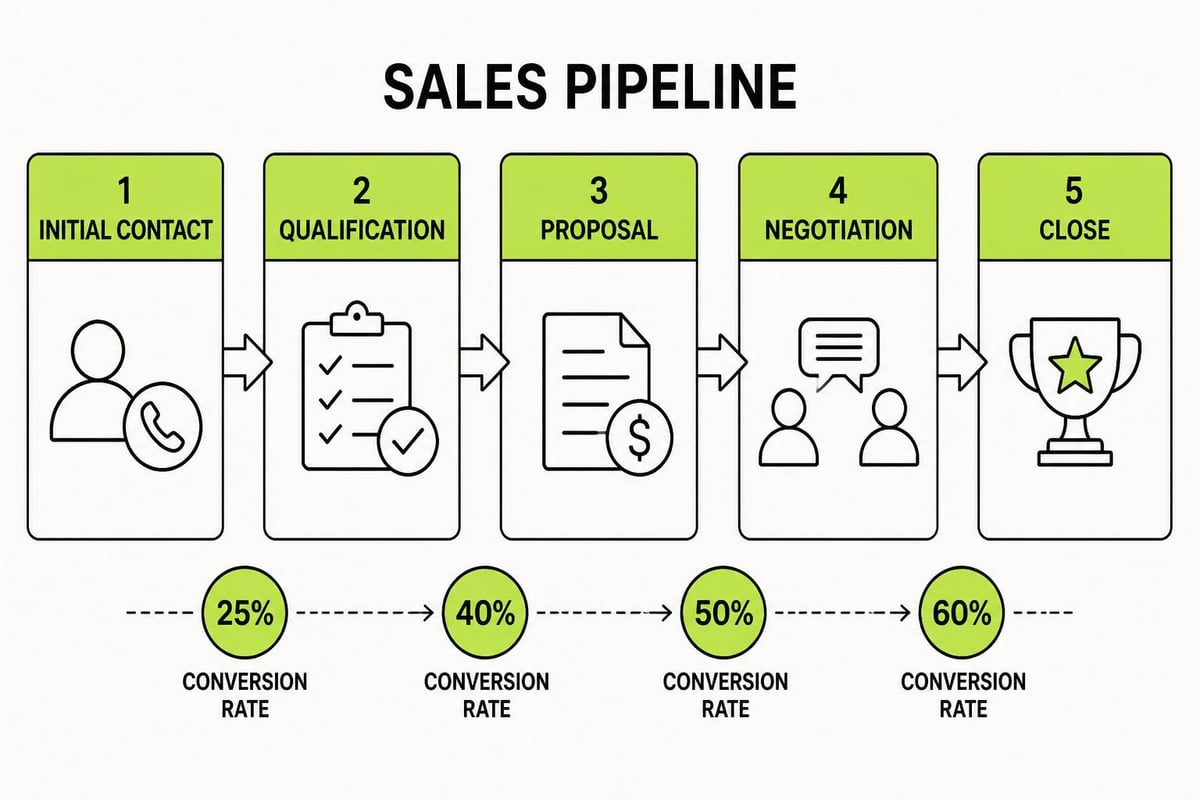
Your pipeline stages should match how prospects actually buy, not how you wish they'd buy.
Generic stages like "contacted" and "interested" don't tell you anything useful. Instead, base stages on specific actions or commitments that signal genuine progress.
Common Service Business Pipeline Stages
Here's a framework that works for most service-based businesses:
| Stage | Entry Criteria | Exit Criteria | Typical Duration |
|---|---|---|---|
| New Lead | Inquiry received | First conversation booked | 1-3 days |
| Qualification | Discovery call scheduled | Need confirmed, budget discussed | 3-7 days |
| Proposal | Scope agreed, proposal sent | Proposal presented, questions answered | 5-10 days |
| Negotiation | Agreement in principle | Final terms accepted | 3-7 days |
| Closed Won | Contract signed | Payment received, onboarding started | 1-3 days |
Your stages might differ. That's fine. What matters is that each stage represents a meaningful shift in the relationship, not just internal admin.
Each stage should answer these questions:
- What specific action moves a deal into this stage?
- What must happen for a deal to progress to the next stage?
- How long should deals typically stay here before moving or closing?
CIENCE’s B2B sales pipeline process emphasises defining clear revenue goals first, then working backward to build stages that support those targets. This approach keeps your pipeline aligned with actual business outcomes rather than theoretical best practices.
Build Your Pipeline With the Right Fields and Data
A sales pipeline setup only works if it captures the right information at the right time.
Too many fields and your team won't update it. Too few and you lack the data to make smart decisions. Focus on information that directly impacts how you handle the deal or forecast revenue.
Essential Pipeline Fields
Core fields every pipeline needs:
- Deal name (client name + service)
- Deal value (expected revenue)
- Close date (realistic target)
- Stage (current position)
- Owner (who's responsible)
- Source (where they came from)
Useful but not essential:
- Next action (what happens next)
- Last contact date (prevents ghosting)
- Decision maker(s) (who signs off)
- Pain point (what they're solving)
- Competition (who else they're considering)
The goal is tracking without friction. If adding a field doesn't change how you sell or forecast, skip it. NoteLinker’s sales pipeline template demonstrates how to build efficient pipelines across different CRM platforms without overcomplicating the structure.
Set Realistic Deal Values and Close Dates
Garbage in, garbage out. Your pipeline is only as good as the data inside it.
Deal values should reflect likely revenue, not dream scenarios. If your average project is $8,000, don't inflate every deal to $15,000 because "it could grow." Track actual scope, not potential upsells. You can always increase the value later when scope expands.
Close dates need honesty too. Most people set optimistic dates then keep pushing them forward. Instead, add buffer. If you think a deal will close in two weeks, set the date for three. This creates realistic forecasts and reduces the constant date-shifting that erodes trust in your pipeline data.
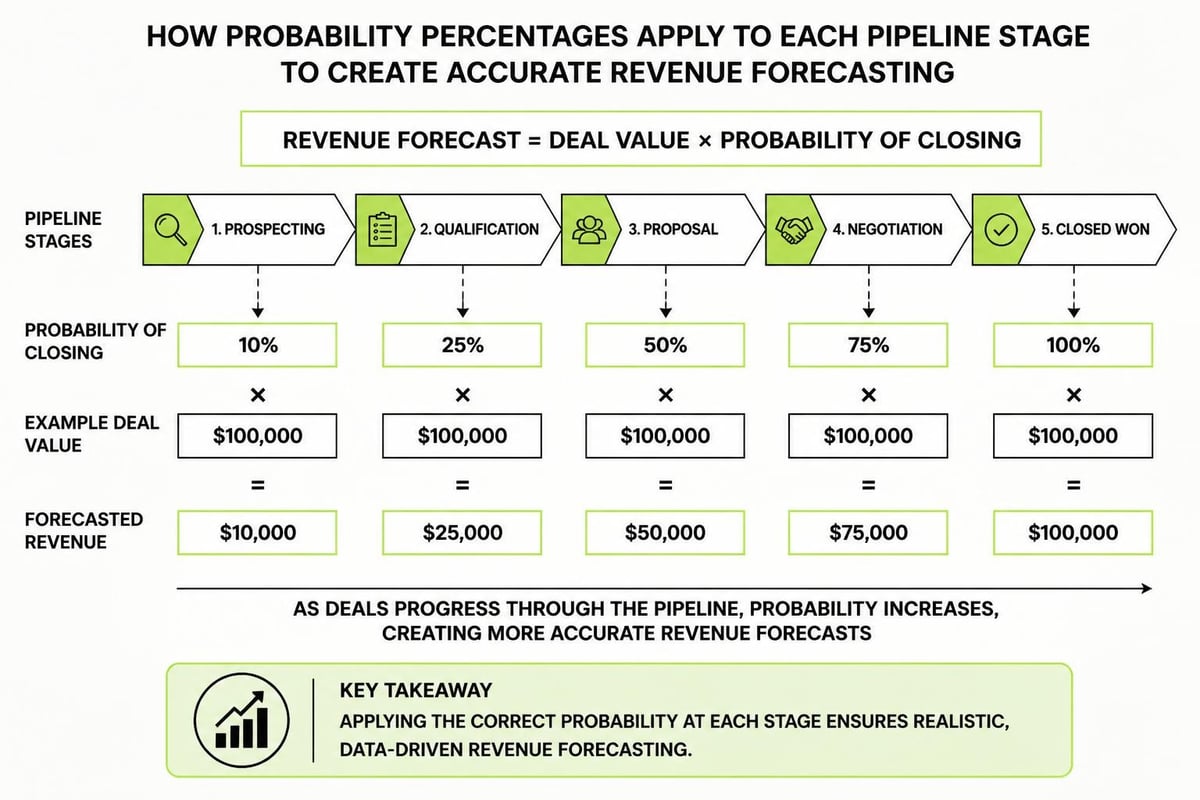
Consider using probability percentages for each stage. New leads might be 10% likely to close. Qualified opportunities jump to 30%. Proposals sent could be 60%. This weights your forecast so early-stage deals don't distort your projections. Over time, you'll refine these percentages based on actual conversion data.
Create Clear Entry and Exit Criteria for Each Stage
Ambiguous stage definitions kill pipeline accuracy.
If two salespeople disagree about whether a deal is "qualified" or still "prospecting," your data becomes meaningless. Stage movement should be objective, based on specific triggers rather than gut feel.
Example Entry Criteria
Qualification stage entry:
- Discovery call confirmed in calendar
- Budget range discussed (even if rough)
- Decision timeline identified
- Key stakeholder identified
Proposal stage entry:
- Scope documented and agreed
- Pricing expectations aligned
- Proposal deadline set
- Approval process understood
Negotiation stage entry:
- Proposal presented (not just sent)
- Client confirms intent to proceed
- Specific objections or questions raised
- Timeline to decision confirmed
Notice these are actions or conversations, not internal milestones. "Proposal drafted" doesn't move the stage. "Proposal presented and client asking questions" does.
This level of clarity might feel rigid at first, but it protects your forecast. When someone says a deal is in negotiation, you know exactly what that means. No interpretation required. This structured approach aligns with how we think about marketing systems where clarity removes chaos.
Automate Follow-Ups and Stage Movement Where Possible
Manual pipeline management breaks down as you scale.
The best sales pipeline setup includes automation that nudges deals forward without relying on perfect memory or discipline. This doesn't mean removing the human element. It means creating scaffolding so humans can focus on relationships, not admin.
Automation opportunities in your pipeline:
- Task creation: When a deal enters "Proposal," auto-create a follow-up task for 3 days later
- Email sequences: Send a pre-written check-in email 5 days after proposal if no response
- Stage reminders: Flag deals that haven't moved in X days based on typical stage duration
- Data hygiene: Auto-archive deals in early stages with no activity for 30+ days
Some CRMs let you set required fields before stage progression. For example, you can't move to "Proposal" until you've logged a budget range and decision date. This enforces data quality without micromanaging your team.
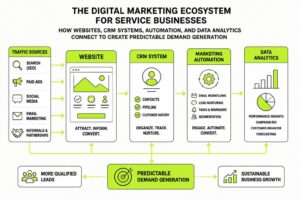
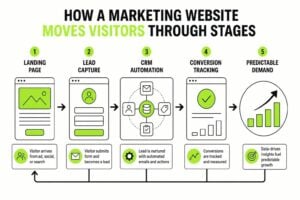
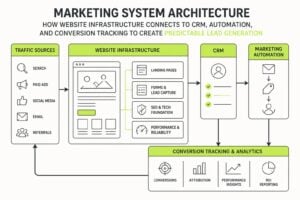
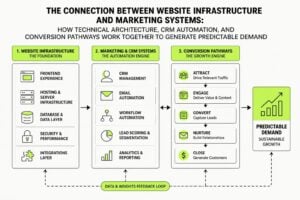
Connecting your pipeline to your broader marketing infrastructure creates even more leverage. When someone books a discovery call through your website, they automatically enter the pipeline with source data, form responses, and a task assigned to follow up. This is where a systematic 7-Step Marketing Plan becomes powerful, it shows you how the pipeline fits into a larger growth system that feeds itself.
Track the Right Metrics to Improve Over Time
A sales pipeline setup isn't static. It evolves as you learn what actually works.
Core metrics to track weekly:
- Conversion rate by stage: What percentage of qualified leads become proposals? What percentage of proposals close?
- Average deal size: Is it growing, stable, or shrinking over time?
- Average sales cycle: How long from first contact to closed deal? Is it getting faster or slower?
- Pipeline velocity: How quickly are deals moving through stages?
- Win rate: What percentage of proposals turn into clients?
| Metric | What It Reveals | Action If Low |
|---|---|---|
| Qualification to Proposal | Are you qualifying properly? | Tighten qualification criteria |
| Proposal to Close | Is your pricing or positioning off? | Review objections, adjust pitch |
| Average Deal Size | Are you attracting right-fit clients? | Revisit targeting and messaging |
| Days in Stage | Where are deals getting stuck? | Add resources or training for that stage |
These numbers tell you where to focus. If 70% of qualified leads become proposals but only 20% of proposals close, your problem isn't lead generation. It's pricing, positioning, or proposal quality.
Review metrics monthly, not daily. Daily checking creates noise. Monthly reviews reveal actual patterns. Look for trends over three to six months before making major changes to your sales pipeline setup.
Handle Deal Loss and Pipeline Hygiene Properly
Lost deals teach you more than won deals if you capture the lessons.
When a deal closes lost, record why. Not vague reasons like "no budget" or "timing." Specific reasons: "went with competitor offering faster delivery," "couldn't justify ROI for current headcount," "decision postponed pending Q4 review."
Create a standard lost-reason list:
- Price too high
- Chose competitor (note who)
- Timing not right
- No longer need solution
- Can't get internal approval
- Ghost (no response after multiple attempts)
This data shapes everything. If you're losing to the same competitor repeatedly, study their positioning. If timing kills deals, consider how to create urgency earlier. If price is the issue, you might be targeting the wrong market or failing to demonstrate value.
Pipeline hygiene keeps your forecast honest:
- Archive deals with no activity for 60+ days
- Update close dates when they slip (and note why)
- Remove deals stuck in early stages for 90+ days
- Review high-value deals weekly, not just monthly
Sales pipeline management requires discipline. The temptation is keeping zombie deals alive because removing them hurts your forecast. But false hope is worse than an honest number. Clean data drives better decisions. This connects to how we approach business development as a whole, you can't improve what you're not measuring accurately.
Adapt Your Pipeline as Your Business Changes
Your first sales pipeline setup won't be your last.
As you add services, target new markets, or change your sales process, your pipeline needs to adapt. What worked for $5k projects breaks when you're selling $50k engagements. What worked for one-call closes doesn't fit multi-stakeholder enterprise deals.
Signs your pipeline needs updating:
- New service offerings don't fit existing stages
- Sales cycles have lengthened or shortened significantly
- You're tracking workarounds in spreadsheets outside the CRM
- Forecast accuracy has dropped below 70%
- Team members consistently misuse stages
Don't redesign on a whim. Give changes at least a quarter to prove out. But also don't cling to a pipeline that no longer matches reality. Setting up pipelines in platforms like Salesforce or HubSpot gives you flexibility to evolve the structure as your business grows, without starting from scratch.
Version your pipeline. When you make significant changes, note the date and what changed. This lets you compare conversion rates and cycle times before and after adjustments, so you know if the change actually helped.
Connect Your Pipeline to Marketing and Delivery
The sales pipeline doesn't exist in isolation.
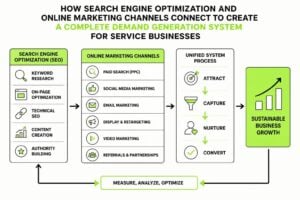
Upstream connection to marketing: Where do leads come from? Which sources convert best? If referrals close at 60% but cold outreach closes at 10%, double down on referral systems. Your pipeline data should inform marketing spend and channel focus. This integration matters whether you're running digital marketing campaigns or building organic reach.
Downstream connection to delivery: What happens after the deal closes? Does the sales pipeline feed directly into project management? Or do details get lost in handoff? The best sales pipeline setups include a "closed won" process that triggers onboarding, creates project records, and ensures nothing drops during transition.
Think of your pipeline as the middle third of a larger system. Marketing feeds it. Delivery depends on it. When all three connect cleanly, you've built a growth system that compounds. Leads don't leak. Promises made in sales get kept in delivery. Happy clients refer new business that enters the top of the pipeline.
This systematic thinking is core to how MDO Digital approaches growth infrastructure. The pipeline is one piece, but it has to integrate with everything else to create predictable, scalable growth.
Test and Refine Based on Real Data
Your sales pipeline setup should get better every quarter.
Run quarterly pipeline reviews where you examine actual performance against targets. Look at conversion rates, velocity, deal sizes, and loss reasons. Ask your team what's working and what feels clunky. They're using the system daily, they'll spot friction you miss.
Questions for quarterly reviews:
- Which stage has the worst conversion rate? Why?
- Are we losing deals to the same issues repeatedly?
- Has average deal size changed? Should we adjust targeting?
- Are close dates consistently accurate or always slipping?
- Do we have enough pipeline coverage to hit next quarter's target?
Make one or two changes maximum per quarter. More than that and you can't tell what impact each change had. Test, measure, adjust. Over time, your sales pipeline setup becomes a competitive advantage, not just a tracking tool.
The businesses that win aren't necessarily the best at selling. They're the best at systematising sales so success becomes repeatable rather than random. That's what a proper sales pipeline setup delivers.
A solid sales pipeline setup turns sales from a mystery into a system you can predict, manage, and improve. It protects leads, reveals bottlenecks, and creates the visibility you need to make smart decisions about where to focus time and resources. If you're ready to build marketing and sales infrastructure that actually scales, MDO Digital helps service businesses remove chaos and create structured growth systems that compound over time. We design the CRM, automation, and processes that turn scattered activity into predictable demand.