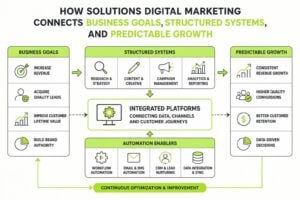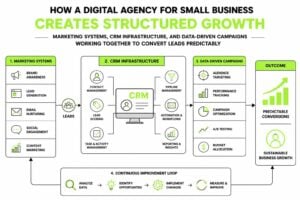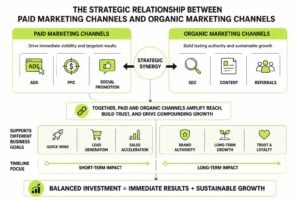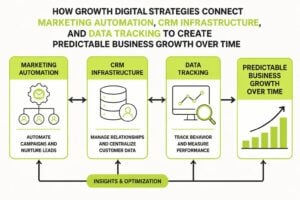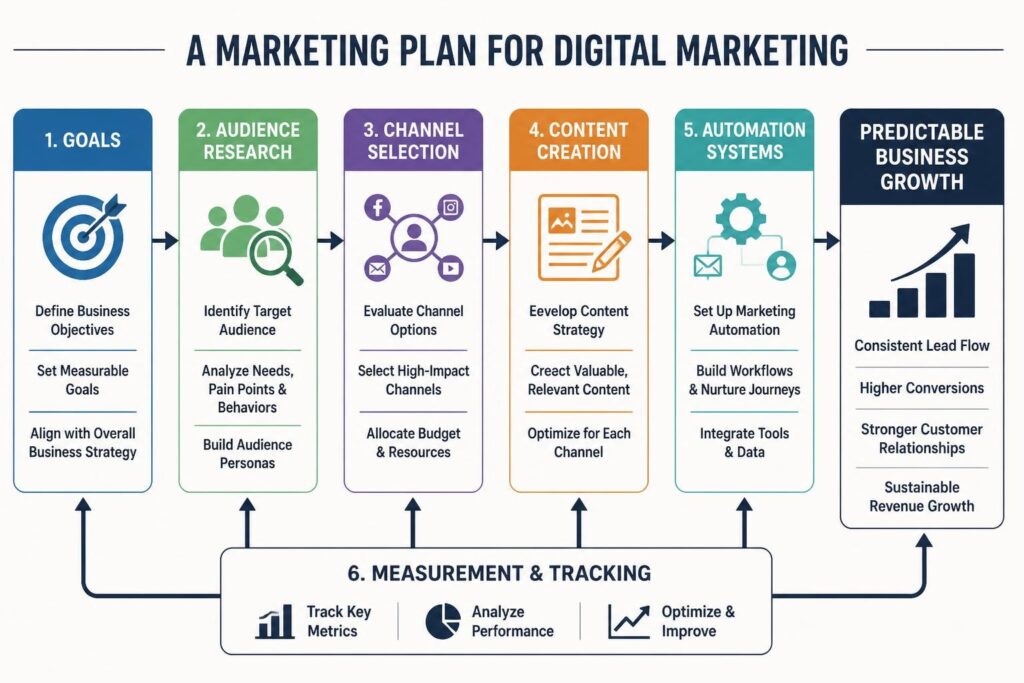
Most service businesses approach digital marketing like they’re throwing darts in the dark. They post on social media when they remember, run ads when revenue dips, and wonder why nothing compounds. The problem isn’t effort. It’s the absence of a proper marketing plan for digital marketing that connects the dots between what you do and what actually drives revenue. Without structure, every campaign feels like starting from scratch. With a plan, your marketing becomes a system that builds momentum over time.
Why Most Digital Marketing Fails Without a Plan
Here’s the pattern we see constantly: a business invests in Facebook ads for three months, sees some leads, then switches to LinkedIn because someone said it’s better for B2B. Six months later, they’re trying SEO because ads feel expensive. Each channel gets tested in isolation, nothing gets optimised, and the business owner concludes that digital marketing “doesn’t work for us.”
The real issue is fragmentation. Digital marketing isn’t a channel. It’s a system where multiple touchpoints work together to move prospects from strangers to buyers. Without a marketing plan for digital marketing that maps this journey, you’re forever chasing tactics instead of building a machine.
What a Marketing Plan Actually Does
A solid plan gives you three things that tactics alone can’t deliver:
- Clarity on who you’re talking to and what problems you solve for them
- A repeatable process for attracting, nurturing, and converting leads
- Measurable milestones so you know what’s working and what needs fixing
It’s not about doing more. It’s about doing the right things in the right order so each piece reinforces the others. Creating a digital marketing plan starts with understanding your business goals, not just copying what competitors are doing.
The Core Components of a Marketing Plan for Digital Marketing
Every effective marketing plan for digital marketing needs the same foundational elements. Miss one, and the whole system develops gaps.
Business Goals and Marketing Objectives
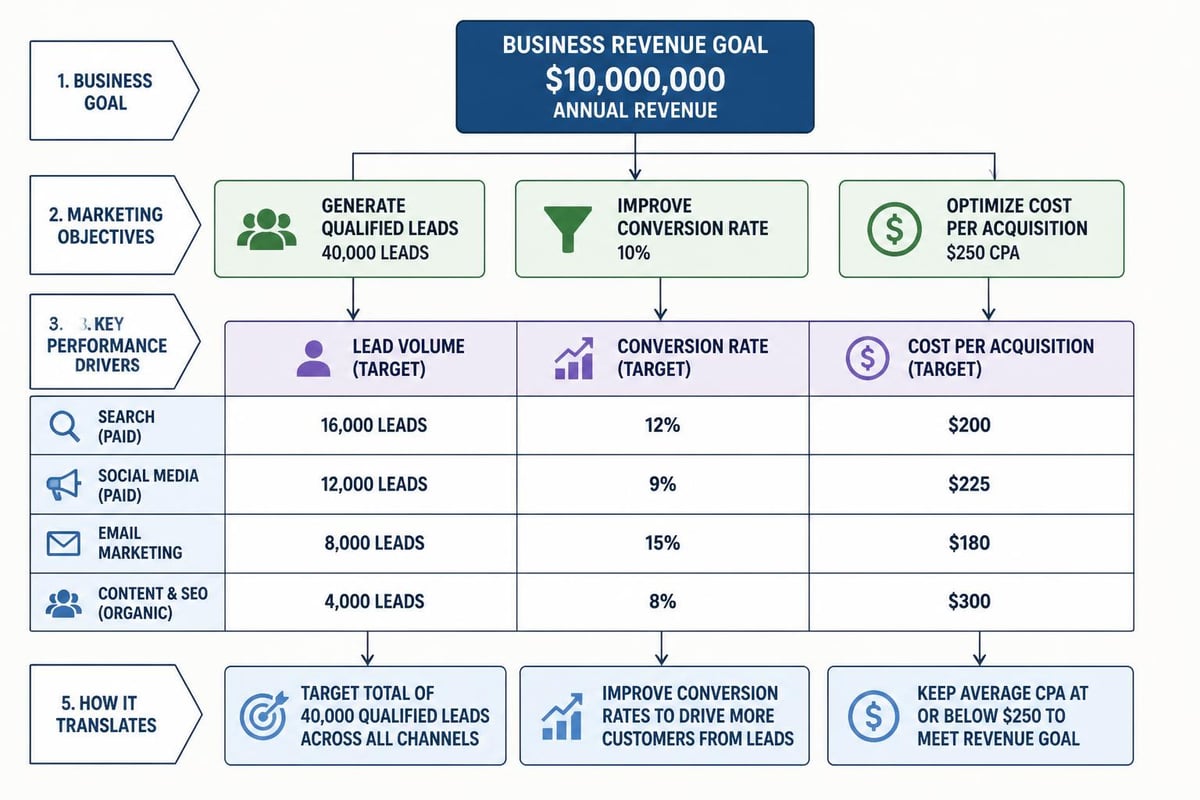
Start with what you’re actually trying to achieve. Not vague aspirations like “grow the business.” Specific outcomes tied to numbers and timeframes.
| Business Goal | Marketing Objective | Measurement |
|---|---|---|
| Increase revenue by 30% | Generate 50 qualified leads per month | Lead volume, conversion rate |
| Reduce acquisition cost | Build organic content that ranks | Traffic, cost per lead |
| Improve client retention | Launch email nurture sequence | Open rate, repeat purchase rate |
Your marketing plan needs to ladder up to real business outcomes. Otherwise you’re optimising for vanity metrics that don’t move the numbers that matter.
Audience Research and Buyer Personas
You can’t build a marketing plan for digital marketing without knowing exactly who you’re marketing to. Not demographics. Psychographics. What keeps them awake at night? What do they need to believe before they’ll buy from you?
Build detailed buyer personas that include:
- Current situation and pain points
- Goals they’re trying to achieve
- Objections and concerns about solutions like yours
- Where they spend time online
- Language and terminology they use
This isn’t academic. The depth of your audience understanding determines whether your content resonates or gets ignored. When you know your audience properly, you can craft marketing systems that speak directly to their reality.
Channel Selection and Budget Allocation
Not every channel deserves your attention. Your marketing plan for digital marketing should focus resources where your audience actually is and where you can realistically compete.
Paid channels:
- Search ads (Google, Bing)
- Social media ads (LinkedIn, Facebook, Instagram)
- Display and retargeting
- Sponsored content
Organic channels:
- SEO and content marketing
- Social media presence
- Email marketing
- Referral programs
The structure of a digital marketing plan should allocate budget based on expected ROI and strategic importance, not just what feels comfortable. New businesses might lean heavier on paid for speed. Established ones can invest more in owned assets that compound.
Building Your Content and Campaign Strategy
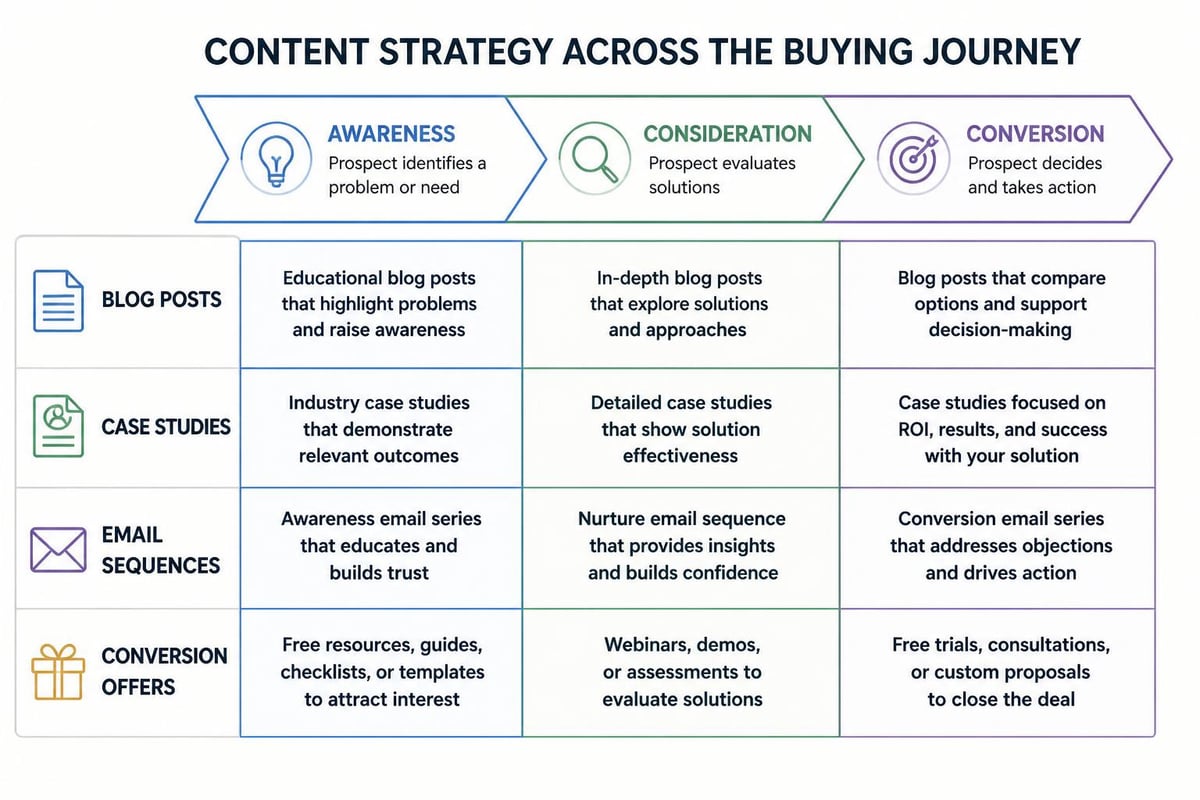
Content isn’t just blog posts. It’s every touchpoint where your message meets a prospect. Your marketing plan for digital marketing needs a content strategy that maps to each stage of the buyer journey.
Awareness Stage Content
At the top of the funnel, prospects don’t know you exist. They’re researching problems, exploring solutions, and trying to understand their options.
Effective awareness content includes:
- Educational blog posts that answer common questions
- Social media content that demonstrates expertise
- Video content that simplifies complex topics
- Guides and resources that provide genuine value
This content shouldn’t sell. It should help. The goal is to get on someone’s radar as a credible voice in your space. When done well, this is what feeds your entire funnel over time.
Consideration and Conversion Content
Once prospects know you exist, they’re evaluating whether you’re the right fit. This is where most marketing plans for digital marketing fall apart, because businesses either push too hard or don’t push at all.
| Content Type | Purpose | Format Examples |
|---|---|---|
| Case studies | Proof of results | Written, video, data-driven |
| Product comparisons | Help decision-making | Tables, guides, walkthroughs |
| Free tools or assessments | Demonstrate value | Calculators, audits, templates |
| Email sequences | Nurture and educate | 5-7 message series |
The 7-Step Marketing Plan framework is built around creating these conversion pathways. It walks you through building opt-in offers that attract the right people, then nurturing them through automated sequences until they’re ready to buy.

Setting Up Your CRM and Marketing Automation
Here’s where theory meets execution. You can have brilliant content and perfect targeting, but if you don’t capture and nurture leads properly, you’re haemorrhaging opportunities.
Why CRM Infrastructure Matters
Every lead that comes through your digital marketing should flow into a system that tracks, scores, and nurtures them automatically. This isn’t optional infrastructure anymore. It’s the difference between a marketing plan for digital marketing that generates predictable revenue and one that depends on luck.
Your CRM setup should handle:
- Lead capture from all digital channels
- Automatic tagging and segmentation
- Triggered email sequences based on behaviour
- Lead scoring to prioritise follow-up
- Integration with your sales process
Without this, you’re manually chasing leads, forgetting to follow up, and losing deals to competitors who have their systems sorted. Understanding how digital marketing and branding work together means connecting every brand touchpoint to your backend systems.
Automation Sequences That Convert
The best marketing plans for digital marketing include nurture sequences that run on autopilot. When someone downloads a resource, they should automatically enter a series that educates, builds trust, and moves them toward a sale.
A basic nurture sequence might include:
- Email 1 (Immediate): Deliver the promised resource
- Email 2 (Day 2): Share a relevant case study or success story
- Email 3 (Day 5): Address common objections or concerns
- Email 4 (Day 8): Provide additional value, soft CTA
- Email 5 (Day 12): Clear offer with deadline or urgency
Each email should feel helpful, not salesy. The goal is to stay top of mind while demonstrating you understand their world. How to create a digital marketing plan that converts means building these nurture pathways into your initial strategy, not bolting them on later.
Measurement, Analytics, and Optimisation
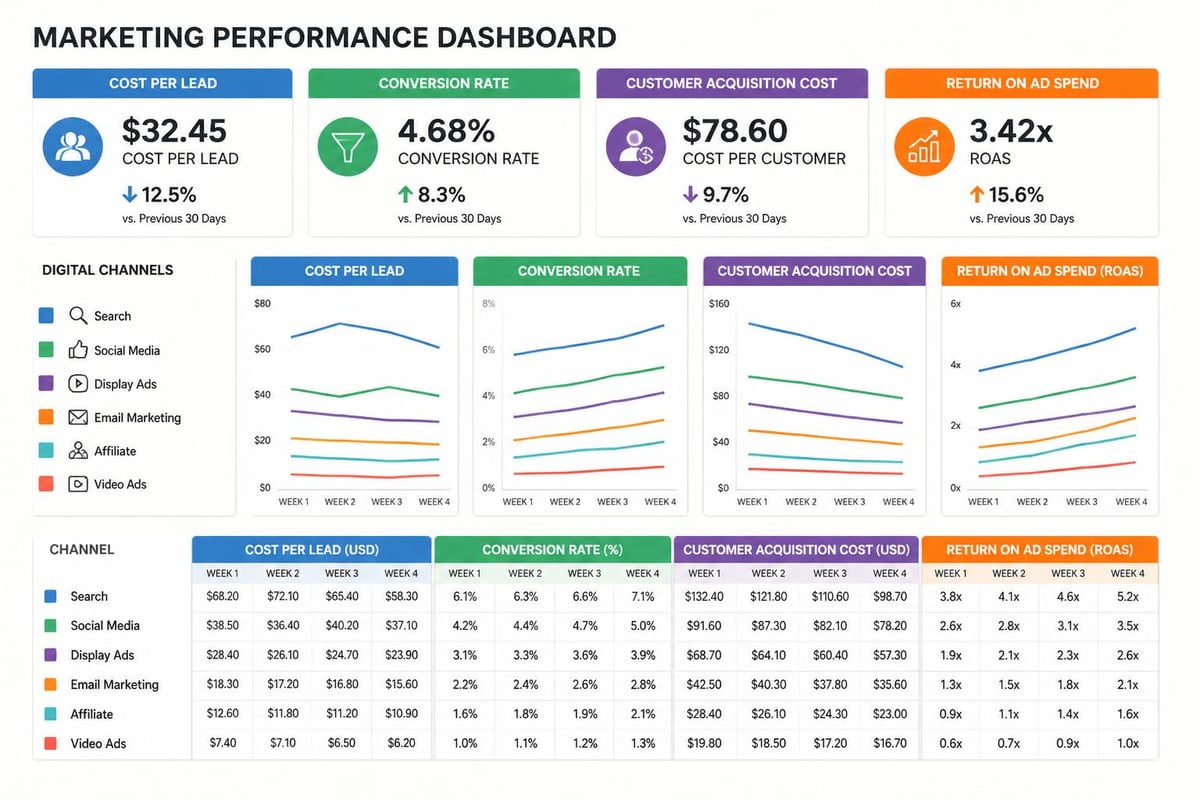
A marketing plan for digital marketing without clear metrics is just expensive guesswork. You need to know what’s working, what’s burning budget, and where the leverage points are.
Key Metrics to Track
Different channels require different metrics, but these core numbers tell you if your plan is actually working:
| Metric | What It Tells You | Why It Matters |
|---|---|---|
| Cost per lead | Efficiency of acquisition | Budget allocation decisions |
| Lead to customer rate | Quality of leads | Channel effectiveness |
| Customer acquisition cost | Total cost to acquire customer | Profitability analysis |
| Lifetime value | Revenue per customer | Growth sustainability |
| Return on ad spend | Revenue per dollar spent | Campaign performance |
Track these monthly. Compare channels. Look for trends. The businesses that scale are the ones that treat marketing like a science, not an art project.
Testing and Iteration Cycles
Your first version of a marketing plan for digital marketing won’t be perfect. That’s fine. What matters is building a rhythm of testing, measuring, and improving.
Run structured tests on:
- Ad copy and creative variations
- Landing page headlines and layouts
- Email subject lines and send times
- Offer positioning and pricing
- Audience segments and targeting
Change one variable at a time. Give tests enough time to reach statistical significance. Document what you learn. This is how a decent plan becomes excellent over time. Digital marketing case studies often show that sustained improvement comes from systematic testing, not random changes.
Timeline and Implementation Roadmap
Building a marketing plan for digital marketing is one thing. Actually executing it is another. Most plans fail because they’re too ambitious or lack clear ownership.
Your First 90 Days
The 90-day marketing plan template approach works because it creates manageable chunks. Here’s what a realistic first quarter looks like:
Month 1: Foundation
- Finalise buyer personas and messaging
- Set up CRM and tracking infrastructure
- Create core content assets
- Launch initial paid campaigns (small budget)
Month 2: Activation
- Publish content on consistent schedule
- Scale paid campaigns based on early data
- Build and launch first nurture sequence
- Start collecting baseline metrics
Month 3: Optimisation
- Analyse performance across channels
- Run A/B tests on underperforming elements
- Expand what’s working, cut what isn’t
- Plan next quarter based on learnings
This cadence keeps momentum without overwhelming your team. It also builds the habit of regular review and adjustment that separates plans that work from plans that collect dust.
Resource Allocation and Team Roles
Every element of your marketing plan for digital marketing needs someone responsible for execution. Vague ownership means nothing gets done.
Typical team structure might include:
- Strategist/Manager: Owns the overall plan and performance
- Content Creator: Produces written, video, and visual assets
- Paid Media Specialist: Manages ad campaigns and optimisation
- Marketing Technologist: Handles CRM, automation, and integrations
- Analyst: Tracks metrics and provides insights
Small teams wear multiple hats. That’s fine. Just make sure every function has clear ownership. When everyone’s responsible, no one is.
Common Mistakes That Kill Digital Marketing Plans
We see the same errors repeatedly. Knowing them helps you avoid the traps that waste time and budget.
Mistake 1: Building Before Researching
Jumping straight into tactics without understanding your audience or market is like building a house without a foundation. You might get something up quickly, but it won’t stand.
Do this instead:
- Spend real time on audience research
- Analyse what competitors are doing (and missing)
- Validate your messaging before scaling
- Test small before investing big
Mistake 2: Ignoring the Backend
Beautiful ads and clever content mean nothing if your backend can’t handle the leads. We’ve seen businesses generate hundreds of enquiries and convert almost none because their follow-up process was chaos.
A proper marketing plan for digital marketing includes the unglamorous work of building systems that capture, qualify, and convert leads reliably. Learn more about building marketing systems that actually support growth.
Mistake 3: Expecting Overnight Results
Digital marketing compounds over time. SEO takes months. Content builds authority gradually. Email lists grow through consistency. The businesses that succeed are the ones that commit to systematic execution rather than chasing quick wins.
Set realistic timelines. Most marketing plans for digital marketing need 6-12 months to really hit their stride. Budget and plan accordingly.
Advanced Tactics for Scaling What Works
Once your foundational plan is running and showing results, you can layer in more sophisticated approaches.
Retargeting and Audience Segmentation
Not everyone who visits your site is ready to buy. Retargeting lets you stay in front of warm prospects across the web, reminding them you exist and moving them closer to conversion.
Effective retargeting segments:
- Website visitors who didn’t convert
- Email subscribers who haven’t purchased
- Past customers for upsells or renewals
- Engaged social media followers
The more granular your segmentation, the more relevant your messaging can be. Generic ads get ignored. Specific, targeted messages that speak to where someone actually is in their journey convert.
Partnership and Referral Integration
The best marketing plan for digital marketing includes word-of-mouth amplification. Happy customers are your most credible marketing channel.
Build referral mechanisms directly into your plan:
- Automated requests for reviews post-purchase
- Referral incentives for both referrer and referee
- Case study programs that showcase client success
- Partner programs with complementary businesses
These channels often have the highest conversion rates because they come with built-in trust. Real case studies show that businesses with structured referral systems consistently outperform those relying solely on paid acquisition.
Content Repurposing and Efficiency
Creating content is time-intensive. Smart marketing plans for digital marketing squeeze maximum value from each asset by repurposing across formats and channels.
| Original Asset | Repurposed Formats |
|---|---|
| Long-form blog post | Social media snippets, email newsletter, infographic, video script |
| Webinar | Blog series, YouTube video, podcast episode, lead magnet |
| Case study | Testimonial quotes, social proof graphics, email content |
| Research report | Multiple blog posts, white paper, presentation slides |
This isn’t about being lazy. It’s about being strategic with limited resources. One well-researched piece can fuel your content calendar for weeks.
Making Your Plan Adaptable to Market Changes
Markets shift. Algorithms change. What worked last quarter might not work next quarter. Your marketing plan for digital marketing needs flexibility built in.
Quarterly Review and Adjustment
Lock in a quarterly planning rhythm where you review performance, adjust budgets, and refine strategy based on real data.
Your review should cover:
- What exceeded targets and why
- What underperformed and why
- Market changes or competitive shifts
- New opportunities or channels to test
- Budget reallocation based on performance
This prevents you from rigidly following a plan that’s no longer relevant while still maintaining strategic consistency.
Building in Buffer and Testing Budget
Allocate 10-15% of your marketing budget to testing new channels, offers, or approaches. This creates space for innovation without risking your core performance.
When you find something that works in testing, you can shift budget from underperforming areas. This is how digital marketing plans evolve from good to great over time.
A marketing plan for digital marketing isn’t a document you write once and forget. It’s a living system that guides decisions, focuses resources, and creates predictable growth. The businesses that win are the ones that build these systems properly, then execute with consistency. If you’re ready to move beyond scattered tactics and build marketing infrastructure that actually scales, MDO Digital helps service businesses design systems that convert attention into predictable demand. We’ll help you remove the chaos, protect your leads, and create structured growth that compounds over time.