Your website isn’t just a digital brochure. It’s the first handshake, the pitch deck, and the trust signal all rolled into one. Web branding is what separates a site that converts from one that gets ignored. It’s the difference between looking like every other service business and being the obvious choice. For service businesses in 2026, strong web branding isn’t about fancy design trends. It’s about creating a system that communicates value, builds confidence, and turns visitors into clients without you needing to chase them down.
What Web Branding Actually Means
Web branding is the strategic presentation of your business identity across your digital presence. It’s not just your logo slapped on a homepage.
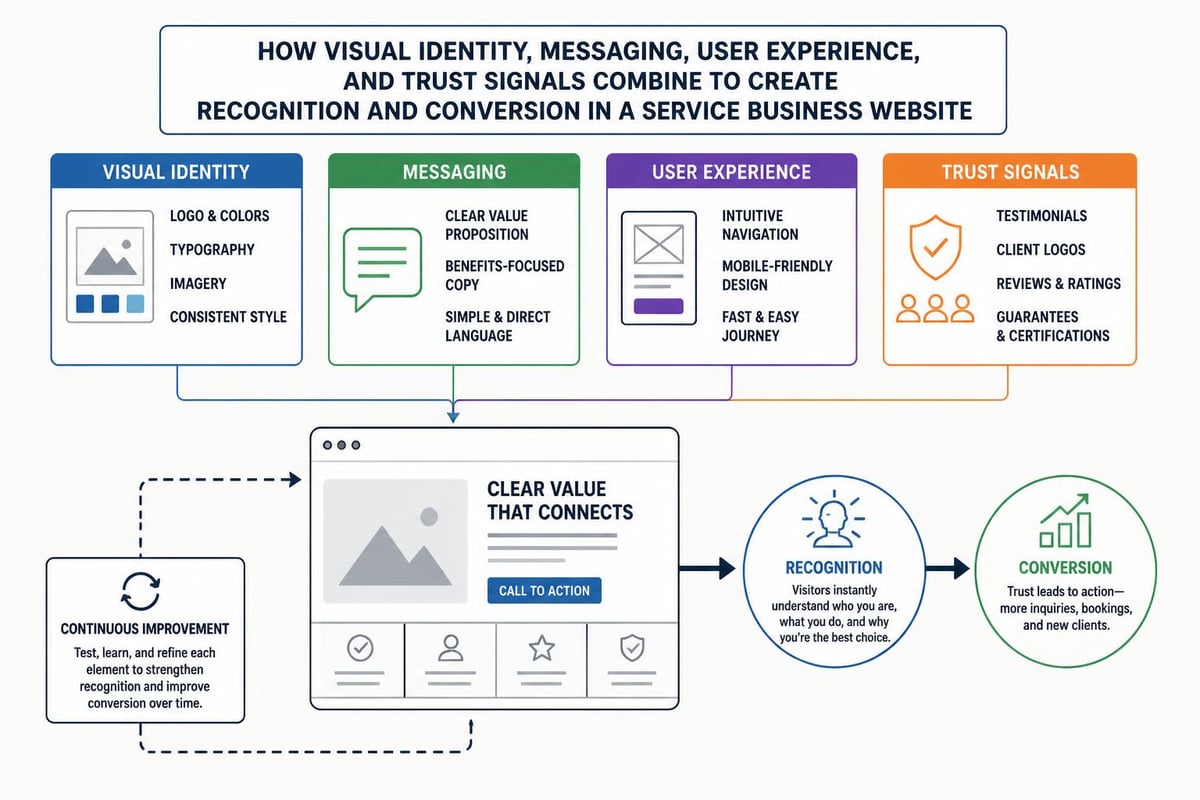
It’s how your visual identity, messaging, user experience, and conversion touchpoints work together to create recognition and trust. When done right, web branding makes your business feel consistent, credible, and clear about what you do and who you serve.
Think of it as the infrastructure that supports everything else. Your paid ads, your content, your sales conversations, they all rely on your website to deliver on the promise. If your web branding is weak or inconsistent, you’re creating friction at the exact moment people are deciding whether to trust you.
The Components That Matter
Strong web branding pulls together several elements that need to work in harmony:
- Visual identity: colors, typography, imagery, and layout that reflect your market position
- Brand voice: the tone and language you use across pages, CTAs, and microcopy
- User experience: how easily people find what they need and take the next step
- Content hierarchy: what you say first, what you emphasize, what you leave out
- Trust signals: social proof, credentials, case studies, and testimonials placed strategically
Each component reinforces the others. Your typography choices affect readability. Your content hierarchy affects conversion. Your trust signals affect how long someone stays on the page. Web branding decisions shape whether visitors see you as the professional choice or just another option.
Why Web Branding Drives Real Business Outcomes
Service businesses often treat branding as a nice-to-have. Something to worry about after they’ve sorted out leads and sales. That’s backwards.
Your web branding is what makes your marketing scalable. When your site clearly communicates who you serve and what you solve, your paid ads work harder. Your SEO attracts the right traffic. Your referrals close faster because they’ve already pre-qualified themselves on your website.
Poor web branding creates leaks. You spend money driving traffic to a site that doesn’t convert. You explain the same things over and over on sales calls because your website didn’t do the work. You compete on price because nothing else differentiates you.
The Conversion Impact
Here’s what changes when web branding is dialed in:
- Faster trust building: visitors understand what you do and why it matters within seconds
- Higher lead quality: people self-select based on clear positioning and messaging
- Shorter sales cycles: prospects arrive pre-educated and ready to engage
- Better ad performance: consistent branding from ad click to landing page reduces drop-off
- Stronger referrals: existing clients can easily explain what makes you different
| Weak Web Branding | Strong Web Branding |
|---|---|
| Generic messaging that could apply to anyone | Specific language that speaks to your ideal client |
| Inconsistent visuals and tone across pages | Cohesive experience from homepage to contact form |
| Unclear next steps and vague CTAs | Clear conversion paths with strategic CTAs |
| Limited social proof or trust signals | Testimonials, case studies, and credentials placed purposefully |
| Mobile experience as an afterthought | Responsive design that works seamlessly everywhere |
The businesses that scale sustainably don’t just get more traffic. They convert that traffic at higher rates because their web branding does the heavy lifting. Everything from brand consistency to navigation structure affects whether someone becomes a lead or clicks away.
Building Web Branding That Converts
Most businesses approach web branding by copying competitors or following design trends. That’s a mistake. Effective web branding starts with clarity about who you serve and what outcomes you create.
Start With Strategic Foundations
Before you touch colors or fonts, get clear on positioning. What specific problem do you solve for what specific audience? What transformation do you create? What makes your approach different from the ten other businesses in your category?
This isn’t fluffy brand work. It’s the foundation for every decision that follows. Your positioning determines your messaging hierarchy. Your messaging determines your content structure. Your content structure determines your conversion architecture.
Service businesses that skip this step end up with pretty websites that don’t perform. They look professional but sound generic. They have all the right elements but no cohesive story.
A 7-Step Marketing Plan helps map out how your web branding connects to your broader marketing system. It ensures your website isn’t operating in isolation but as part of a repeatable process that generates and nurtures leads.
Visual Identity That Supports Function
Once you have positioning locked in, visual identity follows. This isn’t about making things look expensive. It’s about using design to reinforce your market position and guide user behavior.
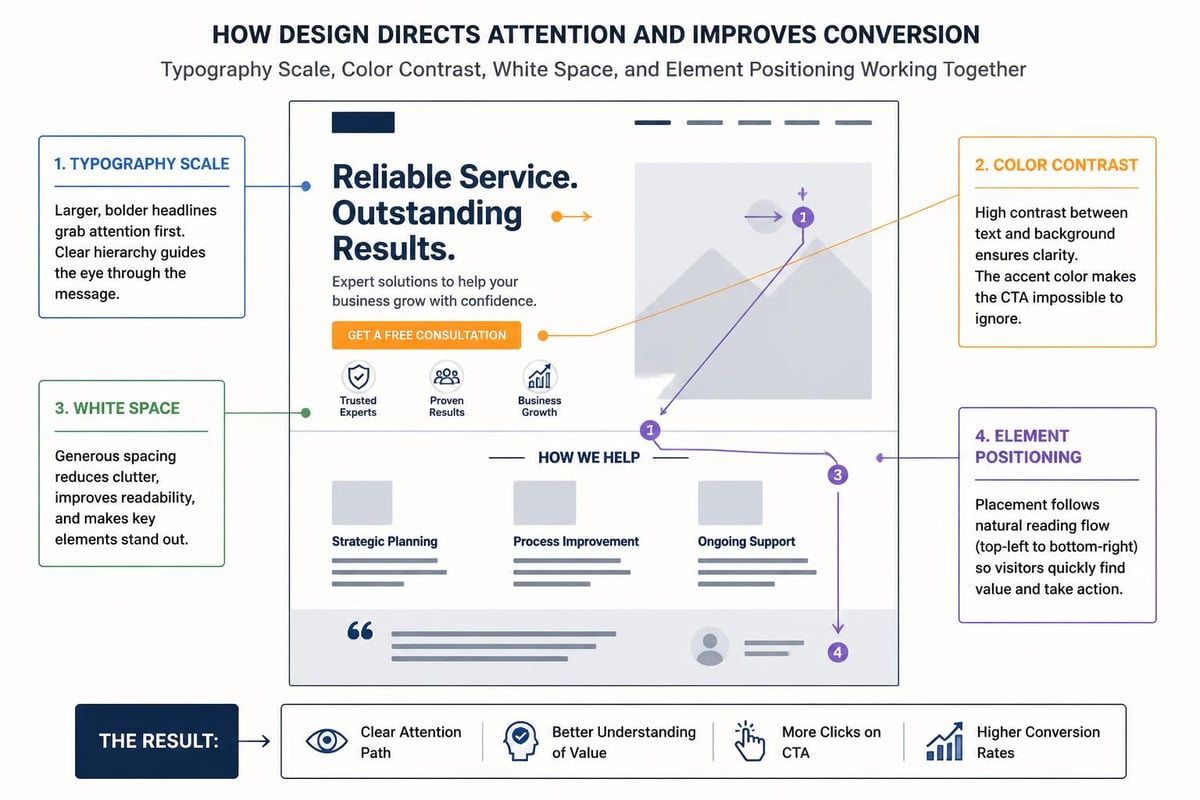
Typography choices matter more than most businesses realize. Serif fonts can communicate tradition and authority. Sans-serif fonts feel modern and accessible. Your font pairing affects readability, hierarchy, and tone. Choose fonts that match how you want to be perceived and ensure they work across devices.
Color psychology is real but shouldn’t be overthought. Blue suggests trust and stability. Green implies growth and health. Orange communicates energy and creativity. Pick a palette that aligns with your industry expectations while creating enough contrast for accessibility. Effective web design balances brand expression with usability.
Layout and white space affect comprehension. Dense pages overwhelm. Too much white space can feel empty. Use layout to create visual rhythm, guide attention to key information, and make conversion actions obvious.
Content and Messaging Architecture
Web branding lives or dies on the words you use. Visual identity gets people in the door. Messaging keeps them there.
Writing for Clarity and Conversion
Every page needs a clear job. Your homepage should orient visitors and direct them to the next logical step. Service pages should explain outcomes, not features. About pages should build credibility and connection. Contact pages should remove friction.
Most service businesses bury their value proposition under vague language. “We provide innovative solutions” tells visitors nothing. “We build CRM systems that stop service businesses from losing leads” tells them exactly what you do.
- Lead with outcomes, not process: people care about results first, methods second
- Use specific language: replace industry jargon with plain English
- Structure content for scanners: most visitors won’t read every word, make key points visible
- Match voice to audience: professional doesn’t mean stiff, approachable doesn’t mean casual
Your brand voice in marketing should be consistent across all touchpoints. If your ads are conversational but your website reads like a legal document, you’re creating cognitive dissonance.
Trust Building Through Content
Service businesses sell expertise and reliability. Your web branding needs to prove both. Social proof isn’t about plastering logos everywhere. It’s about strategically placing evidence that you’ve done this work before and delivered results.
Case studies work when they tell a clear before/after story. Testimonials work when they’re specific and address common objections. Credentials work when they’re relevant to your audience’s concerns.
| Content Type | Purpose | Placement |
|---|---|---|
| Hero statement | Immediate clarity on who you serve | Homepage above fold |
| Service descriptions | Explain transformation and process | Service pages, structured with clear headings |
| Case studies | Demonstrate results and expertise | Dedicated page + service pages |
| Testimonials | Build trust and address objections | Multiple pages, context-specific |
| Process overview | Reduce uncertainty about engagement | Service pages or dedicated process page |
Structure your content to answer questions in the order people ask them. What do you do? Who is it for? How does it work? What results can I expect? What happens next?
Technical Execution and User Experience
Pretty websites that load slowly or break on mobile aren’t examples of good web branding. They’re examples of style over substance.
Performance as Brand Signal
Site speed directly affects conversion rates. A three-second delay can cut conversions by half. Slow loading times tell visitors you don’t value their time. In 2026, performance isn’t a technical nice-to-have, it’s a brand promise.
Mobile responsiveness is non-negotiable. More than half your traffic likely comes from phones. If your web branding falls apart on mobile, you’re losing leads before they ever engage. Test every page on multiple devices. Check load times. Ensure forms work smoothly.
Navigation should be intuitive, not clever. People need to find information without thinking about it. Clear site structure supports both user experience and SEO. Complicated menus create confusion. Simple hierarchies create confidence.
Conversion Architecture
Web branding isn’t complete without a clear path to conversion. Every page should have a purpose and a next step. Homepage? Direct visitors to key service pages or offer a lead magnet. Service page? Include a consultation CTA. Blog post? Offer related resources or next steps.
Too many CTAs create decision paralysis. Too few create dead ends. The right balance depends on page purpose. High-intent pages need strong, singular CTAs. Educational content can offer softer next steps like downloads or related articles.
Forms should be as short as possible while capturing what you need. Every field you add reduces completion rates. Ask yourself: do I need this information now, or can I get it later?
Maintaining Brand Consistency at Scale
Web branding isn’t a one-time project. As you add pages, create content, and expand services, consistency becomes harder to maintain.
Systems That Protect Brand Integrity
Create documented guidelines. Not a 50-page brand book that no one reads. A practical reference that covers:
- Color codes and usage rules
- Font pairings and hierarchy
- Image style and quality standards
- Voice and tone guidelines with examples
- CTA copy formulas and button styles
Use templates for recurring content types. Blog posts, service pages, and landing pages should follow consistent structures. This doesn’t mean cookie-cutter content. It means reliable user experience.
Regular audits catch drift before it becomes a problem. Check new pages against your guidelines. Look for inconsistencies in messaging, visual treatment, or user experience. Website design and marketing should evolve intentionally, not accidentally.
Evolving Without Losing Identity
Markets change. Your business grows. Your web branding needs to adapt without losing recognition.
Small, iterative updates work better than complete overhauls. Refresh imagery while keeping color palettes consistent. Update messaging while maintaining voice. Improve navigation while preserving familiar structure.
When you do need significant changes, phase them in. Test new approaches on landing pages before rolling them across your site. Gather data on performance before committing to broad changes.
The businesses that maintain strong web branding over time treat it as infrastructure, not decoration. They build systems that scale, create guidelines that teams can follow, and make decisions based on performance data rather than personal preference.
Making Web Branding Work for Your Business
Web branding isn’t about winning design awards. It’s about creating a digital presence that builds trust, communicates value, and converts visitors into clients predictably.
For service businesses, that means treating your website as a system, not a static asset. Every element should have a purpose. Every page should advance the relationship. Every conversion point should remove friction rather than create it.
The difference between businesses that scale and those that struggle often comes down to how well their web branding supports their growth. Strong branding creates compound returns. It makes every marketing dollar work harder, every referral convert faster, and every lead easier to close.
Start with clarity about who you serve and what you deliver. Build visual identity that reinforces that positioning. Structure content that educates and converts. Optimize technical performance that respects user time. Create systems that maintain consistency as you grow.
Web branding either works for you or against you. There’s no neutral ground. If you’re ready to build a website that actually drives predictable growth instead of just looking professional, MDO Digital helps service businesses create marketing systems that remove chaos and protect leads. We focus on structured growth that compounds over time, not one-off projects that need constant attention.