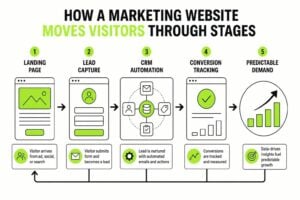
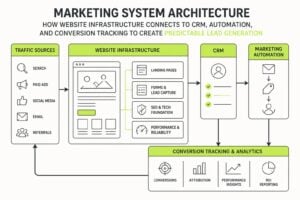
Digital campaigning isn't just advertising. It's the entire structure you build to move someone from awareness to action, using systems that can be measured, repeated, and improved. For service based businesses, that means campaigns need to do more than generate clicks. They need to filter the right people, protect your leads, and create predictable outcomes without burning through budget or losing momentum halfway through.
The difference between a campaign and random marketing activity is structure. A digital campaign has clear entry and exit points, defined objectives, and a measurable path between attention and conversion. Without that, you're just hoping things work.
What Digital Campaigning Actually Means
Digital campaigning is the planned, coordinated use of digital channels to achieve a specific business outcome within a defined timeframe. It's not the same as posting content or running ads. A campaign has a start, a middle, and an end. It has a measurable goal, a target audience, and a set of messages designed to move people through stages.
For service businesses, digital campaigning often focuses on generating qualified leads, launching new offerings, or repositioning in the market. The tools might include email sequences, paid ads, content series, retargeting, and landing pages. But the tools matter less than the system holding them together.
Key components of effective digital campaigning include:
- A clear objective tied to revenue or pipeline
- Defined audience segments based on behaviour or intent
- A message sequence that builds trust and relevance
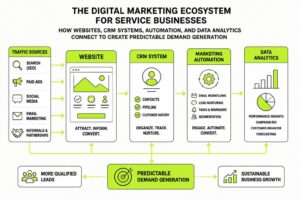
- Infrastructure to capture, track, and nurture leads
- Performance data that tells you what's working
Most campaigns fail because they skip the infrastructure. You can't run a successful digital campaign without a CRM, a way to track attribution, and a process for following up. The campaign might generate attention, but if there's no system to convert it, you've just wasted money.
Why Structure Beats Volume
Throwing more budget at a campaign doesn't fix weak structure. You need to know who you're speaking to, what problem you're solving, and what action you want them to take. If those three things aren't clear, more traffic just means more confusion.
Effective digital campaigns rely on three fundamentals: spending enough to reach the right people, targeting precisely, and delivering content that matches intent. You can't skip any of those and expect results.
Service businesses often make the mistake of targeting too broad. They want everyone to see the campaign, so they dilute the message and waste budget on people who'll never convert. Tighter targeting means fewer impressions but better outcomes. You'd rather reach 500 people who actually need what you offer than 5,000 who don't.
Building Campaigns Around Buyer Intent
Digital campaigning works when it aligns with how people actually make decisions. That means understanding where someone is in their journey and delivering the right message at that moment. Someone researching options needs different content than someone ready to book a call.
The three stages of buyer intent are:
- Awareness: They know they have a problem but haven't defined a solution yet
- Consideration: They're evaluating different approaches or providers
- Decision: They're ready to commit and need a reason to choose you
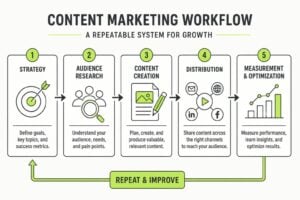
Your campaign needs assets for each stage. Awareness content educates and builds trust. Consideration content demonstrates your process and results. Decision content removes friction and makes it easy to take action.
Most campaigns focus too heavily on decision stage content. They want immediate conversions, so they push offers before trust is built. That might work for low ticket products, but service businesses need to earn attention first. Building trust through personalization and empathy creates better long term outcomes than aggressive selling.
Mapping Content to Campaign Stages
| Campaign Stage | Content Type | Objective |
|---|---|---|
| Awareness | Educational blog posts, guides, research | Build credibility and capture contact details |
| Consideration | Case studies, process breakdowns, comparisons | Demonstrate how you solve the problem |
| Decision | Pricing clarity, testimonials, direct offers | Remove objections and simplify next steps |
Each piece of content should have a clear role. If you can't explain what stage it serves, it doesn't belong in the campaign. This is where many digital campaigns fall apart. There's content, but no structure connecting it to outcomes.
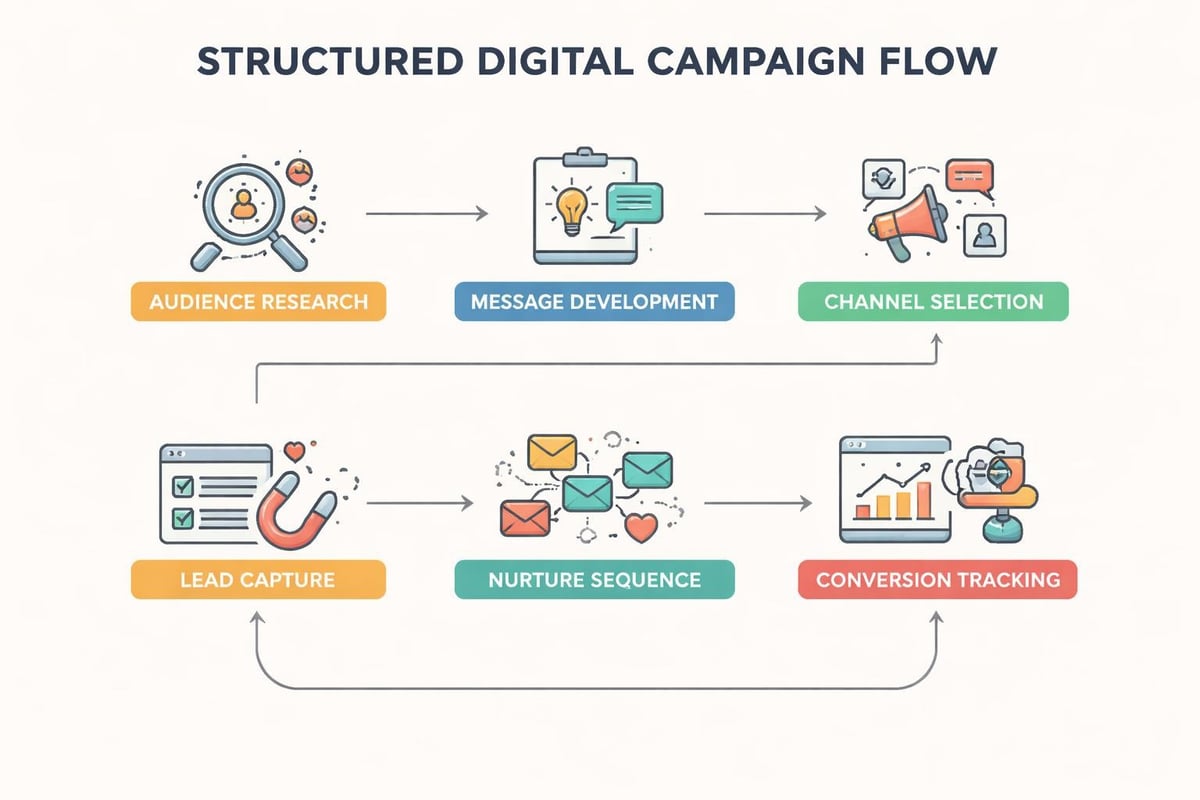
A well designed campaign moves people through stages deliberately. You might start with a paid ad driving to an educational resource. That resource captures an email. The email sequence delivers value while positioning your service. After a few touchpoints, you invite them to a consultation. Each step earns the next.
Channel Selection and Media Spend
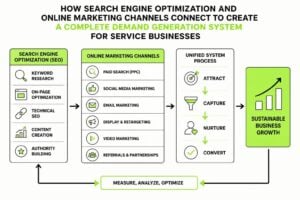
Digital campaigning gives you access to multiple channels, but that doesn't mean you should use all of them. Better to own one or two channels than spread thin across six. Service businesses typically see the best results from paid search, LinkedIn, email, and retargeting.
Paid search works when people are actively looking for solutions. You're not interrupting them, you're answering a question they already have. The downside is competition and cost per click, but if your targeting is sharp, the leads tend to convert.
LinkedIn suits B2B service businesses because you can target by role, company size, and industry. The platform skews professional, so the context matches business conversations. Organic reach is weak, but paid campaigns can filter audiences precisely.
Email remains the highest ROI channel if you've built a list. Campaigns can nurture leads over weeks or months, keeping you visible without constantly paying for impressions. The challenge is deliverability and list quality. A small engaged list beats a large inactive one every time.
Retargeting lets you stay in front of people who've already shown interest. Someone visited your site but didn't convert? A retargeting campaign keeps the conversation going. It's cost effective because you're only reaching warm traffic.
When planning digital campaigns for service businesses, channel choice should match where your audience spends time and how they prefer to consume information. Don't pick channels because they're trendy. Pick them because they connect with your buyers.
Budget Allocation Across Channels
How you split budget depends on campaign goals. If you're launching something new, you'll weight towards awareness channels. If you're trying to convert existing pipeline, nurture and retargeting get more spend.
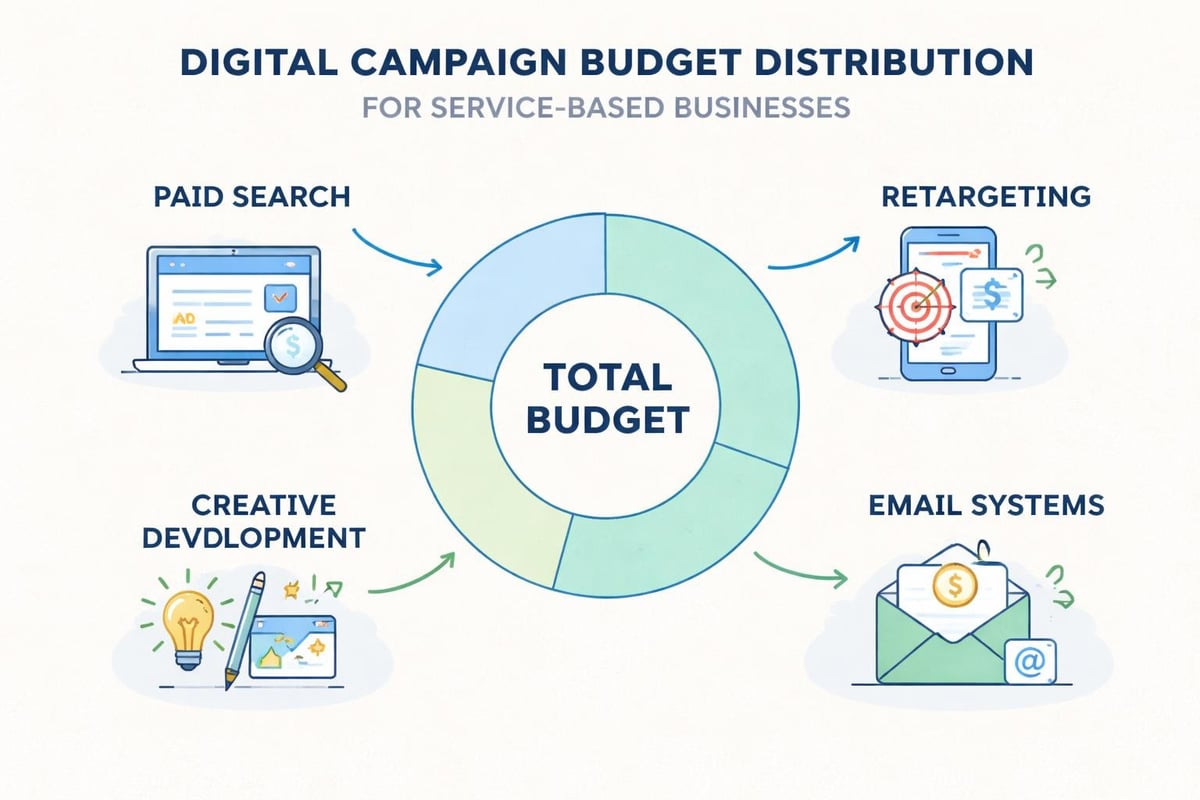
A typical split for a service business campaign might look like:
- 40% on paid search or LinkedIn for new reach
- 30% on retargeting to convert warm traffic
- 20% on email infrastructure and sequences
- 10% on creative and landing page development
This isn't a rule, just a starting point. Test, measure, shift budget towards what converts. The mistake is locking into a plan without reviewing performance. Digital campaigns should be monitored and adjusted based on real data, not assumptions.
Creating Message Sequences That Build Trust
A single message rarely converts anyone. Digital campaigning works through repetition and progression. Each touchpoint should add value, not just repeat the same pitch. People need to hear your ideas in different contexts before they trust you enough to buy.
Message sequences typically run across 5 to 10 touchpoints. That might be a mix of ads, emails, content pieces, and direct outreach. The goal is to gradually shift perception from "I don't know this business" to "I understand what they do and trust they can help."
Effective message sequences include:
- A hook that captures attention with a relevant insight or question
- Educational content that demonstrates expertise without selling
- Social proof that shows you've solved this problem before
- A clear explanation of your process or methodology
- An offer that removes risk and makes the next step obvious
The sequence should feel like a conversation, not a broadcast. Each message assumes they saw the previous one and builds on it. If someone opts out or doesn't engage, they exit the sequence. No point messaging people who aren't interested.
For service businesses, the sequence needs to establish authority without being condescending. You're positioning as a peer who's solved this before, not a guru with secret knowledge. Practical, specific examples work better than vague promises.
One of the common mistakes in digital campaigning is sending generic, unpersonalized messages that feel like spam. Segmentation fixes that. If you're running campaigns for multiple audience types, write separate sequences for each. A startup founder needs different messaging than a corporate decision maker.
Balancing Automation and Personalization
Automation lets you scale campaigns without manually sending every message. But over automation kills trust. People can tell when they're in a generic workflow. The solution is to automate structure while personalizing key details.
Use automation for timing, delivery, and follow up logic. Use personalization for names, company details, specific pain points, and examples. A templated email with genuine personalization beats a fully custom email that arrives at the wrong time.
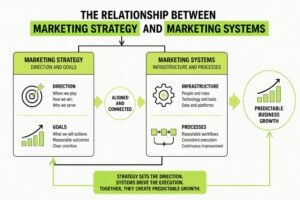
Service businesses running digital campaigns should treat their CRM as campaign infrastructure, not just a database. Having a structured CRM and nurture system means you can build campaigns that respond to behaviour, not just time. If someone downloads a guide, they enter a sequence relevant to that topic. If they visit your pricing page, they get different messaging than someone who just read a blog post.
Measuring Campaign Performance Without Vanity Metrics
Digital campaigning generates a lot of data. Most of it doesn't matter. Impressions, reach, and engagement are interesting, but they don't tell you if the campaign worked. You need to measure outcomes tied to revenue.
Core metrics for service business campaigns:
- Cost per qualified lead: What you're paying to generate a lead that matches your ideal client profile
- Lead to opportunity conversion rate: How many leads turn into real sales conversations
- Campaign attributed revenue: How much revenue came from people who entered through this campaign
- Return on ad spend (ROAS): Revenue generated divided by campaign cost
Vanity metrics like clicks and impressions can indicate reach, but they don't prove value. A campaign with 10,000 impressions and zero qualified leads is a failure. A campaign with 500 impressions and 10 qualified leads is a success.
Attribution gets messy with longer sales cycles. Someone might see your ad in March, download a resource in April, and book a call in June. Which touchpoint gets credit? Most businesses use first touch attribution (credit the first interaction) or last touch (credit the final one before conversion). Neither is perfect, but pick one and stick with it so you can compare campaigns over time.
Building Dashboards That Actually Help
You need a dashboard that shows campaign performance in real time. Not a 40 page report, a single view that answers: is this working?
| Metric | Target | Current | Status |
|---|---|---|---|
| Cost per lead | Under $150 | $132 | On track |
| Lead quality score | 7/10+ | 6.8/10 | Needs improvement |
| Conversion rate | 15% | 18% | Exceeding |
| ROAS | 3:1 | 2.7:1 | Close |
Your dashboard should trigger decisions. If cost per lead is climbing, you adjust targeting or creative. If conversion rate is dropping, you review your message sequence or landing page. Data without action is just noise.
When running digital campaigns for marketing systems and branding, tracking needs to extend beyond the campaign itself. You want to know if the leads generated actually became clients, and if those clients were profitable. That requires connecting your campaign data to your CRM and financial systems.
Ethical Considerations in Digital Campaigning
Digital campaigning gives you the ability to track, target, and influence people at scale. That power comes with responsibility. Ethical digital campaigning means respecting privacy, being honest about what you offer, and not manipulating people into decisions they'll regret.
Practical ethical guidelines:
- Only collect data you'll actually use and protect it properly
- Be transparent about how you're targeting people
- Make it easy to opt out or unsubscribe
- Don't use dark patterns or manipulative urgency tactics
- Ensure your service can actually deliver what the campaign promises
The last point matters most. A campaign that generates leads you can't serve creates problems for everyone. You waste their time, damage your reputation, and burn budget on the wrong audience. Better to be clear upfront about who you help and who you don't.
Service businesses sometimes feel pressure to accept every lead. But a good digital campaign should filter as much as it attracts. If your messaging is specific enough, the wrong people self select out. That's not a failure, it's efficiency.
Infrastructure Requirements for Campaign Success
You can't run effective digital campaigns without the right infrastructure. That means more than just tools. It means systems, processes, and people who know how to use them.
At minimum, you need:
- A CRM that tracks every interaction and attributes leads to sources
- Landing pages optimized for conversion with clear calls to action
- Email infrastructure that actually reaches inboxes, not spam folders
- Analytics connected across platforms so you can see the full journey
- A process for lead handoff between marketing and sales
Most service businesses have some of these pieces but not all of them. They might have a CRM but no attribution. Or landing pages that aren't connected to the CRM. Gaps in infrastructure create gaps in performance.
Marketing systems built for growth connect every piece so data flows automatically. When someone fills out a form, they enter the CRM, trigger an email sequence, and notify the team. No manual steps, no leads falling through cracks.
The cost of poor infrastructure isn't just inefficiency. It's lost revenue. If 30% of your campaign leads never get followed up because they landed in the wrong inbox, you're throwing away money.
Platform Integration and Data Flow
Your campaign tools should talk to each other. Google Ads should feed data to your CRM. Your CRM should trigger email sequences. Your analytics should show which ads led to which clients.
Integration isn't glamorous, but it's what separates campaigns that scale from campaigns that just create work. When everything connects, you can see clearly what's driving results and make decisions based on evidence, not guesswork.
If you're running campaigns across multiple platforms (LinkedIn, Google, email, retargeting), you need a central place where all that data comes together. Some businesses use tools like HubSpot or Salesforce. Others build custom integrations. What matters is that nothing runs in isolation.
Scaling Campaigns Without Losing Quality
Once a campaign works, the temptation is to scale it immediately. More budget, broader targeting, more aggressive messaging. That usually kills performance.
Scaling digital campaigns requires keeping the core structure intact while carefully expanding reach. You don't change what works, you find more of the same audience. If a campaign converts well for companies with 10 to 50 employees in professional services, you look for more of those, not suddenly target retail businesses.
Steps to scale campaigns sustainably:
- Identify the exact audience segment that converts best
- Find additional channels or targeting options that reach similar people
- Increase budget by 20 to 30% increments, not doubling overnight
- Monitor quality metrics closely, not just volume
- Build additional creative variations to prevent ad fatigue
Scaling also means scaling your infrastructure. If you double lead volume but don't increase sales capacity, you'll just create a backlog. The whole system needs to grow together, campaigns, follow up, delivery.
Service businesses sometimes scale campaigns faster than they can deliver. They generate 100 leads a month when they can only handle 30 conversations. The extra 70 get poor follow up or ignored entirely. That damages brand and wastes money. Better to scale at the rate you can actually serve.
Digital campaigning works when structure, message, and infrastructure align. It's not about creative brilliance or huge budgets. It's about building systems that move the right people through predictable stages, from attention to conversion. For service businesses, that means campaigns need to generate qualified leads, protect them through proper follow up, and create measurable revenue outcomes. If your current campaigns feel chaotic or unpredictable, the problem is usually infrastructure, not ideas. MDO Digital helps service businesses build the marketing systems and automation that turn campaigns into repeatable growth, removing chaos and creating structure that compounds over time.