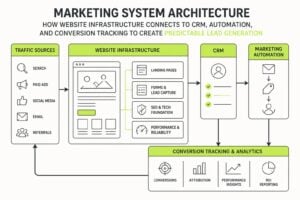
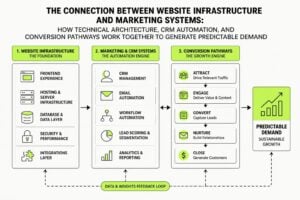
Design marketing sits at the intersection of visual strategy and systematic growth. It's not just about making things look good. It's about building marketing assets that guide prospects through a structured journey, protect every lead, and convert attention into predictable demand. For service-based businesses, design marketing determines whether your website builds trust or creates friction, whether your emails get opened or ignored, and whether your brand compounds value over time or gets lost in noise. This is where clarity meets conversion, where aesthetics serve strategy, and where every visual decision either supports or sabotages your growth infrastructure.
What Design Marketing Actually Means
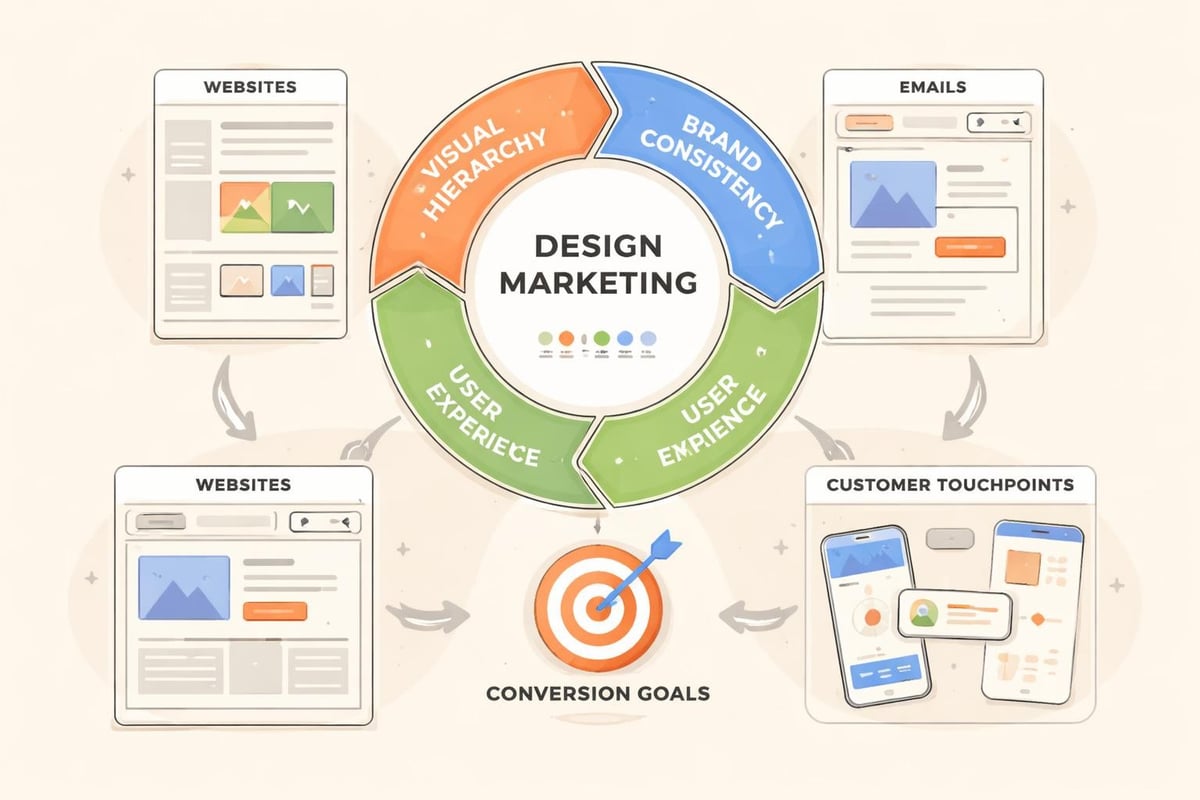
Design marketing is the practice of using intentional visual systems to support measurable marketing outcomes. It's not graphic design applied to marketing materials after the fact. It's the strategic integration of visual hierarchy, user experience, and brand consistency into every customer touchpoint.
When most people hear "design," they think aesthetics. When they hear "marketing," they think campaigns. Design marketing fuses both into a structured approach where every colour choice, layout decision, and visual element serves a conversion goal.
The Core Components
Visual hierarchy directs attention to what matters most. In email campaigns, this means designing layouts that guide eyes toward your primary call to action. On websites, it means structuring pages so prospects understand your value proposition within three seconds.
Brand consistency builds recognition and trust across channels. Your website, email templates, proposals, and social graphics should speak the same visual language. This isn't about rigid brand police. It's about reducing cognitive load so prospects focus on your message, not trying to figure out if they're still dealing with the same company.
User experience design removes friction from the journey. Forms that are too long, navigation that confuses, or mobile layouts that break all undermine your marketing efforts before any campaign launches. User experience best practices focus on making every interaction intuitive and purposeful.
The table below shows how design marketing differs from traditional approaches:
| Traditional Approach | Design Marketing Approach |
|---|---|
| Design as final polish | Design as strategic foundation |
| Separate brand and campaign work | Integrated visual systems |
| Aesthetics-first decisions | Conversion-focused decisions |
| One-off project mentality | Compounding asset mindset |
Building High-Trust Websites Through Design Marketing
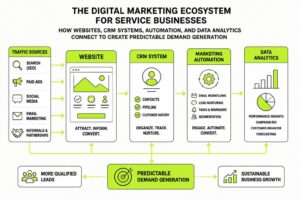
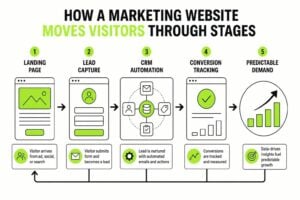
Your website is infrastructure, not decoration. Design marketing treats it as the central hub where all traffic converges, where trust gets built or broken, and where prospects decide if you're worth their time.
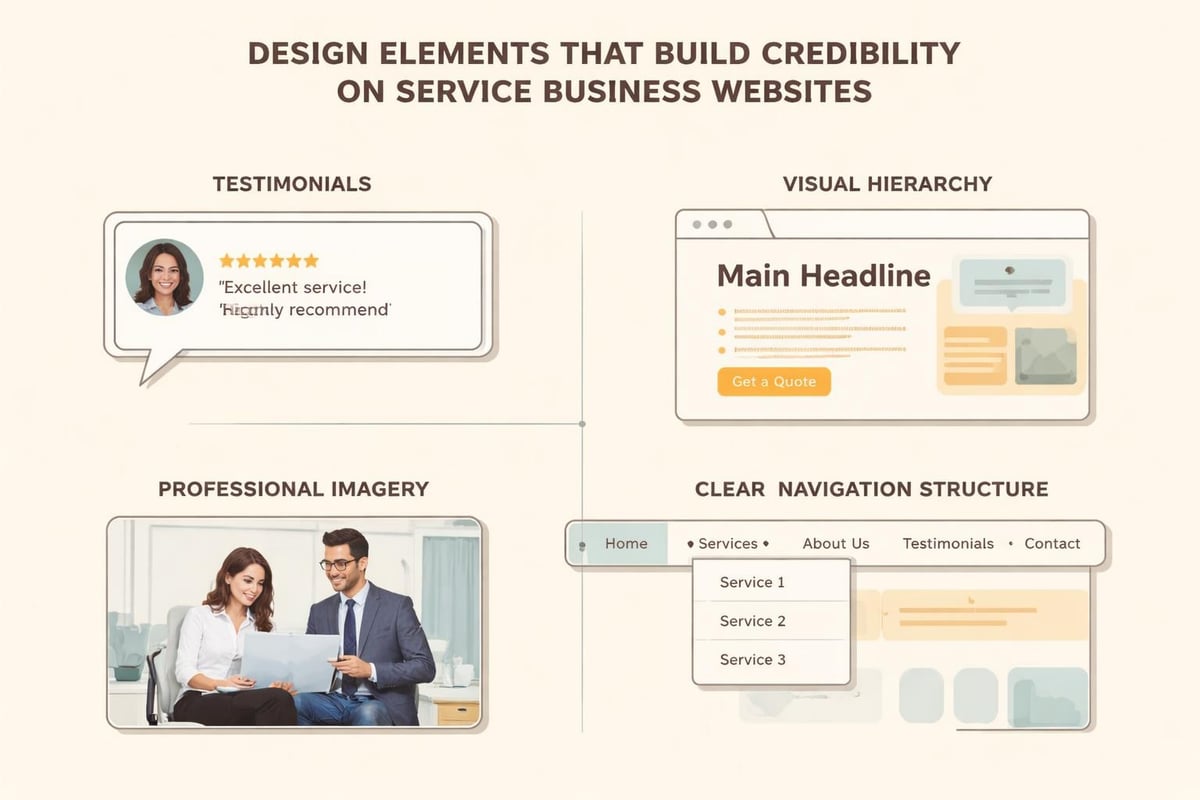
High-trust websites share specific design characteristics. They load fast, communicate value immediately, and guide visitors toward clear next steps. They don't try to be clever. They try to be clear.
Structure That Converts
Start with your homepage. The hero section should answer three questions within seconds: what you do, who it's for, and why it matters. This isn't about creative copywriting experiments. It's about respecting your visitor's time and reducing uncertainty.
Navigation should be predictable and minimal. Seven menu items maximum. Group related pages under dropdown menus only when necessary. Every additional choice creates decision paralysis.
Service pages need distinct visual sections that break up information:
- Problem statement that shows you understand their situation
- Solution framework that explains your approach
- Process clarity that removes mystery from engagement
- Proof elements like case studies or metrics
- Clear call to action with no competing options
The principles of effective web design emphasize creating layouts that serve user intent first, visual appeal second. When these align, you get both trust and conversion.
Responsive design isn't optional anymore. More than 60% of website traffic comes from mobile devices in 2026. If your site breaks on phones, you're losing half your prospects before they read a word.
Visual Signals of Credibility
Professional photography beats stock images every time. Real faces, real offices, real work. Stock photos signal low investment and generic service.
Whitespace communicates premium positioning and makes content digestible. Cramming information creates anxiety. Breathing room creates confidence.
Testimonials need design structure. Don't just dump quotes onto a page. Format them with client photos, company names, and specific results. Use design to make social proof scannable and credible.
Email Design That Actually Gets Read
Email marketing lives or dies on design decisions made before you write a single word. Layout, image ratio, mobile optimization, and visual hierarchy determine whether your message gets three seconds or gets deleted.
Email design best practices from HubSpot emphasize the critical balance between images and text. Too many images trigger spam filters. Too much text creates walls that mobile users scroll past.
Template Systems That Scale
Build email templates, not individual designs. Templates create consistency, speed up production, and ensure every campaign maintains brand standards. A solid template library includes:
- Announcement template for product launches or company news
- Newsletter template for regular content distribution
- Nurture template for automated sequences
- Event template for webinars or workshops
- Sales template for direct offers
Each template should work perfectly on mobile first, desktop second. Most emails get opened on phones. Design for the smallest screen, then enhance for larger ones.
Converting Attention Into Action
Every email needs one primary goal. Design should support that goal relentlessly. If you want people to book a call, your entire layout should guide them toward that button. Secondary links dilute focus and reduce conversion.
Button design matters more than most marketers realize. Use contrasting colours that stand out from your brand palette. Make buttons large enough to tap easily on mobile (minimum 44×44 pixels). Use action-oriented copy: "Book Your Strategy Call" beats "Learn More" every time.
Salesforce's email design guide highlights how strategic design choices directly impact click-through rates and conversion metrics. Their research shows well-designed emails can improve engagement by 40% or more.
| Design Element | Poor Execution | Strong Execution |
|---|---|---|
| Subject line preview text | Ignored or defaulted | Crafted to extend subject |
| Header image | Heavy file, slow load | Optimized, fast, mobile-ready |
| Body copy | Dense paragraphs | Short blocks, scannable |
| CTA placement | Bottom only | Multiple strategic positions |
| Footer | Minimal, compliance only | Useful links, contact info |
Automation Infrastructure Needs Design Too
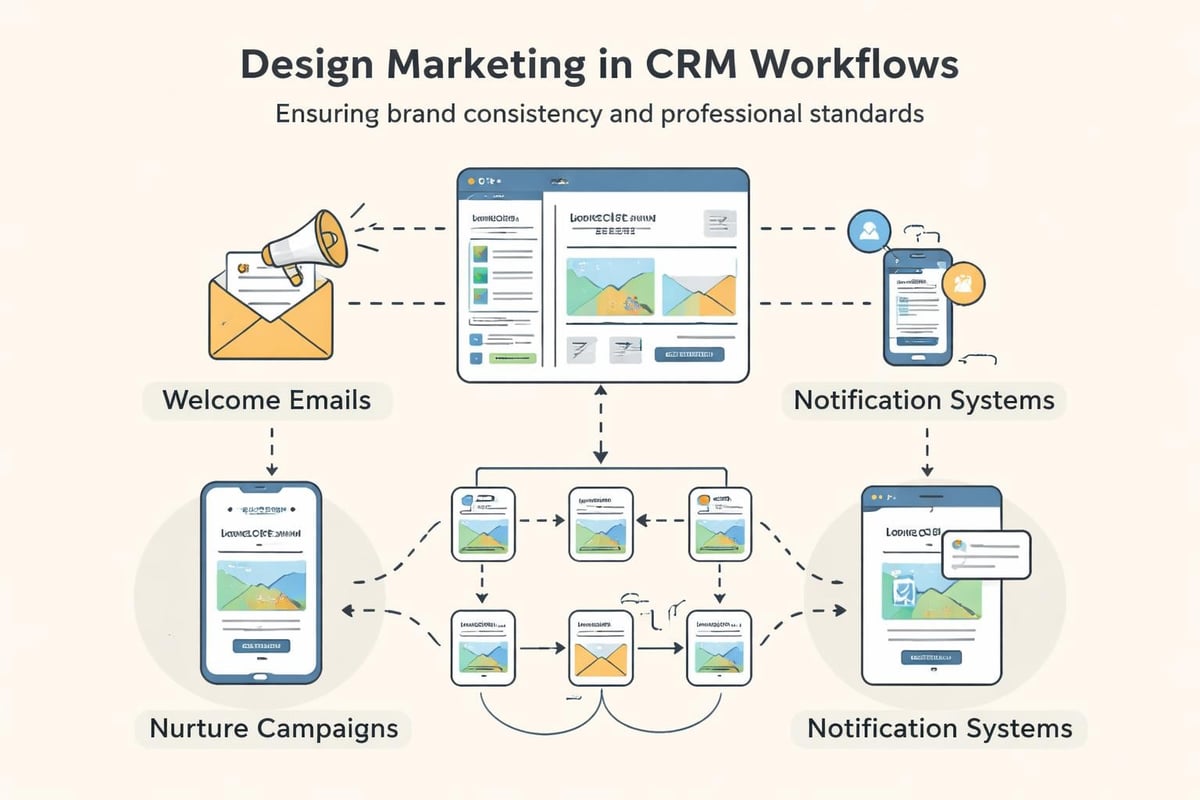
CRM systems and marketing automation platforms are where design marketing often gets forgotten. People focus on workflows and logic but ignore the visual experience of automated touchpoints.
Every automated email, SMS, or notification that your system sends is a brand interaction. Design marketing extends into these systems to ensure consistency and professionalism at scale.
Designing Automated Journeys
Map your customer journey visually before building automation. Identify every touchpoint where prospects interact with your brand. Each needs appropriate design treatment.
Welcome sequences set expectations. The design should match the premium positioning you've established elsewhere. If your website looks professional but your welcome email looks like it was built in 1999, you've broken trust.
Abandoned cart or follow-up sequences need different design than nurture emails. They're more direct, more urgent, and require design elements that create appropriate emphasis without feeling pushy.
Notification emails (password resets, booking confirmations, receipt emails) still represent your brand. Many businesses neglect these, using default templates that look nothing like their marketing. Every interaction either builds or erodes brand equity.
Visual Consistency Across Platforms
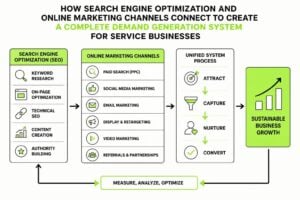
Your design marketing strategy should create cohesive experiences whether someone receives an email, visits your website, sees your social content, or gets a proposal. This doesn't mean everything looks identical. It means everything feels like it comes from the same trusted source.
Develop a visual system with defined:
- Colour palette (primary, secondary, accent colours)
- Typography hierarchy (H1, H2, body, captions)
- Image style (photography approach, graphics treatment)
- Layout patterns (grid systems, spacing standards)
- Icon library (consistent visual language)
Document these decisions so everyone creating marketing assets works from the same foundation. This is how you scale without losing brand integrity.
Content Marketing Needs Visual Strategy
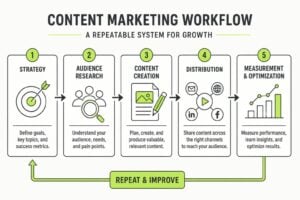
Content without design is just words on a screen. Blog posts, case studies, lead magnets, and resource libraries all benefit from intentional visual structure that makes information accessible and actionable.
Blog Post Design
Every blog post on your site should follow a consistent template that includes defined heading styles, optimal line length for readability, strategic use of bulleted lists, and visual breaks that prevent wall-of-text syndrome.
Images within posts serve specific purposes. Hero images set context and improve social sharing. Inline images break up long sections and illustrate complex concepts. Screenshots and diagrams provide proof and clarity.
Tables make comparisons scannable. Instead of describing differences in paragraph form, show them in structured rows and columns. Readers absorb information faster and retain it better.
The graphic design best practices for digital marketing emphasize purposeful design over decorative elements. Every visual should earn its place by serving reader comprehension or conversion goals.
Lead Magnet Design
PDF guides, templates, and downloadable resources represent your expertise. Poor design undermines credibility instantly. These assets need professional treatment because they get saved, shared, and referenced long after initial download.
Cover design creates first impressions. Clean typography, professional imagery, and clear value propositions signal quality. Inside pages need consistent formatting, generous margins, and visual hierarchy that guides readers through content logically.
Interactive tools like calculators, assessments, or templates require different design considerations. They need to be intuitive enough that users can engage without instructions while maintaining your brand standards.
Portfolio and Case Study Presentation
For service-based businesses, how you present past work matters as much as the work itself. Design marketing principles apply directly to portfolio construction and case study formatting.
Case Study Structure
Strong case studies follow predictable visual patterns that make information easy to extract. Start with a summary section showing client name, industry, challenge, and results. Use design to make key metrics stand out (larger numbers, contrasting colours, strategic placement).
The body should alternate between text explanation and visual proof. Screenshots, before/after comparisons, data visualizations, and process diagrams all strengthen credibility.
Exemplary design portfolios showcase work through strategic curation and presentation. They don't dump everything. They select best examples and present them in ways that highlight thinking, not just execution.
Quantifying Visual Impact
Design marketing works because it produces measurable outcomes. Track metrics that connect design decisions to business results:
- Conversion rate by landing page design
- Email open rates by template type
- Time on page by layout structure
- Form completion rate by design complexity
- Mobile vs desktop conversion gaps
These metrics tell you which design approaches work for your specific audience. What converts for B2B software might fail for professional services. Test, measure, and refine based on your data, not design trends.
Our approach to branding and marketing integration focuses on creating systems where design decisions compound value over time rather than chasing aesthetic trends that change monthly.
Implementation Without Overwhelm
Design marketing sounds like a massive undertaking. It doesn't have to be. Start with your highest-traffic assets and work backward.
Most businesses should prioritize in this order:
- Homepage redesign with clear value proposition and navigation
- Primary email templates for campaigns and automation
- Core service pages with consistent structure
- Lead magnet design for top-performing offers
- Case study templates for proof elements
Don't try to fix everything at once. Build one solid template, use it consistently, then expand. This incremental approach prevents overwhelm and allows you to test effectiveness before scaling.
Working With Design Resources
You have three options: hire in-house, work with an agency, or use freelancers. Each has tradeoffs.
In-house designers understand your business deeply but may lack specialized marketing expertise. They're great for ongoing needs but expensive for small teams.
Agencies bring strategic thinking and diverse experience. They're ideal for building foundational systems and templates you'll use repeatedly. Higher cost upfront, but the infrastructure they build pays off over time.
Freelancers offer flexibility and specialized skills. Perfect for project-based work or filling specific gaps. Quality varies widely, so invest time in finding the right people.
Whichever path you choose, design marketing requires ongoing attention. It's not a project you complete. It's a system you refine as your business evolves and your market shifts. When you treat it as infrastructure rather than decoration, the return on investment becomes obvious in your metrics.
Design marketing builds the systematic foundation that turns visual assets into conversion infrastructure. When your website, emails, automation, and content all work together with intentional design and strategic purpose, growth becomes predictable instead of chaotic. At MDO Digital, we help service-based businesses build these high-trust systems that protect leads, remove friction, and create compounding returns. If you're ready to move beyond random acts of marketing into structured growth, let's talk.