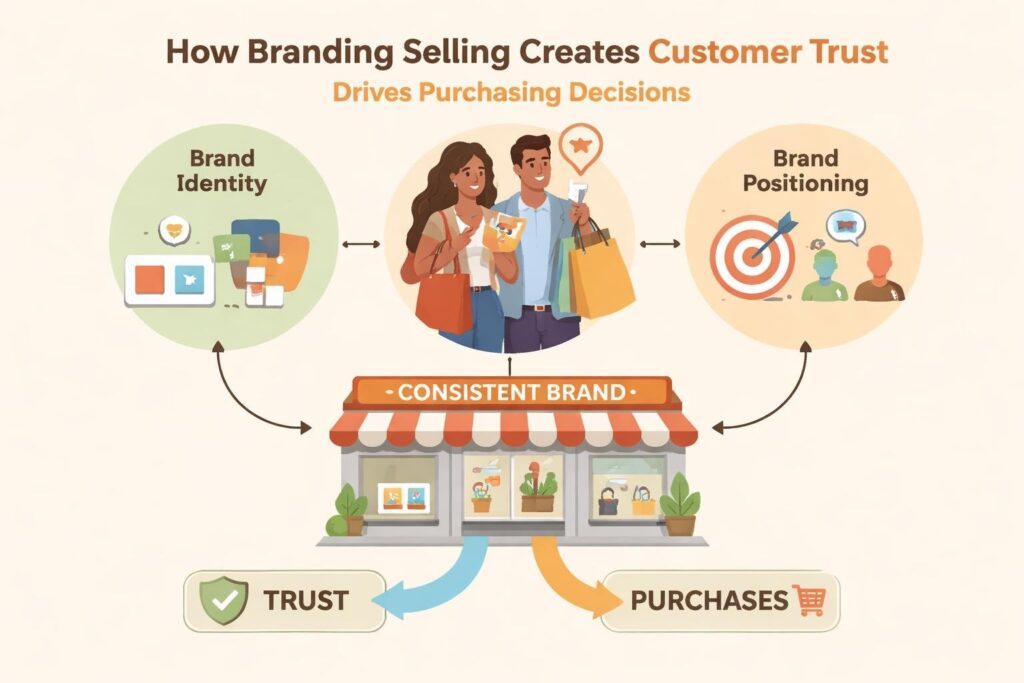
Most service businesses think they have a sales problem when they really have a branding problem. You can perfect your pitch, optimize your funnel, and train your team, but if your brand doesn't communicate trust, clarity, and value before anyone speaks to you, you're fighting uphill. Branding selling isn't about logos or color schemes. It's about building a market position so clear that prospects already understand why they need you before the first conversation starts. When your brand does the heavy lifting, selling becomes easier, faster, and more predictable.
What Branding Selling Actually Means
Branding selling is the practice of using brand identity, positioning, and perception to make the sales process more effective. Instead of relying purely on features, benefits, or discounts, you leverage the trust and recognition your brand has built.
Think about it this way: when someone sees your brand and immediately understands what you do, who you serve, and why you're different, half the selling is already done. They arrive pre-qualified, pre-educated, and pre-disposed to trust you.
The Difference Between Selling and Branding Selling
Traditional selling focuses on persuading individuals through direct conversation. You explain your service, overcome objections, and close deals one at a time. It works, but it doesn't scale well.
Branding selling, on the other hand, creates market conditions where buyers come to you already convinced. Your brand communicates value continuously, across every touchpoint, so each sales conversation starts from a position of authority rather than skepticism.
- Traditional selling: Reactive, conversation-dependent, high effort per deal
- Branding selling: Proactive, perception-driven, compounding returns over time
- Traditional selling: Competes on price or features
- Branding selling: Competes on trust and positioning
The best businesses do both. They build strong brands and train competent sales teams. But the brand creates the foundation that makes selling dramatically easier.
Why Service Businesses Struggle Without Strong Branding
Service businesses face a unique challenge: you can't show prospects a physical product. You're selling expertise, process, and results. Without a strong brand, you're asking people to trust you based on nothing but words.
When your branding is weak or inconsistent, prospects hesitate. They compare you to competitors purely on price because they can't see any other meaningful difference. You end up in endless qualification calls, negotiating fees, and losing deals to cheaper alternatives.
The Hidden Cost of Weak Branding
Every prospect who visits your website and leaves confused is a lost opportunity. Every sales call where you have to explain what you do from scratch is inefficiency. Every client who hires you but doesn't fully understand your value is a risk for churn or scope creep.
Weak branding creates friction at every stage:
- Awareness: Prospects don't understand what you do or why it matters
- Consideration: You look similar to every competitor in your space
- Decision: Price becomes the only differentiator
- Retention: Clients don't value your work enough to stay long-term or refer others
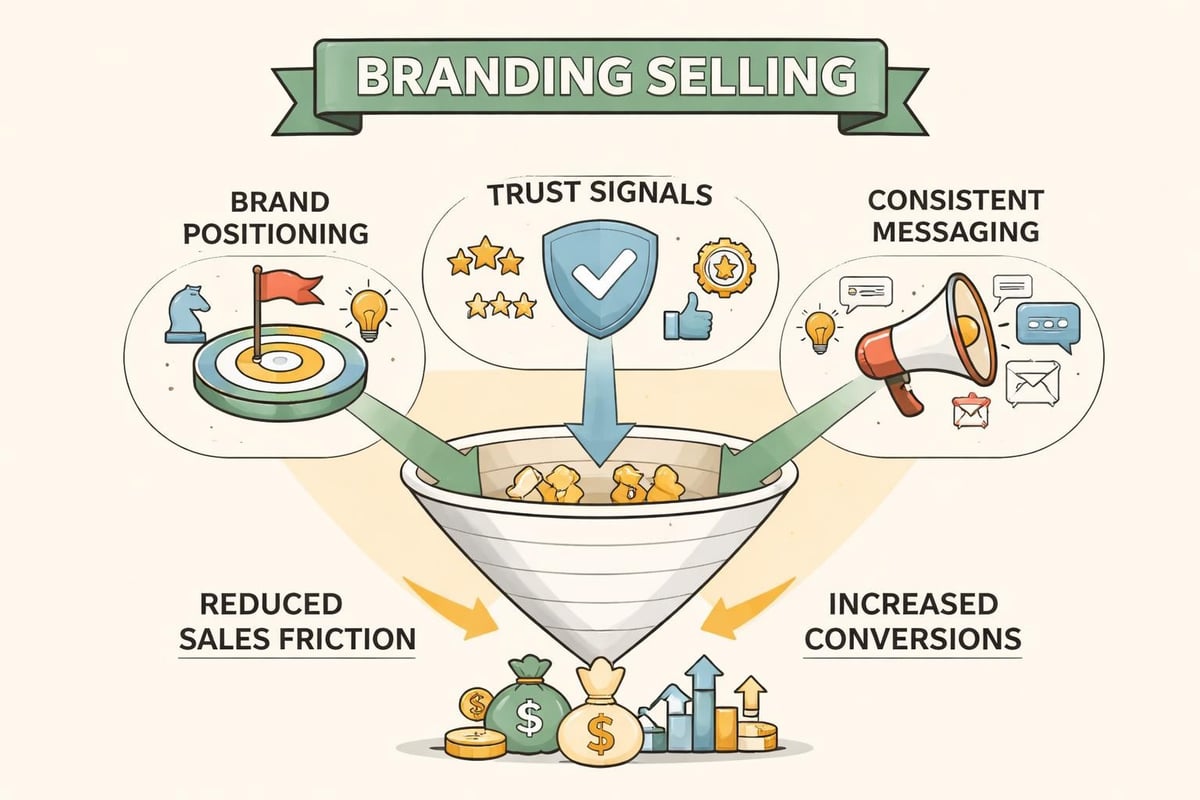
Strong branding selling eliminates most of this friction before it starts. When prospects arrive already understanding your positioning, they skip straight to evaluating fit rather than questioning credibility.
Building a Brand That Sells Itself
Creating a brand that actively contributes to your sales process requires clarity, consistency, and commitment. You're not building something pretty. You're building a system that communicates value at scale. Understanding the advantages of strong branding for sellers helps frame how your brand influences buyer perception and reduces sales resistance.
Start With Positioning, Not Aesthetics
Most businesses start with a logo and a color palette. That's backwards. Start by answering three questions with brutal clarity:
- Who exactly do we serve? (The narrower, the better)
- What specific problem do we solve? (One primary pain point)
- Why are we different from every alternative? (Unique mechanism or approach)
Once you've answered these, your brand identity should communicate them instantly. Every design choice, every word, every touchpoint should reinforce this positioning.
| Positioning Element | Weak Example | Strong Example |
|---|---|---|
| Target Audience | "Small businesses" | "Service businesses doing $500K-$2M annually" |
| Problem Solved | "Marketing help" | "Converting website traffic into booked sales calls" |
| Differentiation | "We care about clients" | "Data-driven systems that predict demand 90 days out" |
The tighter your positioning, the easier branding selling becomes. Prospects either fit or they don't. The ones who fit recognize themselves immediately and move forward fast.
Design for Trust, Not Trends
Your visual brand should communicate professionalism, consistency, and reliability. Service businesses don't need to be flashy. They need to be trustworthy.
This means clean design, clear typography, professional photography or graphics, and consistent application across every channel. Your website, proposals, email signatures, and social profiles should all feel like they come from the same company.
When prospects see inconsistency, they question competence. If you can't manage your own brand, why would they trust you to manage their marketing or business systems?
How Branding Selling Shows Up in Practice
Theory is fine, but branding selling only matters if it drives measurable business results. Here's how it plays out in real client acquisition and retention.
Shorter Sales Cycles
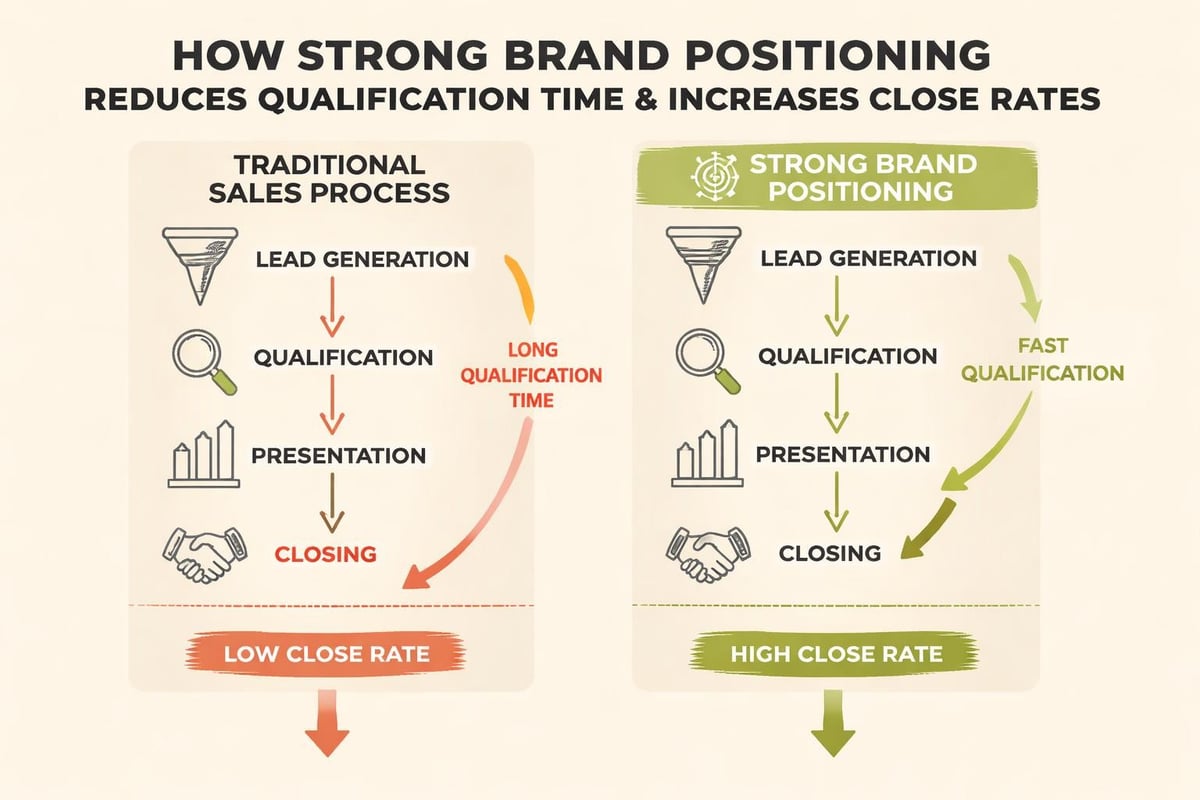
When your brand communicates clearly, prospects arrive already educated. They've read your content, seen your positioning, and decided you're credible before the first call. Instead of spending 30 minutes explaining what you do, you spend 5 minutes confirming fit and 25 discussing implementation.
This compounds quickly. If you can close deals in half the time, you can either double your deal flow or free up resources for delivery and growth. Many successful brands sell the brand, not just the category, which creates differentiation that speeds up decision-making.
Higher Close Rates
Prospects who come through a strong brand are pre-qualified and pre-sold on your value. They're not shopping around looking for the cheapest option. They specifically want to work with you.
Your close rate naturally increases because you're speaking to better-fit prospects who already trust you. Many of them arrive ready to buy, just needing confirmation that you can deliver what they need.
Premium Pricing Without Pushback
Strong branding selling allows you to charge more because you're not competing on price. You're competing on trust, expertise, and results.
When prospects understand your unique positioning and believe in your capability, price becomes a secondary consideration. They're evaluating value, not cost. This doesn't mean you can charge whatever you want, but it does mean you can command market-leading rates without constant negotiation.
Pricing psychology shifts when branding is strong:
- Weak brand: "Can you match this competitor's price?"
- Strong brand: "What's included in this investment?"
- Weak brand: Price objections in every proposal
- Strong brand: Budget discussions early, then focus on scope
The best part? Premium pricing attracts better clients. People who value expertise, respect process, and pay on time. That creates a virtuous cycle where your brand gets stronger with every project.
Internal Branding Matters Just as Much
Most businesses focus exclusively on external branding, but your team needs to understand and embody your brand just as much as your market does. This concept of selling the brand inside ensures employees become brand ambassadors who strengthen your market position.
Your Team as Brand Ambassadors
Every interaction a client or prospect has with your business either reinforces or undermines your brand. If your brand promises clarity and structure but your project manager is disorganized, the brand promise breaks.
Your team needs to understand:
- What your brand stands for (values and positioning)
- How their role contributes to the brand promise
- What behavior is on-brand versus off-brand
This isn't about creating robots who recite talking points. It's about ensuring everyone understands the standards your brand sets and how their work upholds those standards.
Consistent Delivery Builds Brand Equity
Every project you deliver is a brand touchpoint. When you consistently meet or exceed expectations, your brand equity grows. Clients become advocates, referrals increase, and your market reputation compounds.
When delivery is inconsistent, even the best external branding eventually falls apart. Trust erodes, referrals dry up, and you're back to competing on price.
Strong internal branding creates the consistency that makes external branding credible. The brand promise your marketing makes is only as strong as your team's ability to deliver it repeatedly.
Scaling Branding Selling Through Systems
Branding selling works best when it's systematized, not accidental. You need infrastructure that supports consistent brand experiences at scale. This is where marketing systems and branding intersect to create predictable growth.
Document Your Brand Standards
Create clear guidelines for how your brand shows up everywhere:
- Visual identity: Logo usage, colors, fonts, imagery style
- Voice and tone: How you write, speak, and communicate
- Messaging: Key value propositions, positioning statements, common objections
- Behavior standards: How team members interact with clients and prospects
These shouldn't sit in a drawer. They should be accessible, referenced regularly, and updated as your brand evolves.
Build Automation That Reinforces Brand
Your CRM, email sequences, proposal templates, and client onboarding should all reflect your brand consistently. Automation doesn't have to feel robotic. When done well, it delivers consistent, high-quality experiences that reinforce your positioning.
| System | Brand Opportunity | Implementation |
|---|---|---|
| Email nurture | Consistent voice, valuable content | Template library with approved messaging |
| Proposals | Professional presentation, clear value | Branded templates with reusable sections |
| Onboarding | Smooth experience, early wins | Automated welcome sequence with clear next steps |
| Reporting | Data transparency, ongoing value | Branded dashboards with commentary |
Every automated touchpoint is a chance to reinforce what makes your brand different. Don't waste those opportunities on generic, impersonal communication.
Measure Brand Impact on Sales
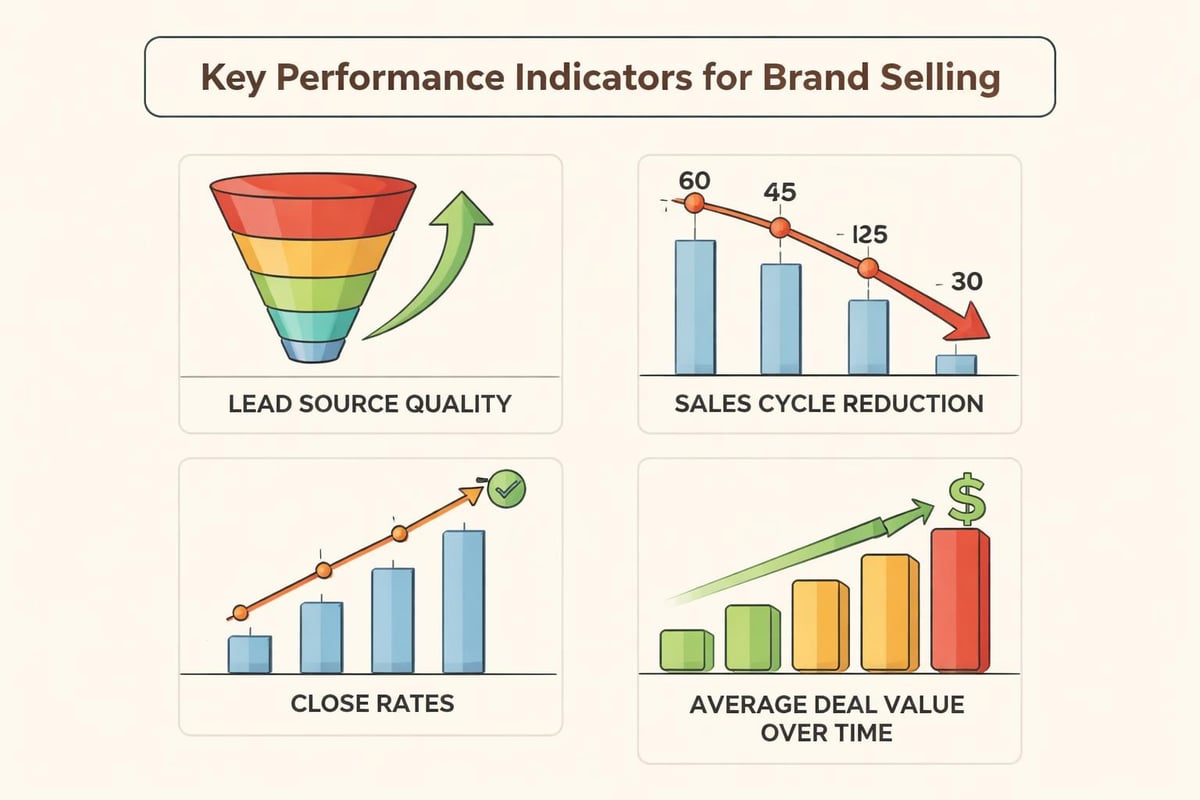
Track metrics that reveal how branding selling is performing:
- Source of leads: Are more coming through brand channels (content, referrals, organic) versus paid?
- Sales cycle length: Are deals closing faster as brand awareness grows?
- Close rate by channel: Do brand-aware prospects close at higher rates?
- Average deal size: Are clients willing to invest more as your brand strengthens?
These metrics tell you if your branding investment is paying off in sales efficiency and revenue growth. If branding is strong, you should see compounding returns over time as market awareness and trust increase.
Common Branding Selling Mistakes to Avoid
Even businesses that understand the importance of branding often sabotage their efforts through common mistakes.
Inconsistency Across Channels
Your brand needs to feel cohesive everywhere. If your website looks professional but your social media is casual and your proposals are templated clipart, prospects notice. Each inconsistency creates doubt.
Pick a standard and stick to it. Every channel, every touchpoint, every interaction should feel like it comes from the same company with the same values.
Copying Competitors Instead of Differentiating
When you look too much like everyone else in your space, branding selling fails. Prospects can't tell you apart, so they default to price comparisons.
Your brand should make it obvious what makes you different. If you can't articulate that difference clearly, neither can your brand. Understanding different branding approaches and agency roles can help you see how professionals create meaningful differentiation.
Neglecting Brand After Launch
Branding isn't a one-time project. It evolves as your business grows, your market shifts, and your positioning sharpens. Brands that stay relevant require ongoing attention and refinement.
Review your brand quarterly. Ask:
- Is our positioning still accurate?
- Are we communicating clearly?
- Is our visual identity still serving our goals?
- What feedback are we getting from prospects and clients?
Small adjustments keep your brand sharp and responsive. Ignoring it lets your brand drift or stagnate while competitors move forward.
Long-Term Value: Brand Equity as a Business Asset
Strong branding selling doesn't just make sales easier today. It builds equity that increases your business value over time. If you ever plan to sell your business, exit to a partner, or attract investment, brand strength is a major factor. Research shows how a strong brand helps you sell your business by demonstrating market position and reducing buyer risk.
Brands Survive Founder Transitions
Personal brands can drive early growth, but business brands outlast individuals. If your company is just your name and personality, it's hard to sell or scale beyond yourself.
A strong business brand has value independent of any single person. It represents systems, reputation, and market position that continue generating revenue regardless of who's leading the company.
Market Recognition Creates Compounding Returns
The longer you build a consistent brand, the more awareness and trust compound in your market. Early efforts feel slow, but after years of consistent positioning, your brand becomes a shortcut in prospects' minds.
When someone needs what you offer, they think of you first. That's brand equity. It's the difference between chasing every lead and having qualified prospects seek you out specifically.
Future-Proofing Your Business Growth
Markets change. Tactics shift. Platforms rise and fall. But a strong brand adapts and persists. Your brand provides stability and continuity while everything else evolves around it. Exploring digital branding solutions can help service businesses build brands that adapt to changing market conditions.
Investing in branding selling today sets up sustainable growth for years. It's not the fastest path to a quick sale, but it's the most reliable path to building a business that grows, scales, and eventually becomes valuable beyond your daily involvement.
Branding selling transforms how service businesses acquire clients by making trust, positioning, and value visible before the first conversation. When your brand does the heavy lifting, sales become predictable, efficient, and profitable. If you're ready to build marketing systems and branding that create structured growth, MDO Digital helps service businesses scale with clarity through high-trust websites, CRM infrastructure, and data-driven demand generation. Let's remove the chaos and build something that compounds.