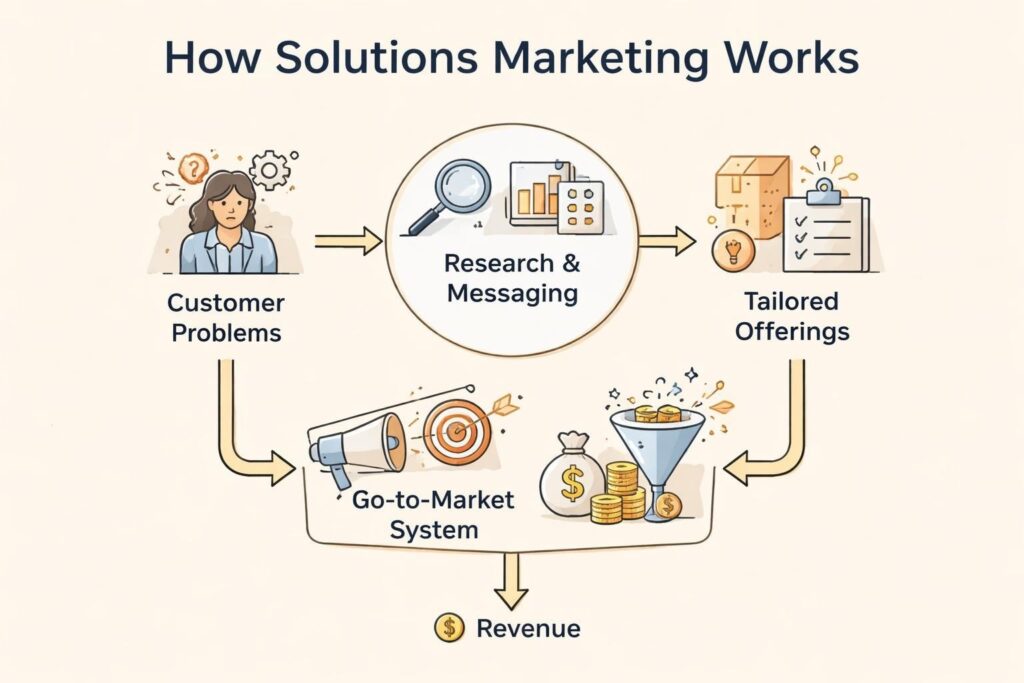
Most service businesses market what they do, not what their customers actually need. They lead with features, capabilities, and credentials. The problem? Buyers don’t wake up wanting a CRM implementation or a brand refresh. They wake up frustrated by lost leads, unclear messaging, or growth that’s stalled because their systems can’t keep up. Solutions marketing flips the script. It starts with the problem, builds offerings around outcomes, and positions your business as the clear answer to a specific struggle. It’s not about being everything to everyone. It’s about being the right fit for the right people at the right time.
What Solutions Marketing Actually Means
Solutions marketing is a strategic approach that defines and promotes offerings based on the specific problems they solve rather than the technical features they include. Instead of selling “email automation platform” or “brand strategy services,” you’re selling “predictable follow-up that converts 30% more leads” or “clarity that makes every marketing decision easier.”
The shift sounds simple, but it changes everything. Your messaging, your positioning, your case studies, even your pricing model all reorganise around customer outcomes. This approach requires deep understanding of:
- Who your buyers are and what keeps them stuck
- What alternative solutions they’re considering (including doing nothing)
- How they measure success in their own terms
- What internal barriers prevent them from solving the problem alone
Why Service Businesses Need This Framework
Product companies figured this out years ago. SaaS platforms don’t sell databases, they sell “a single source of truth for your team.” Manufacturing companies don’t sell machinery, they sell “30% faster production with half the downtime.”
Service businesses often lag behind because their offerings feel harder to package. How do you “productise” strategy? How do you standardise something custom?
That’s exactly why solutions marketing works. It doesn’t require cookie-cutter deliverables. It requires clarity about the transformation you create. When you build your branding around outcomes, you make buying decisions easier for prospects who are already trying to solve the problem you address.
Building Your Solutions Marketing Strategy
Creating an effective solutions marketing approach isn’t about rewriting your website copy. It’s about restructuring how you think about what you sell and who you serve. This step-by-step guide to building a solution marketing strategy outlines the foundational work required.
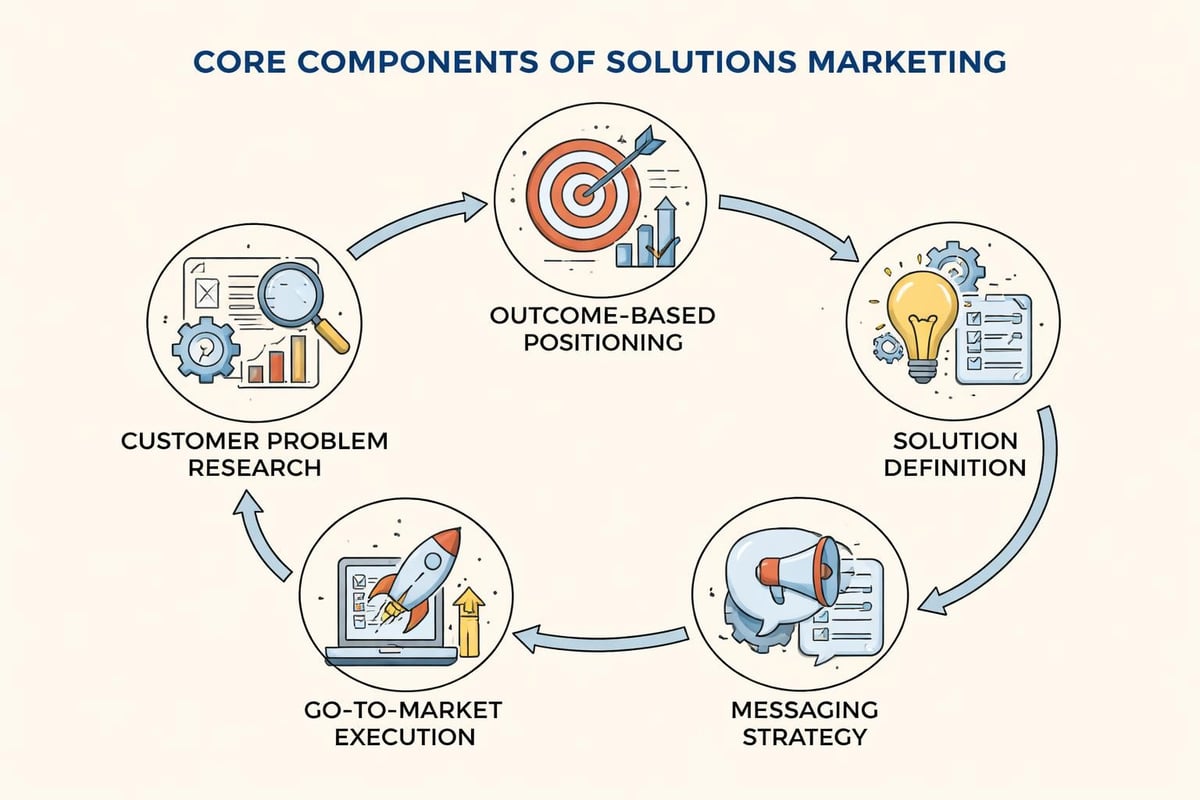
Start With Problem Research
Most agencies assume they know their clients’ problems. They’re usually half right. The surface issue (we need more leads, our brand looks outdated) rarely tells the full story.
Proper problem research involves:
- Interview existing clients about what they were struggling with before hiring you
- Document the exact language they use to describe their pain points
- Map the cost of inaction in time, money, and opportunity
- Identify trigger events that made them finally seek help
- Understand failed attempts at solving it themselves or with competitors
This isn’t survey work. It’s conversation. Ask open questions. Listen for emotion. The best solutions marketing messages come directly from customer interviews, not from your assumptions about what matters.
Define Solution Categories
Once you understand the problems deeply, you can structure your offerings as distinct solutions rather than a generic service menu. Each solution should target a specific problem cluster with a clear outcome promise.
| Solution Category | Core Problem Addressed | Primary Outcome |
|---|---|---|
| Lead Infrastructure | Lost leads, no follow-up system | Predictable conversion path |
| Brand Clarity | Inconsistent messaging, confused positioning | Clear market differentiation |
| Marketing Systems | Random acts of marketing, no data | Structured demand generation |
Notice how each category leads with the struggle, not your capability. You’re not selling “CRM setup” or “brand strategy.” You’re selling relief from chaos and a path to predictable outcomes.
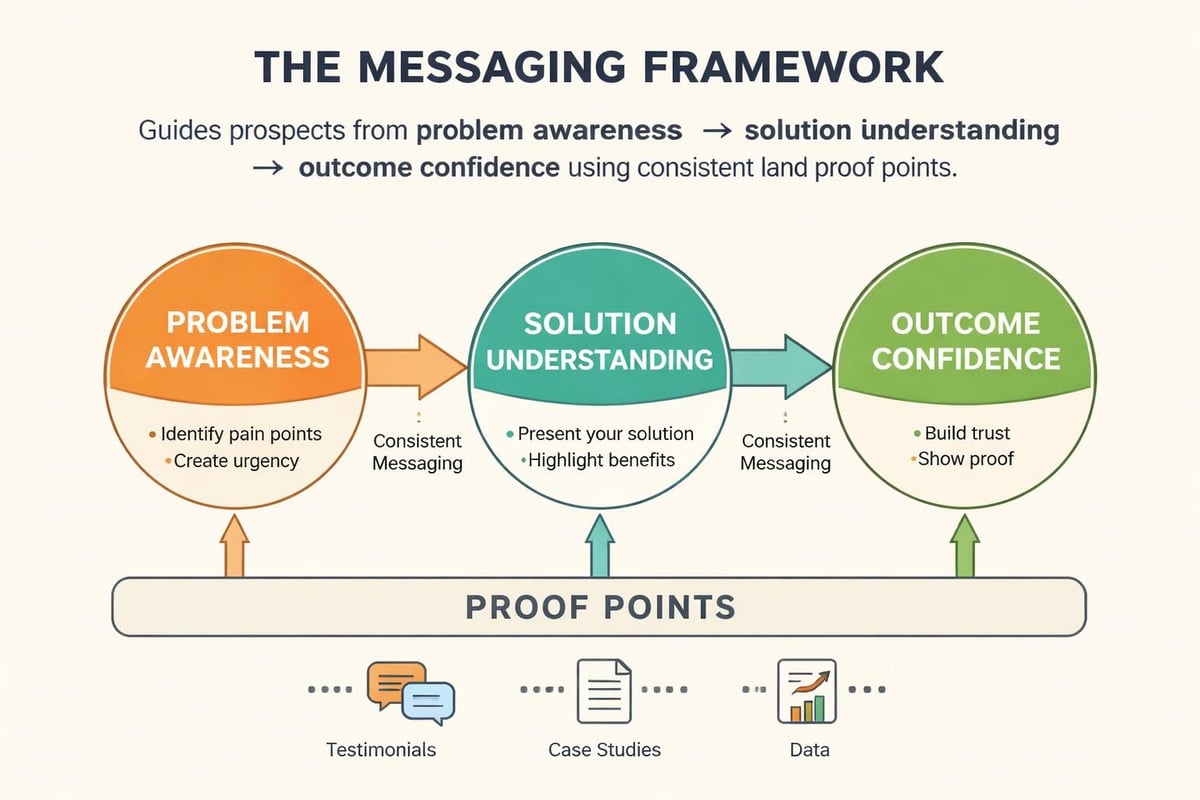
Develop Outcome-Based Messaging
Here’s where most service businesses stumble. They define the solution correctly but then revert to capability-speak when describing it. “We build custom CRM workflows in HubSpot” tells me what you do. “We design follow-up systems that protect every lead and convert 25% more opportunities” tells me what changes for my business.
Strong solutions marketing messaging includes:
- Before state: Where the customer is stuck right now
- The bridge: Your solution and why it works
- After state: Tangible outcomes they’ll experience
- Proof: Evidence that you’ve delivered this before
Every piece of content, every case study, every sales conversation should reinforce this narrative arc. The Product Marketing Alliance’s overview of solutions marketing emphasises how consistent messaging across channels amplifies impact.
How to Position Solutions in Your Market
Solutions marketing only works if your market recognises the problem you solve. If you’re inventing a new category or addressing something prospects don’t realise is holding them back, you need educational positioning before promotional positioning.
Problem Awareness Levels
Not every prospect knows they have the problem you solve. Some are aware but haven’t prioritised it. Others are actively searching for solutions. Your positioning needs to meet people where they are.
Unaware prospects don’t recognise the problem exists. Your marketing educates before it sells. Content focuses on symptoms and costs of inaction.
Problem-aware prospects know something’s wrong but haven’t defined it clearly. Your marketing helps them name the issue and understand its scope.
Solution-aware prospects are evaluating options. Your marketing demonstrates why your approach delivers better outcomes than alternatives.
Most aware prospects understand both problem and solution types. They’re comparing providers. Your marketing shows proof and removes friction from buying.
Different channels serve different awareness levels. Your advertising strategy should account for this spectrum rather than treating all prospects identically.
Competitive Differentiation
In solutions marketing, your competition isn’t just other agencies. It’s also:
- DIY approaches (they’ll try to figure it out themselves)
- Internal resources (they’ll assign it to their marketing person)
- Doing nothing (they’ll live with the problem a bit longer)
Your positioning needs to address why hiring you produces better outcomes than these alternatives. Price comparisons matter less than outcome confidence. If a prospect believes you’ll solve their problem and competitors might not, pricing becomes secondary.
This is where case studies earn their weight. Not generic testimonials, but specific stories showing how you’ve solved this exact problem for similar businesses. Real case studies demonstrate outcomes, not just satisfaction.
Implementing Solutions Marketing Systems
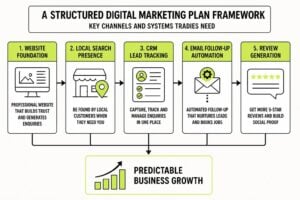
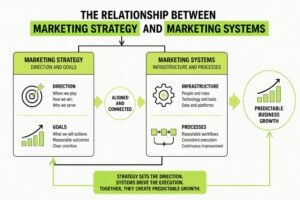
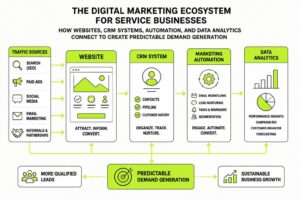
Strategy means nothing without execution. Solutions marketing requires infrastructure that captures attention, qualifies intent, and converts interest into conversations and revenue.
Content That Matches Search Intent
When someone searches for “how to stop losing leads” or “why our marketing doesn’t work,” they’re showing problem awareness. Your content should acknowledge their struggle, explain root causes, and position your solution as the path forward.
Create content clusters around each solution category:
- Pillar content explaining the core problem and solution approach
- Supporting articles addressing specific symptoms and obstacles
- Comparison pieces evaluating different solution approaches
- Implementation guides showing what change actually looks like
This breakdown of marketing strategies highlights the importance of customer-focused content over promotional messaging. Solutions marketing demands this customer-first lens across every asset.
Lead Capture and Qualification
Not everyone who engages with your content is ready to buy. Solutions marketing systems include qualification mechanisms that identify serious prospects and nurture those who need more time.
High-intent offers like audits, assessments, or strategy sessions attract people actively evaluating solutions. These should ask qualifying questions upfront so your team focuses on viable opportunities.
Educational offers like guides, frameworks, or templates serve earlier-stage prospects building problem awareness. Follow-up sequences should educate rather than push for immediate sales conversations.
Your marketing systems should automatically route leads based on intent signals, ensuring the right message reaches people at the right stage.
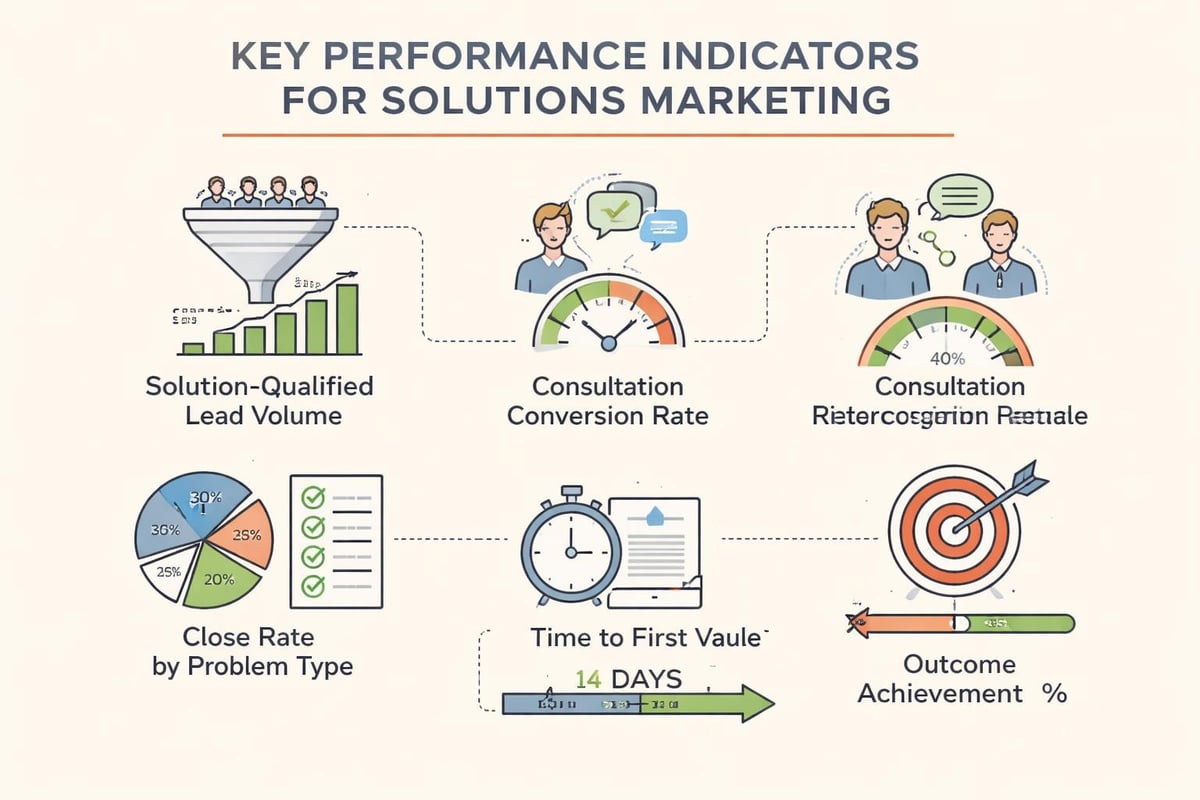
Metrics That Matter
Solutions marketing success isn’t measured by traffic or followers. It’s measured by how efficiently you convert problem-aware prospects into clients who achieve outcomes.
Track these indicators:
- Solution-qualified leads: Prospects matching your ideal problem profile
- Consultation conversion rate: How many qualified leads take meetings
- Close rate by solution type: Which offerings convert best
- Client outcome achievement: Percentage reaching promised results
- Time to value: How quickly clients experience initial wins
The application of Bayesian Marketing Mix Modeling demonstrates how data-driven approaches improve marketing investment decisions. Solutions marketing works best when you continuously refine based on performance data.
Solutions Marketing in Practice
Theory breaks down without practical application. Here’s how solutions marketing shapes day-to-day operations for service businesses.
Sales Conversations Change
Traditional sales conversations focus on what you offer and how you work. Solutions-focused conversations start with understanding where the prospect is stuck and what’s at stake if nothing changes.
Your discovery questions should uncover:
- What triggered them to seek help now versus six months ago
- What they’ve already tried and why it didn’t work
- How they’ll measure whether this problem is solved
- What internal obstacles might prevent implementation
- Who else needs to believe this solution will work
The sale isn’t about convincing them to buy. It’s about determining if you can actually solve their problem better than alternatives. When you position yourself as a partner solving a real struggle rather than a vendor selling services, objections shift from price and features to fit and confidence.
Packaging Becomes Clearer
Solutions marketing naturally leads to more structured offerings. Instead of custom quotes for every project, you develop solution packages with defined scopes, deliverables, and outcome targets.
This doesn’t mean zero customisation. It means you have a framework that’s proven to work, with clear variation points based on business size, complexity, or specific circumstances.
| Solution Package | Target Client | Core Deliverable | Outcome Target |
|---|---|---|---|
| Foundation | Early-stage service business | Brand positioning + lead system | Clear message + working pipeline |
| Scale | Growing business with demand | Full marketing infrastructure | Predictable demand generation |
| Optimisation | Established business | Performance improvement | 30%+ efficiency gain |
Packages make buying easier and delivery more efficient. You’re not reinventing the wheel for each client. You’re applying proven frameworks to their specific situation.
Marketing Execution Gets Focused
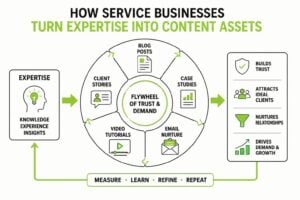
When you know exactly which problems you solve and for whom, content creation becomes strategic rather than random. Every blog post, every email, every social update should either:
- Build awareness of problems you solve
- Educate on solution approaches
- Demonstrate outcomes you’ve created
- Remove objections to working with you
Advanced AI frameworks for marketing analytics are making it easier to identify which content drives actual business results. Solutions marketing demands this level of precision. You can’t afford to create content that doesn’t move prospects toward clarity and action.
Client Success Becomes Measurable
Because solutions marketing defines offerings around specific outcomes, client success metrics become built into delivery. You’re not just completing projects. You’re tracking whether the problem actually got solved.
This creates natural case study material, testimonial opportunities, and referral conversations. When a client can point to concrete improvements (leads protected, conversion rates up, marketing costs down), they become advocates who validate your solutions to similar prospects.
Adapting Solutions Marketing for Service Businesses
The framework works across industries, but implementation details vary based on what you sell and who you serve. For marketing systems and branding agencies, solutions marketing requires some specific adaptations.
Handling Complex, Integrated Solutions
Many service businesses solve interconnected problems. A business might need brand clarity and lead infrastructure and marketing systems. These aren’t separate purchases, they’re components of a larger transformation.
Your solutions marketing should acknowledge this reality:
- Modular solutions that can stand alone or integrate
- Clear sequencing showing which problem to solve first
- Pathway positioning that shows how solutions build on each other
Avoid overwhelming prospects with everything they need. Start with the most urgent problem. Deliver outcomes. Expand from there.
Building Trust Without Overpromising
The danger in outcome-based positioning is overpromising results you can’t guarantee. Solutions marketing works when you’re honest about what drives outcomes and what you can control.
Frame outcomes as:
- Client + agency partnership: “When you implement the system we build”
- Based on prior results: “Businesses similar to yours typically see”
- With clear dependencies: “Assuming consistent execution over 90 days”
Trust comes from realistic expectations met and exceeded, not ambitious promises failed.
Scaling Without Losing the Solution Focus
As you grow, there’s temptation to add services, target new markets, or broaden your positioning. This usually dilutes effectiveness. Solutions marketing works best when focused.
Instead of expanding horizontally (more services), consider:
- Going deeper on existing solutions with more sophisticated delivery
- Targeting narrower with industry-specific variations
- Building out the customer journey with advanced solutions for existing clients
Specialists win in solutions marketing. Generalists get lost in comparison shopping.
Solutions marketing transforms how service businesses attract, convert, and deliver value to clients by organising everything around the problems that matter most to your market. When your positioning, messaging, and delivery systems all reinforce clear outcomes, growth becomes more predictable and less dependent on constant hustle. If you’re ready to move from random marketing tactics to structured systems that compound over time, MDO Digital builds the infrastructure that protects leads, clarifies messaging, and creates demand that actually converts.