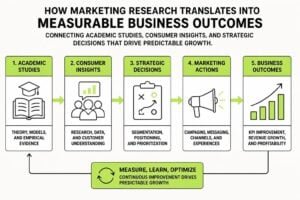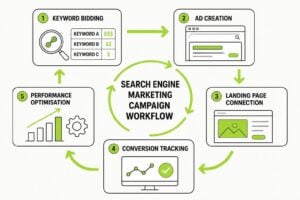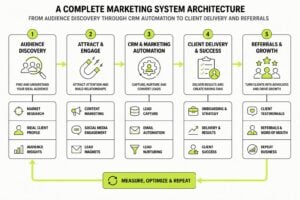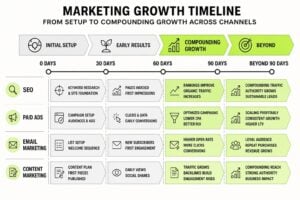
Most service businesses struggle with copywriting digital content because they approach it backwards. They start with what they want to say rather than what their customers need to hear. The result is websites that sound impressive but don’t convert, email campaigns that get ignored, and CRM systems filled with unconvincing automated messages. Digital copywriting isn’t about being clever or creative for its own sake. It’s about creating structured, repeatable messaging that turns attention into action, protects leads through nurture sequences, and compounds trust over time.
Why Copywriting Digital Matters for Service Businesses
Your digital presence operates 24/7. Every page, email, and automated message is either building trust or creating friction.
Service businesses face a unique challenge. You’re not selling a product someone can hold or test. You’re selling expertise, process, and results that exist in the future. Your copywriting needs to bridge that gap between skepticism and confidence.
The core functions copywriting digital serves:
- Clarifies your value proposition so prospects understand what you do within seconds
- Guides qualified leads through decision stages with the right information at the right time
- Reduces sales friction by answering objections before they arise
- Creates consistency across all customer touchpoints, from website to CRM to invoices
When your messaging is scattered or unclear, every lead requires manual intervention. Your team spends time explaining basics that should already be handled by your digital infrastructure. That’s not scalable.
Building Your Foundation: Research Before Writing
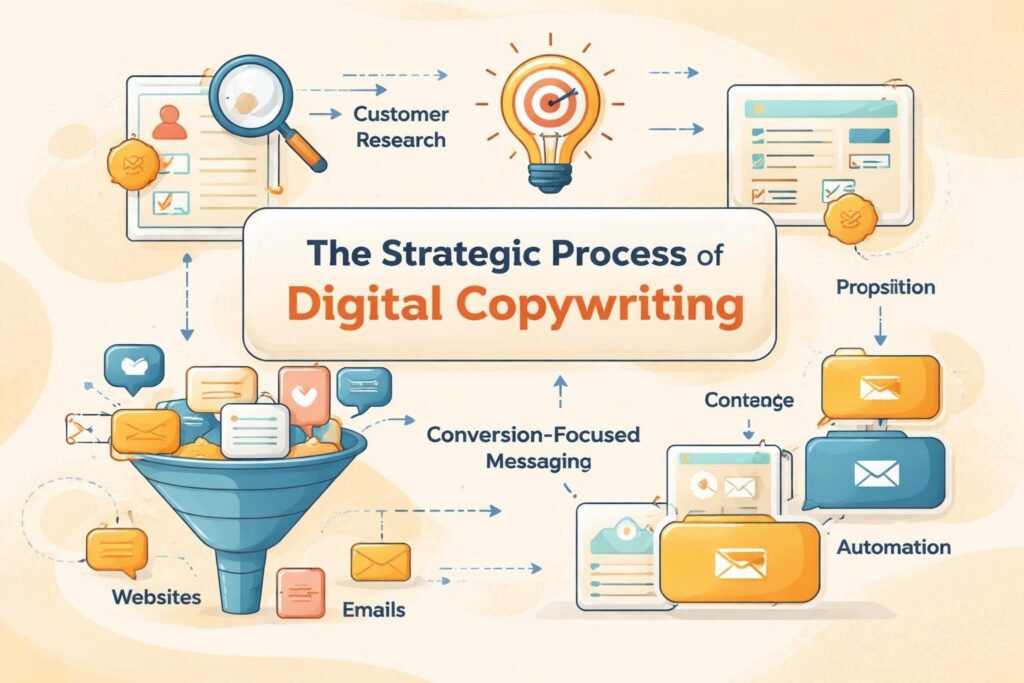
You can’t write compelling copy without understanding who you’re writing for. This sounds obvious, yet most businesses skip proper research and jump straight into drafting.
Start with your existing customers. What problems were they trying to solve when they found you? What language did they use to describe those problems? What objections did they raise before buying?
Customer Research Methods That Work
Interview 5-10 recent customers. Ask specific questions about their journey. Record the exact phrases they use. These aren’t fluffy testimonials but forensic analysis of decision-making patterns.
Review your sales calls and proposals. Look for patterns in questions, hesitations, and what finally convinced people to move forward. Your branding and strategy work should inform this research process.
| Research Source | What You Learn | How to Apply It |
|---|---|---|
| Customer interviews | Pain points, language, objections | Headlines, value props, FAQ content |
| Sales call recordings | Decision triggers, timing, concerns | Email sequences, landing page copy |
| Support tickets | Common confusion points | Clarifying website copy, onboarding emails |
| Competitor analysis | Market positioning gaps | Differentiation messaging |
The goal is building a picture of your customer’s world before they found you. What were they searching for? What solutions had they already tried? What made those solutions fail?
Crafting Messages That Convert
Once you understand your audience, the actual writing becomes systematic. You’re not staring at a blank page wondering what to say. You’re translating research into structured messages.
Effective digital marketing copywriting relies on clear value propositions and strong calls-to-action that guide readers toward specific outcomes.
The Value Proposition Formula
Your value proposition answers three questions in one or two sentences:
- Who you serve
- What problem you solve
- How your approach differs
Vague: “We help businesses grow through digital marketing.”
Specific: “We build CRM and automation systems for service businesses drowning in manual follow-up, so leads don’t fall through cracks.”
The second version tells you exactly who benefits, what problem gets solved, and hints at the methodology. No interpretation required.
Writing for Different Digital Touchpoints
Homepage copy:
- Hook attention in the first 5 seconds with a clear outcome
- State who you serve and what you fix
- Show proof through case studies or metrics
- Give one clear next action
Service pages:
- Lead with the end result, not your process
- Address the specific problem this service solves
- Break down what’s included in concrete terms
- Handle common objections preemptively
Email sequences:
- First email: confirm they’re in the right place
- Middle emails: educate on the problem and approach
- Later emails: case studies and specific offers
- Always one clear call-to-action per email
Your services infrastructure should reflect this clarity across every touchpoint.
Copywriting Digital for Automation and CRM
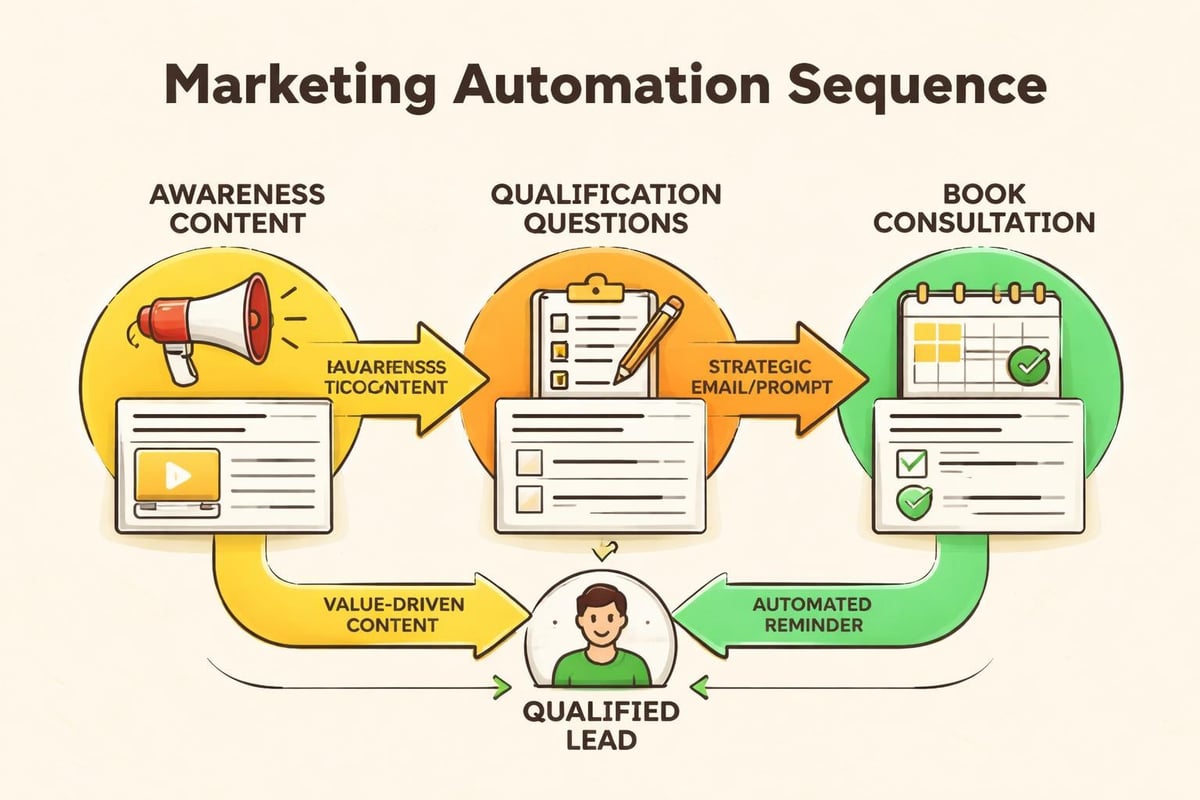
This is where most businesses completely drop the ball. They invest in CRM platforms and automation tools, then fill them with generic, awkward messages that sound like robots wrote them.
Your automated emails still need to sound human. They still need strategic purpose.
Automation copywriting principles:
- Write sequences, not individual emails. Each message builds on the last.
- Vary tone and length. Not every email needs to be 400 words.
- Use behavioral triggers to send relevant messages, not calendar-based blasts.
- Test different approaches and track what actually moves people forward.
For instance, if someone downloads a pricing guide but doesn’t book a call, your automation should acknowledge that specific action. “You grabbed our pricing guide yesterday. Most people at this stage have questions about implementation timelines” is vastly more effective than “Thanks for your interest in our services.”
The Psychology Behind Effective Digital Copy
Understanding why people make decisions helps you write copy that actually influences behavior. This isn’t manipulation but recognition of how humans process information and make choices.
Cognitive Load and Clarity
People’s attention is fractured. They’re skimming, not reading. Every unnecessary word increases cognitive load and reduces conversion.
Research on persuasive copywriting shows that psychological principles and emerging technologies are reshaping how we think about influence in marketing messages.
Cut ruthlessly:
- Remove modifier words (very, really, quite)
- Delete redundant phrases
- Use specific numbers instead of vague claims
- Break long sentences into shorter ones
Social Proof and Trust Signals
Service businesses sell trust. Your copywriting digital needs to establish credibility quickly.
Trust elements to include:
- Specific client results with context
- Process transparency about how you work
- Clear timelines and expectations
- Honest limitations about who you can’t help
That last point matters more than most realize. When you clearly state who you’re not for, ideal prospects trust you more. “We work with service businesses doing $500K+ annually who need structured systems” tells someone whether to keep reading.
Common Copywriting Digital Mistakes
Mistake 1: Writing about features instead of outcomes
“Our CRM includes 47 automation triggers and advanced segmentation” means nothing to someone drowning in spreadsheets. “Stop manually following up with leads who ghost you after the first call” speaks directly to their pain.
Mistake 2: Inconsistent messaging across channels
Your website says one thing, your emails say another, and your proposals introduce completely different language. This creates confusion and kills trust. Develop core messaging pillars and use them everywhere.
Mistake 3: No clear next step
Every piece of digital copy needs to guide people somewhere. Not aggressive sales pitches but logical next actions. After reading about your approach, what should someone do? Make it obvious.
| Copy Element | Weak Approach | Strong Approach |
|---|---|---|
| Headline | “Digital Marketing Solutions” | “Stop Losing Leads to Manual Follow-Up” |
| Body Copy | Lists all your capabilities | Focuses on one specific transformation |
| Call-to-Action | “Learn More” | “See How We Built This for [Client Name]” |
| Email Subject | “Our Latest Newsletter” | “The CRM mistake costing you 30% of leads” |
Writing for SEO Without Sacrificing Quality
Copywriting digital content means balancing search visibility with human readability. Keywords matter, but not at the expense of clarity.
The approach that works: write for humans first, then optimize for search. Start with clear, helpful content that answers real questions. Then look for natural opportunities to include target terms.
Digital marketing copywriting strategies emphasize aligning copy with brand values while using humor and personality to engage readers authentically.
SEO Copywriting Tactics That Don’t Feel Forced
- Use target keywords in headlines when they fit naturally
- Include semantic variations throughout body copy
- Structure content with clear headings that signal topic hierarchy
- Link to related content where it adds genuine value
- Answer specific questions people are actually searching for
Your digital branding approach should integrate SEO principles without compromising message clarity.
Testing and Improving Your Copy Over Time
No copywriting digital strategy is complete without measurement. You need to know what’s working and what’s wasting attention.
Metrics that matter for service businesses:
- Email open rates (are subject lines compelling?)
- Click-through rates (is body copy driving action?)
- Time on page (are people actually reading?)
- Conversion rates (is the message convincing?)
- Lead quality scores (are you attracting the right people?)
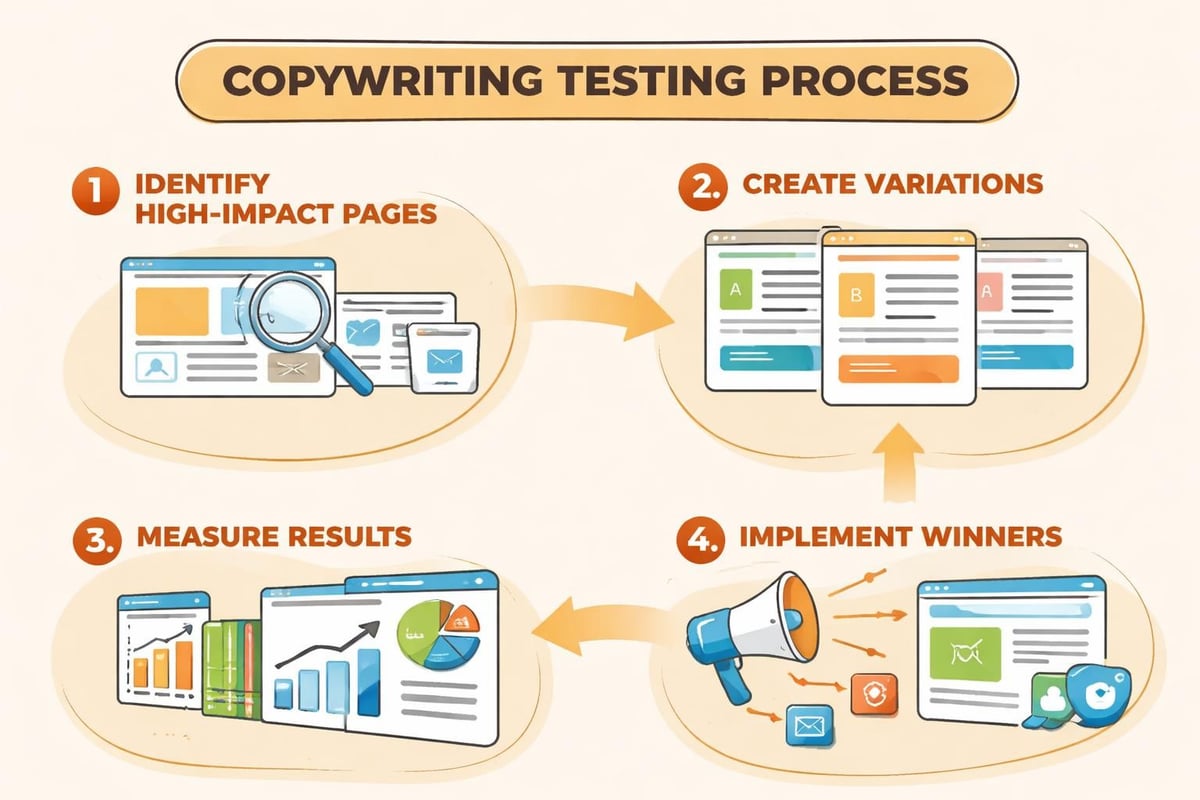
Run A/B tests on high-traffic pages and important email sequences. Change one element at a time. Headlines, calls-to-action, value proposition framing, social proof placement.
What to Test First
- Homepage headline: This has the biggest impact on bounce rate
- Primary call-to-action: Small wording changes can shift conversion significantly
- Email subject lines: Open rates tell you if you’re earning attention
- Service page structure: Does leading with outcome beat leading with process?
Track results over at least two weeks before making conclusions. Statistical significance matters more than gut feelings.
Scaling Your Copywriting Systems
As your business grows, you can’t manually write every piece of copy. You need templates, frameworks, and systems that maintain quality while increasing output.
Create a messaging library that includes:
- Core value propositions for different service tiers
- Common objection responses
- Industry-specific examples and case studies
- Email templates for different funnel stages
- Landing page structures that convert
Implementing creative copywriting strategies helps marketing teams engage with industry communities and publish content that resonates with target audiences.
This isn’t about being robotic. It’s about capturing what works and replicating it systematically. Your team can customize templates for specific situations without reinventing the wheel every time.
The Role of AI in Modern Digital Copywriting
AI tools have changed copywriting digital workflows significantly. Not as replacements for human strategy but as accelerators for execution.
Recent research on LLM-based frameworks shows how iterative refinement with multiple constraints can improve marketing copy effectiveness at scale.
Where AI helps:
- Generating multiple headline variations quickly
- Drafting first versions of standard email sequences
- Repurposing long-form content into social snippets
- Identifying gaps in existing messaging
Where AI falls short:
- Understanding your specific customer context
- Capturing your unique brand voice consistently
- Making strategic decisions about positioning
- Recognizing when copy is technically correct but emotionally flat
Use AI as a drafting partner, not a final solution. It can speed up the 0-to-1 phase but needs human editing for nuance, strategy, and authenticity.
Integrating Copy with Your Marketing Infrastructure
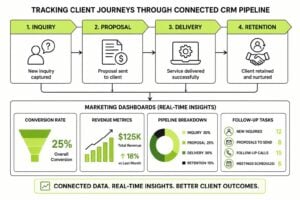
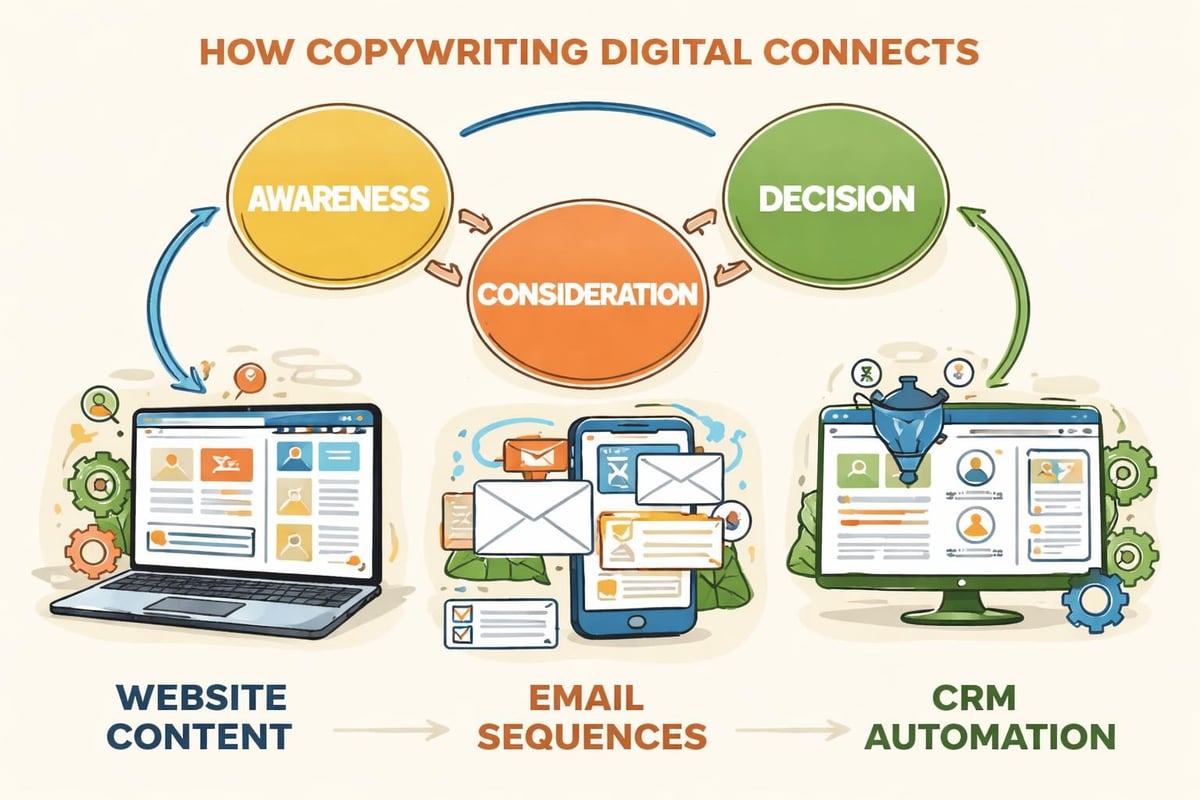
Copywriting digital content doesn’t exist in isolation. It works within your larger marketing system, connecting website visitors to CRM records to automated nurture sequences to sales conversations.
Every piece of copy should serve the system:
- Website copy qualifies visitors and captures leads
- Thank-you page copy sets expectations for what happens next
- Welcome email copy confirms they’re in the right place
- Nurture sequence copy educates and addresses objections
- Proposal copy reinforces earlier messages with specific solutions
When these pieces align, the entire system becomes more effective. When they contradict each other or use different language, friction increases and conversions drop.
Think about copy as infrastructure, not decoration. It’s the wiring that connects all your marketing components. Your case studies and results demonstrate how this integration plays out in practice.
Building Brand Voice into Every Message
Consistency in tone builds recognition and trust over time. People should be able to identify your emails without seeing your logo.
Define your brand voice across these dimensions:
- Formality: Professional but conversational vs. strictly business
- Complexity: Straightforward explanations vs. industry jargon
- Emotion: Calm and direct vs. enthusiastic and energetic
- Humor: Dry observations vs. serious throughout
Document examples of what fits your voice and what doesn’t. Show your team actual before/after samples. “We sound like this, not like that.”
For service businesses, authenticity beats polish. People want to work with real humans who understand their problems, not corporate personas reading from scripts.
Effective copywriting digital strategies turn scattered messaging into systematic growth. When your website, emails, and automation speak clearly to the right people with consistent value, leads move through your pipeline with less friction and higher trust. MDO Digital builds these marketing systems for service businesses who need clarity, not chaos. We design messaging that converts, automate follow-up that protects leads, and create infrastructure that compounds results over time.