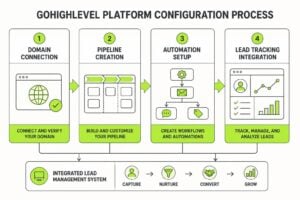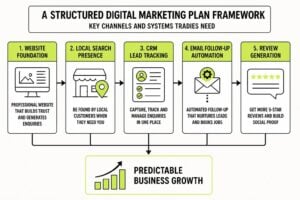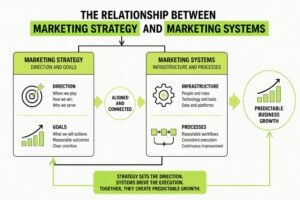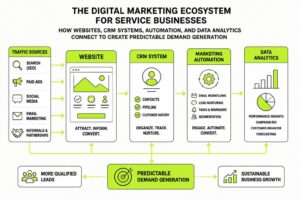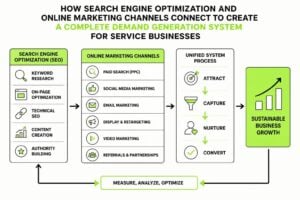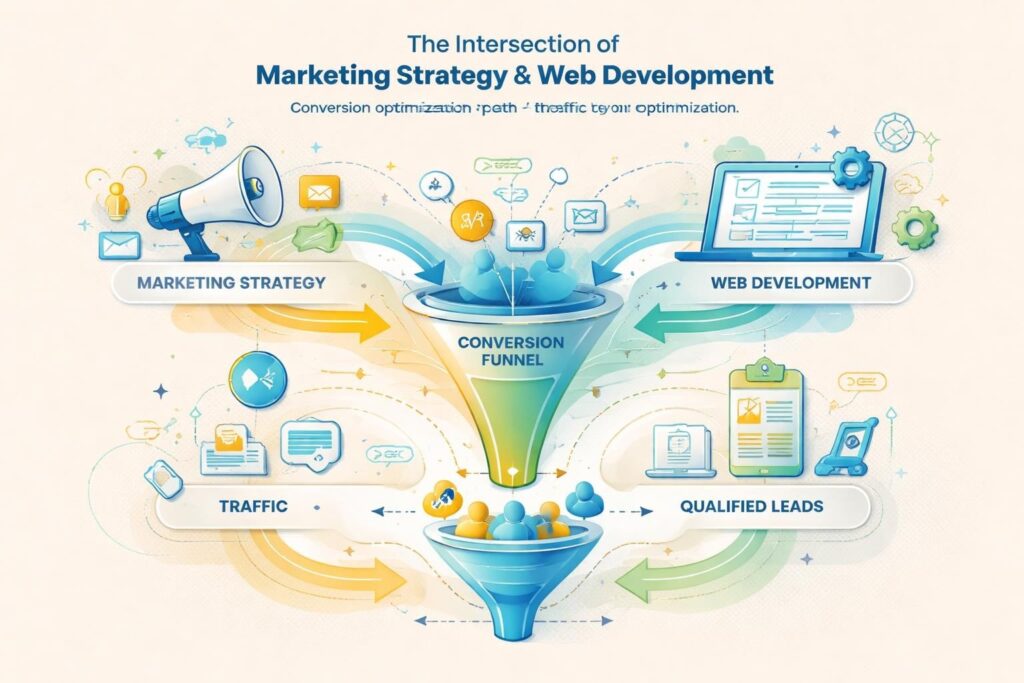
Most websites sit somewhere between digital brochure and abandoned experiment. They're functional enough to exist but not strategic enough to matter. Marketing web development changes that equation. It's the practice of building websites that serve as active revenue infrastructure, not passive digital placeholders. When done properly, it removes the chaos between attention and conversion, turning traffic into predictable demand through intentional design, technical performance, and systems thinking.
What Makes Marketing Web Development Different
Traditional web development focuses on functionality. Marketing web development focuses on outcomes.
The difference shows up in every decision. A traditional developer builds a contact form that works. A marketing-focused developer builds a form that captures qualified leads, routes them to the right CRM workflow, and triggers follow-up sequences based on lead score. One approach checks a box. The other builds infrastructure.
Key distinctions include:
- Conversion architecture built into page structure, not added later
- Data capture systems that feed directly into marketing automation
- Performance optimization tied to user behavior and engagement metrics
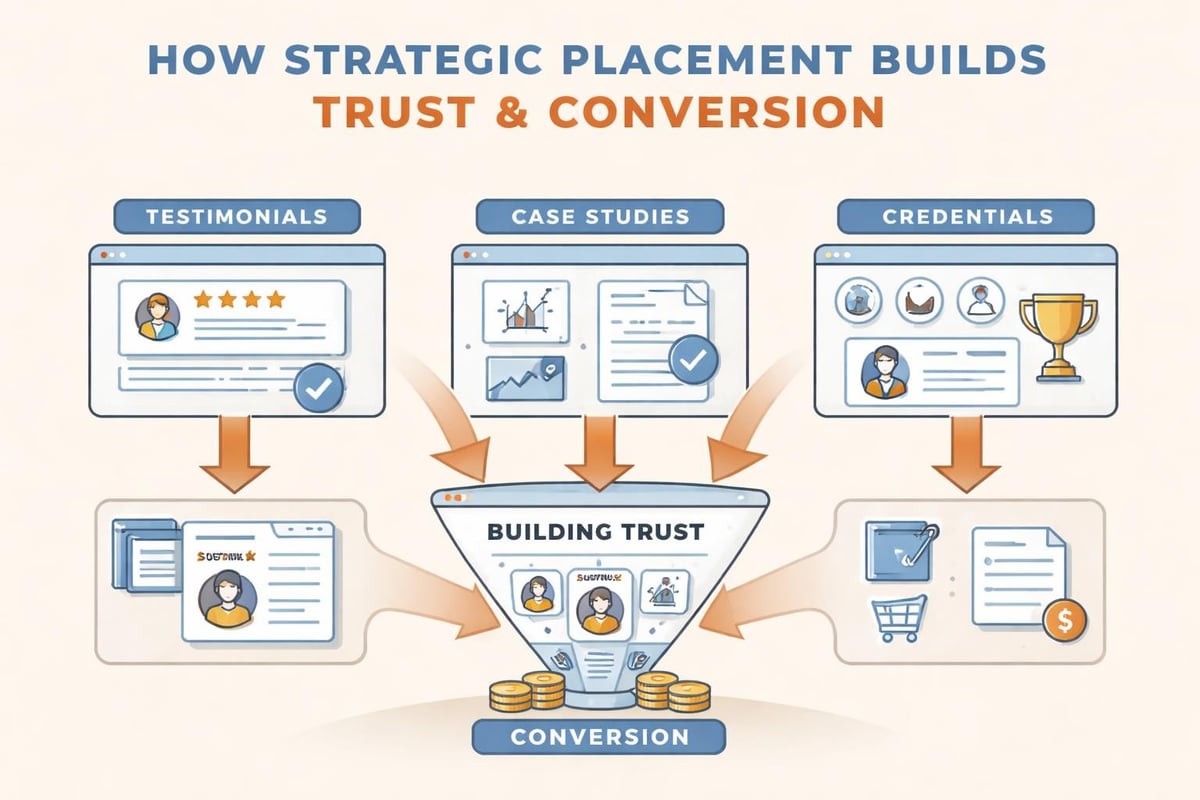
- Trust signals strategically placed throughout the user journey
- Technical SEO implemented during development, not retrofitted
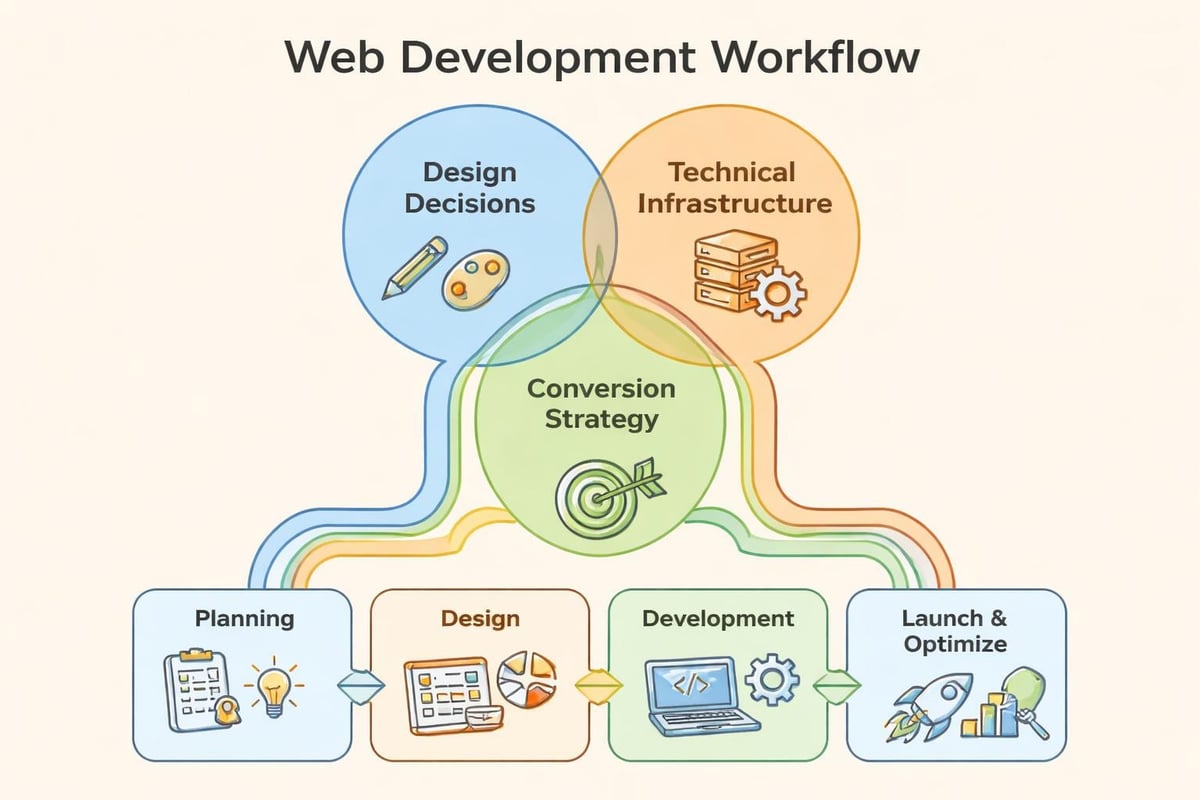
This approach requires understanding both the technical stack and the marketing funnel. You're not just writing clean code. You're building a system that needs to perform under the weight of real business objectives.
The Technical Foundation of Conversion
Website speed isn't a nice-to-have anymore. Research on balancing user experience with visual intensity shows that performance directly impacts conversion rates. Every second of load time costs you qualified traffic.
But speed is just the baseline.
Performance Metrics That Actually Matter
| Metric | Target | Impact |
|---|---|---|
| First Contentful Paint | < 1.8s | User perception of load speed |
| Time to Interactive | < 3.8s | When users can actually engage |
| Cumulative Layout Shift | < 0.1 | Visual stability during load |
| Largest Contentful Paint | < 2.5s | Main content visibility |
These numbers matter because they map to user behavior. A slow site doesn't just frustrate visitors. It trains them to leave before they see your value proposition. Website speed and performance optimization should be treated as a conversion lever, not a technical afterthought.
Marketing web development treats these metrics as constraints, not targets. You design within them from the start, choosing frameworks and features that maintain performance under real-world conditions.
Security as a Trust Signal
SSL certificates and HTTPS are table stakes. But marketing-focused security goes deeper. It's about building visible trust into every interaction point where users share information.
Practical trust implementation:
- Privacy policy links placed at every data collection point
- Security badges from recognized third parties near forms
- Transparent data handling explained in plain language
- Session security that protects user data without degrading experience
- Compliance frameworks (GDPR, CCPA) built into form logic
Service-based businesses lose deals over security concerns more often than they realize. A confusing privacy policy or missing security badge can kill conversion on an otherwise perfect landing page.
Conversion Infrastructure, Not Just Pages
Marketing web development treats your website as a system, not a collection of pages. Each element connects to something else. Forms feed CRMs. User behavior triggers automation. Content adapts based on traffic source.
This is where most websites fall apart. The design looks good, but nothing connects. Leads hit a form and disappear into an inbox. Follow-up depends on someone remembering to check email. Qualification happens manually, if at all.
Building proper infrastructure means:
- CRM integration at the form level, not through third-party plugins
- Lead scoring based on behavior, not just form submissions
- Automated routing that sends leads to the right team member
- Follow-up sequences triggered by specific user actions
- Analytics tracking that connects traffic sources to closed deals
When we work on marketing systems and branding, the website development phase always includes infrastructure mapping. We document where every lead goes, how it's tagged, what automation fires, and who receives notifications. That documentation becomes the operating manual for your revenue system.
The Role of Strategic Design
Design in marketing web development isn't about aesthetics. It's about guiding attention toward conversion actions while building enough trust to overcome natural skepticism.
Every page should answer three questions within seconds: What is this? Who is it for? Why should I care?
Page Structure for Service Businesses
Service businesses face a particular challenge. They're selling expertise and outcomes, not products with photos and spec sheets. The page structure needs to make intangible value tangible.
Effective service page structure:
- Clear headline stating the specific problem you solve
- Subheadline explaining who it's for and the outcome
- Trust section with credentials, case results, or social proof
- Process overview showing how you deliver the outcome
- Objection handling addressing common concerns upfront
- Strong call-to-action with clear next steps
This structure works because it maps to how buyers evaluate service providers. They need to understand the problem you solve, believe you can solve it, and feel confident taking the next step. Web design best practices for small business marketing emphasize this clarity-first approach.
The design should make this flow invisible. Users shouldn't feel like they're being walked through a formula. They should just find it easy to make a decision.
SEO Built In, Not Bolted On
Technical SEO needs to happen during development, not after launch. URL structure, schema markup, internal linking architecture, these aren't things you fix later. They're foundational decisions that affect everything built on top.
Marketing web development treats SEO as part of the infrastructure specification. Before a single line of code gets written, the site architecture should map to keyword intent and user journey.
Technical SEO Checklist
- Semantic HTML using proper heading hierarchy and structural elements
- Schema markup for organization, services, reviews, and local business
- XML sitemaps automatically generated and updated
- Robots.txt properly configured to guide crawler access
- Canonical tags preventing duplicate content issues
- Mobile responsiveness that maintains UX across devices
- Image optimization with proper alt text and compressed file sizes
- Internal linking that distributes page authority strategically
Many of these elements require backend configuration that's hard to change later. Getting them right during development saves months of technical debt. Our branding and design approach includes SEO architecture in the discovery phase, not as an afterthought.
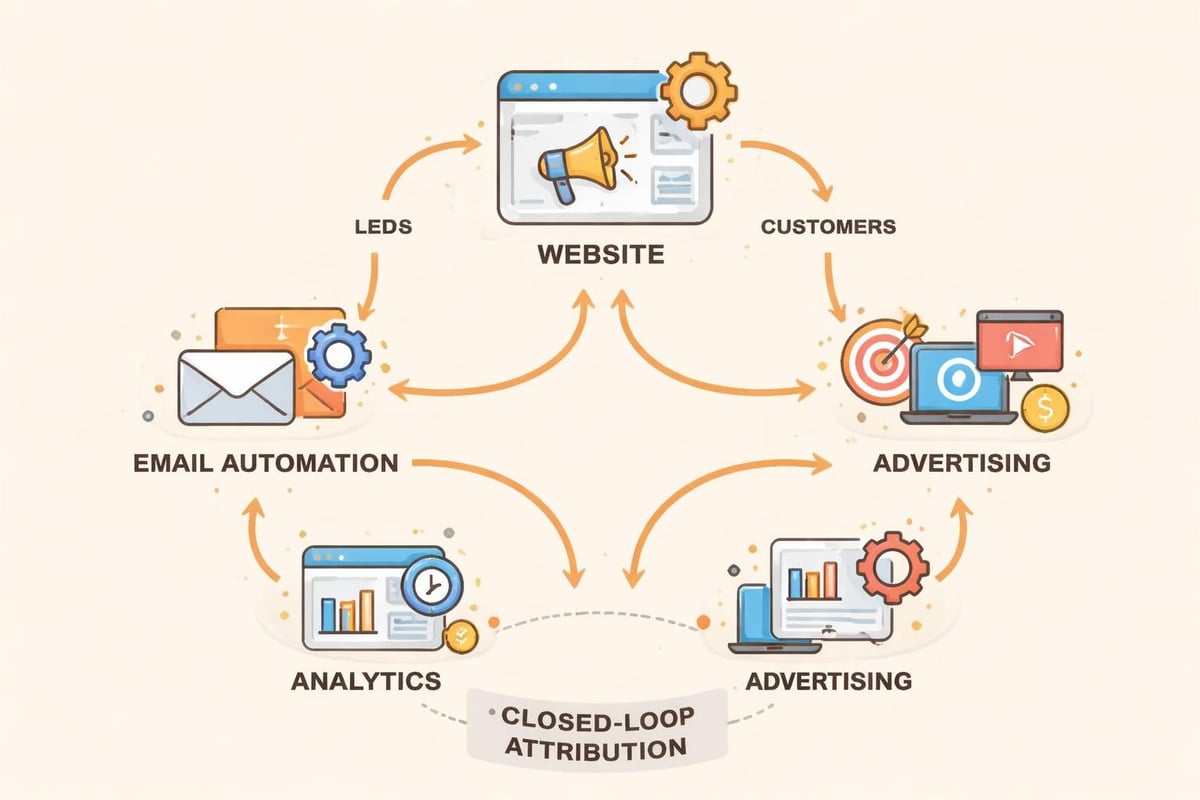
Integration With Marketing Systems
A website that doesn't connect to your other marketing tools is a silo. Marketing web development breaks down those walls.
The goal is seamless data flow. Someone fills out a contact form on your website. That data should instantly appear in your CRM, tagged with their traffic source, page history, and lead score. An automation should fire based on that score. Your sales team should get a notification if they meet qualification criteria.
Common marketing integrations:
| System Type | Purpose | Data Flow |
|---|---|---|
| CRM | Lead management and sales process | Bidirectional: website to CRM, CRM status to website |
| Email platform | Nurture sequences and campaigns | Website to email (new subscribers, tags, behavior) |
| Analytics | Behavior tracking and attribution | Website to analytics, analytics insights to optimization |
| Ad platforms | Conversion tracking and retargeting | Website to ad platform (conversions, audience data) |
| Calendar tools | Appointment booking | Bidirectional: availability checks, booking confirmations |
Each integration point is a potential failure point. Marketing web development means testing these connections under realistic conditions and building fallback systems when APIs fail or data doesn't sync.
Mobile Experience and Conversion
Mobile traffic now dominates most industries. But mobile conversion still lags desktop in many sectors. That gap represents lost revenue, not user preference.
The problem is usually design, not device. Forms too complex for thumbs. CTAs hidden below fold on small screens. Page speed that's acceptable on desktop but painful on 4G. Trust signals crammed into footers that mobile users never see.
Mobile conversion optimization:
- Touch-friendly forms with large input fields and simple validation
- Sticky CTAs that remain accessible while scrolling
- Simplified navigation that doesn't hide key pages in hamburger menus
- Mobile-first load times optimized for cellular connections
- Thumb-zone design placing important elements within easy reach
This isn't responsive design. That's about layout adapting to screen size. This is about rebuilding the conversion path for how people actually use mobile devices. Key marketing strategies for web agencies emphasize mobile optimization as a competitive advantage, not a checkbox.
Content Management for Marketing
Your CMS choice matters more than most developers admit. WordPress, Webflow, custom builds, they all have trade-offs. But from a marketing perspective, the question is simple: can you move fast without breaking things?
Service businesses need to test messaging, update case studies, launch landing pages for campaigns, and adjust conversion paths based on data. If every change requires a developer, you'll move too slowly to compete.
Marketing web development means choosing and configuring a CMS that empowers non-technical team members while maintaining performance and security. That usually involves:
- Custom content blocks for common page sections
- Template systems that enforce design consistency
- Preview environments for testing changes before publishing
- Role-based permissions protecting critical infrastructure
- Version control allowing rollback when experiments fail
The best system is the one your team will actually use. Complexity kills adoption. If your marketing manager needs a tutorial to update a testimonial, you've built wrong.
Measurement and Optimization
Marketing web development doesn't end at launch. It starts there. The site needs built-in measurement that tells you what's working and what's dying on the vine.
Essential tracking implementation:
- Goal completion tracked in analytics with monetary values
- Event tracking for key micro-conversions (video plays, PDF downloads, chat initiations)
- Form analytics showing where users drop off in multi-step forms
- Heatmapping revealing actual user attention vs. intended design flow
- A/B testing framework allowing structured experimentation
This data should flow into regular optimization cycles. Monthly reviews of conversion rates, quarterly deep dives into user behavior, continuous small adjustments based on what the numbers reveal. Check our case studies to see how this approach plays out in real client work.
The infrastructure for this measurement needs to be built during development. Adding it later means working around existing architecture instead of building it in from the foundation.
Working With Developers Who Understand Marketing
Most developers can build a website. Fewer understand how that website needs to function as a revenue system.
When evaluating development partners, look for evidence they think in systems, not just pages. Ask about their CRM integration experience. Request examples of conversion optimization work. Check whether they discuss analytics and testing methodology or just design aesthetics.
Red flags when hiring:
- Focus on design trends rather than business outcomes
- No questions about your CRM or marketing stack
- Portfolio showing only visual design, no conversion data
- Resistance to analytics implementation or tracking requirements
- No post-launch optimization process
Best practices for developer marketing emphasize community and education. Look for developers who stay current with marketing technology, not just coding frameworks.
The right partner asks uncomfortable questions about your sales process, qualification criteria, and follow-up systems. They want to understand the business context because they know the website needs to serve that context.
Integrating Emerging Technology
AI, chatbots, personalization engines, these tools promise better conversion through better experience. Some deliver. Many add complexity without proportional value.
Marketing web development means evaluating new technology through a return lens. Will this improve conversion enough to justify the complexity it adds? Can we measure that improvement? What happens when it breaks?
Emerging technologies in web design and marketing are worth exploring, but not blindly adopting. Service businesses especially need to be careful. A broken chatbot makes you look less capable than no chatbot at all.
Practical technology adoption criteria:
- Solves a specific, measurable conversion problem
- Degrades gracefully when unavailable or broken
- Doesn't require ongoing technical maintenance you can't sustain
- Integrates cleanly with existing marketing infrastructure
- Improves user experience in measurable ways
Start with foundational infrastructure. Add sophisticated tools only after you've mastered the basics. A perfectly optimized contact form beats a poorly implemented AI assistant every time.
Marketing web development removes the gap between how your website looks and how it performs. It's infrastructure work disguised as design. When you treat your website as a revenue system instead of a digital brochure, everything changes: conversion rates improve, leads get qualified automatically, and your marketing stack actually talks to itself. If you're ready to build a site that protects leads and drives structured growth, MDO Digital can help you map the system, build the infrastructure, and create conversion paths that compound over time.