Most service businesses know they need a stronger online presence. The challenge isn’t awareness. It’s execution. Digital branding solutions create the infrastructure that turns visibility into trust and trust into predictable revenue. This isn’t about logos or colour palettes alone. It’s about building systems that work together: websites that convert, automation that protects leads, and messaging that connects with the right people at the right time. When these elements align, growth becomes less chaotic and more compounding.
What Digital Branding Solutions Actually Include
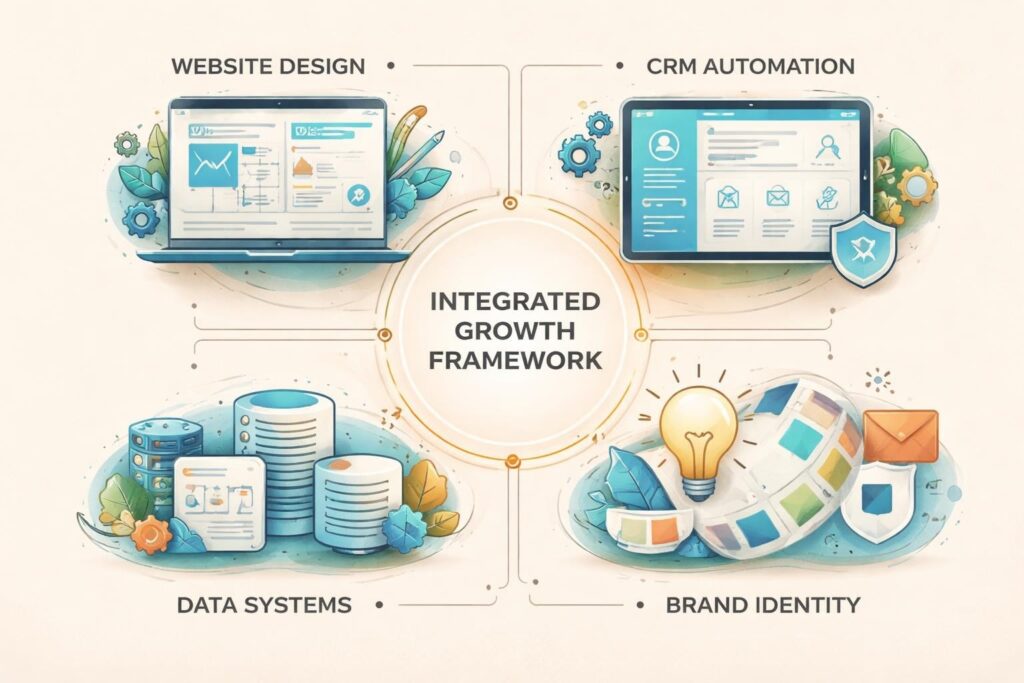
The term gets thrown around loosely, but genuine digital branding solutions combine strategy, design, and infrastructure. They address how your business shows up online, how it functions behind the scenes, and how those two layers reinforce each other.
Core components typically include:
- Website design and development focused on conversion and trust
- Brand messaging frameworks that clarify positioning
- CRM implementation and workflow automation
- Content systems that support SEO and authority building
- Analytics and tracking infrastructure for decision-making
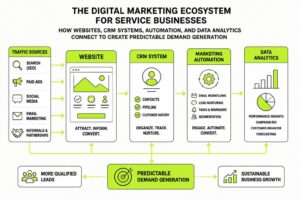
These aren’t isolated services. They’re interconnected systems. A website without proper lead routing wastes traffic. Beautiful branding without automation creates manual bottlenecks. Strategic branding combined with digital marketing creates momentum that builds over time.
The Infrastructure Layer Most Businesses Miss
Here’s what separates cosmetic changes from real digital branding solutions: the backend. Your brand’s digital presence isn’t just what people see. It’s what happens after they click, submit a form, or book a call.
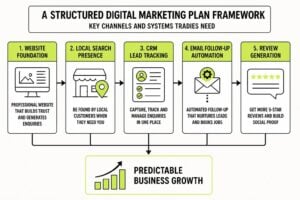
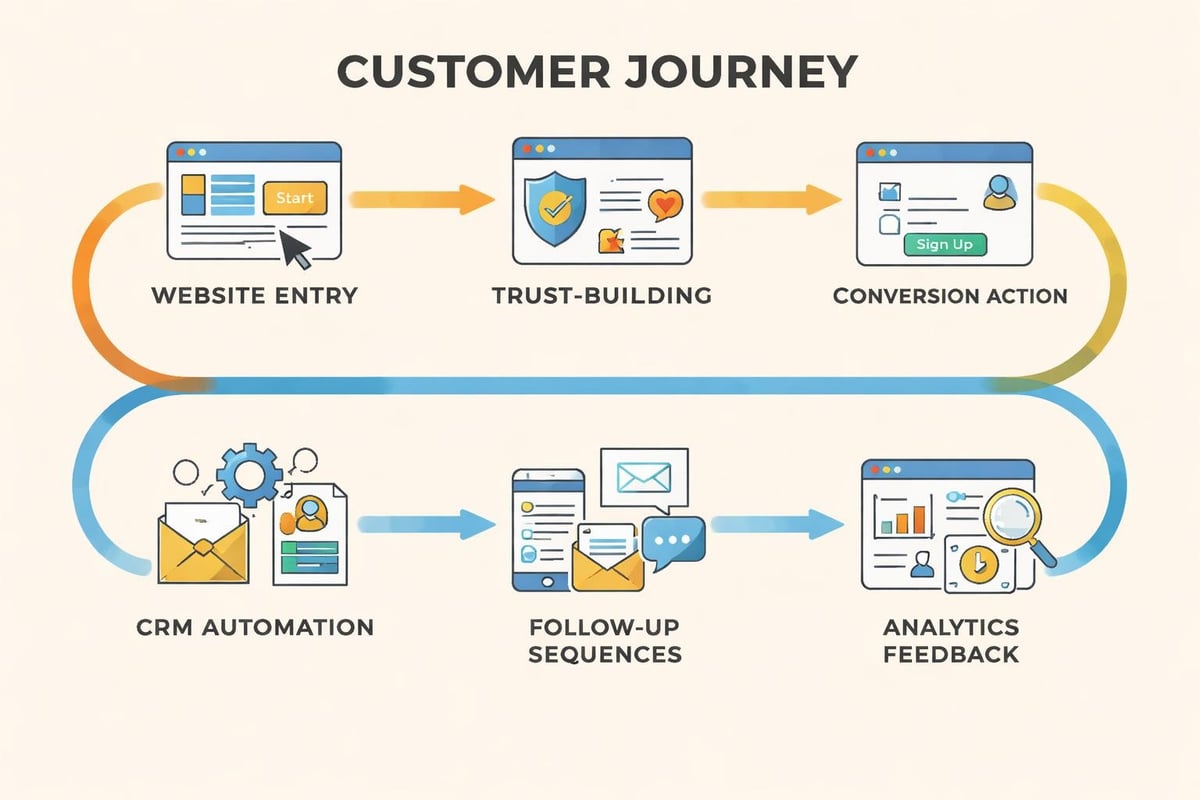
Consider this workflow breakdown:
- Visitor lands on your website from organic search or paid traffic
- Brand messaging and design build immediate trust and clarity
- Clear calls-to-action guide them toward a specific next step
- Form submission triggers automated CRM entry and routing
- Follow-up sequences maintain engagement without manual effort
- Data flows into reporting dashboards for ongoing optimisation
Each step needs deliberate design. Most businesses nail step one or two, then lose leads in the gaps. MDO Digital’s services focus on closing those gaps with systems that protect revenue.
Why Service Businesses Need Structured Brand Systems
Service-based businesses face unique challenges. You’re not selling widgets. You’re selling expertise, trust, and outcomes that prospects can’t see or touch until they commit. That makes your digital presence the primary proof point.
Without structure, three things happen. First, messaging becomes inconsistent across channels. Second, leads fall through cracks between marketing and sales. Third, growth feels exhausting rather than systematic.
Digital branding solutions solve this by creating repeatable systems. When someone visits your site, reads your content, or engages with your brand on any platform, they should encounter the same clarity and professionalism. Digital branding establishes that consistency across every digital touchpoint.
The ROI Framework: What to Measure
Branding feels intangible until you attach metrics to it. Here’s what matters:
| Revenue per customer over the relationship | What It Tells You | Target Benchmark |
|---|---|---|
| Conversion Rate | How well your site turns traffic into leads | 2-5% for most service sites |
| Lead Response Time | Speed of CRM automation and routing | Under 5 minutes |
| Customer Acquisition Cost | Total marketing spend divided by new customers | Should decrease over time |
| Lifetime Value | Revenue per customer over relationship | Should increase as brand strengthens |
| Organic Traffic Growth | SEO and authority building performance | 10-20% quarterly growth |
These numbers tell you whether your digital branding solutions actually create value or just create noise. Strong branding lowers acquisition cost while increasing lifetime value. That’s the compounding effect service businesses need.
Building High-Trust Websites That Convert
Your website sits at the centre of digital branding solutions. It’s the hub where all other efforts point. But most service business websites fail at their primary job: building trust fast enough to convert attention into action.
High-trust websites share specific characteristics:
- Clear value proposition visible within three seconds
- Social proof positioned near conversion points
- Intuitive navigation that matches how buyers think
- Fast load times and mobile optimisation as baseline
- Transparent pricing or process information
- Professional design that matches the value of your service
Notice what’s missing from that list: flashy animations, walls of text, and clever taglines that confuse more than clarify. High-performing digital brand identities prioritise function and clarity over decoration.
The Trust-Building Hierarchy
People decide whether to trust your business in layers. Each layer builds on the previous one.
Level 1: Visual Credibility
Design quality signals business quality. Outdated websites trigger immediate doubt.
Level 2: Message Clarity
Can visitors understand what you do and who it’s for within seconds?
Level 3: Social Validation
Testimonials, case studies, and recognisable client logos reduce perceived risk.
Level 4: Proof of Competence
Content that demonstrates expertise builds authority and confidence.
Level 5: Ease of Next Step
Simple, clear pathways to contact or purchase remove friction.
If any level fails, prospects drop off. Digital branding solutions address all five systematically. Check MDO Digital’s case studies to see this hierarchy in practice across different service businesses.
CRM and Automation as Brand Infrastructure
Here’s where most businesses separate digital branding from operations. Big mistake. Your CRM and automation infrastructure is part of your brand experience. How quickly you respond, how personalised your communication feels, how seamlessly handoffs happen between marketing and sales, all of that shapes brand perception.
Prospects don’t distinguish between “marketing” and “sales.” They experience your brand as one entity. When automation breaks, your brand breaks. When follow-up is slow or generic, trust erodes.
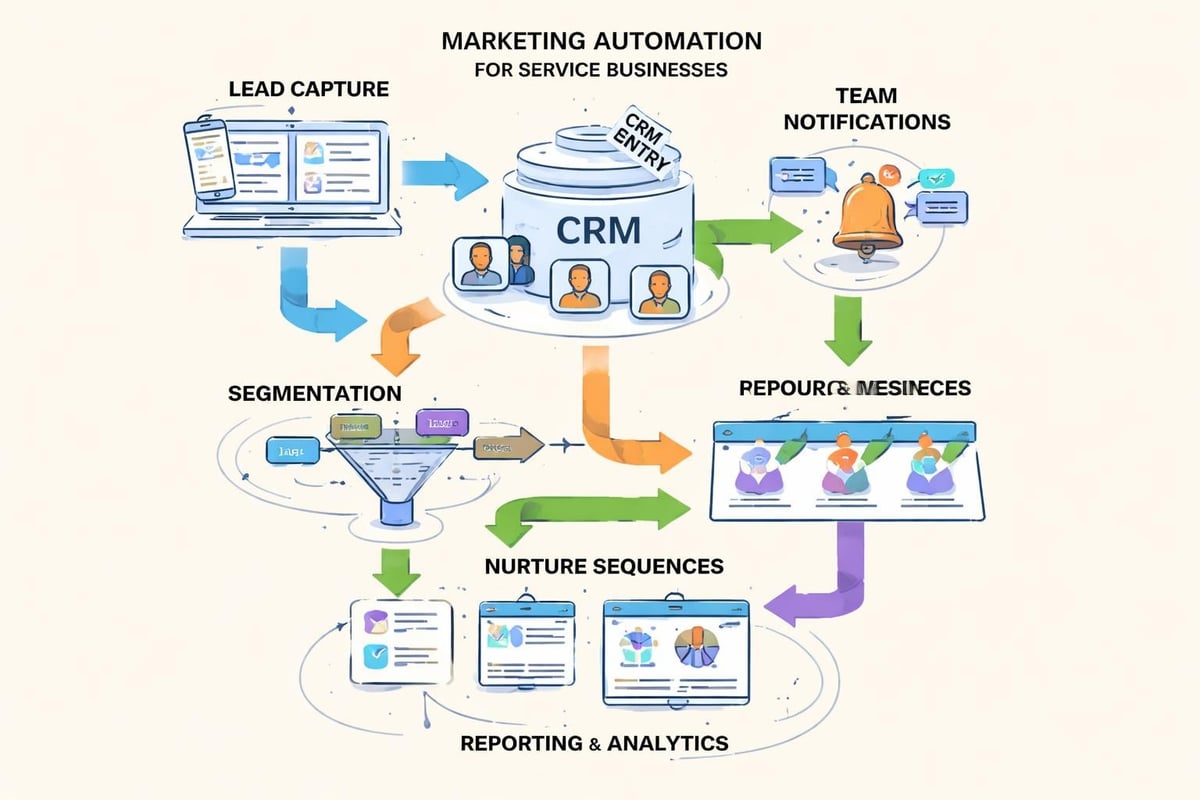
What Proper Marketing Automation Looks Like
- Lead capture forms connect directly to CRM with proper field mapping
- Automated notifications alert the right team members immediately
- Segmentation tags route leads based on service interest or business size
- Nurture sequences maintain engagement through valuable content
- Pipeline tracking shows exactly where revenue sits at any moment
- Reporting dashboards surface what’s working and what’s not
This isn’t optional infrastructure for 2026. This is table stakes. Digital branding for service businesses now includes the operational layer that delivers on brand promises.
The payoff? Leads don’t get forgotten. Follow-up happens consistently. Sales conversations start with context. Revenue becomes more predictable because the system doesn’t rely on someone remembering to do something.
Content Systems That Build Authority Over Time
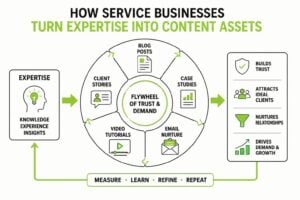
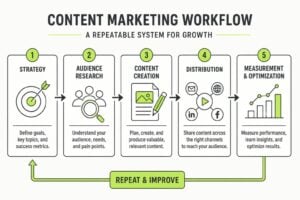
Digital branding solutions need fuel. That fuel is content. Not random blog posts or occasional social updates. Strategic content systems designed to build authority, capture search traffic, and nurture prospects through longer sales cycles.
Service businesses often have complex offerings and educated buyers. Your content strategy should reflect that reality.
Effective content systems include:
- Pillar content targeting high-value keywords in your niche
- Educational resources that answer common prospect questions
- Case studies and proof demonstrating real outcomes
- Thought leadership establishing unique perspectives
- Email nurture sequences keeping your brand top-of-mind
Each piece should serve multiple purposes. A well-crafted case study builds social proof, creates shareable content, provides sales material, and potentially ranks for relevant searches. That’s leverage.
The SEO and Branding Connection
Search visibility and brand strength reinforce each other. Strong brands get more clicks at the same ranking position. Better content earns more backlinks. Higher engagement signals improve rankings. It’s a virtuous cycle.
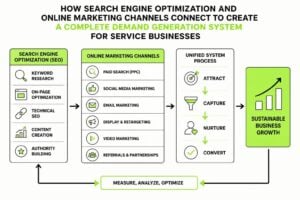
But it requires patience and consistency. Digital marketing services like SEO work best when integrated with broader branding efforts, not treated as isolated tactics. Your keyword strategy should align with your brand positioning. Your content topics should reinforce your expertise areas. Your internal linking should guide visitors toward conversion paths.
MDO Digital’s approach treats content as infrastructure, not decoration. Every piece connects to larger systems designed to compound over time.
Data-Driven Optimisation and Growth
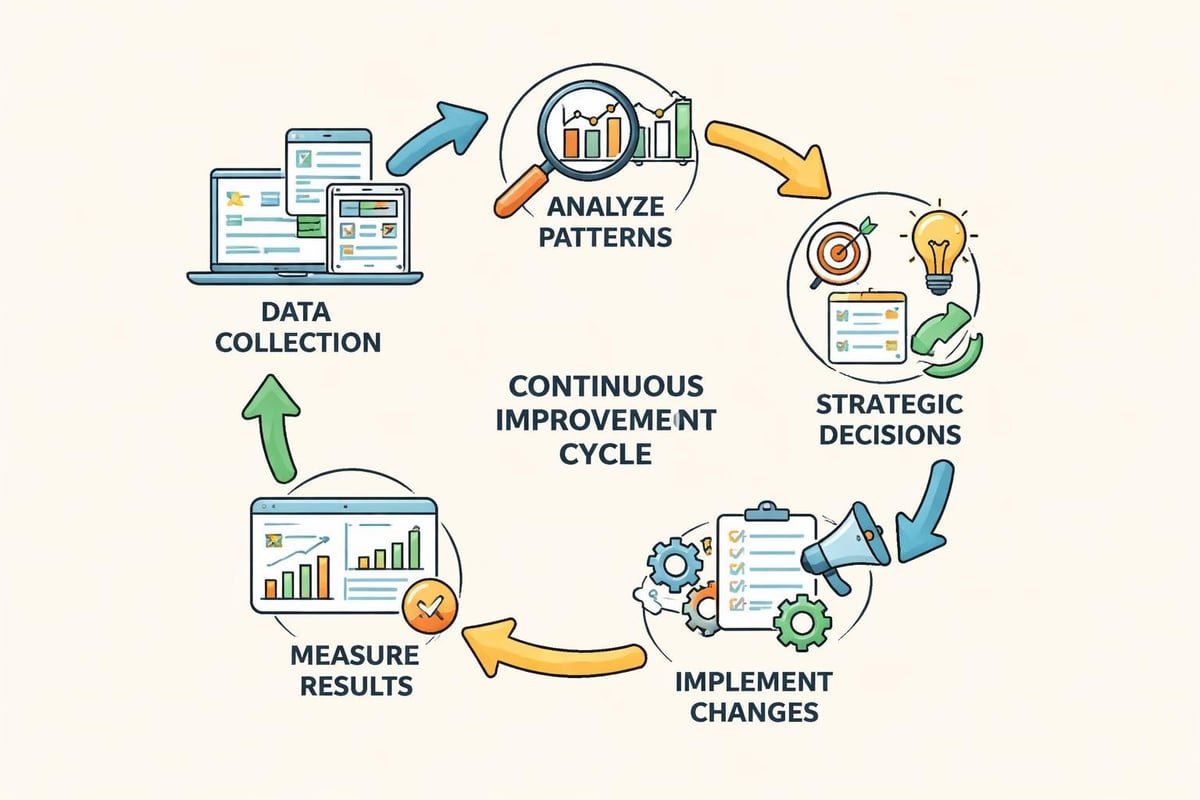
Digital branding solutions generate data. Lots of it. The question is whether you’re set up to learn from it. Most service businesses collect metrics but don’t close the loop into actual decisions.
Real optimisation requires three things: proper tracking, regular analysis, and a willingness to change based on evidence.
Key Data Sources to Integrate
| Data Source | What It Reveals | How to Use It |
|---|---|---|
| Website Analytics | Traffic patterns, page performance, conversion paths | Identify high-performing content and conversion barriers |
| CRM Data | Lead sources, conversion rates by channel, sales cycle length | Optimize budget allocation and messaging by segment |
| Email Metrics | Open rates, click patterns, engagement over time | Refine messaging and nurture sequence timing |
| Form Analytics | Field completion rates, drop-off points | Simplify forms and reduce friction |
| Call Tracking | Lead quality by source, conversion to appointment | Improve targeting and qualification processes |
The goal isn’t perfection. It’s progressive improvement based on actual behavior rather than assumptions. Branding solutions that include web design and development should also include measurement frameworks that show whether changes actually improve outcomes.
Choosing the Right Digital Branding Solutions Partner
Not all agencies are built the same. Some specialize in creative but ignore operations. Others focus on tech implementation without strategic vision. The best digital branding solutions partners integrate both.
Questions to ask before committing:
- How do you connect brand work to actual revenue outcomes?
- What’s your approach to CRM and automation infrastructure?
- How do you measure success beyond design deliverables?
- What does ongoing support and optimization look like?
- Can you show case studies from similar service businesses?
Also pay attention to process. Do they ask strategic questions or jump straight to tactics? Do they want to understand your business model or just apply templates? The right partner treats your business as a system, not a project.
Implementation Roadmap for Service Businesses
Rolling out comprehensive digital branding solutions doesn’t happen overnight. Here’s a practical sequence that builds momentum without overwhelming operations.
Phase 1: Foundation (Weeks 1-4)
- Brand messaging framework and positioning clarity
- Website content audit and priority page identification
- CRM selection and basic configuration
- Analytics and tracking implementation
Phase 2: Core Build (Weeks 5-12)
- Website design and development
- Essential automation workflows
- Lead routing and notification setup
- Initial content creation
Phase 3: Launch and Optimize (Weeks 13-16)
- Soft launch with testing and refinement
- Full public launch with traffic driving campaigns
- Data collection and initial optimization
- Team training on new systems
Phase 4: Scale (Ongoing)
- Continuous content production
- A/B testing of key conversion points
- Expansion of automation sequences
- Advanced reporting and forecasting
This timeline assumes moderate complexity. Larger organizations or more intricate service offerings might extend certain phases. The key is maintaining momentum while ensuring each layer works before adding the next.
Explore MDO Digital’s pricing to understand how different scopes map to investment levels and expected timelines.
The Compounding Effect of Integrated Systems
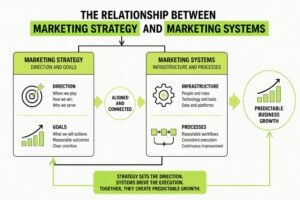
Here’s what separates businesses that grow predictably from those that stay stuck in the chaos loop: integrated systems. When your website, CRM, content, automation, and analytics all work together, improvements compound.
A better headline doesn’t just improve one landing page. It informs email sequences, social content, and sales messaging. A smoother form experience doesn’t just increase one conversion rate. It feeds better leads into your CRM, which improves sales efficiency and customer quality. Better analytics don’t just produce reports. They surface insights that improve targeting, messaging, and resource allocation.
This compounding effect is the real value of proper digital branding solutions. You’re not buying a website or a logo. You’re building infrastructure that gets stronger over time. Every lead teaches the system. Every conversion refines the approach. Every piece of content builds authority that makes the next piece work better.
That’s how service businesses scale with clarity instead of chaos. Not through heroic individual efforts, but through systems that do the heavy lifting. Enhanced brand loyalty through innovative digital solutions comes from this integration, not from isolated tactics.
Most businesses never reach this stage because they treat digital branding as a series of projects rather than an interconnected system. They redesign their website without fixing lead routing. They implement a CRM without cleaning up their messaging. They create content without clear conversion paths.
The businesses that win in 2026 and beyond understand that digital branding solutions need to address the whole system: what prospects see, what happens behind the scenes, and how those layers reinforce each other over time.
Digital branding solutions work when strategy, design, and infrastructure align to create systems that compound over time. For service businesses ready to remove chaos and build predictable growth, MDO Digital provides the clarity and execution that turns attention into revenue. We design high-trust websites, implement automation that protects leads, and build marketing systems that scale with your business, not against it.