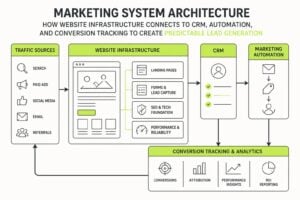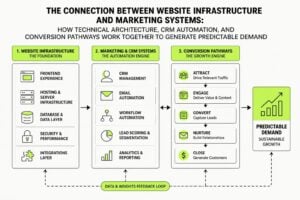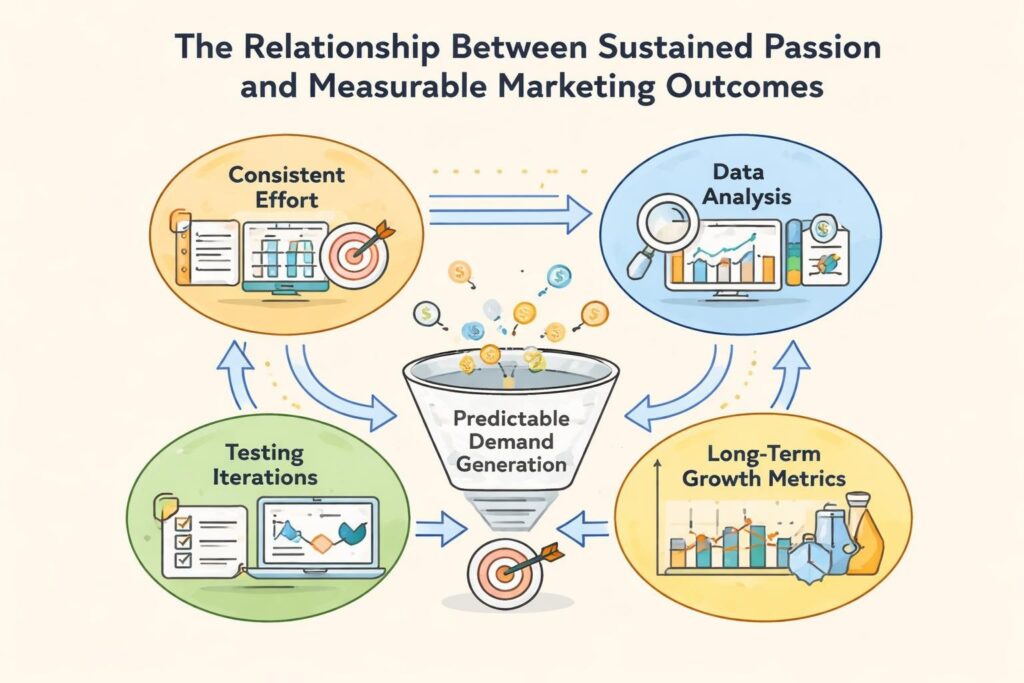
Being passionate in marketing doesn't mean you need to post motivational quotes at sunrise or talk about hustle culture. It means you care enough to stay curious when a campaign underperforms, to rebuild a funnel when the data tells you it's broken, and to keep testing when everyone else has moved on. Passion in this context is quiet, persistent, and disciplined. It's the difference between agencies that chase trends and businesses that build systems that compound. Most service-based businesses don't fail from lack of ideas. They fail because no one cares enough to execute the boring parts consistently.
What Being Passionate in Marketing Actually Looks Like
Passion without structure is just noise. The marketing landscape in 2026 rewards depth over volume, and intensity over theatrics. When you're passionate in marketing, you're not just excited about the creative brief. You're invested in understanding why a 2% conversion rate matters more than a viral post, and you're willing to spend three hours segmenting your CRM properly because you know it affects every campaign downstream.
Here's what separates genuine passion from performance:
- You track outcomes, not activity. Passionate marketers measure pipeline contribution, not social media impressions.
- You rebuild when something breaks. A failed automation or broken landing page doesn't get ignored. It gets fixed.
- You ask better questions. Instead of "What should we post?" you ask "What does our ideal customer need to believe before they buy?"
- You respect the system. Marketing systems aren't just tools. They're the infrastructure that turns effort into predictable growth.
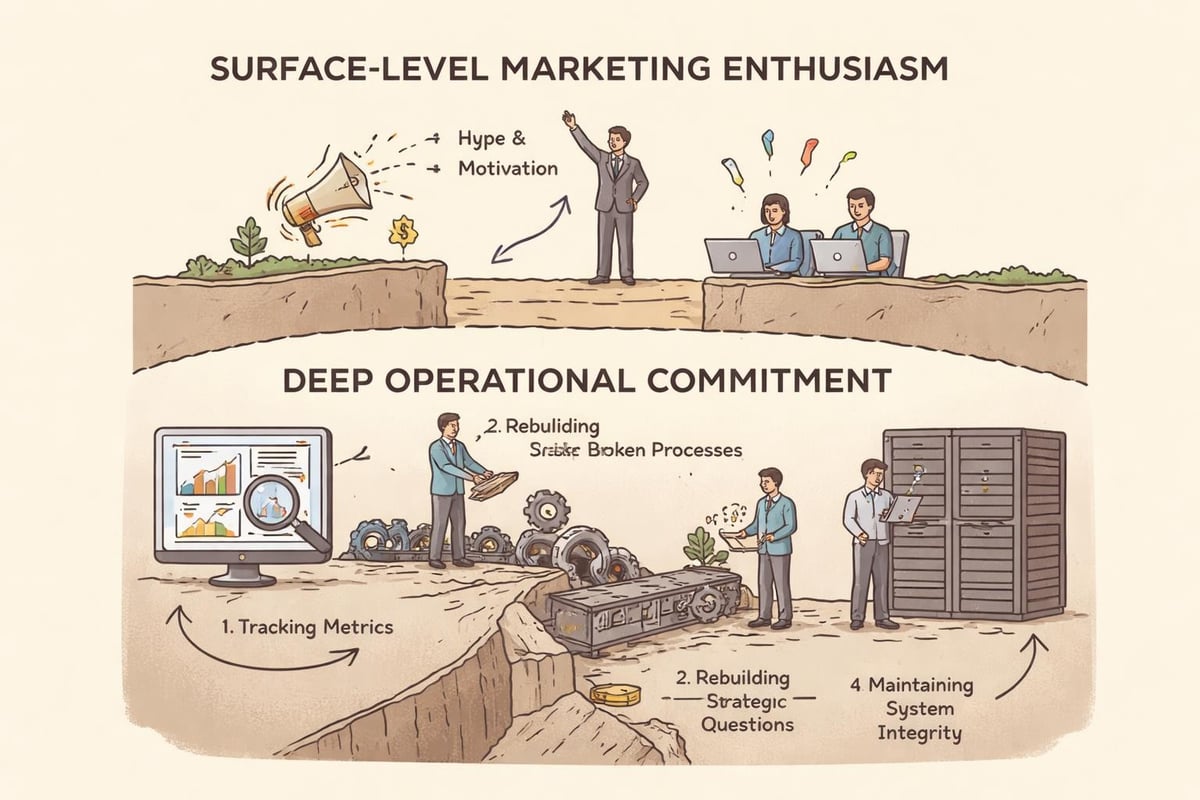
Passion shows up in how you respond to failure. When a campaign doesn't convert, do you blame the platform or do you audit the messaging, the offer, the targeting, and the follow-up sequence? The passionate approach treats every failure as feedback. Simon Sinek’s insight on how great leaders inspire action applies here. People don't buy what you do, they buy why you do it. And your why needs to survive the third failed A/B test.
The Execution Gap That Kills Good Ideas
Most businesses aren't short on passion at the start. They're short on it at month four when the initial excitement fades and the hard work begins. That's when being passionate in marketing becomes a competitive advantage. Anyone can get excited about a rebrand. Not everyone will care enough to map every touchpoint, audit every page, and ensure the messaging is consistent across email, web, and sales conversations.
| Phase | Low Passion Response | High Passion Response |
|---|---|---|
| Campaign underperforms | Blame the channel, move on | Audit targeting, messaging, offer, timing |
| CRM data is messy | Live with it | Clean it, build automation to prevent it |
| Lead follow-up is slow | Accept the delay | Build a structured sequence with SLAs |
| Website traffic drops | Hope it recovers | Investigate, test, adjust content strategy |
The gap between strategy and execution is where most businesses lose. Passion drives marketing innovation, but only when it's paired with operational discipline. You can't innovate if you can't execute the basics consistently.
Passion as a Filter for Better Marketing Decisions
When you're genuinely passionate in marketing, you develop better judgment. You stop chasing every new platform and start asking whether it serves your customer. You stop copying competitors and start building systems that reflect how your business actually works. Passion becomes a filter that protects you from distraction.
Here's how that plays out in practice:
- You prioritize high-leverage work. Not everything deserves equal attention. A passionate marketer knows that a well-built automation saves more time than a clever tweet.
- You say no to bad-fit clients. Passion means protecting your ability to do good work. Taking on clients who don't respect systems or data kills your capacity to serve the ones who do.
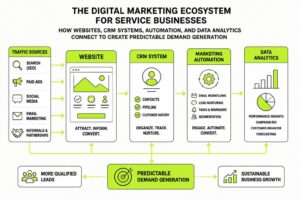
- You invest in infrastructure. Passionate businesses spend money on CRM setup, lead tracking, and website development because they know these are force multipliers.
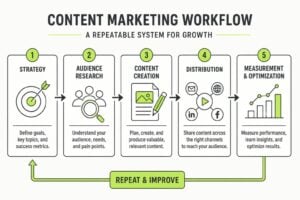
- You document what works. You don't just run campaigns. You capture what worked, why it worked, and how to replicate it.
Passion without focus is exhausting. It burns you out without creating value. The best marketers channel intensity into systems that reduce chaos and create predictable outcomes. That's the difference between working hard and working smart.
Why Service-Based Businesses Need Passionate Marketing Systems
Service businesses live or die on trust. Your website, your follow-up emails, your CRM workflows, they all either build trust or erode it. Being passionate in marketing for a service business means obsessing over every detail that affects how a lead experiences your business. It's not about perfection. It's about giving a damn when something doesn't work.
Here's where passion shows up in service business marketing:
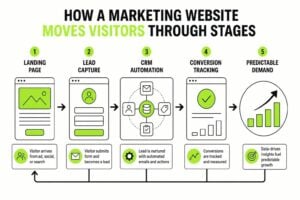
- Lead response time. A passionate system routes leads instantly, assigns them to the right person, and triggers a follow-up sequence that feels human.
- Website clarity. Your site doesn't exist to look pretty. It exists to answer questions and move people toward a decision. Passionate businesses build high-trust websites that do that job relentlessly.
- Data hygiene. Passionate marketers don't tolerate messy CRMs. They build processes that keep data clean because they know dirty data kills campaigns.
- Feedback loops. You track what happens after the sale. You ask why deals close and why they don't. You feed that insight back into your messaging.
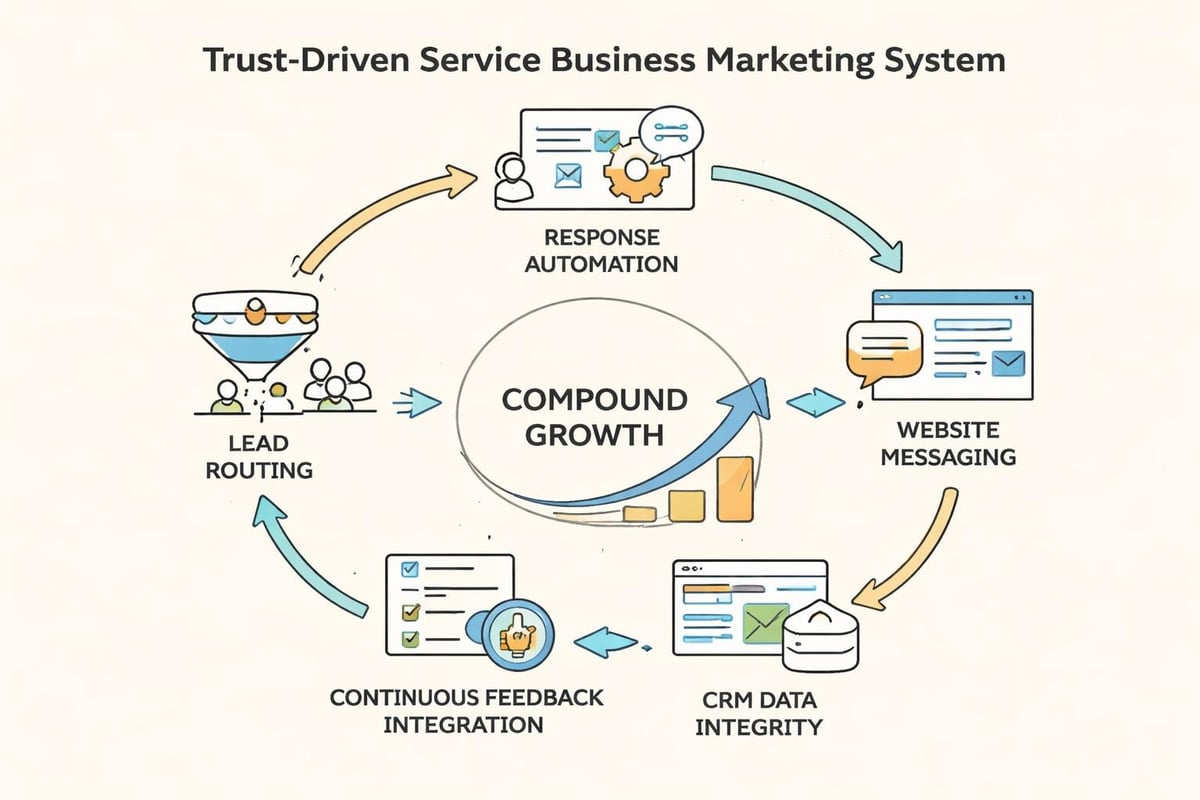
Most service businesses treat marketing as a cost center. Passionate businesses treat it as the engine that funds everything else. That shift in perspective changes how you allocate time, money, and attention. You stop asking "How cheap can we do this?" and start asking "How well can we build this so it compounds over time?"
The Role of Passion in Long-Term Marketing Strategy
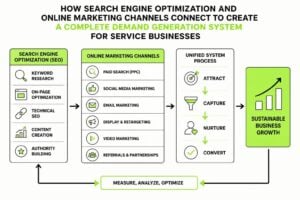
Short-term tactics come and go. Passion keeps you focused on what compounds. In 2026, the businesses winning aren't the ones with the best ads. They're the ones with the best systems. Systems built by people who cared enough to think three steps ahead, to connect the dots between branding, automation, and customer experience.
Being passionate in marketing means you think in timelines longer than a quarter. You're building assets, not just running campaigns. Here's what that looks like:
| Tactic-Focused Approach | System-Focused Approach |
|---|---|
| Run ads until budget runs out | Build evergreen content that drives inbound leads |
| Post daily on social | Create content hubs that answer core customer questions |
| Buy email lists | Build opt-in sequences that qualify and nurture |
| Chase the latest platform | Double down on channels that already convert |
| Hire freelancers per project | Build internal processes that scale |
Passionate marketers are patient. They know that structured growth compounds over time. They don't panic when a campaign takes two months to dial in. They trust the process because they've built one worth trusting.
How to Maintain Passion When Marketing Gets Hard
Marketing will test you. Campaigns will fail. Platforms will change. Leads will ghost. If your passion is built on quick wins, it won't survive the grind. But if it's built on curiosity, craft, and a commitment to doing work that matters, it becomes durable.
Here's how to protect your passion:
- Measure what matters. Stop tracking vanity metrics. Focus on pipeline contribution, customer acquisition cost, and lifetime value.
- Build feedback loops. Talk to customers. Understand what message broke through and why. Let real conversations inform your strategy.
- Invest in systems early. Don't wait until you're drowning to build automation. The earlier you structure your marketing systems, the more energy you have for creative work.
- Celebrate small wins. A 10% improvement in conversion rates might not feel sexy, but over a year it's transformational. Recognize progress.
- Stay curious. The best marketers are students. They read, they test, they ask questions. Curiosity fuels passion long after excitement fades.
Passion isn't about intensity every day. It's about showing up on the days when you don't feel like it and doing the work anyway. That's the version of passion that builds businesses.
The Business Case for Passionate Marketing
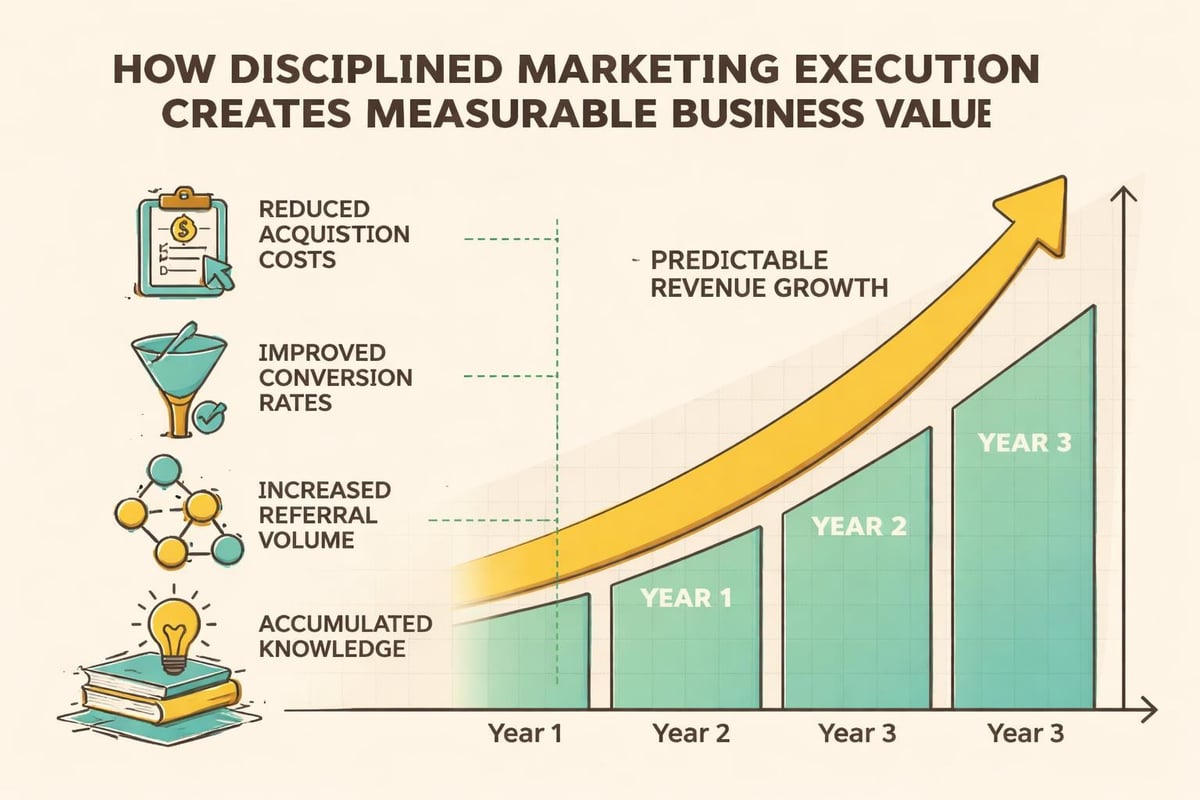
Let's be practical. Passion alone doesn't pay the bills. But passionate execution creates the conditions for predictable revenue. When you care enough to build proper lead nurture sequences, to track attribution correctly, to design websites that convert, the business outcomes follow.
Here's the ROI of being passionate in marketing:
- Lower customer acquisition costs. Better systems mean less waste. You spend less to acquire the same customer.
- Higher close rates. When your messaging is dialed in and your follow-up is consistent, more leads convert.
- Stronger referrals. Customers refer businesses that feel organized and trustworthy. Passionate systems create that experience.
- Retained institutional knowledge. When you document processes and build systems, you're not starting from scratch every quarter.
The businesses that treat marketing as a checkbox don't last. The ones that treat it as a craft, as something worth caring about, build equity that compounds. That's not motivational talk. That's math. Systems built with care produce better outcomes over time.
Passion Meets Process
You can't scale passion without process. And process without passion becomes bureaucracy. The sweet spot is when you care enough to build systems that work, then trust those systems enough to step back and let them run. That's where marketing and business development intersect in ways that actually drive growth.
The mistake most businesses make is assuming passion and process are opposites. They're not. Process is how you bottle passion so it doesn't depend on your mood. It's how you ensure that your best thinking becomes your default behavior. When you build automation that reflects how you'd personally nurture a lead, that's passionate work. When you design a website that answers the exact questions your ideal customer is asking, that's passionate work.
Passion without process burns out. Process without passion becomes lifeless. The combination creates marketing that feels human, scales predictably, and builds trust at every touchpoint. That's the goal.
Being passionate in marketing isn't optional if you want to build a service business that scales. It's the difference between campaigns that fizzle and systems that compound. If you're ready to move past chaos and build marketing infrastructure that actually works, MDO Digital helps service-based businesses design high-trust systems, automate lead nurture, and turn attention into predictable demand. Let's build something that lasts.