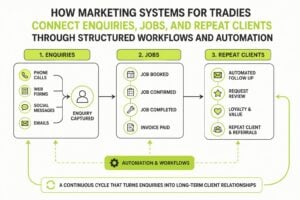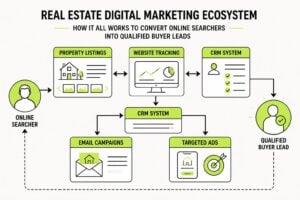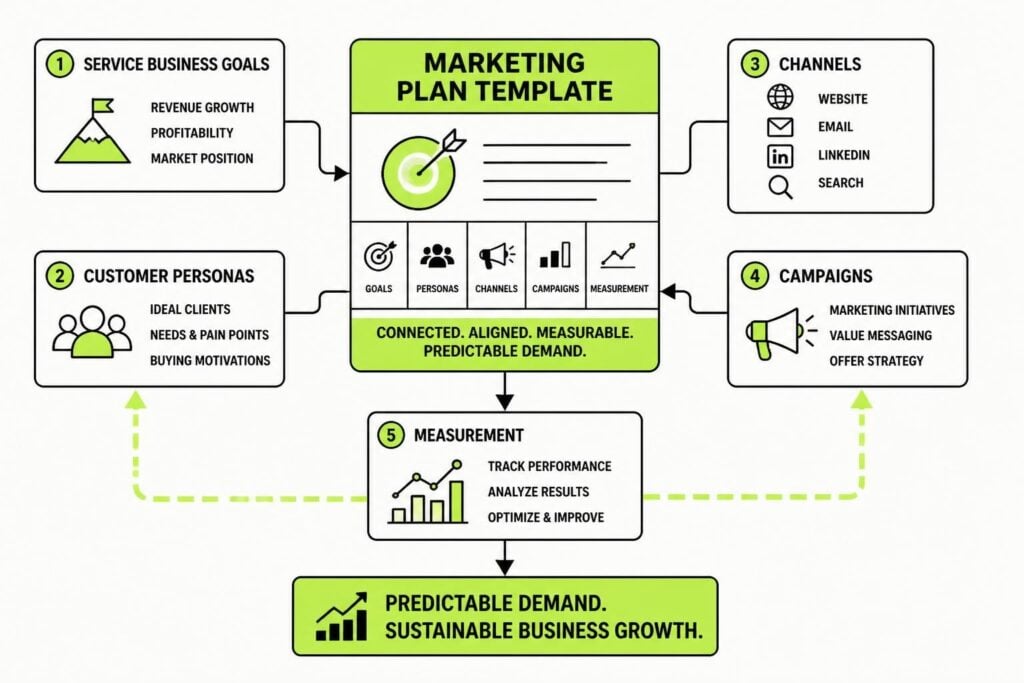
Most service businesses treat marketing like a side project. They post when they remember, chase random tactics, and wonder why leads don't show up consistently. A proper marketing plan template for service companies changes that. It turns scattered effort into a system that runs whether you're working in the business or on it. This isn't about complex frameworks or theoretical nonsense. It's about building a document that guides every marketing decision, protects your leads, and creates growth that actually compounds over time.
Why Service Companies Need a Different Marketing Template
Product companies can rely on shelf space, packaging, and impulse buys. Service businesses live or die on trust, expertise, and relationships built over weeks or months. Your marketing plan needs to reflect that reality.
A marketing plan template for service companies should prioritize:
- Lead nurture over quick conversions because service buyers rarely commit after one touchpoint
- Expertise demonstration through content, case studies, and thought leadership
- Relationship infrastructure including CRM, follow-up sequences, and referral systems
- Service delivery experience as a marketing asset, not just operations
The American Marketing Association’s marketing plan toolkit provides solid foundational structure, but most templates skip the operational details that matter for service work. You need something that connects marketing activity to actual delivery capacity, client experience, and the long sales cycles common in professional services.
Service marketing isn't about viral moments. It's about showing up consistently, proving you understand the problem, and making it easy for buyers to choose you when they're ready.
Core Components Every Template Must Include
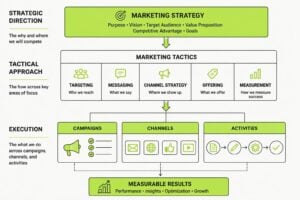
A working marketing plan template for service companies needs six sections that feed into each other. Miss one and the system breaks.
Business Context and Goals
Start with where you are and where you're heading. This section anchors everything else.
| Element | What to Document | Why It Matters |
|---|---|---|
| Current position | Revenue, client count, capacity | Defines realistic growth targets |
| 12-month goals | Revenue target, new clients, retention rate | Creates measurable outcomes |
| Service capacity | Maximum clients, delivery constraints | Prevents marketing outpacing fulfillment |
| Positioning statement | Who you serve, problem you solve, unique approach | Guides all messaging decisions |
Write specific numbers. "Grow revenue" means nothing. "Add 24 new clients at $5K average project value to reach $480K in new revenue" gives you a target to reverse-engineer.
Your goals should connect directly to delivery capacity. Marketing that floods you with leads you can't serve creates worse problems than no marketing at all.
Audience Definition and Research
Generic targeting kills service marketing. You need to know exactly who makes buying decisions, what triggers them to search, and how they evaluate options.
Document these details for your primary audience:
- Role and responsibilities (specific job titles, not "decision makers")
- Problems they own (the ones that keep them up or get them fired)
- Current failed solutions (what they've already tried)
- Information sources (where they learn and who they trust)
- Buying triggers (events that start the search process)
Most service buyers research for weeks before reaching out. Your marketing plan template for service companies needs to map that entire journey, not just the moment someone fills a form. The Hinge Marketing guide for professional services firms emphasizes this point across multiple service sectors.
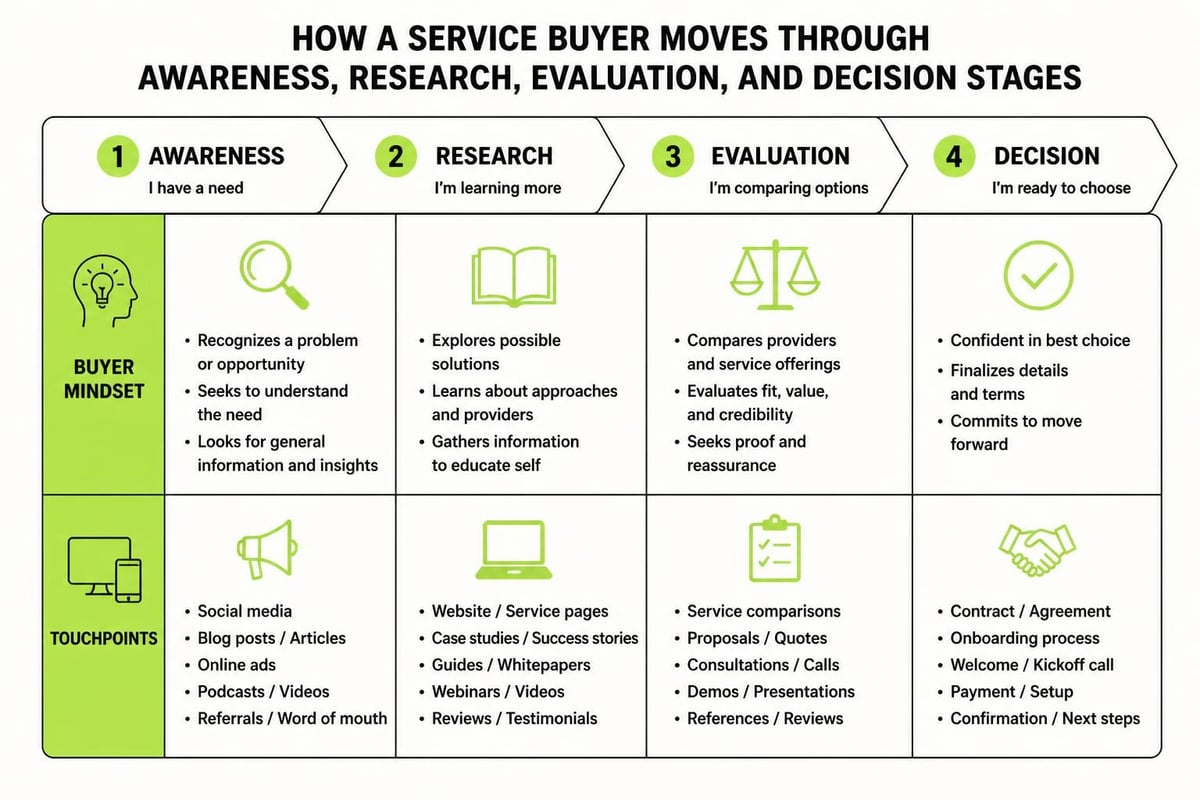
Understanding your audience isn't marketing theory. It's competitive advantage. When you know the specific language, fears, and proof points your buyers need, you stop wasting budget on generic messages that reach everyone and convince no one.
Channel Strategy and Prioritization
Service companies have limited time and budget. Your template needs a clear channel hierarchy based on where your specific buyers actually spend attention.
Choose 2-3 primary channels and 1-2 secondary ones. Trying to be everywhere guarantees you'll be effective nowhere.
Primary channels get 70% of your effort:
- SEO and owned content if your buyers research extensively
- LinkedIn and thought leadership if you target B2B decision makers
- Referral and partnership programs if you serve local markets
- Paid search if you have short consideration cycles and strong margins
Secondary channels get 20% of your effort:
- Email nurture campaigns to stay present during long buying cycles
- Case studies and testimonials for proof during evaluation
- Industry events or speaking for positioning and network building
Experimental channels get 10%:
- Testing new platforms, partnerships, or tactics
- Small budget tests before committing resources
The HubSpot marketing plan template includes helpful channel-planning sections, though you'll need to adapt it for service-specific considerations like referral infrastructure and client experience touchpoints.
Don't build your channel strategy around what you enjoy or what's trendy. Build it around where your specific buyers go when they have the problem you solve. A service marketing plan that ignores buyer behavior is just expensive content creation with no distribution.
Building Your Lead Generation and Nurture System
Lead generation for service companies isn't about volume. It's about attracting qualified prospects and keeping them engaged through weeks or months of consideration.
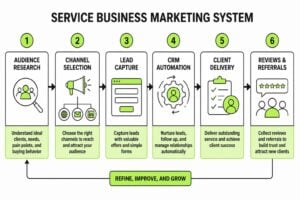
Your marketing plan template for service companies needs to document exactly how you'll move someone from stranger to client:
- Attention mechanism: How will ideal buyers discover you exist?
- Value exchange: What will convince them to share contact details?
- Nurture sequence: How will you stay relevant during their research phase?
- Conversion path: What triggers them to book a call or request a proposal?
- Follow-up system: What happens when they're not ready yet?
The Opt-In Offer That Actually Works
Most service businesses offer generic guides or checklists that get downloaded and ignored. Your opt-in needs to solve a specific sub-problem your audience has right now.
Good service opt-ins:
- Assessment tools that help them understand their current state
- Planning frameworks that organize their thinking about the problem
- Comparison guides that help them evaluate options intelligently
- Process maps that show them what proper execution looks like
Bad service opt-ins:
- Generic industry reports they can get from ten other sources
- "Ultimate guides" that try to teach everything and teach nothing
- Webinar recordings from two years ago
- Ebooks that are just blog posts in PDF format
The 7-Step Marketing Plan offers exactly this type of practical framework. It breaks down the complete system from goal-setting through to review generation, giving service businesses a clear structure they can actually implement. This isn't theory. It's the same process we use internally and with clients.
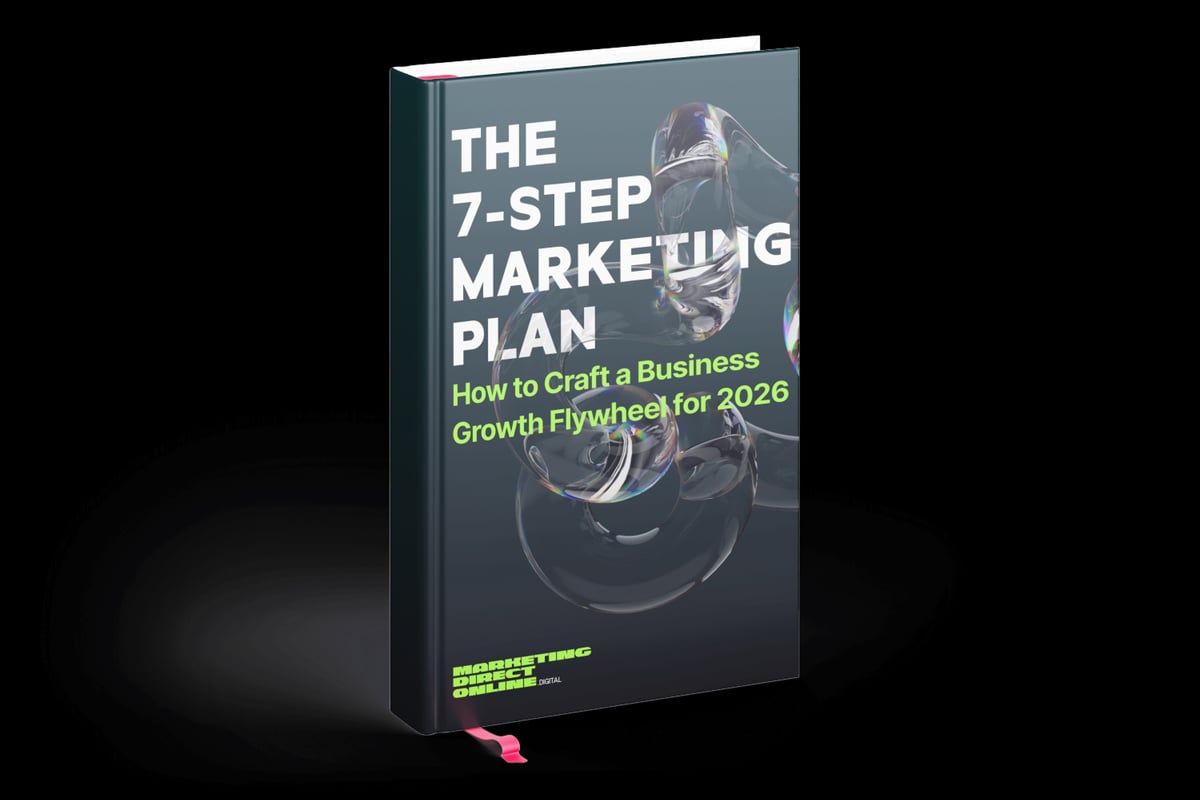
Your opt-in should be valuable enough that someone would consider paying for it. If you wouldn't charge $50 for it, it's probably not compelling enough to build a quality email list.
CRM Infrastructure and Lead Protection
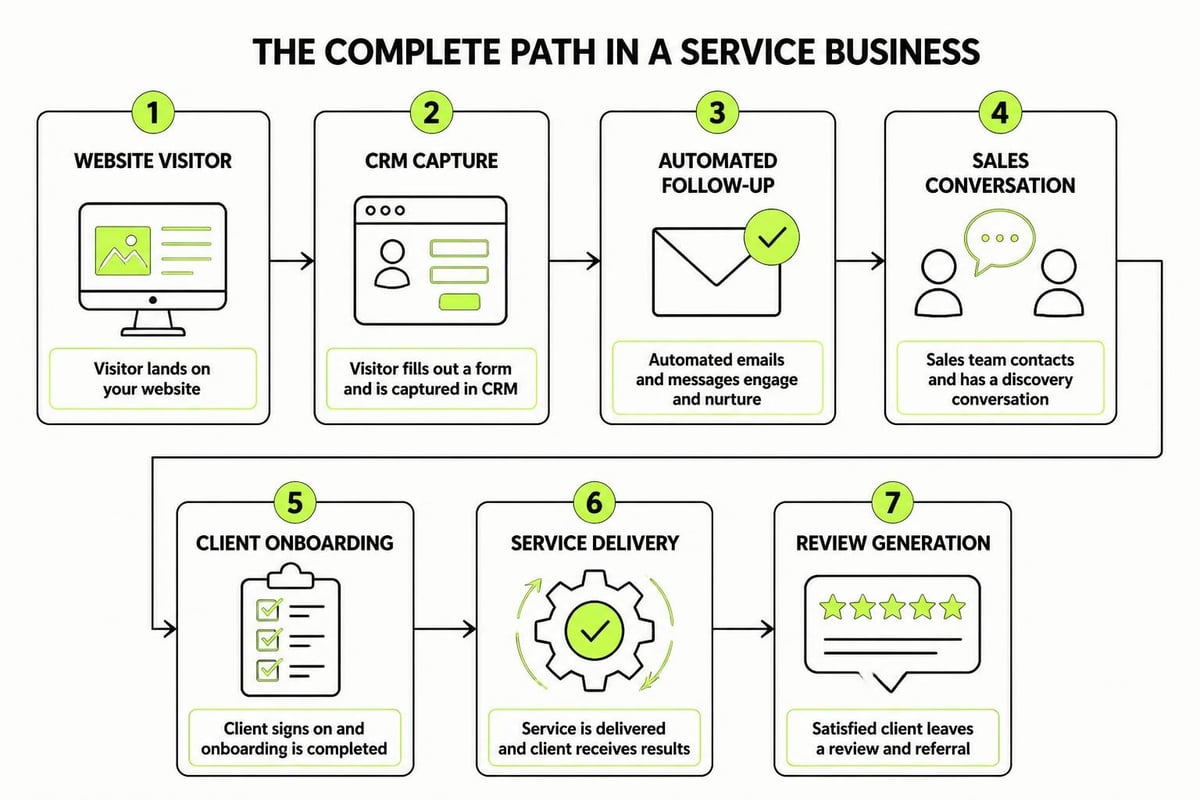
Here's where most marketing plans fail for service companies. They focus entirely on getting leads and completely ignore what happens after someone raises their hand.
A marketing plan template for service companies must include your lead management infrastructure:
| System Component | Purpose | Implementation |
|---|---|---|
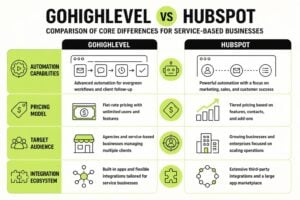
| CRM platform | Centralized lead and client database | GoHighLevel, HubSpot, or similar |
| Lead capture | Forms, chat, call tracking integrated to CRM | Automatic contact creation and tagging |
| Follow-up automation | Immediate response, nurture sequences | Email and SMS workflows triggered by actions |
| Lead scoring | Prioritize sales outreach | Point system based on engagement and fit |
| Pipeline tracking | Visibility into proposal and close rates | Stage-based pipeline with conversion metrics |
Setting up a CRM and automation infrastructure isn't optional in 2026. Every lead that doesn't get followed up immediately is money walking out the door. Every prospect who asks a question and waits 24 hours for a response is probably talking to your competitor.
Your plan should specify:
- Response time commitments (ideally under 5 minutes for new leads)
- Nurture cadence (how often you'll contact prospects who aren't ready)
- Re-engagement triggers (when and how you'll revive old leads)
- Handoff process (how leads move from marketing to sales to delivery)
Service businesses lose more revenue to poor lead management than to bad marketing. Your template needs to treat lead protection as seriously as lead generation.
Content Strategy and Editorial Planning
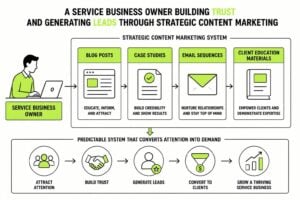
Content marketing for service companies serves three specific purposes. Your marketing plan template for service companies should document all three.
Purpose one: Demonstrate expertise
You're not trying to teach people to do it themselves. You're proving you understand the problem better than alternatives. Your content shows thinking, process, and the second-order considerations that separate expertise from basic knowledge.
This means:
- In-depth guides on specific service scenarios, not surface-level listicles
- Case studies that show problem, approach, result, and why it worked
- Process documentation that reveals how you think about solving the problem
Purpose two: Answer buying questions
Your prospects are researching. They're comparing options, evaluating cost versus value, and trying to understand what good looks like. Create content that makes those decisions easier.
This means:
- Comparison content (in-house vs. outsourced, different approaches, when to hire specialists)
- Pricing guides that educate on cost drivers and value factors
- Selection frameworks that help them evaluate providers intelligently
Purpose three: Stay present during consideration
Service buying cycles run weeks or months. You need reasons to stay in front of prospects without being pushy.
This means:
- Regular email content tied to subscriber interests or journey stage
- Topic clusters that let interested prospects go deeper on specific areas
- New perspectives on industry changes, trends, or common mistakes
Your editorial calendar should map to these three purposes. If a content piece doesn't demonstrate expertise, answer buying questions, or maintain presence, it's probably a waste of time.
The Small Business Administration’s marketing plan example includes helpful content planning sections you can adapt for service contexts.
Measurement Framework and Reporting Cadence
A marketing plan template for service companies fails if it doesn't specify exactly how you'll know what's working.
Define these metrics upfront:
Lead Generation Metrics
- New contacts added per month
- Cost per lead by channel
- Lead quality score or qualification rate
- Source attribution (where leads come from)
Engagement Metrics
- Email open and click rates
- Time on site and pages per session
- Return visitor rate
- Content piece performance
Conversion Metrics
- Lead-to-consultation conversion rate
- Consultation-to-proposal rate
- Proposal-to-client close rate
- Average sale value and sales cycle length
Revenue and Growth Metrics
- Marketing-sourced revenue
- Customer acquisition cost (CAC)
- Customer lifetime value (LTV)
- Month-over-month and year-over-year growth
Assign a reporting cadence to each metric. Some you'll check weekly, others monthly or quarterly. The American Marketing Association’s budget template helps you track spending against these outcomes.
What gets measured gets managed. Your template should make it impossible to avoid the numbers that matter.
Create a simple dashboard or reporting document that you actually review. Most marketing plans include ambitious measurement sections that never get looked at after month two. Build something you'll use, even if it's just a spreadsheet you update every Monday.
Budget Allocation and Resource Planning
Service companies operate on tighter margins than product businesses. Your marketing plan template for service companies needs realistic budget allocation tied to capacity and goals.
Start with your revenue goal and work backward:
- Total new revenue target: $480,000
- Average client value: $5,000
- Required new clients: 96
- Needed qualified leads (assuming 25% close rate): 384
- Required traffic/attention (assuming 5% lead capture): 7,680 visitors or impressions
Now assign budget by channel:
| Channel | Monthly Budget | Expected Leads | Cost per Lead | Notes |
|---|---|---|---|---|
| SEO/Content | $2,000 | 15 | $133 | Compounds over time |
| LinkedIn Ads | $1,500 | 12 | $125 | Fast testing, higher intent |
| Referral Program | $500 | 8 | $63 | Incentives and partner outreach |
| Email Marketing | $300 | 5 | $60 | Nurture and re-engagement |
| Total | $4,300 | 40 | $108 | 480/year, on target |
Your budget allocation should reflect:
- What you can measure (don't pour money into channels with no tracking)
- Your service capacity (no point generating 100 leads if you can only handle 30)
- Realistic timelines (SEO takes 6-12 months, paid ads work faster)
- Resource availability (who's creating content, managing campaigns, following up?)
Most service businesses under-invest in marketing because they don't connect spending to revenue outcomes. When you can show that $4,300 per month generates $40,000 in monthly revenue, the budget conversation changes.
Include both hard costs (ads, tools, contractors) and soft costs (internal time, opportunity cost). A "free" channel that takes 20 hours per week isn't free if that time could generate billable revenue.
Implementation Timeline and Accountability
The best marketing plan template for service companies is worthless if it sits in a folder. Your plan needs clear timelines and assigned ownership.
Break your 12-month plan into quarters:
Q1: Foundation and Testing
- Complete audience research and positioning
- Set up CRM and basic automation
- Launch primary content channel
- Test 2-3 lead generation tactics
- Establish measurement baseline
Q2: Scale What Works
- Double down on winning channels from Q1
- Launch secondary content initiatives
- Build out nurture sequences
- Start case study and testimonial collection
- Optimize conversion paths
Q3: Expansion and Refinement
- Add secondary marketing channels
- Expand content production
- Launch referral or partnership programs
- Test advanced automation
- Refine based on six months of data
Q4: Optimization and Planning
- Audit full marketing system
- Cut underperforming tactics
- Scale top performers
- Document wins and lessons
- Plan next year's strategy
Assign every tactic to a specific person with a specific deadline. "Marketing team" isn't accountable. "Sarah will publish the first case study by March 15" is.
Build monthly review meetings into your plan. Thirty minutes to review numbers, discuss what's working, and adjust tactics beats quarterly marathons where you realize you've been doing the wrong thing for three months.
Your digital marketing plan should be a living document. Review it monthly, adjust quarterly, and rebuild annually based on what you learned.
Common Mistakes That Kill Service Marketing Plans
Even good templates fail when execution breaks down. Watch for these traps.
Mistake one: Tactics without strategy
Jumping straight to "we need a newsletter" or "let's try TikTok" without connecting to audience needs and business goals. Every tactic should have a clear purpose tied to your overall plan.
Mistake two: No follow-up infrastructure
Generating leads without a system to capture, respond, and nurture them. This is the most expensive mistake service businesses make. Build the infrastructure before you turn on the lead tap.
Mistake three: Unrealistic resource allocation
Planning to publish daily blogs, run three ad campaigns, and speak at ten events when you're a two-person operation. Better to do three things well than ten things poorly.
Mistake four: Ignoring service delivery as marketing
Your client experience is your most powerful marketing asset. Unhappy clients poison your funnel. Delighted clients generate referrals and testimonials that make everything else easier. Build client experience into your marketing plan template for service companies.
Mistake five: No measurement or adjustment
Setting the plan in January and never looking at it again. Markets shift, tactics fail, and opportunities emerge. Your plan should evolve based on real data.
The service blueprinting guidance from Nielsen Norman Group helps you map client experience touchpoints that most marketing plans completely miss.
When to Rebuild Your Marketing Plan
Your marketing plan template for service companies isn't permanent. Rebuild when:
- You've grown past your target market and need to move upmarket or expand into new segments
- Your service offering has changed significantly and your messaging no longer matches what you deliver
- Major market shifts have changed buyer behavior, competitive landscape, or channel effectiveness
- You've learned your positioning was wrong and need to pivot how you talk about your value
- Annual review shows systematic underperformance across multiple channels or tactics
Don't rebuild reactively after one bad month. Do rebuild strategically when the fundamentals have shifted.
A solid plan should last 12 months with quarterly adjustments. If you're rebuilding every few months, you're probably chasing tactics instead of executing strategy.
Consider working with specialists who understand marketing systems and branding for service businesses if your internal team lacks the expertise or capacity to build and execute a comprehensive plan.
A marketing plan template for service companies works when it connects your expertise to the specific problems your buyers are trying to solve. It's not about creativity or viral moments. It's about building a system that consistently attracts qualified prospects, nurtures them through long buying cycles, and converts them into clients who value your work. If you're ready to remove the chaos and build marketing infrastructure that actually generates predictable demand, MDO Digital helps service businesses do exactly that with clarity, systems, and execution that compounds over time.