The term “marketing experts” gets thrown around a lot. Everyone with a laptop and a LinkedIn profile seems to claim the title. But real expertise in marketing isn’t just about knowing tactics or running ads. It’s about understanding systems, solving specific problems, and delivering results that compound over time. For service-based businesses trying to scale, the question isn’t whether you need marketing experts. It’s which ones you need, when, and how to integrate their knowledge without creating more chaos.
What Marketing Experts Actually Do
Marketing experts bring depth to specific areas that most businesses can’t justify hiring full-time. They’re not generalists who dabble. They specialise.
Some focus on brand strategy and positioning. They help you articulate why you exist and who you serve. Others live in data, turning analytics into forecasting models that predict demand. Then you’ve got the builders: CRM specialists, automation engineers, conversion optimisers.
The value sits in their pattern recognition. They’ve seen what works across dozens or hundreds of businesses. They know the difference between a tactic that might work and a system that will compound.
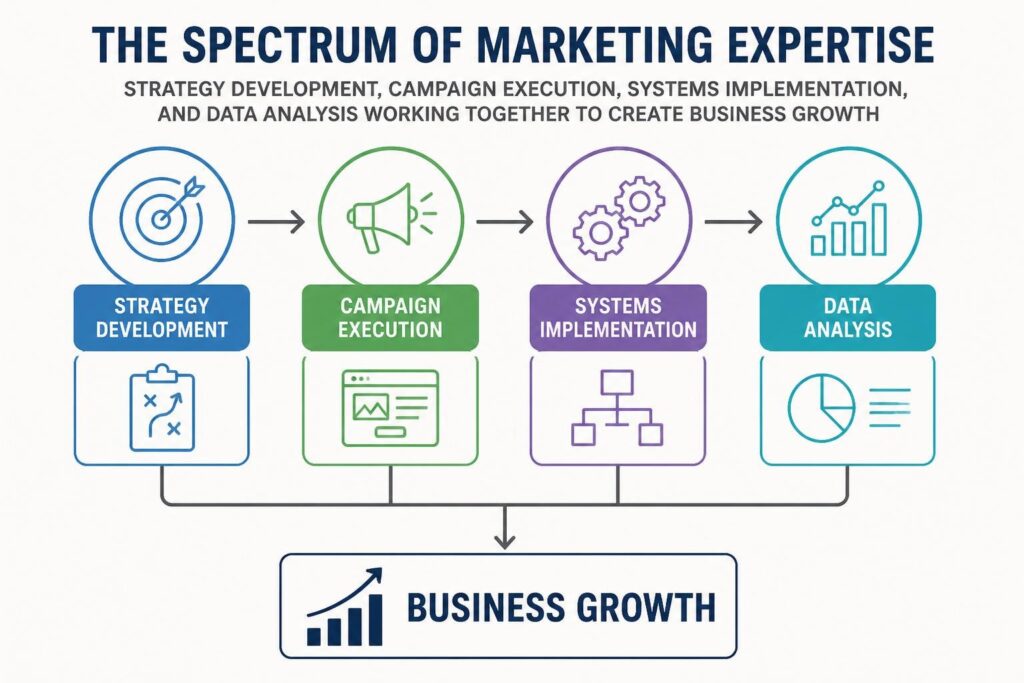
The Spectrum of Expertise
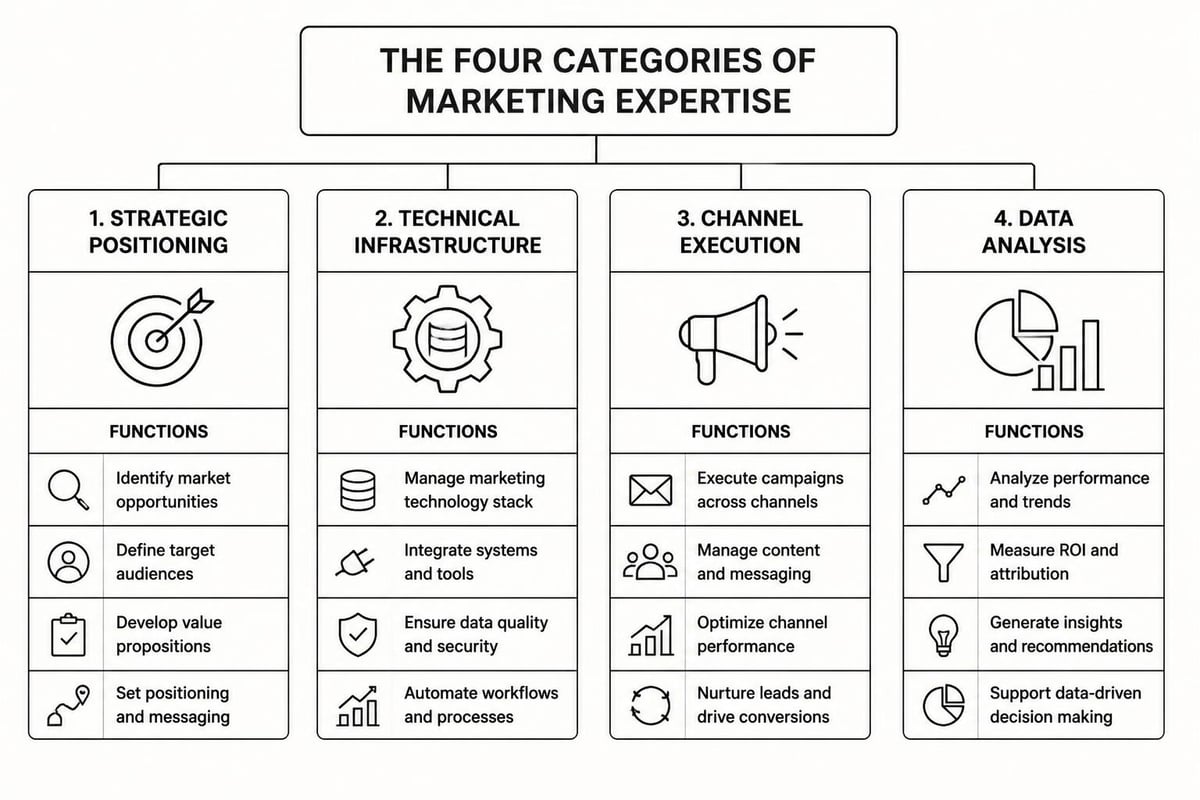
Marketing expertise falls into a few core categories:
- Strategic experts who shape positioning, messaging, and market approach
- Technical specialists who build infrastructure like CRMs, tracking, and automation
- Channel experts who execute in specific areas: SEO, paid ads, email, content
- Analytical minds who translate data into decisions and optimisations
Each plays a different role. Strategic thinkers set direction. Technical builders create the systems that scale. Channel experts execute with precision. Analysts keep everyone honest.
The mistake most businesses make is hiring tacticians when they need strategists, or vice versa. You don’t need a Facebook ads expert if you haven’t nailed your positioning. You don’t need a brand consultant if your website can’t capture leads.
When You Actually Need Marketing Experts
Not every business needs outside experts. If you’re just starting out, focus on fundamentals first. Learn your market. Talk to customers. Test messaging manually.
But there are clear signals that it’s time to bring in specialised knowledge.
Growth Plateau
You’ve hit a ceiling. Revenue flatlines. Lead quality drops. What worked at $500K annual revenue doesn’t work at $2M. Marketing experts help you identify the constraint and redesign the system around it.
System Chaos
Leads fall through cracks. No one knows which marketing actually works. Data lives in six different places. You need someone who’s built the infrastructure before and knows how pieces connect.
Specialised Channels
You want to expand into a new channel but lack the knowledge. Paid search, account-based marketing, partnership programs. These need expertise, not guesswork.
| Signal | What It Means | Type of Expert Needed |
|---|---|---|
| Revenue plateau | Current system maxed out | Strategic + analytical |
| Lead leakage | Infrastructure gaps | Technical specialist |
| Poor conversion | Messaging or experience issues | Strategic + channel expert |
| Wasted ad spend | Execution problems | Channel specialist + analyst |
| No visibility on ROI | Tracking and reporting broken | Technical + analytical |
How to Choose the Right Marketing Experts
Credentials don’t mean much. Case studies can be cherry-picked. Testimonials get gamed. So how do you actually evaluate expertise?
Start with specificity. Real experts talk in systems and frameworks, not platitudes. They reference specific methodologies. They explain tradeoffs. They ask diagnostic questions before prescribing solutions.
Ask them to walk through a problem they solved. Listen for detail. Did they just run ads, or did they rebuild the entire funnel? Did they increase traffic, or did they fix conversion and attribution first?
Red Flags and Green Lights
Watch for these warning signs:
- Guaranteed results (no one controls outcomes completely)
- Vague language about “growth hacking” or “disruption”
- One-size-fits-all solutions
- Reluctance to show actual work or explain thinking
- Overpromising on timelines
Good signs include:
- Asking about your current systems and infrastructure
- Explaining multiple approaches with pros and cons
- References to measurement and ongoing optimisation
- Clear statements about what they don’t do
- Realistic timelines based on your resources
The Marketing Science Institute connects businesses with academic experts who bring rigorous thinking to marketing challenges. That level of structured methodology should inform any expert you work with.
Working With Marketing Experts Effectively
Hiring expertise is one thing. Getting value from it is another. Most failures happen because of misaligned expectations or poor integration.
Define the scope ruthlessly. Are they advising or executing? Building systems or running campaigns? Temporary or ongoing? Get specific before anything starts.
Integration Points
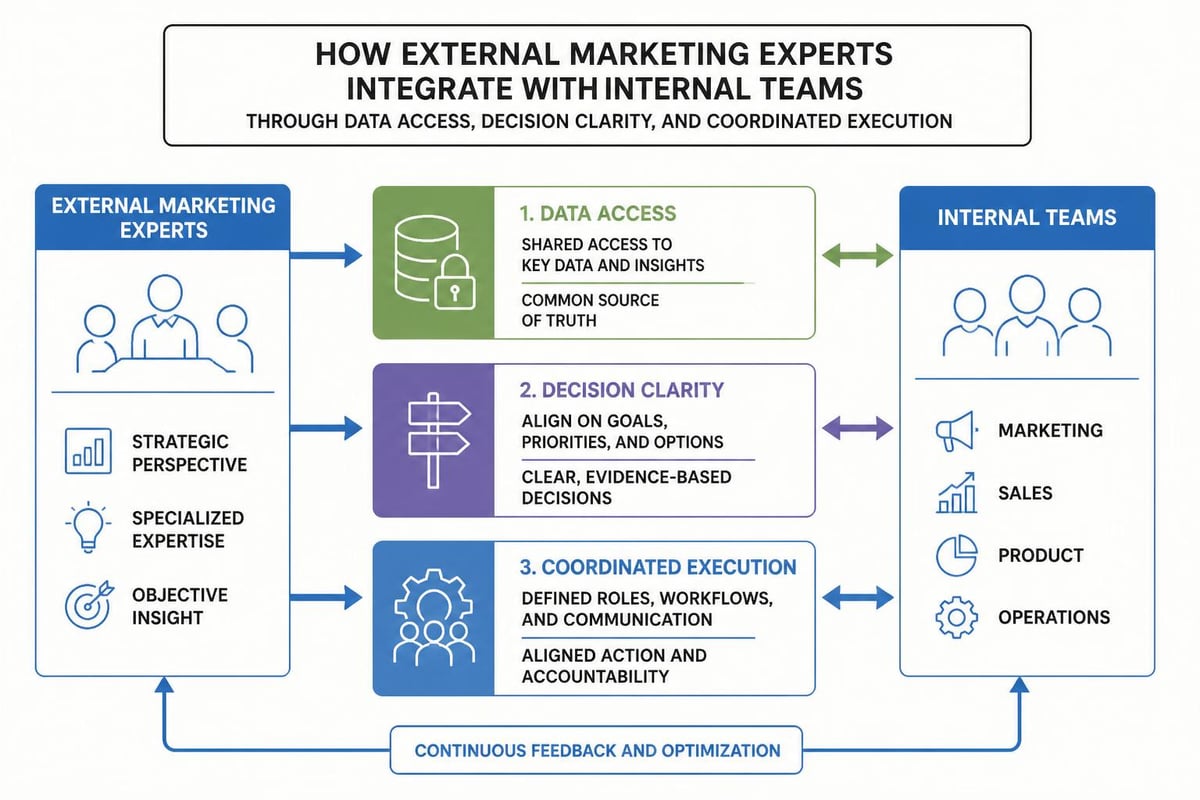
Marketing experts need three things to succeed:
- Access to data: Analytics, CRM records, customer feedback, sales conversations
- Decision-making clarity: Who approves what, and how fast can things move
- Existing team coordination: How they’ll work with your people without stepping on toes
The best engagements happen when experts complement your team, not replace it. They bring knowledge you lack. You bring context they need.
Many service businesses hit a point where they need structured marketing but don’t know where to start. The 7-Step Marketing Plan offers a clear framework that covers everything from defining your buyer persona to building CRM infrastructure and nurture campaigns. It’s the kind of systematic approach that turns sporadic marketing into predictable demand.
The Economics of Hiring Marketing Experts
Expertise costs money. But so does guessing wrong for six months.
A good fractional CMO or strategic consultant might run $5K to $15K per month. Specialists (ads, SEO, automation) range from $3K to $10K depending on scope. Agencies bundle services but often at higher monthly retainers.
The real cost is opportunity cost. If you spend $8K per month for three months to fix your lead capture and attribution, but that generates an extra $30K in monthly pipeline, the math works. If you spend the same amount on tactics without fixing systems, you’ve just burned cash.
Build vs Buy Decisions
Should you hire marketing experts or build internal capability?
It depends on frequency and complexity. If you need ongoing content marketing and branding, an in-house person might make sense. If you need a CRM built once and optimised quarterly, hire expertise for the project.
Consider this breakdown:
| Need | Best Approach | Typical Cost Range |
|---|---|---|
| Strategy and positioning | Consultant (project-based) | $10K to $40K |
| CRM and automation build | Specialist (project-based) | $8K to $25K |
| Paid advertising execution | Agency or freelancer (ongoing) | $3K to $10K/month |
| SEO and content | Hybrid: strategist + in-house writer | $4K to $8K/month |
| Analytics and reporting | Specialist (setup) + internal maintenance | $5K to $15K setup |
Common Mistakes When Working With Marketing Experts
The biggest mistake is hiring an expert to do what you should be doing yourself. Marketing experts can’t define your value proposition. They can’t create authentic brand voice from nothing. They need raw material to work with.
Unrealistic Expectations
Marketing compounds. It doesn’t explode overnight. Expect 90 days minimum before seeing meaningful results from most strategic or system work. Channel execution can move faster, but only if infrastructure already exists.
Another trap: thinking one expert solves everything. B2B marketing expertise covers a massive range. A paid search specialist won’t fix your email nurture sequence. A brand strategist won’t set up your Google Tag Manager.
Poor Handoff Planning
What happens when the engagement ends? If you haven’t planned for knowledge transfer, documentation, and internal capability building, you’re left dependent. Good experts build you up, not create dependency.
Evaluating Results and ROI
How do you know if marketing experts delivered value? Track inputs and outputs separately.
Inputs include what they built, documented, or improved:
- Systems implemented (CRM, automation, tracking)
- Processes documented
- Team training delivered
- Strategic frameworks created
Outputs are business results:
- Lead volume and quality changes
- Conversion rate improvements
- Revenue impact (direct and influenced)
- Cost per acquisition trends
Don’t expect experts to own revenue outcomes alone. Too many variables sit outside their control. But they should move the metrics they’re responsible for.
Attribution Challenges
Marketing impact gets fuzzy fast. A customer might see three ads, read two blog posts, and get two emails before booking a call. Who gets credit?
The customer journey across multiple touchpoints: ads, content, email, and direct outreach showing attribution challenges
Good marketing experts help you build attribution models that make sense for your business. Perfect attribution doesn’t exist. Useful attribution shows what’s working well enough to make decisions.
Building Long-Term Relationships With Marketing Experts
The best expert relationships evolve. They start with a specific project or problem. If the fit works, they grow into ongoing advisory roles.
Treat experts as partners, not vendors. Share context freely. Involve them in strategic conversations. Give them visibility into what’s happening across the business.
Compensation models matter. Pure hourly billing creates incentive misalignment. Fixed project fees work for defined scopes. Retainers with performance bonuses align interests better for ongoing work.
The University of Chicago Booth School has published extensive research on marketing effectiveness and expert collaboration. The core finding: integrated experts who understand business context deliver 3-4x better results than siloed specialists.
The Future of Marketing Expertise
Marketing expertise is fragmenting and specialising further. Five years ago, “digital marketing expert” meant something. Now it’s too broad. You need experts in specific platforms, technologies, and methodologies.
AI and automation are shifting what expertise means. The value isn’t in doing tasks anymore. It’s in designing systems, making strategic choices, and interpreting results. Technical skills remain crucial, but strategic thinking and business acumen matter more.
Expect to see more fractional experts and fewer generalist agencies. Businesses want specific solutions, not bundled services they don’t need. The marketing resources recommended by industry experts reflect this shift toward specialisation and continuous learning.
Building Your Expert Network
Don’t wait until you’re desperate to find marketing experts. Build relationships before you need them.
Follow people doing work you respect. Engage with their content. Ask smart questions. When you eventually need help, you’ll have context on who knows what.
Create a personal advisory network. Two or three trusted experts you can call for specific situations beats a roster of vendors you barely know. These relationships take time to develop but pay off repeatedly.
Consider joining communities where experts gather. Industry conferences, online forums, local business groups. The best experts often come through referrals from people whose judgment you trust.
At MDO Digital, we’ve seen how structured systems and clear strategy transform service businesses. Our work focuses on digital growth through marketing infrastructure that removes chaos and creates predictable demand.
Marketing experts solve specific problems, not vague ones. They build systems, not just run campaigns. The right expertise at the right time accelerates growth and prevents expensive mistakes. When you’re ready to move from scattered tactics to structured systems, working with specialists who’ve built what you need makes the difference between guessing and knowing. MDO Digital helps service-based businesses scale with clarity through high-trust websites, CRM infrastructure, and data-driven marketing that turns attention into predictable demand.