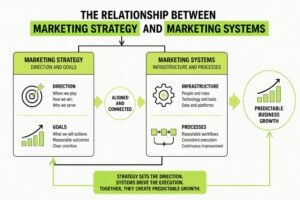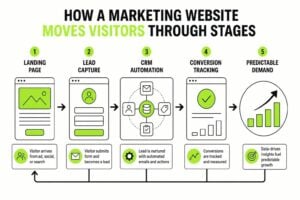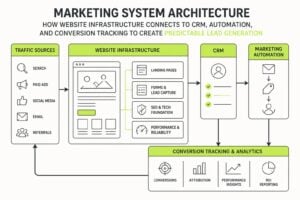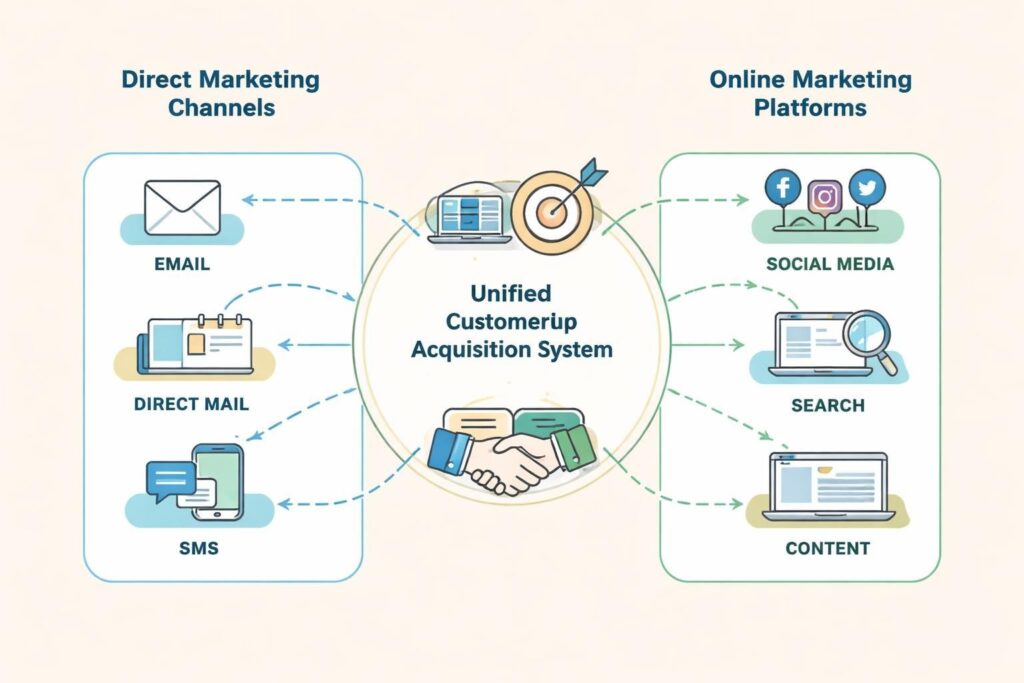
Most service businesses treat direct marketing and online marketing as separate functions. Sales handles one, marketing owns the other, and the gap between them becomes a revenue leak. The truth is simpler: both strategies target people who need what you sell. The difference is proximity. Direct marketing puts your message in someone's hands or inbox. Online marketing builds the infrastructure that makes them care when it arrives. Neither works well in isolation. Together, they create a system where attention converts into predictable demand.
What Direct Marketing and Online Marketing Actually Mean
Direct marketing is any communication you send to a specific person or defined audience. Email campaigns, postal mail, SMS, telemarketing. The goal is a measurable response: book a call, download a resource, buy something. You're not broadcasting to everyone. You're targeting people who've raised their hand or fit your customer profile.
Online marketing operates in digital spaces where potential customers already spend time. Your website, search engines, social platforms, content hubs. You're building presence, earning attention, and creating pathways that lead back to your offers. The integration of both approaches strengthens your entire marketing system.
Why Service Businesses Need Both
Service businesses don't sell impulse purchases. Your customers need trust, proof, and multiple touch points before they commit. Direct marketing and online marketing handle different stages of that journey.
Direct marketing excels at:
- Converting warm leads who already know you
- Generating immediate responses from targeted segments
- Nurturing relationships over time through sequenced messaging
- Delivering personalized offers based on behavior or demographics
Online marketing excels at:
- Attracting cold audiences who've never heard of you
- Building authority through educational content
- Creating 24/7 discovery mechanisms (search, social, referrals)
- Tracking customer journeys across multiple channels
When a service business invests in online marketing and branding without direct follow-up, leads go cold. When they run direct campaigns without online infrastructure, messages land in a vacuum with no context or trust foundation.
Building Your Direct Marketing Infrastructure
Direct marketing lives or dies on your database quality. You can't send relevant messages to people you don't understand or segment properly.
List Building That Matters
Growing an email list isn't about volume. It's about attracting people who match your ideal customer profile and giving them a reason to stay engaged.
Effective lead magnets for service businesses:
- Diagnostic tools or assessments
- Industry-specific templates
- Case studies showing real results
- Educational video series
- Exclusive access to research or data
Every signup should trigger a welcome sequence that sets expectations, delivers immediate value, and positions your expertise. This is where marketing and business development intersect, you're not just collecting contacts, you're starting conversations that lead to discovery calls.
Email Campaigns That Convert
Generic newsletters don't work in 2026. Your audience gets hundreds of emails weekly. Yours needs to be relevant, timely, and structured around their actual needs.
Segment your database by:
- Where they are in the buying journey
- Which services or solutions interest them
- Past engagement with your content
- Industry or business size
- Specific problems they've indicated
Then build campaigns that match each segment. Someone who downloaded a branding guide needs different messaging than someone who requested a website audit. Following email marketing best practices means treating subscribers as individuals, not just list members.
| Campaign Type | Purpose | Frequency | Key Metric |
|---|---|---|---|
| Welcome Series | Onboard new subscribers | Once per signup | Open rate, click rate |
| Educational Nurture | Build authority over time | Weekly or biweekly | Engagement, forward rate |
| Promotion | Drive specific action | Monthly or as needed | Conversion rate |
| Re-engagement | Revive cold contacts | Quarterly | Reactivation rate |
SMS and Direct Mail in a Digital World
Text messaging works for appointment reminders, time-sensitive offers, and urgent updates. The open rates exceed email by multiples. But overuse kills the channel. Reserve SMS for high-value moments where immediacy matters.
Direct mail still converts for service businesses targeting decision-makers who receive fewer physical pieces than they did five years ago. A well-designed mailer with a clear offer and online follow-up mechanism (QR code, custom URL) bridges physical and digital channels effectively.
Online Marketing Systems That Feed Direct Campaigns
Your online presence doesn't exist to look good. It exists to capture attention, build trust, and move people toward conversations that generate revenue.
Search as Your Lead Generation Engine
When someone searches for solutions you provide, your business should appear. Not through ads alone. Through organic visibility built on content that answers real questions.
Your search strategy needs:
- Service pages optimized for commercial intent keywords
- Educational content targeting problem-aware searches
- Location pages if you serve specific regions
- Case studies and examples that rank for solution searches
Every page should capture visitor information through relevant offers. A homepage visitor might download a capabilities deck. Someone on a blog post about CRM automation might want a system assessment. Connect your website development marketing efforts to specific conversion goals, not just traffic metrics.
Social Media for Relationship Building
Social platforms aren't broadcast channels. They're relationship infrastructure. According to global social network statistics, billions of people use these platforms daily, but your audience is a fraction of that number.
Focus on where your ideal customers actually spend time. For most service businesses, that's LinkedIn for B2B relationships, potentially Instagram for visual-first industries, or niche communities where your expertise adds value.
Effective social marketing:
- Shares insights, not promotions
- Engages with comments and questions
- Builds your personal brand alongside your company brand
- Drives traffic to owned assets (your website, email list)
- Creates content that gets shared within your target market
The goal isn't followers. It's qualified attention that converts into email subscribers, website visitors, or direct inquiries.
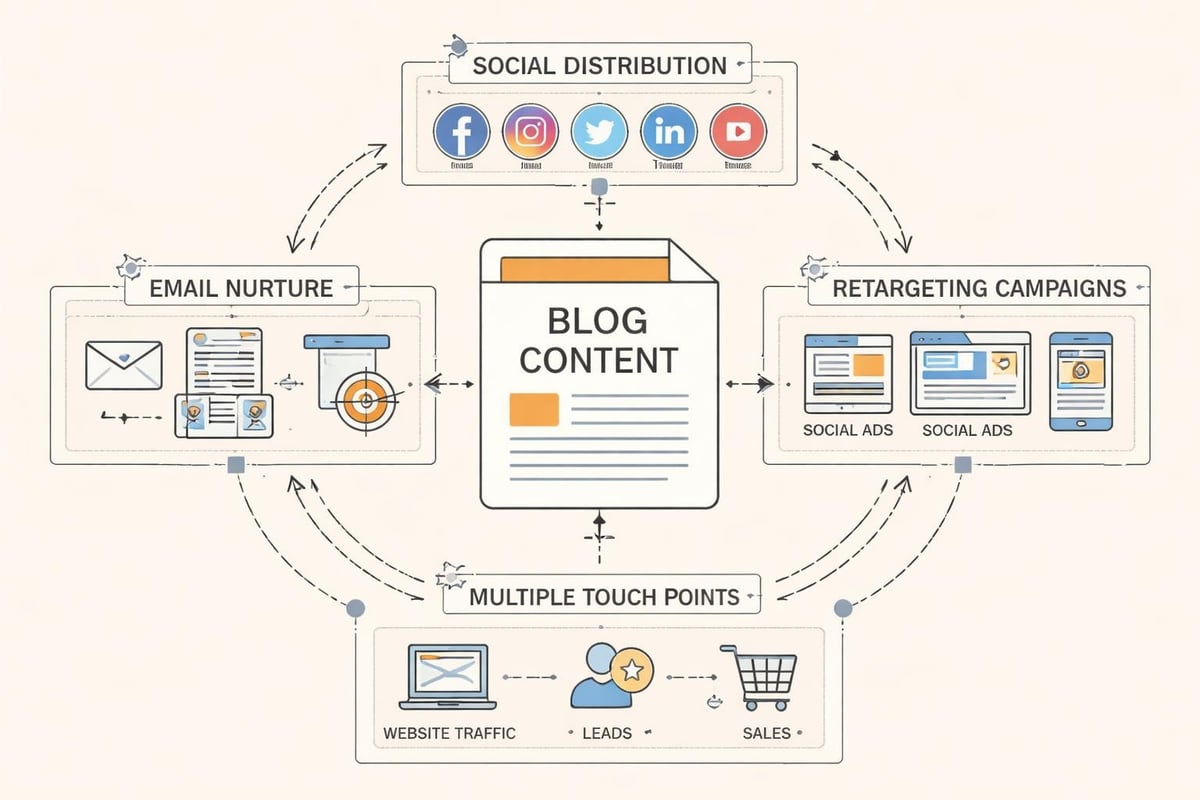
Where Direct Marketing and Online Marketing Overlap
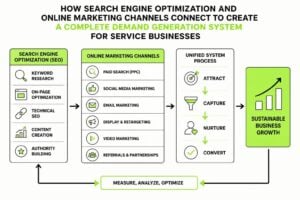
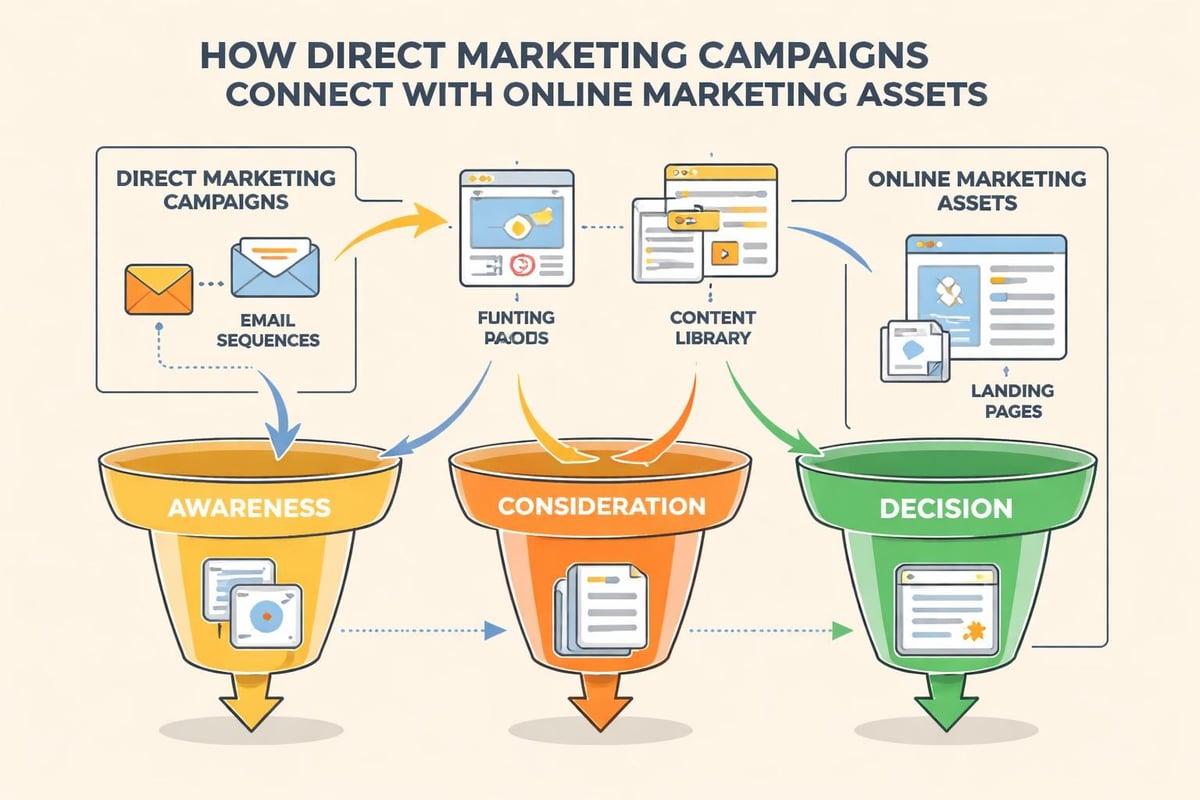
The most effective systems blur the line between direct and online approaches. Your email campaigns drive to landing pages. Your social content captures emails. Your website triggers direct outreach based on behavior.
Retargeting: The Bridge Strategy
Someone visits your pricing page but doesn't book a call. Standard online marketing loses them. Direct marketing never knew they existed. Retargeting connects both worlds.
You can show targeted ads to website visitors across social platforms, display networks, and search results. These ads drive to specific offers, content, or conversion pages tailored to what they already viewed. When they convert, they enter your direct marketing sequences.
Behavior-Triggered Campaigns
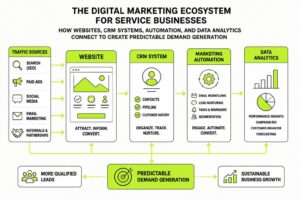
Modern CRM and automation platforms track how people interact with your online presence, then trigger direct marketing based on those actions.
Example workflow:
- Visitor downloads a guide about digital branding solutions
- They're added to an email nurture sequence
- If they visit your services page within seven days, they receive a case study relevant to their industry
- If they don't engage, they're moved to a longer educational sequence
- High-engagement contacts get flagged for direct outreach from your team
This integration requires infrastructure, tracking, and clear decision trees. But it transforms scattered marketing activity into a system that protects leads and creates structured follow-up.
Content Syndication and Promotion
You publish a detailed article about marketing systems. That's online marketing. But the real value comes from how you distribute it through direct channels.
- Email it to your subscriber list with context about why it matters now
- Share it in LinkedIn messages to specific contacts who'd benefit
- Use it as a conversation starter in sales outreach
- Turn sections into social posts that drive back to the full piece
- Create a downloadable PDF version as a lead magnet
One piece of content becomes multiple touch points across both direct marketing and online marketing channels. Branding content marketing amplifies when you have distribution systems in place, not just publishing schedules.
Building a Unified System
Most businesses run campaigns. What you need is a system where every piece connects to the next.
Your Marketing Stack
Essential tools for integrated direct marketing and online marketing:
| Tool Category | Purpose | Integration Point |
|---|---|---|
| CRM | Centralize contact data, track interactions | Connects email, website, sales outreach |
| Email Platform | Send campaigns, automation, segmentation | Pulls website behavior, triggers workflows |
| Website/CMS | Host content, capture leads, track visitors | Feeds data to CRM, retargeting pixels |
| Analytics | Measure traffic, conversions, behavior | Informs campaign targeting, content strategy |
| Automation | Trigger actions based on behavior | Bridges online activity and direct follow-up |
The stack matters less than the connections between tools. Data should flow automatically. A form submission on your website should create a CRM contact, trigger an email sequence, and notify your sales team, all without manual work.
Measurement That Drives Decisions
You can't optimize what you don't measure. But most businesses track vanity metrics (social followers, email list size) instead of business metrics (cost per qualified lead, revenue per subscriber).
Track these across both channels:
- Lead source (which online channel or campaign brought them in)
- Conversion path (which emails, pages, or content pieces they engaged with)
- Time to conversion (how long from first touch to qualified opportunity)
- Revenue attribution (which marketing activities led to closed deals)
- Channel efficiency (cost and conversion rate by source)
According to HubSpot’s State of Marketing report, data-driven marketers are more likely to exceed their goals. That means connecting your online analytics to your direct campaign performance and making decisions based on what actually converts, not what feels right.
Common Integration Mistakes
The gap between strategy and execution kills more marketing systems than budget constraints.
Three mistakes that break the connection:
-
Running campaigns without infrastructure. You drive traffic to your website, but there's no clear conversion path. You send emails, but they link to generic pages. Every campaign needs a destination designed for the next step.
-
Collecting leads you never nurture. Your ads work. Your content captures emails. Then nothing happens. Or worse, everyone gets the same generic newsletter regardless of how they found you or what they need. Build the follow-up system before you scale lead generation.
-
Ignoring the customer journey. Someone who just discovered your business needs different messaging than someone who's been reading your content for months. Map your typical journey from awareness to decision, then create content and campaigns for each stage. Don't jump straight to sales pitches with cold audiences.
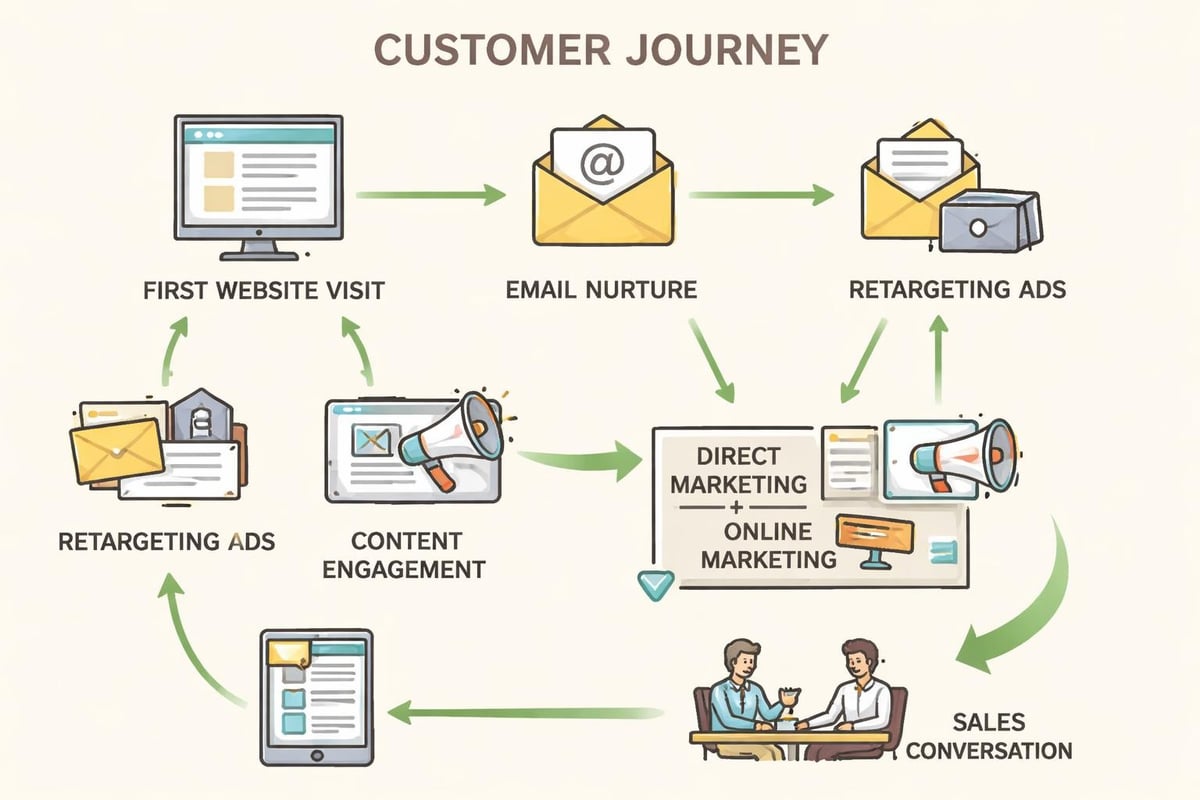
Making It Work for Service Businesses
Service businesses have longer sales cycles, higher price points, and more complex decision processes than e-commerce or simple transactions. Your direct marketing and online marketing needs to reflect that reality.
Trust Before Transactions
Nobody books a high-value service after one Instagram post or email. They need proof that you understand their problems and can deliver results.
Your online presence builds that proof through:
- Educational content that demonstrates expertise
- Case studies showing real outcomes
- Clear processes that remove uncertainty
- Social proof from clients they recognize or relate to
Your direct campaigns leverage that foundation by:
- Referencing specific content they've consumed
- Offering personalized audits or assessments
- Sharing relevant case studies based on their industry
- Creating urgency around limited availability or seasonal factors
Long-Term Nurture, Not Quick Hits
A three-email sequence won't convert most service prospects. Plan for months of touch points, not days. Your automation should include:
- Educational sequences that build authority (6-12 emails over weeks)
- Periodic check-ins for contacts who engage but don't convert
- Re-engagement campaigns for cold leads
- Event or announcement broadcasts when you have relevant news
Between active campaigns, your online presence keeps you visible. Blog posts, social content, and search visibility maintain awareness while your direct campaigns create specific conversion opportunities.
Sales and Marketing Alignment
The handoff from marketing to sales determines whether your system works or wastes money. Your sales team needs visibility into:
- Which content prospects consumed
- Which emails they opened or clicked
- Which pages they visited before requesting contact
- How long they've been in your database
That context transforms cold outreach into informed conversations. When someone fills out a contact form, your team shouldn't send a generic "tell us about your needs" email. They should reference what the prospect already downloaded, acknowledge the specific service they inquired about, and offer a relevant next step.
This is where marketing systems separate profitable service businesses from those constantly chasing leads that go nowhere.
Scaling What Works
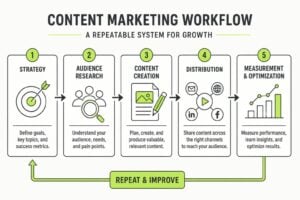
Once you've built the basic infrastructure connecting direct marketing and online marketing, scale comes from iteration and optimization, not just bigger budgets.
Test, Measure, Refine
Monthly optimization cycle:
- Review conversion rates by source and campaign
- Identify highest-performing content and channels
- Analyze drop-off points in your sequences
- Test new headlines, offers, or targeting parameters
- Double down on what converts, cut what doesn't
Small improvements compound. A 10% increase in email open rates, combined with a 15% improvement in landing page conversions, dramatically changes your cost per qualified lead over time.
When to Expand Channels
Don't chase every platform or tactic. Master one direct channel (usually email) and one online channel (usually organic search or LinkedIn) before adding more.
Expand when:
- You're maxing out current channels (email list growth plateaued, search traffic topped out)
- Data shows your audience is active elsewhere
- You have capacity to maintain quality across multiple channels
- New channels connect naturally to your existing system
Adding channels without the infrastructure to support them just spreads your efforts thinner. Better to dominate two channels than struggle with six.
Direct marketing and online marketing aren't competing strategies, they're complementary systems that create predictable demand when properly connected. Your online presence attracts attention and builds trust. Your direct campaigns convert that attention into conversations and revenue. The gap between them is where most service businesses lose deals they should win. If you're ready to close that gap and build marketing infrastructure that protects leads and creates structured growth, MDO Digital can help you design the systems, automation, and campaigns that turn scattered marketing activity into predictable demand.