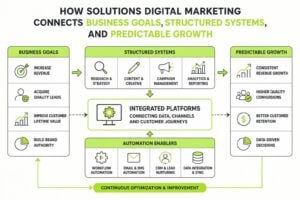
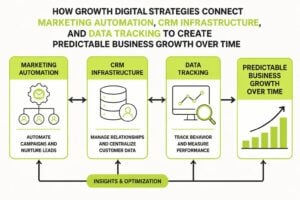
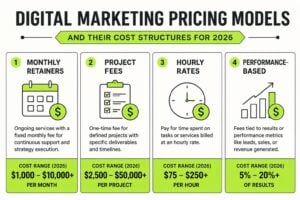
Most service businesses treat marketing like a collection of random tasks. Post on social. Update the website. Send an email. Hope something sticks. A digital marketing plan changes that. It turns scattered effort into a system where each part reinforces the next, creating predictable growth instead of hoping for lucky breaks.
What a Digital Marketing Plan Actually Does
A digital marketing plan isn’t a document you write once and forget. It’s a framework that coordinates how you attract attention, build trust, and convert prospects into clients.
The main job of your digital marketing plan is to answer four questions clearly:
- Who are you trying to reach, and where do they spend their time?
- What problem do you solve, and how do you communicate that?
- Which channels and tactics will you use to reach them?
- How will you measure whether it’s working?
When these questions have solid answers, you stop guessing. You know what to build, what to say, and where to show up. That clarity saves time and money.
Why Service Businesses Need Structure
Service based businesses face a specific challenge. You’re not selling a product someone can touch or try. You’re selling expertise, process, and outcomes. That requires more trust and longer consideration.
Without a structured digital marketing plan, you end up chasing attention without converting it. You might get website traffic but no enquiries. Or you collect leads that go cold because there’s no follow-up system.
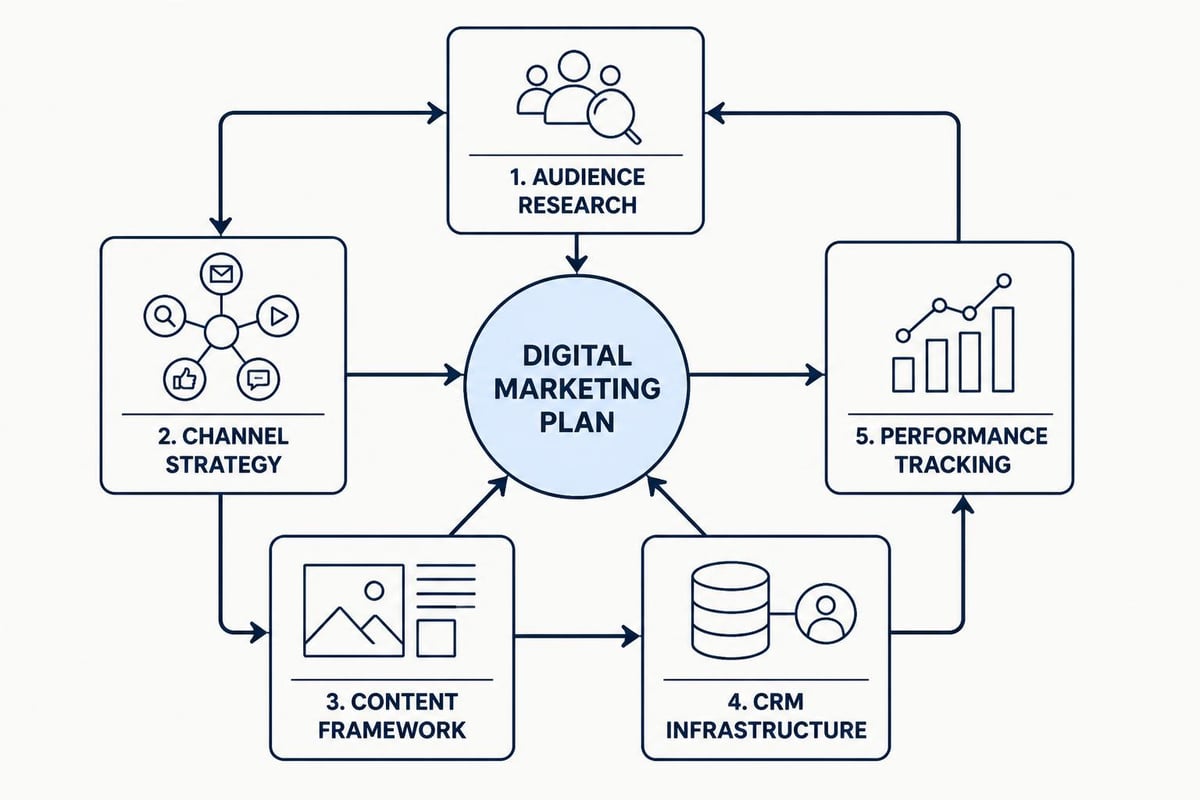
Building Your Digital Marketing Plan in Phases
Start with the foundation, then layer in tactics. Trying to do everything at once spreads you thin and makes it hard to measure what’s working.
Phase One: Define Goals and Audience
Before you pick channels or write content, get clear on what success looks like and who you’re talking to.
Set specific goals. Vague goals like “get more leads” don’t give you direction. Better goals look like this:
- Generate 25 qualified enquiries per month by Q3 2026
- Book 10 discovery calls from organic search traffic each month
- Build an email list of 500 engaged prospects by year end
Build a detailed buyer persona. Go beyond demographics. Understand their actual situation:
| Persona Element | What to Document |
|---|---|
| Current problem | What’s frustrating them right now? |
| Failed attempts | What have they already tried that didn’t work? |
| Decision triggers | What makes them finally seek help? |
| Objections | What makes them hesitate to commit? |
| Preferred channels | Where do they go for information? |
This research shapes everything else. It tells you what to say, where to say it, and how to structure your offers. TechTarget’s four-step approach emphasises building this foundation before jumping into tactics.
Phase Two: Choose Your Channels
Most businesses spread themselves across too many platforms. A strong digital marketing plan focuses effort where your audience actually pays attention.
Evaluate channels based on three criteria:
- Does your target audience actively use this channel?
- Can you produce content that performs well in this format?
- Do you have the resources to maintain consistent presence?
If the answer to any of these is no, skip it. Better to own one channel than half-arse three.
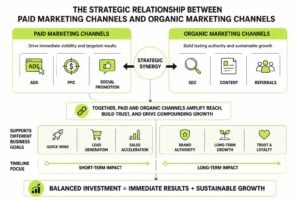
For service businesses in 2026, these channels typically deliver the best return:
- Organic search: Captures people actively looking for solutions
- Email marketing: Builds relationships and nurtures trust over time
- LinkedIn: Reaches decision makers in B2B contexts
- Google Ads: Gets quick visibility for high-intent searches
Choose two, maybe three. Build systems to run them consistently. A practical digital marketing plan framework helps you map out which channels align with your goals and capacity.
Phase Three: Create Content Systems
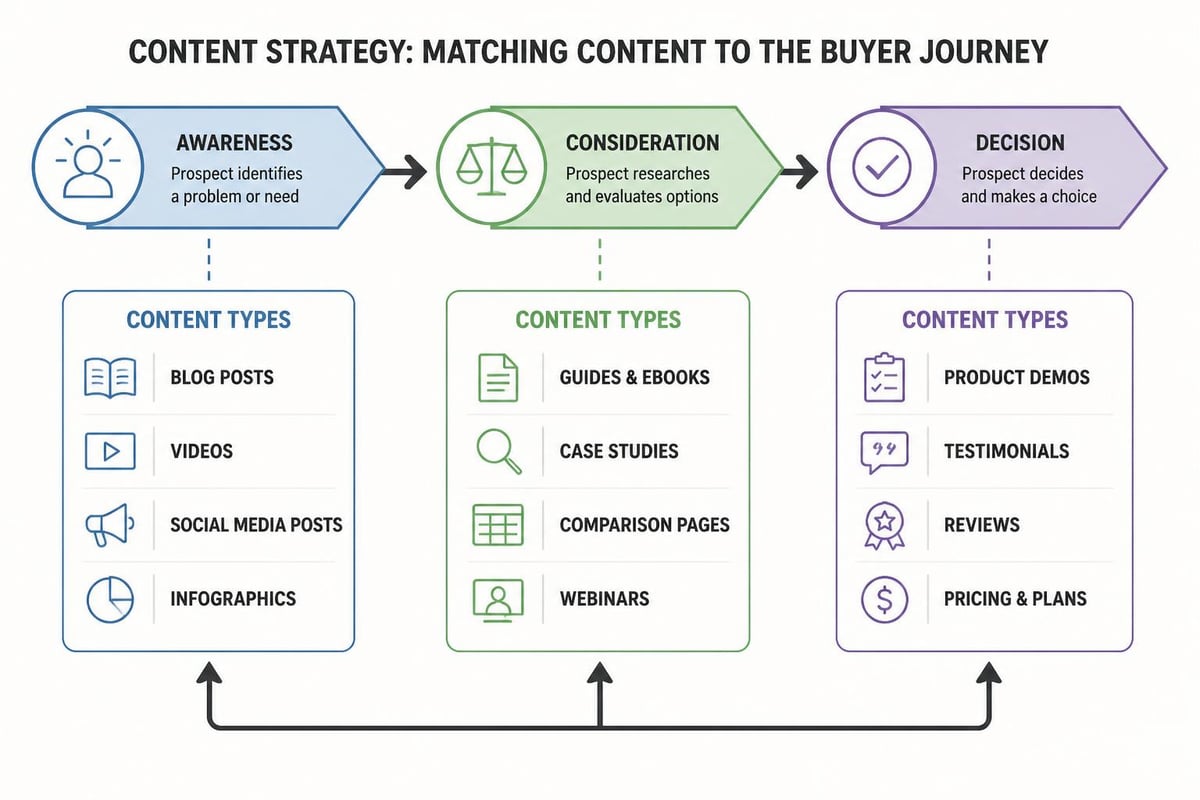
Content isn’t just blog posts. It’s anything that communicates value and builds trust. Your digital marketing plan should specify what you’ll create, why it matters, and where it lives in the buyer journey.
Map content to stages:
- Awareness: Educational content that demonstrates expertise (guides, frameworks, case studies)
- Consideration: Detailed resources that help evaluation (comparison tools, ROI calculators, detailed service pages)
- Decision: Trust builders that overcome final objections (testimonials, process walkthroughs, guarantees)
Each piece should have a clear job. If you can’t explain why you’re creating something and what action it should drive, don’t create it.
The step-by-step approach from edX walks through how to align content creation with strategic goals rather than just publishing for the sake of it.
Infrastructure That Converts Attention
Getting eyeballs is one thing. Converting them into clients requires infrastructure most businesses overlook.
Your Website as a Conversion Engine
Your website shouldn’t be a brochure. It should qualify visitors, answer objections, and make it easy to take the next step.
Essential elements for service based sites:
- Clear value proposition above the fold (what you do, who it’s for, why it matters)
- Specific service pages that address real problems, not just list features
- Case studies or examples that demonstrate outcomes
- Multiple conversion paths (calls, forms, downloads) based on readiness
- Fast load times and mobile optimisation
Every page should answer “why should I care?” and “what do I do next?” If a page doesn’t move someone closer to becoming a client, rework it or remove it. More on building high-trust websites at MDO Digital.
CRM and Nurture Systems
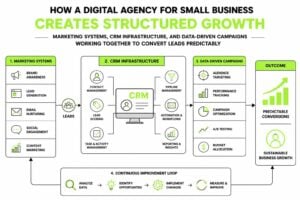
Most leads aren’t ready to buy immediately. Without a system to nurture them, you lose 80% of your potential revenue.
Your digital marketing plan needs to include:
- Lead capture mechanisms: Opt-in offers that trade value for contact info
- CRM infrastructure: A system that tracks where each lead is in the journey
- Automated nurture sequences: Regular touchpoints that build trust over time
- Qualification workflows: Ways to identify when someone’s ready to talk
This is where a clear framework makes all the difference. The 7-Step Marketing Plan provides a proven structure for building these systems so leads don’t fall through the cracks. It covers everything from defining your buyer persona to creating nurture campaigns that convert, making it easier to implement a digital marketing plan that actually works.

Measuring What Matters
Your digital marketing plan should specify exactly what you’ll track and how often you’ll review it.
Primary Metrics by Channel
Different channels require different measurements. Track what actually predicts business outcomes.
| Channel | Primary Metrics | What Good Looks Like |
|---|---|---|
| Organic Search | Qualified traffic, keyword rankings, conversion rate | 2-5% visitor to lead conversion |
| Open rate, click rate, reply rate | 20%+ opens, 3%+ clicks | |
| Paid Search | CPC, conversion rate, cost per lead | CPL under your max acquisition cost |
| Social/LinkedIn | Engagement rate, profile views, direct messages | Consistent conversations, not just likes |
Vanity metrics (total followers, page views without context) don’t tell you if your digital marketing plan is working. Focus on the numbers that connect directly to business growth.
Review Cadence
Set a schedule for reviewing performance and adjusting tactics:
- Weekly: Check campaign performance, respond to what’s working or breaking
- Monthly: Review channel metrics against goals, identify patterns
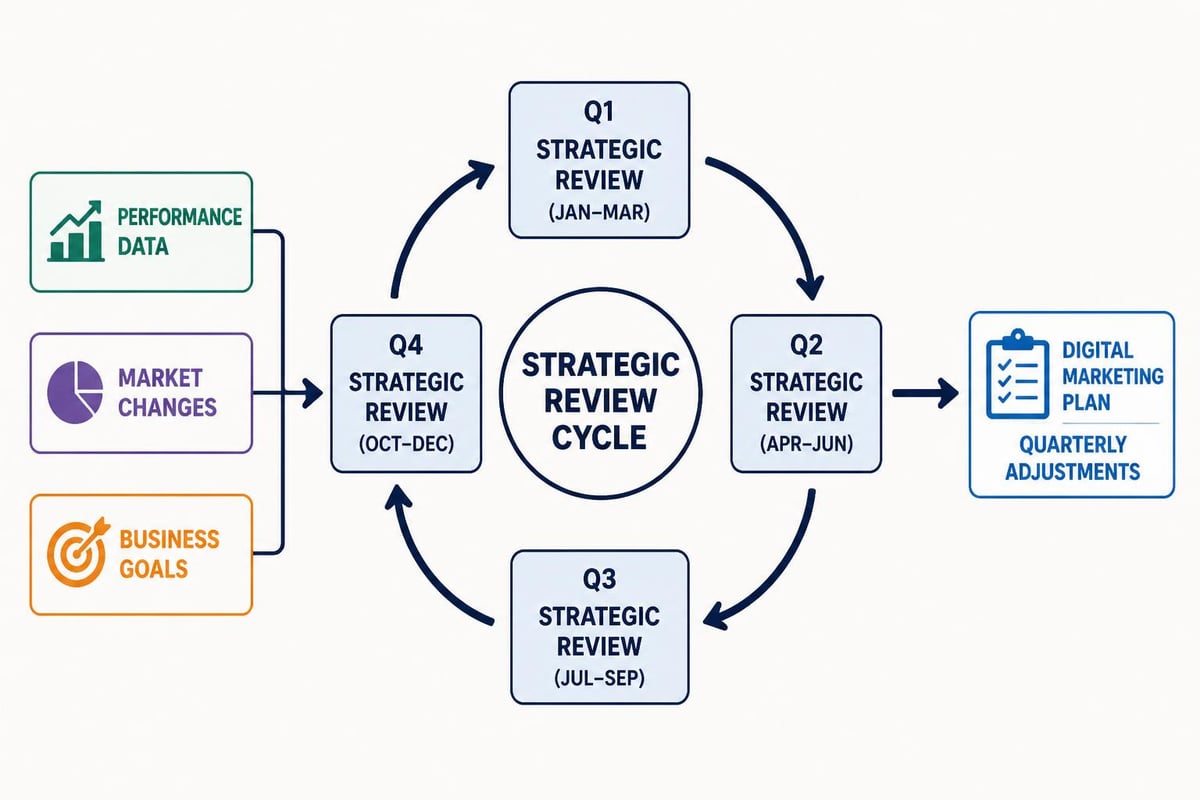
- Quarterly: Assess overall strategy, shift budget and effort based on ROI
This rhythm keeps you responsive without constantly chasing shiny objects. You can explore best practices for digital marketing to refine your measurement approach.
Common Mistakes That Undermine Digital Marketing Plans
Even solid plans fail when execution goes sideways. Watch for these patterns.
Mistake one: No clear offer. You attract attention but don’t give people a clear next step. Fix this by creating specific opt-in offers for different audience segments.
Mistake two: Channels without capacity. You commit to posting daily but can’t sustain it. Better to post weekly with consistency than daily for two months then ghost.
Mistake three: No lead protection. Leads come in but fall into a black hole. Implement automated follow-up and CRM tracking immediately.
Mistake four: Ignoring the data. You collect metrics but never adjust based on what they tell you. Build review sessions into your calendar and act on what you learn.
Mistake five: Trying to do everything. Your digital marketing plan includes twelve tactics across eight platforms. Cut it down. Do three things well instead of ten things poorly.
Integration With Business Operations
Your digital marketing plan doesn’t exist in isolation. It connects to sales process, service delivery, and client experience.
Sales and Marketing Alignment
Marketing generates attention and leads. Sales converts them. These teams need to operate from the same playbook.
Define lead handoff criteria:
- What qualifies as a marketing qualified lead (MQL)?
- At what point does sales take over?
- How quickly should sales follow up?
- What information does sales need to close effectively?
When this is fuzzy, leads get dropped. When it’s clear, conversion rates climb.
Client Experience as Marketing Fuel
The best digital marketing plan includes a loop where happy clients create more marketing assets.
Build systems to:
- Request reviews and testimonials at peak satisfaction moments
- Turn case studies into multiple content pieces (blog, social, ads)
- Encourage referrals with a simple, clear process
- Use client wins in nurture sequences to build social proof
This turns every successful project into fuel for future growth. Explore approaches to digital marketing and business development that integrate these systems.
Adapting Your Plan Over Time
Markets shift. Platforms change. What worked in 2024 might not work in 2026. Your digital marketing plan needs built-in flexibility.
Quarterly strategy reviews should ask:
- Which channels are delivering qualified leads at acceptable cost?
- What’s changed in how our audience searches or consumes content?
- Are there new platforms or tactics worth testing?
- Which parts of the plan are working well enough to scale?
Don’t change everything at once. Make incremental adjustments based on evidence, not hunches. Real examples from actual digital marketing campaigns show how plans evolve as businesses learn what works.
Testing New Tactics
Allocate 10-20% of your marketing budget to experiments. This keeps you learning without risking core performance.
When testing something new:
- Define what success looks like before you start
- Give it enough time and budget to generate meaningful data (usually 60-90 days)
- Compare results to your existing channels
- Kill it, scale it, or iterate based on clear criteria
This approach lets you stay current without chasing every trend that crosses your feed.
Building Capability Internally
Your digital marketing plan will only work if someone can execute it. Decide what to own and what to partner on.
Common division for service businesses:
- Own internally: Strategy, content creation, client relationships, brand voice
- Partner externally: Technical implementation, paid media management, design, automation setup
This keeps strategic control in-house while leveraging specialist expertise where it matters. Whether you’re exploring web development and digital marketing integration or need support building systems, knowing your capability gaps helps you make smart decisions.
Training Your Team
If you’re building internal capability, invest in structured learning. Random YouTube videos won’t cut it.
Skills worth developing:
- SEO fundamentals and content optimisation
- Email copywriting and nurture sequence design
- CRM management and lead tracking
- Basic analytics and data interpretation
Send people to actual courses. Give them time to implement what they learn. Make it part of their role, not something they squeeze in between everything else.
When to Rebuild Your Digital Marketing Plan
Some situations require more than tweaks. Sometimes you need to start fresh.
Rebuild when:
- Your target market has fundamentally changed
- Core business model or services have shifted
- Current channels are dying (platform changes, audience migration)
- You’ve grown past the capacity of your current systems
- Three months of optimisation haven’t improved results
Don’t rebuild out of boredom or because a competitor is doing something flashy. Rebuild when the foundation no longer fits the business you’re building.
A digital marketing plan removes the chaos that comes from reactive marketing. It gives you a framework to make decisions, measure progress, and build systems that compound over time. When attention converts to demand predictably, growth stops feeling like luck and starts feeling like process. If you need help building marketing infrastructure that actually works, MDO Digital specialises in creating systems that protect leads, eliminate guesswork, and deliver structured growth for service based businesses.