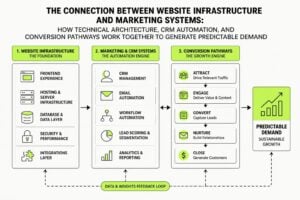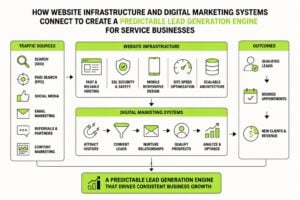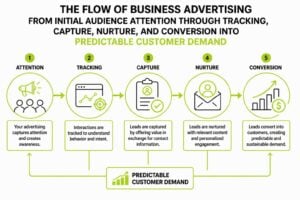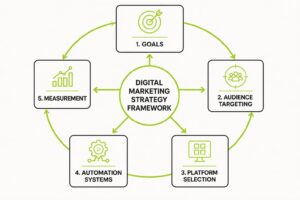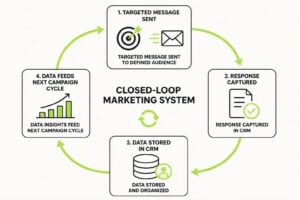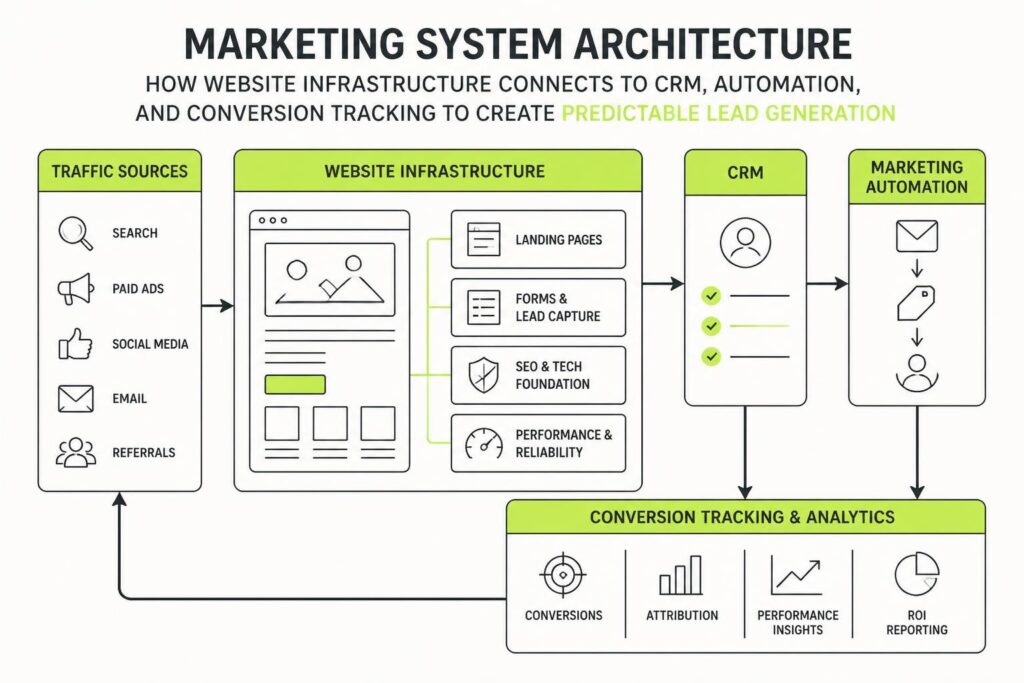
Most businesses treat their website like a brochure. They build it, tick a box, and wonder why leads don't appear. But when you think about web for marketing properly, your site isn't a destination. It's the engine of your entire demand system. It captures attention, qualifies prospects, feeds your CRM, and turns visitors into pipeline. The difference between a website that sits there and one that generates predictable demand comes down to how you build, connect, and use it.
The Real Purpose of Web for Marketing
Your website exists to do three things: build trust fast, capture leads cleanly, and feed your marketing system with data. Everything else is decoration.
Trust comes from clarity. Visitors should understand what you do, who you help, and why you're different within seconds. No jargon. No vague positioning. If someone has to scroll three times to figure out if you're relevant, you've lost them.
Lead capture isn't about forms everywhere. It's about giving people a reason to identify themselves at the right moment. An opt-in offer, a tool, a guide, something valuable enough that they'll trade contact details for it. This is where most sites fail. They ask for the sale before earning permission to follow up.
Data flow is what separates a static site from a system. Every visitor action, form submission, page view, and click should feed into your CRM. That's how you know what's working, who's engaged, and when to reach out. Without this, you're flying blind.
Build for Conversion, Not Just Aesthetics
Good design matters, but only when it serves function. A beautiful site that doesn't convert is just expensive decoration. The goal of web for marketing is to move people down a path, from curiosity to contact to customer.
Start with your buyer's journey. What questions do they have at each stage? What objections will they raise? Your site structure should mirror this. Early stage visitors need educational content. Mid-stage prospects want proof and differentiation. Late stage leads are looking for pricing, process, and next steps.
Use these elements to guide visitors:
- Clear headlines that state the benefit, not just the feature
- Scannable content with short paragraphs, bullet points, and bold text for key ideas
- Strategic CTAs placed where intent is highest, not just above the fold
- Social proof positioned near decision points, case studies, testimonials, results
- Minimal friction in forms, only ask for what you actually need at that stage
Every page should answer one question: what do you want the visitor to do next? If you can't answer that, the page doesn't belong.
Technical Foundations That Actually Matter
Web for marketing isn't just about what people see. The technical layer, the stuff most business owners ignore, determines whether Google finds you, whether your pages load fast enough to keep attention, and whether your tracking actually works.
Google’s developer documentation makes it clear: structure matters. Your site needs clean HTML, logical hierarchy, and crawlable architecture. If Google's bots can't navigate your site, your content won't rank. That means proper heading structure (H1, H2, H3), descriptive URLs, and internal linking that makes sense.
Speed is non-negotiable. Core Web Vitals measure load time, interactivity, and visual stability. Slow sites don't just frustrate visitors, they rank lower and convert worse. Compress images. Lazy load content below the fold. Minify code. Use a CDN if traffic warrants it.
| Metric | What It Measures | Why It Matters for Marketing |
|---|---|---|
| LCP | Largest Contentful Paint | First impression, page load speed affects bounce rate |
| FID | First Input Delay | Interactivity, how fast forms and buttons respond |
| CLS | Cumulative Layout Shift | Visual stability, prevents accidental clicks and frustration |
Accessibility isn't just compliance. It's good marketing. Sites built to WCAG standards are easier to navigate, clearer in structure, and rank better because they're built with intent. Alt text helps screen readers and Google. Keyboard navigation improves usability for everyone. Contrast ratios make your CTAs visible.
Structured Data and Discoverability
If you're not using schema markup, you're leaving rankings on the table. Schema.org gives you the vocabulary to tell search engines exactly what your content is: a service, a product, a FAQ, a review, an event. Rich results in search come from structured data, not hope.
For service businesses, these schema types matter:
- LocalBusiness for location-based queries
- Service for individual offerings
- FAQPage to capture featured snippet spots
- Review and AggregateRating for social proof in SERPs
- Organization for brand entity recognition
Add schema to your pages and validate it with Google's Rich Results Test. It's not hard, just specific. And it works.
Content Strategy for Web Marketing Systems
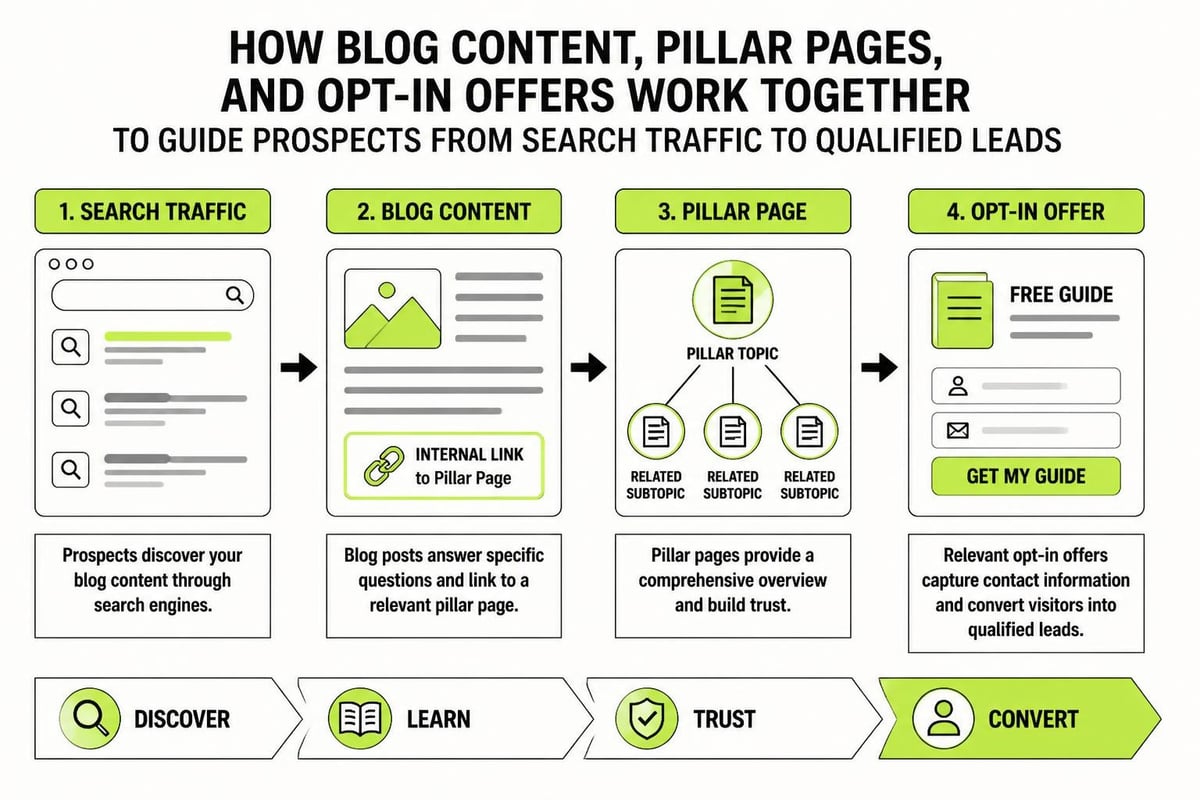
Publishing random blog posts won't build demand. Content for web marketing needs structure. Every piece should serve a function: attract search traffic, educate prospects, or nurture leads toward a decision.
Start with a documented content plan that maps to your buyer's journey. What questions do prospects ask at each stage? What search terms do they use? Build clusters around core topics, pillar pages that cover the big picture, and supporting content that dives into specifics.
Link internally with purpose. Your marketing category pages should connect to detailed posts on execution. Articles on how to build a marketing system should link to tactical breakdowns of each component. This helps Google understand your site's structure and keeps visitors moving through related content.
The Opt-In Offer Framework
Web for marketing depends on permission. You need a reason for people to give you their email before they're ready to buy. That's where opt-in offers come in.
Not every lead magnet works. The best ones solve a specific, immediate problem. A checklist, a template, a calculator, a short guide. Something they can use today. The goal isn't to give away everything, it's to demonstrate expertise and start a relationship.
Once someone opts in, your site should trigger a sequence: confirmation email, delivery of the offer, first nurture message, and then regular value-driven emails that build trust over time. This is where a 7-Step Marketing Plan becomes useful. It gives you a repeatable framework to move from attention to conversion, step by step, with each stage feeding the next.

CRM Integration and Lead Flow
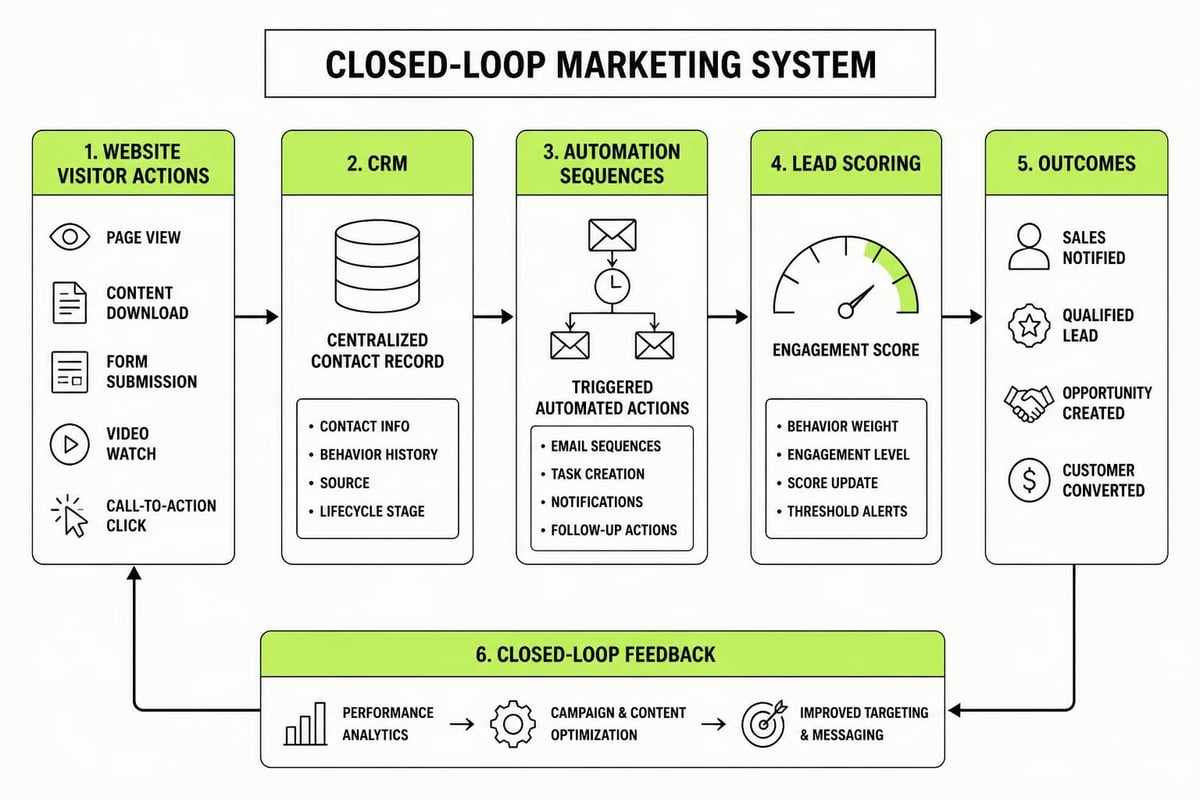
Your website should feed your CRM automatically. Every form, every opt-in, every action should create or update a contact record. This isn't optional if you want a marketing system that compounds.
Most businesses lose leads in the gap between website and follow-up. Someone fills out a form, it goes to an inbox, it sits there, and the moment passes. By the time you respond, they've moved on or forgotten why they reached out.
Automation fixes this. When someone downloads an offer, they should receive it instantly. When they book a call, it should appear in your calendar and trigger a confirmation sequence. When they visit your pricing page three times, your CRM should flag them as high-intent.
Here's what good web-to-CRM integration looks like:
- Form submission triggers instant lead capture
- Contact created in CRM with source tracking
- Welcome sequence delivers value and sets expectations
- Lead scoring updates based on page views and engagement
- Internal alert notifies your team when intent is high
- Nurture campaign keeps the conversation going until they're ready
None of this happens by accident. It requires planning, tools that talk to each other, and testing to make sure data flows cleanly.
Analytics That Drive Decisions
Tracking vanity metrics won't help you grow. Page views don't matter if they don't convert. Time on site means nothing if visitors don't take action.
For web marketing, these metrics actually matter:
- Conversion rate by traffic source so you know where to invest
- Lead quality by channel so you can optimize for fit, not volume
- Drop-off points in funnels so you know where to fix friction
- Engagement by content type so you know what to create more of
- Cost per lead vs. lifetime value so you can scale profitably
Matomo’s privacy-first analytics gives you the data without compromising visitor trust. You own the data, you control what's tracked, and you stay compliant without third-party scripts slowing your site.
Privacy, Consent, and Trust Signals
Web for marketing in 2026 means respecting privacy, not just complying with laws. Visitors are more aware of tracking than ever. How you handle data affects trust, and trust affects conversions.
If you're running ads or tracking across domains, you need a consent framework. The IAB’s Transparency & Consent Framework sets industry standards for how to ask, store, and respect user choices. But even beyond compliance, clear privacy policies and transparent data use build confidence.
Research shows that most users don't fully understand consent banners, and many feel manipulated by dark patterns. If your site uses tracking, make it obvious, easy to opt out, and respect that choice. Don't hide settings or make rejection harder than acceptance.
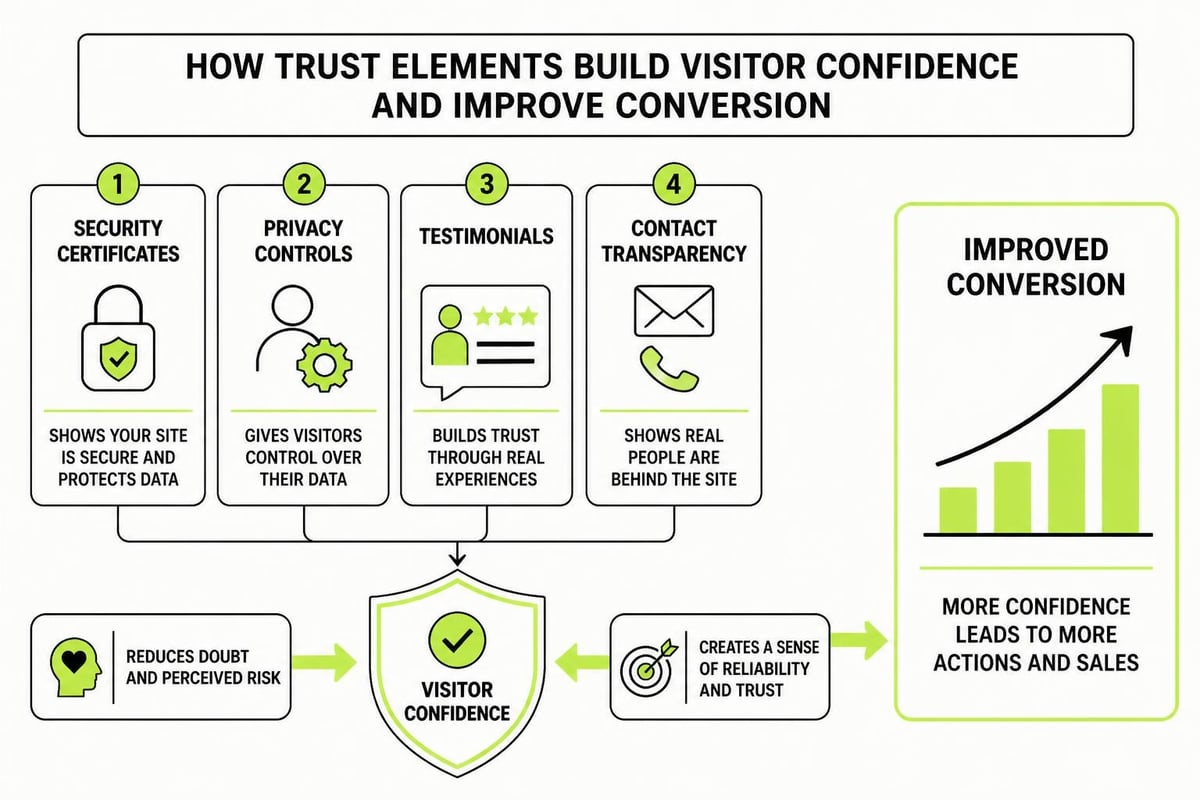
Trust signals extend beyond privacy. HTTPS is table stakes. Security badges near forms reduce friction. Clear contact details and real team photos make you human. Testimonials with full names and companies carry more weight than anonymous quotes.
| Trust Element | Why It Works | Where to Place It |
|---|---|---|
| SSL Certificate (HTTPS) | Shows data is encrypted | Sitewide, visible in browser |
| Privacy Policy | Legal requirement, builds transparency | Footer, linked near forms |
| Real Testimonials | Social proof from named customers | Service pages, near CTAs |
| Contact Details | Proves you're reachable and legitimate | Header, footer, contact page |
| Professional Design | First impression of credibility | Homepage, landing pages |
User Experience as a Conversion Lever
Good UX isn't subjective. It's measurable, testable, and directly tied to results. Nielsen Norman Group’s research consistently shows that clarity, consistency, and low cognitive load improve conversion.
Navigation should be obvious. If people have to think about where to click, you've added friction. Limit top-level menu items to five or six. Use descriptive labels, not clever ones. Include a search bar if your site has depth.
Forms are where most conversions die. Every field you add reduces completion. Ask only what you need at that stage. Use inline validation so people know they've filled it correctly. Show progress if the form is multi-step. Confirm submission instantly so they know it worked.
Your site should work on mobile. Not just "responsive," but genuinely usable on a phone. Buttons big enough to tap. Text readable without zooming. Forms that don't require precision scrolling. More than half your traffic will come from mobile, and if the experience is clunky, they'll leave.
Connecting Web to the Rest of Your Marketing
Web for marketing isn't isolated. Your site should connect to email, ads, social, and offline channels. Every touchpoint should reinforce the same message and feed the same system.
Run ads? Your landing pages should match the ad copy and continue the conversation. If your ad promises a free guide, the landing page should deliver that guide immediately, not bury it below three paragraphs and a generic form.
Send email? Link back to relevant content on your site to keep people engaged and improve SEO. Use UTM parameters so you can track which emails drive traffic and conversions. Segment your list based on behavior, pages viewed, offers downloaded, and tailor your messaging.
Post on social? Drive traffic to owned content, not just platforms you don't control. A blog post on your site ranks. A LinkedIn post doesn't. Use social to start conversations, then move them to your website where you control the experience.
Offline marketing? Include a landing page URL specific to that channel so you can measure impact. QR codes on print materials, vanity URLs on business cards, trackable phone numbers on signage. Connect every piece back to your system.
Iteration and Compounding Returns
Web for marketing isn't a set-it-and-forget-it project. It's a system you improve over time. Every month, you should be testing, measuring, and refining.
Run A/B tests on headlines, CTAs, form fields, and page layouts. Small improvements compound. A 2% lift in conversion might not sound like much, but over a year, across thousands of visitors, it's dozens of extra leads.
Review analytics monthly. Which pages drive the most conversions? Which sources bring the highest quality leads? Double down on what works. Cut what doesn't.
Update content regularly. Refresh old posts with new data. Add schema markup to existing pages. Build internal links to new content. Google rewards sites that stay current and comprehensive.
Your web for marketing system should get better every quarter. More traffic. Higher conversion. Cleaner data. Stronger trust. That's how growth compounds.
Web for marketing works when it's built as a system, not a project. Every element should serve a purpose: attract the right people, capture their attention, earn permission to follow up, and guide them toward a decision. At MDO Digital, we design websites that do exactly that, connected to CRM, automation, and data systems that turn attention into predictable demand. If your site isn't generating leads, let's fix that.