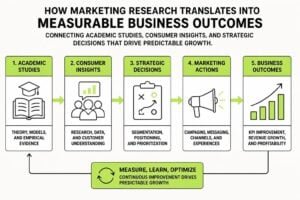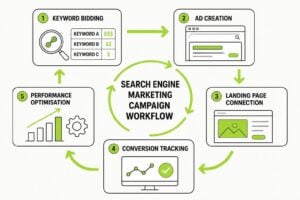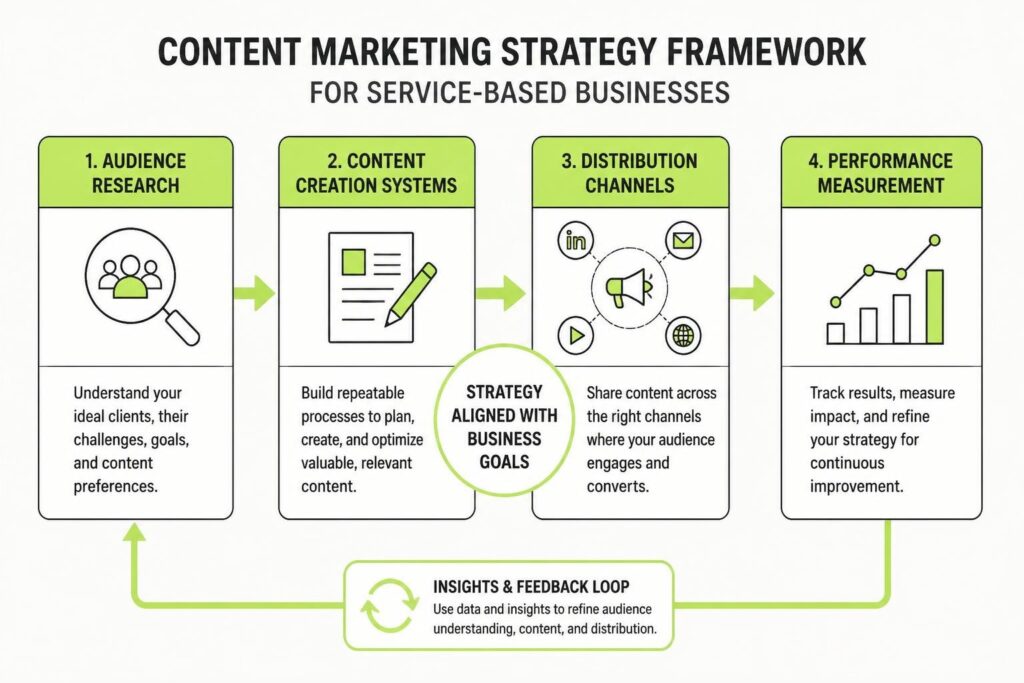
Most businesses hire content marketing experts expecting magic. What they actually get is structure, discipline, and a system that compounds over time. The difference between content that generates demand and content that wastes budgets comes down to whether you're treating it like a campaign or infrastructure. Real content marketing experts build the latter. They create frameworks that turn attention into predictable revenue, not one-off pieces that disappear into the void. If you're considering bringing expertise in-house or hiring externally, understanding what separates genuine skill from surface-level tactics will save you months of wasted effort and budget.
What Content Marketing Experts Actually Do
The job title gets thrown around loosely. A content marketing expert isn't just someone who writes blog posts or schedules social media. They architect systems that connect awareness to conversion, using content as the mechanism that moves people through stages of trust and intent.
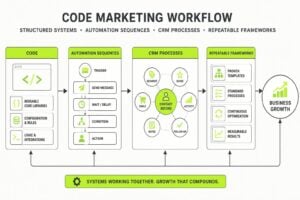
Building Repeatable Systems
True experts focus on creating infrastructure, not isolated assets. They design:
- Content frameworks that align with buyer journey stages
- Distribution channels optimised for where your audience actually pays attention
- Measurement systems that track what content drives pipeline, not just traffic
- Reuse strategies that extract maximum value from every piece created
A single pillar article gets repurposed into email sequences, social threads, video scripts, and lead magnets. This isn't about working harder, it's about building systems that multiply effort.
Strategic Alignment With Business Goals
Content marketing experts tie every deliverable back to revenue outcomes. They start with your commercial model, understand your sales cycle, then reverse-engineer what content needs to exist at each stage. If you sell high-ticket services with a three-month consideration window, they'll build nurture sequences and authority content that keeps you front of mind during that period.
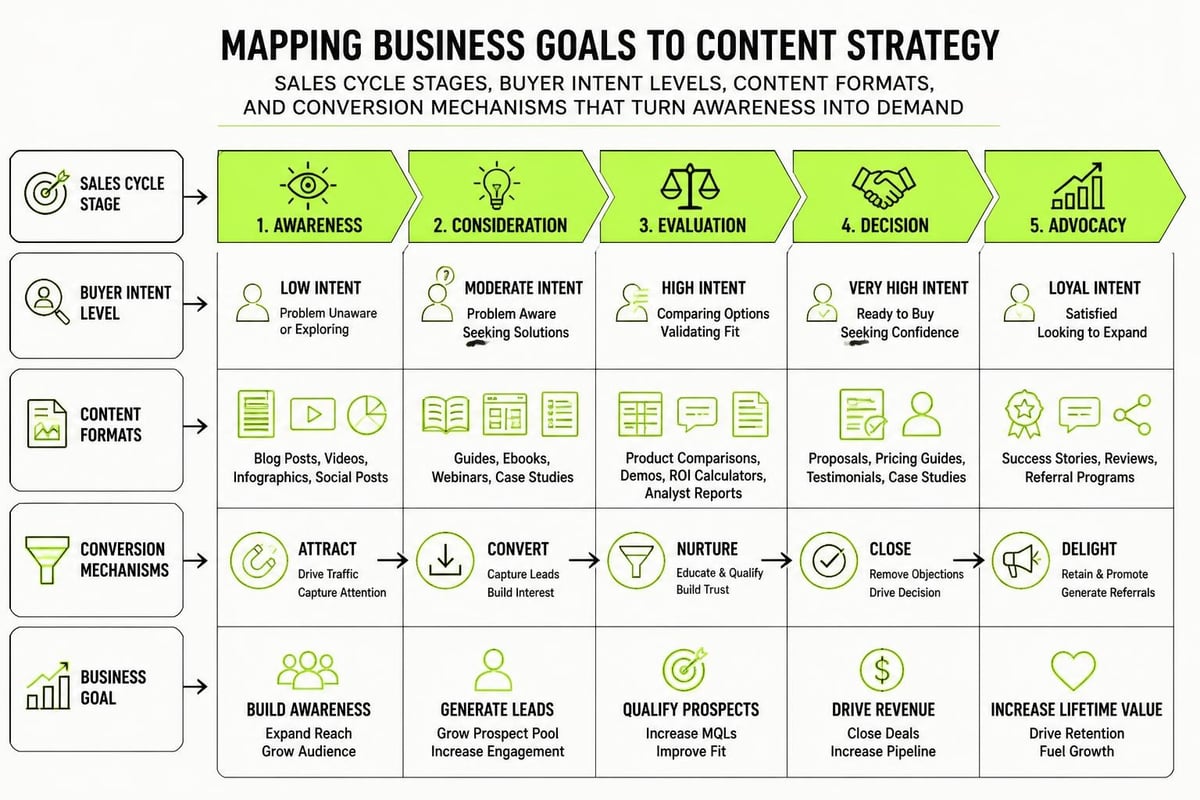
They also kill content that doesn't serve a purpose. If a blog topic doesn't attract your ideal buyer or support a commercial outcome, it doesn't get prioritised. Ruthless focus keeps resources on what compounds.
| What Experts Build | What Amateurs Build |
|---|---|
| Systems that compound | One-off campaigns |
| Content aligned to pipeline stages | Generic topics for traffic |
| Reusable asset libraries | Single-use pieces |
| Measurement tied to revenue | Vanity metrics (likes, impressions) |
How Content Marketing Experts Approach Strategy
Strategy separates professionals from hobbyists. Content marketing experts don't guess what might work. They research, plan, and build frameworks based on how your audience actually makes decisions.
Audience Research That Goes Beyond Demographics
Demographics tell you who someone is. Psychographics and behavioural data tell you why they buy. Experts dig into:
- Pain points that trigger buying decisions
- Language and terminology your audience uses
- Questions asked during the sales process
- Objections that stall deals
This research shapes everything from headline formulas to the depth of technical detail in long-form content. Google’s guidance on creating helpful content emphasises experience, expertise, authoritativeness, and trustworthiness. Content marketing experts embed these signals by demonstrating real understanding of customer problems, not just keyword stuffing.
Channel Selection Based on Behaviour
Not every channel deserves your attention. Experts identify where your audience spends time when they're in buying mode, then build presence there. For service-based businesses, that's often:
- Search (organic and AI-driven discovery)
- Email (owned channel, highest ROI)
- LinkedIn (B2B decision-makers)
- Industry communities (forums, Slack groups, niche platforms)
The shift toward LLM-powered search changes how content gets discovered. Experts now optimise for answer engines and citation-worthy depth, not just keyword rankings. This means structuring content to be referenced by AI tools, which requires clarity, authority, and comprehensive coverage of topics.
Content Types Matched to Intent
Different formats serve different purposes. A comparison guide targets late-stage buyers evaluating options. A thought leadership piece builds authority with an audience not yet ready to buy. Content marketing experts map formats to intent:
- Awareness stage: Educational blog posts, videos, podcasts
- Consideration stage: Case studies, comparison guides, webinars
- Decision stage: Product demos, consultations, ROI calculators
The 7-Step Marketing Plan provides a practical framework for designing these buyer journeys. It connects platform selection, opt-in offers, and nurture sequences into a system that predictably moves people from awareness to client. Content sits at the centre of this framework, turning cold traffic into engaged leads ready for sales conversations.
The Technical Skills That Matter
Content marketing experts combine creative and technical capabilities. Writing well is table stakes. The real value comes from understanding systems, data, and distribution mechanics.
SEO and Discoverability
Search remains one of the highest-intent channels. Experts understand:
- Keyword research that prioritises commercial intent over volume
- On-page optimisation (title tags, headers, internal linking)
- Technical SEO (site speed, mobile optimisation, schema markup)
- Content structure that answers questions comprehensively
They also stay current with how AI is reshaping search. Content Marketing Institute’s 2025 trends highlight the shift toward conversational search and the need for content that serves both traditional crawlers and LLM-based summarisers.
CRM and Marketing Automation
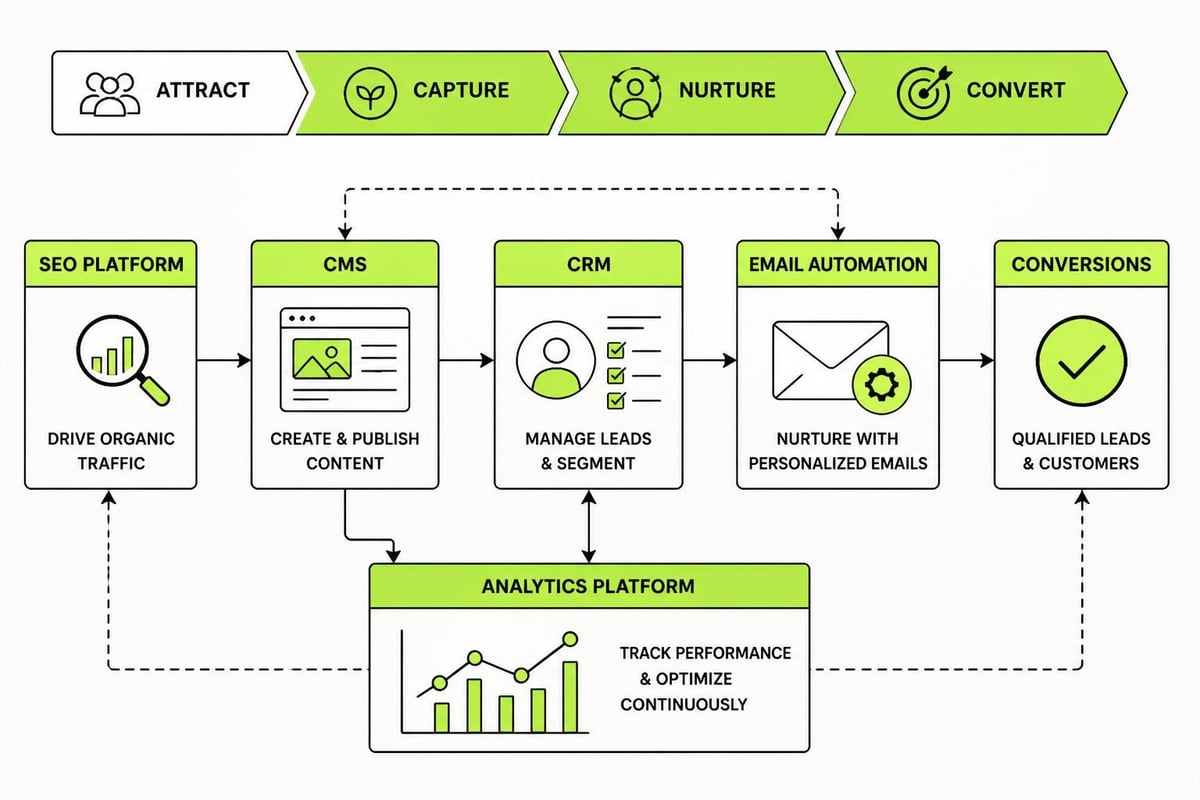
Content doesn't exist in isolation. It needs to feed into systems that nurture and convert. Content marketing experts integrate content with:
- CRM platforms (HubSpot, ActiveCampaign, Salesforce)
- Email automation (segmented sequences based on behaviour)
- Lead scoring (tracking content engagement to prioritise sales outreach)
- Attribution models (understanding which content assists conversions)
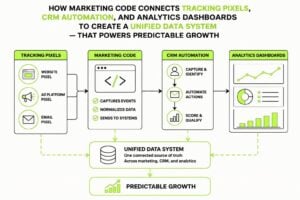
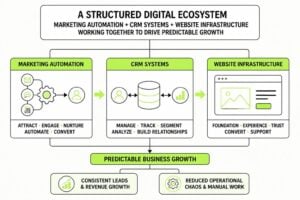
This is where most businesses fail. They create content but don't connect it to lead capture, nurture, or sales enablement. Experts treat content as part of a broader marketing system designed to protect leads and move them toward revenue.
Data Analysis and Performance Tracking
Experts measure what matters. Vanity metrics (page views, social followers) get ignored in favour of:
| Metric | What It Reveals |
|---|---|
| Organic traffic to high-intent pages | SEO effectiveness and topic relevance |
| Conversion rate by content type | Which formats drive action |
| Email engagement (open, click, reply rates) | Nurture effectiveness |
| Pipeline contribution | Revenue impact of content |
| Time to conversion | How long content supports buying decisions |
HubSpot’s research on blogging and content trends reveals that successful content teams prioritise ROI over output volume. They publish less but ensure each piece serves a strategic purpose tied to business outcomes.
What to Look for When Hiring Content Marketing Experts
Not every hire will deliver. Some talk strategy but only execute tactics. Others produce volume without understanding commercial goals. Vetting properly saves budget and protects timelines.
Portfolio and Proven Results
Ask for case studies that show:
- Before and after metrics (traffic, leads, pipeline contribution)
- Strategic rationale behind content choices
- System design, not just individual pieces
- Long-term results (12+ months of sustained performance)
Be wary of portfolios heavy on creative work but light on data. Content marketing experts should be able to articulate how their work contributed to revenue, not just engagement.
Understanding of Your Business Model
Generic content marketing doesn't work for service businesses. Your expert needs to understand:
- How your sales process works
- What objections buyers have
- Why deals stall
- What makes a qualified lead versus a time-waster
During interviews, ask them to outline a content strategy for your business. If they jump straight to tactics without asking about your buyer, sales cycle, or commercial model, they're not thinking strategically.
Technical and Strategic Balance
The best content marketing experts straddle creative and analytical. They should be comfortable discussing:
- Messaging and positioning (brand voice, differentiation)
- Content formats and production workflows
- SEO and distribution mechanics
- Data, attribution, and measurement
If they can't speak to all four, they're either a specialist (which may be fine for certain roles) or they're missing critical capabilities.
Cultural Fit and Communication Style
Content marketing touches every part of your business. Experts need to collaborate with sales, product, leadership, and external partners. Look for:
- Clear, jargon-free communication
- Willingness to challenge assumptions (respectfully)
- Ability to explain complex strategy in simple terms
- Alignment with your company's pace and decision-making style
Misalignment here tanks projects even when the strategy is sound.
Building Internal Capability vs. Hiring Externally
The decision to hire in-house or work with external content marketing experts depends on your business stage, budget, and growth velocity.
When to Hire In-House
In-house makes sense when:
- You have consistent, high-volume content needs
- Your industry requires deep product or technical knowledge
- You need fast iteration and real-time collaboration with sales
- You're building a brand with a unique voice that takes time to develop
Trade-offs: Higher fixed costs, longer ramp time, risk of stagnation if the hire isn't senior enough to drive strategy independently.
When to Hire Externally
External experts work well when:
- You need strategic direction but lack internal capacity
- You're launching a new content program and need infrastructure built
- You want specialised skills (SEO, video, automation) without full-time hires
- You need accountability and fresh perspective from someone outside your company bubble
Trade-offs: Less day-to-day integration, potential misalignment if briefing isn't tight, dependency on external timelines.
Many businesses find a hybrid approach works best. A senior internal marketer owns strategy and coordination, while external content and digital marketing specialists handle execution, technical SEO, and system design.
Common Mistakes When Working With Content Marketing Experts
Even experienced businesses make avoidable errors when bringing content expertise into their operations.
Treating Content as a Campaign, Not Infrastructure
Content compounds. It's not a three-month project. You don't "finish" content marketing. Businesses that expect quick wins often pull resources before the system has time to build momentum. Forrester’s research on customer-centric content emphasises that sustained content programs, not sporadic campaigns, drive long-term customer engagement and revenue.
Not Integrating Content With Sales
Content that isn't used by your sales team is wasted effort. Experts should be building enablement assets (case studies, objection handlers, comparison guides) that sales can deploy during conversations. If your content and sales teams aren't talking regularly, the strategy will drift from commercial reality.
Micromanaging Tactics While Ignoring Strategy
Let experts do their job. If you've hired well, trust their process. Micromanaging word counts, publishing schedules, and design choices wastes their strategic capacity. Instead, align on goals, review performance data, and hold them accountable to outcomes.
Measuring the Wrong Things
Page views don't pay the bills. Shares don't close deals. Content marketing experts should be measured on:
- Lead quality and volume from content channels
- Sales cycle acceleration (how content reduces time to close)
- Pipeline contribution (revenue influenced or sourced by content)
- Customer retention (how content supports post-sale engagement)
If your dashboards are full of vanity metrics, reset expectations and measurement frameworks.
How Content Marketing Experts Adapt to Change
The discipline evolves constantly. Platforms shift, algorithms change, buyer behaviour adapts. Good content marketing experts stay ahead by building systems that flex with change rather than depending on single tactics.
Embracing AI Without Losing Quality
AI tools accelerate production but can't replace strategic thinking or brand voice. Experts use AI for:
- Research and ideation
- Outlining and structuring long-form content
- Repurposing content into multiple formats
- Data analysis and performance insights
They don't outsource final creative or strategic decisions to AI. The Content Marketing Association’s 2025 trends note that authenticity and human expertise remain differentiators, even as automation handles more production tasks.
Focusing on Owned Channels
Platform dependency is risky. Algorithm changes tank reach overnight. Content marketing experts prioritise owned channels (email lists, websites, podcasts) where you control distribution and retain direct access to your audience. Paid and social channels amplify reach, but they don't replace owned infrastructure.
Building for Modularity and Reuse
Content should be designed for reuse from the start. A long-form research article becomes:
- A lead magnet (PDF guide)
- An email sequence (broken into chunks)
- Social posts (key insights with commentary)
- Video scripts (recorded summaries or interviews)
- Slide decks (for webinars or sales enablement)
This approach maximises ROI per asset and ensures content supports multiple channels and stages.
Content marketing experts build systems that remove chaos and create predictable demand. They align content with business goals, measure what matters, and design infrastructure that compounds over time. If you're ready to turn attention into structured growth with a marketing system built for your business, MDO Digital can help. We specialise in designing high-trust websites, CRM automation, and data-driven content strategies for service-based businesses that need clarity, not clutter.