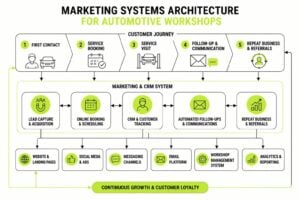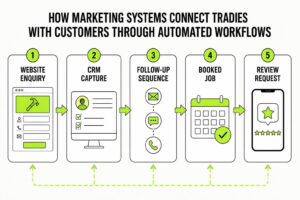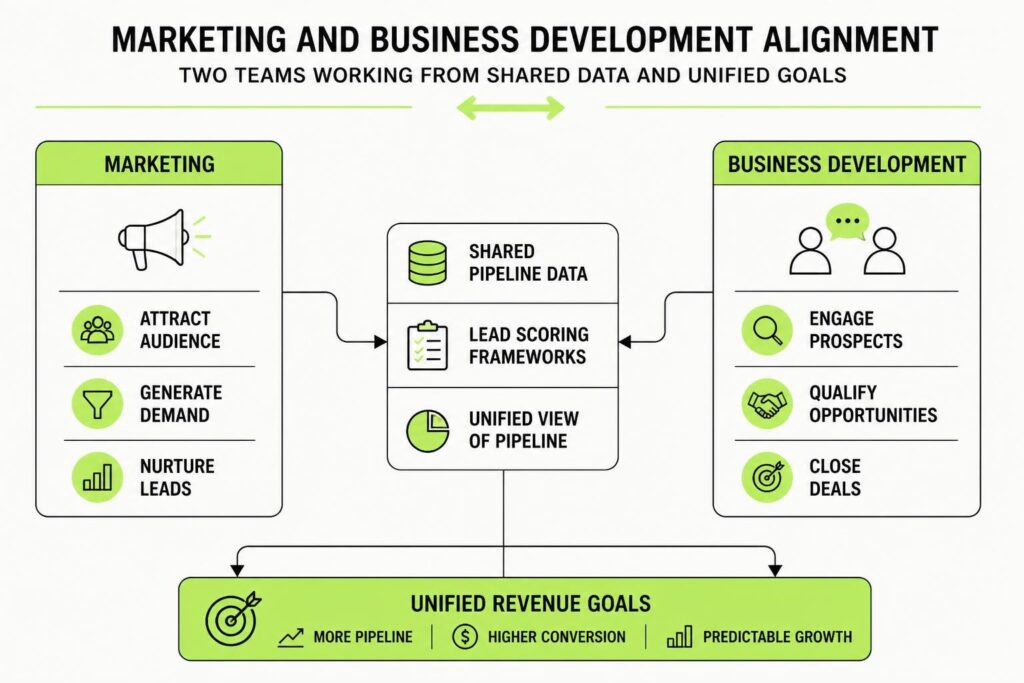
Most service businesses treat marketing and business development as separate departments. Marketing fills the top of the funnel. Business development closes deals. The handoff happens somewhere in the middle, usually through a spreadsheet or a quick Slack message. This setup creates chaos, not predictable demand. When these two functions operate in silos, leads fall through cracks, follow-up becomes inconsistent, and revenue becomes a guessing game. Marketing and business development alignment for predictable demand isn't about better meetings or clearer org charts. It's about shared systems, unified definitions, and structured processes that turn attention into closed revenue.
Why Most Businesses Struggle With Alignment
The friction between marketing and business development isn't new. Marketing complains that sales doesn't follow up on quality leads. Business development argues that marketing sends junk. Both teams are often right because they're measuring different things.
Marketing tracks website visitors, form submissions, and cost per lead. Business development cares about conversations, qualified opportunities, and closed deals. Without shared definitions, a "lead" means something different to each team. Marketing considers a whitepaper download a win. Business development wants a booked discovery call with budget authority.
This misalignment shows up in three predictable ways:
- Leads sit in limbo between handoff and follow-up
- No clear owner for nurturing mid-funnel prospects
- Revenue attribution becomes a political debate instead of a data exercise
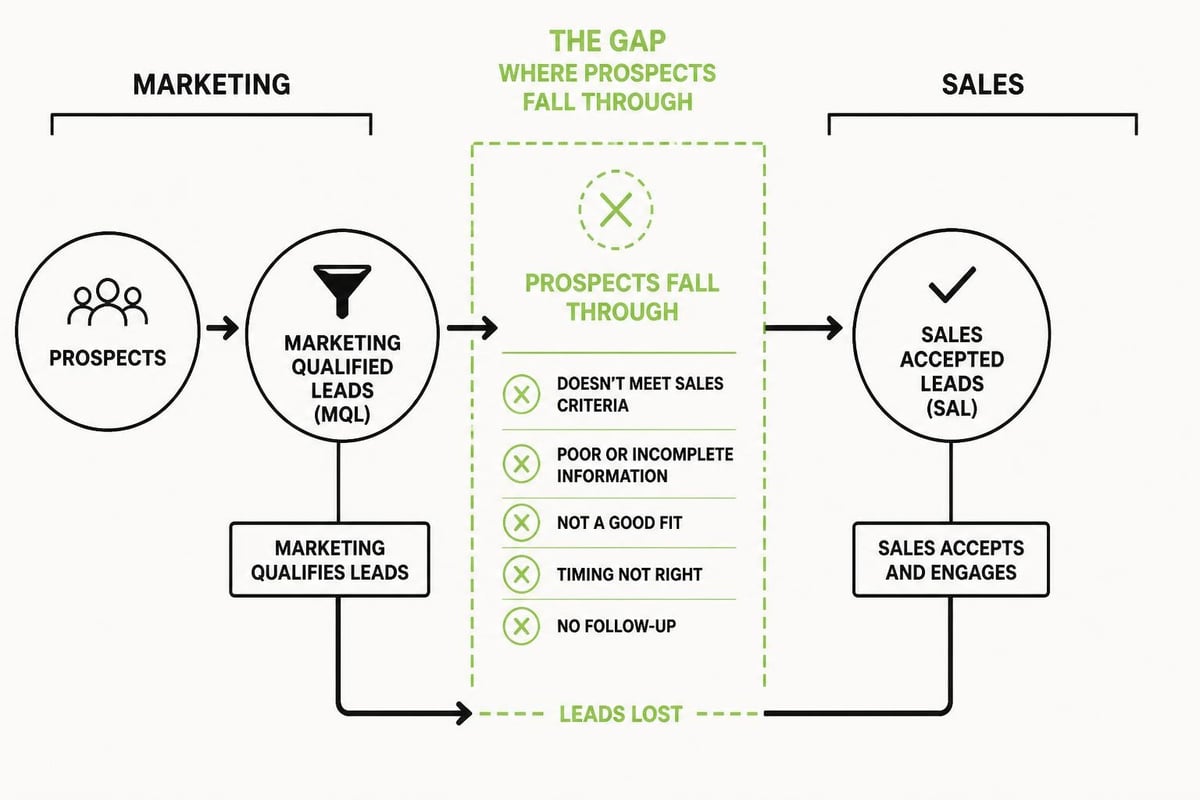
The cost isn't just inefficiency. It's lost revenue. When a prospect downloads a resource but doesn't hear from anyone for five days, they've already started conversations with your competitors.
The Hidden Tax of Poor Handoffs
Every day without alignment costs you opportunities. A lead comes in through your website. Marketing scores it as "hot" based on page visits and content downloads. The lead gets passed to business development through an email notification. But business development is in back-to-back calls and misses the alert. By the time someone reaches out 48 hours later, the prospect has gone cold or chosen another provider.
This isn't a people problem. It's a systems problem. Marketing and business development alignment for predictable demand requires infrastructure that removes human error from critical handoffs.
Building Shared Definitions From the Ground Up
Alignment starts with language. If marketing and business development use different terms for the same prospect stage, your CRM becomes a battlefield instead of a single source of truth.
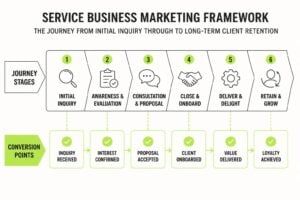
Start by defining your lead stages together:
- Inquiry: Someone raised their hand but hasn't been qualified
- Marketing Qualified Lead (MQL): Meets baseline criteria (fit, engagement, timing signals)
- Sales Accepted Lead (SAL): Business development agrees to work the opportunity
- Sales Qualified Lead (SQL): Two-way conversation confirmed, budget and authority verified
- Opportunity: Active deal in pipeline with proposal or scope in progress
Each stage needs clear entry and exit criteria. An MQL isn't just "someone who downloaded something." It's a contact who fits your ideal customer profile, engaged with at least three touchpoints in 14 days, and showed intent signals like pricing page visits or booking a demo.
When both teams agree on these definitions, lead scoring stops being subjective. Your CRM can route, notify, and track without interpretation. This is where building a marketing funnel transitions from theory to operational discipline.
| Lead Stage | Marketing Owner | Business Development Owner | Key Metrics |
|---|---|---|---|
| Inquiry | Yes | No | Volume, source, initial engagement |
| MQL | Yes | No | Score threshold, fit criteria |
| SAL | Shared | Yes | Acceptance rate, time to contact |
| SQL | No | Yes | Qualification rate, pipeline value |
| Opportunity | No | Yes | Win rate, deal size, sales cycle |
Agreement on Ideal Customer Profile
Your ideal customer profile (ICP) can't be a marketing document that business development ignores. It needs to be built collaboratively and updated based on closed revenue data, not marketing's assumptions about who should buy.
Sit down quarterly and review:
- Which customer segments have the highest lifetime value
- Which industries or company sizes close fastest
- Which acquisition channels produce the best long-term clients
- Which initial problems or pain points predict successful engagements
This isn't abstract brand positioning work. It's business and marketing strategy backed by your CRM data. When both teams agree on the ICP, marketing can focus budget on channels that attract those profiles, and business development can prioritise outreach accordingly.
Creating a Single Revenue Operating System
Marketing and business development alignment for predictable demand requires one shared system. Not a marketing automation tool that exports to a spreadsheet that imports to a CRM. One platform where every touchpoint, conversation, and deal stage lives in the same database.
This is where most service businesses fail. They bolt together HubSpot, Salesforce, Google Sheets, and Slack, then wonder why nothing syncs properly. The gaps between systems are where leads disappear.
Your revenue operating system should track:
- Every inbound touchpoint: Form fills, chat conversations, email replies, content downloads
- Lead scoring in real time: Firmographic fit + behavioral engagement + timing signals
- Automated routing and notifications: Right lead to right person based on territory, specialty, or capacity
- Activity tracking: Calls, emails, meetings logged automatically
- Pipeline visibility: Both teams see the same deals, stages, and forecast
When marketing sees which leads business development actually works and closes, they can optimise spend toward those sources. When business development sees the full engagement history before a lead arrives, first conversations become warmer and more contextual.
Automation That Protects Leads
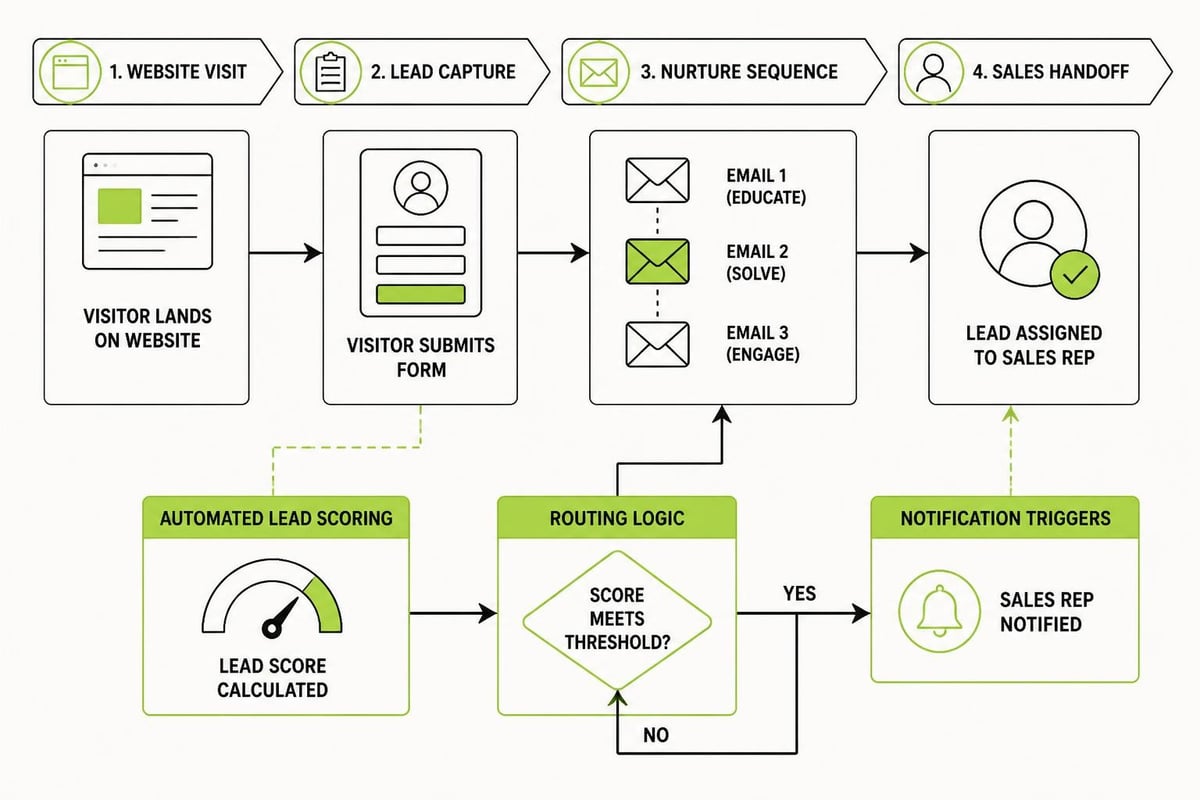
The best alignment systems don't rely on people remembering to do things. They use automation to ensure no lead goes dark.
Here's a basic workflow that removes chaos:
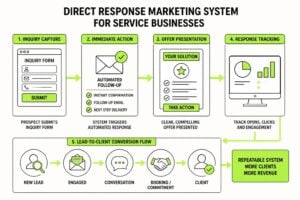
- Lead submits a form or books a call
- CRM scores the lead automatically based on fit and behavior
- If score exceeds threshold, lead routes to business development within 60 seconds
- Automated Slack or email notification with full context (pages visited, content consumed, company size)
- If no contact attempt within 2 hours, reminder notification escalates
- If still no contact within 24 hours, lead routes back to marketing for nurture
This kind of workflow isn't complex to build, but it requires both teams to agree on the process and commit to the system as the source of truth.
Many businesses already have the tools to create marketing and business development alignment for predictable demand. They just haven't designed the processes or agreed on the rules. That's where a structured framework like the 7-Step Marketing Plan becomes valuable, it connects goals, personas, platforms, and CRM infrastructure into a repeatable system that both teams can execute.
Aligning on Metrics and Accountability
Alignment breaks down when teams optimise for different goals. Marketing celebrates 500 new leads this month. Business development complains that only 12 were worth calling. Both are measuring activity, not shared outcomes.
The shift happens when both teams are accountable to the same North Star metric: revenue from new customers. Everything else is a leading indicator that feeds that outcome.
Shared Metrics That Matter
Instead of separate dashboards, build one report both teams review together weekly:
| Metric | What It Measures | Why Both Teams Care |
|---|---|---|
| MQL to SAL conversion rate | Quality of marketing's targeting and lead scoring | Marketing improves sources, business development confirms criteria accuracy |
| SAL to SQL conversion rate | Business development's ability to qualify quickly | Business development owns execution, marketing sees which sources qualify best |
| SQL to close rate | Deal quality and sales effectiveness | Validates that both targeting and qualification are working |
| Average deal size by source | Revenue quality per channel | Guides marketing budget allocation and business development prioritisation |
| Sales cycle length by source | Speed from inquiry to close | Identifies friction points in handoff or nurture |
When both teams are measured on conversion rates, not just top-of-funnel volume or bottom-line closes, the incentives align. Marketing wants to send better leads, not just more leads. Business development wants to work leads faster, knowing marketing can see the follow-up data.
This approach mirrors the B2B sales and marketing alignment framework used by demand generation teams, where shared pipeline metrics replace vanity metrics.
Weekly Revenue Reviews
Monthly reviews are too slow. By the time you spot a problem, you've lost a month of pipeline. Weekly 30-minute syncs keep both teams calibrated.
Agenda every week:
- Pipeline snapshot: deals added, moved, closed, lost
- Lead volume and quality: MQLs generated, SAL acceptance rate, top sources
- Conversion bottlenecks: where are leads stalling or dropping off
- Attribution insights: which campaigns or content are influencing closed deals
- Next week's priorities: where to focus effort based on data
These aren't status update meetings. They're working sessions where both teams adjust tactics based on what the system is showing. If SAL acceptance drops, marketing investigates lead quality. If SQL to close rate falls, business development examines qualification rigor or proposal process.
Designing Handoff Processes That Work
The moment a lead moves from marketing to business development is the highest-risk point in your pipeline. It's where context gets lost, timing delays happen, and prospects feel the seams in your operation.
A clean handoff process includes:
- Contextual briefing: Business development receives full engagement history, not just name and email
- Speed commitment: First contact attempt within defined SLA (often 1-2 hours for hot leads)
- Feedback loop: Business development marks leads as good fit, poor fit, or bad timing so marketing can refine scoring
- Rejected lead routing: If business development rejects a lead, it flows back to marketing nurture, not into a black hole
Many businesses skip the feedback loop. Marketing never learns which leads were actually worth the cost. Business development never sees follow-up data on leads they rejected as "not ready yet." This lack of visibility prevents both teams from improving.
Marketing and business development alignment for predictable demand means closing these feedback gaps. Your CRM should show marketing which sources produce SQLs, not just MQLs. It should show business development which nurtured leads eventually converted, validating the long game.
Lead Nurture as Shared Responsibility
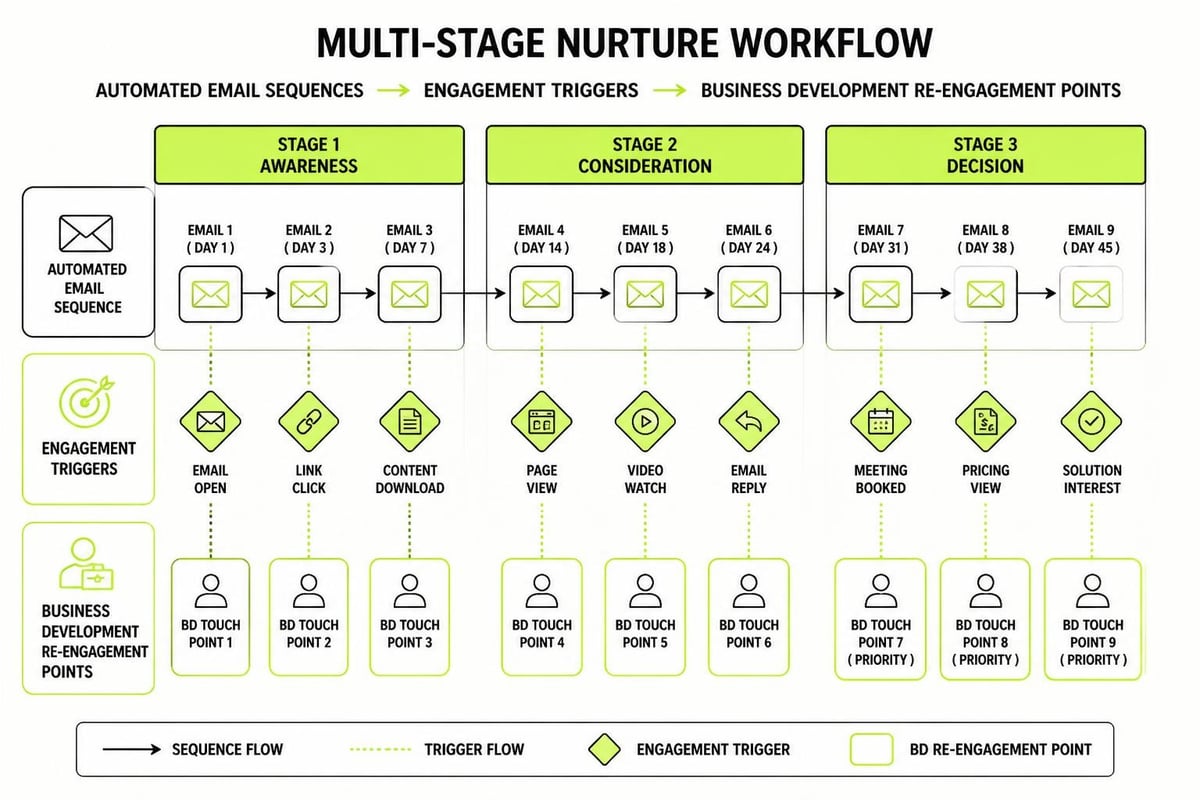
Not every inquiry is ready to buy today. The mistake is treating nurture as purely marketing's job. Business development owns the relationship once someone is SAL or higher, but marketing continues to deliver value through content, education, and reminders.
A strong nurture strategy includes:
- Segmented email sequences based on where the lead is in the journey (awareness, consideration, decision)
- Triggered re-engagement when a lead goes dark for 30+ days
- Content that moves deals forward, like case studies, ROI calculators, or implementation guides
- Visibility for business development into what prospects are engaging with during nurture
When business development can see that a lead opened the last three emails and clicked through to a pricing page, the follow-up call becomes timely and relevant. Marketing sees which content drives SQL conversions, not just downloads.
Technology Stack for Alignment
You don't need a dozen tools. You need the right stack configured properly. For most service businesses, that's a CRM with marketing automation, connected to your website, with clean data flowing between them.
Core stack components:
- CRM with deal pipeline: HubSpot, Salesforce, Pipedrive
- Marketing automation: native to CRM or connected (ActiveCampaign, Marketo)
- Website with tracking: Webflow, WordPress with proper tracking scripts
- Form and chat tools: integrated with CRM for instant lead capture
- Analytics and attribution: Google Analytics 4, CRM reporting, possibly a BI tool like Looker
The goal isn't the fanciest tech. It's seamless data flow. Every form submission should create a contact record, trigger scoring, route based on criteria, and notify the right person. No exports, imports, or manual entry.
If your current stack has gaps, start by auditing where data breaks. Is it between your website and CRM? Between marketing automation and sales pipeline? Between Slack and your CRM? Fix one integration at a time until the system is watertight.
Attribution and Ongoing Optimisation
Marketing and business development alignment for predictable demand isn't a one-time setup. It's a continuous optimisation loop. Both teams need visibility into what's working, what's not, and where to shift effort.
Attribution models worth tracking:
- First-touch: What brought them in (useful for top-of-funnel budget decisions)
- Last-touch: What closed the deal (useful for validating bottom-funnel tactics)
- Multi-touch: All touchpoints that influenced the journey (most accurate but harder to act on)
For most service businesses, multi-touch attribution is overkill. Focus on first-touch and last-touch, then fill in the gap with anecdotal data from business development conversations ("they mentioned they saw our case study on LinkedIn").
Review attribution quarterly and reallocate budget. If organic content is driving 40% of SQLs but only getting 15% of budget, shift spend. If paid ads bring volume but terrible SAL acceptance rates, pause and refine targeting.
This kind of data-driven decision making is only possible when both teams trust the same system and agree on what the numbers mean. That's where the evolution of marketing becomes clear: it's not about creative or tactics anymore. It's about systems, data, and structured growth.
Building the Feedback Loop
Alignment improves when both teams share what they're learning. Business development hears objections, questions, and buying triggers on every call. That intelligence should flow back to marketing to refine messaging, content, and targeting.
Marketing sees which channels, campaigns, and content formats drive engagement. That data should help business development prioritise follow-up and tailor outreach.
Create a simple feedback mechanism:
- Monthly win/loss analysis: Why did deals close or fall apart
- Lead quality surveys: Business development rates MQL quality weekly
- Content requests from business development: What assets would help close deals
- Objection tracking: Common hesitations or questions that marketing can address earlier
When both teams actively share insights, the system gets smarter every quarter. Marketing moves upstream to address objections before they reach sales calls. Business development shares which content moves deals forward, so marketing can produce more of it.
Making Alignment Stick
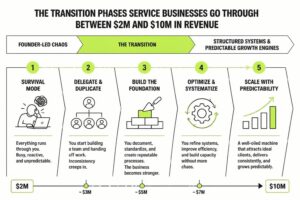
The hardest part isn't setting up the system. It's maintaining discipline when things get busy. Leads pile up. Business development gets slammed with existing clients. Marketing launches a new campaign. The weekly review gets skipped. Data hygiene slips. Within a month, you're back to chaos.
Alignment requires executive commitment. Someone needs to own the revenue operating system and hold both teams accountable. For smaller businesses, that's often the founder or managing director. For larger ones, it might be a Head of Growth or Revenue Operations role.
Non-negotiable practices:
- Weekly pipeline reviews happen every week, no exceptions
- CRM data entry is mandatory for both teams
- Lead handoff SLAs are measured and reported
- Attribution reports are reviewed monthly with budget decisions attached
- Quarterly ICP and process reviews adjust the system based on results
Marketing and business development alignment for predictable demand isn't a project. It's an operating discipline. The businesses that treat it as such stop guessing at revenue. They build pipelines they can forecast, scale systems that compound, and remove the chaos that kills growth.
At MDO Digital, we help service businesses design and implement these exact systems, from CRM infrastructure to lead scoring, automated workflows, and unified reporting. If your marketing and business development teams are still operating in silos, the cost shows up in your pipeline. The fix isn't more effort. It's better systems.
Marketing and business development alignment for predictable demand comes down to shared definitions, unified systems, and structured processes that both teams commit to. When you remove the handoff chaos and build a single revenue operating system, leads stop falling through cracks and growth becomes something you can forecast and scale. MDO Digital builds the CRM infrastructure, automation workflows, and marketing systems that turn attention into predictable demand. If you're ready to remove the guesswork and build structured growth, start here.