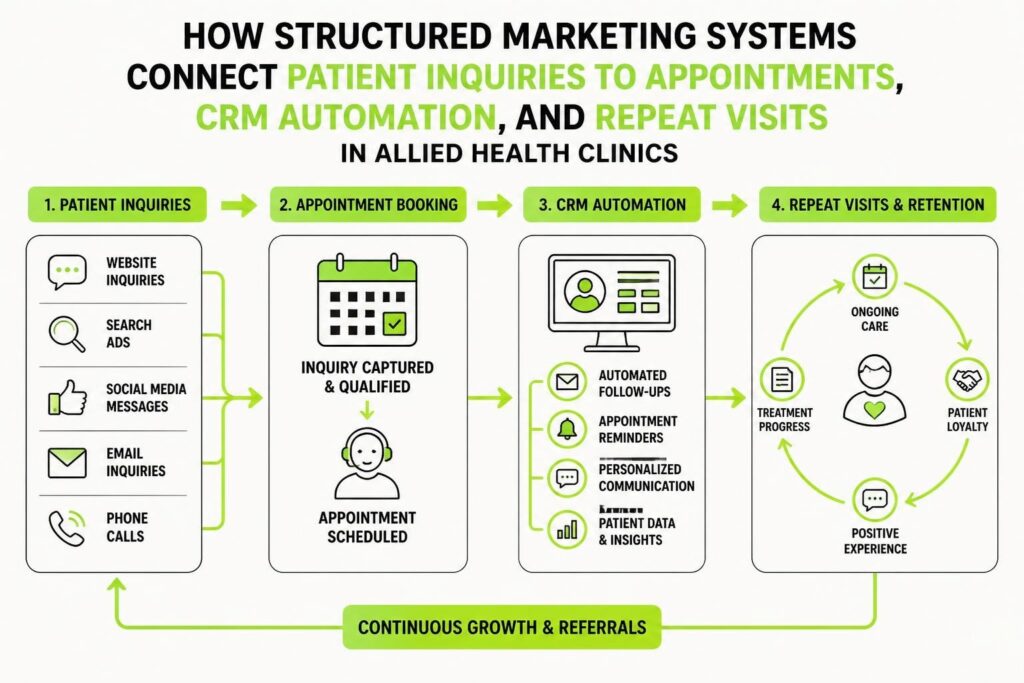
Most clinics and allied health practices run marketing the same way they handle admin tasks. When they remember. A Facebook post here, a newsletter there, maybe an ad campaign if the month's been quiet. It's reactive, inconsistent, and it doesn't scale. What works is structure. Marketing systems for clinics and allied health turn scattered effort into predictable patient flow. They protect leads, automate follow-up, and create the conditions for sustained growth without burning out your front desk.
Why Allied Health Marketing Needs Systems, Not Just Activity
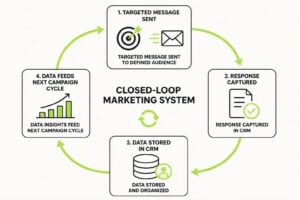
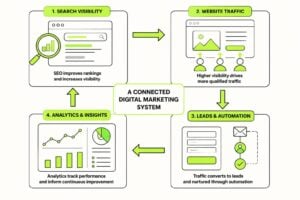
You can run ads, publish content, and send emails all day. But if those efforts don't connect to each other, you're just creating noise. A system turns individual tactics into a repeatable process where each piece feeds the next.
Here's what happens without a system:
- Leads come in from multiple channels with no central record
- Front desk staff manually follow up, but only when they're not busy
- Patients ghost after their first appointment because there's no nurture sequence
- You have no idea which marketing activity actually books appointments
Marketing strategies for clinics must account for the fact that allied health operates on trust and continuity. One appointment rarely solves the problem. Your marketing needs to reflect that reality by creating touchpoints that support long-term relationships, not just one-time bookings.
The Core Components of a Marketing System
A proper marketing system for clinics includes five essential layers:
- Lead capture infrastructure that collects contact details across all channels
- CRM integration that stores every interaction in one place
- Automated nurture sequences that move prospects toward booking
- Attribution tracking so you know which efforts generate revenue
- Referral and retention loops that turn existing patients into ongoing advocates
Without these, you're working harder than you need to. You're also leaving money on the table because you're not systematically converting the attention you're already generating.
Building Trust Through Structured Content and Presence
Allied health is a trust business. Patients need to believe you understand their condition, that you're qualified to treat it, and that you actually care about outcomes. Allied health marketing strategies work when they demonstrate competence and empathy at every stage.
Your content needs to educate, not just promote. Blog posts that explain conditions, video walkthroughs of treatment approaches, and case studies that show real results build credibility. But only if they're easy to find and regularly published.
Content Types That Convert for Clinics
| Content Type | Purpose | Conversion Goal |
|---|---|---|
| Condition guides | Educate prospects on symptoms and treatment options | Drive discovery and position expertise |
| FAQ videos | Answer common patient questions before they ask | Lower booking friction and build trust |
| Case studies | Demonstrate outcomes with real patient stories | Validate your approach and create confidence |
| Email nurture series | Stay top of mind between appointments | Encourage rebooking and treatment plan adherence |
The content itself matters, but delivery matters more. If someone downloads a guide on managing chronic pain, your system should automatically add them to a CRM, tag them by interest, and enrol them in a follow-up sequence that stays relevant. That's the difference between creating content and running a content system.
Local SEO and Online Visibility for Allied Health
Most clinic patients search locally. They type "physio near me" or "podiatrist in [suburb]" and book with whoever shows up first. If that's not you, you're invisible to the majority of your potential market.
Local SEO for marketing systems for clinics and allied health starts with the basics:
- Google Business Profile fully optimized with accurate hours, services, and contact details
- Consistent NAP data (name, address, phone) across all directories
- Local keyword targeting on your website and service pages
- Patient reviews that prove social credibility and improve rankings
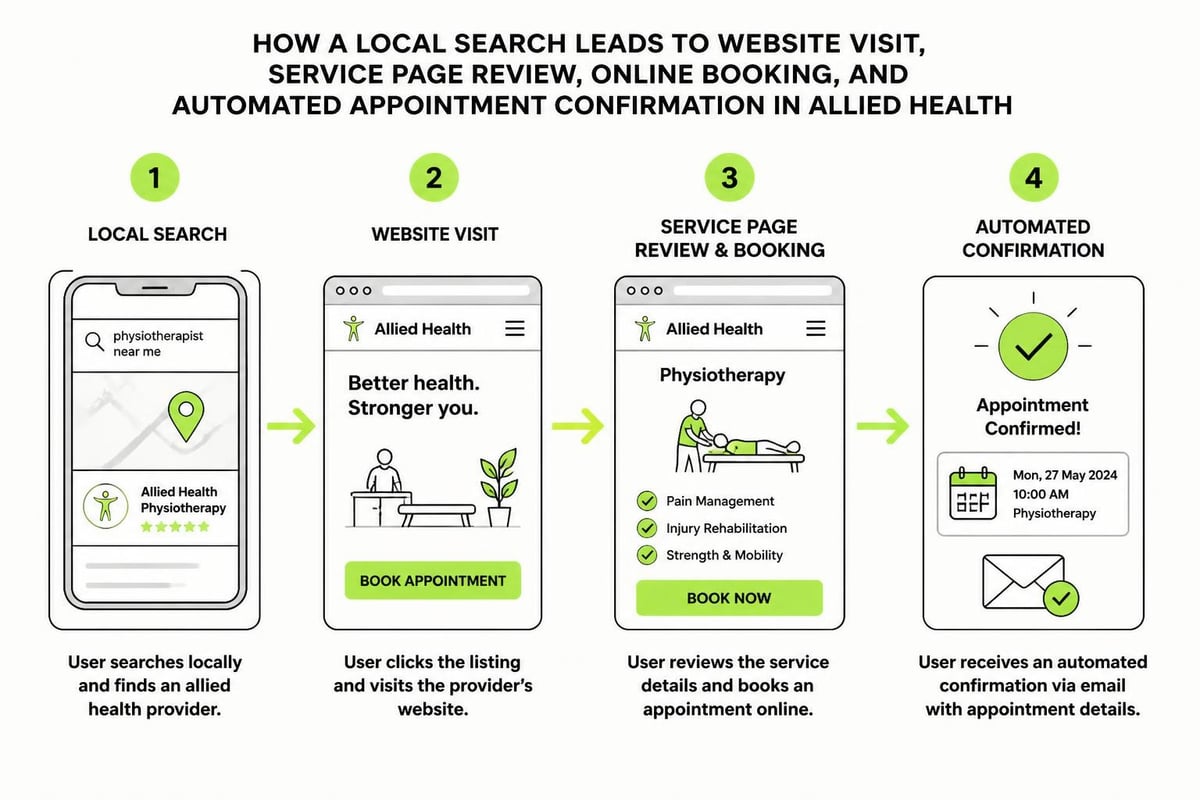
But optimization alone isn't a system. The system is what happens after someone finds you. Do they land on a generic homepage or a service page tailored to their exact search? Is there a clear call to action? Can they book online or do they need to call during business hours?
Optimizing the Path from Search to Appointment
When someone searches for your service, they should land on a page that matches their intent. If they search "sports injury physio," they shouldn't land on your homepage. They should land on a page about sports injury treatment with social proof, an explanation of your approach, and a booking form.
Speed matters too. If your site takes six seconds to load on mobile, you've already lost half your visitors. Local SEO isn't just about ranking. It's about converting that visibility into actual bookings through structured marketing funnels that guide people to action.
CRM and Automation Infrastructure
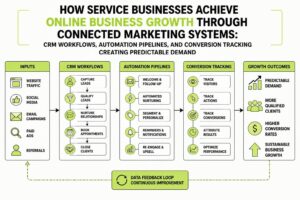
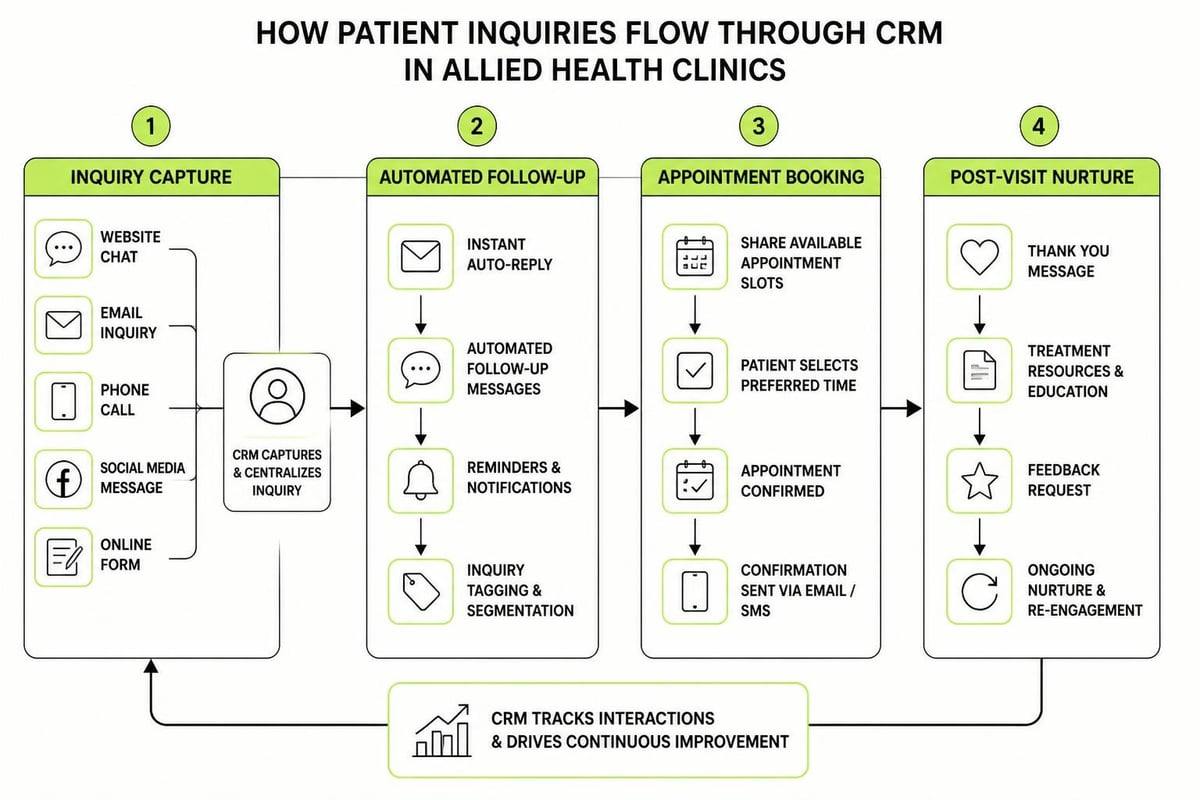
Most clinics use practice management software for scheduling and billing. That's fine for operations, but it's not enough for marketing. You need a CRM that tracks every touchpoint, automates follow-up, and segments your audience based on behavior and intent.
Here's what a proper CRM does for marketing systems for clinics and allied health:
- Captures leads from all sources (web forms, phone calls, social ads, walk-ins)
- Tags and segments contacts by service interest, treatment stage, or referral source
- Automates email and SMS follow-up based on triggers (e.g., booked but didn't show, treatment plan ending)
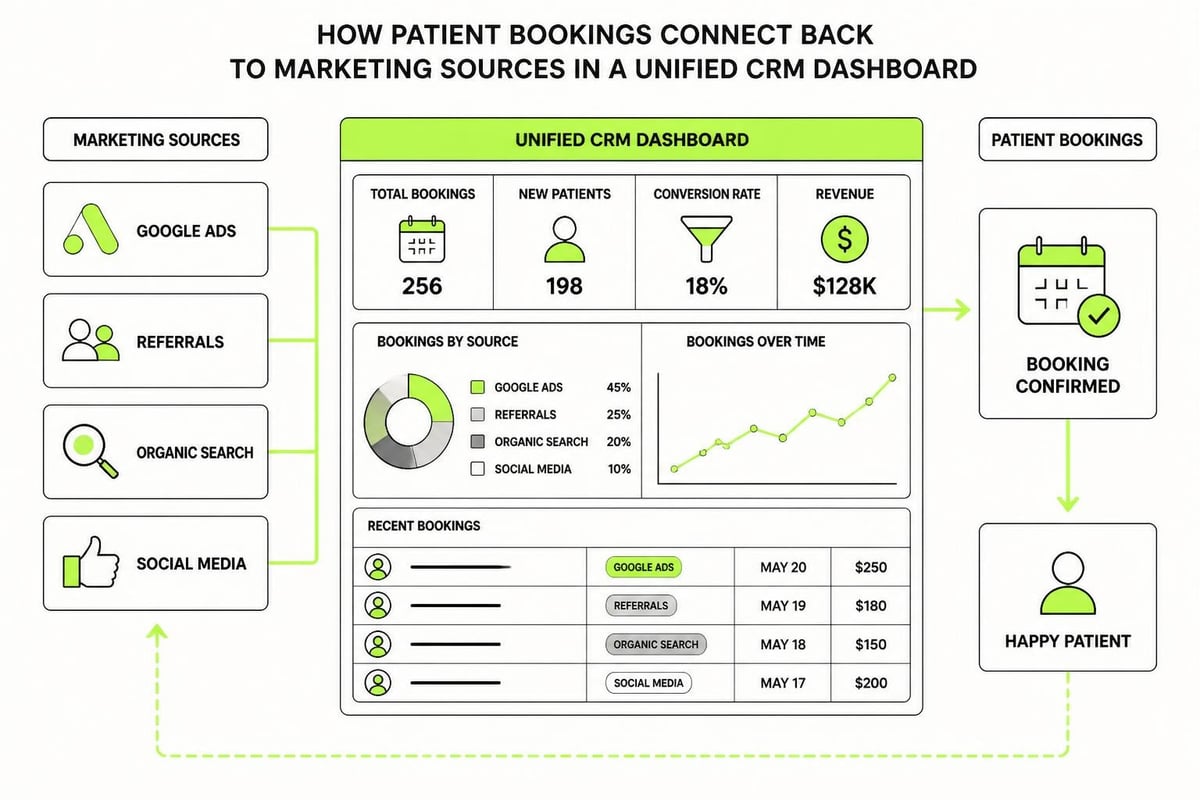
- Tracks attribution so you know which campaigns drive bookings and revenue
Without this, your front desk is manually chasing leads in spreadsheets or worse, in their heads. That doesn't scale. And when staff leave, the knowledge walks out the door.
Automations That Protect Revenue
Set up these core automations:
- New lead welcome sequence that educates and encourages booking
- Appointment reminder series (SMS 24 hours before, email 2 hours before)
- No-show recovery that offers easy rebooking or a callback
- Post-appointment follow-up asking about progress and offering next steps
- Treatment plan completion nudge for patients nearing the end of their care cycle
Each automation removes a manual task and ensures nothing falls through the cracks. It's not about replacing human interaction. It's about making sure every patient gets consistent, timely communication even when your team is flat out.
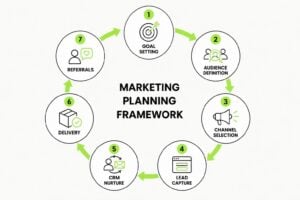
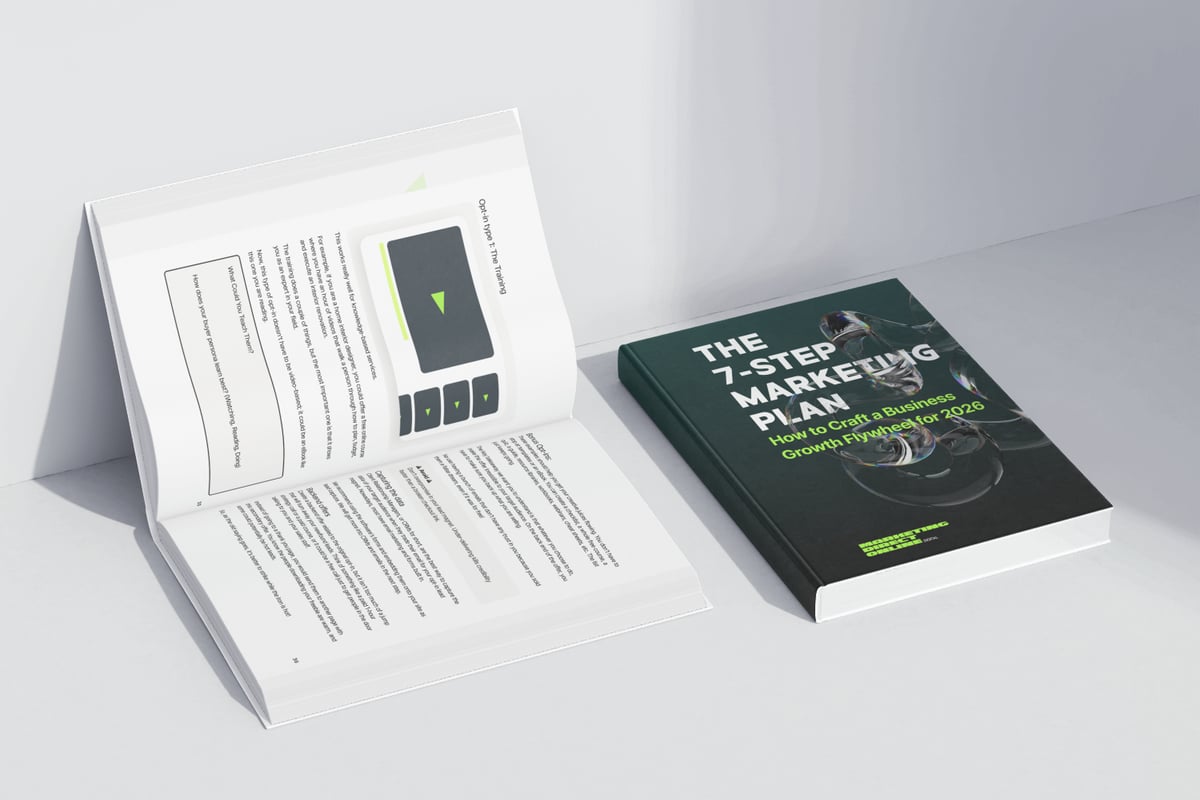
The 7-Step Marketing Plan framework walks through how to structure these systems step by step, from defining your buyer persona to building nurture campaigns that convert attention into appointments.
Referral Systems and Community Engagement
Word of mouth still drives a huge portion of allied health bookings. But most clinics leave referrals to chance. A system makes them predictable.
Building referral networks works best when it's structured. That means identifying who refers to you (GPs, specialists, other allied health providers, past patients), staying in regular contact, and making it easy for them to send people your way.
Referral Types and How to Systematize Them
| Referral Source | System Approach | Touchpoint Frequency |
|---|---|---|
| GPs and specialists | Quarterly updates on your services, case summaries for mutual patients | Monthly email, quarterly in-person |
| Other allied health | Cross-referral agreements, shared patient care plans | Bi-monthly coffee or call |
| Past patients | Automated request after positive treatment outcome | Post-treatment email series |
| Community groups | Educational workshops, sponsorships, health talks | Quarterly events or content |
For patient referrals, timing is everything. Ask too early and they don't have results to talk about. Ask too late and they've forgotten. The sweet spot is right after a major improvement or treatment milestone. Your CRM should trigger a referral request email or SMS automatically at that point.
Paid Advertising That Feeds the System
Organic efforts take time. Paid ads can accelerate patient flow if they're connected to the rest of your system. The mistake most clinics make is running ads to a homepage or a phone number. That's a leak.
Ads should drive to landing pages built for conversion. One clear offer, minimal distractions, and a form or booking button. From there, leads enter your CRM, get tagged by ad source, and move into a nurture sequence.
Platforms worth testing for allied health:
- Google Ads for high-intent local search terms
- Facebook and Instagram for awareness and retargeting
- YouTube for educational content that builds authority
Track everything. Cost per lead, cost per booking, lifetime value by channel. If you can't measure it, you can't improve it. Data-driven marketing removes guesswork and lets you double down on what's working.
Retargeting and Remarketing Sequences
Most people don't book on their first visit to your site. Retargeting keeps you visible while they're deciding. Show ads to people who visited your service pages but didn't book. Use testimonials, FAQs, or limited-time offers to push them over the line.
Once they've booked, switch the messaging. Now you're nurturing for retention and upsell. Retarget past patients with content about related services or advanced treatment options. It's lower cost and higher return than constantly chasing cold traffic.
Attribution and Performance Tracking
You can't optimize what you don't measure. Most clinics have no idea which marketing activities actually generate bookings. They just know the phone rang or someone walked in.
Marketing systems for clinics and allied health rely on attribution. That means tracking the source of every lead from first touch to booked appointment to completed treatment.
Key metrics to track:
- Lead source (organic search, paid ad, referral, social, direct)
- Conversion rate by source (leads to bookings)
- Cost per acquisition by channel
- Lifetime value by patient type
- Referral rate by service or provider
Use UTM parameters on all paid and organic links. Set up call tracking numbers for offline channels. Integrate your CRM with your booking system so attribution flows automatically. When you know a Google Ad costs $45 per booking and generates patients worth $850 on average, you know to scale it.
Patient Retention and Lifecycle Marketing
Acquiring a new patient costs five to seven times more than retaining an existing one. Yet most clinics focus all their energy on getting new faces through the door.
Retention marketing systematizes the post-appointment experience. It keeps patients engaged between visits, encourages adherence to treatment plans, and creates opportunities for additional services.
Retention Tactics That Work
- Post-visit surveys to gather feedback and identify issues early
- Educational email series matched to their condition or treatment phase
- Birthday or anniversary messages with special offers or check-ins
- Progress tracking tools that patients can access between sessions
- Reactivation campaigns for patients who haven't booked in 90+ days
Your CRM should automate these touchpoints based on patient stage. Someone two weeks into a six-week plan needs different messaging than someone who finished treatment six months ago. Segmentation and timing make or break retention efforts.
According to clinic marketing guides, clinics that implement structured patient retention systems see 30-40% higher lifetime value per patient. That's not from upselling. It's from reducing drop-off and encouraging treatment plan completion.
Compliance and Ethical Considerations
Allied health marketing in Australia has regulatory constraints. AHPRA guidelines apply to registered practitioners. Even non-AHPRA providers need to follow consumer protection laws and advertising standards.
What you can't do:
- Make guarantees about treatment outcomes
- Use patient testimonials without proper consent
- Claim superiority over other providers without evidence
- Use before-and-after images in certain modalities
What you can do:
- Share educational content about conditions and treatment approaches
- Highlight qualifications, experience, and specializations
- Collect and display reviews (with patient permission)
- Explain your process and what patients can expect
Marketing systems for clinics and allied health need compliance baked in. Train your team on what's allowed. Review all ad copy and website content against AHPRA guidelines. Building trust through marketing means staying within the lines while still communicating value clearly.
Integrating Marketing with Operations
Marketing doesn't exist in a vacuum. If your system drives 50 new bookings but your front desk can't handle the volume, you've created a problem, not a solution.
Systems thinking means connecting marketing to operations. Your CRM should talk to your practice management software. Your booking system should trigger marketing automations. Your team should know how to handle inquiries consistently.
Create scripts for common questions. Train reception on how to convert phone inquiries. Make sure your online booking tool actually works on mobile. Small friction points kill conversions even when your marketing is flawless.
When everything connects, marketing becomes predictable. You know how many leads you need to hit your booking targets. You know which channels deliver them. You know how to nurture them from inquiry to long-term patient. That's when growth compounds instead of stalls.
Marketing systems for clinics and allied health replace chaos with clarity. They turn scattered effort into structured growth, protect every lead, and build patient relationships that last. When you're ready to implement systems that actually scale, MDO Digital helps service businesses like yours build the infrastructure that turns attention into predictable demand.