Running a service business without marketing frameworks and playbooks for service-based businesses is like building a house without blueprints. You might get something standing, but it's inefficient, inconsistent, and hard to scale. Most service business owners find themselves in a cycle of reactive marketing, chasing leads when the pipeline runs dry, then going quiet when work floods in. This approach burns energy, wastes budget, and leaves revenue completely unpredictable. The difference between a business that scales and one that stays stuck often comes down to having documented, repeatable systems that anyone on the team can execute.
Why Service Businesses Need Marketing Frameworks
Service businesses face unique challenges that product companies don't deal with. You're selling expertise, transformation, and trust rather than a physical item someone can hold or test. The buying cycle is longer, the decision more complex, and the need for relationship-building far more critical.
Without structured marketing frameworks and playbooks for service-based businesses, you're relying entirely on founder hustle. That works to a point, but it doesn't compound. Every new client requires the same energy output, every campaign starts from scratch, and knowledge stays locked in someone's head instead of being captured in systems.
A proper framework gives you three things:
- Repeatability: You can run the same process again and produce similar results
- Scalability: New team members can execute without needing years of experience
- Measurability: You know what's working and what's draining budget
The businesses that grow past seven figures almost always have some form of documented playbook. They've stopped winging it and started building infrastructure.
Core Components of an Effective Marketing Framework
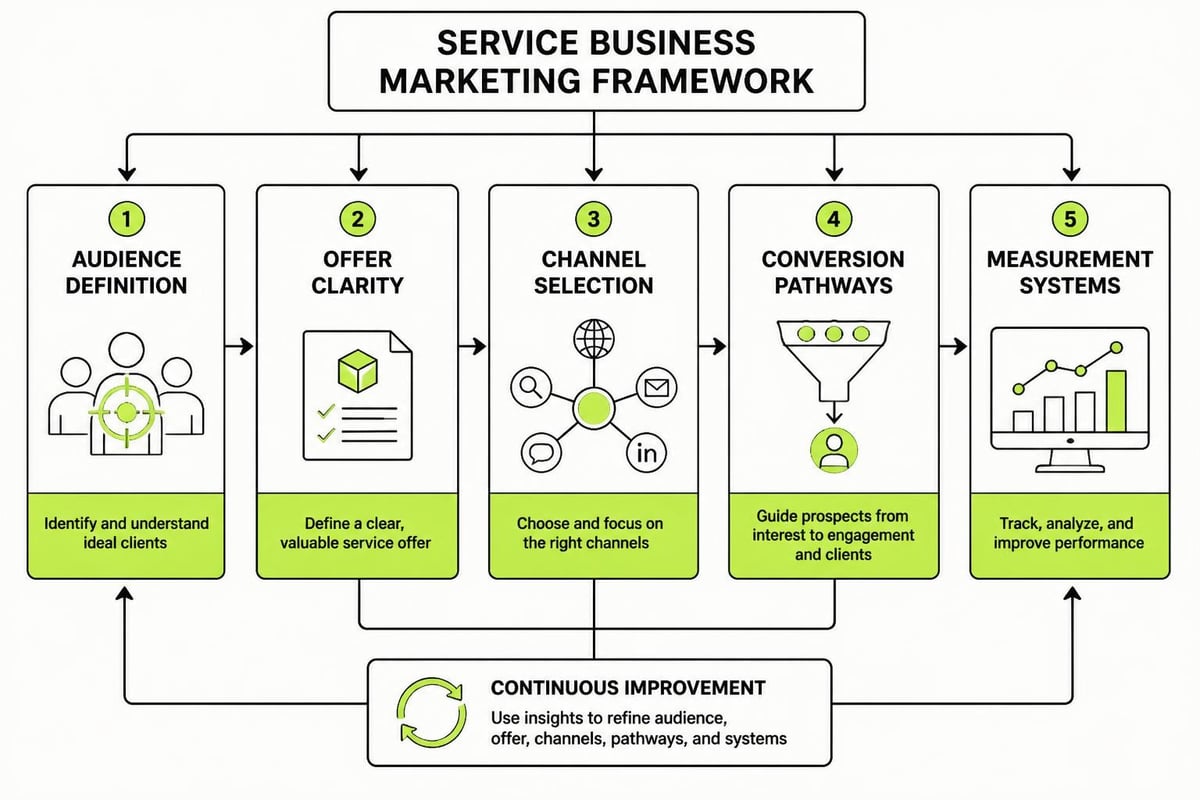
Audience Definition and Segmentation
You can't market to everyone, and trying to do so makes every message weak. The first part of any marketing framework is knowing exactly who you're talking to and what problems keep them up at night.
Most service businesses know their industry but haven't done the work to define their ideal client profile. This goes beyond basic demographics. You need to understand buying triggers, decision-making processes, budget authority, and the specific language your prospects use when describing their pain points.
Build out detailed personas that include:
- Company size and structure
- Current challenges and pain points
- Goals for the next 12-24 months
- Objections and concerns about buying your service
- Preferred communication channels
- Decision-making timeline
This isn't academic. When you know your audience this well, every piece of content you create hits harder because it speaks directly to their situation. Your digital marketing plan becomes focused rather than scattered.
Offer Architecture and Messaging
Service businesses often struggle with clarity around what they actually sell. You might offer ten different services, but leading with all of them creates confusion. Strong marketing frameworks and playbooks for service-based businesses include a clear offer hierarchy.
Structure your offers in tiers:
| Offer Type | Purpose | Price Point | Sales Process |
|---|---|---|---|
| Entry offer | Lead generation, trust building | Low to free | Automated |
| Core offer | Primary revenue driver | Mid-range | Consultative |
| Premium offer | High-value transformation | High | Relationship-based |
Your entry offer might be a diagnostic, audit, or strategy session. This gets prospects into your world without major commitment. Your core offer is what most clients buy, the bread and butter service that keeps the business running. Premium offers serve clients who need deeper support or faster results.
Each tier needs its own messaging, positioning, and conversion pathway. Trying to sell everything to everyone through the same funnel is why most service marketing falls flat.
Channel Strategy and Content Distribution
Once you know who you're talking to and what you're offering, you need to decide where the conversation happens. Not every channel makes sense for every service business, and spreading yourself thin across too many platforms guarantees mediocre results everywhere.
Pick 2-3 primary channels based on where your ideal clients actually spend time. For B2B services, that might be LinkedIn and email. For local services, Google Business Profile and Facebook groups. For creative services, Instagram and a well-optimized website.
The playbook part is documenting exactly what you publish, when, and how often:
- Daily: Social engagement and community participation
- Weekly: Long-form content (blog posts, videos, podcasts)
- Bi-weekly: Email nurture sequences to your list
- Monthly: Strategic content (case studies, research, in-depth guides)
Consistency beats intensity. Publishing one quality piece weekly for a year delivers far better results than posting daily for a month then disappearing.
Building Your Lead Generation Playbook
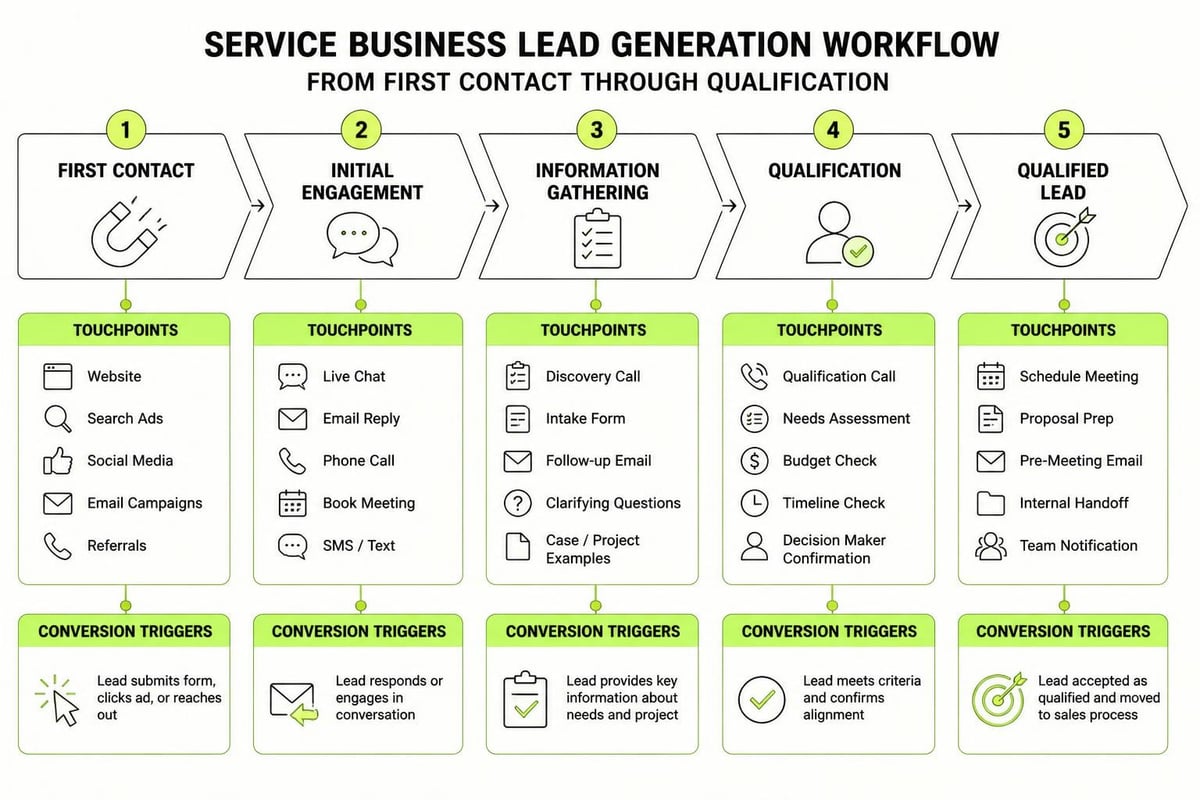
Lead generation for service businesses isn't about volume, it's about quality and timing. Your playbook needs to address three stages: attention, capture, and qualification.
Attention Mechanisms
Getting attention means showing up where your prospects already are with content that solves real problems. This stage is about building authority and trust before anyone's ready to buy.
Content at this stage should be freely accessible, genuinely helpful, and demonstrate your expertise without requiring commitment. Think blog posts answering common questions, short videos breaking down complex topics, or social posts sharing insights from client work.
The goal isn't immediate conversion. You're building awareness and positioning yourself as someone worth paying attention to when they do hit a buying trigger.
Capture Systems
Once you have attention, you need a mechanism to capture contact details so you can continue the conversation. This is where opt-in offers come in.
Effective opt-in offers for service businesses:
- Diagnostic tools or assessments
- Templates and frameworks
- Recorded workshops or training
- Research reports or industry data
- Buying guides or comparison resources
The opt-in should relate directly to your core service and demonstrate your expertise. If you're a marketing agency, giving away a complete marketing framework shows both your knowledge and gives prospects a taste of how you think.
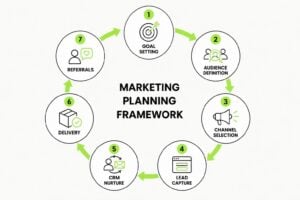
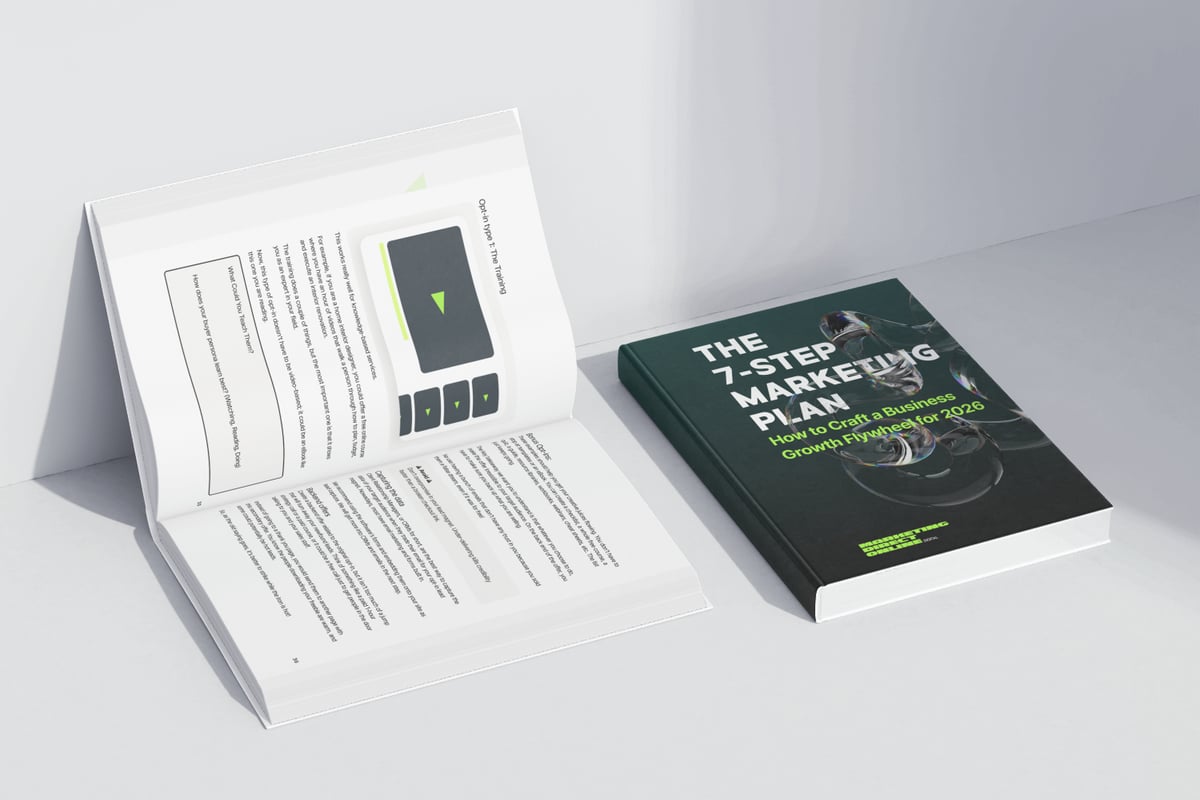
A structured approach like the 7-Step Marketing Plan helps businesses understand the full journey from setting goals through to generating referrals, with each step feeding into the next. When prospects see the complete system, they often realize they need help executing it rather than trying to DIY everything.
Qualification Process
Not everyone who downloads your opt-in is a good fit. Your playbook needs a clear qualification process that separates tire-kickers from serious prospects.
This typically happens through a combination of automated email sequences and direct conversation. Your nurture emails should naturally filter people by presenting your point of view, sharing your pricing approach, and being clear about who you work with and who you don't.
For those who remain engaged, a structured discovery call process helps both parties determine fit. Document your discovery questions, qualification criteria, and the information you need to put together a proposal.
Conversion and Sales Playbooks
Marketing frameworks and playbooks for service-based businesses can't stop at lead generation. The handoff from marketing to sales is where many service businesses leak revenue.
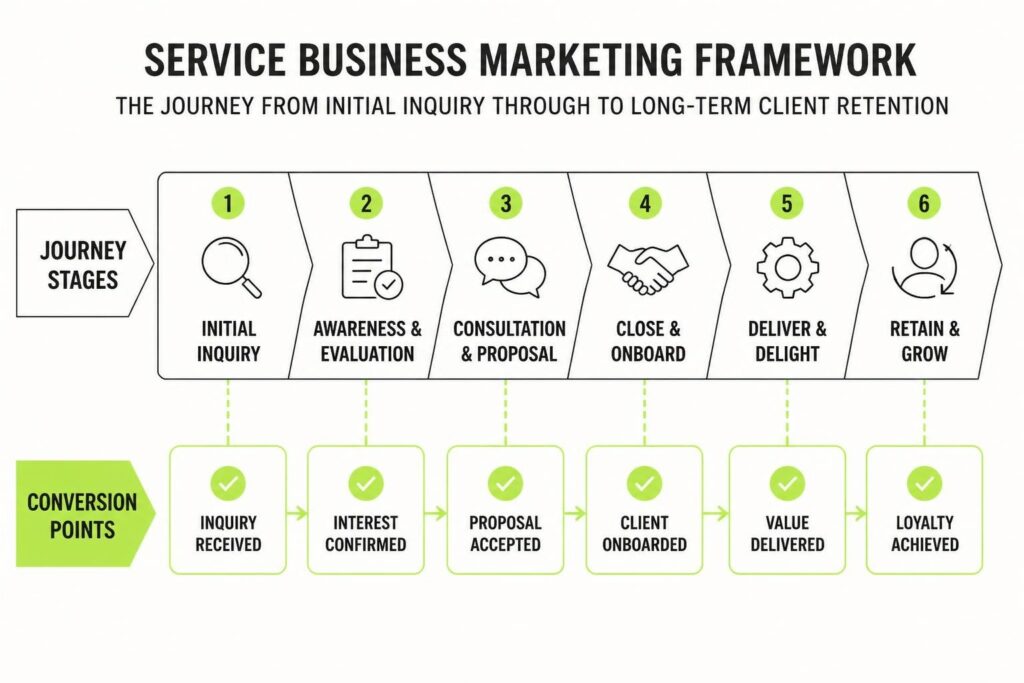
Consultation Framework
Service sales happen through conversation, not carts and checkout pages. Your consultation framework should guide prospects through understanding their problem, seeing what's possible, and deciding if you're the right partner.
Structure consultations in three phases:
- Discovery: Understand their current situation, what they've tried, and what's blocking progress
- Prescription: Share your assessment and recommended approach
- Investment: Present pricing, timeline, and next steps
Don't give away your entire methodology for free, but demonstrate enough insight that the prospect understands you grasp their situation and have a clear path forward.
Proposal and Close Process
Once you've had the consultation, your proposal process should be documented and consistent. This doesn't mean cookie-cutter proposals, it means having templates, standard scope elements, and clear pricing structures that you can customize quickly.
Your playbook should include:
- Proposal templates for common service packages
- Standard terms and conditions
- Payment structures and schedules
- Onboarding process overview
- Timeline expectations
The faster you can turn around a proposal after a good conversation, the higher your close rate. Having systems in place makes that possible without scrambling every time.
Client Delivery and Experience Playbooks
Marketing doesn't end when someone signs. The experience your clients have determines whether they become referral sources or cautionary tales. Strong branding and digital marketing systems extend through the entire client journey.
Onboarding Systems
First impressions matter. A structured onboarding process sets expectations, gathers necessary information, and starts the relationship with clarity. Document every step from signed contract to project kickoff.
Create checklists for:
- Welcome email sequence
- Access and logins setup
- Initial documentation gathering
- Kickoff meeting agenda
- First milestone delivery
When onboarding is smooth, clients feel confident in their decision. When it's chaotic, buyer's remorse kicks in immediately.
Delivery Standards
Your playbook should define what good looks like for service delivery. This includes communication frequency, update formats, review cycles, and quality standards.
Document your process so new team members can deliver consistent results. If your output quality depends entirely on who's assigned to the project, you don't have a business system, you have a collection of freelancers under one brand.
Measurement and Optimization Framework
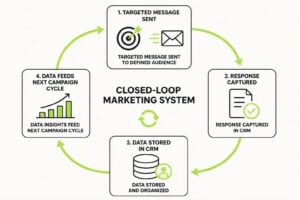
Marketing frameworks and playbooks for service-based businesses need built-in feedback loops. Track what matters and adjust based on data rather than gut feel.
Key Metrics by Stage
Different stages of your marketing system require different metrics:
| Stage | Primary Metrics | Secondary Metrics |
|---|---|---|
| Awareness | Traffic, reach, engagement | Share of voice, brand searches |
| Capture | Conversion rate, cost per lead | Opt-in quality, source breakdown |
| Nurture | Email open/click rates, engagement | Time to MQL, content consumption |
| Sales | Consultation booking rate, close rate | Average deal size, sales cycle length |
| Delivery | Client satisfaction, referral rate | Project margin, timeline adherence |
Don't try to track everything. Pick 3-5 metrics that actually influence decisions and review them weekly. Monthly deep dives can look at trends and bigger patterns.
Continuous Improvement Process
Your playbook isn't set and forget. Schedule quarterly reviews where you analyze what's working, what's not, and what needs adjustment. Look for bottlenecks where prospects drop off, channels that aren't pulling their weight, or messaging that isn't resonating.
Test one variable at a time. Change your email subject lines for a month and measure the impact. Try a new opt-in offer and compare conversion rates. Adjust your consultation structure and track close rates.
Small, consistent improvements compound faster than periodic overhauls. A marketing system that improves 1% each week is dramatically better by year end.
Implementation Roadmap
Building marketing frameworks and playbooks for service-based businesses doesn't happen overnight. Most businesses need 3-6 months to get core systems in place and another 6-12 months to refine them based on real data.
Start with documentation. Before building new systems, document what you're currently doing. Write down your sales process, your content schedule, your client onboarding steps. Even if they're inconsistent, getting them on paper shows you where the gaps are.
Then prioritize based on impact. If you're generating enough leads but not closing them, focus on your sales playbook first. If your pipeline is empty, start with lead generation systems. Don't try to fix everything simultaneously.
Build incrementally:
- Month 1-2: Document current processes and identify biggest gaps
- Month 3-4: Implement core lead generation framework
- Month 5-6: Build out sales and consultation playbooks
- Month 7-9: Create delivery and client experience systems
- Month 10-12: Optimize based on data and feedback
The businesses that succeed with this approach treat it like infrastructure, not a project. You're building the foundation for predictable growth, and that requires commitment and consistency.
Your digital marketing project success depends on having systems that outlast any individual campaign or tactic. Platforms change, algorithms shift, but solid frameworks adapt and keep producing results.
Marketing frameworks and playbooks for service-based businesses turn chaos into predictable growth by documenting what works and making it repeatable. When you stop relying on founder hustle and start building systems, scaling becomes possible without everything falling apart. MDO Digital helps service businesses build these exact systems through structured marketing infrastructure, CRM automation, and data-driven strategy that removes guesswork and protects every lead that comes through your door.