Most service businesses treat marketing like brand awareness work. They post content, run ads, and hope someone remembers them when they need help. That approach might build recognition over time, but it doesn't create predictable demand. Direct response marketing for service businesses works differently. It's designed to generate immediate action, measurable results, and trackable revenue. Every message has a job. Every campaign has a goal. And every dollar spent should tell you exactly what it bought.
This matters because service businesses operate on tight margins and high stakes. When someone needs a plumber, accountant, or consultant, they need them now. The business that responds fastest and clearest usually wins. Direct response marketing for service businesses removes the guesswork and builds systems that turn attention into booked jobs.
What Makes Direct Response Different
Traditional marketing builds recognition. Direct response demands action.
The difference shows up in how you structure every piece of communication. Brand marketing might share your story or values. Direct response tells people exactly what to do next and why they should do it now.
Core Elements That Drive Action
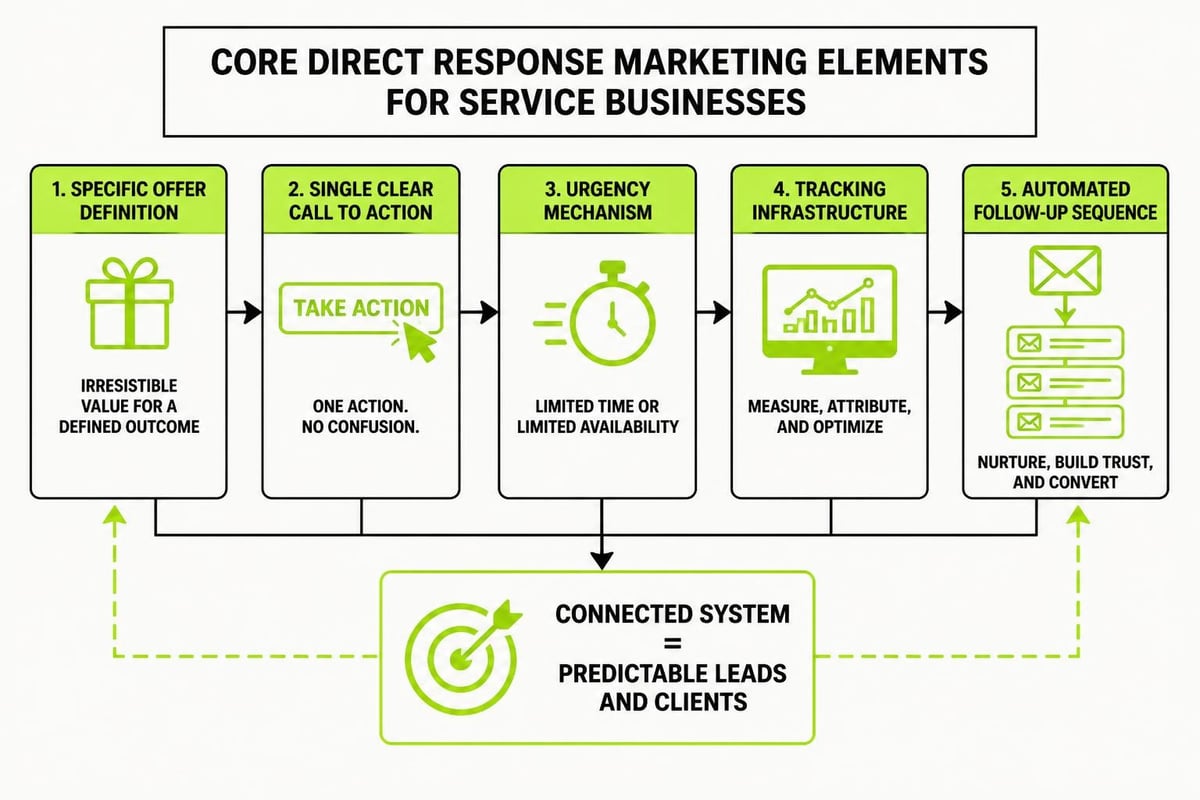
Every direct response campaign needs these components working together:
- Clear, specific offer that solves an urgent problem
- Strong call to action with one obvious next step
- Time-sensitive urgency through deadlines or limited availability
- Measurable tracking so you know what works
- Immediate follow-up systems that protect every lead
Direct response marketing fundamentals emphasize that these elements must work as a system, not isolated tactics. Miss one piece and the whole chain breaks.
The offer matters most. Service businesses often make this too complicated. Your offer isn't your full service catalogue. It's the specific thing someone gets when they respond. A free assessment. A fixed-price starter package. A limited diagnostic. Make it concrete, valuable, and easy to say yes to.
Why Service Businesses Need This Approach
Service businesses face unique challenges that make direct response marketing essential.
You're selling expertise and outcomes, not physical products. Buyers can't see what they're getting before they commit. Trust gaps are massive. Decision cycles can drag on for weeks or months. Every lead that goes cold represents lost revenue you'll never recover.
The Speed-to-Lead Reality
Response time isn't just a nice-to-have. It's the difference between winning and losing work.
Research shows dramatic conversion drops when businesses wait even minutes to respond. Speed-to-lead data from service business implementations demonstrates that AI-driven follow-up outperforms manual processes by massive margins, both in response time and lead recovery rates.
Here's what happens at different response speeds:
| Response Time | Conversion Rate | Revenue Impact |
|---|---|---|
| Under 5 minutes | 21-35% | Baseline |
| 5-30 minutes | 12-18% | -40% to -50% |
| 30-60 minutes | 6-9% | -70% to -75% |
| 1+ hours | 2-4% | -85% to -90% |
Those numbers compound across hundreds of leads. A service business generating 100 qualified leads monthly loses 60-80 potential clients simply by being slow.
Building a marketing system that handles this properly isn't optional anymore. It's table stakes.
Building Your Direct Response System
Most service businesses approach this backwards. They create marketing, then figure out how to handle responses. That creates chaos and leaks leads everywhere.
Start with the response system, then build marketing that feeds it.
Step 1: Design Your Offer Architecture
You need three offer types working together:
- Low-barrier entry offer that starts relationships (free audit, assessment, guide)
- Starter package at a fixed price that delivers quick wins
- Core service that generates your main revenue
Each offer should solve a specific problem and naturally lead to the next level. Your entry offer identifies qualified prospects. Your starter package proves value. Your core service delivers transformation.
Direct response marketing for service businesses works best when offers are packaged, priced, and positioned clearly. Vague "we can help with anything" messaging kills response rates.
Step 2: Map Your Response Pathways
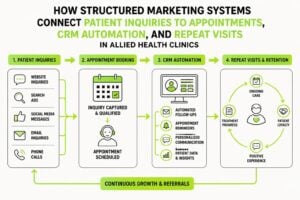
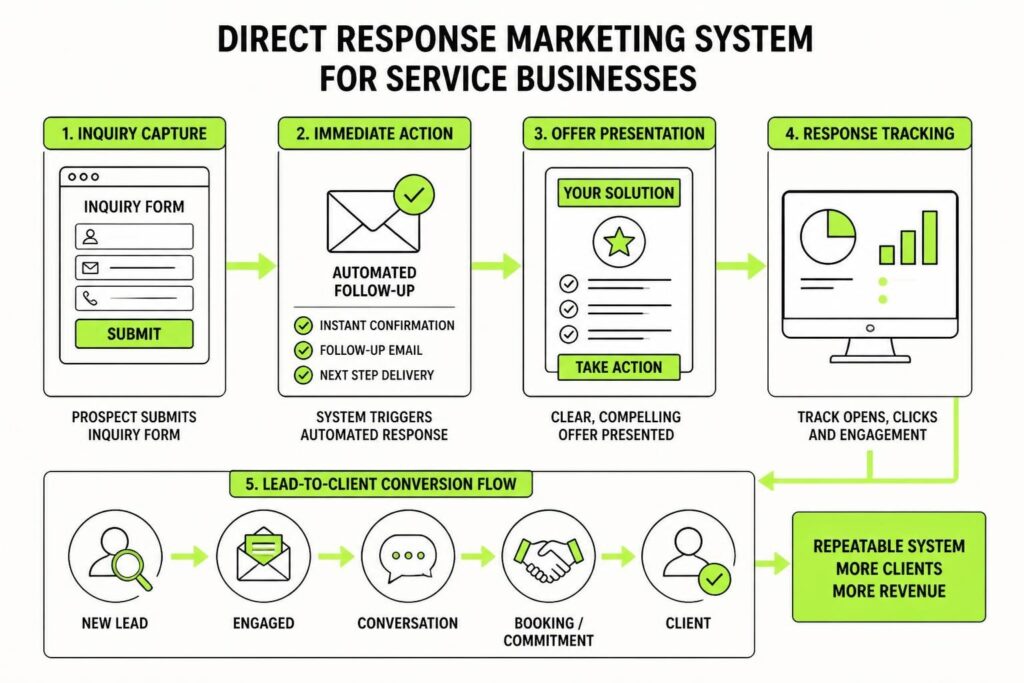
Every inquiry should trigger a predictable sequence.
For phone inquiries:
- Immediate answer or callback within 5 minutes
- Qualification questions asked consistently
- Offer presented based on need identified
- Next step scheduled before call ends
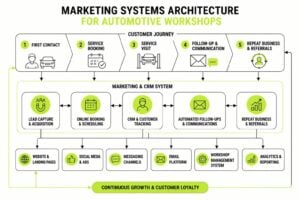
For digital inquiries:
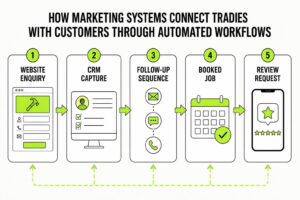
- Instant automated confirmation received
- First human response within 15 minutes during business hours
- Follow-up sequence activated if no immediate contact
- CRM tracking engagement and next actions
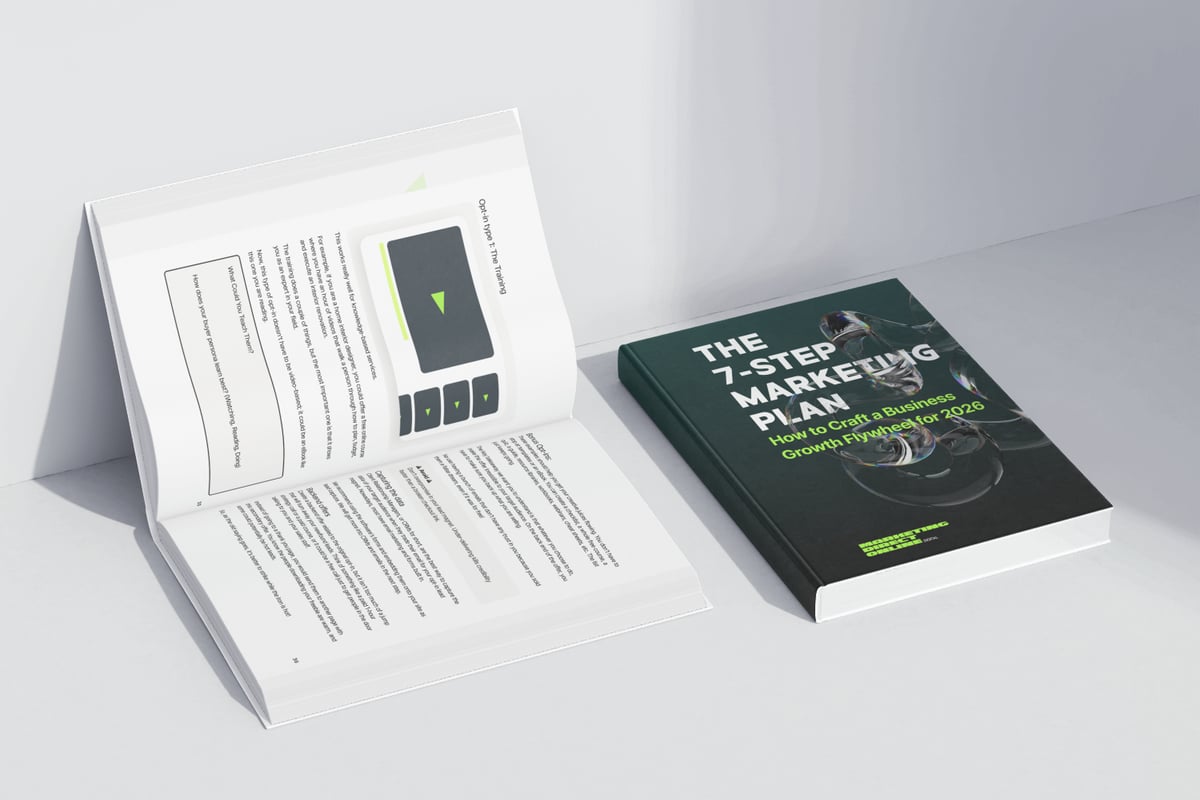
The 7-Step Marketing Plan provides a framework for building these pathways systematically, ensuring every lead enters a nurture sequence that protects the relationship and guides them toward becoming clients.
Step 3: Write Copy That Converts
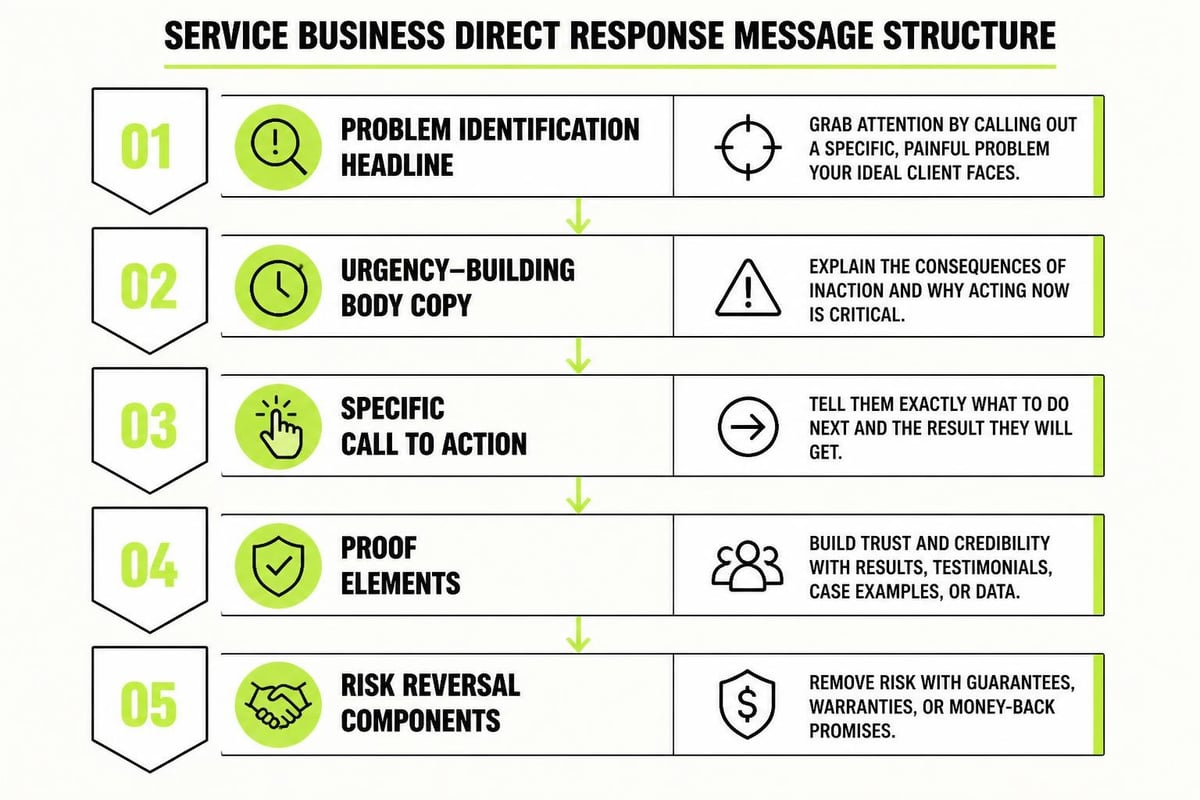
Direct response copywriting follows specific patterns because they work.
HubSpot’s direct response copywriting guide breaks down the formulas that drive action. The mechanics matter:
- Headlines that identify the problem and promise a solution
- Body copy that builds urgency and removes objections
- Calls to action that tell people exactly what to do
- Proof elements like case results and testimonials
- Risk reversal through guarantees or trials
Service businesses often write like they're trying to impress other marketers. Your prospects don't care about clever wordplay. They want to know if you can solve their problem and what happens next.
Choosing Channels That Generate Response
Not all marketing channels suit direct response work equally well.
High-Intent Channels
These platforms connect you with people actively searching for solutions:
- Google Search Ads targeting service-specific keywords
- Local Service Ads for home service and professional service categories
- Remarketing campaigns following engaged website visitors
- Email to qualified lists of people who opted in
High-intent channels cost more per click but convert at higher rates because people are already looking for help.
Outbound Direct Response
Some service categories benefit from proactive outreach:
| Channel | Best For | Key Metric |
|---|---|---|
| Direct mail | High-value B2B services | Response rate 2-5% |
| Cold email | Professional services, consulting | Open rate 20-30% |
| LinkedIn outreach | B2B with specific job titles | Connection rate 30-40% |
| Door hangers | Local home services | Response rate 1-3% |
The Frisco dealership service campaign case study demonstrates how direct mail drove measurable service volume through clear attribution and smart targeting. Physical mail still works when the offer and timing align.
Low-Intent Channels
Social media and content marketing generally perform worse for direct response in service businesses. People scrolling Facebook or reading blog posts aren't actively buying. You can use these channels, but expect longer conversion cycles and lower immediate response rates.
That doesn't mean avoid them. It means set realistic expectations and structure your approach differently. Use low-intent channels to build awareness and capture contact information, then shift people into higher-intent sequences.
Tracking What Actually Matters
Direct response marketing for service businesses lives or dies on measurement.
You need to track three levels of data:
Campaign-Level Metrics
- Cost per inquiry
- Inquiry-to-consultation conversion rate
- Consultation-to-client conversion rate
- Customer acquisition cost
- Revenue per campaign dollar spent
System-Level Metrics
- Average response time to new inquiries
- Follow-up sequence completion rates
- Lead-to-opportunity progression
- Pipeline velocity
Business-Level Metrics
- Monthly recurring revenue growth
- Customer lifetime value
- Referral rate from clients acquired through direct response
- Net profit per marketing channel
Most service businesses only track the first level. They know what they spent and roughly what they got. But they can't tell you why certain campaigns worked or how to improve their systems.
Research on lead response benchmarks shows that local service businesses with proper tracking systems outperform competitors by 3-5x in conversion rates, simply because they can see where leads leak and fix the holes.
Common Mistakes That Kill Results
Service business owners make predictable errors with direct response marketing.
Mistake 1: Too Many Calls to Action
Every message should have one clear next step. When you give people three options, response rates plummet. Pick the most important action and make everything point to it.
Mistake 2: Slow Follow-Up Infrastructure
You can't run effective direct response marketing without fast, systematic follow-up. ROI analysis of home service lead response automation quantifies returns of 12-17x on automation investments. The math is simple: faster response equals more conversions.
Mistake 3: Generic Offers
"Call us for a free quote" isn't an offer. It's a request for work. Strong offers solve specific problems for specific people. The narrower your offer, the higher your response rate.
Mistake 4: No Nurture Sequence
Most service leads aren't ready to buy immediately. Without a nurture system, you lose everyone who doesn't convert in the first conversation. Build email sequences that stay in touch, provide value, and make regular offers.
Mistake 5: Ignoring the Data
Your campaigns tell you exactly what's working if you listen. Track everything. Review weekly. Kill what doesn't work. Double down on what does. Understanding marketing evolution and adaptation helps service businesses stay competitive as channels and tactics shift over time.
Building Predictable Demand
Direct response marketing for service businesses creates compound effects over time.
Your first campaign might break even or lose money while you optimize. By campaign five or six, you should know your numbers well enough to predict revenue within 10-15%. That predictability changes everything.
The Systematic Approach
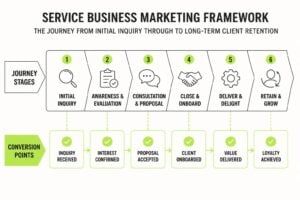
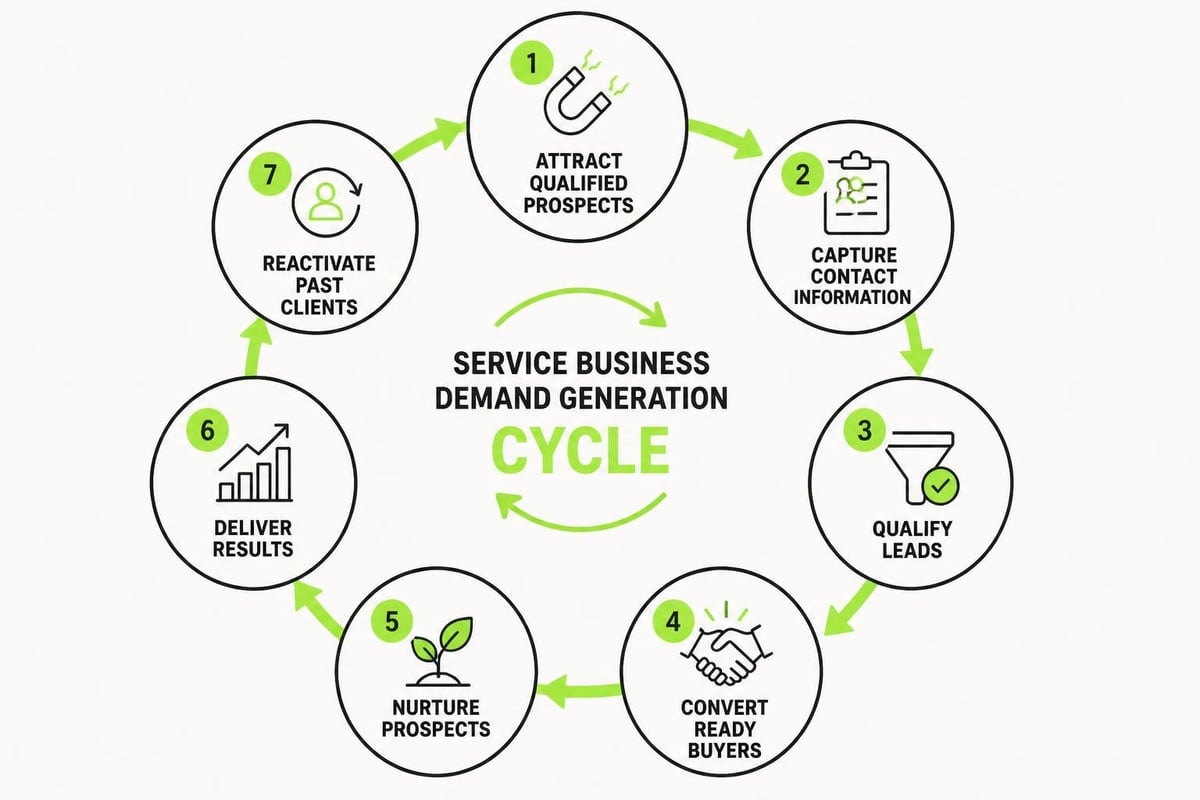
Strong direct response systems follow this pattern:
- Attract qualified prospects through targeted campaigns
- Capture contact information with valuable offers
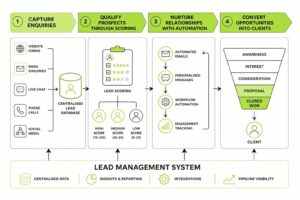
- Qualify leads through automated and human processes
- Convert ready buyers through consultations and proposals
- Nurture not-yet-ready prospects until timing improves
- Deliver outstanding results that generate referrals
- Reactivate past clients and dormant leads regularly
Each step feeds the next. The system gets stronger with every lead that enters because you learn more about what works.
Service business marketing strategies and best practices emphasize this systematic approach over one-off campaigns because consistency beats intensity in the long run.
Scaling What Works
Once you've validated a direct response approach, scaling becomes straightforward.
You're not guessing anymore. You know a certain type of campaign generates a predictable number of leads at a known cost. You know what percentage convert. You know the revenue each client generates.
Expansion Strategy
Horizontal scaling: Run the same campaign in new markets or to new audience segments.
Vertical scaling: Increase budget on proven campaigns until returns diminish.
Channel expansion: Test new channels using the same offers and messaging that work elsewhere.
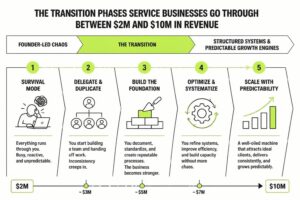
The key is maintaining measurement rigor as you scale. What works at $2,000 monthly spend might break at $20,000. Watch your metrics and adjust quickly.
Most service businesses plateau because they stop testing. Direct response marketing rewards constant experimentation within a structured framework. Test new offers quarterly. Test new messaging monthly. Test new channels when current ones mature.
Integration with Broader Marketing
Direct response isn't the only marketing approach service businesses need, but it should anchor your system.
Brand building, content marketing, and relationship development all play roles. The difference is timing and measurement. Balancing digital marketing approaches means understanding which tactics drive immediate revenue and which build long-term assets.
Use direct response to fund everything else. Revenue from direct response campaigns gives you budget to invest in slower-burning brand work, content creation, and thought leadership.
Many service businesses do this backwards. They spend on brand building and hope it eventually generates leads. That works if you have deep pockets and patience. Most don't. Start with direct response, prove the model, then layer in supporting activities.
Making It Work for Your Business
Direct response marketing for service businesses isn't complicated, but it requires discipline.
You need clear offers, fast follow-up, systematic nurture, and rigorous tracking. Skip any piece and results suffer.
Start small. Pick your best offer. Choose one channel. Build the follow-up system properly. Track everything. Optimize until it works. Then scale and expand.
The businesses that win with direct response treat it as infrastructure, not campaigns. They build systems that run whether they're paying attention or not. Leads come in. Follow-up happens. Conversations convert. Revenue compounds.
That's the goal. Predictable demand you can rely on, measure, and improve month after month.
Direct response marketing transforms service businesses from hoping for clients to systematically generating them. The mechanics are proven, the returns are measurable, and the competitive advantage compounds over time. If you're ready to build marketing infrastructure that actually drives predictable demand, MDO Digital helps service businesses design the systems, automation, and campaigns that turn attention into revenue. We remove the chaos, protect your leads, and create structured growth that scales.