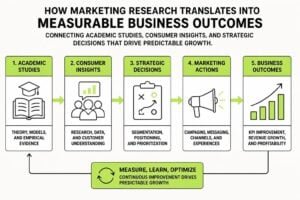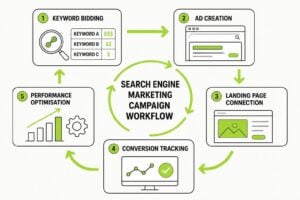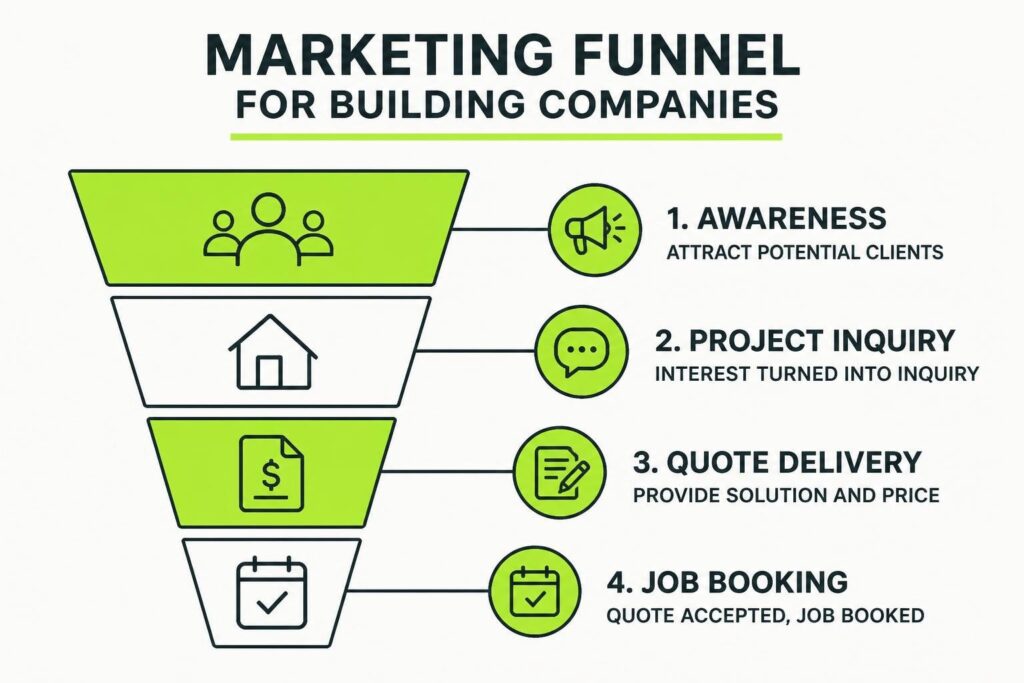
Most builders know how to run a project. They understand timelines, materials, subcontractors, and site management. But when it comes to marketing for builders, things get murky. The phone doesn't ring as predictably as it should. Referrals dry up between jobs. And trying to compete on price with every other builder in the area becomes exhausting. The truth is, marketing isn't complicated. It just needs structure. Like a build itself, it works best when you follow a system that moves prospects from awareness to booked work without relying on luck or discounting.
Why Most Builder Marketing Fails
The problem with marketing for builders isn't lack of effort. Most builders try things. They throw up a Facebook page, maybe run some ads, post the odd before-and-after photo. But none of it connects into a coherent system.
Here's what typically goes wrong:
- No clear target market, so messaging speaks to everyone and resonates with no one
- A website that looks fine but doesn't explain what makes you different
- Leads come in sporadically through various channels with no way to track or follow up
- No nurture process, so prospects who aren't ready now disappear forever
- Relying entirely on word of mouth, which works until it doesn't
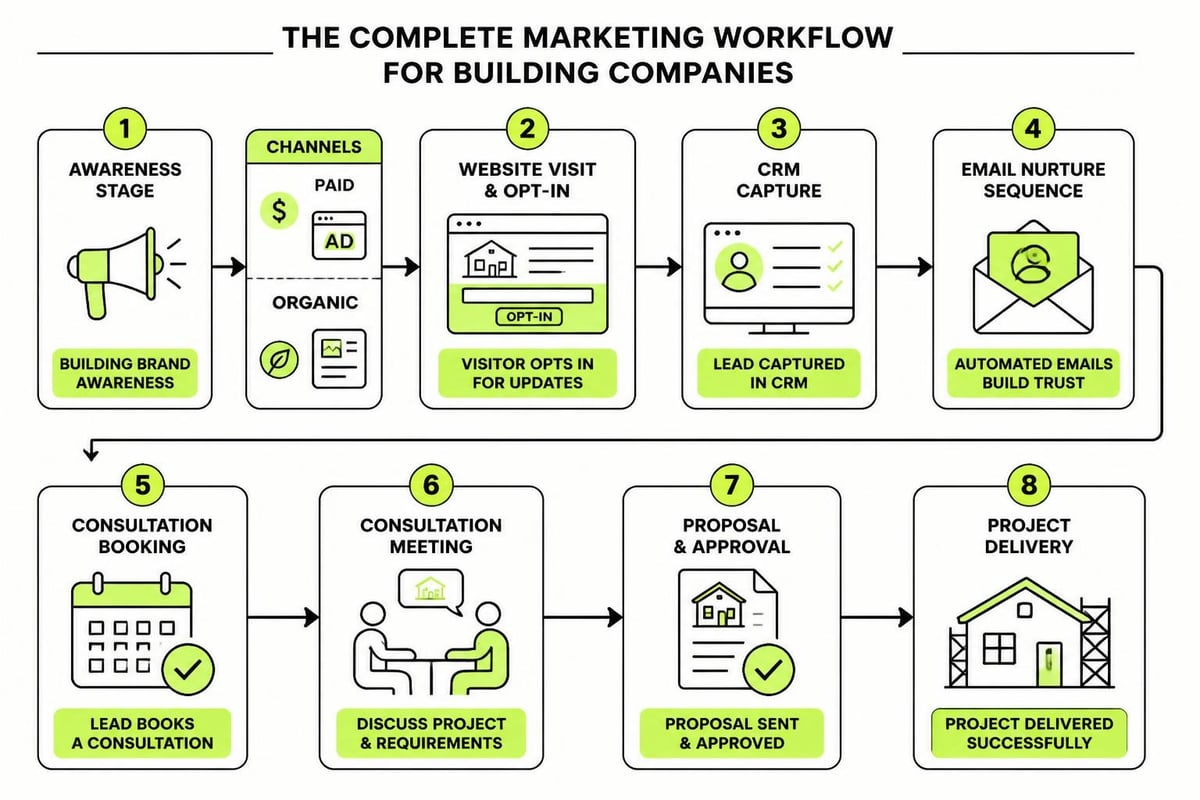
Marketing works when each piece connects to the next. A prospect sees your ad, visits your site, opts in for something useful, gets nurtured until they're ready, then books a consultation. That's a system. Random posts and hoping the phone rings isn't.
Building Your Foundation: Who You're Actually For
Before you spend a dollar on ads or content, get clear on who you serve. Not "homeowners" or "people who need renovations." That's too broad to be useful.
Define Your Ideal Project
What type of work do you want more of? Custom homes? Kitchen renovations? Extensions? Commercial fit-outs? Each requires different messaging, different channels, and different proof points.
Think about:
- Project size and budget range: Are you chasing $50k bathroom renos or $800k custom builds?
- Client demographic: First home buyers, upgrading families, retirees, property developers?
- Geographic area: Tightly defined suburbs or broader regional coverage?
- Project complexity: Standard scope or high-end custom work requiring specialist skills?
The tighter you define this, the easier everything else becomes. Your website can speak directly to that person. Your ads can target them precisely. Your portfolio can showcase exactly what they're looking for. A structured marketing foundation makes every dollar you spend work harder.
Your Website: The Hub That Converts Attention
Your website isn't a brochure. It's the central piece of infrastructure that turns interest into inquiry. Most builder websites fail because they focus on the business instead of the prospect's problem.
What your website needs to do:
- Immediately clarify who you serve and what makes you different
- Show relevant proof through project galleries and testimonials
- Explain your process so prospects know what to expect
- Capture contact details through useful lead magnets
- Make it dead simple to book a consultation or request a quote
Content That Actually Helps
Stop talking about yourself. Start solving problems. Write articles, create guides, publish videos that address the questions prospects actually have. "How much does a kitchen renovation cost in Sydney?" "What permits do I need for an extension?" "How long does a custom build take?"
This content does three things. It builds trust by demonstrating expertise. It improves your search rankings for terms people actually use. And it gives you something to share and promote that isn't just "hire us." Resources like this construction marketing guide show how content fits into a broader strategy.
| Website Element | Purpose | Common Mistake |
|---|---|---|
| Homepage | Clarify who you serve and differentiate | Generic "quality workmanship" claims |
| Services Pages | Detail specific offerings and process | Listing services without explaining approach |
| Portfolio | Prove capability with relevant projects | Random mix of unrelated work |
| About Page | Build trust and credibility | Corporate language instead of human story |
| Contact/Quote | Make next step frictionless | Long forms with too many fields |
Local SEO: Being Found When It Matters
Most building work is local. Someone in Newcastle isn't hiring a builder from Perth. That makes local SEO critical for marketing for builders who want consistent inquiry flow.
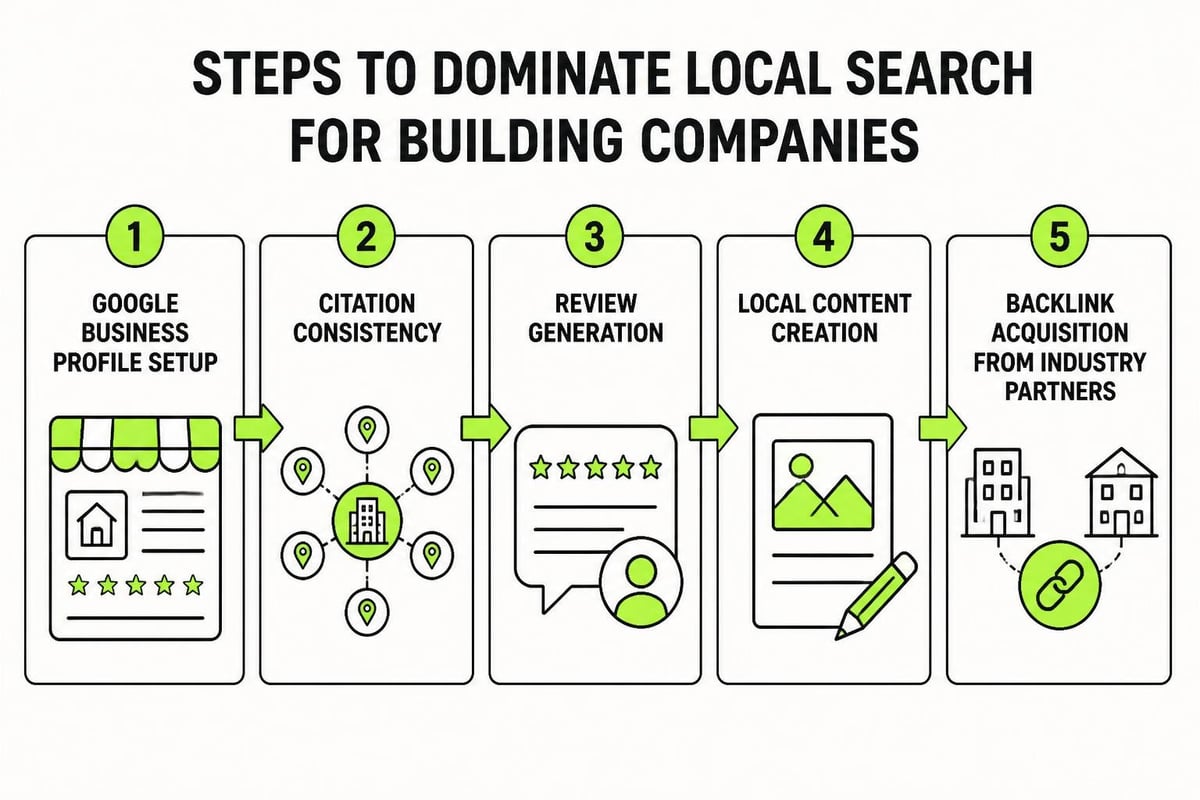
Google Business Profile Optimization
Your Google Business Profile (formerly Google My Business) is often the first thing prospects see. It needs to be complete, accurate, and actively managed.
- Use your primary keyword in your business description naturally
- Select the most specific categories that apply to your work
- Upload high-quality photos of completed projects regularly
- Respond to every review, positive or negative
- Post updates about current projects and company news
Local Link Building and Citations
Search engines verify your business exists by checking consistency across the web. Your name, address, and phone number should be identical on every directory, citation, and platform.
Build relationships with local suppliers, industry associations, and complementary businesses. A link from a local building supply company or architectural firm carries more weight than random directory spam. The digital marketing strategies outlined here emphasize how local relevance compounds over time.
Lead Magnets: Capturing Interest Before They're Ready
Most prospects aren't ready to book when they first find you. They're researching, comparing options, getting quotes. If you don't capture their contact details, they'll disappear and you'll never know they existed.
A lead magnet is something valuable you offer in exchange for an email address. For builders, this might be:
- A detailed cost guide for your specialty (kitchen renos, extensions, new builds)
- A project planning checklist covering permits, timelines, and decisions
- A "choosing the right builder" guide that educates rather than sells
- Before-and-after case studies with budget breakdowns
- Design inspiration lookbooks for specific project types
The best lead magnets solve a specific problem for your ideal client. They demonstrate expertise and begin building trust before any sales conversation happens. Marketing for builders works best when you give before you ask.
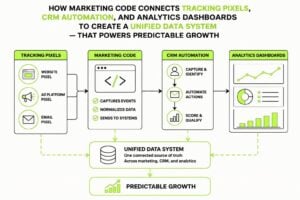
When someone downloads your guide, they enter your CRM. Now you can nurture them with helpful content, project updates, and timely offers until they're ready to move forward. Without this capture mechanism, you're constantly starting from zero.
A framework like the 7-Step Marketing Plan helps you structure this entire process, from defining your ideal client through to generating referrals from completed projects. Each step builds on the previous one, creating a system that consistently fills your pipeline.
Email Nurture: Staying Front of Mind
You've captured a lead. Now what? Most builders do nothing and wonder why conversion rates are terrible. The prospect downloaded your guide three months ago. You never followed up. They hired someone else.
Build a Nurture Sequence
Set up an automated email sequence that delivers value over time. This isn't daily spam. It's a structured series of helpful content that keeps you front of mind.
A basic builder nurture sequence might include:
- Email 1: Deliver the lead magnet and set expectations
- Email 2: Share a relevant case study or project story
- Email 3: Address common concerns or objections
- Email 4: Explain your process and what makes it different
- Email 5: Offer a consultation or quote
Space these out over 2-3 weeks. Between the automated sequence, send regular newsletters with project updates, design ideas, and industry insights. The goal is to be the first builder they think of when they're ready to move.
Paid Advertising: Accelerating Results
Organic marketing through SEO and content takes time. Paid advertising gets you in front of prospects immediately. For marketing for builders, the two main platforms worth your attention are Google Ads and Facebook/Instagram.
Google Ads for High-Intent Searches
Someone searching "custom home builder northern beaches" or "kitchen renovation melbourne" has intent. They're actively looking. Google Ads puts you at the top of those results.
Target specific service-based keywords in your geographic area. Send traffic to dedicated landing pages that match the search intent exactly. If someone searches for bathroom renovations, don't send them to your homepage. Send them to a bathroom reno page with relevant portfolio work, pricing guidance, and a clear next step.
Facebook and Instagram for Awareness
Social ads work differently. People aren't actively searching for a builder. You're interrupting them with something interesting enough to stop scrolling. This works for marketing for builders when you have strong visual content and tight targeting.
Show before-and-after transformations. Highlight unique design solutions. Share client testimonials. Target by location, age, homeownership status, and interests related to home improvement. Resources like these construction marketing strategies show how different channels serve different purposes in your overall system.
| Platform | Best For | Typical Cost | Timeline to Results |
|---|---|---|---|
| Google Ads | High-intent search traffic | $15-40 per click | Immediate traffic, 1-3 months to optimize |
| Facebook/Instagram Ads | Visual storytelling and brand awareness | $1-5 per click | 2-4 weeks to dial in targeting |
| Local SEO | Sustained organic visibility | Time investment + tools | 3-6 months for meaningful rankings |
| Email Marketing | Nurturing existing leads | Minimal (CRM costs) | Ongoing, compounds over time |
Social Proof: Making Trust Visible
People don't trust what you say about yourself. They trust what others say about you. Social proof is how you demonstrate credibility without sounding like a used car salesman.
Reviews and Testimonials
Actively request reviews from happy clients. On Google, on Facebook, on industry-specific platforms. Make it easy by sending a direct link. Follow up a week after project completion when satisfaction is highest.
Display testimonials prominently on your website. Not generic "great work" quotes. Specific testimonials that mention the problem, your solution, and the outcome. Video testimonials carry even more weight.
Case Studies That Tell Stories
A portfolio photo shows what you built. A case study shows how you think and solve problems. Document your best projects with:
- The client's challenge or vision
- Constraints you had to work within (budget, timeline, site conditions)
- Your approach and key decisions
- The finished result with photos
- Client feedback on the experience
This positions you as a strategic partner, not just a pair of hands. It helps prospects imagine working with you and builds confidence before they reach out.
Tracking What Actually Matters
You can't improve what you don't measure. Marketing for builders needs clear metrics that connect to business outcomes, not vanity numbers that feel good but mean nothing.
Track these core metrics:
- Lead sources: Where do inquiries come from? Google, Facebook, referrals, website contact forms?
- Cost per lead: How much are you spending to generate each inquiry?
- Conversion rate: What percentage of leads turn into quotes, and quotes into jobs?
- Project value: What's the average value of a booked job from each source?
- Return on ad spend: For every dollar spent on marketing, how many dollars of revenue come back?
A simple CRM tracks all of this automatically. You can see which marketing channels deliver the best quality leads, where you're wasting money, and what needs more investment. Understanding business and marketing systems helps you build this tracking infrastructure properly from the start.
The Referral System You're Probably Missing
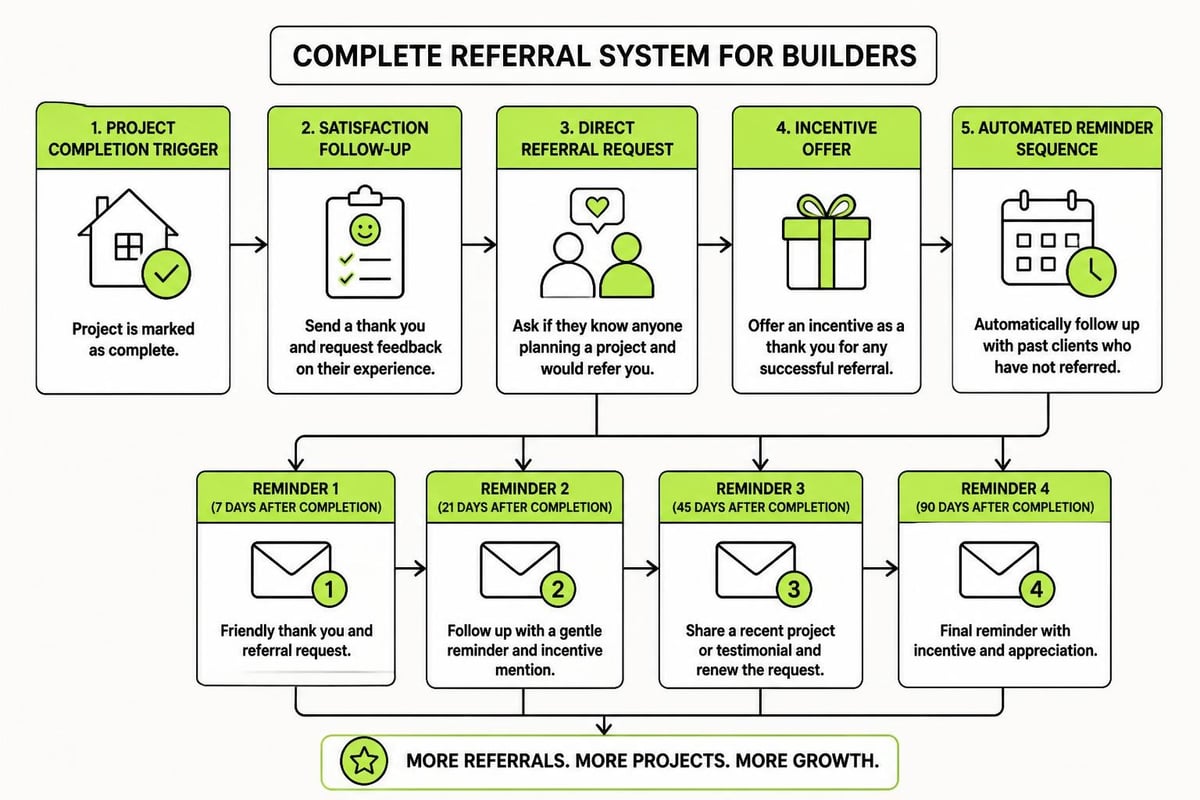
Word of mouth is powerful. But it shouldn't be your only strategy. The best marketing for builders includes a deliberate referral generation system, not just hoping clients remember to recommend you.
Make Referrals Easy and Rewarding
Most satisfied clients would happily refer you. They just don't think about it unless prompted. Build prompts into your process:
- Ask directly at project completion when satisfaction is highest
- Provide referral cards or a simple link they can share
- Offer a meaningful incentive (discount on future work, gift card, donation to their chosen charity)
- Stay in touch after the project so you're top of mind when friends ask for recommendations
The strongest referrals come from recent clients who had an excellent experience. That means the quality of your work and the smoothness of your process are marketing tools themselves. Deliver well, communicate clearly, finish on time, and referrals follow naturally. Practical advice from sources like Chase’s construction marketing ideas confirms that operational excellence and marketing strategy can't be separated.
Common Marketing Mistakes Builders Make
Even builders who invest in marketing often trip over the same preventable problems. Knowing what to avoid saves you time and money.
Stop doing these things:
- Competing on price alone: There's always someone cheaper. Build value instead.
- Inconsistent messaging: Your website says one thing, your ads say another, your proposals say something else.
- No follow-up system: Leads slip through the cracks because you're too busy on-site.
- Ignoring past clients: You spend all your energy chasing new leads and forget about previous customers who'd hire you again.
- Copying what competitors do: Just because another builder runs Facebook ads doesn't mean you should, especially if your ideal client isn't there.
Marketing for builders works when it fits your actual business model, your strengths, and the clients you want to attract. There's no one-size-fits-all template. The best approach combines proven principles with your specific context.
Systemising Your Marketing for Predictable Growth
The difference between builders who consistently have work and those who scramble is systems. Marketing shouldn't depend on whether you remember to post on social media or have time to follow up with leads.
Build simple, repeatable processes for:
- Content creation: One blog post and three social posts per month, scheduled in advance.
- Lead follow-up: Every inquiry gets a response within 2 hours and enters a structured follow-up sequence.
- Review requests: Automated email sent one week after project completion.
- Referral outreach: Quarterly check-in with past clients sharing recent work and asking for introductions.
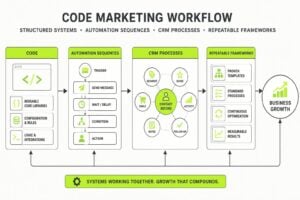
Document these processes. Assign responsibility. Review results monthly and adjust what isn't working. This is how marketing systems create compounding returns instead of starting from zero each month.
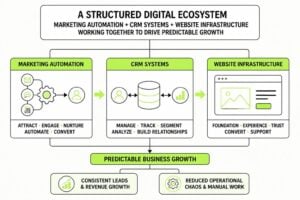
The builders who win long-term don't have the flashiest websites or the biggest ad budgets. They have systems that consistently attract the right leads, nurture them properly, convert them efficiently, and turn them into repeat clients and referrals. That predictability is what allows you to scale without chaos.
Marketing for builders doesn't require a big budget or a marketing degree. It requires clarity about who you serve, a website that converts, and a system that captures and nurtures leads until they're ready to move. If you're tired of inconsistent inquiry flow and want marketing infrastructure that actually works, MDO Digital helps service-based businesses build exactly that. We remove the chaos, protect every lead, and create structured growth that compounds over time.