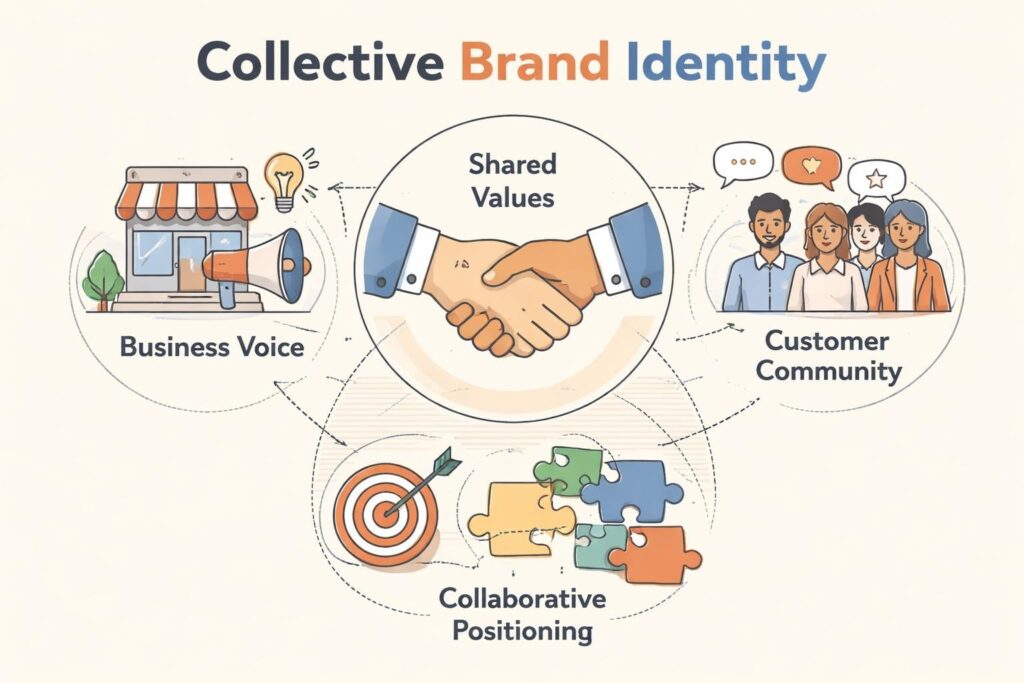
Most service businesses talk about themselves. Their expertise. Their process. Their results. It’s a natural instinct, but it creates distance. When you shift from “I” and “you” to a genuine “we” that includes your customer, something changes. We advertising isn’t about inserting a pronoun. It’s about positioning your brand as part of a shared journey where the customer belongs to something larger than a transaction. This matters in 2026 because trust has become the scarcest resource in marketing, and collective identity builds it faster than any claim about your capabilities.
What We Advertising Actually Means
We advertising refers to brand messaging that positions the business and customer as collaborators working toward a common goal. Instead of presenting your service as something you deliver to a passive buyer, you frame the relationship as a partnership. The customer isn’t purchasing a solution. They’re joining a community, a movement, or a system that makes them part of the outcome.
This approach shows up across different formats:
- Brand voice and website copy that speaks in first-person plural
- Campaign messaging focused on shared values rather than product features
- Community building that gives customers identity and belonging
- Content marketing that positions insights as collective knowledge
The shift sounds subtle, but it changes how people perceive your brand. You’re no longer selling to them. You’re building with them.
How This Differs From Traditional Positioning
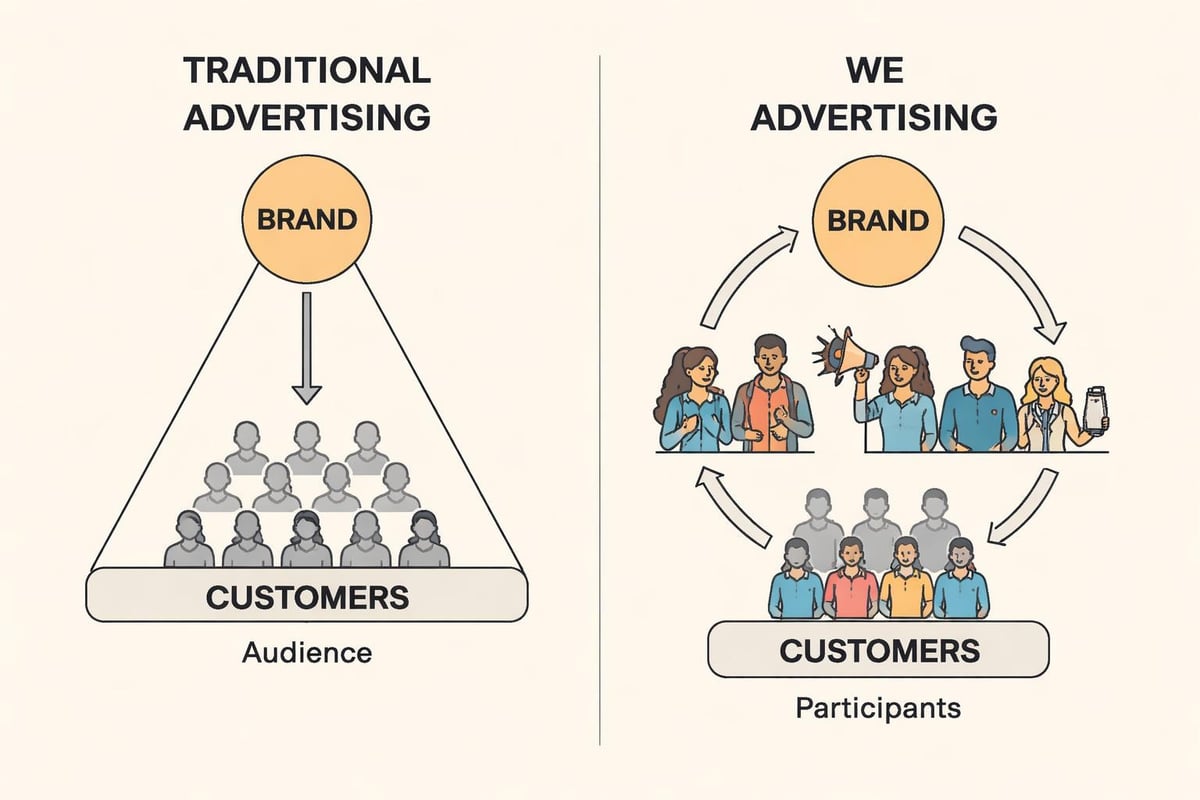
Traditional advertising treats the customer as an audience. You present credentials, highlight differentiation, and demonstrate why they should choose you. It works when trust is high and attention is abundant. Neither condition exists in most markets today.
We advertising flips the dynamic. The customer becomes part of the brand narrative from the first interaction. This doesn’t mean abandoning authority or expertise. It means framing that expertise as a shared resource rather than a competitive advantage you’re granting access to.
| Traditional Approach | We Advertising Approach |
|---|---|
| “We help businesses grow” | “We build systems that scale together” |
| Focus on company credentials | Focus on shared outcomes |
| Customer as buyer | Customer as partner |
| Transactional language | Collaborative language |
| Authority-driven | Community-driven |
The practical difference shows up in conversion behavior. People buy from brands they trust. They stay with brands they belong to.
Why Service Businesses Benefit From This Framework
Service-based businesses sell expertise and outcomes that only materialize over time. You can’t hold the result in your hand before purchase. Trust becomes the entire sales mechanism. When you position yourself as part of the customer’s team rather than a vendor they’re evaluating, you reduce perceived risk.
We advertising works particularly well for businesses with:
- Complex buying cycles where multiple touchpoints precede a decision
- High-ticket services requiring significant commitment and trust
- Ongoing relationships rather than one-time transactions
- Commoditized markets where differentiation through features alone falls flat
For marketing systems and branding work, this framework aligns perfectly. You’re not selling a website or a CRM setup. You’re building infrastructure that becomes part of how the business operates. The customer needs to see themselves in that future state, not just admire your portfolio.
Building Trust Through Shared Language
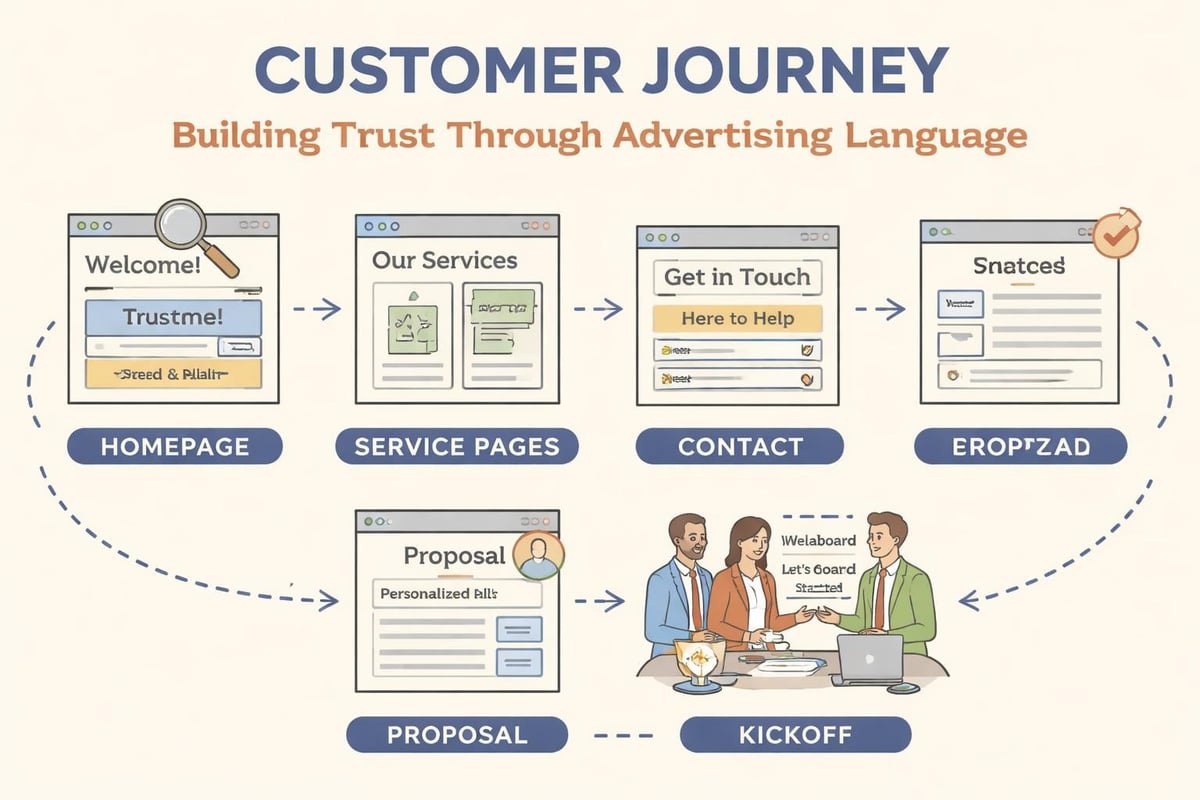
The way you talk about your work shapes how people experience buying from you. When your website, proposals, and client communications consistently use “we” in the context of partnership, it reinforces that you’re not just executing deliverables. You’re investing in their outcome.
This matters in discovery calls, onboarding sequences, and project updates. Instead of “We’ll deliver your new website in six weeks,” you might say “We’ll have your new site live in six weeks, giving us a foundation to build predictable demand.” The pronoun stays the same, but the framing shifts from delivery to collaboration.
This approach connects naturally to how modern digital display advertising and brand campaigns perform. People scroll past claims. They stop for stories where they see themselves.
Implementing We Advertising in Your Marketing Systems
Shifting to this framework isn’t about rewriting everything at once. It’s about adjusting how you position value across your systems. Start where customers first encounter your brand and work through the funnel.
Website Positioning and Messaging
Your homepage sets expectations. Most service businesses lead with capabilities or industry buzzwords. A we advertising approach leads with the outcome the customer wants and positions your role as the infrastructure that gets them there.
Compare these headline approaches:
- Standard: “Marketing Systems and Branding for Growing Businesses”
- We Advertising: “We Build Marketing Systems That Remove Chaos and Create Predictable Growth”
The second version doesn’t abandon expertise. It frames that expertise as something you do together, with shared ownership of the outcome. Your branding and advertising strategy should reflect this collaborative positioning throughout the site.
Key areas to adjust:
- Hero sections that speak to shared goals
- Service descriptions that focus on what “we” achieve together
- Case studies framed as partnerships, not just results
- About pages that explain your approach to collaboration
Email and CRM Communication Flows
Your automation sequences reveal how you actually view the relationship. Transactional language creates distance. Collaborative language builds momentum.
In nurture sequences, replace “We can help you” with “We’ll work together to” or “Let’s build this.” In onboarding emails, shift from “Here’s what we need from you” to “Here’s how we’ll move forward together.”
This isn’t manipulation. It’s accuracy. You genuinely do work together with clients. The language should match the reality of how great client relationships actually function. Your digital branding solutions become more compelling when positioned as collaborative systems rather than deliverables.
Content Marketing and Thought Leadership
Most marketing content positions the business as the expert teaching the audience. We advertising content positions insights as discoveries you’re making together with your market. This shows up in:
- Using “we” to refer to your industry or market, not just your company
- Sharing challenges you’ve solved together with clients
- Presenting frameworks as tools you use together, not proprietary secrets
- Inviting feedback and conversation as part of the learning process
This approach aligns with advertainment principles where the line between education and persuasion blurs. You’re not entertaining to distract. You’re including the audience in the thinking process.
Real-World Applications Across Marketing Channels
Different channels require different executions, but the core framework stays consistent. You’re always positioning the customer as part of the solution, not just the recipient.
Paid Advertising and Campaign Creative
Ad copy has tight character limits. Every word needs to work. We advertising in paid channels means focusing ad copy on the transformation “we” create rather than what “you” get.
Test these variations:
| Standard Ad Copy | We Advertising Version |
|---|---|
| “Get a high-converting website” | “We’ll build a site that converts” |
| “CRM automation for your business” | “Let’s automate your entire pipeline” |
| “Marketing that drives leads” | “We turn attention into predictable demand” |
The second version invites participation. It assumes the reader is already considering partnership. This reduces friction in the decision process because you’re not asking them to evaluate a claim. You’re describing what happens when they join.
Social Media and Community Building
Social platforms reward conversation over broadcast. We advertising fits naturally into how these channels actually work. Instead of posting about your services, share insights about challenges “we” face as an industry. Ask questions about problems “we’re” solving together.
This builds community faster than product-focused content because it gives people something to belong to before they buy anything. Agencies like WE Communications have built global reach partly through this inclusive approach to brand identity.
Practical applications:
- Share client wins as collaborative achievements
- Post behind-the-scenes content showing how “we” work
- Create frameworks and tools for your audience to use alongside you
- Run workshops or challenges that position participants as active contributors
Proposal and Sales Process
Your proposal shouldn’t read like a vendor quote. It should read like a strategic plan you’re presenting to a partner. Replace “We will deliver” with “We’ll build together” or “Our approach gives us.”
The structure stays professional, but the framing shifts. You’re not bidding for work. You’re outlining how the partnership will function. This reduces price sensitivity because the conversation has already moved past vendor selection into execution planning.
Include sections on:
- Shared objectives (what we’re building together)
- Collaborative process (how we’ll work as a team)
- Success metrics (how we’ll measure progress together)
- Investment and timeline (what we need to move forward)
Avoiding Common Mistakes With This Approach
We advertising only works when it’s authentic. If you treat clients like projects and talk like partners, the disconnect destroys trust faster than traditional positioning ever could. Here’s what breaks this framework.
Overuse of “We” Without Substance
Sprinkling “we” into copy without changing your actual approach feels manipulative. Customers notice when language promises collaboration but systems deliver transactions. If your onboarding process, project management, and communication don’t actually involve the client as a partner, don’t position yourself that way.
The fix isn’t better copywriting. It’s operational. Build systems that genuinely involve clients in decisions, progress, and outcomes. Then describe what you already do.
Abandoning Expertise and Authority
Collaborative positioning doesn’t mean pretending everyone’s on equal footing. You have expertise they need. We advertising frames that expertise as a resource you apply together toward their goals, not a credential that makes you superior.
You’re still the guide. You’re just guiding a partner instead of leading a follower. Your marketing systems still require deep knowledge. You’re just applying that knowledge in service of shared success.
Forgetting to Define the “We”
Not every customer wants the same relationship. Some buyers prefer clear vendor/client boundaries. They want you to execute, not collaborate. We advertising works best when you define who “we” includes and exclude people who don’t fit that identity.
This might mean turning away certain prospects. That’s the point. You’re not building a customer base. You’re building a community of people who work well together.
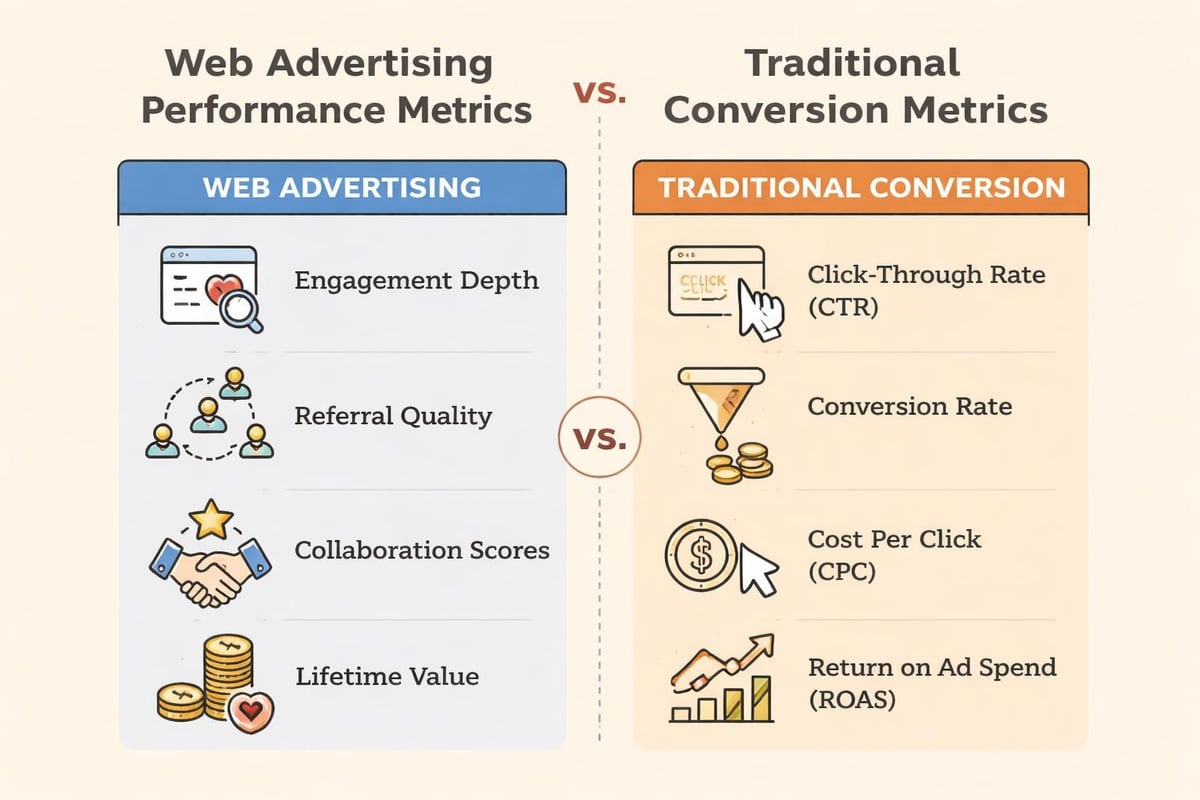
Measuring Impact Beyond Conversion Rates
Traditional advertising metrics focus on click-through rates, conversion percentages, and cost per acquisition. Those numbers matter, but we advertising produces different leading indicators worth tracking.
Engagement depth tells you if people feel included. Time on site, pages per session, email open rates, and content consumption all signal whether your messaging resonates as collaborative or transactional.
Referral quality improves when customers see themselves as part of something worth sharing. We advertising naturally increases word-of-mouth because people refer others to communities they belong to, not just vendors they use.
Project collaboration scores measure how clients actually engage during delivery. Do they respond quickly? Provide feedback? Participate in strategy discussions? High engagement during work predicts retention and expansion better than satisfaction surveys.
Lifetime value and retention compound when relationships feel collaborative rather than transactional. Clients who see you as partners stay longer and buy more because they’re invested in shared outcomes.
These metrics connect back to how online branding actually builds equity over time. Short-term conversion optimization matters less than long-term relationship quality.
Integration With Broader Marketing Strategy
We advertising isn’t a tactic. It’s a positioning framework that influences everything from website development to CRM automation. When implemented well, it becomes the lens through which you make marketing decisions.
Alignment With Content and SEO
Your content strategy should reflect collaborative expertise. Instead of writing to demonstrate knowledge, write to share tools and frameworks readers can use immediately. This positions you as a resource they’re already working with before they become clients.
SEO benefits because this content tends to earn more engagement signals, backlinks, and social shares. People link to useful tools more readily than promotional content.
CRM and Lead Nurture Automation
Your automation sequences should reinforce the partnership positioning at every stage. Welcome emails, nurture tracks, and re-engagement campaigns all need to speak in terms of “we” and shared progress.
Segment contacts based on engagement level and adjust messaging intensity. Highly engaged prospects get more collaborative, detailed communication. Low-engagement contacts get lighter touches that still maintain the positioning without overwhelming them.
Team Training and Client Communication
Your team needs to understand this isn’t just marketing copy. It’s how you actually operate. Sales calls, project kickoffs, status updates, and problem-solving conversations should all reflect the collaborative framework.
This requires training on language, process, and mindset. If your advertising team speaks collaboratively but your delivery team uses transactional language, clients experience whiplash.
Looking at Global Examples of Effective Implementation
While the framework applies universally, execution varies by market and culture. We Advertising in Tel Aviv demonstrates how a 360-degree communication agency positions collaborative creativity across multiple channels and client types.
Similarly, WE Interactive in Singapore shows how digital marketing agencies adapt this positioning to social media and automation, areas where collaborative messaging feels natural.
The common thread across successful implementations is consistency. The positioning shows up everywhere, not just in marketing materials. From how they name their services to how they structure client portals, everything reinforces partnership over vendor relationship.
The Role of Sustainable Practices in We Advertising
Modern buyers, particularly in 2026, care about how businesses operate beyond just outcomes delivered. We advertising extends naturally into operational transparency and shared values. When you position environmental and social responsibility as something “we” care about together, it strengthens identity and trust.
Resources like AdGreen’s case studies show how advertising and marketing agencies implement sustainable production practices. These aren’t just operational improvements. They’re positioning opportunities that align with collaborative brand identity.
Including clients in sustainability initiatives, sharing progress on operational improvements, and inviting feedback on business practices all reinforce the partnership framework while building deeper trust.
We advertising builds trust through collaborative positioning, turning transactions into partnerships and customers into community members. When your brand speaks in terms of shared outcomes rather than delivered services, you create relationships that compound over time. MDO Digital helps service businesses implement these frameworks through high-trust websites, CRM automation, and data-driven marketing systems designed for structured, predictable growth. If you’re ready to remove chaos and build infrastructure that positions your brand as a partner rather than a vendor, let’s talk about how we’ll build it together.