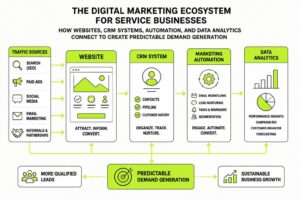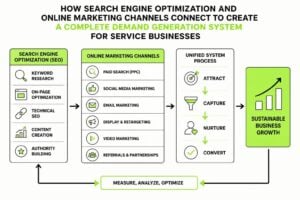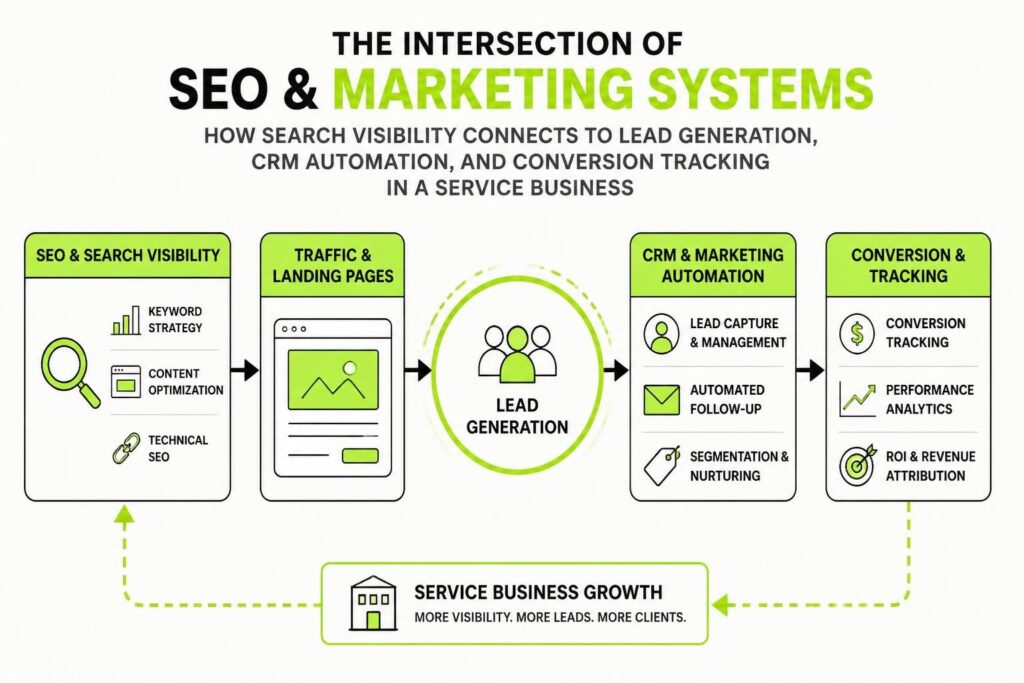
Most service businesses treat SEO and marketing as separate projects. One team chases rankings, another runs ads, and nobody's quite sure what's working. The gap between getting found and getting hired stays wide. Real growth happens when you connect visibility to conversion, when the person searching becomes a qualified lead in your system. That's where SEO and marketing stop being tactics and start being infrastructure.
Why SEO and Marketing Need to Work as One System
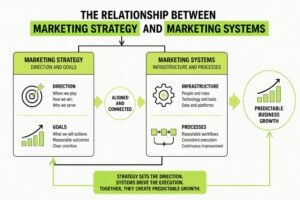
Search visibility without a marketing system is just traffic. Marketing campaigns without organic reach burn cash. The businesses that scale predictably do both, and they connect them properly.
Here's what breaks when they're separated:
- SEO drives traffic that doesn't convert because there's no nurture path
- Paid ads perform well but cost too much without organic support
- Content ranks but doesn't match buyer intent or campaign messaging
- Leads arrive through search with no CRM automation to catch them
- Attribution gets messy because systems don't talk to each other
When SEO and marketing infrastructure work together, you get compounding returns. Organic rankings reduce acquisition costs. Marketing automation converts more of the traffic SEO delivers. Data from both channels informs better targeting and content decisions.
The Three Pillars of Search Authority
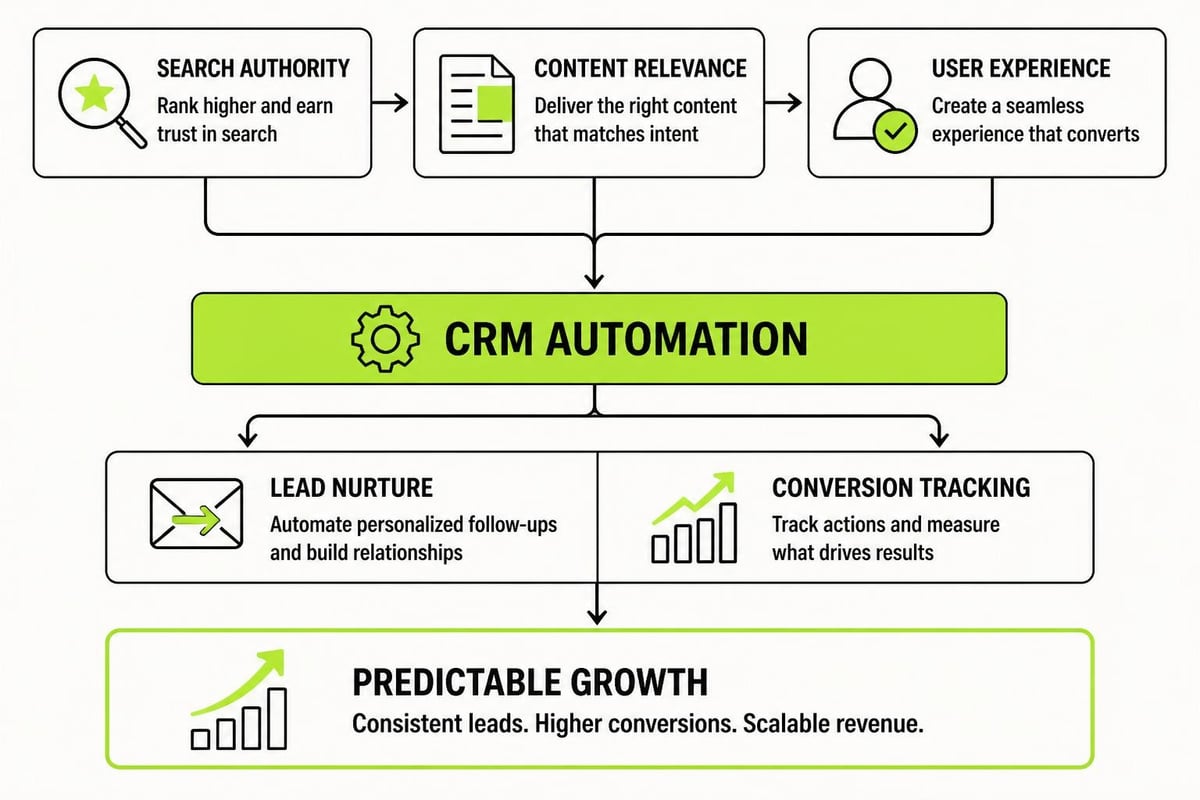
Google doesn't just rank pages anymore. It evaluates entire systems of trust. Authority, relevance, and experience form the foundation of modern search performance, and each pillar connects directly to your marketing execution.
| Pillar | What It Measures | How Marketing Supports It |
|---|---|---|
| Authority | Backlink profile, domain trust, brand mentions | PR campaigns, partnerships, content distribution |
| Relevance | Content alignment with search intent | Buyer research, keyword strategy, content mapping |
| Experience | User signals, engagement, conversion data | CRM tracking, page optimization, lead nurture |
Authority comes from how other sites reference you. That requires outreach, relationships, and content worth linking to. Link building strategies still matter, but the best links come from genuine visibility, not just outreach templates.
Relevance means your content matches what people actually need when they search. Marketing teams who understand buyer stages create content that ranks and converts. You're not just answering questions. You're guiding decisions.
Experience is where most businesses fail. They rank, they get clicks, but the page doesn't deliver what the searcher needs next. No clear call to action. No lead capture. No follow-up system. SEO gets them there. Marketing keeps them moving.
Building the Infrastructure That Connects Traffic to Revenue
Good SEO and marketing share the same foundation: structured systems that protect leads and track outcomes. Here's what that looks like in practice.
Start With Search Intent, Not Keywords
Too many businesses still chase volume keywords without checking what the searcher actually wants. Commercial intent matters more than traffic numbers.
Map your content to buyer stages:
- Awareness stage – Educational content, problem identification, no pitch
- Consideration stage – Comparison content, methodology, proof of concept
- Decision stage – Case studies, pricing clarity, consultation offers
Each stage needs different SEO optimization and different marketing automation. Awareness content should rank broadly and feed email sequences. Decision content should rank for high-intent terms and connect directly to your CRM.
The shift toward AI-generated search results changes this dynamic. Google and other platforms increasingly pull answers from verified sources rather than sending clicks. That means your content needs to establish authority before someone searches, through brand mentions, data credibility, and structured information.
Build CRM and Automation Before Scaling Traffic
Driving more visitors without lead capture infrastructure is expensive. You pay (in time or money) for traffic that disappears because there's no system to convert it.
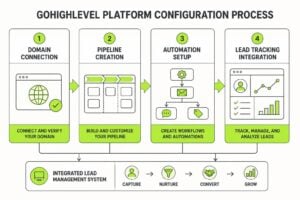
Your automation stack should include:
- Lead capture forms connected to your CRM (not just email)
- Tag-based segmentation so you know which content brought them in
- Email nurture sequences mapped to search intent and buyer stage
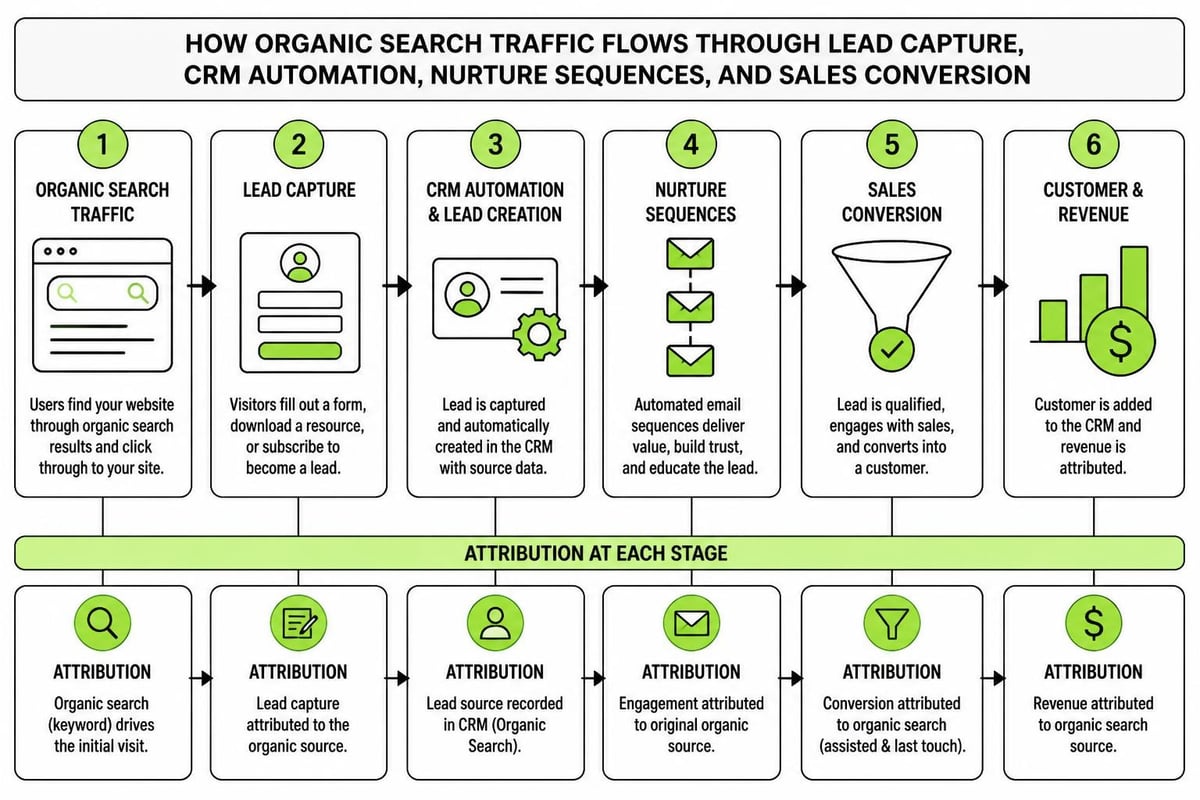
- Attribution tracking that connects organic search to closed deals
- Re-engagement campaigns for leads who go quiet
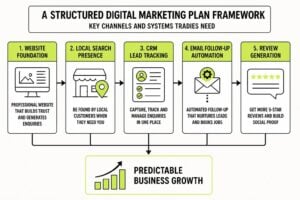
When someone finds you through search, they're usually not ready to hire. They're researching. A properly built 7-Step Marketing Plan ensures you've got the infrastructure to capture, nurture, and convert that interest over weeks or months, not just during their first visit.
This is where SEO and marketing actually become one system. The content that ranks feeds the automation that converts. The CRM data tells you which keywords drive qualified leads, not just traffic.
Create Content That Ranks and Converts
Most businesses think content has to choose: optimized for search or optimized for humans. That's a false split. The best content does both.
Write for the person, structure for the algorithm:
- Use clear headings that match search queries
- Answer the question in the first 100 words
- Include related questions and topics in subheadings
- Add internal links to relevant service pages and related content
- Place calls to action where the reader naturally asks "what's next?"
Google's algorithm rewards content that keeps people engaged and satisfies intent. That aligns perfectly with marketing goals. You want someone to read, understand, and take action.
Outbound links to authoritative sources also matter. Linking to credible research, tools, or industry publications signals that your content is well-researched. It's not about gaming the system. It's about creating genuinely useful resources.
How Modern Search Is Changing the SEO and Marketing Relationship
AI-driven search is rewriting the rules. Traditional SEO focused on ranking for specific queries. Now, search engines synthesize answers from multiple sources, often without sending traffic to any single site.
Agentic Search Optimization Replaces Traditional Tactics
The concept of Agentic Search Optimization introduces a new approach. Instead of optimizing for ten blue links, businesses need to optimize for being the cited source, the verified answer, the trusted reference.
This shifts the focus from individual page rankings to brand authority across platforms. Your business needs to appear in:
- AI-generated summaries and answer boxes
- Industry databases and directories
- Review platforms and trust signals
- Structured data that machines can parse
- Knowledge graphs and entity recognition systems
Marketing supports this by building genuine authority, not just backlinks. PR, partnerships, speaking opportunities, and published data all contribute. SEO ensures that authority is structured, tagged, and discoverable.
Data Verification Becomes a Ranking Factor
When AI tools pull information to answer queries, they prioritize verified, structured data. That means your digital presence needs to include consistent business information, schema markup, and authoritative third-party references.
Checklist for data verification:
- Consistent NAP (name, address, phone) across all platforms
- Verified Google Business Profile with regular updates
- Schema markup for services, reviews, FAQs, and contact info
- Author credentials and expertise signals on content
- Third-party citations from industry publications or databases
This isn't traditional SEO work. It's reputation infrastructure. But it directly impacts visibility in AI-powered search, which is increasingly how your buyers find solutions.
Measuring What Actually Matters in SEO and Marketing
Metrics theatre is rampant. Businesses celebrate traffic growth while revenue stays flat. They obsess over keyword rankings that don't convert. Real measurement connects search performance to business outcomes.
Track the Full Funnel, Not Just Vanity Metrics
| Metric | What It Tells You | Why It Matters |
|---|---|---|
| Organic sessions | Volume of search traffic | Validates visibility, but meaningless without conversion context |
| Keyword rankings | Position for target terms | Useful for tracking progress, not for measuring ROI |
| Conversion rate | % of visitors who opt in or inquire | Shows whether traffic quality matches intent |
| Lead-to-customer rate | % of captured leads who become clients | Reveals whether nurture and sales systems work |
| Cost per acquisition | Total marketing spend / new customers | Compares organic and paid efficiency |
| Customer lifetime value | Revenue per customer over relationship | Justifies investment in long-term SEO strategies |
Your CRM should attribute revenue to source. When you can see that organic search delivers 30% of leads at half the cost per acquisition of paid ads, you make smarter budget decisions.
SEO and marketing metrics should feed the same dashboard. Traffic sources, conversion rates, email engagement, and sales outcomes all need to connect. Otherwise you're flying blind, optimizing for activity instead of results.
Use Qualitative Data to Improve Targeting
Numbers tell you what's happening. Conversations tell you why. The best marketing systems combine both.
Collect insights from:
- Sales call recordings and common objections
- Email replies to nurture campaigns
- Support questions and knowledge gaps
- Customer interviews about their buying journey
- Competitor analysis and positioning gaps
This qualitative research shapes both your SEO content strategy and your marketing messaging. You discover what language buyers actually use, which questions block decisions, and where your positioning resonates or falls flat.
When you write content informed by real conversations, it ranks better (because it matches natural search queries) and converts better (because it addresses genuine concerns). SEO and marketing alignment isn't theoretical. It's practical execution informed by the same customer intelligence.
Building Systems That Compound Over Time
The businesses that win with SEO and marketing aren't chasing tactics. They're building systems that get stronger the longer they run. Published content keeps ranking. Nurtured leads keep converting. Authority keeps compounding.
Invest in Evergreen Assets, Not Just Campaigns
Campaigns have a shelf life. Assets appreciate. The difference is simple: campaigns end, assets keep working.
Evergreen assets include:
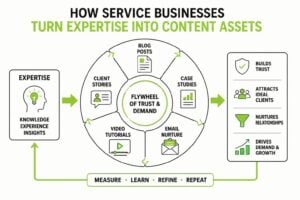
- Comprehensive guides that answer buyer questions
- Tools or calculators that solve specific problems
- Case studies that demonstrate repeatable results
- Templates or frameworks buyers can implement
- Video content that educates and builds trust
These assets rank in search for years. They feed email sequences. They support sales conversations. They establish authority. Every hour spent creating them delivers returns long after publication.
Compare that to most paid campaigns, which stop delivering the moment you stop spending. Both have a place, but businesses that scale predictably invest heavily in assets that compound.
Structure for Iteration, Not Perfection
The best SEO and marketing systems improve continuously. You don't need everything perfect on day one. You need infrastructure that lets you test, measure, and refine.
Build systems that allow:
- A/B testing on landing pages and calls to action
- Content refresh cycles to update and improve ranking pages
- Segmentation experiments in your email nurture sequences
- Keyword expansion based on what's already working
- Attribution analysis to double down on high-value sources
This iterative approach matches how modern marketing evolves. You don't guess what will work. You test, you learn, you optimize. SEO provides the traffic. Marketing systems provide the feedback loop.
Making SEO and Marketing Work for Service Businesses
Service businesses have unique advantages in SEO and marketing. You're selling expertise, not products. Your content can demonstrate competence in ways e-commerce sites can't. But you also need different infrastructure.
Demonstrate Expertise Through Content Depth
Shallow content doesn't convert service buyers. They're hiring you for knowledge and execution. Your content needs to prove you have both.
Show depth through:
- Detailed process breakdowns and methodologies
- Specific examples with real numbers and outcomes
- Technical accuracy that only an expert would include
- Acknowledgment of trade-offs and decision frameworks
- Content that educates even if they don't hire you
This kind of content ranks well because it satisfies search intent thoroughly. It also pre-sells your services by demonstrating capability. When someone reads a comprehensive guide you wrote, then books a call, they're already halfway convinced.
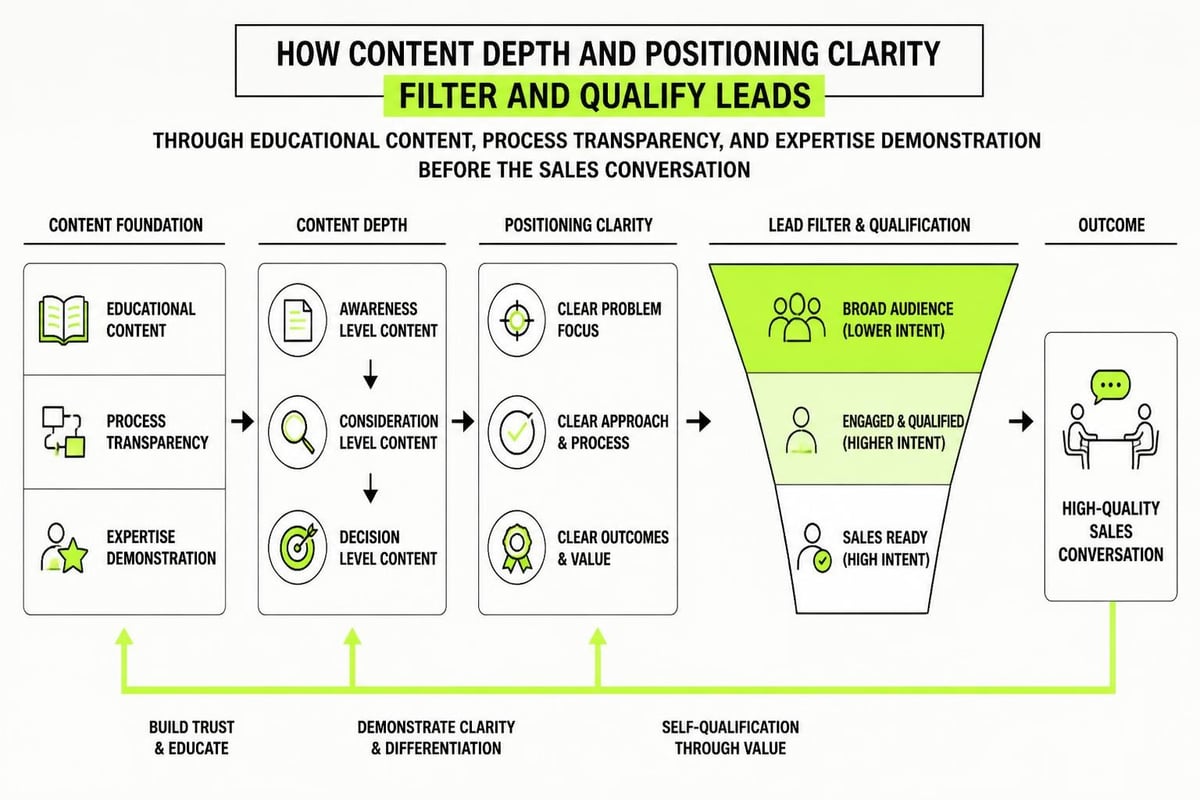
Use Content to Filter and Qualify Leads
Not every visitor should become a lead. Good content attracts the right people and repels the wrong ones. This makes your marketing more efficient and your sales conversations better.
Create content that clarifies:
- Who you work with and why
- What your process requires from clients
- Where your approach differs from competitors
- When prospects should choose you versus alternatives
- How pricing and investment typically work
This transparency improves lead quality. The people who contact you understand your positioning and are more likely to be good fits. Your marketing and business development efforts become more efficient because you're not filtering tire-kickers in sales calls.
SEO and marketing work best when they're not competing for budget or working in silos. The visibility you build through search feeds the conversion systems you run through marketing. The data from your CRM improves your content targeting. It's one system, built to turn attention into predictable demand. If your traffic and leads aren't connecting properly, or you're ready to build infrastructure that actually compounds, MDO Digital helps service businesses design systems that convert search visibility into structured growth.