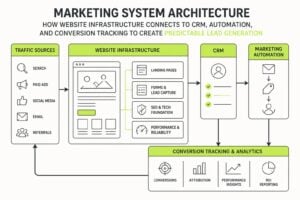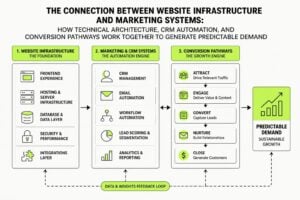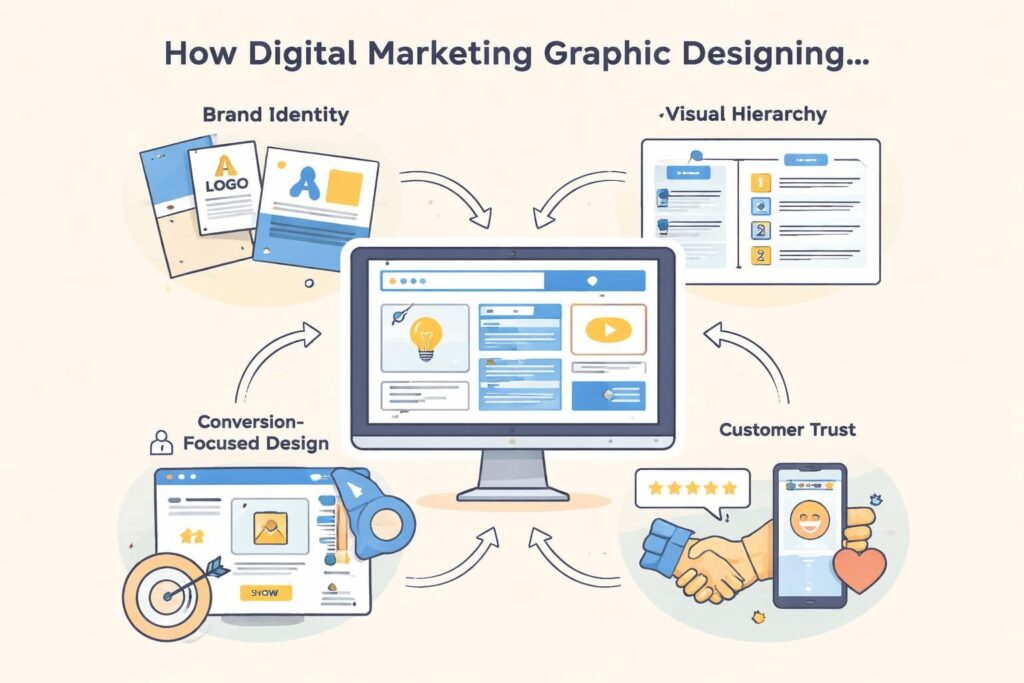
Digital marketing graphic designing sits at the intersection of strategy and visual execution. It's not just about making things look good. It's about building visual systems that guide attention, communicate value, and convert prospects into customers. For service-based businesses, design either builds trust or creates friction. When your graphics align with your marketing objectives, every touchpoint becomes an opportunity to reinforce credibility and move people closer to a decision. When they don't, you waste attention and dilute your message. This article breaks down how to approach digital marketing graphic designing as a system that supports growth, not just decoration.
Why Digital Marketing Graphic Designing Matters for Service Businesses
Service businesses sell outcomes that can't be held or demonstrated before purchase. Trust becomes the primary currency. Your visual identity carries the weight of that trust.
Digital marketing graphic designing establishes credibility before a single conversation happens. When someone lands on your website, sees your social content, or opens an email, they make instant judgments about professionalism, organization, and reliability. Inconsistent visuals signal chaos. Thoughtful, structured design signals competence.
Consider these functions design serves in your marketing:
- Brand recognition across channels and touchpoints
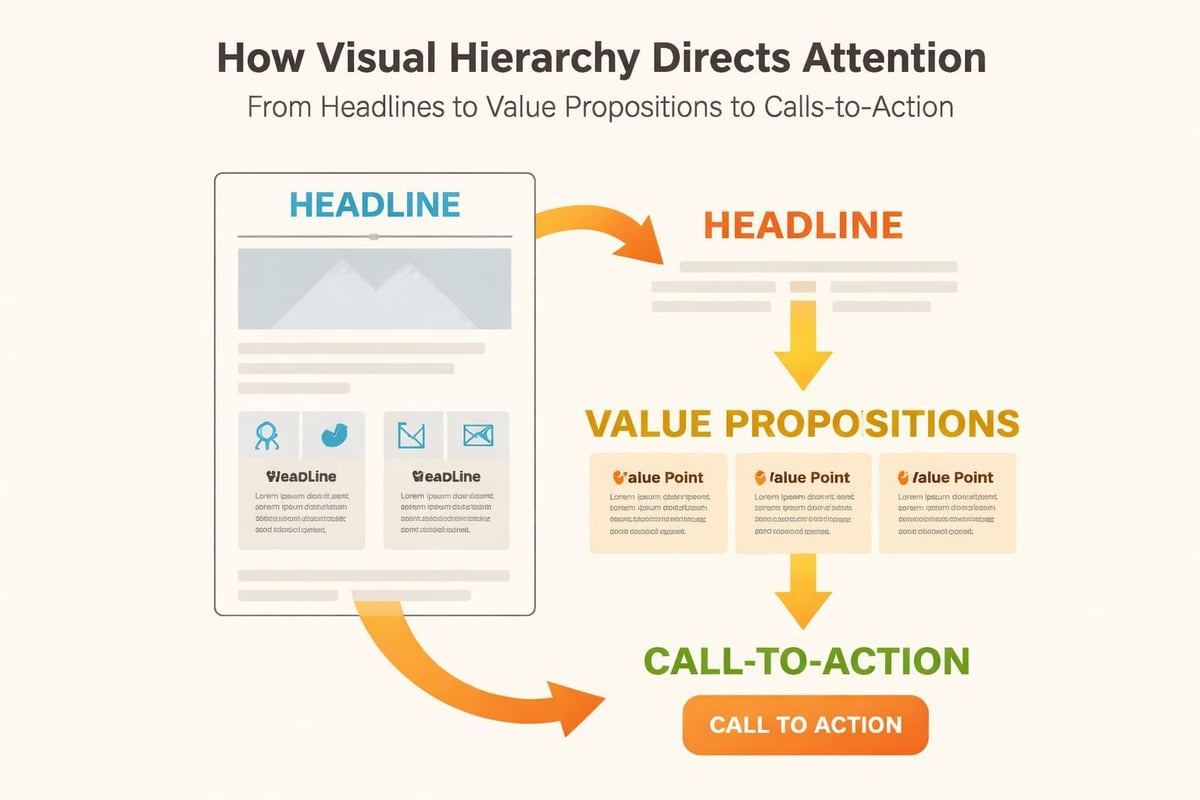
- Visual hierarchy that guides attention to high-value actions
- Information clarity that reduces cognitive load
- Emotional resonance that aligns with your audience's values
- Trust signals through polish and consistency
The gap between amateur and professional design isn't about aesthetics alone. It's about whether your visuals support or undermine your marketing objectives. Graphic design for digital marketers requires understanding both design principles and marketing strategy, creating visuals that serve business outcomes.
The Cost of Poor Design in Marketing Systems
Bad design doesn't just look unprofessional. It creates measurable friction in your conversion path. When graphics confuse, distract, or misalign with messaging, you lose leads who were otherwise interested.
Here's what poor digital marketing graphic designing costs you:
| Problem | Business Impact | Typical Symptom |
|---|---|---|
| Inconsistent branding | Reduced recall and trust | Different logos, colors, fonts across platforms |
| Weak visual hierarchy | Lower engagement and conversions | Users miss CTAs or value propositions |
| Cluttered layouts | High bounce rates | Too many competing elements, no clear path |
| Generic stock imagery | Weak differentiation | Looks like every competitor |
| Poor mobile optimization | Lost mobile traffic | Text too small, buttons hard to tap |
Each of these issues compounds over time. You're not just losing individual opportunities; you're training your market to overlook your brand. Strong branding creates compound returns. Weak design creates compound losses.
Building a Digital Marketing Graphic Design System
Random acts of design don't scale. You need a system that produces consistent, on-brand visuals without starting from scratch each time.
Start with Brand Foundations
Before you design anything for marketing, lock down your visual identity. This isn't about perfection; it's about decisions. Choose and document:
Core visual elements:
- Primary and secondary color palette (with hex codes)
- Typography system (headlines, body, accents)
- Logo usage guidelines and clear space requirements
- Photography or illustration style and tone
- Iconography approach and library
These decisions become your design rails. They speed up execution and ensure consistency whether you're creating an ad, a landing page, or a presentation. Understanding your brand identity provides the foundation for all marketing visuals that follow.
Without these foundations, every design becomes a debate. With them, you're executing within established parameters.
Design for Conversion, Not Just Aesthetics
Digital marketing graphic designing must prioritize function. Beautiful designs that don't convert are expensive decorations. Every visual element should serve a strategic purpose.
Apply this conversion-focused framework:
- Define the action you want users to take
- Establish hierarchy that guides attention to that action
- Remove friction by simplifying choices and reducing clutter
- Build trust through professional execution and relevant imagery
- Test variations to optimize performance over time
Consider a landing page for a service offer. The hero section needs to communicate value instantly. Your digital marketing graphic designing choices here include headline sizing, color contrast for the CTA button, image selection that supports (not distracts from) the message, and whitespace that creates breathing room around key elements.
Best practices for graphic design in digital marketing emphasize purpose-driven design where every visual decision supports the user journey toward conversion. This mindset shift moves design from subjective preference to measurable performance.
Platform-Specific Design Considerations
Different channels have different design requirements. Your digital marketing graphic designing system needs to adapt while maintaining brand consistency.
Social Media Graphics
Social platforms reward native-feeling content. Overly polished ads often underperform authentic-looking posts. Your design approach should match platform culture while still representing your brand.
Platform-specific design adjustments:
| Platform | Format Priority | Design Approach | Key Constraint |
|---|---|---|---|
| 1200×627 link previews | Professional, data-driven | Conservative audience | |
| 1080×1080 square posts | Visual-first, lifestyle | Saturated competition | |
| 1200×630 shared links | Clear headlines, benefit-focused | Older demographic | |
| Twitter/X | 1200×675 cards | Text-readable at small sizes | Fast scroll speed |
Each platform also has technical specs for file size, aspect ratios, and text overlay limits. Build templates that work within these constraints rather than reformatting every time. Strong digital marketing requires platform fluency, not just generic graphics.
Email Design That Actually Gets Read
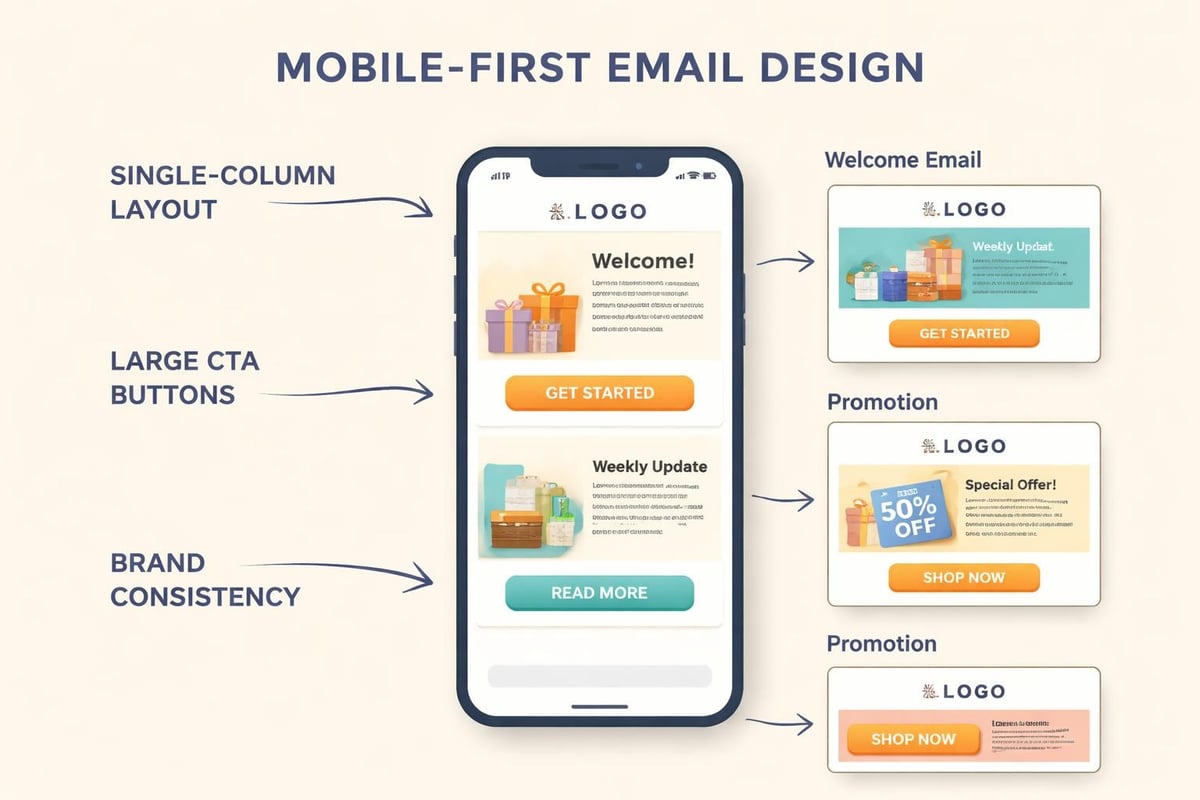
Email inboxes are hostile environments. Your digital marketing graphic designing for email needs to work in preview panes, on mobile devices, and with images turned off.
Design emails with these constraints:
- Mobile-first layouts with single-column structures
- Large, tappable CTAs (minimum 44×44 pixels)
- Alt text for all images since many clients block by default
- Text-based fallbacks for key messages
- Consistent header branding for instant recognition
Too many service businesses treat emails like miniature websites. That approach fails. Email design should be simple, scannable, and focused on one primary action. Every additional element reduces the effectiveness of your main CTA.
Typography and Readability in Marketing Materials
Typography carries your message. Poor type choices make even good content hard to consume. Digital marketing graphic designing requires understanding how people actually read digital content.
Choosing Fonts That Work
You don't need hundreds of fonts. You need a small, well-selected system that creates clear hierarchy without visual chaos.
A practical font system includes:
- One headline font (can be distinctive, brand-expressive)
- One body font (readable, neutral, easy on eyes)
- One accent font (optional, used sparingly for emphasis)
Sans-serif fonts generally perform better for digital marketing graphic designing because they remain readable at small sizes and on screens. Serif fonts can work for headlines or premium brand positioning but often struggle in body copy on mobile devices.
Graphic design best practices include testing readability across devices before committing to a typography system. What looks sophisticated on your desktop might become illegible on a phone screen.
Hierarchy Through Type
Size, weight, and spacing create visual hierarchy without adding complexity. Your digital marketing graphic designing should make scanning effortless.
Establish a type scale:
- H1 (Main headline): 32-48px, bold weight, short
- H2 (Section headers): 24-32px, medium/bold weight
- H3 (Subsections): 18-24px, medium weight
- Body copy: 16-18px, regular weight, 1.5-1.7 line height
- Small text: 12-14px, regular weight, limited use
This hierarchy guides attention naturally. Users should be able to scan your content and extract key points without reading every word. That's not laziness; it's how people consume digital content. Your design systems need to accommodate actual reading behavior.
Color Psychology and Application
Color isn't decoration. It communicates meaning, creates emphasis, and influences emotional response. Your digital marketing graphic designing color choices affect everything from brand perception to conversion rates.
Building a Functional Color Palette
Most service businesses need a restrained palette. Three to five colors is usually sufficient.
Structure your palette this way:
- Primary brand color: Used for logos, main CTAs, headers
- Secondary color: Supports primary, creates variation
- Accent color: Draws attention to specific elements
- Neutral palette: Grays for text, backgrounds, borders
- Alert colors: Success (green), warning (yellow), error (red)
Each color should serve a function. Random color use creates visual noise. Creating clean designs means disciplined color application where each hue has a job.
Test your palette for accessibility. Contrast ratios matter for readability, especially for users with visual impairments. WCAG standards require minimum contrast ratios between text and backgrounds. This isn't just compliance; it's ensuring your message reaches everyone.
Color Application for Conversion
Certain colors drive action better than others, but context matters more than universal rules. A red CTA button might convert well for one brand and poorly for another based on surrounding colors and brand associations.
Testing reveals what works for your audience:
- Run A/B tests on CTA button colors
- Track engagement on different color schemes
- Measure conversion rate changes when adjusting prominence
- Monitor how color affects time on page and scroll depth
Your digital marketing graphic designing should evolve based on data, not assumptions. What theoretically should work and what actually performs are often different. The businesses that win are the ones who test and refine continuously.
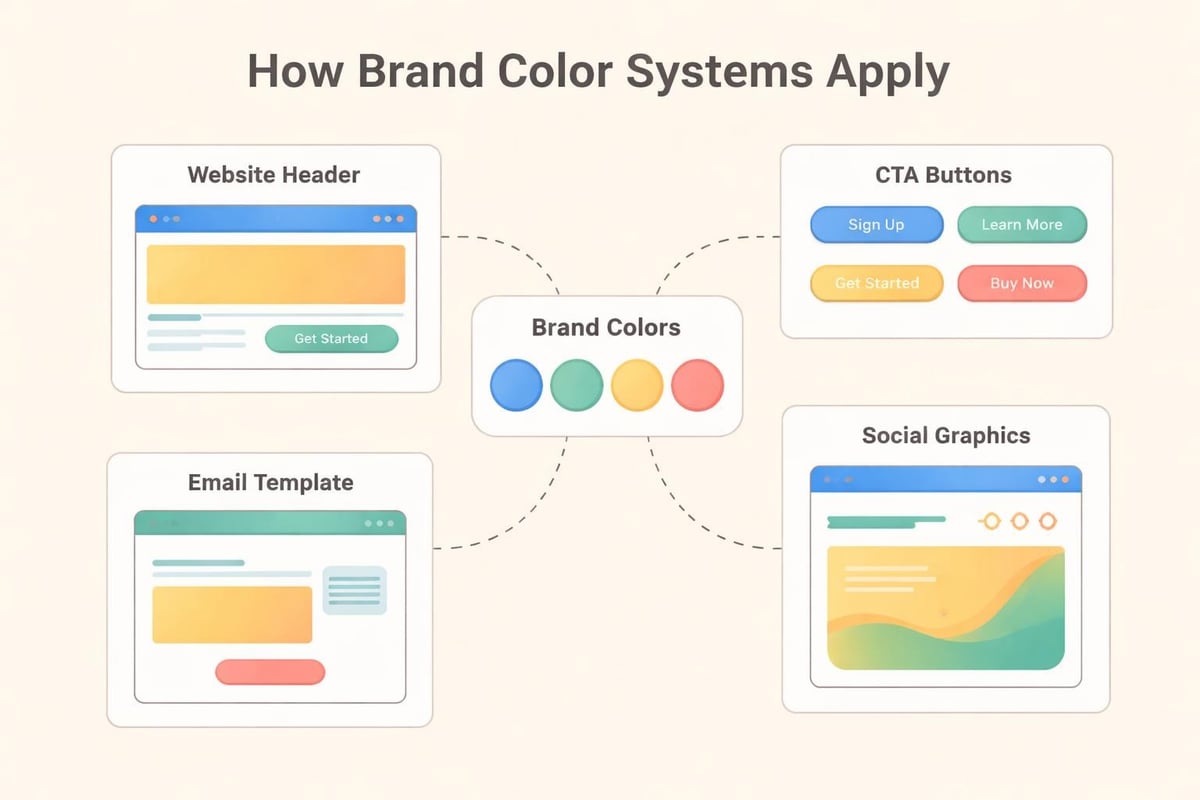
Image Selection and Optimization
Stock photos are everywhere, which means they communicate nothing distinctive. Your digital marketing graphic designing needs imagery that supports your message without looking like every competitor.
Moving Beyond Generic Stock Photography
Service businesses face a challenge: their product is intangible. Photography needs to communicate outcomes, processes, and professionalism without literal product shots.
Better approaches than generic stock:
- Custom photography of your team, workspace, or process
- Illustrated graphics that visualize concepts
- Screenshot examples of your work or results
- Client-provided imagery (with permission) showing outcomes
- Data visualizations and infographics
- Behind-the-scenes process documentation
The goal isn't perfection. It's authenticity and relevance. A genuine photo of your actual team will outperform a polished stock image of models pretending to collaborate. Marketing graphic design that feels real builds more trust than design that feels manufactured.
Technical Optimization
Beautiful images that load slowly hurt more than they help. Digital marketing graphic designing requires balancing visual quality with performance.
Image optimization checklist:
- Export at appropriate dimensions (not larger than display size)
- Compress without visible quality loss (tools like TinyPNG)
- Use modern formats (WebP for web when supported)
- Implement lazy loading for below-fold images
- Provide alt text for accessibility and SEO
Page speed affects both search rankings and conversion rates. Users abandon slow sites. Every second of load time costs you attention and revenue. Your website design should prioritize performance alongside aesthetics.
Maintaining Consistency Across Marketing Channels
Brand consistency builds recognition. Recognition builds trust. Trust drives conversions. Your digital marketing graphic designing system needs to ensure visual coherence everywhere your brand appears.
Creating Design Templates
Templates aren't limitations; they're accelerators. Pre-built structures let you produce on-brand content quickly without reinventing layouts each time.
Essential template library:
| Asset Type | Variations Needed | Update Frequency |
|---|---|---|
| Social media posts | 3-5 layouts per platform | Monthly review |
| Email templates | Welcome, newsletter, promotion | Quarterly update |
| Ad creatives | Multiple formats, sizes | Per campaign |
| Landing pages | Lead gen, sales, content | As needed |
| Presentation decks | Client, internal, sales | Annually |
These templates embed your brand foundations, ensuring consistency even when different team members create content. They also reduce decision fatigue and speed up execution. Understanding graphic design rules for brands helps you build templates that maintain quality and consistency.
Brand Guidelines That Actually Get Used
Comprehensive brand books that no one reads don't help. Your digital marketing graphic designing guidelines need to be accessible, practical, and easy to follow.
Make guidelines functional:
- Keep documentation in shared, searchable locations
- Include visual examples, not just written rules
- Provide downloadable assets (logos, fonts, templates)
- Show correct usage alongside common mistakes
- Update based on questions that arise in practice
The best guidelines anticipate real-world scenarios. Address things like "What if our logo needs to go on a dark background?" or "How do we handle co-branding with a partner?" These practical answers prevent inconsistency before it happens.
Testing and Iterating Design Performance
Digital marketing graphic designing isn't a one-time project. It's an ongoing optimization process. The designs that perform best emerge through testing and refinement.
What to Test
Everything can be tested, but focus on high-impact elements first. Changes that affect conversion rates deserve priority over aesthetic preferences.
High-value testing opportunities:
- CTA button colors, sizes, and copy
- Hero image selection and placement
- Headline sizing and positioning
- Form field quantity and layout
- Mobile versus desktop layout approaches
- Email subject line visual elements (emojis, spacing)
Track both quantitative metrics (conversion rate, click-through rate, time on page) and qualitative feedback (user recordings, heatmaps, session replays). Numbers tell you what's happening. Recordings show you why. When you understand how digital marketing and branding work together, you design with intent and measure what matters.
Building a Design Feedback Loop
Improvement requires systematic learning. Your digital marketing graphic designing should get better over time as you accumulate data about what resonates with your specific audience.
Create a feedback system:
- Document design decisions and reasoning
- Track performance metrics against objectives
- Collect user feedback through surveys or interviews
- Review analytics to identify drop-off points
- Implement improvements based on findings
- Repeat the cycle continuously
This isn't bureaucracy; it's learning infrastructure. Service businesses that optimize their visual systems based on real performance data outpace competitors relying on guesswork. Your marketing systems should include design as a core component, not an afterthought.
Tools and Resources for Efficient Design Production
You don't need to be a trained designer to produce effective digital marketing graphic designing. The right tools and frameworks make professional output accessible.
Design Platforms for Non-Designers
Modern design tools have democratized visual creation. Platforms like Canva, Figma, and Adobe Express provide templates and guardrails that prevent common mistakes.
Choosing design tools:
- Canva: Best for quick social graphics, presentations, simple layouts
- Figma: Better for web design, prototyping, collaborative work
- Adobe Express: Good middle ground with Adobe integration
- Photoshop/Illustrator: Professional tools with steeper learning curves
The tool matters less than having a system. Pick one platform, learn it properly, and build your template library within it. Switching tools constantly wastes time and creates inconsistency. Practical graphic design tips emphasize mastering fundamentals over chasing new software.
When to Bring in Professional Design Help
Some design work requires professional execution. Knowing when to handle internally versus when to hire out saves money and improves results.
Hire professional designers for:
- Logo and core brand identity development
- Website design and UX architecture
- Complex infographics or data visualization
- Video editing and motion graphics
- Print materials requiring production files
Handle internally with templates for:
- Social media posts and routine graphics
- Email newsletters using established templates
- Simple promotional graphics and ads
- Presentation decks for internal use
- Basic photo editing and optimization
This division of labor lets you maintain quality on strategic assets while moving quickly on tactical execution. Your digital marketing graphic designing system should accommodate both approaches.
Digital marketing graphic designing builds the visual infrastructure that supports every customer touchpoint. When you approach design as a system rather than isolated projects, you create consistency that compounds into brand recognition and trust. The service businesses that grow predictably are the ones who understand that design isn't decoration but a strategic tool that either supports or undermines their marketing objectives. If you need help building marketing systems that integrate design, messaging, and conversion architecture into a coherent growth engine, MDO Digital works with service businesses to remove chaos and create structured systems that protect leads and drive predictable demand.