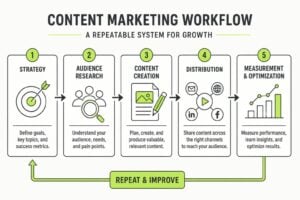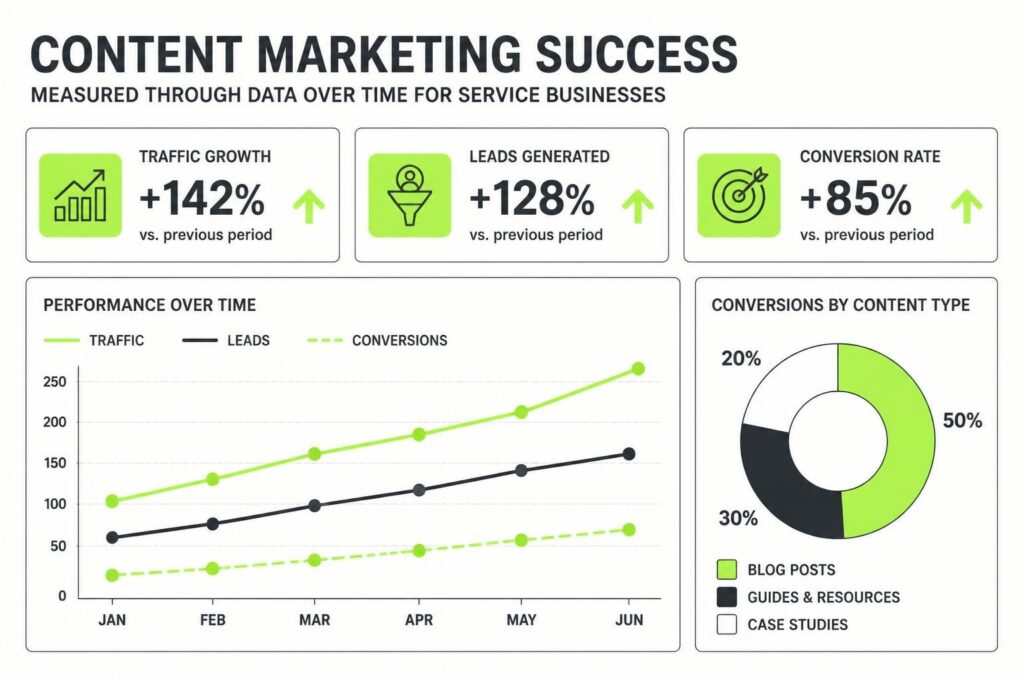
Most businesses start content marketing with good intentions and vague hopes. They publish blogs, share insights, and wait for results that never quite materialise. The difference between content that generates leads and content that disappears into the void isn't creativity or budget. It's structure, measurement, and a willingness to learn from what actually works. Content marketing case studies strip away the theory and show you the mechanics of success. They reveal the systems, timelines, and specific decisions that turned publishing into predictable demand.
Why Content Marketing Case Studies Matter More Than Theory
Reading another "10 tips for better content" article won't change your results. You need evidence. You need proof that specific approaches work in specific contexts, with real numbers attached.
Content marketing case studies provide three things theory can't:
- Actual timelines showing how long results take to materialise
- The relationship between effort, investment, and return
- Mistakes and pivots that shaped the final outcome
When you study real campaigns, you notice patterns. Businesses that succeed with content don't just write more. They build systems that connect content to CRM infrastructure, track every interaction, and optimise based on data rather than gut feel.
The gap between a blog that gets read and one that generates revenue is measurement. Without proper tracking and marketing systems that connect content to conversion, you're just publishing into the dark.
What Separates Winning Content From Wasted Effort
Most content marketing case studies share common threads. Winners didn't stumble into success. They followed structured approaches, tested consistently, and protected every lead that came through.
| Success Factor | What It Looks Like | What It Prevents |
|---|---|---|
| Clear buyer persona | Content speaks to specific pain points | Generic messaging that resonates with no one |
| CRM integration | Every download, click, and email tracked | Lost leads and missed follow-up opportunities |
| Defined metrics | Traffic, conversion rate, revenue per piece | Vanity metrics with no business impact |
| Consistent publishing | Weekly or fortnightly schedule maintained | Momentum loss and audience drift |
The businesses featured in top content marketing case studies didn't just create content. They built repeatable systems that turned attention into trackable demand.
Case Study Breakdown: How Service Businesses Scale With Content
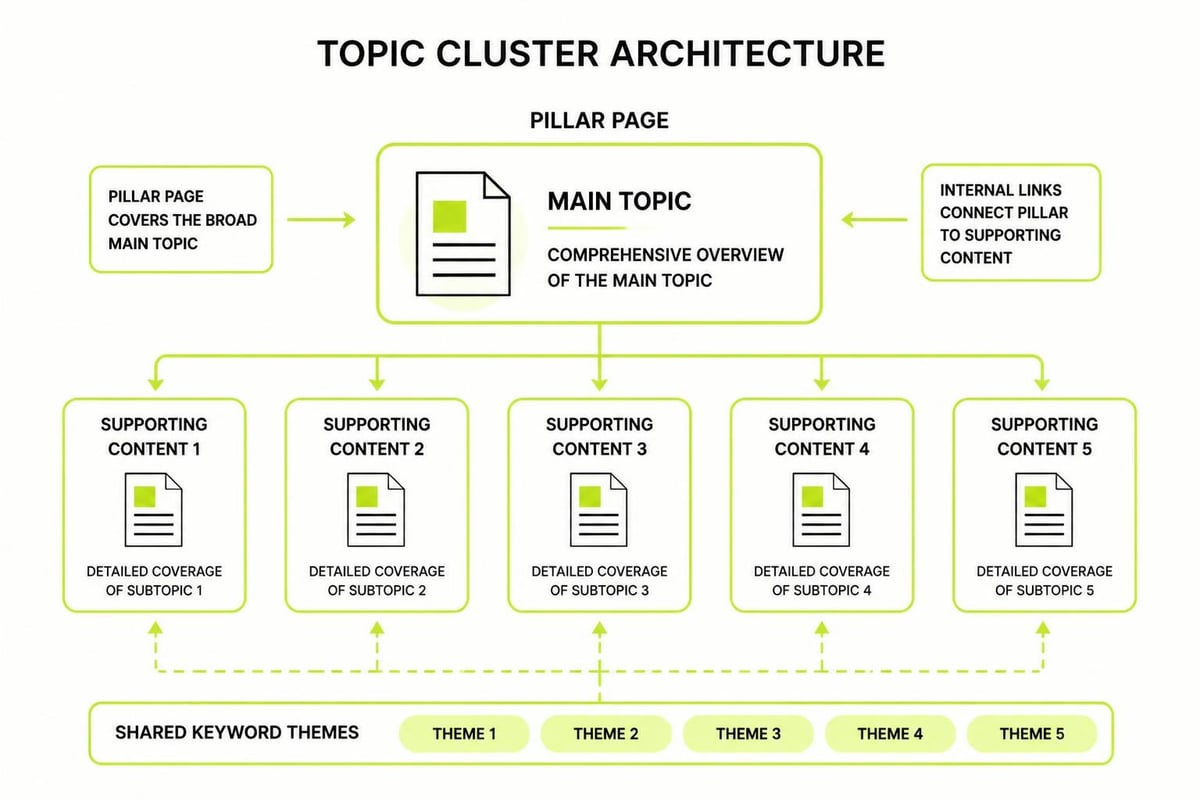
Looking at actual numbers changes how you think about content. When AppSumo achieved 843% organic traffic growth through strategic content, they weren't just writing better headlines. They mapped content to search intent, built topic clusters, and created internal linking structures that Google rewarded.
The GE Sealants Content Program
GE Sealants saw a 117% increase in organic traffic through sustained content efforts. Their approach wasn't revolutionary. It was disciplined.
Their content system included:
- Keyword research tied to actual buyer questions
- Technical content that educated rather than sold
- Regular publishing schedule maintained over 18 months
- Performance tracking with monthly optimisation
- Internal linking strategy that built topical authority
The lesson here isn't "create technical content." It's "build a system that publishes consistently, measures everything, and iterates based on data." That's the difference between hoping content works and knowing it does.
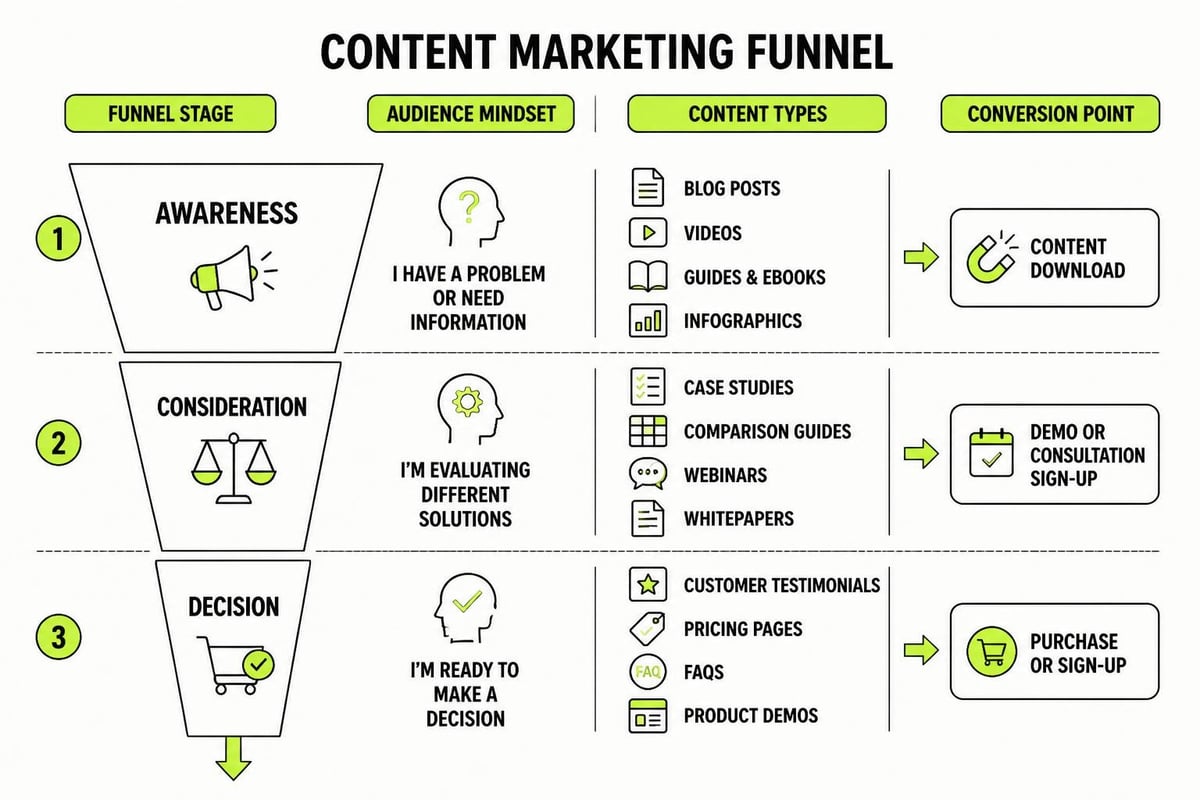
Pipedrive increased revenue by 39% focusing on bottom-of-funnel content. They didn't chase traffic. They created comparison guides, implementation tutorials, and decision-making frameworks for people ready to buy. When you track content performance properly, you discover that 100 visitors with high intent outperform 10,000 casual browsers every time.
Bottom-of-Funnel Content That Converts
Service businesses often waste resources on awareness content while ignoring buyers ready to commit. Grizzle’s case studies demonstrate how targeted content at the decision stage drives disproportionate revenue.
Content types that convert for service businesses:
- Comparison guides addressing "your service vs competitors"
- Implementation roadmaps showing exactly what working together looks like
- Case studies with specific numbers and timelines
- Pricing transparency content that qualifies leads before contact
- FAQ pages that answer objections directly
This approach requires CRM infrastructure that tracks which content leads consume before converting. Without that data, you're guessing what works.
Building Content Systems That Compound Over Time
One-off viral posts don't build businesses. Systems do. The most impressive content marketing case studies share a common trait: they built infrastructure before chasing volume.
HubSpot didn't become a category leader through luck. They created educational content systematically, building topical authority through interconnected content clusters that answered every question a prospect might ask.
The Infrastructure Behind Successful Content
Before you write another word, you need these systems in place:
| System Component | Purpose | Without It |
|---|---|---|
| Editorial calendar | Plans topics, formats, and publishing dates | Random publishing with no strategic direction |
| Keyword tracking | Monitors rankings and search volume | No idea what's working or declining |
| CRM integration | Connects content consumption to lead behavior | Can't attribute revenue to specific content |
| Lead magnets | Converts readers into trackable contacts | Anonymous traffic with no follow-up path |
| Nurture sequences | Educates and qualifies leads automatically | Manual follow-up that doesn't scale |
These aren't nice-to-haves. They're the difference between content marketing and content publishing. When you examine successful content marketing case studies, the infrastructure always precedes the results.
A practical framework helps here. The structured approach of defining your buyer persona, choosing the right platform, creating opt-in offers, and building proper CRM integration creates a flywheel that generates leads consistently.
Measuring What Actually Matters in Content Marketing
Vanity metrics kill more content programs than poor writing. When you track the wrong numbers, you optimise for the wrong outcomes.
Metrics That Predict Revenue
Forget page views. Focus on metrics that connect to business outcomes:
- Conversion rate by content type (which formats generate leads)
- Time to conversion (how long content nurtures before sale)
- Revenue per piece (which topics attract high-value clients)
- Organic visibility (rankings for buyer-intent keywords)
- Lead quality score (how well content qualifies prospects)
The content marketing case studies from Optimist showing 49x LLM revenue didn't happen by accident. They tracked micro-conversions, tested formats relentlessly, and killed content that didn't perform.
Real measurement requires connecting your content platform to your CRM. Every download, every email click, every page view should build a profile of prospect intent. When someone reads your pricing page three times, your CRM should flag them for outreach.
This level of tracking isn't paranoid. It's professional. Service businesses live or die on lead quality, and content without measurement generates noise, not qualified demand.
Content Strategy for Service-Based Businesses
Service businesses face different content challenges than product companies. You can't just showcase features. You need to build trust, demonstrate expertise, and qualify leads before they reach your calendar.
Effective service business content addresses:
- Specific industry pain points using client language
- Process transparency showing how you work
- Outcome evidence through detailed case studies
- Educational resources that solve real problems
- Clear next steps that segment by intent level
When DataVantage revamped their website and content approach through strategic content marketing, they didn't just improve user experience. They created content pathways that guided different buyer types through appropriate educational journeys.
Topic Selection That Matches Buyer Journey Stages
Random topics based on what you feel like writing about won't work. Map content to actual buyer stages.
| Buyer Stage | Content Type | Example Topics | Goal |
|---|---|---|---|
| Problem Aware | Educational blog posts | "Why leads disappear after contact" | Build authority, capture email |
| Solution Aware | Comparison guides | "CRM vs spreadsheets for lead tracking" | Position your approach |
| Product Aware | Case studies, process guides | "How we built a marketing system for X" | Demonstrate capability |
| Most Aware | Pricing, onboarding info | "What to expect in month one" | Remove friction, book calls |
This structure forces discipline. Every piece serves a purpose in moving prospects toward decision.
The brands that succeed in content marketing case studies across B2B sectors all segment content by buyer stage. They don't publish everything for everyone.
Building Authority Through Consistent Execution
Publishing twice then disappearing is worse than never starting. Every successful content marketing case study involves sustained effort over 12-24 months minimum.
Mahlkönig reclaimed digital authority by becoming the definitive source for commercial grinder buying decisions through comprehensive content strategies. They didn't write one great article. They systematically answered every question their buyers asked.
The Publishing Cadence That Actually Works
Consistency beats frequency. Weekly mediocre content outperforms monthly perfection because search engines and audiences reward reliability.
Realistic publishing schedules for service businesses:
- One in-depth article (1500+ words) per week
- Monthly comprehensive guide (3000+ words)
- Quarterly major content piece (case study, research, tool)
- Weekly social content repurposing blog insights
- Fortnightly email nurture sequence additions
This pace is sustainable with proper systems. Without editorial calendars, content briefs, and quality standards documented, you'll burn out or drift off schedule.
The businesses featured in compelling content marketing case studies from With Content didn't wing it. They built repeatable processes that produced quality content regardless of whether the founder felt inspired that week.
Content Distribution and Amplification
Creating brilliant content that nobody sees is common. Distribution matters as much as creation, yet most businesses publish and pray.
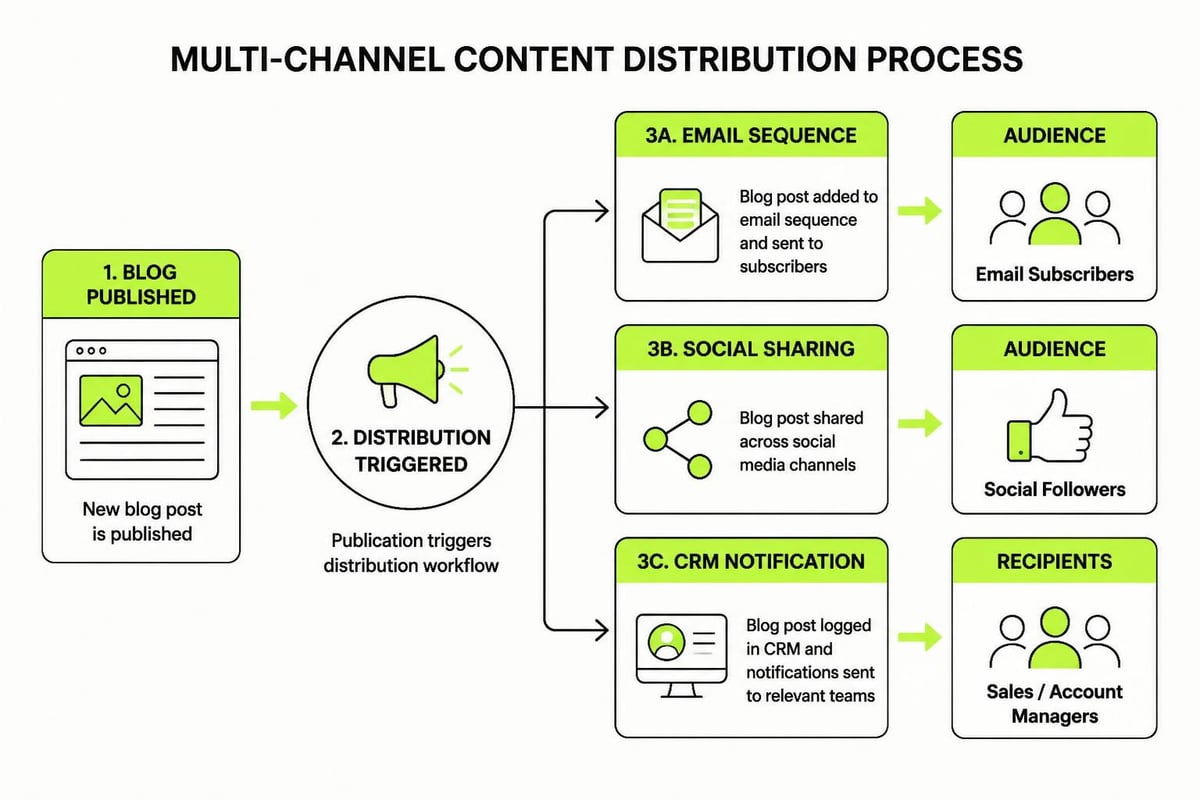
Multi-Channel Distribution Framework
Your content should work across channels simultaneously:
- Owned channels: Blog, email list, website resources
- Earned channels: SEO, backlinks, media mentions
- Shared channels: LinkedIn, industry forums, partnerships
- Paid channels: Targeted promotion of top performers
When Reebok rebuilt their brand through content, they didn't just publish. They amplified strategically, using paid distribution to seed content, then let organic sharing and SEO take over.
Service businesses often neglect email distribution. Your existing contacts and past clients are your warmest audience. Every new piece should reach them first, with personalised context based on their CRM profile.
Testing, Learning, and Optimising Content Performance
The first version of your content strategy will be wrong. That's fine. What matters is having infrastructure to measure, test, and improve.
Successful content marketing case studies always include a testing component:
- Headline variants to improve open and click rates
- CTA placement testing for conversion optimisation
- Content format experiments (long-form vs short, video vs text)
- Topic angle testing (problem-focused vs solution-focused)
- Distribution timing to find optimal publishing windows
Track everything. Your CRM should show you which content pieces prospects consumed before converting. That data tells you what to create more of and what to kill.
The gap between businesses that grow through content marketing and those that waste resources is simple: measurement. Without data, you're just publishing content and hoping something sticks.
Common Patterns Across Winning Case Studies
After reviewing dozens of content marketing case studies, clear patterns emerge. Winners share specific approaches that separate them from businesses still struggling to see results.
Shared characteristics of high-performing content programs:
- Clear documentation of buyer personas with actual research
- CRM infrastructure tracking content consumption to conversion
- Editorial calendars planned minimum 90 days ahead
- Quality standards preventing rushed, thin content
- Regular performance reviews with documented learnings
- Budget allocation for content promotion, not just creation
- Team accountability with specific metrics and deadlines
None of this is sexy. All of it works. The businesses achieving real results through content don't chase trends. They build systems that produce quality consistently, measure everything ruthlessly, and optimise based on evidence.
When you study real content marketing case studies from credible sources like Thestacc’s analysis, you notice the absence of hacks or shortcuts. It's strategy, systems, and sustained execution.
Making Content Marketing Case Studies Relevant to Your Business
Reading about AppSumo or HubSpot is interesting. Applying their lessons to your service business requires translation.
Questions to ask when studying any case study:
- What was their starting position compared to mine?
- What infrastructure did they have in place before scaling?
- How did they connect content to revenue measurement?
- What was their actual timeline from start to results?
- What mistakes did they make that I can avoid?
Don't copy tactics. Extract principles. A SaaS company's content strategy won't map directly to your branding agency or consultancy, but the underlying systems will.
The principle of "create bottom-of-funnel content first" applies whether you sell software or services. The specific format and topics change, but the strategy of prioritising high-intent content remains constant.
Building Your Own Case Study Worth Sharing
The best way to understand content marketing case studies is to create your own. That requires systems, discipline, and enough time to generate meaningful data.
Steps to build a content program that produces results:
- Define success metrics tied to actual revenue, not traffic
- Map buyer journey with specific content for each stage
- Build measurement infrastructure connecting content to CRM
- Create editorial calendar with topics mapped to keywords and intent
- Publish consistently following documented quality standards
- Track everything from rankings to conversion paths
- Review monthly and optimise based on performance data
- Document learnings to build institutional knowledge
This process takes 12-18 months before you have data worth sharing. That's reality. Anyone promising faster results is selling you something that won't work.
Service businesses that commit to structured marketing and business development through content always outperform those chasing quick wins. Compounding beats urgency every time.
Content marketing case studies prove that structured, measured approaches beat random publishing every time. The difference between content that builds your business and content that wastes your time is infrastructure: clear buyer personas, CRM integration, consistent measurement, and documented optimisation. If you're ready to build marketing systems that convert attention into predictable demand rather than hoping your next blog post goes viral, MDO Digital can help you create the structure that makes content marketing actually work for service businesses.