Most service businesses run marketing like a collection of separate tasks. Someone posts on social media. Another person sends an email. The website sits unchanged for months. Ads run independently of everything else. It works, sort of, until you realize prospects see five different versions of your business depending on where they find you. This fragmented approach bleeds trust, wastes budget, and makes growth unpredictable. Blending marketing solves this by creating unified systems where every channel, message, and touchpoint works together. Not just consistent branding, actual integration where data flows, messaging aligns, and each piece strengthens the others.
What Blending Marketing Actually Means
Blending marketing is the practice of connecting all your marketing channels, systems, and messages into a cohesive whole. It extends beyond marketing communications to include the infrastructure that supports those communications.
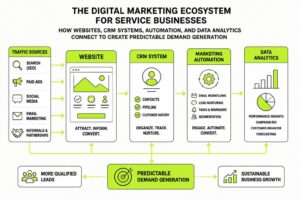
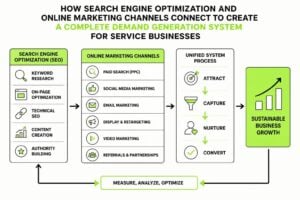
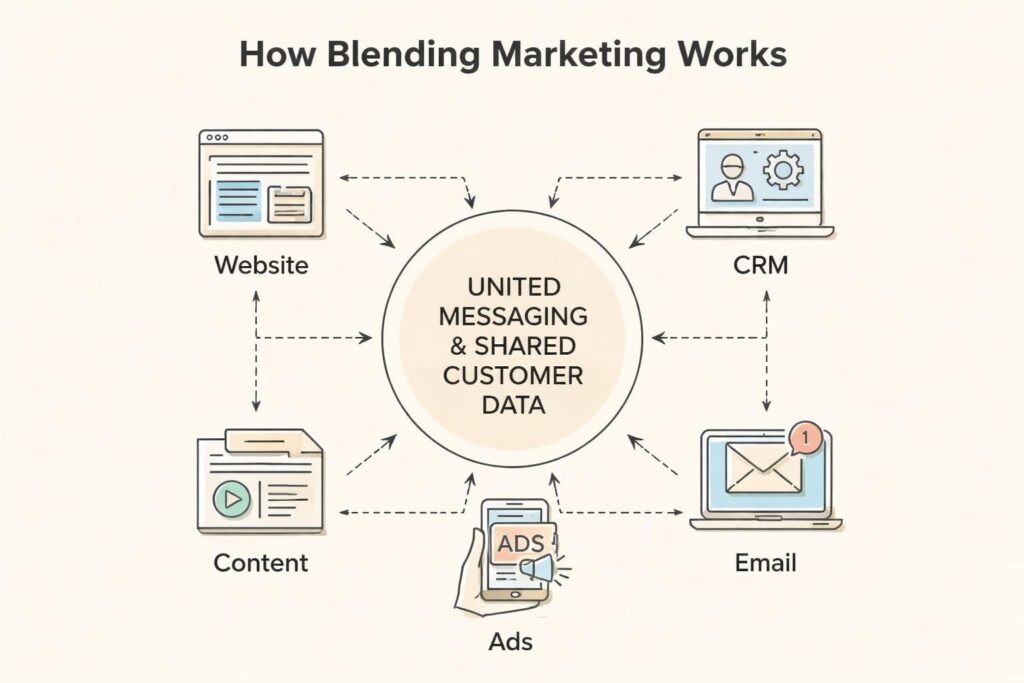
Think of it as the difference between having six separate tools and having six tools that talk to each other. Your website captures leads. Your CRM stores them. Your email platform nurtures them. Your ads retarget them. Your content educates them. When these operate independently, you're guessing. When they blend together, you're measuring, optimizing, and scaling.
The Core Components
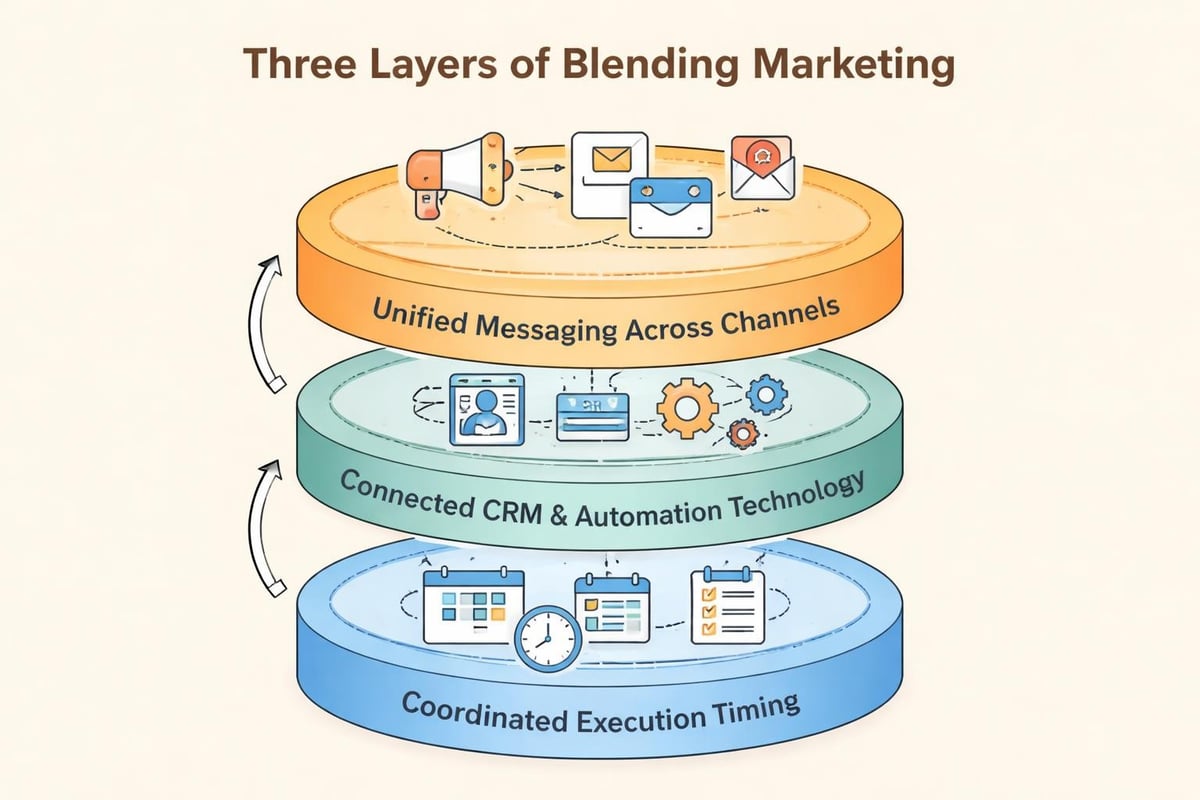
A blended marketing system requires three layers:
- Unified messaging across all touchpoints
- Connected technology that shares data between platforms
- Coordinated execution where timing and sequencing matter
The messaging layer ensures your brand voice, positioning, and value proposition remain consistent whether someone reads your LinkedIn post, visits your website, or opens an email. The technology layer connects your website forms to your CRM, your CRM to your email platform, and your email platform to your ad retargeting. The execution layer coordinates when each piece activates so prospects experience a logical journey rather than random touches.
Why Service Businesses Need Blended Systems
Service businesses sell expertise, which means trust matters more than product features. You can't hold a consulting engagement in your hand or test drive strategy work. Prospects evaluate you through cumulative exposure to your marketing.
Each isolated touchpoint creates friction:
- Your website promises custom solutions, your email talks about packages
- Your ads highlight speed, your content emphasizes thoroughness
- Your sales calls reference case studies that don't exist on your site
- Your CRM has incomplete data because forms aren't connected
These gaps don't just confuse prospects. They signal disorganization. If you can't keep your own marketing aligned, why would someone trust you to organize their business growth?
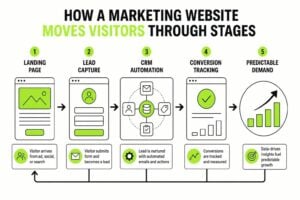
Blending marketing removes these contradictions. When someone downloads your guide, your CRM captures it. When they visit your pricing page, your email sequence adjusts. When they click your ad, they land on a page that continues the exact conversation the ad started. Every step reinforces the previous one.
Building Your Blended Marketing Foundation
Start with the infrastructure, not the tactics. Most businesses do this backwards, they launch campaigns before their systems can support them.
Connecting Your Core Systems
Your foundation needs four connected pieces:
| System | Purpose | Key Integration |
|---|---|---|
| Website | Capture and qualify leads | Form submissions to CRM |
| CRM | Store and segment contacts | Contact data to email platform |
| Email Platform | Nurture and convert leads | Engagement data back to CRM |
| Analytics | Measure and optimize | Track conversions across all channels |
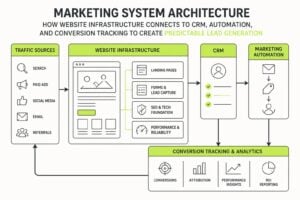
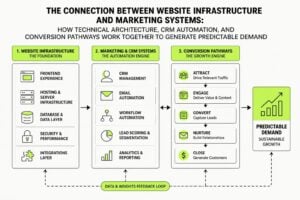
These aren't separate tools that happen to exist in your business. They're components of one system. When someone fills out a contact form, that information should flow automatically to your CRM, tag them based on what they requested, trigger a relevant email sequence, and record the source so you know which marketing channel worked.
At MDO Digital, we see businesses run campaigns with broken handoffs between these systems. The ad works. The landing page converts. Then the lead sits in a spreadsheet for three days because nobody connected the form to the CRM. Blending marketing means removing every one of those gaps.
Creating Message Consistency Across Channels
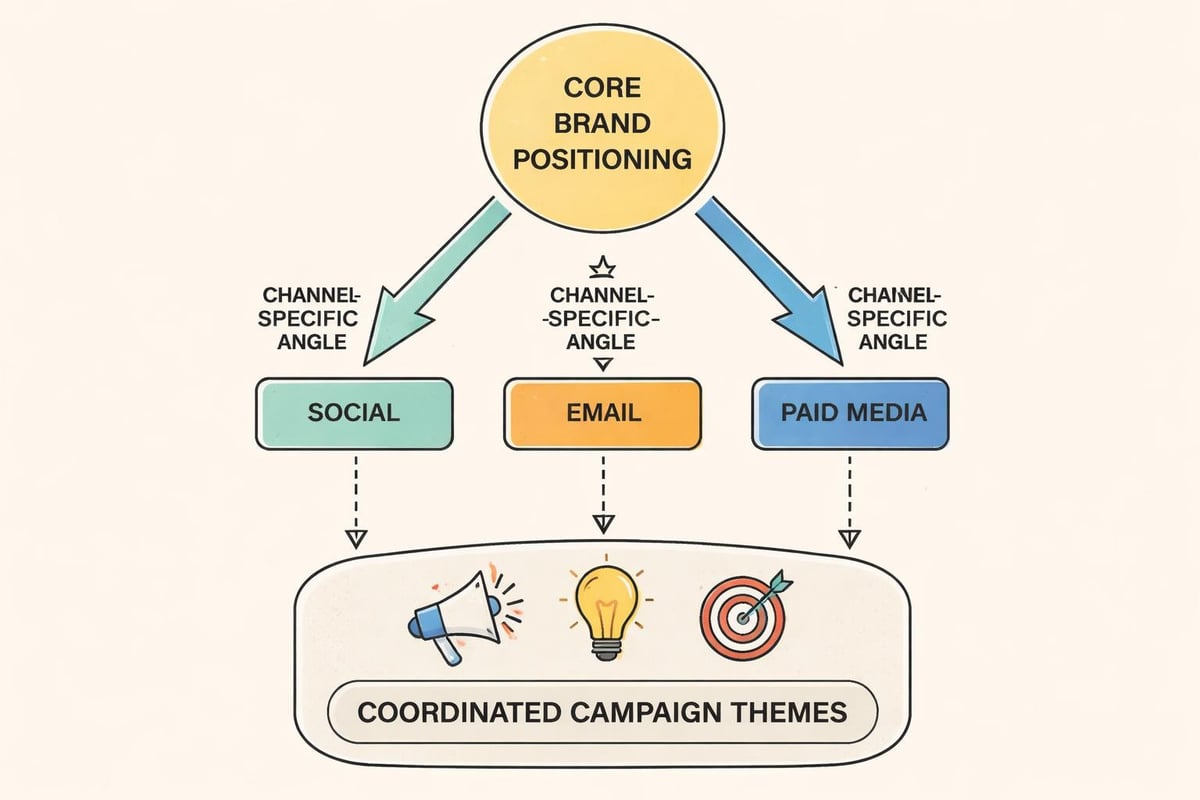
Consistent messaging doesn't mean repeating yourself. It means your positioning, tone, and core value proposition remain recognizable across every channel while the specific content adapts to context.
Map your message hierarchy:
- Core positioning: The fundamental problem you solve and how you're different
- Channel-specific angles: How that positioning translates to LinkedIn vs email vs website
- Campaign themes: Specific topics or offers that cycle through your channels
- Tactical content: Individual posts, emails, or pages that execute the theme
Your branding establishes the core positioning. Everything downstream should connect back to it. If your positioning focuses on removing chaos from marketing operations, your LinkedIn posts discuss operational problems, your emails teach systems, your website showcases process, and your case studies prove results. Different formats, same foundation.
The Technology Stack for Blended Marketing
You don't need expensive enterprise software. You need tools that integrate and a clear data flow between them.
Essential Integrations
Website to CRM: Every form submission, download, or contact request flows directly into your CRM with source tracking. No manual exports. No spreadsheets. No delay.
CRM to Email: Contact records, tags, and segment data sync bidirectionally. When someone's status changes in your CRM, their email sequence adjusts. When they engage with an email, that activity updates their CRM record.
Analytics to Everything: Your analytics platform tracks behavior across your website, email, and ads, connecting that activity back to specific contacts and revenue outcomes.
Most businesses already own these tools. They just haven't connected them. The marketing systems work exists in the integration layer, the boring technical setup that makes everything else possible.
Automation That Enhances Blending
Automation isn't about removing humans from marketing. It's about ensuring consistent execution that would be impossible manually.
Consider what happens when a prospect downloads your service guide:
- CRM receives contact information with source tag
- Email sequence begins with relevant first message
- Contact gets tagged for retargeting ads
- Sales notification triggers if they meet qualification criteria
- Analytics records conversion and attributes it to traffic source
This five-step response happens in seconds. Manually, it might happen incompletely over three days, if at all. Blending marketing through automation means nothing falls through the cracks.
Coordinating Execution Across Channels
Having connected systems matters little if you still treat each channel as an independent project. True blending marketing requires coordinated execution where channels reinforce each other.
Campaign-Level Integration
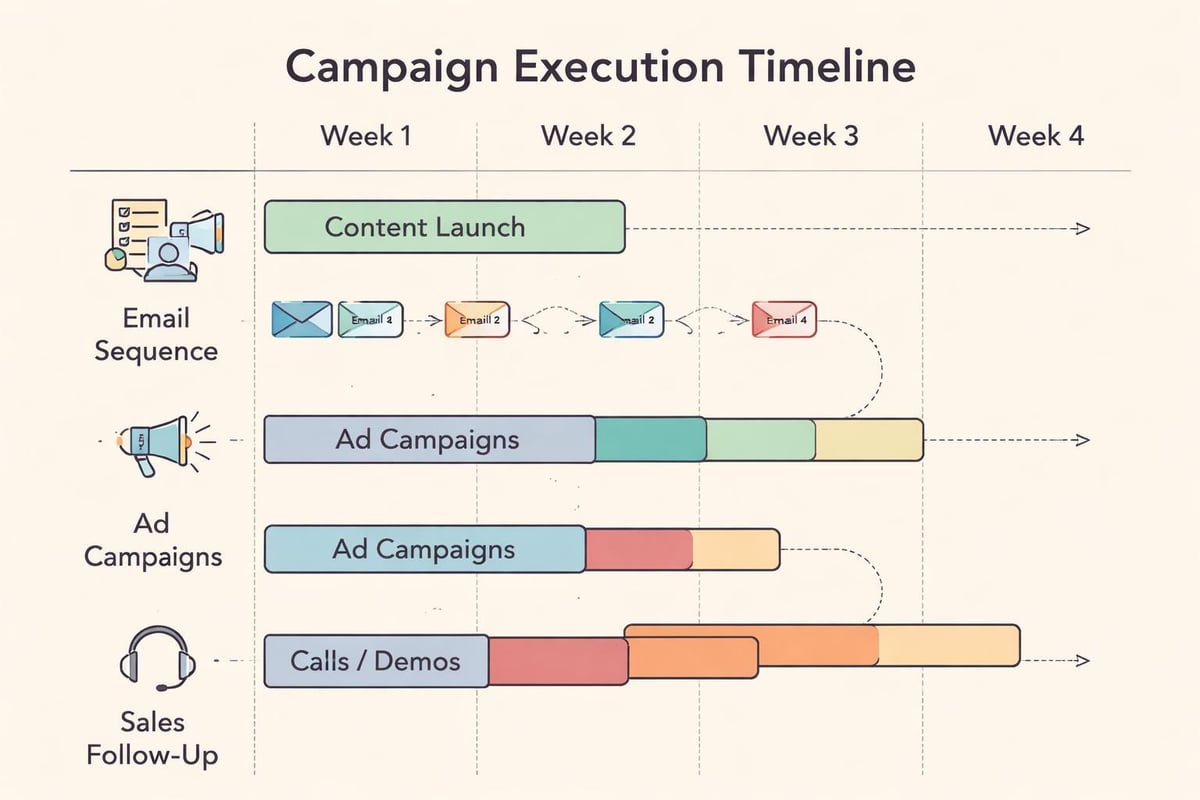
Instead of running separate initiatives per channel, structure campaigns that flow across multiple touchpoints.
Example campaign structure:
- Launch: Publish pillar content on website, announce via email and social
- Amplify: Run ads to cold traffic driving to pillar content
- Nurture: Email sequences reference pillar content for those who engaged
- Convert: Retargeting ads to content readers with relevant offer
- Close: Sales follows up with CRM data on specific content consumed
Each phase builds on the previous one. The content isn't just a blog post, it's the foundation for email topics, ad targeting criteria, and sales conversation starters. This approach aligns with threaded marketing concepts, where all elements connect back through the customer journey.
Timing and Sequencing
Blending marketing requires thinking about when each touchpoint happens, not just what it says.
| Stage | Timing | Channel Mix | Goal |
|---|---|---|---|
| Awareness | Week 1 | Content + Ads | Establish relevance |
| Consideration | Weeks 2-3 | Email + Retargeting | Build trust |
| Decision | Week 4+ | Sales + Targeted email | Convert to client |
Someone shouldn't receive your "ready to start?" email three days after they first heard of you. They shouldn't see retargeting ads before they've visited your site. Proper sequencing ensures each message arrives when it's most relevant.
Measuring Blended Marketing Performance
Traditional channel-specific metrics miss the point. Blending marketing requires measuring how channels work together, not just how they perform independently.
System-Level Metrics
Attribution across touchpoints: Track which combination of channels leads to conversions. Most clients don't convert after one touchpoint. They might see an ad, visit your site, read three emails, then book a call. Single-channel attribution misses this reality.
Data quality and flow: Monitor how completely information moves through your systems. Are all form submissions reaching your CRM? Is email engagement updating contact records? Broken data flows undermine everything else.
Message consistency scores: Review content across channels for alignment. Do your ads promise what your website delivers? Does your email content match your positioning?
Lead velocity and conversion time: Blended systems should accelerate the journey from stranger to client. Track how long it takes leads to move through each stage and whether your systems reduce that timeline.
Channel Synergy Analysis
Look for evidence that channels strengthen each other:
- Do email subscribers who also see your ads convert faster?
- Do blog readers who receive follow-up emails engage more?
- Do social media followers who visit your website qualify better?
These cross-channel effects prove your blending marketing actually works. When the numbers show that combined exposure outperforms isolated touches, you've built real integration.
Common Blending Marketing Mistakes
Most attempts at blended marketing fail in predictable ways. Avoid these patterns.
Mistake One: Technology Before Strategy
Buying tools and connecting systems without clear strategic goals creates complexity without benefit. Know what you need to achieve, then build systems that support it. Digital marketing infrastructure should serve your growth strategy, not replace it.
Mistake Two: Surface-Level Consistency
Matching your brand colors across channels isn't blending marketing. Real integration means shared data, coordinated timing, and messages that build on each other. Surface consistency without system integration just looks prettier while still underperforming.
Mistake Three: Over-Automation
Some businesses automate everything and remove the human judgment that makes marketing effective. Automation should handle repetitive execution, data flow, and trigger-based responses. Strategy, creative development, and relationship building still need humans.
Balance automation and human input:
- Automate: Data entry, sequence triggers, source tracking, basic segmentation
- Human-led: Strategy, message development, offer creation, complex nurture decisions
Mistake Four: Ignoring the Handoffs
The gaps between systems kill more campaigns than bad creative. A brilliant ad that leads to a form that doesn't connect to your CRM wastes every dollar. Map every handoff point and test them religiously.
Scaling With Blended Systems
The real advantage of blending marketing appears when you scale. Fragmented approaches break under growth. Integrated systems compound.
How Integration Enables Growth
When you add a new channel to a blended system, it plugs into existing infrastructure. Your new LinkedIn campaign feeds the same CRM. Those contacts enter the same nurture sequences. The data flows to the same analytics. You're expanding reach, not rebuilding systems.
Growth multiplication through blending:
- New traffic source → existing conversion infrastructure → faster ROI
- New content piece → existing distribution channels → broader reach
- New offer → existing audience segments → targeted promotion
- New team member → existing systems and processes → quicker onboarding
Compare this to fragmented marketing where each new initiative requires new workflows, new tracking, new integration work. Blended systems make growth more efficient over time, not more complex.
Building Compounding Advantages
Blended marketing creates data advantages that strengthen with time. Every campaign adds to your knowledge base. Every contact adds behavioral data. Every conversion refines your targeting.
Your marketing and business development efforts become increasingly precise as your systems capture more information about what works. Year two campaigns outperform year one because you're building on better data, more refined sequences, and proven channel combinations.
Implementation Priorities for Service Businesses
Don't try to blend everything at once. Build your integrated system in logical phases.
Phase One: Foundation (Months 1-2)
- Connect website forms to CRM
- Integrate CRM with email platform
- Set up basic analytics tracking
- Establish core message framework
Phase Two: Automation (Months 3-4)
- Build primary email nurture sequences
- Create automated tagging and segmentation
- Set up retargeting pixel infrastructure
- Implement lead scoring basics
Phase Three: Expansion (Months 5-6)
- Add additional marketing channels
- Develop cross-channel campaigns
- Refine attribution tracking
- Optimize based on performance data
This phased approach prevents overwhelm while building a foundation that supports everything that comes after. Rush it, and you'll create a mess of half-implemented systems that underperform compared to simpler approaches.
Blending marketing transforms disconnected tactics into unified systems where every channel strengthens the others. For service businesses, this integration builds the trust and consistency that expertise-based sales require. If you're ready to remove chaos from your marketing operations and build infrastructure that supports predictable growth, MDO Digital specializes in designing these integrated systems. We connect your website, CRM, automation, and campaigns into frameworks that protect leads and compound results over time.