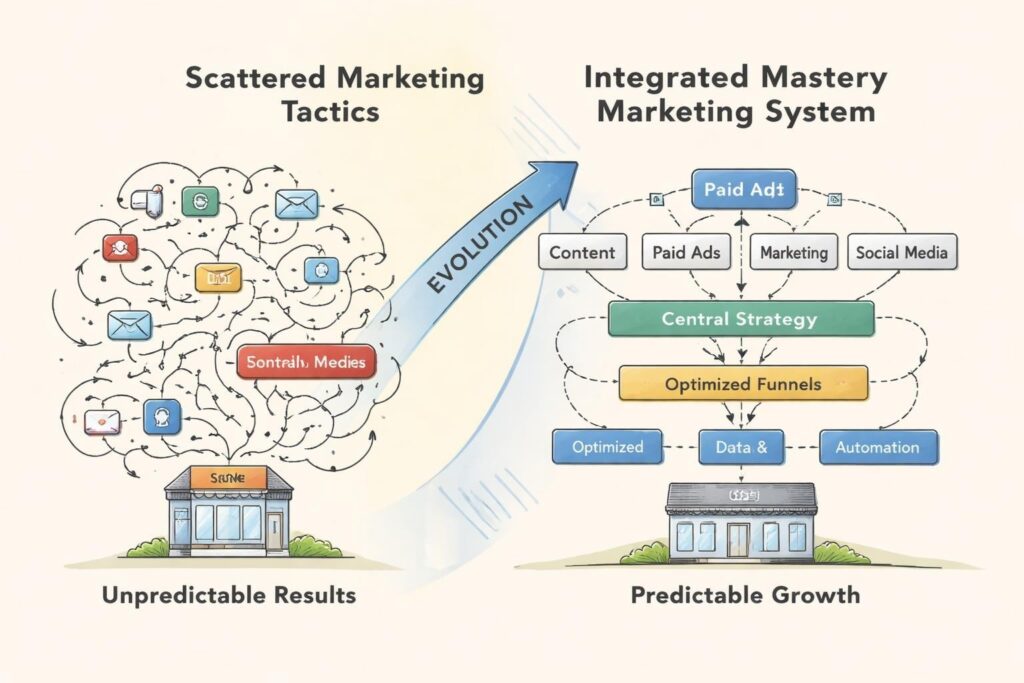
Most businesses treat marketing like throwing spaghetti at a wall. They launch campaigns, post content, run ads, and hope something sticks. The problem isn't effort. It's the absence of a system. Mastery marketing is the deliberate shift from reactive tactics to strategic infrastructure that compounds over time. It's how service businesses move from feast-or-famine cycles to predictable demand generation. Instead of chasing every new platform or trend, you build frameworks that capture attention, nurture trust, and convert prospects into clients with repeatable precision.
What Mastery Marketing Actually Means
Mastery marketing isn't about being brilliant at every channel. It's about building competence across the fundamentals and integrating them into a coherent system.
Think of it as the difference between owning a collection of tools and running a workshop. Tools sit in drawers. A workshop has processes, workflows, and systems that turn raw materials into finished products. Mastery marketing operates the same way.
The Core Components
Strategic clarity forms the foundation. You need to know who you're serving, what problem you solve, and how you're positioned against alternatives. Without this, every tactic becomes a guess.
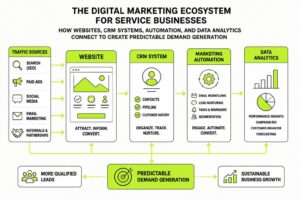
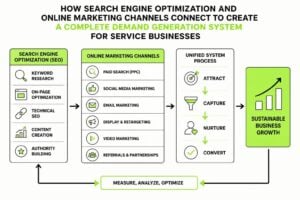
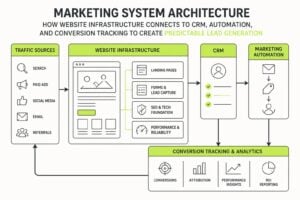
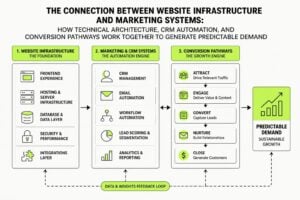
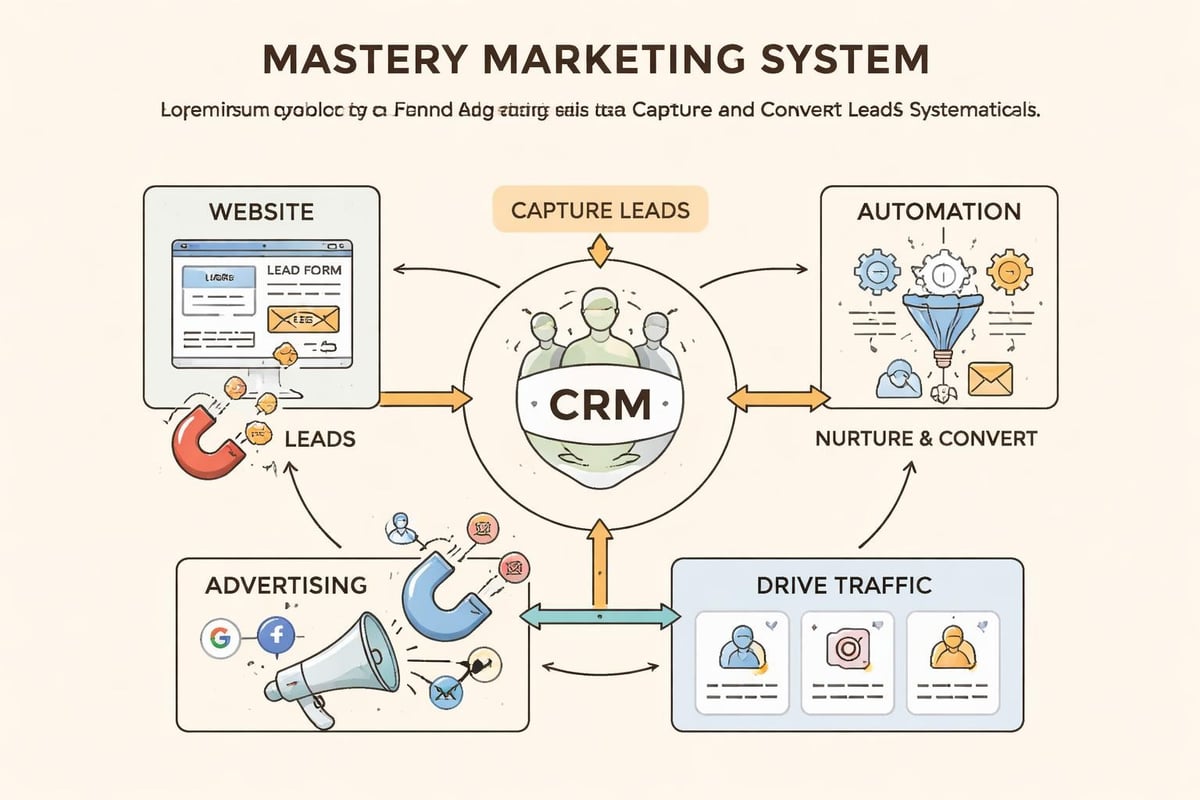
Integrated systems connect your website, CRM, email automation, and advertising into a unified infrastructure. Leads don't fall through cracks because every touchpoint is mapped and measured.
Data-driven optimization replaces gut feelings with evidence. You test, measure, adjust, and improve based on what actually moves the needle for your business.
Here's what separates mastery marketing from ordinary execution:
- Repeatability: You can generate results consistently, not just when inspiration strikes
- Scalability: Systems handle increased volume without proportional increases in manual effort
- Measurability: Every investment has clear attribution to business outcomes
- Sustainability: Growth compounds instead of requiring constant reinvention
The Marketing Mastery Institute emphasizes bridging fundamental principles with real-world applications. That's exactly the mindset shift required. Theory without application is academic. Application without theory is chaos.
Building Your Marketing Foundation
Before you optimize anything, you need something worth optimizing. The foundation of mastery marketing starts with three non-negotiable elements.
Audience Definition Beyond Demographics
Too many businesses describe their audience in census data. "Business owners aged 35-55 with $500K+ revenue." That's not understanding. That's guessing.
Mastery marketing requires psychographic depth:
- What keeps them awake at 3am? The real problems, not surface symptoms
- What have they already tried? Understanding their journey prevents repeating failed solutions
- What language do they use? Their words become your messaging
- What proof do they need? The specific evidence that builds trust in their context
Positioning That Creates Market Space
Your positioning determines whether you compete on price or value. Most service businesses position themselves as "full-service" or "comprehensive." That's code for "we do everything our competitors do."
Mastery marketing demands specificity. You need a clear answer to: "Why you, why now, why not something else?"
| Weak Positioning | Strong Positioning |
|---|---|
| "We help businesses grow" | "We build CRM infrastructure for service businesses losing leads to broken systems" |
| "Full-service digital agency" | "Marketing systems agency for service businesses ready to scale with clarity" |
| "Creative branding solutions" | "High-trust websites designed to convert professional service buyers" |
The tighter your positioning, the easier every subsequent marketing decision becomes. Our work at MDO Digital focuses specifically on service businesses because the operational challenges, buying cycles, and growth patterns follow predictable patterns we can systematically address.
Message Architecture That Converts
Once you know who you're talking to and why they should care, you need message architecture that guides prospects from awareness to decision.
Primary message: The core value proposition that answers "what's in it for me?"
Supporting pillars: Three to five proof points that substantiate your primary claim
Objection handling: Preemptive responses to predictable hesitations
Call to action: The specific next step that moves prospects forward
This isn't copywriting creativity. It's structural thinking about how information flows through the buying process. Branding and marketing strategies only work when built on solid message architecture.
System Design for Predictable Growth
Mastery marketing lives in your systems. If you can't document it, teach it, and scale it, you don't have a system. You have a dependency on individual talent or lucky timing.
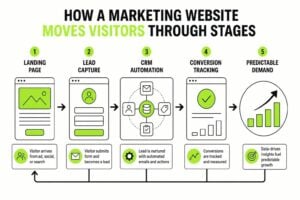
The Lead Capture Infrastructure
Every business loses leads. The question is whether you know how many, where they leak, and what it costs you.
Your lead capture infrastructure includes:
- Entry points: Every place a prospect can raise their hand (website forms, chat, phone, social media)
- Qualification criteria: The data you need to route leads appropriately
- Assignment logic: Who handles what type of lead, when, and through which channel
- Follow-up sequences: Automated touchpoints that maintain engagement while you work the pipeline
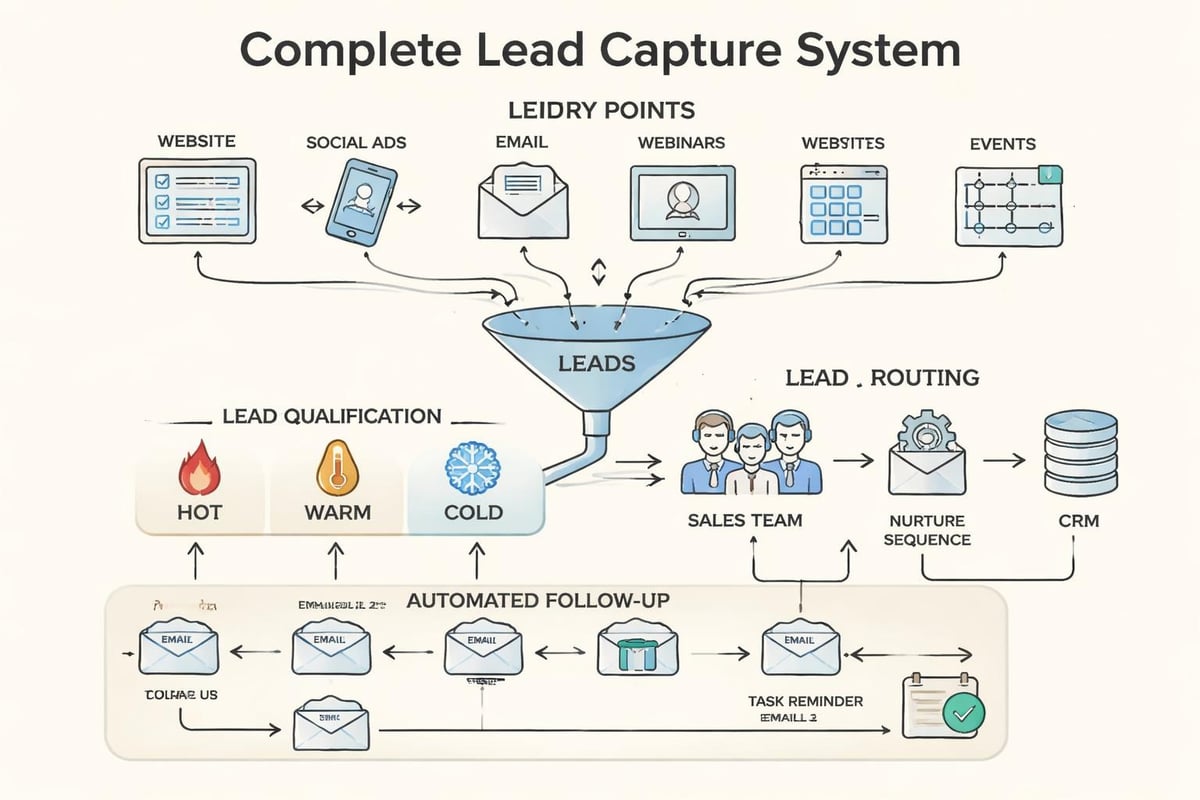
Most service businesses lose 30-40% of inbound leads to process failures. Not competition. Not pricing. Process. They don't respond fast enough, follow up consistently, or track what happens to inquiries.
Building marketing systems that protect leads requires mapping every touchpoint and automating what doesn't require human judgment.
Content That Compounds
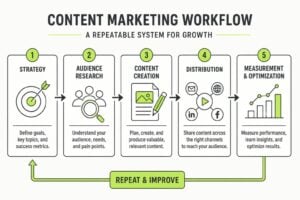
Mastery marketing treats content as infrastructure, not output. You're not publishing to hit a quota. You're building assets that appreciate over time.
Pillar content addresses core topics your audience searches for. These are comprehensive, authoritative pieces that rank, get linked to, and establish expertise.
Supporting content expands on specific aspects of pillar topics, creating internal linking networks that strengthen your topical authority.
Conversion content moves educated prospects toward decisions. Case studies, comparison guides, ROI calculators, and other tools that reduce buying friction.
The strategies outlined by Strategic Advisor Board emphasize content strategy as fundamental. But strategy means nothing without the discipline to execute consistently over 12-24 months.
Attribution and Measurement
You can't master what you don't measure. Most businesses track vanity metrics: traffic, followers, impressions. Mastery marketing focuses on business metrics: qualified leads, conversion rates, customer acquisition cost, lifetime value.
Your measurement framework needs:
- Source tracking: Where did this lead come from originally?
- Journey mapping: What touchpoints influenced their decision?
- Conversion analysis: Which messages, offers, or pages drive action?
- Revenue attribution: What marketing activity generated what revenue?
This requires CRM infrastructure that captures source data and maintains it through the entire customer lifecycle. When you can say "our SEO content generated 23 qualified leads last month with a 34% close rate averaging $8,400 per client," you're thinking like a mastery marketer.
Implementation Over Inspiration
The gap between knowing and doing destroys more marketing efforts than bad strategy. Mastery marketing prioritizes execution discipline over creative genius.
The 90-Day Build Cycle
Instead of year-long roadmaps that never survive contact with reality, work in 90-day cycles:
Days 1-30: Foundation and framework. Set up systems, define processes, create templates.
Days 31-60: Consistent execution. Run the system without changing it. Collect data.
Days 61-90: Analysis and optimization. Review what worked, what didn't, and what to adjust.
This cycle prevents two common failures. First, changing tactics before you have enough data to evaluate them. Second, running broken systems indefinitely because you never create space to review results.
Standard Operating Procedures
Every repeatable task needs documentation. Not because you're building bureaucracy. Because you're removing decision fatigue and creating capacity to scale.
Your SOPs should cover:
- Lead intake and qualification process
- Content creation workflow (from keyword research to publication)
- Client onboarding sequence
- Monthly reporting and analysis
- Campaign launch checklist
When these processes live in someone's head, you can't scale without them. When they live in documented systems, you can train, delegate, and maintain quality as you grow.
The frameworks offered by Mastery Playbooks demonstrate how systematic approaches outperform ad-hoc execution across industries. The specific tactics vary, but the commitment to documented processes remains constant.
Technology Stack for Marketing Systems
Mastery marketing requires appropriate technology. Not the newest tools. Not the most features. The right infrastructure for your specific business model.
The Essential Stack
| Tool Category | Purpose | Integration Priority |
|---|---|---|
| CRM | Lead and customer management | Critical – connects everything |
| Email Platform | Automated nurture sequences | Critical – primary conversion channel |
| Website/CMS | Content publishing and conversion | Critical – primary lead source |
| Analytics | Traffic and behavior tracking | High – informs optimization |
| Project Management | Workflow and execution tracking | Medium – operational efficiency |
The mistake isn't using too few tools. It's using disconnected tools that create data silos and manual handoffs. Your CRM should talk to your email platform. Your website should feed data to your analytics. Your project management should reflect actual client work, not just internal tasks.
Digital marketing strategies only scale when supported by integrated technology that reduces friction and maintains data integrity across systems.
Automation Without Losing the Human Touch
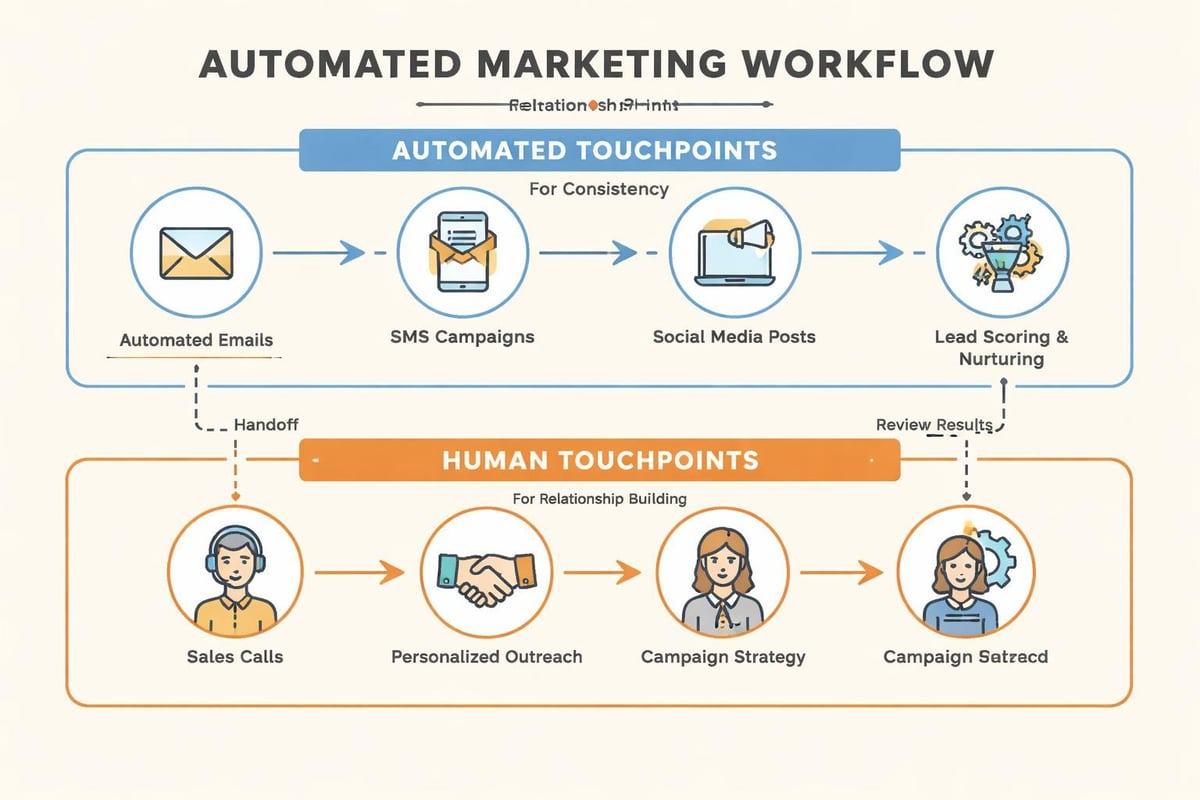
Automation serves two purposes: removing manual repetition and ensuring consistency. It doesn't replace judgment. It creates capacity for judgment where it matters.
Automate:
- Initial lead acknowledgment (instant response builds trust)
- Nurture sequences for leads not ready to buy
- Data entry and routing between systems
- Reporting and dashboard updates
- Appointment scheduling and reminders
Keep human:
- Sales conversations and qualification
- Strategic recommendations
- Complex problem-solving
- Relationship building with key accounts
The AI marketing strategies gaining attention in 2026 demonstrate how technology augments human expertise rather than replacing it. Use automation to handle the predictable so your team can focus on the valuable.
Common Mastery Marketing Failures
Most businesses fail at mastery marketing not because they chose wrong tactics, but because they sabotage execution through predictable patterns.
Shiny Object Syndrome
Every quarter brings new platforms, new tactics, new "must-do" strategies. Mastery marketing requires the discipline to ignore most of them.
Before adding any new tactic, ask:
- Does this serve our positioning and audience?
- Do we have capacity to execute it properly?
- Can we measure its contribution to business goals?
- What are we stopping to make room for this?
If you can't answer all four clearly, the answer is no. Depth beats breadth in marketing systems every time.
Premature Scaling
Businesses often try to scale tactics before they work at small volume. They increase ad spend before achieving positive ROI. They hire content teams before defining what content should accomplish.
Master something at small scale first. Get your conversion rate above breakeven. Prove the message resonates. Document the process. Then scale.
Measurement Procrastination
"We'll implement proper tracking next month" turns into six months of unattributed marketing spend. You can't optimize what you don't measure.
Set up basic tracking infrastructure before launching campaigns:
- UTM parameters on all external links
- Goal tracking in analytics
- Lead source capture in your CRM
- Regular reporting cadence (weekly minimum)
The Marketing Mastery Summit focuses on building thought leadership and client attraction systems. But without measurement, you're still guessing about what works.
Evolution and Adaptation
Mastery marketing isn't static. Markets shift, competitors adapt, customer preferences evolve. The system requires regular maintenance and strategic updates.
Quarterly System Audits
Every 90 days, audit your marketing infrastructure:
- Conversion rate trends: Are they improving, stable, or declining?
- Lead quality metrics: Is your targeting attracting the right prospects?
- System performance: Are automations firing correctly? Any broken links or forms?
- Competitive landscape: What have competitors changed in their positioning or tactics?
- Technology stack: Any redundant tools or missing capabilities?
This isn't about radical change. It's about continuous improvement and catching small problems before they become large failures.
Strategic Pivots vs. Tactical Adjustments
Know the difference between adjusting tactics and changing strategy. Tactics shift frequently based on data. Strategy changes rarely and only when fundamentals shift.
Tactical adjustment: Changing ad creative because click-through rates dropped
Strategic pivot: Changing target audience because market conditions eliminated your previous segment
Most businesses do the opposite. They change strategy constantly (chasing different audiences, repositioning every quarter) while maintaining failing tactics indefinitely.
Understanding how to build sustainable marketing systems means protecting strategic focus while remaining tactically flexible.
The Compounding Effect
Mastery marketing creates compounding returns that advertising alone never delivers. Your published content continues generating traffic for years. Your automated systems handle increasing lead volume without increasing overhead. Your brand recognition opens doors that were previously closed.
This compounding happens because you're building assets, not renting attention. Every piece of content, every system improvement, every successful campaign adds to your infrastructure rather than disappearing when you stop paying for it.
The businesses that achieve genuine mastery marketing share common characteristics. They think in systems, not campaigns. They measure business outcomes, not marketing metrics. They execute consistently over long timeframes. And they understand that marketing isn't a department. It's the infrastructure that turns business capability into market demand.
Mastery marketing transforms how service businesses generate demand by replacing scattered tactics with integrated systems that compound over time. When you build the right foundation, measurement framework, and execution discipline, growth becomes predictable rather than hopeful. MDO Digital specializes in designing these marketing systems for service businesses ready to scale with clarity. We build the CRM infrastructure, automation workflows, and high-trust websites that turn attention into predictable demand. If you're tired of marketing chaos and ready for structured growth, let's talk about what that looks like for your business.