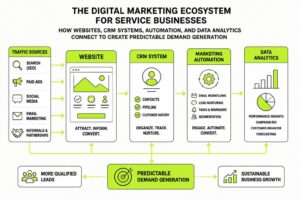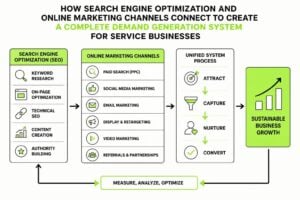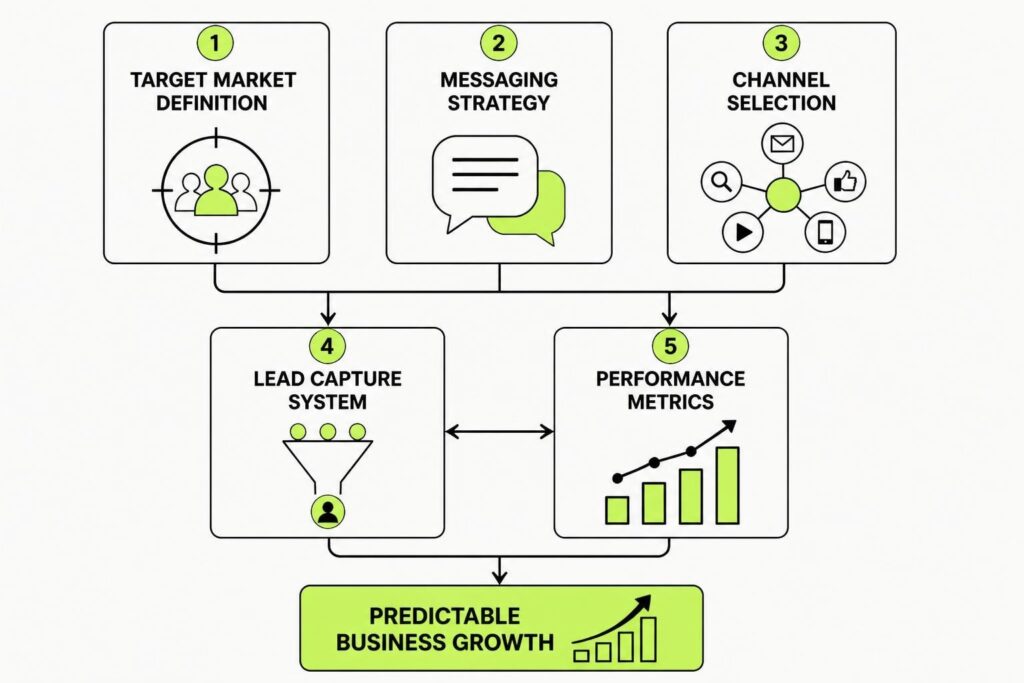
Most service businesses run marketing on hope. They post when they remember, send emails when inspiration strikes, and wonder why growth feels chaotic. The difference between guessing and growing is simple. You need a marketing plan. Not a 40-page strategy document that sits in a drawer. A working system that tells you what to do, when to do it, and how to measure whether it’s working. This guide walks you through building one that fits how real businesses operate.
Why Most Marketing Plans Fail Before They Start
The problem isn’t writing the plan. It’s writing the wrong kind of plan.
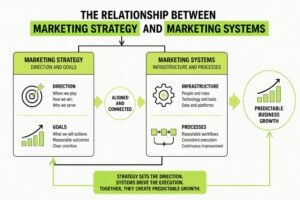
Traditional marketing plans focus on brand positioning, market analysis, and competitive landscapes. All useful context, but none of it tells you what to do on Tuesday morning when you need to generate leads. A functional marketing plan is an operating system. It defines who you’re talking to, what you’re saying, where you’re saying it, and how you’re capturing the result.
Most plans fail because they:
- Confuse strategy with activity (being busy isn’t the same as making progress)
- Lack clear ownership (when everyone’s responsible, no one is)
- Measure vanity metrics instead of revenue impact
- Don’t account for the infrastructure needed to execute
The businesses that actually grow treat their marketing plan as a system that connects every touchpoint, from first impression to final sale. If someone downloads a guide, what happens next? If they attend a webinar, where do they go? A real plan answers these questions before you need to.
The Core Components Every Marketing Plan Needs
A complete marketing plan has seven essential pieces. Miss one and you create gaps where leads fall through.
Business Objectives That Connect to Revenue
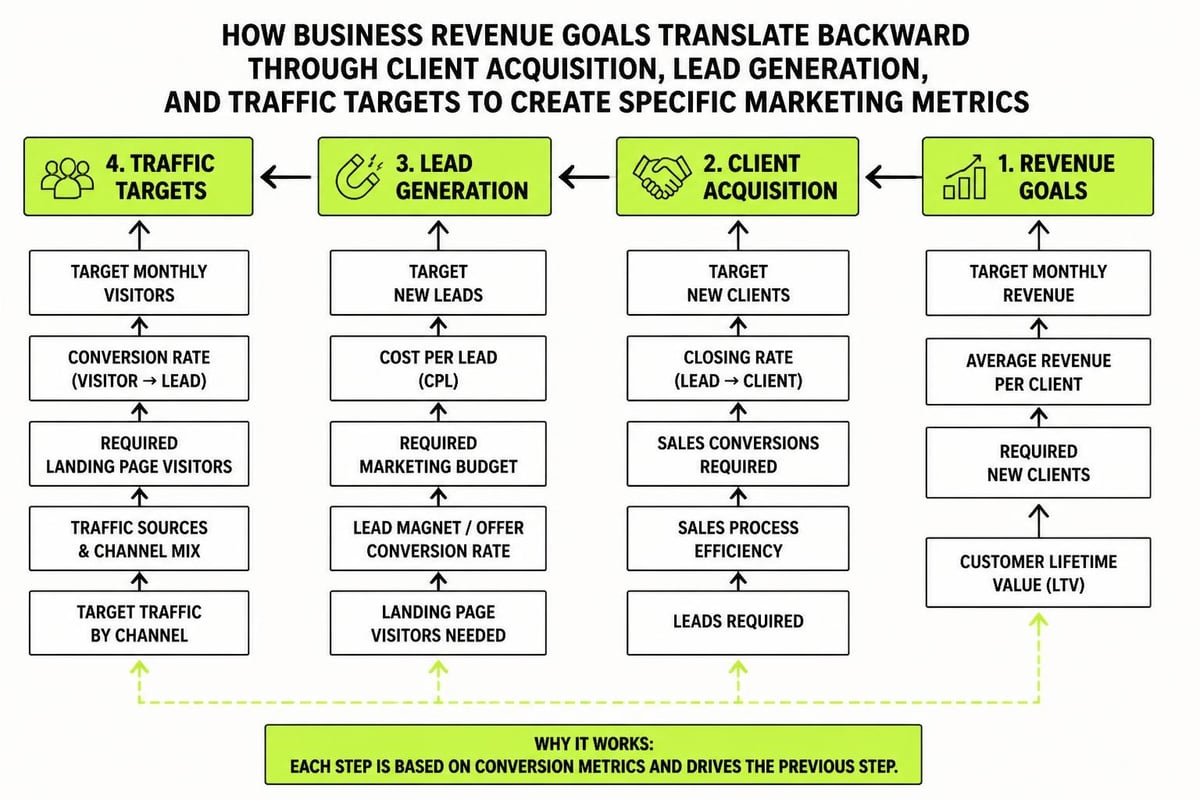
Start with what you’re trying to achieve in concrete terms. “Increase brand awareness” isn’t a goal. “Generate 40 qualified leads per month by Q3 2026” is a goal. Your marketing plan must tie directly to numbers that matter, typically new clients, project value, or revenue targets.
Define your objectives using this structure:
- Revenue target for the period
- Number of new clients needed to hit that target
- Lead volume required based on your close rate
- Traffic or reach needed to generate those leads
This reverse engineering makes every marketing activity accountable. When you know you need 40 leads to get 8 clients, and those 8 clients represent $96,000 in revenue, your marketing plan suddenly has clear parameters.
Target Market Definition Beyond Demographics
Age ranges and job titles don’t help you write better emails. You need to understand the actual problem your market is trying to solve and where they are in that journey.
A marketing plan should define your buyer persona around their situation, not their statistics. What triggers them to start looking for a solution? What objections stop them from moving forward? What language do they use when describing the problem?
| Persona Element | Surface Level | Useful Level |
|---|---|---|
| Who they are | “Business owners, 35-50” | “Service providers with 5+ staff hitting revenue ceiling” |
| Their problem | “Need better marketing” | “Can’t predict monthly revenue, leads come randomly” |
| Their objection | “Price concerns” | “Burned by agencies before, don’t trust the process” |
| Decision trigger | “Want to grow” | “Just lost a major client, need consistent pipeline” |
This depth changes how you communicate. When your digital marketing plan speaks to the actual experience your market is living through, conversion rates shift.
Platform Selection Based on Attention, Not Preference
You don’t get to choose where your market pays attention. Your marketing plan needs to align with where they actually spend time, even if you’d rather be somewhere else.
For service businesses in 2026, this typically means:
- LinkedIn for B2B and professional services
- Google Search for high-intent problem-solvers
- Email for nurture and relationship building
- YouTube for education and demonstration
- Industry communities for credibility and referrals
Pick two, maybe three platforms. Master them before adding more. The Australian Small Business Administration provides guidance on understanding your target market, which directly influences which channels will actually deliver results.
Opt-In Offers That Start Relationships
Your marketing plan must include specific assets that convert attention into contact information. These aren’t brochures. They’re valuable resources that solve a small but urgent problem for your target market.
Effective opt-in offers typically:
- Address one specific challenge (not everything you do)
- Deliver immediate value (frameworks, templates, checklists work well)
- Demonstrate your thinking and approach
- Position the next logical step (usually a conversation or assessment)
A commercial cleaning company might offer “The 14-Point Office Hygiene Audit Checklist.” A business coach might provide “Revenue Forecasting Template for Service Businesses.” Each offer shows competence while capturing lead information.
Building the Infrastructure That Protects Leads
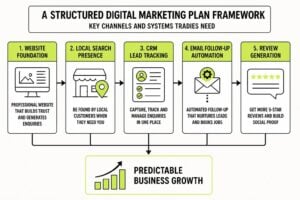
A marketing plan without delivery infrastructure is just a wish list. You need systems that capture, nurture, and convert the attention you generate.
CRM Setup That Actually Gets Used
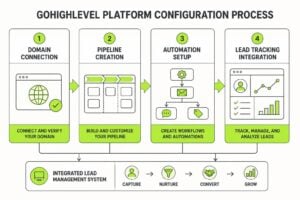
Every lead needs a home. Your marketing plan should specify exactly what happens when someone expresses interest. Which CRM are you using? What fields are you tracking? Who gets notified?
Most service businesses need:
- Contact capture forms connected to your CRM (not just collecting emails in a spreadsheet)
- Lead source tracking so you know which channels actually work
- Activity logging that records every interaction automatically
- Pipeline stages that match your actual sales process
- Automation triggers for follow-up sequences
This isn’t exciting work, but it’s the difference between “we got a lot of leads this month” and “we generated 47 leads, 23 from LinkedIn, 12 from search, 8 qualified for proposals.” The practical framework we’ve developed helps businesses structure these systems so nothing falls through.

Nurture Campaign That Builds Trust Over Time
Most buyers aren’t ready to purchase the moment they find you. Your marketing plan needs a sequence that keeps you relevant while they evaluate options.
A functional nurture campaign includes:
- Welcome sequence (3-5 emails introducing your approach and perspective)
- Educational content (weekly or fortnightly value adds)
- Social proof (case studies, results, client experiences)
- Clear calls to action (ways to take the next step when ready)
The timing matters. According to research on effective marketing plans, businesses that maintain consistent touchpoints see significantly higher conversion rates than those that contact leads once and move on.
Content Strategy That Feeds the System
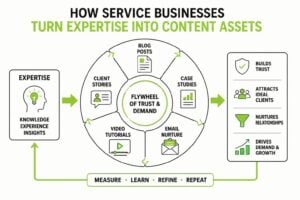
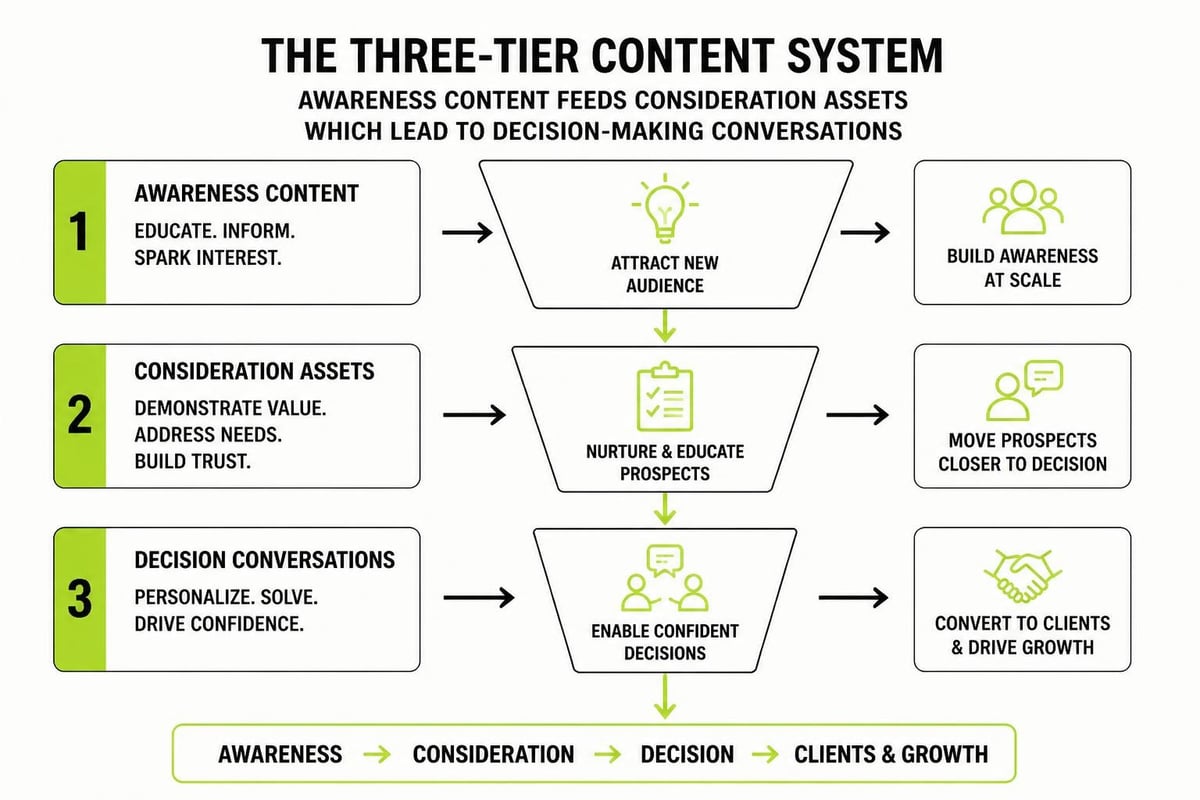
Your marketing plan needs a content calendar that supports every stage of the buyer journey. Not random posts, deliberate pieces that move people forward.
The Three Content Layers That Work Together
| Content Type | Purpose | Format Examples | Frequency |
|---|---|---|---|
| Awareness | Attract new audience | Blog posts, social content, SEO pages | 2-3/week |
| Consideration | Educate and differentiate | Guides, webinars, case studies | 1-2/month |
| Decision | Remove final obstacles | Proposals, demos, consultations | As needed |
Each layer reinforces the others. Awareness content brings people in. Consideration content builds authority. Decision content closes the gap. Your marketing plan should map out the specific pieces you’ll create and how they connect.
Distribution Cadence That Maintains Visibility
Creating content is half the work. Your marketing plan must specify how you’ll distribute it. Wrike’s marketing guide emphasizes the importance of defining these distribution channels upfront, not treating them as an afterthought.
A basic distribution rhythm might look like:
- Monday: Educational blog post published and shared on LinkedIn
- Tuesday: Email to subscribers with main insight from blog post
- Wednesday: Short-form content repurposing blog concept for social
- Thursday: Engagement on industry forums or communities
- Friday: Case study or client result shared across channels
Consistency beats perfection. Better to publish good content regularly than wait for perfect pieces that never ship.
Measurement Systems That Show What’s Working
A marketing plan without metrics is just theatre. You need specific numbers that tell you whether you’re moving toward your objectives or drifting away from them.
The Metrics That Actually Matter for Service Businesses
Forget vanity metrics. Track the numbers that connect to revenue:
- Lead volume (total new contacts by source)
- Lead quality (percentage that match ideal client profile)
- Cost per lead (total marketing spend divided by leads generated)
- Conversion rate (leads to qualified opportunities to clients)
- Customer acquisition cost (total marketing and sales cost per new client)
- Lifetime value (average revenue per client over relationship)
When you know your numbers, you can make decisions. If LinkedIn generates leads at $47 each with a 12% close rate, and Google generates leads at $89 each with a 23% close rate, you know where to invest.
Review Cadence That Catches Problems Early
Your marketing plan should specify when and how you review performance. Monthly is typically right for most service businesses. Weekly is too reactive, quarterly is too slow.
Each review should answer:
- Did we hit our lead targets?
- Which channels overperformed or underperformed?
- What changed in conversion rates?
- Where are leads getting stuck in the funnel?
- What adjustments do we make for next month?
The businesses that grow consistently treat these reviews as non-negotiable. Growthink’s approach to marketing plans includes regular performance assessment as a core component, not an optional extra.
Implementation Timeline That Keeps You Moving
A complete marketing plan includes a timeline that breaks big goals into weekly actions. This prevents the common trap of writing a plan in January and checking it again in December.
The First 90 Days Matter Most
Your marketing plan should detail the first quarter in concrete weekly goals:
Weeks 1-4: Foundation
- CRM setup and testing
- Opt-in offer creation and landing page build
- Initial nurture sequence written
- Website conversion points optimized
Weeks 5-8: Content Production
- First month of blog content created
- Social media templates designed
- Email sequences loaded and scheduled
- Case study interviews completed
Weeks 9-12: Promotion and Optimization
- Full distribution rhythm established
- First round of paid promotion (if applicable)
- Initial metric review and adjustments
- Team roles and responsibilities confirmed
This structure, similar to what Business Gateway recommends, prevents overwhelm by breaking execution into manageable phases. Our work with service businesses at MDO Digital consistently shows that the first 90 days determine whether a marketing plan becomes a working system or another abandoned document.
Team Roles and Budget Allocation
Your marketing plan needs to assign clear ownership. Even if you’re a team of one, defining who does what prevents important tasks from falling through.
Typical Role Distribution for Small Service Businesses
- Strategy and planning (business owner or marketing director)
- Content creation (internal or contracted writers, designers)
- Technical implementation (CRM admin, website updates, automation)
- Campaign execution (social posting, email deployment, ad management)
- Analysis and reporting (whoever owns the numbers and reviews)
One person might wear multiple hats, but each hat should be explicitly defined. When you know “content creation happens every Tuesday morning” rather than “we need to create content sometime,” execution improves.
Budget Framework That Reflects Reality
Service businesses typically allocate 5-12% of revenue to marketing. Your marketing plan should break this down by category:
| Category | Percentage of Marketing Budget | Example at $10k/month |
|---|---|---|
| Technology (CRM, tools, hosting) | 15-20% | $1,500-$2,000 |
| Content creation | 30-40% | $3,000-$4,000 |
| Paid promotion | 20-30% | $2,000-$3,000 |
| Design and creative | 10-15% | $1,000-$1,500 |
| Education and training | 5-10% | $500-$1,000 |
Adjust based on your situation, but having clear allocation prevents month-end surprises and ensures every dollar has a purpose.
Common Mistakes That Undermine Otherwise Solid Plans
Even well-structured marketing plans fail when businesses make these predictable errors.
Planning without capacity. Your marketing plan can’t require 40 hours per week if you have 10 hours available. Be honest about bandwidth before committing to activities you can’t sustain.
Copying competitor tactics without understanding the system. Seeing a competitor post daily on LinkedIn doesn’t mean that’s the right move for you. Their marketing plan likely includes infrastructure and support you don’t see. Focus on what you can execute consistently, not what looks impressive.
Changing strategy too quickly. Marketing compounds over time. A marketing plan needs at least 90 days to show meaningful results. Switching platforms every month guarantees mediocre outcomes everywhere.
Ignoring the data. If your metrics show email converts at 3x the rate of social media, but you keep investing in social because you enjoy it more, your marketing plan isn’t actually guiding decisions. Follow the evidence, not your preferences.
Treating the plan as static. Your marketing plan should evolve as you learn what works. The version you write in January 2026 should look different by June, refined by real results and market feedback. Businesses that maintain strategic direction while adjusting tactical execution based on performance consistently outperform those that either never change or change everything constantly.
Making Your Marketing Plan Work Long Term
The difference between a document and a system is ongoing use. Your marketing plan stays relevant when it becomes part of weekly operations, not a quarterly reference.
Schedule regular planning sessions. Monthly is good, weekly is better if you have the discipline. Review what happened, what’s working, what needs adjustment. Keep the document updated with current metrics and refined approaches.
Build accountability into the system. If you’re working alone, join a mastermind or peer group where you report progress. If you have a team, create clear expectations about what gets reviewed and when. Research on B2B marketing plans shows that accountability structures dramatically improve execution rates.
Celebrate small wins while staying focused on big outcomes. When you generate your first lead from a new channel, acknowledge it. When you close your first client from that lead, mark the milestone. Progress compounds when you notice and reinforce what’s working.
Your marketing plan isn’t about being perfect. It’s about being intentional, consistent, and willing to learn from what the market tells you. Service businesses that approach marketing as a system rather than a series of random acts create the predictable growth that lets them plan ahead, invest confidently, and build teams around sustainable demand.
A marketing plan that actually works removes guessing from your growth strategy and replaces chaos with clear, repeatable systems. When you know what you’re doing, why you’re doing it, and how to measure whether it’s working, marketing stops feeling like a gamble and starts feeling like infrastructure. If you’re ready to build a marketing system that protects leads and creates structured growth, MDO Digital helps service businesses implement the infrastructure, automation, and strategy that turns attention into predictable demand.