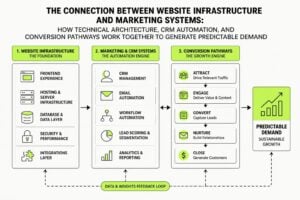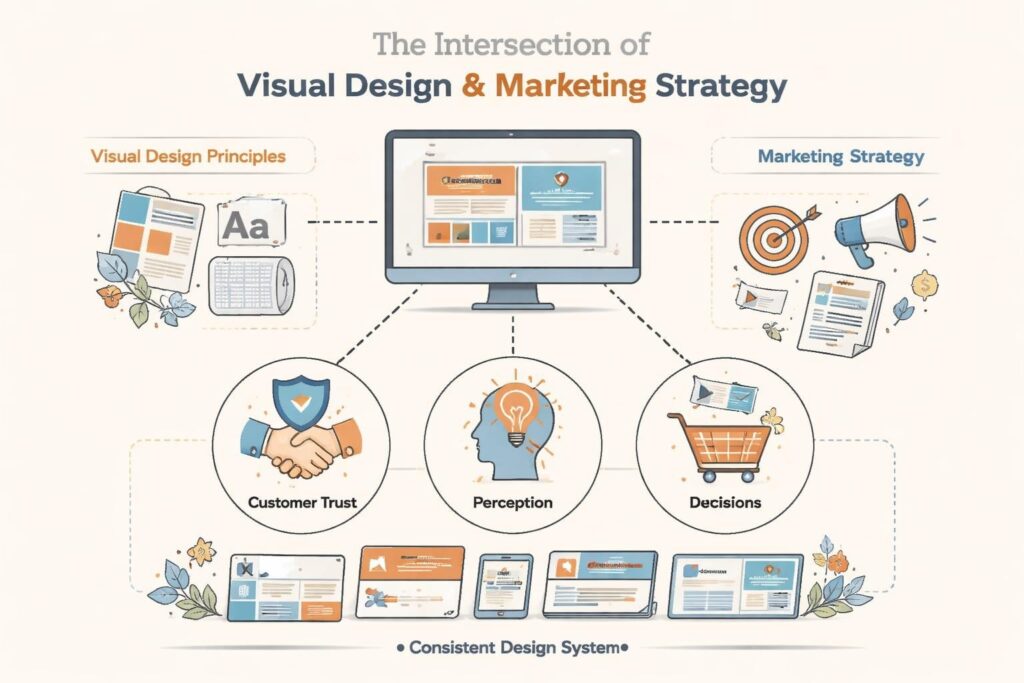
Marketing aesthetics shape the first impression your business makes before a word is read. The way your brand looks, feels, and presents itself online determines whether a prospect trusts you enough to stay, read, and eventually buy. For service businesses trying to scale with clarity, aesthetics aren't decoration. They're the foundation of how your systems convert attention into predictable demand. When your visual identity is sharp, consistent, and aligned with your positioning, prospects move faster through your funnel because trust is already established.
Why Marketing Aesthetics Matter More Than You Think
People judge credibility in milliseconds. According to research on the aesthetic-usability effect, users perceive well-designed interfaces as easier to use, even when functionality is identical. This cognitive bias extends beyond digital products. Your website, email templates, proposals, and social content all trigger immediate judgments about your competence.
Marketing aesthetics influence three critical conversion factors:
- Perceived authority: Clean design signals professionalism and expertise
- Decision speed: Visual clarity reduces cognitive load and friction
- Brand recall: Consistent aesthetics make your business memorable across touchpoints
When prospects land on your site, they're not consciously analyzing your typography or color palette. But their brains are processing visual cues that determine whether you're credible. Poor aesthetics raise doubt. Strong aesthetics create space for your message to land.
The Cost of Aesthetic Inconsistency
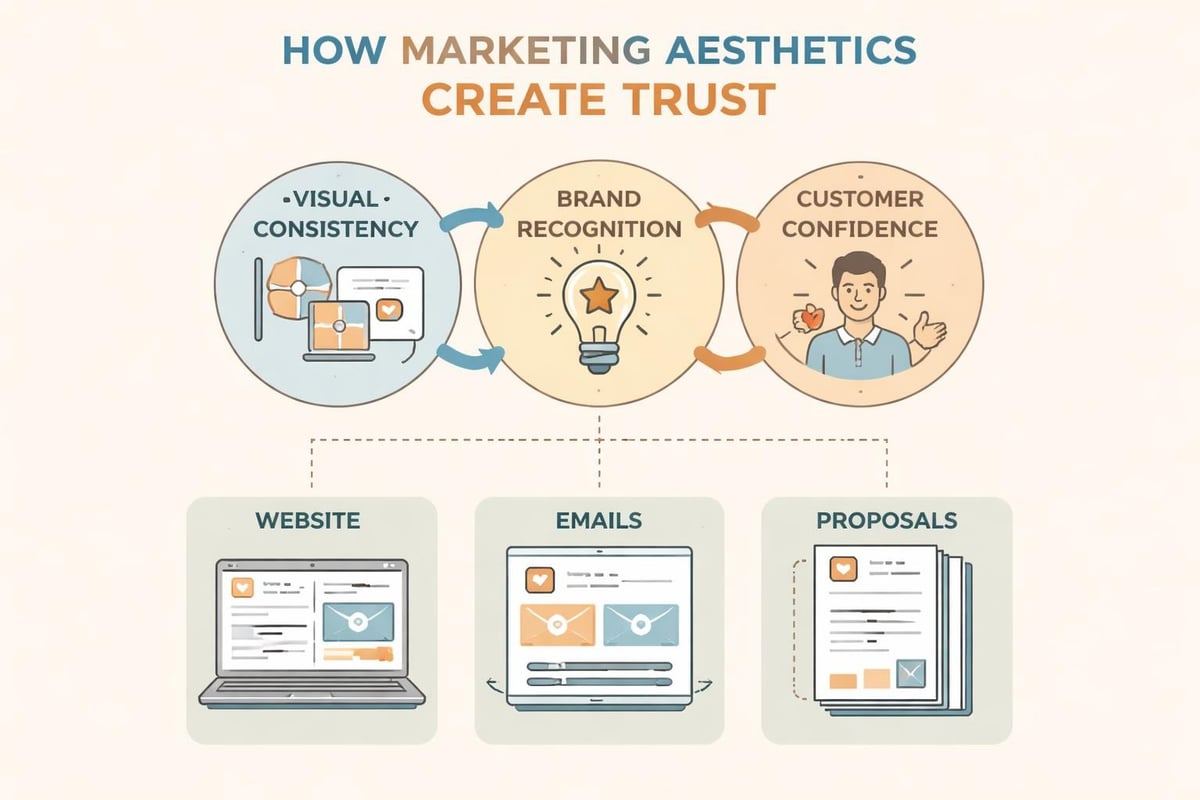
Inconsistent branding creates confusion. If your website looks polished but your proposal template feels generic, prospects notice the gap. If your Instagram feed has one vibe and your email campaigns have another, trust erodes. Marketing aesthetics work when they're systematic, not sporadic.
Service businesses often treat design as a one-off project. Build the website, tick the box, move on. But aesthetics compound over time when they're part of a cohesive system. Your CRM templates, your Zoom backgrounds, your LinkedIn banner, they all reinforce (or contradict) the same brand promise.
| Touchpoint | Aesthetic Consistency | Impact on Trust |
|---|---|---|
| Website homepage | High-quality design, clear hierarchy | Strong first impression |
| Email campaigns | Generic templates, mismatched fonts | Weakens credibility |
| Proposals | Custom-branded, professional layout | Reinforces authority |
| Social media | Random stock images, no style guide | Dilutes brand recall |
Aesthetic inconsistency doesn't just hurt perception. It slows down your team. Without clear design standards, every email, slide deck, or landing page becomes a creative decision that burns time. Systems solve this.
Building a Marketing Aesthetics System That Scales
Marketing aesthetics aren't subjective when you treat them as infrastructure. Start with constraints. Define your color palette, typography, imagery style, and layout principles. These decisions become guardrails that speed up execution while maintaining quality.
Your marketing aesthetics system should include:
- Brand style guide: Colors, fonts, logo usage, spacing rules
- Template library: Email headers, social graphics, proposal covers
- Image guidelines: Photography style, illustration approach, icon sets
- Layout principles: Grid systems, whitespace standards, hierarchy rules
These aren't creative limitations. They're decision filters that protect quality at scale. When your team knows the rules, they can execute faster without sacrificing consistency. When prospects see the same visual language across every interaction, trust builds without friction.
How Sensory Details Reinforce Brand Memory
Marketing aesthetics extend beyond visuals. Sensory branding shows how smell, sound, and texture influence brand recall and emotional connection. While service businesses can't leverage scent like retail stores, you can apply the principle to digital experiences.
Sensory elements in digital marketing aesthetics:
- Visual rhythm: Consistent spacing and pacing in content creates familiarity
- Tone of voice: Your written style is an aesthetic choice that triggers emotional response
- Motion design: How elements animate on your site affects perceived quality
- Sound (where relevant): Intro music on videos, notification sounds in apps
The goal is multi-sensory consistency. When your design choices align with your messaging, positioning, and service delivery, prospects experience coherence. That coherence feels like trust.
Marketing Aesthetics in Service Business Growth
Service businesses face a unique challenge. You're selling outcomes, not physical products. Marketing aesthetics become the tangible proof of your capability. If you claim to build high-trust systems but your own website feels chaotic, the disconnect is immediate.
Your aesthetics should reflect your process. If you emphasize structure, your design should feel organized and clear. If you prioritize simplicity, your layouts should breathe with whitespace. If you're data-driven, your visuals should feel precise and intentional.
Design Choices That Signal Service Quality
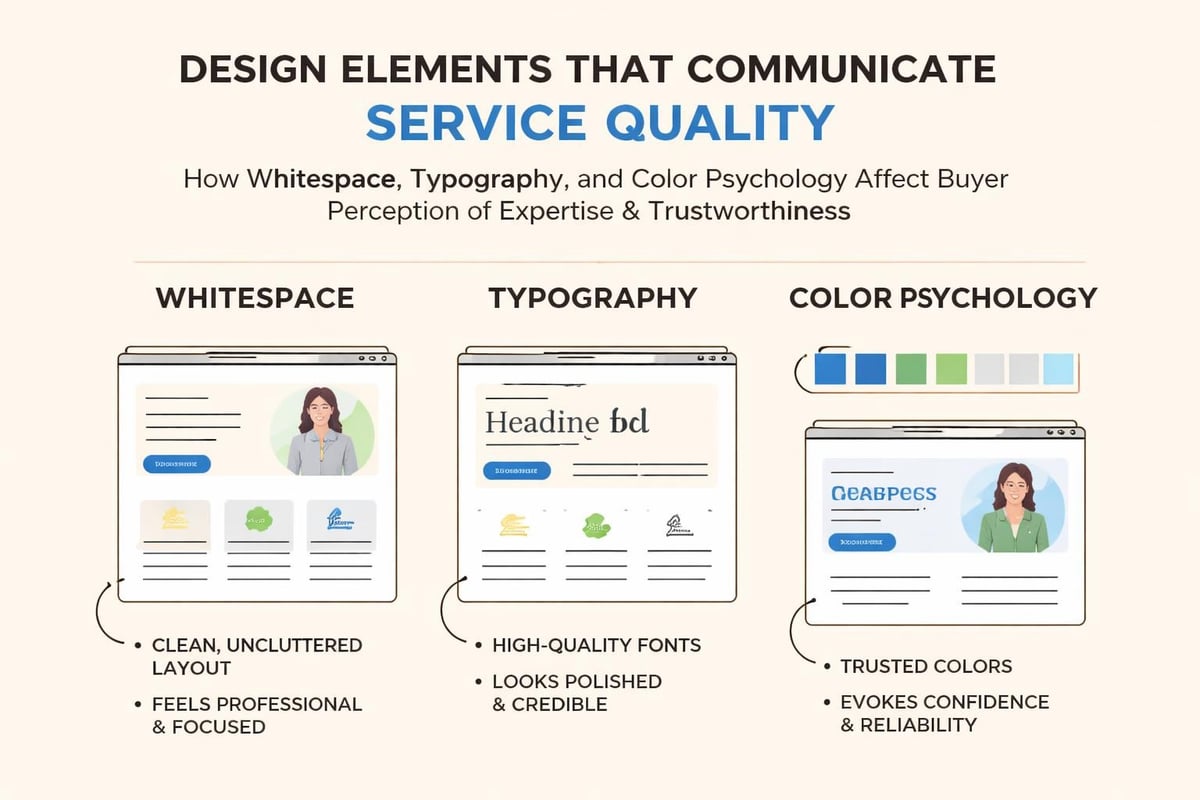
Certain aesthetic decisions communicate specific brand attributes. Understanding these associations helps you design with intent rather than preference.
| Design Element | What It Signals | When to Use It |
|---|---|---|
| Generous whitespace | Premium positioning, confidence | High-ticket services, strategic work |
| Dense information | Expertise, thoroughness | Technical services, compliance-heavy industries |
| Bold typography | Authority, directness | Consulting, leadership development |
| Soft colors, rounded edges | Approachability, care | Client services, community-focused work |
These aren't rules. They're patterns. But when your marketing aesthetics align with your market's expectations, conversion improves because the visual language matches the value proposition.
The Relationship Between Aesthetics and Conversion
Marketing aesthetics directly influence conversion rates through reduced friction and increased trust. When prospects don't have to work to understand your offer, they move faster. When your visuals eliminate doubt, they're more likely to book a call or request a proposal.
Research on atmospherics in retail shows how environmental design influences purchase behavior. The digital equivalent is how your website structure, color choices, and visual hierarchy guide prospects toward action. Your marketing aesthetics create the environment where decisions happen.
Conversion-focused aesthetic principles:
- Clear visual hierarchy guides attention to key actions
- Consistent button styling reduces decision fatigue
- Strategic use of contrast highlights calls-to-action
- Whitespace around important elements increases click-through rates
- Professional photography builds credibility faster than stock images
These details matter because they remove micro-friction. Each small improvement compounds. A prospect who trusts your aesthetics is more likely to trust your process, your pricing, and your ability to deliver.
Testing Aesthetic Changes Systematically
Marketing aesthetics should be data-informed, not opinion-driven. A/B test your design choices the same way you test copy. Track how changes to layout, color, or imagery affect time on page, scroll depth, and conversion rates.
Start with high-impact areas. Test homepage hero sections, pricing page layouts, and form designs before optimizing footer links. Prioritize aesthetic changes that directly influence revenue.
Common Marketing Aesthetics Mistakes
Even businesses that understand the importance of design make predictable mistakes. These errors don't come from bad taste. They come from treating aesthetics as isolated decisions rather than systematic infrastructure.
Three frequent aesthetic failures:
- Over-designing: Adding visual complexity that creates confusion rather than clarity
- Under-designing: Generic templates that fail to differentiate your brand
- Inconsistent execution: Strong website but weak follow-through in email, proposals, and social
The fix isn't hiring a more expensive designer. It's creating systems that maintain quality across every touchpoint. Your marketing aesthetics should work whether you're designing a landing page or a one-slide email.
When to Refresh Your Marketing Aesthetics
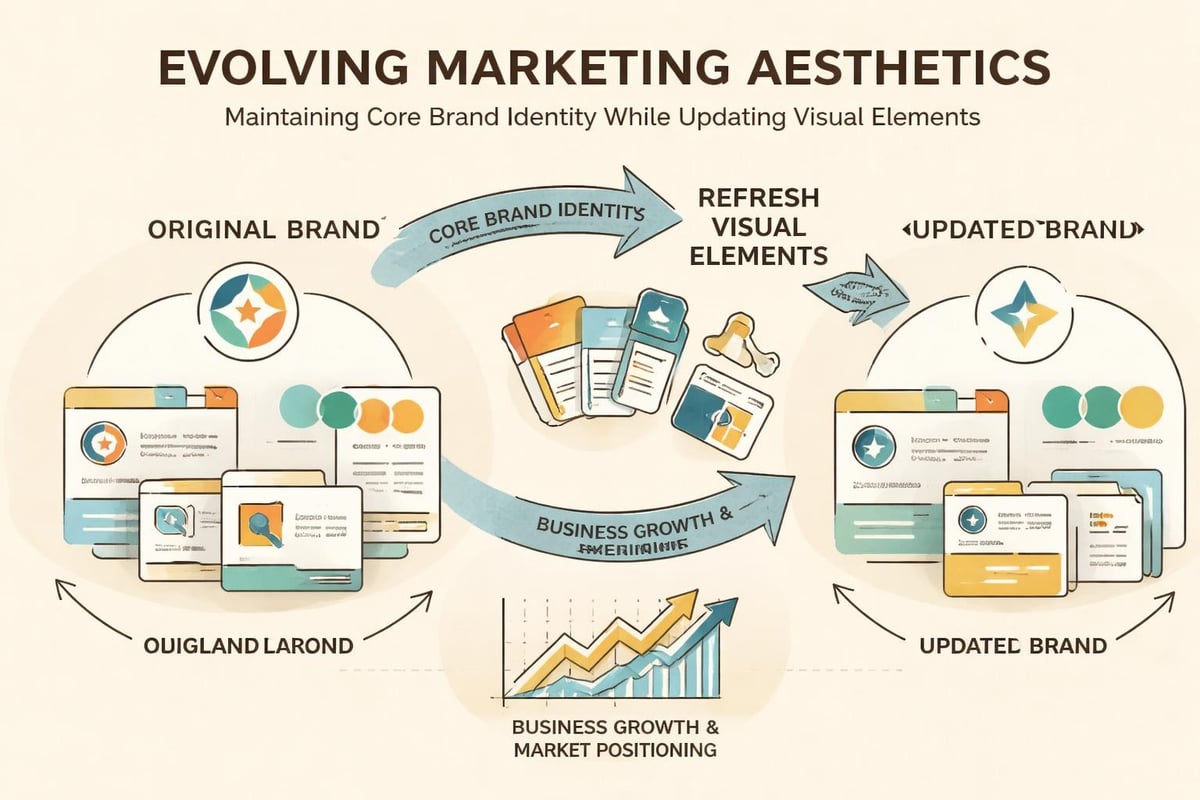
Brand evolution is normal. As your positioning sharpens and your services mature, your aesthetics should keep pace. But refresh strategically, not randomly.
Signs it's time to update your marketing aesthetics:
- Your brand has expanded into new service lines that the current design doesn't reflect
- Competitor aesthetics have evolved and yours now feel dated
- Internal feedback shows your team struggles to create on-brand content
- Analytics show high bounce rates on key pages despite strong traffic
- You've repositioned from generalist to specialist and need to signal premium value
Refreshing marketing aesthetics isn't rebranding. It's refining the visual system to match where your business is now. Keep what works, update what doesn't, and maintain consistency through the transition.
Aesthetic Alignment Across Marketing Channels
Your marketing doesn't live in one place. Prospects interact with your brand across your website, email, social platforms, proposals, and live presentations. Marketing aesthetics fail when these channels feel disconnected.
Creating Cross-Channel Aesthetic Consistency
Build templates for every channel using the same design system. Your email headers should echo your website navigation. Your social graphics should use your brand color palette. Your proposal covers should match your landing page hero sections.
Channel-specific aesthetic applications:
| Channel | Aesthetic Priority | Implementation |
|---|---|---|
| Website | Hierarchy, navigation clarity | Consistent spacing, clear CTAs |
| Readability, brand recognition | Simple layouts, branded headers | |
| Social media | Thumb-stopping visuals | Bold typography, consistent filters |
| Proposals | Professionalism, authority | Clean layouts, strategic whitespace |
| Presentations | Clarity, memorability | Minimal text, strong visuals |
This consistency doesn't mean everything looks identical. It means everything feels related. A prospect should recognize your brand instantly, regardless of where they encounter it.
Marketing Aesthetics as Competitive Advantage
In crowded markets, marketing aesthetics become differentiation. When services are similar and pricing is comparable, the business with stronger visual identity wins more often. Not because prospects are shallow, but because aesthetics signal operational quality.
Your design choices tell prospects how you work. Attention to detail in your marketing suggests attention to detail in your delivery. Visual clarity in your website implies process clarity in your systems. Strong marketing aesthetics aren't vanity, they're evidence.
Service businesses that invest in systematic marketing aesthetics see:
- Faster sales cycles: Prospects trust sooner and need less convincing
- Higher perceived value: Professional presentation supports premium pricing
- Better client quality: Strong aesthetics attract clients who value quality
- Increased referrals: Memorable branding makes word-of-mouth more effective
These outcomes compound. The business with better marketing aesthetics doesn't just win individual deals. It builds momentum that makes future growth easier.
Operationalizing Aesthetic Excellence
Marketing aesthetics become operational when they're built into your systems. Create branded templates in your CRM. Build a Canva library with pre-approved layouts. Document your design standards in a shared guide your whole team can access.
The goal is to make good design the default, not the exception. When aesthetic quality is systematic rather than dependent on individual skill, your marketing scales without quality drop-off.
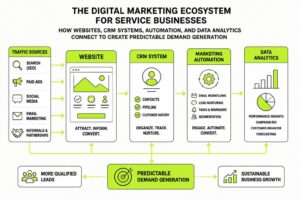
At MDO Digital, we see how structured marketing aesthetics remove chaos and protect leads. When your visual identity is consistent across your website, automation sequences, and client touchpoints, trust builds automatically. The aesthetic system becomes infrastructure that works while you focus on delivery.
Marketing aesthetics aren't about making things pretty. They're about building trust at scale through consistent visual systems that signal quality, reduce friction, and accelerate decisions. When your design choices align with your positioning and are executed systematically across every touchpoint, prospects move faster because credibility is already established. If you need help building marketing systems and branding infrastructure that actually converts attention into predictable demand, MDO Digital can help you create clarity that compounds.