Most content marketing doesn't work because it's built on hope instead of systems. You publish blog posts, share on social media, and wait for leads that never arrive. Growth content marketing flips this approach. It treats content as infrastructure, not decoration. Every piece serves a measurable purpose in your customer journey, backed by data that tells you what's working and what's wasting your time. For service-based businesses, this shift from volume to velocity changes everything.
The difference between traditional content and growth-focused content strategy comes down to intent. Traditional content asks, "What should we write about?" Growth content marketing asks, "What conversion event are we optimizing for, and what content gets us there fastest?" This isn't about churning out more posts. It's about building a system where each asset compounds the value of what came before it.
What Growth Content Marketing Actually Means
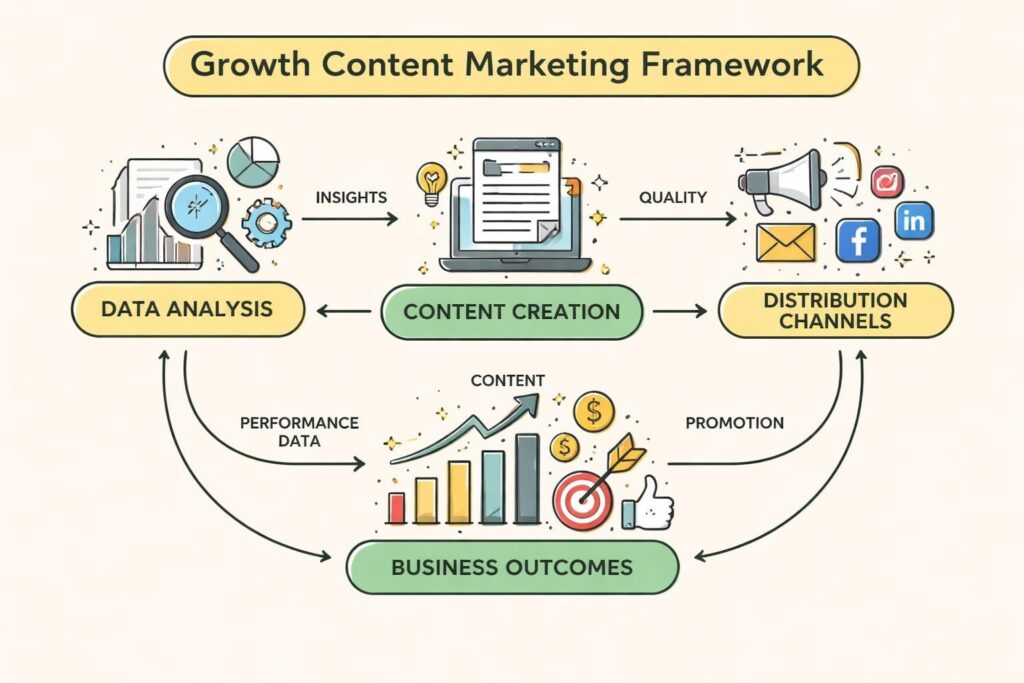
Growth content marketing combines the principles of content marketing with the velocity mindset of growth hacking. You're not just attracting an audience. You're engineering a predictable path from stranger to qualified lead to customer.
The framework rests on three pillars:
- Data-driven topic selection based on search intent and conversion potential
- Distribution systems that amplify reach without manual effort
- Conversion architecture built into every content piece
Most agencies treat these as separate functions. SEO sits in one corner. Content lives in another. Conversion optimization becomes someone else's problem. Growth content marketing integrates all three from the start.
The Infrastructure Behind Effective Content
Think of your content ecosystem like a CRM. Each piece captures information, qualifies interest, and moves prospects through stages. A blog post isn't just traffic. It's the first touchpoint in a sequence that ends with a booked call or signed contract.
Here's what that infrastructure looks like in practice:
| Content Type | Primary Function | Conversion Goal | Measurement |
|---|---|---|---|
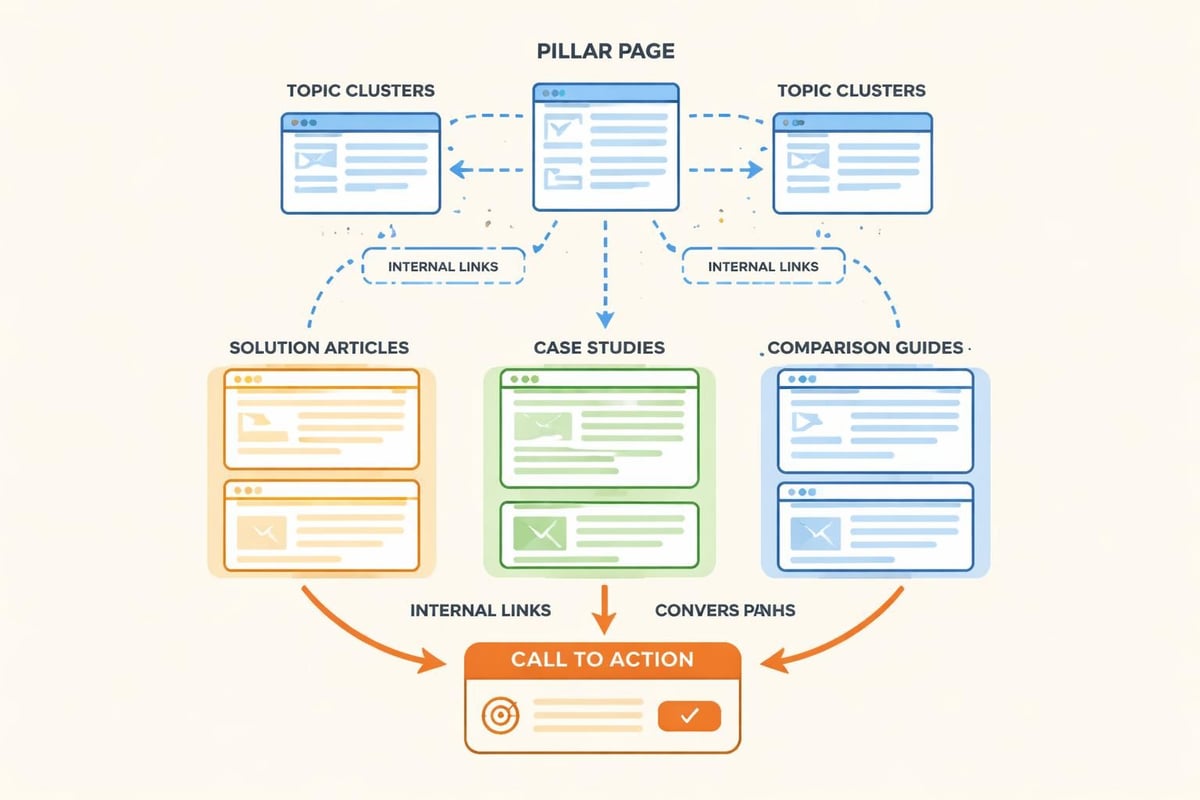
| Topic Cluster Hub | SEO authority, brand positioning | Email capture, tool download | Organic traffic, list growth |
| Problem-Solution Article | Qualify search intent, demonstrate expertise | Contact form, calendar booking | Conversion rate, cost per lead |
| Case Study | Proof, objection handling | Direct inquiry, sales enablement | Time to close, deal size |
| Comparison Guide | Late-stage education | Demo request, purchase | Click-through rate, revenue attribution |
The table shows function, but the real power comes from connecting these pieces. Your hub page links to solution articles. Those articles reference case studies. Case studies drive to comparison guides. Every path leads somewhere measurable.
Building Your Growth Content System
Start with the conversion event you actually need. Not "awareness." Not "engagement." What business outcome matters? For most service businesses, it's qualified leads booking discovery calls or requesting proposals.
Work backward from that point. What questions does someone ask before they're ready to book? What objections need handling? What proof do they require? Map these decision points, then build content that addresses each one.
Topic Selection Based on Business Value
Traditional SEO chases search volume. Growth content marketing prioritizes business value per visitor. A keyword with 500 monthly searches that attracts your exact customer beats 5,000 searches from tire-kickers every time.
Calculate topic value using this formula:
- Search volume × Click-through rate estimate
- × Your typical conversion rate
- × Average customer value
- = Monthly topic value
This math tells you which topics deserve investment and which waste resources. You'll often find that lower-volume, high-intent terms generate more revenue than the obvious broad keywords everyone fights over.
When building content that drives measurable outcomes, you'll notice patterns. Service businesses convert best on comparison content, process explanations, and pricing transparency. Product businesses need specification guides and use case libraries. Your data shows what works for your market.
Distribution Channels That Compound Value
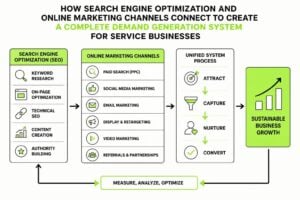
Creating good content solves half the problem. Getting it in front of people who'll actually convert solves the other half. Growth content marketing treats distribution as a system, not an afterthought.
Owned Channel Integration
Your website becomes the hub. Everything else points back:
- Email sequences that resurface relevant content based on subscriber behavior
- Social snippets that pull prospects into full articles
- Retargeting campaigns showing specific content to specific audience segments
- Sales enablement where your team sends articles instead of writing custom emails
This integration means content gets multiple lives. A single article might reach someone through organic search, get reshared in an email sequence three months later, show up in a LinkedIn ad to website visitors, and get sent by your sales team during negotiations.
The compounding effect comes from these repeated exposures. Each touchpoint builds familiarity and authority without requiring new content production.
Strategic Partnerships and Syndication
Growth content marketing leverages other people's audiences without losing control of the conversion path. Guest posts on relevant industry sites, syndication to business publications, podcast appearances that drive to specific landing pages.
The key is tracking. Every external placement needs UTM parameters so you know which channels actually convert. Most businesses discover that one or two partnership channels drive 80% of results. Double down there instead of spreading thin.
Conversion Architecture Within Content
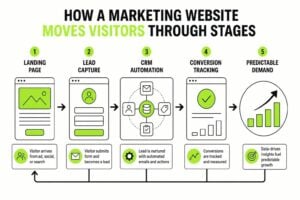
Every content piece needs a clear next step. Not a generic "contact us" button. A specific action that matches where the reader sits in their decision process.
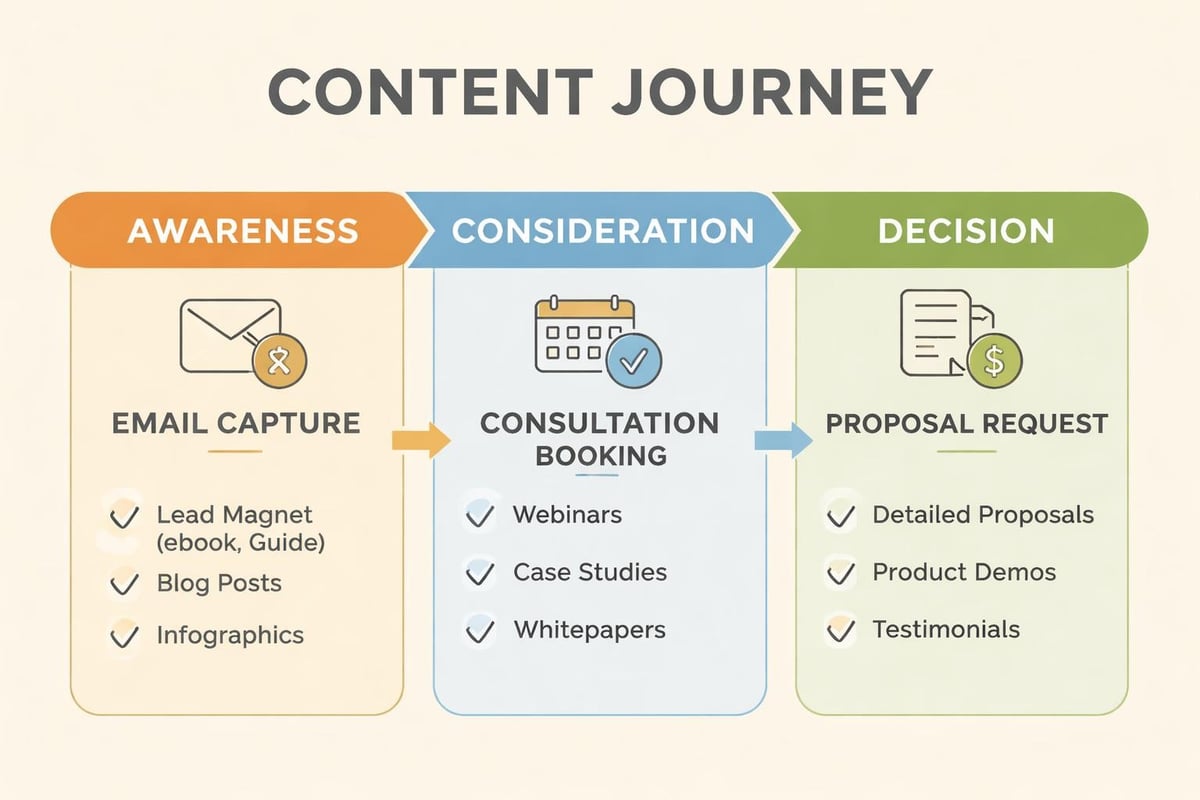
Early-stage content (awareness, problem identification) converts to email capture or resource downloads. You're building permission to follow up, not forcing a sale.
Mid-stage content (solution exploration, option comparison) drives to calculators, assessments, or consultation bookings. The reader knows they have a problem and needs help scoping solutions.
Late-stage content (vendor selection, final objections) pushes to demos, proposals, or direct sales conversations. These readers are ready to buy. Make it easy.
Conversion Elements That Actually Work
Skip the popup overlays and aggressive CTAs. Growth content marketing uses conversion elements that feel helpful, not pushy:
- Content upgrades specific to the article topic (checklists, templates, expanded guides)
- Inline calculators that provide instant value while capturing lead data
- Exit-intent offers timed to reading behavior, not arbitrary scroll depth
- Conversational CTAs that acknowledge where the reader is in their journey
Test everything. What converts in a pricing guide won't convert in a thought leadership piece. Your data from digital marketing initiatives shows which approaches work for your specific audience.
Measurement and Optimization Loops
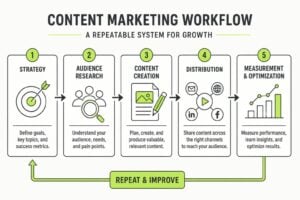
Growth content marketing lives or dies by measurement. You need to know what's working this month so you can do more of it next month.
Track these metrics at minimum:
| Metric Category | Specific Measures | Why It Matters |
|---|---|---|
| Acquisition | Organic traffic by topic, referral sources | Shows what's attracting your audience |
| Engagement | Time on page, scroll depth, bounce rate | Indicates content quality and relevance |
| Conversion | Form fills, downloads, bookings by content | Reveals which topics drive business outcomes |
| Revenue Attribution | Customer source by content, lifetime value | Connects content investment to actual revenue |
Most businesses track the first two categories and ignore the last two. That's why their content doesn't drive growth. You can't optimize what you don't measure.
The Monthly Optimization Process
Set aside time each month to review performance:
- Identify your top 10 performing pieces by conversion rate
- Analyze what they have in common (topics, format, CTAs, length)
- Update underperforming content to match winning patterns
- Plan next month's topics based on conversion data, not gut feel
This process turns content creation from guesswork into a system. You're not starting from zero each month. You're building on what already works. According to Amazon’s guide on growth marketing, this experimentation cycle is what separates growth-focused teams from traditional marketing departments.
Integration With Marketing Systems
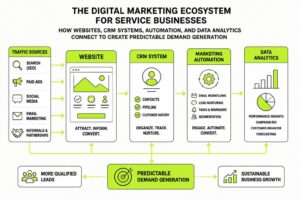
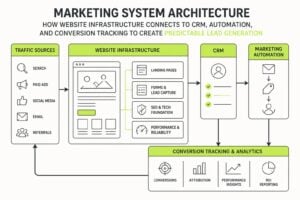
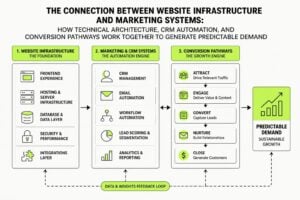
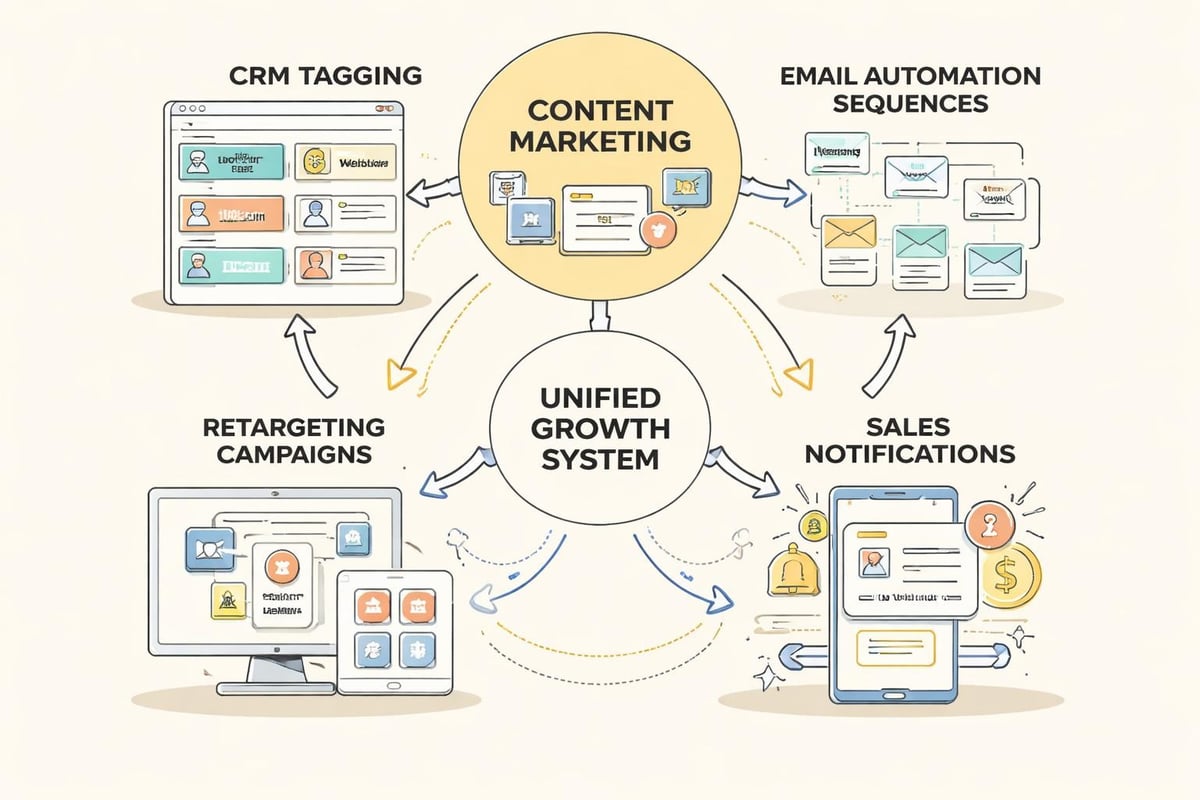
Growth content marketing doesn't exist in isolation. It connects to your CRM, email automation, advertising platforms, and sales processes. When these systems talk to each other, you unlock capabilities impossible with standalone content.
A visitor reads your article about pricing models. Your CRM tags them as "pricing stage." They get added to an email sequence addressing common pricing objections. Three days later, they see a retargeting ad for your ROI calculator. A week after that, your sales team receives a notification that this lead is "hot" based on engagement scoring.
This orchestration requires infrastructure. Most service businesses need:
- CRM with marketing automation (HubSpot, ActiveCampaign, or similar)
- Analytics beyond Google Analytics to track full customer journeys
- Content management system that integrates with your CRM
- Ad platforms that can retarget based on content engagement
The investment in marketing systems pays for itself quickly when content starts generating predictable leads instead of random traffic.
Automation That Scales Your Effort
Manual content distribution doesn't scale. Growth content marketing automates repetitive tasks so you focus on creation and strategy:
- RSS-to-social tools that share new content across platforms
- Email sequences triggered by specific content interactions
- Slack or CRM notifications when high-value prospects engage with content
- Automated reporting that shows content performance without manual data pulls
The goal isn't to remove humans from the process. It's to remove humans from tasks machines handle better. Your team should spend time on strategy, creation, and relationship building. Not copying links into social media schedulers.
Content Formats That Drive Growth
Not all formats perform equally. Growth content marketing focuses on formats with proven conversion potential for service businesses.
Long-Form Educational Content
Comprehensive guides (2,000-4,000 words) that thoroughly address a topic establish authority and rank for multiple related keywords. They're also linkable assets that attract backlinks naturally, compounding their SEO value over time.
These pieces work best for:
- Complex service explanations
- Process breakdowns
- Industry education
- Comparison frameworks
When exploring strategic content development, you'll find that one exceptional guide often outperforms ten mediocre blog posts.
Interactive Tools and Calculators
Prospects love instant value. A pricing calculator, ROI estimator, or assessment tool provides immediate utility while capturing lead information.
Interactive content has higher engagement rates and conversion rates than static content. It also gives you better qualification data. Someone who spends five minutes with your ROI calculator is more qualified than someone who skimmed a blog post.
Video Content With Strategic CTAs
Video extends your reach to people who prefer watching over reading. But growth content marketing uses video strategically, not randomly.
Create videos that:
- Answer specific questions your prospects ask during sales calls
- Demonstrate processes too complex for written explanation
- Showcase results through client testimonials and case studies
- Include clear next steps in both the video and description
Host videos on platforms where your audience already spends time. For B2B service businesses, that's usually YouTube and LinkedIn. Track which videos drive the most conversions, then create more content on those topics.
Team Structure for Growth Content
Traditional content teams separate writers, SEO specialists, and conversion optimizers. Growth content marketing requires cross-functional collaboration from the start.
The ideal structure includes:
- Content strategist who defines topics based on business value, not just search volume
- Writer/creator who understands both audience needs and conversion principles
- SEO specialist who optimizes for rankings without sacrificing readability
- Data analyst who tracks performance and identifies optimization opportunities
Small teams often combine these roles. One person might handle strategy and writing, while another covers SEO and analytics. The key is ensuring all perspectives inform each piece of content from conception through publication.
Building Content Operations
Consistency matters more than perfection. A good article published weekly beats an excellent article published quarterly. Growth content marketing requires operational discipline:
- Monthly planning based on keyword research and performance data
- Weekly production with clear deadlines and quality standards
- Daily distribution across owned and partner channels
- Continuous optimization of existing content based on performance
This rhythm turns content from a project into a system. Your audience expects regular value. Search engines reward consistent publishing. Your sales team needs fresh material for outreach. Operations make it happen.
Common Mistakes That Kill Growth
Most businesses trying growth content marketing stumble on predictable problems. Avoid these:
Chasing trends instead of serving intent. That viral topic might get traffic, but if it doesn't attract your customer, it's noise. Stick to topics with clear business value.
Publishing without distribution plans. Content doesn't promote itself. Every piece needs a deliberate distribution strategy before it goes live.
Ignoring existing content. Your archive likely contains underperforming articles that need optimization more than you need new content. Update the old before creating the new.
Measuring vanity metrics. Page views and social shares feel good but don't pay bills. Measure conversions and revenue attribution.
Skipping the systems integration. Content that doesn't connect to your CRM, email platform, and sales process operates at 30% effectiveness.
When you focus on branding and content marketing together, these mistakes become obvious. Your brand promise should inform your content strategy, and your content should reinforce your brand positioning.
Scaling Without Losing Quality
As your content system starts working, you'll want to scale production. Do it carefully. More content doesn't automatically mean more results.
Scale in this order:
- Optimize existing top performers until you've maxed their potential
- Expand topic clusters around proven winners
- Increase publishing frequency only after ensuring quality standards hold
- Add new formats (video, interactive, audio) to reach different audience segments
Quality beats quantity at every stage. Ten exceptional pieces generate more business than fifty mediocre ones. Your audience can tell the difference, and search engines increasingly can too.
When to Bring In Outside Help
Some businesses handle growth content marketing in-house. Others partner with specialists. Consider outside help when:
- Your team lacks specific expertise (technical SEO, conversion optimization, content strategy)
- Production demands exceed internal capacity
- You need fresh perspective on stuck strategies
- Systems integration requires specialized technical knowledge
The right partner doesn't just create content. They build systems that keep working after the engagement ends. Look for agencies that emphasize infrastructure over one-off projects.
Growth content marketing transforms how service businesses approach demand generation. When you treat content as infrastructure connected to marketing systems, every piece compounds the value of what came before it. The shift from volume to velocity, from hope to measurement, makes growth predictable instead of random. If you're ready to remove chaos from your marketing and build systems that convert attention into qualified leads, MDO Digital helps service-based businesses design the content infrastructure and automation that creates structured, compounding growth.