Most service businesses treat branding and direct marketing as separate jobs. Branding sits over here looking pretty, while direct response does the heavy lifting of generating leads. But that split creates waste. You're either building a beautiful brand that doesn't convert, or running tactical campaigns that don't build equity. Direct branding bridges that gap. It's the practice of making every brand touchpoint measurable and every direct response campaign a deposit into your brand. When done properly, you stop choosing between awareness and action. You get both, compounded over time.
What Direct Branding Actually Means
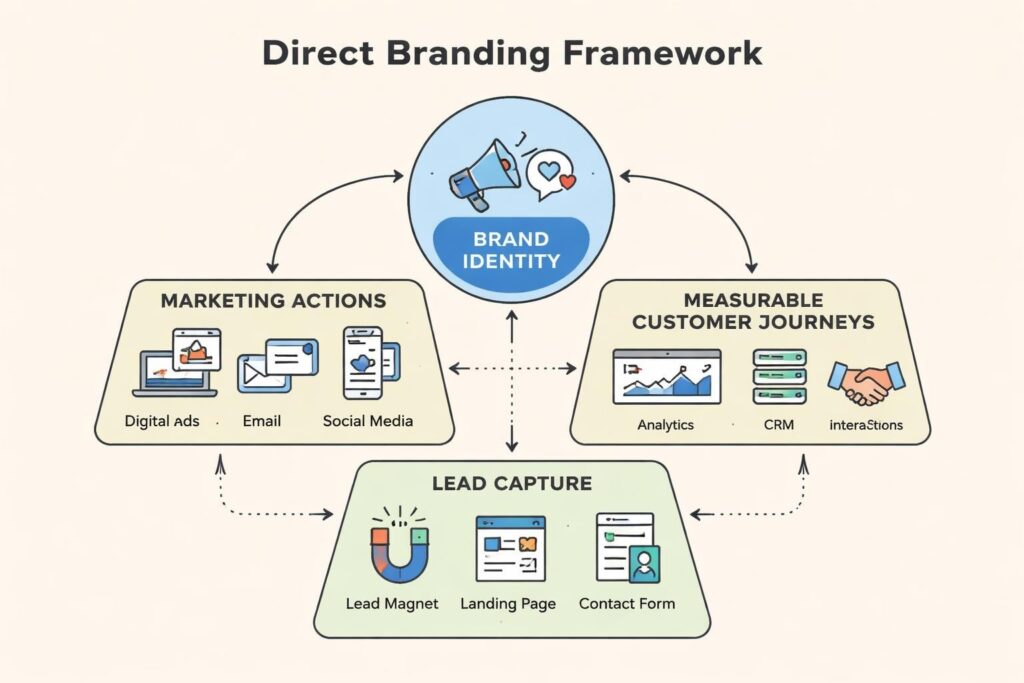
Direct branding isn't just slapping a logo on a Facebook ad. It's a strategic approach that treats brand building as a measurable discipline. Think of it as direct marketing with a memory. Every touchpoint, whether it's an email sequence, a landing page, or a retargeting ad, reinforces who you are while prompting immediate action.
The traditional view keeps these worlds apart. Brand marketing focuses on recognition, emotional connection, and long-term positioning. Direct marketing obsesses over conversion rates, cost per lead, and immediate ROI. But service businesses don't have the luxury of treating these as separate budgets. You need every dollar to work twice: once to build trust, again to generate demand.
Key principles that define direct branding:
- Every brand asset must have a call to action
- Every direct response campaign must reinforce brand values
- Messaging stays consistent across all conversion points
- Design and copy work together to build recognition and response
- Data from campaigns informs brand positioning
When you apply these principles, your website isn't just a brochure. It's a conversion tool that looks and feels like your brand. Your email nurture sequences don't just educate; they build a relationship that compounds with each send. Your paid campaigns don't interrupt; they invite people into a branded experience that moves them toward a decision.
Why Service Businesses Need Direct Branding
Service businesses live in a different world than product companies. You can't show a photo of your deliverable on a shelf. You're selling expertise, process, and outcomes. That makes trust the entire game. And trust doesn't come from a single touchpoint.
Direct branding solves the trust problem by creating repeated, consistent exposure that also moves prospects forward. Instead of running brand awareness campaigns and hoping people remember you months later, you're building recognition while capturing intent. Every interaction is tracked, every message is purposeful, and every conversion point strengthens the brand.
The Economics of Integration
Splitting brand and direct response creates duplication. You're hiring different agencies, running separate campaigns, and trying to connect dots that were never designed to align. The messaging drifts. The design feels disconnected. Prospects see your brand ad on LinkedIn but land on a generic landing page that looks nothing like it.
That friction costs conversions. More importantly, it wastes the brand equity you've built. The Responsory’s Direct Branding℠ method demonstrates how combining these disciplines creates efficiency: one strategy, one voice, one measurement framework.
| Traditional Approach | Direct Branding Approach |
|---|---|
| Brand and performance teams work separately | Single team owns both brand and conversion |
| Awareness campaigns measure impressions | All campaigns measure actions and brand lift |
| Creative optimized for awards | Creative optimized for response and recognition |
| Long attribution windows | Short conversion cycles with brand memory |
| ROI measured in months or years | ROI measured in weeks with compounding brand value |
When you consolidate these functions, you eliminate waste. Your creative budget produces assets that convert today and build equity tomorrow. Your data shows not just what converts, but what messaging strengthens your position. And your team stops arguing about whether to prioritize brand or leads. Both happen simultaneously.
Building a Direct Branding System
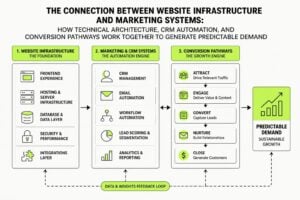
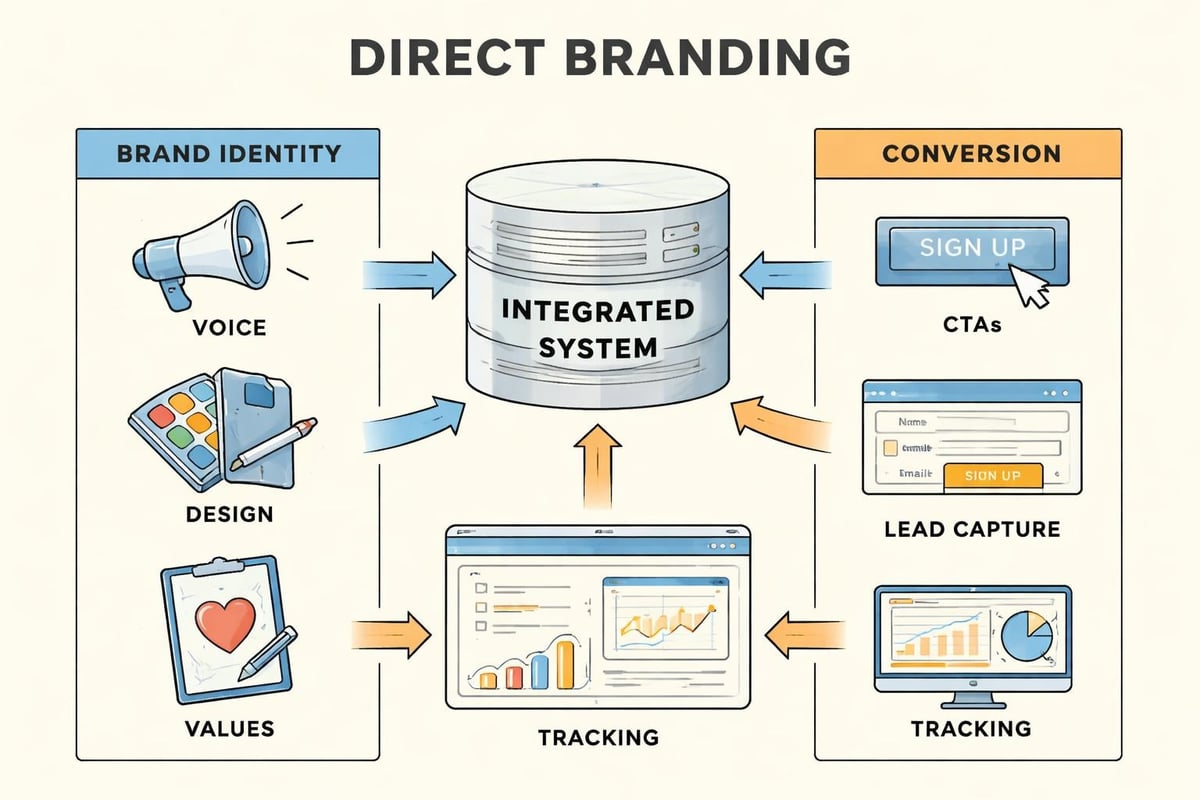
The shift to direct branding requires infrastructure, not just intention. You need systems that connect brand expression to lead capture, nurture, and conversion. This isn't a creative exercise. It's operational.
Start With Messaging Architecture
Direct branding begins with clarity about what you say and how you say it. Your messaging framework should define:
- Core positioning: The specific problem you solve and for whom
- Value propositions: Tangible outcomes clients achieve, not just features
- Brand voice: How you sound across every touchpoint
- Proof elements: Case studies, data, testimonials that support claims
- Objection handling: Common concerns and how you address them
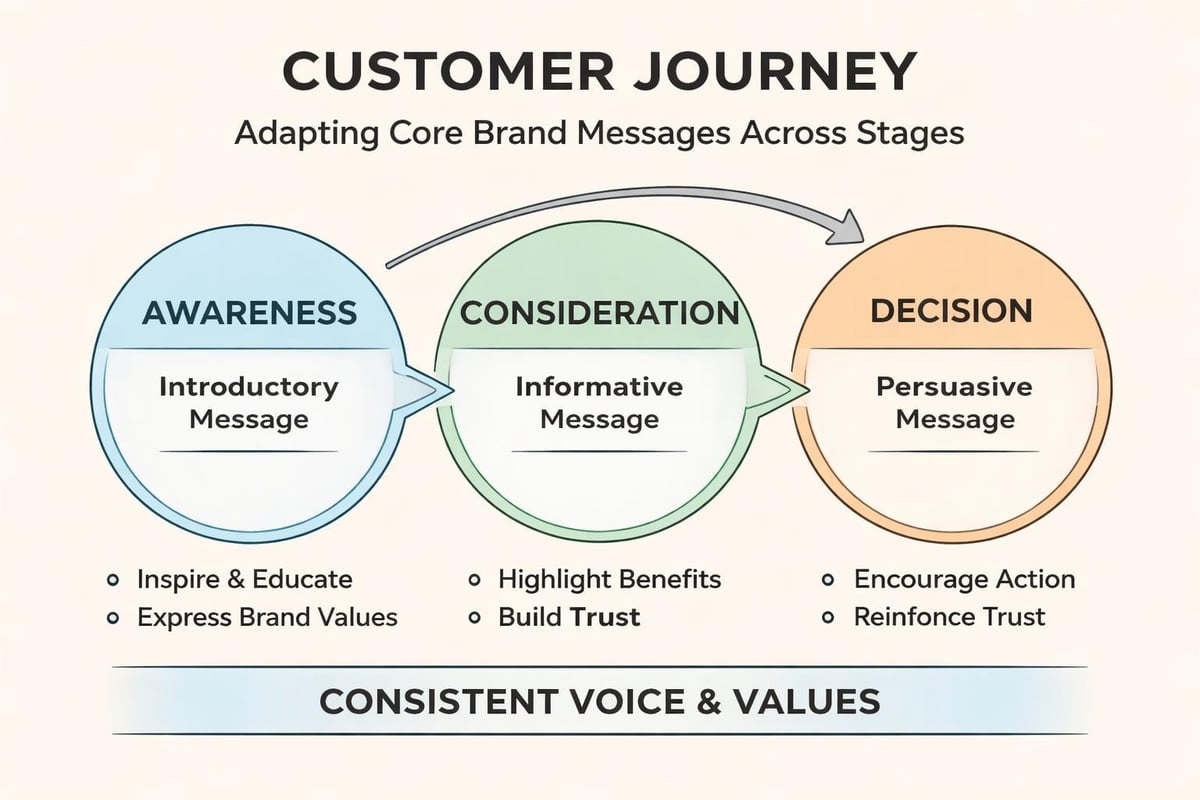
This framework becomes the foundation for everything. Your homepage uses it. Your email sequences pull from it. Your ads reflect it. When prospects move from awareness to consideration, they hear the same story told in consistent language. That consistency builds trust faster than scattered messaging ever could.
The integration of branding and direct marketing works because it creates a unified narrative across the customer journey. You're not changing your personality based on the channel. You're maintaining identity while adapting the call to action to where someone sits in their decision process.
Design Systems That Convert
Visual identity in direct branding serves a dual purpose: recognition and response. Your design system needs templates, components, and guidelines that make every asset instantly recognizable while optimizing for action.
Essential elements of a direct branding design system:
- Color psychology applied to CTAs: Brand colors that also drive clicks
- Typography hierarchy: Headlines that build brand and prompt reading
- Photography style: Images that reflect brand values and support conversion copy
- Form design: Lead capture that feels native to your brand
- Email templates: Branded layouts optimized for mobile opens and clicks
The goal is to create assets that feel cohesive whether someone sees them in paid search, email, or social media. But unlike traditional brand guidelines that focus on aesthetics, direct branding guidelines include conversion benchmarks. You're not just asking "Does this look like us?" You're asking "Does this look like us and make people act?"
Infrastructure for Tracking and Attribution
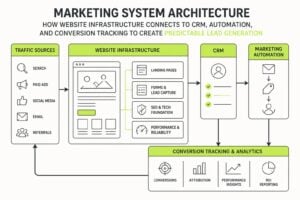
You can't improve what you don't measure. Direct branding requires tracking infrastructure that connects brand exposure to business outcomes. This means proper CRM and automation setup that tags leads by source, campaign, and creative variant.
Your tech stack should enable:
- Multi-touch attribution: Understanding which brand touchpoints contributed to conversion
- Creative testing: A/B testing that measures response while maintaining brand consistency
- Lead scoring: Qualifying prospects based on engagement with brand content
- Lifecycle tracking: Monitoring how brand interactions influence deal velocity
- ROI calculation: Connecting marketing spend to pipeline and revenue
When you have this infrastructure, you stop operating on gut feel. You know which brand messages resonate. You see which creative formats drive qualified leads. You understand the relationship between brand engagement and close rates. That data transforms direct branding from theory into a repeatable system.
Direct Branding in Practice
Theory matters less than execution. Here's how direct branding plays out across core marketing channels for service businesses.
Website as Conversion Engine
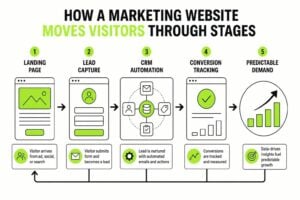
Your website is your most valuable brand asset and your hardest working salesperson. In a direct branding model, every page serves both purposes. The homepage establishes positioning while driving visitors to conversion points. Service pages explain your process while capturing leads. Case studies build credibility while prompting consultation requests.
The structure follows a pattern:
- Clear value proposition in the hero section
- Trust indicators (client logos, results, credentials) above the fold
- Benefit-driven body copy that educates and persuades
- Multiple CTAs positioned at natural decision points
- Social proof integrated throughout, not relegated to testimonial pages
This isn't about being pushy. It's about respecting that someone visiting your website is there to solve a problem. Direct branding ensures you communicate who you are while making it easy for them to take the next step.
Email That Builds and Converts
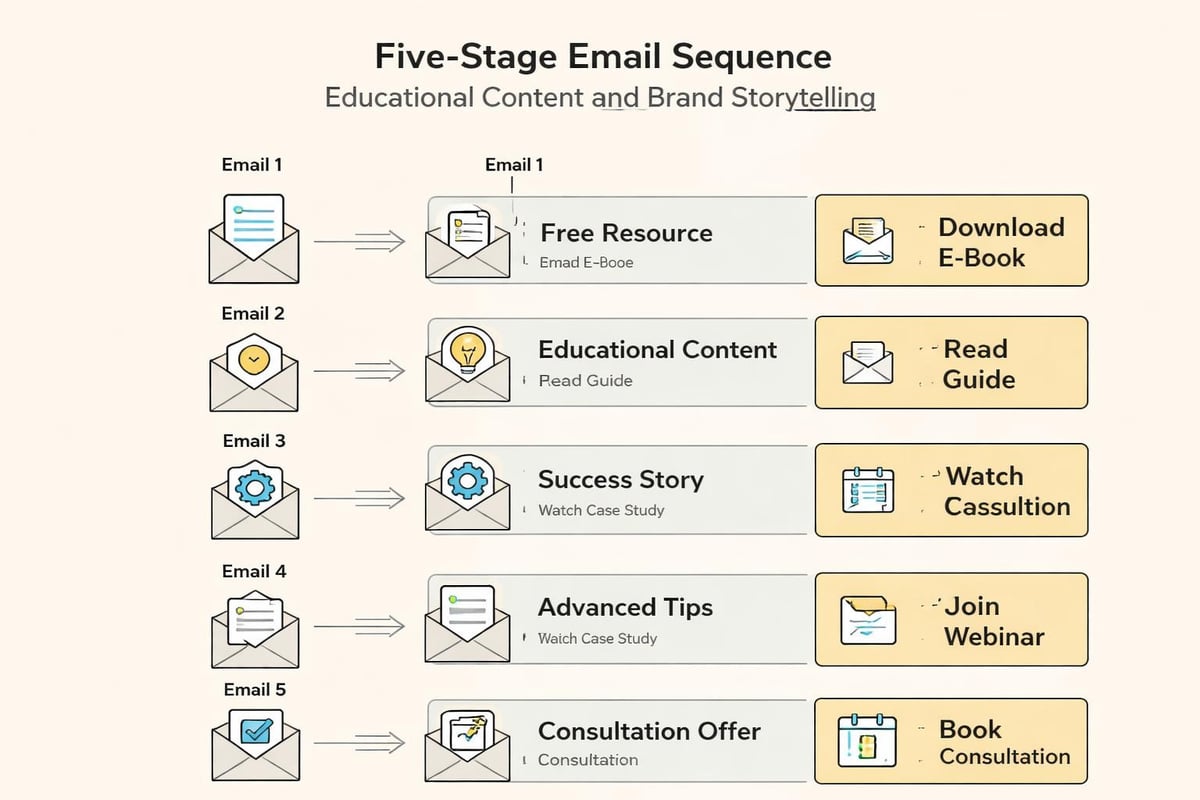
Email nurture sequences are where direct branding compounds fastest. Each message reinforces your positioning while moving prospects closer to a decision. The key is balancing value and promotion.
A typical direct branding email sequence might include:
| Email # | Purpose | Brand Element | Direct Element |
|---|---|---|---|
| 1 | Welcome | Share origin story and mission | Deliver promised resource, invite reply |
| 2 | Education | Demonstrate unique methodology | Link to detailed guide or tool |
| 3 | Social Proof | Share client transformation | Offer case study with consultation CTA |
| 4 | Objection Handling | Address common concerns with your POV | Invite questions or discovery call |
| 5 | Offer | Position premium service | Clear next step with urgency element |
Each email sounds like you. Each one gives value. And each one includes a clear path to conversation. Over time, recipients develop a relationship with your brand and a bias toward working with you. That's the compounding effect of direct branding.
Paid Media That Does Both Jobs
Paid advertising is where most businesses separate brand and direct. They run awareness campaigns on one platform and conversion campaigns on another. Direct branding merges these into campaigns that build recognition while capturing intent.
Your paid creative should always include:
- Distinctive brand elements: Logo, colors, or visual style that's immediately recognizable
- Clear value proposition: What you do and who you help
- Specific offer: Lead magnet, consultation, or resource
- Urgency or scarcity: Reason to act now, not later
- Friction-reduced landing experience: Ad message matches landing page
When someone sees your ads repeatedly, they start to remember you. When they click, they enter a branded experience that converts. This approach works especially well in direct response marketing where every impression is an opportunity to build mental availability while driving immediate action.
Measuring Direct Branding Success
Traditional brand marketing struggles with measurement. You run a campaign, hope for awareness lift, and maybe see results months later. Direct branding flips that model. You measure everything, in real time, across brand and performance metrics.
Metrics That Matter
The scorecard for direct branding includes both leading and lagging indicators:
Brand Metrics:
- Branded search volume (people looking for you by name)
- Direct traffic trends (visitors coming straight to your site)
- Social media mentions and sentiment
- Share of voice in your category
- Brand recall and recognition surveys
Direct Response Metrics:
- Lead volume and quality by source
- Conversion rate at each funnel stage
- Cost per qualified lead
- Pipeline velocity and close rate
- Customer acquisition cost vs. lifetime value
The magic happens when you correlate these. Are increases in branded search leading to lower CPLs? Are leads who engage with brand content closing faster? Does creative that scores high on brand recall also drive more conversions? Those insights let you optimize for both outcomes simultaneously.
Testing Within Brand Guidelines
One fear about direct branding is that constant optimization will dilute your identity. You'll chase clicks and lose your soul. But testing within a defined brand system prevents that. You're not testing whether to abandon your voice. You're testing which expression of your voice works best.
Examples of tests that strengthen both brand and performance:
- Headline variations that maintain brand voice but emphasize different benefits
- CTA language that reflects your personality while optimizing for clicks
- Email subject lines that sound like you but improve open rates
- Landing page layouts that preserve brand design while reducing friction
The key is setting boundaries. Define what's non-negotiable (your core positioning, your visual identity, your values) and what's flexible (headline structure, CTA placement, content format). Test aggressively within those boundaries and you'll build a brand that resonates and converts.
Common Direct Branding Mistakes
Even with good intentions, businesses stumble when adopting direct branding. These patterns show up repeatedly.
Prioritizing Short-Term Response Over Brand Equity
The temptation is to chase immediate conversions at the expense of brand building. You run ads that convert today but don't build memory. You send emails that drive clicks but sound nothing like your brand. Short-term wins compound into long-term weakness.
Direct branding requires patience to build assets that serve both purposes. Your first campaign might not hit target CPL while also establishing strong brand recognition. That's expected. Over time, as brand equity builds, your direct response performance improves. Cost per lead drops because people know you. Conversion rates increase because trust is pre-established.
Inconsistent Execution Across Channels
You nail direct branding on your website but your LinkedIn ads feel generic. Your email sequences sound like you but your landing pages look like templates. This inconsistency confuses prospects and wastes brand investment.
The solution is centralized creative and messaging control. One team, or one agency, owns brand expression across all channels. They adapt to platform constraints, but the core identity never shifts. When someone moves from ad to landing page to email sequence, they experience one continuous brand journey.
Ignoring the Data
Some businesses adopt direct branding conceptually but ignore what the data tells them. They assume their brand messaging is working without checking if it converts. Or they see strong response rates but don't track whether those leads remember who they are.
Direct branding only works if you let measurement inform iteration. Track everything. Review weekly. Test constantly. Let the data show you which brand expressions resonate and which direct tactics work. Then do more of what works and kill what doesn't.
Making Direct Branding Operational
Theory doesn't build businesses. Systems do. To make direct branding operational, you need processes that ensure every campaign, asset, and touchpoint serves both brand and conversion goals.
The Review Framework
Before any marketing asset goes live, run it through this filter:
- Does this sound like us? Voice and tone check
- Does this strengthen our positioning? Brand equity evaluation
- Is there a clear next step? Conversion path assessment
- Can we measure the outcome? Tracking verification
- Does this fit our customer journey? Context and timing review
This framework prevents assets that nail brand but miss conversion, or vice versa. It's a quality gate that keeps your marketing aligned with direct branding principles.
Cross-Functional Collaboration
Direct branding breaks down silos between brand teams and growth teams. In practice, that means regular collaboration:
- Weekly creative reviews where brand and performance marketers evaluate results together
- Shared dashboards that show brand and conversion metrics side by side
- Unified content calendars that plan campaigns around both objectives
- Joint testing roadmaps that prioritize experiments benefiting both outcomes
When brand and growth teams operate as one unit, direct branding becomes your default operating mode. You stop thinking in terms of brand campaigns versus performance campaigns. Everything is direct branding.
Choosing Partners Who Understand Both
If you work with agencies or freelancers, the traditional model assigns brand to one partner and performance to another. Direct branding requires partners who do both, or who collaborate seamlessly.
Look for agencies that:
- Show case studies with brand and performance outcomes
- Use data to inform creative decisions
- Maintain consistent brand expression while optimizing for conversion
- Build infrastructure (websites, CRM, automation) that serves both goals
- Speak both brand language and direct response language fluently
The right partner treats direct branding as standard practice, not a special request. They don't separate strategy into brand and performance workstreams. They build one system that compounds over time.
Direct branding isn't revolutionary. It's just smart business. You're building a brand people recognize and remember while creating systems that turn attention into revenue. When you stop splitting these objectives, your marketing becomes clearer, your costs drop, and your growth becomes predictable. If you need help building marketing infrastructure that treats brand and conversion as one system, MDO Digital specializes in exactly that. We'll help you remove the chaos, protect your leads, and create structured growth that compounds over time.