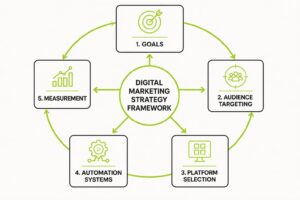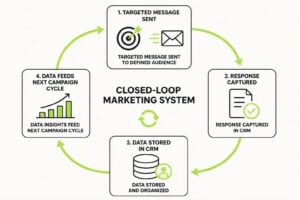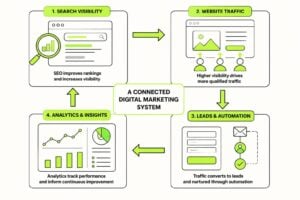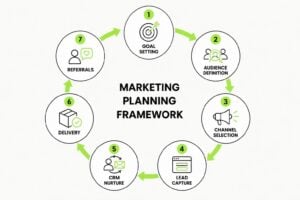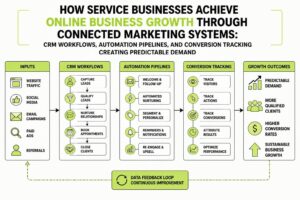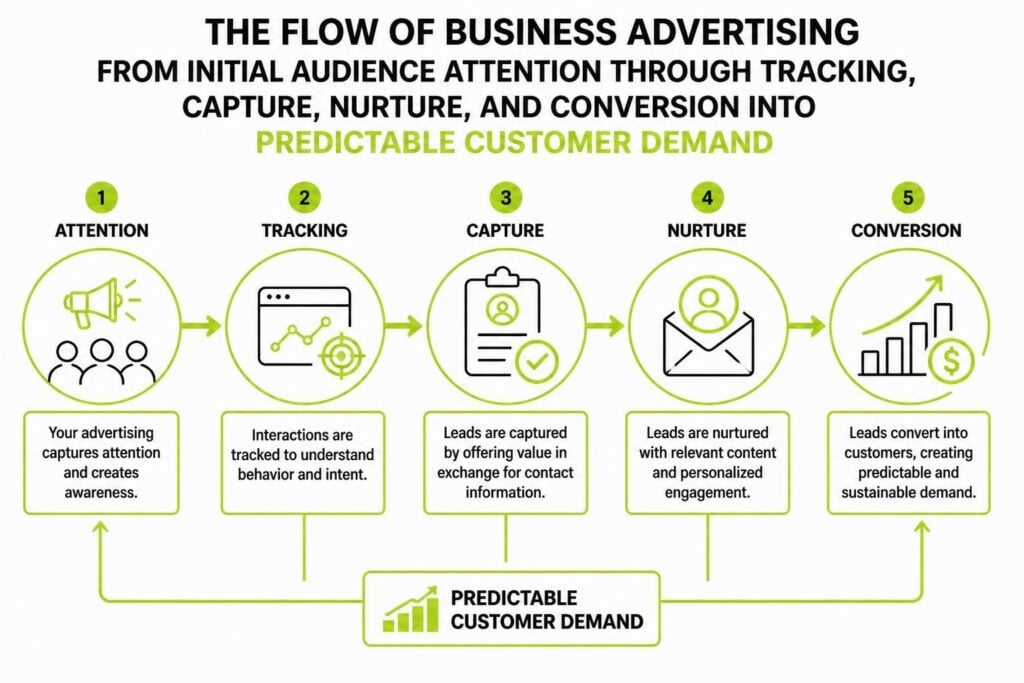
Business advertising doesn't fail because of bad creative or poor targeting. It fails because most businesses treat it as a standalone tactic instead of one part of a connected system. You run ads, clicks arrive, and then what? If you can't capture, track, and nurture those leads through a structured process, you're just renting attention with nothing to show for it. Real advertising works when it plugs into infrastructure that turns interest into revenue over time. That's the difference between spending money and building an asset.
What Business Advertising Actually Does
At its core, business advertising buys visibility. You're paying to put your offer in front of people who don't know you yet. The format changes constantly, from search ads to social feeds to programmatic display, but the function stays the same. You're interrupting someone's attention and offering a trade: give me a moment of your time, and I'll show you something relevant.
The problem is that most service businesses stop thinking right there. They focus entirely on the ad itself, the headline, the image, the call to action, and completely ignore what happens after the click. Advertising without a system is just noise. You might get traffic, but if that traffic hits a generic landing page or a contact form that dumps leads into an inbox, you've wasted the spend.
According to the IAB/PwC Internet Advertising Revenue Report, digital ad revenue continues to grow year over year, with billions flowing into search, social, and display. That's not because advertising is magic. It's because the businesses winning are the ones connecting ads to data, automation, and follow-up. They're not just buying clicks, they're building pipelines.
The Three Jobs of Business Advertising
Every ad you run should do at least one of these things:
- Generate immediate demand. Someone sees your ad, clicks, and takes action now. They book a call, download a resource, or buy. This is bottom-of-funnel work, targeting people who already know they have a problem and are looking for a solution.
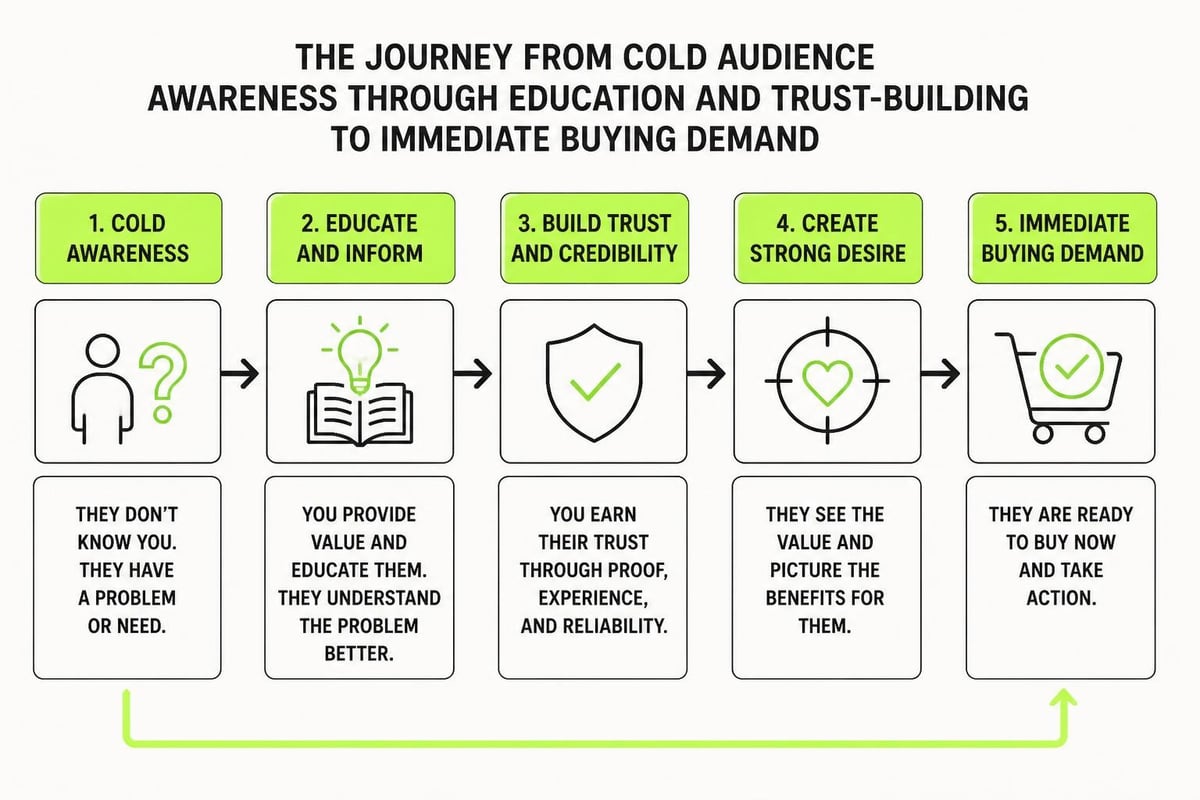
- Build awareness and trust. Not everyone is ready to buy today. Mid-funnel ads introduce your brand, demonstrate authority, and stay visible while a prospect does research. This is where content offers, case studies, and educational material sit.
- Stay top of mind. Retargeting and nurture ads keep you in front of people who've already engaged. They visited your site, watched a video, or downloaded something. These ads remind them you exist and push them toward the next step.
If your advertising only does one of these jobs, you're leaving money on the table. A proper system covers all three, moving people from cold to warm to ready.
Why Most Business Advertising Leaks Revenue
You run a campaign. You get clicks. The clicks land on a page. Then what?
Most businesses lose leads at this exact point. The page isn't optimised, the form asks for too much information, there's no follow-up sequence, and the lead sits in a spreadsheet or inbox until someone remembers to call. By then, the lead has moved on. This is a systems problem, not an advertising problem.
Here's where the leaks happen:
- No tracking. You don't know which ad, keyword, or audience drove the lead. You can't measure cost per acquisition, lifetime value, or return on spend. You're flying blind.
- No capture mechanism. The landing page is vague, the form is buried, or there's no clear offer. People bounce because they don't know what to do next.
- No follow-up. Even if someone fills out a form, there's no automated email sequence, no CRM pipeline, no task to call them. The lead goes cold while you're busy with other work.
- No segmentation. Every lead gets the same generic email or call script, regardless of where they came from or what they're interested in. You're treating a bottom-of-funnel buyer the same as someone who just found you five minutes ago.
This is why building a marketing system matters more than the ads themselves. The system is what converts attention into revenue. Advertising just fills the top of the funnel.
The Structure Behind Effective Business Advertising
Let's get practical. If you're going to spend money on business advertising in 2026, here's what needs to be in place before you launch a single campaign.
Clear Offer and Outcome
Your ad should promise one specific outcome to one specific person. Not "we help businesses grow." That's meaningless. Instead: "We build CRM systems for accountants who are drowning in spreadsheets and losing follow-up." The tighter the message, the better the targeting, and the higher the conversion rate.
If you can't explain what you do and who it's for in one sentence, your ad will wander. So will your audience.
Landing Page That Matches the Ad
This sounds obvious, but most businesses get it wrong. If your ad talks about CRM automation, the landing page better talk about CRM automation. Not your full service list, not a generic homepage, not a "learn more about us" page. Message match is everything.
The page should have:
- A headline that repeats or restates the ad promise
- A clear explanation of the outcome
- Social proof (testimonials, case studies, logos)
- A single, obvious call to action
No navigation, no distractions, no eighteen links to other pages. One message, one offer, one action.
CRM and Automation Behind the Scenes
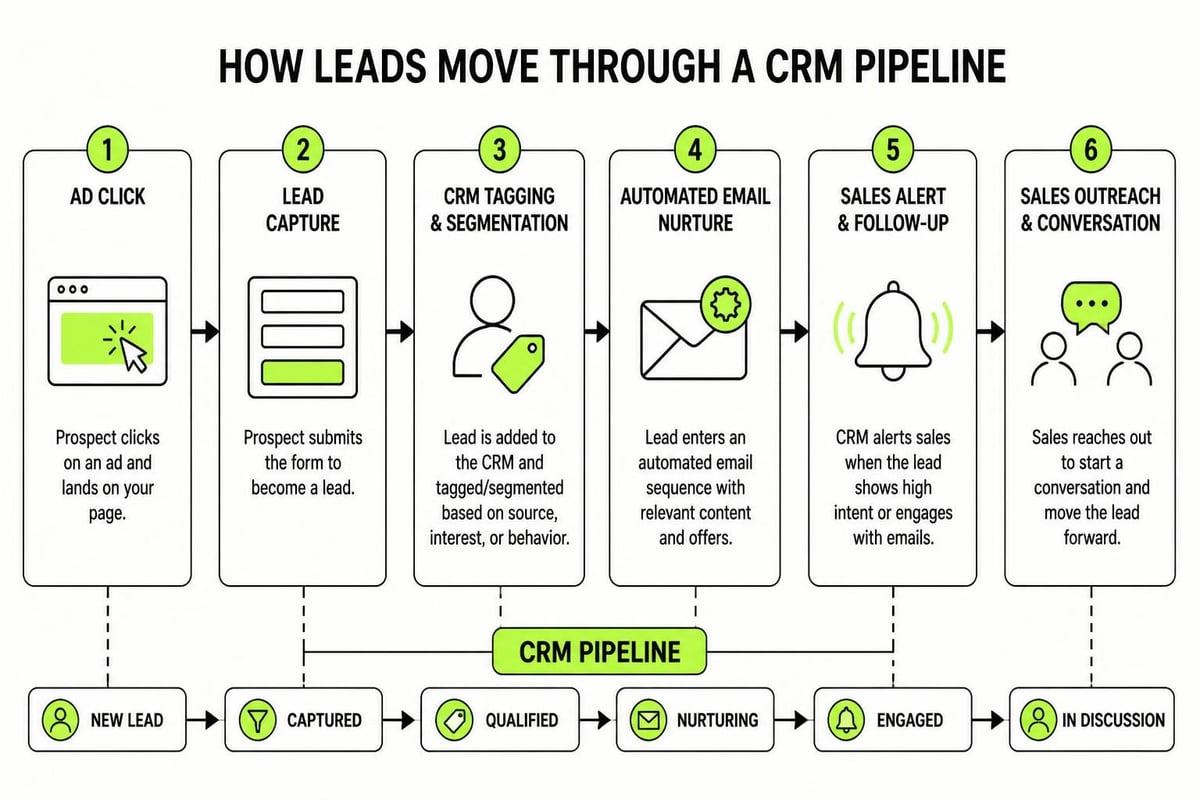
When someone fills out your form, they should immediately enter a CRM pipeline with a tag that tells you where they came from. That tag drives everything: the email sequence they receive, the follow-up task assigned to your team, the segmentation in future campaigns.
If you're not using a CRM, you're not doing business advertising. You're just renting attention. The 7-Step Marketing Plan walks through exactly how to build this kind of repeatable system, from setting goals to generating referrals, so every lead gets nurtured instead of forgotten.
Attribution and Reporting
You need to know which campaigns, ads, and keywords are driving results. Not just clicks, actual revenue. That means tracking from click to close, ideally in the same system.
Use UTM parameters on every ad link, connect your CRM to your ad platforms, and build dashboards that show cost per lead and cost per customer by source. If you can't measure it, you can't improve it.
| Metric | Why It Matters | How to Track It |
|---|---|---|
| Cost per click | Shows how competitive your targeting is | Ad platform dashboard |
| Conversion rate | Tells you if your landing page works | CRM or analytics tool |
| Cost per lead | Measures efficiency of your offer | Ad spend ÷ leads captured |
| Lead to customer rate | Shows how well you nurture and close | CRM pipeline reporting |
| Customer lifetime value | Justifies higher acquisition cost | CRM + revenue data |
Most service businesses obsess over cost per click and ignore everything downstream. That's backwards. A $50 click that turns into a $10,000 client is a bargain. A $2 click that goes nowhere is waste.
Choosing the Right Channels for Business Advertising
Not every platform works for every business. If you're a B2B service targeting CFOs, TikTok probably isn't your channel. If you're a local trade, national display campaigns are overkill. Match the platform to where your buyers actually spend time and how they make decisions.
Search Advertising (Google, Bing)
Best for high-intent leads who are actively looking for a solution right now. They type "CRM setup for small business" or "brand strategy agency Melbourne" and you show up. Search ads work when people already know they have a problem.
Pros:
- High intent, ready to act
- Precise keyword targeting
- Measurable ROI
Cons:
- Expensive in competitive niches
- Requires constant optimisation
- Doesn't build awareness
Social Advertising (Facebook, Instagram, LinkedIn)
Best for building awareness, nurturing interest, and retargeting. People aren't searching for you yet, so you're interrupting with something relevant. LinkedIn works well for B2B, Facebook and Instagram for consumer and local services.
According to PwC’s Global Entertainment & Media Outlook, digital advertising continues to shift toward social and video formats, with strong growth expected through 2030. That doesn't mean you should be everywhere. It means the platforms are maturing, and the businesses that use them strategically will keep winning.
Pros:
- Granular audience targeting
- Visual storytelling
- Good for nurture and retargeting
Cons:
- Lower intent than search
- Creative fatigue happens fast
- Requires ongoing testing
Display and Programmatic
Best for brand visibility and retargeting at scale. You can reach massive audiences across thousands of sites, but the intent is low. Most display works as reminder advertising, not direct response.
Pros:
- Broad reach
- Lower cost per impression
- Good for retargeting
Cons:
- Low engagement rates
- Ad fraud and viewability issues
- Hard to measure direct ROI
For more on how branding and advertising work together to build recognition and trust, the key is consistency. Your messaging, visuals, and tone should feel the same whether someone sees you on Google, LinkedIn, or a retargeting banner.
Compliance and Trust in Business Advertising
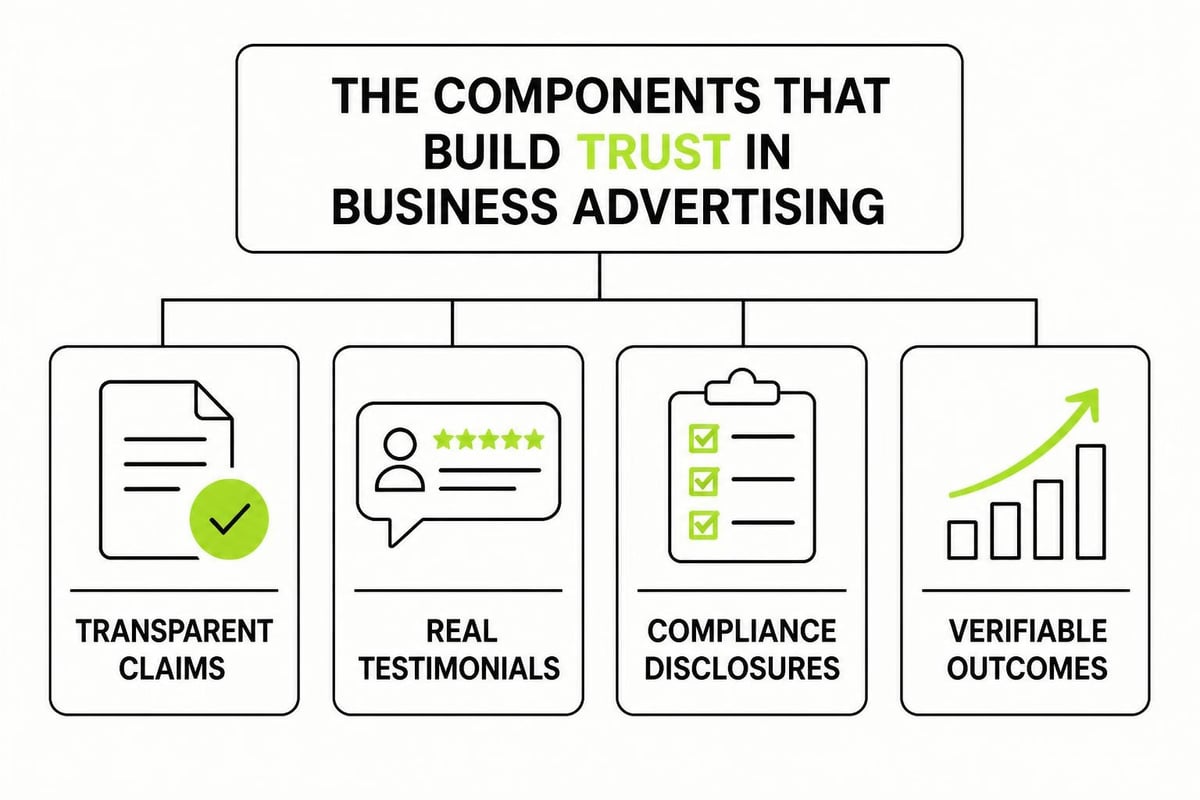
You can't just say whatever you want in an ad. Truth in advertising isn't a suggestion, it's the law. The Federal Trade Commission provides clear guidance on what businesses can and can't claim, especially around endorsements, testimonials, and performance promises.
If you say "guaranteed results," you better be able to prove it. If you use customer testimonials, they need to be real and representative. If you're working with influencers or affiliates, disclosures are mandatory. The FTC has updated its endorsement and influencer guidelines to keep up with digital platforms, and ignoring them can cost you more than the ad spend.
Beyond legal compliance, trust is a commercial issue. People are skeptical of ads by default. If your messaging feels manipulative, exaggerated, or vague, they'll scroll past. Clarity and honesty convert better than hype. Say what you do, who it's for, and what the outcome is. Then prove it with case studies, data, and testimonials that feel real.
Measuring What Matters in Business Advertising
Clicks and impressions are vanity metrics. They tell you people saw your ad, not whether it worked. The metrics that matter are the ones connected to revenue.
Upstream Metrics
These tell you if your ads are reaching the right people and getting attention:
- Impressions show reach
- Click-through rate (CTR) shows relevance
- Cost per click (CPC) shows competitiveness
If your CTR is terrible, your targeting or creative is off. If your CPC is sky-high, you're either in a brutal niche or your quality score is low.
Downstream Metrics
These tell you if the system is working after the click:
- Landing page conversion rate shows if your offer resonates
- Cost per lead shows efficiency
- Lead to opportunity rate shows if you're attracting the right people
- Cost per customer shows true ROI
Most businesses stop tracking at the lead. That's a mistake. A flood of junk leads that never close is worse than a trickle of high-intent prospects who convert. Track the full funnel, not just the top.
Attribution Models
Should you credit the first ad someone clicked, the last one before they converted, or everything in between? There's no universal answer. For service businesses with long sales cycles, multi-touch attribution makes sense. For transactional products, last-click might be fine.
The important part is picking a model and sticking with it so you can compare campaigns over time. The Media Rating Council publishes standards for digital measurement and attribution that can help you build a consistent approach.
The Reality of Business Advertising in 2026
Advertising is getting more expensive, more regulated, and more competitive. Platform algorithms change constantly. Privacy regulations limit tracking. Ad fraud and invalid traffic are real problems, which is why standards like ads.txt exist to bring transparency to the supply chain.
But the fundamentals haven't changed. Business advertising works when it's part of a system that captures attention, builds trust, and converts interest into predictable demand. If you're treating it as a one-off tactic, you'll burn budget and blame the platform.
The businesses winning in 2026 are the ones who:
- Know exactly who they're targeting and why
- Build offers that solve a specific problem for a specific person
- Connect ads to landing pages that match the message
- Capture leads into a CRM with automated follow-up
- Track from click to close and optimise based on revenue, not clicks
- Test constantly, but inside a framework that doesn't change every week
According to eMarketer’s 2025 advertising trends, addressability and measurement are the top concerns for marketers. That's because platforms are making it harder to track individuals, and businesses are realising they need first-party data and owned systems to survive. Your CRM, your email list, and your nurture sequences are more valuable than any ad platform because you control them.
That shift toward owned infrastructure is exactly why a structured digital marketing plan matters more than chasing the latest ad hack. Platforms change. Systems compound.
Business advertising only works when it connects to something bigger. Without a CRM to capture leads, automation to nurture them, and reporting to measure what's actually converting, you're just spending money on visibility. At MDO Digital, we build the systems that turn ad spend into predictable demand: high-trust websites, CRM infrastructure, and data-driven campaigns that remove chaos and protect every lead. If you're ready to stop renting attention and start building an asset, let's talk.