Most service businesses treat digital marketing and seo as separate jobs. Marketing runs ads and writes posts. SEO fiddles with keywords and tags. Both teams work hard, but the results stay scattered. The truth is simpler than most agencies admit. Digital marketing and seo are two parts of the same system. When you build them together, you remove chaos, protect leads, and create growth that compounds. When you split them apart, you waste time and money on tactics that never connect.
Why Digital Marketing and SEO Need Each Other
Digital marketing without SEO is like shouting in a crowded room. You might get attention, but you're burning budget to stay visible. The moment you stop paying, the traffic disappears.
SEO without digital marketing is the opposite problem. You rank well, traffic arrives, but nothing happens. No nurture system. No follow-up. No path from visitor to client. You've built a shop with no sales process.
The overlap is where the leverage lives:
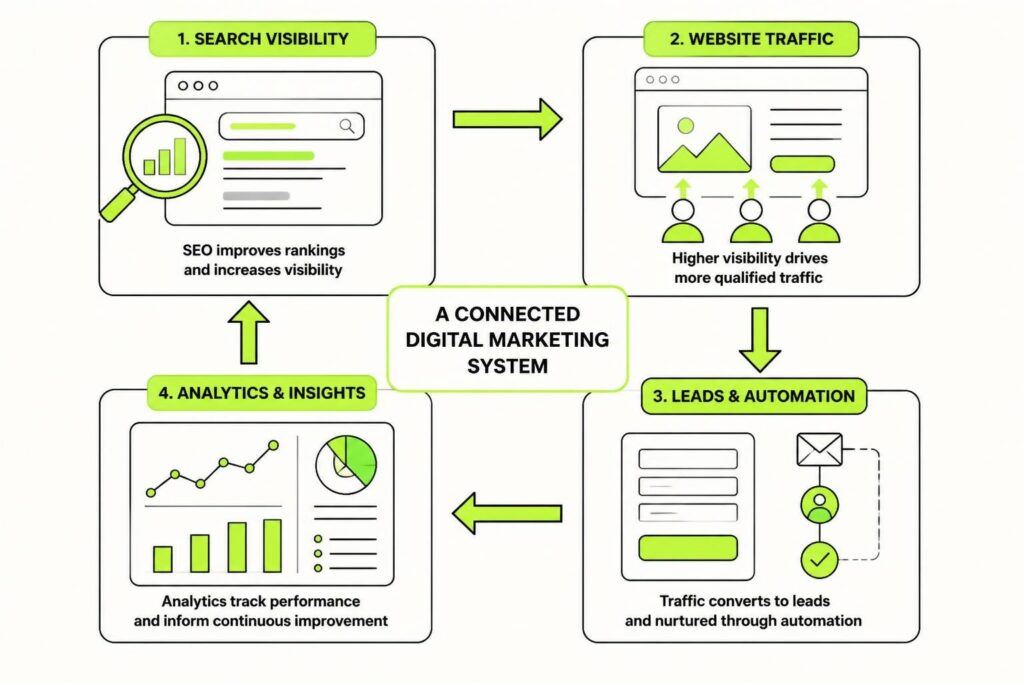
- SEO brings consistent, qualified traffic without ongoing ad spend
- Digital marketing converts that traffic into leads and clients
- Analytics show you which channels and keywords actually produce revenue
- Automation keeps leads warm while you focus on delivery
When these systems connect, you stop guessing. You know where traffic comes from, what it costs, and what it's worth.
The Data Connection Most Businesses Miss
Here's what breaks for most service businesses. They run Google Ads and get leads. Great. They also publish blog posts and rank on page one. Also great. But the two systems don't talk to each other.
You can't see which organic keywords turn into paying clients. You don't know if your ad budget performs better than your content effort. Your CRM sits disconnected from your website, so lead behaviour stays invisible.
| System Element | What It Does | Where It Breaks Without Integration |
|---|---|---|
| Paid ads | Drive immediate traffic to offers | Budget disappears if organic doesn't support it |
| SEO content | Build authority and compound traffic | Traffic leaks without a nurture path |
| CRM | Track leads and close deals | Can't attribute revenue to channels |
| Email automation | Nurture and convert over time | Fires blind without behavior data |
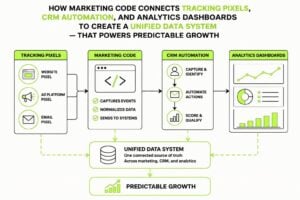
The fix isn't complicated. Connect your tools. Tag your traffic sources. Track behaviour from keyword to closed deal. Most platforms handle this natively. You just need to configure them properly and actually look at the data.
Google's own guidance in their Search Essentials documentation focuses heavily on user experience and content quality, not tricks. That's because SEO now lives downstream of good marketing. If your content answers real questions and your site works properly, the rankings follow.
Building a Digital Marketing and SEO System That Scales
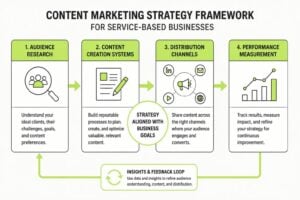
Stop thinking in campaigns. Start thinking in systems. A campaign runs for six weeks, then ends. A system runs forever and improves as it goes.
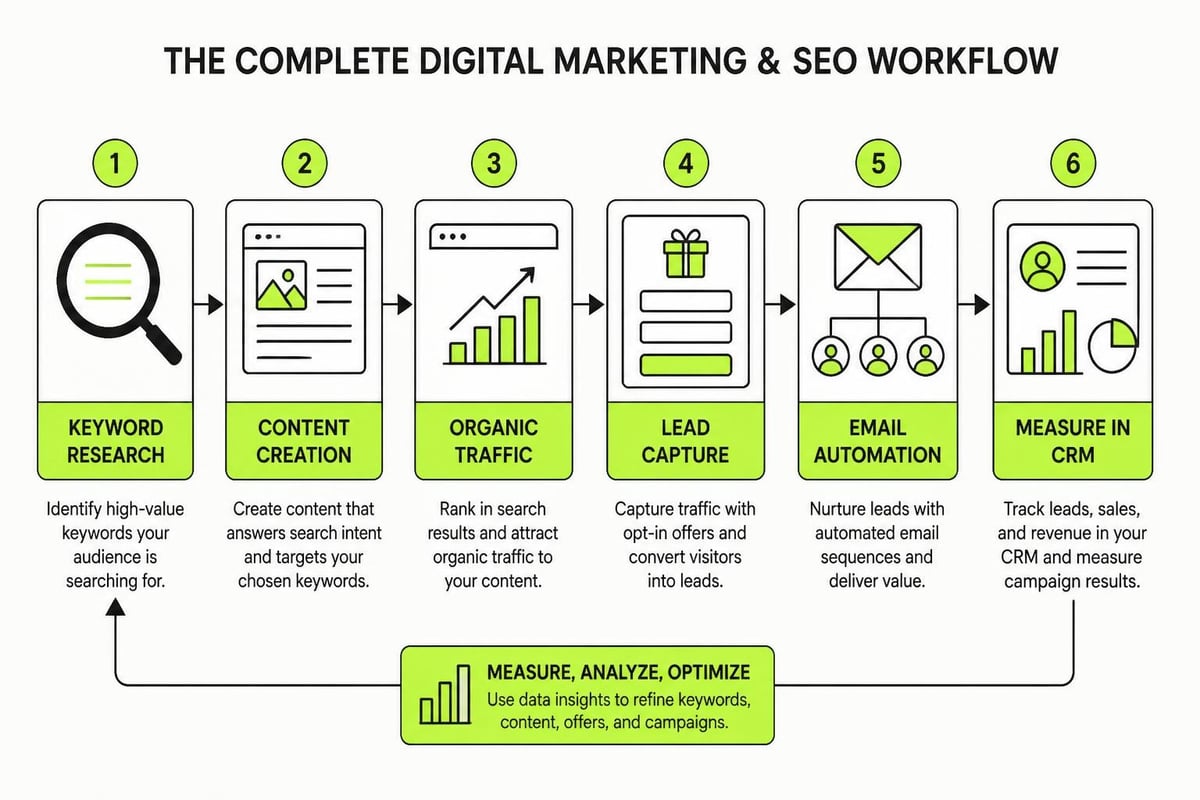
Here's the structure that works for service businesses:
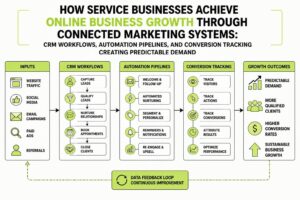
- Keyword research that reflects real buyer questions. Not vanity terms. Not industry jargon. The actual phrases people type when they need what you sell.
- Content that moves people forward. Every page, post, and guide should answer a question or solve a problem. Then point to the next step.
- Opt-in offers that capture intent. A download, checklist, calculator, or assessment. Something valuable enough to exchange for an email.
- CRM and automation that nurture leads. Not a newsletter. A structured sequence that builds trust and moves people toward a conversation.
- Analytics that tie revenue to source. UTM tags. Conversion tracking. Attribution reports. Know what works.
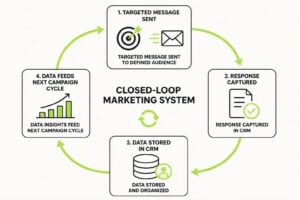
Each piece feeds the next. The system becomes a flywheel. More content improves rankings. Better rankings bring more traffic. More traffic fills the CRM. The CRM converts leads. Converted leads become case studies and testimonials. Those feed back into content. The cycle compounds.
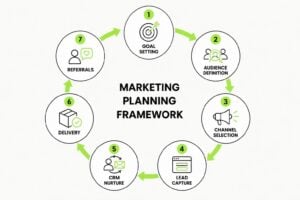
If you're building this from scratch, a structured approach helps. The 7-Step Marketing Plan walks through exactly this kind of system, from setting goals to creating referral loops, with clear steps that feed into each other.
Technical Foundations That Protect Your Investment
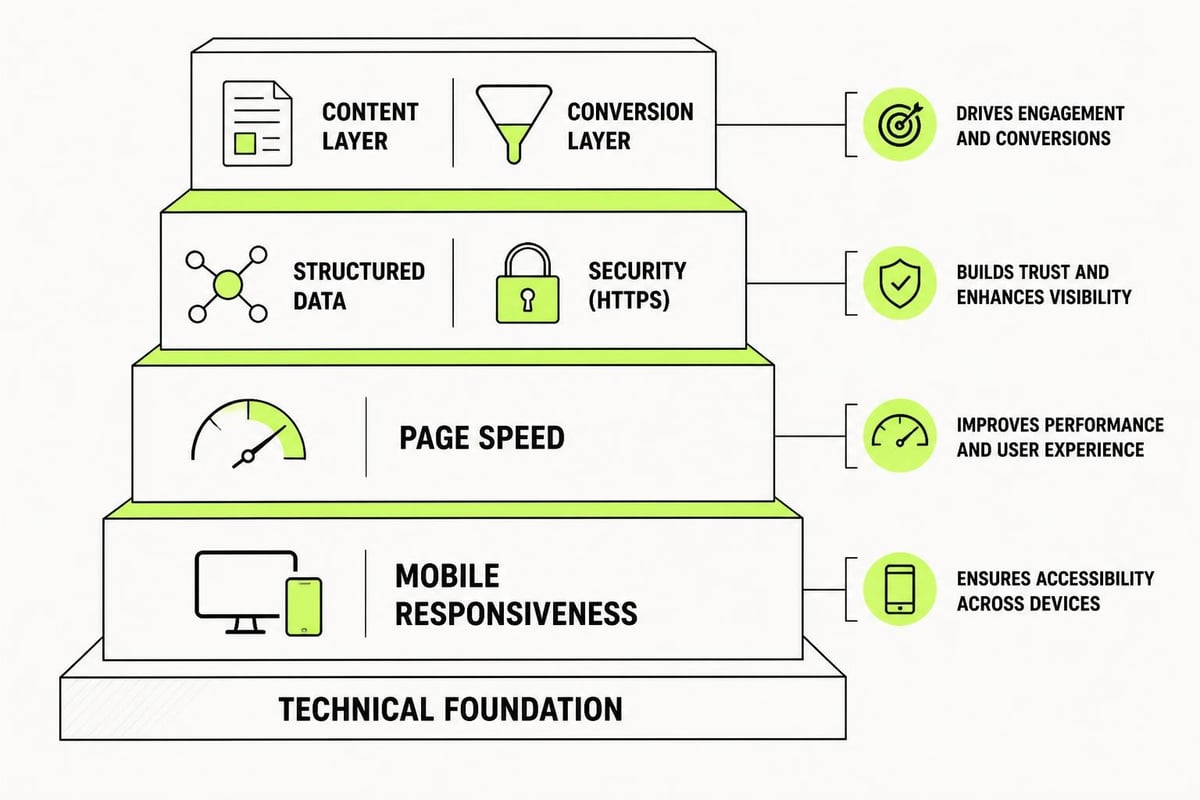
You can write brilliant content and run smart ads, but if your site is slow or broken on mobile, you're leaving money on the table. Core Web Vitals now directly impact rankings and, more importantly, conversions.
The technical checklist:
- Page speed under 2.5 seconds for Largest Contentful Paint (LCP)
- Mobile-first design that actually works on phones, not just scales down
- Structured data so Google understands your services, reviews, and location
- Clean site architecture with logical categories and internal links
- SSL and security because trust is non-negotiable
None of this is optional in 2026. Google's SEO Starter Guide covers the essentials, but the reality is simpler: fast, secure, mobile-friendly sites win. Slow, confusing, desktop-only sites lose.
If your current site takes four seconds to load or looks broken on an iPhone, fix that before you spend another dollar on ads or content. Website design and development should prioritize performance and user experience, not just aesthetics.
Content Strategy That Drives Both Traffic and Trust
Most service businesses publish content backwards. They write what they want to say, not what their buyers need to hear. The post goes live, gets a few clicks, then dies in the archive.
Here's the alternative. Start with search intent. What questions do your ideal clients ask before they're ready to buy? What problems do they try to solve on their own first? What objections or concerns hold them back?
Three content types that work together:
- Top-of-funnel educational content that ranks for high-volume questions and builds trust
- Middle-of-funnel comparison and solution content that helps people evaluate options
- Bottom-of-funnel decision content that addresses objections and moves people to a call
Each type serves a different stage. Educational content brings traffic. Comparison content qualifies interest. Decision content converts. If you only write one type, you're either generating traffic that never converts or writing for people who never find you.
Use internal linking to guide people through the journey. An educational post on digital marketing fundamentals should link to deeper content on branding strategy or organic marketing tactics. Don't make people hunt for the next step.
Measuring What Matters
Vanity metrics will kill your progress. Page views, social shares, and domain authority feel good but don't pay bills.
Track these instead:
| Metric | Why It Matters | How to Improve It |
|---|---|---|
| Organic traffic to conversion pages | Shows SEO driving real leads | Better keyword targeting, stronger CTAs |
| Lead-to-client conversion rate | Reveals nurture system effectiveness | Improve follow-up, refine qualification |
| Cost per acquisition by channel | Tells you where to invest | Cut underperformers, scale winners |
| Customer lifetime value by source | Shows long-term channel quality | Track cohorts, optimize for quality over volume |
Ahrefs offers practical guidance on using SEO data for competitive research and performance tracking. But the real insight comes from connecting SEO data to revenue data. Your analytics should show you which keywords and pages produce paying clients, not just which ones get clicks.
If you're using a proper CRM and tagging traffic sources, you can run this report monthly. Which organic keywords brought in clients? Which paid campaigns converted? Which content pieces assisted the most conversions? That's the data that tells you where to double down.
Paid and Organic Working Together
Digital marketing and seo shouldn't compete for budget. They should amplify each other.
Run paid ads to test messaging and offers fast. Find out what converts. Then use that insight to guide your SEO content strategy. If a particular service page converts well from ads, build organic content around those same buyer questions.
Use SEO content to warm up your paid audience. Retarget people who read your blog posts or guides. They're already familiar with your brand and more likely to convert than cold traffic.
The paid and organic feedback loop:
- Launch paid campaigns to test offers and landing pages
- Identify high-converting keywords and messages
- Build SEO content around those winning themes
- Use organic content to educate and build trust
- Retarget organic visitors with paid ads
- Optimize both channels based on combined data
According to Statista’s marketing data, businesses continue to increase digital ad spend year over year, but the highest-performing companies balance paid and organic investment. The compound effect of both channels beats either one alone.
For service businesses, this balance is critical. Paid ads give you speed and control. SEO gives you leverage and sustainability. Together, they create predictable demand.
Common Mistakes That Waste Time and Money
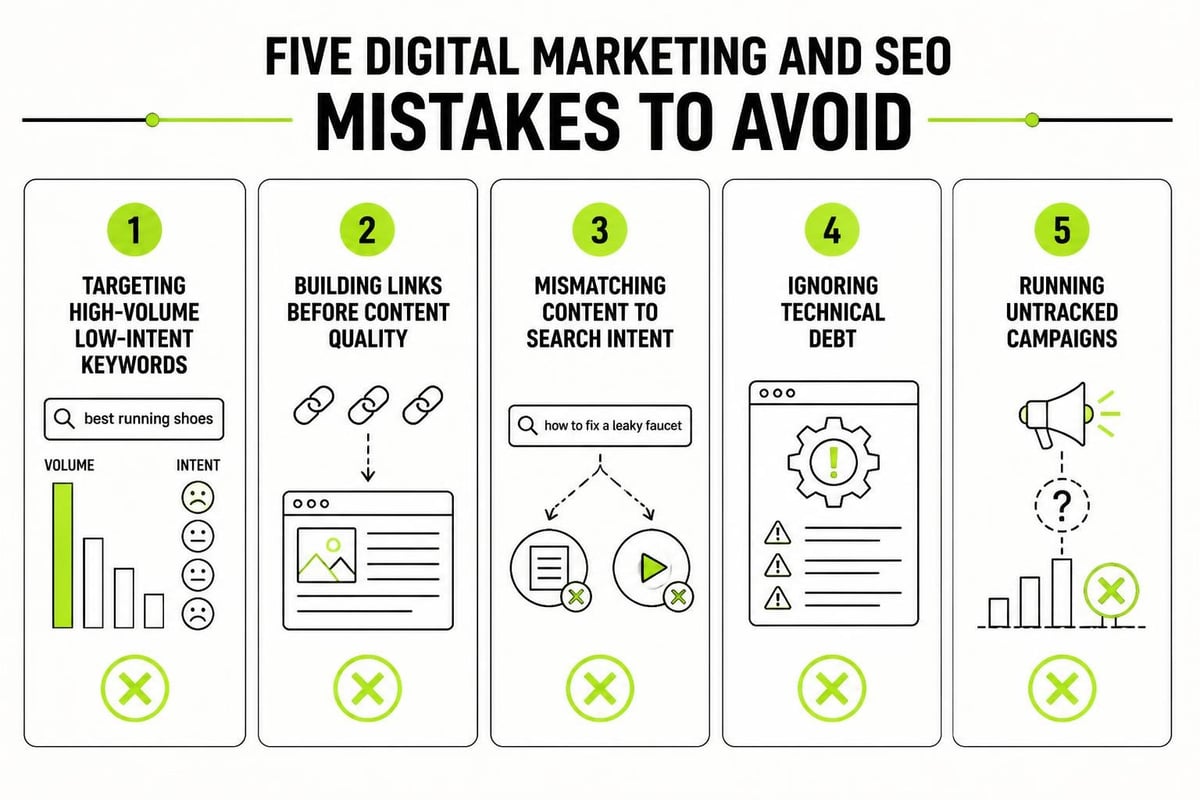
Optimizing for the wrong keywords. High search volume doesn't mean high intent. A keyword with 500 searches per month that converts beats a keyword with 5,000 searches that bounces.
Building links before building content. Backlinks help, but only if the content is worth linking to. Write something genuinely useful first. Then promote it.
Ignoring search intent. If someone searches "CRM for small business," they want comparisons and recommendations, not a sales page. Match the content format to what Google already ranks.
Letting technical debt pile up. Broken links, slow pages, and mobile issues compound over time. Fix them when they're small. Don't wait until you need a full rebuild.
Running campaigns without tracking. If you can't measure it, you can't improve it. Set up conversion tracking before you spend a dollar.
The Content Marketing Institute’s guidance on SEO for 2025 emphasizes ditching outdated tactics like keyword stuffing and thin content. Modern digital marketing and seo reward depth, clarity, and genuine usefulness. Shortcuts don't scale.
Integration as a Competitive Advantage
Most of your competitors run digital marketing and seo in silos. Different agencies. Different dashboards. Different goals. That fragmentation creates gaps you can exploit.
When your systems talk to each other, you see opportunities they miss. You know which organic content supports your best-converting ads. You can nurture leads based on which pages they visited and how they found you. You can make budget decisions based on actual revenue data, not gut feel.
This isn't about having more tools or spending more money. It's about connecting what you already have and using it intelligently. Marketing systems work best when they operate as a unified whole, not a collection of isolated tactics.
Forrester research on digital experience shows that companies who measure and optimize the full customer journey outperform those who optimize channels in isolation. The same principle applies to digital marketing and seo. Measure the whole system, not just the parts.
Building for Compound Growth
The businesses that win with digital marketing and seo think in years, not quarters. They build assets that appreciate. Content that ranks and converts. Systems that improve with data. Infrastructure that supports scale.
Quick wins matter. You need leads this month. But quick wins inside a long-term system beat quick wins that vanish when the campaign ends.
What compounds over time:
- High-quality content that continues ranking and converting
- Email lists that grow and segment based on behaviour
- CRM data that reveals patterns and improves targeting
- Brand authority that makes every channel perform better
What doesn't compound:
- One-off campaigns with no follow-up
- Content published without promotion or internal linking
- Traffic that isn't captured or nurtured
- Tactics that don't connect to a broader system
The difference between businesses that plateau and businesses that scale is often just this: they built systems that compound instead of campaigns that expire.
If you're serious about growth, audit your current setup. Are your tools connected? Can you track a lead from first click to closed deal? Does your content feed your CRM? Does your CRM inform your content? If the answer is no, that's where you start.
Digital marketing and seo stop being guesswork when you build them as a connected system. You get predictable traffic, structured nurture, and clear visibility into what drives revenue. If you need help removing the chaos and building infrastructure that actually scales, MDO Digital specializes in exactly this work. We design high-trust websites, build CRM and automation systems, and run data-driven marketing that turns attention into demand. Let's build something that compounds.