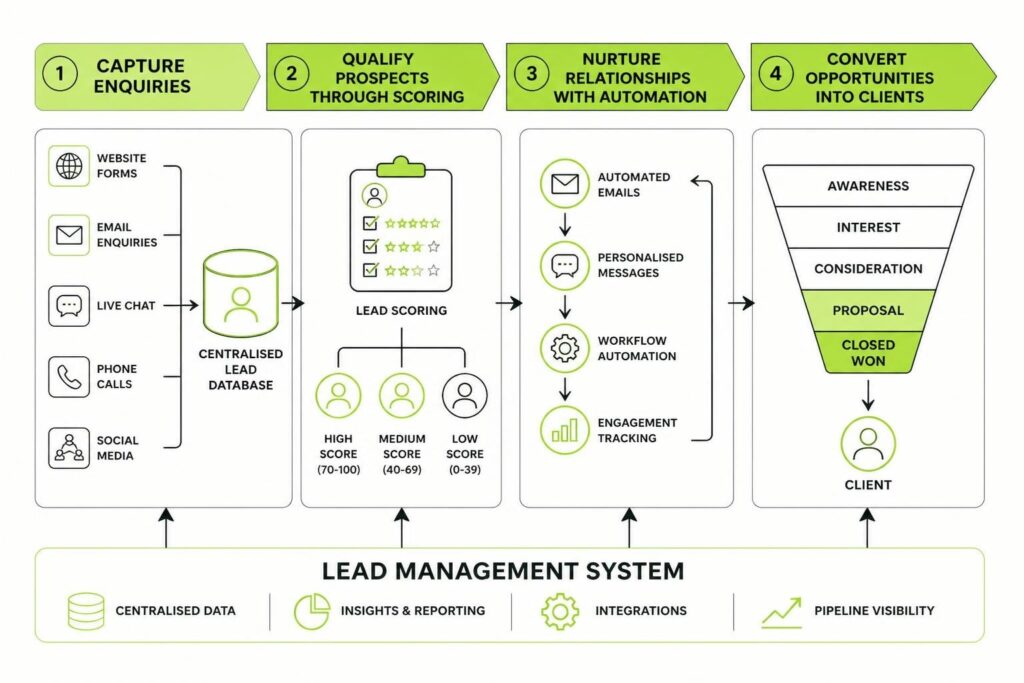
Most service businesses lose leads the same way. Someone fills in a form, sends an enquiry, or downloads a resource. Then nothing happens. The lead sits in an inbox, gets lost in a spreadsheet, or receives a delayed response that kills momentum. By the time someone follows up, the prospect has moved on. This isn't a people problem. It's a systems problem. Lead management and sales funnel automation systems exist to capture every opportunity, qualify it properly, and move it through a structured process that protects revenue and builds trust.
What Lead Management Actually Does
Lead management is the framework that turns strangers into qualified opportunities. It covers everything from the moment someone expresses interest to the point they become a client or exit the funnel.
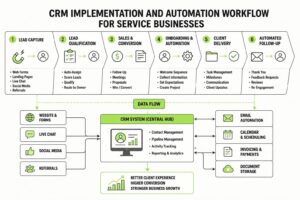
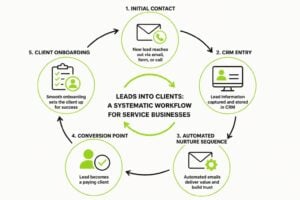
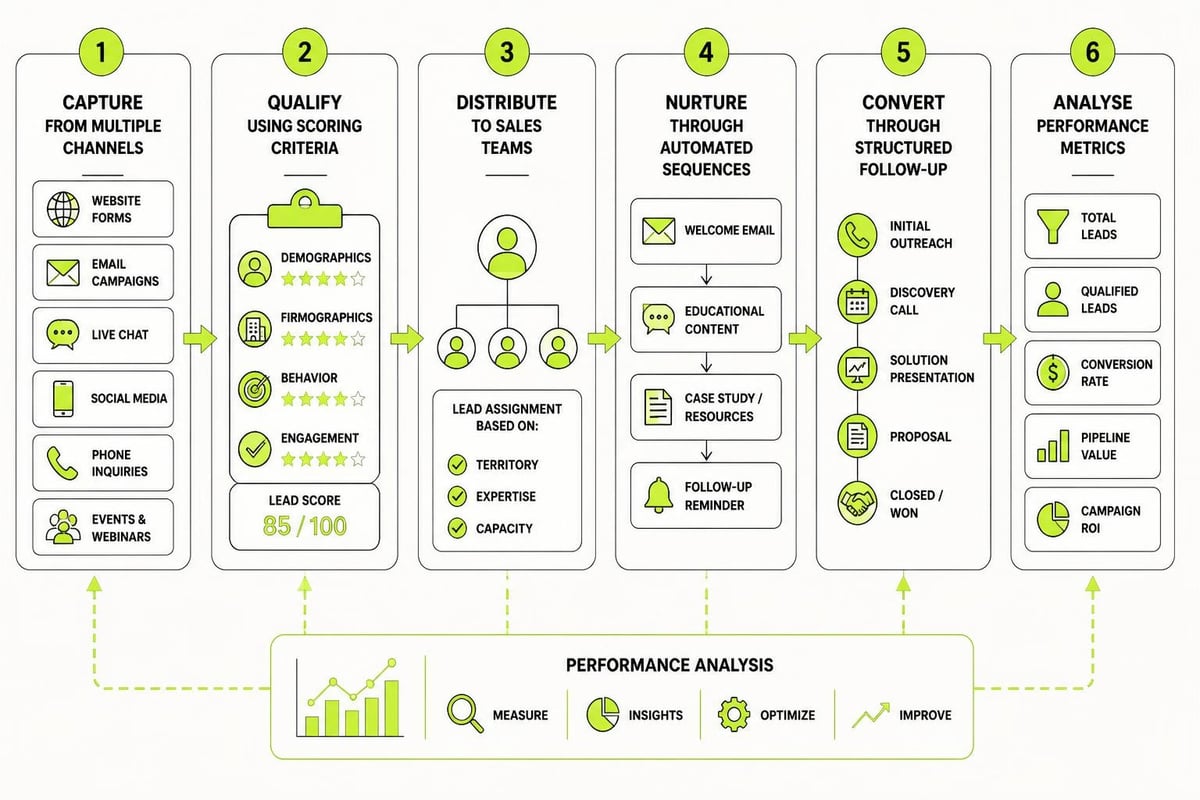
The process breaks into clear stages:
- Capture: Collecting contact details and intent signals from multiple sources
- Qualification: Scoring and categorising leads based on fit and readiness
- Distribution: Routing leads to the right person or team
- Nurture: Building trust through timely, relevant communication
- Conversion: Moving qualified leads into sales conversations
- Analysis: Tracking what works and what doesn't
Without structure, this becomes guesswork. With proper lead management, it becomes predictable. You know where every lead came from, what they care about, and what action comes next.
The Cost of Manual Lead Handling
Handling leads manually works until it doesn't. You can manage 10 enquiries a week with spreadsheets and reminders. But at 50 or 100, things break. Leads get missed. Follow-ups get delayed. Quality prospects receive the same generic response as tyre-kickers.
Common failure points include:
- No central database, so leads exist across email, forms, and messages
- Inconsistent follow-up timing based on who's available
- No lead scoring, so every enquiry gets equal attention
- Lost context when leads contact multiple times
- No visibility into what's working or where leads drop off
The fix isn't working harder. It's implementing lead management and sales funnel automation systems that handle the repetitive work while you focus on high-value conversations.
How Sales Funnel Automation Fits In
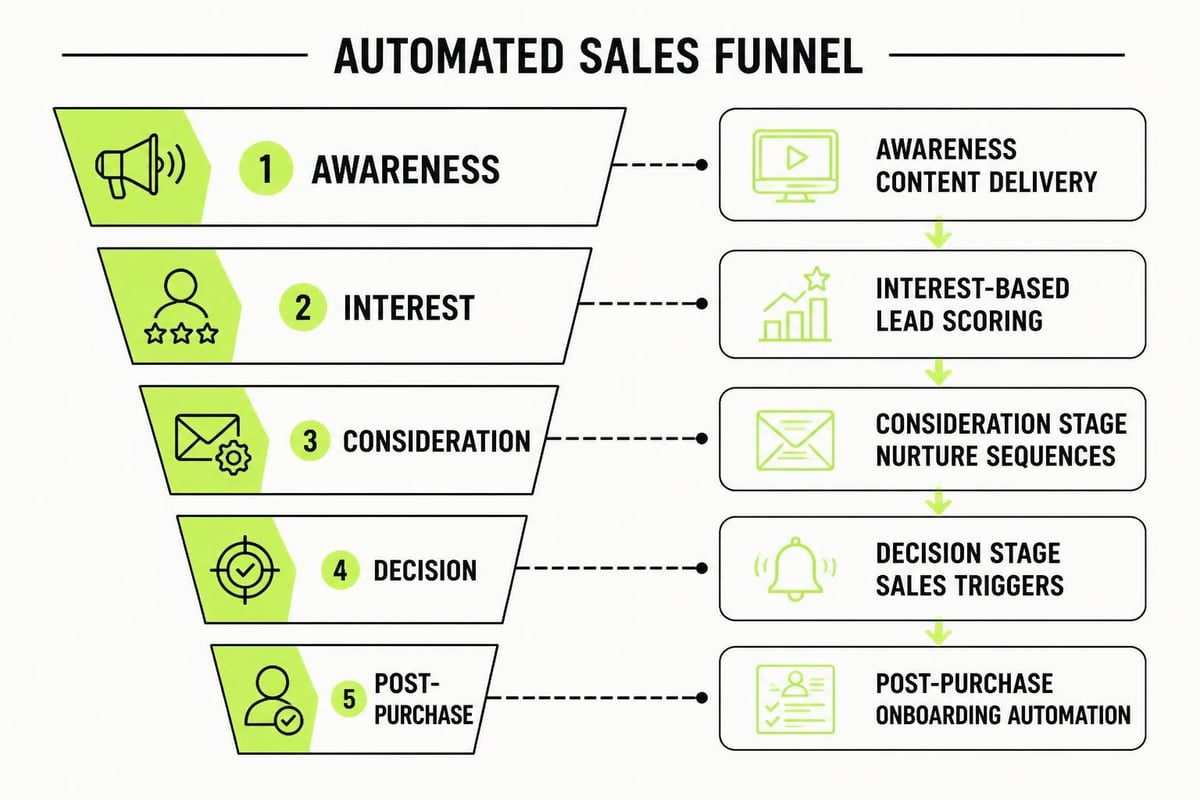
Sales funnels map the journey from awareness to purchase. Automation makes that journey consistent and scalable. Instead of manually sending emails, qualifying leads, or updating records, the system handles it based on triggers and rules you define.
Here's where automation creates leverage:
| Manual Process | Automated Alternative | Time Saved |
|---|---|---|
| Send welcome email to new lead | Auto-send based on form submission | 5 minutes per lead |
| Check if lead opened email | Track opens and trigger next action | 3 minutes per lead |
| Update CRM with lead status | Auto-update based on behaviour | 2 minutes per lead |
| Schedule follow-up reminder | Auto-create task after set time | 4 minutes per lead |
| Send relevant case study | Auto-send based on service interest | 10 minutes per lead |
These minutes compound. A business handling 200 leads monthly saves roughly 80 hours through automation. That's two full working weeks returned to strategy and client delivery.
Building Automation That Feels Human
The best automation doesn't feel automated. It responds to behaviour, respects timing, and delivers value. A good system knows the difference between someone who downloaded a guide and someone who requested a quote. It adjusts messaging, urgency, and next steps accordingly.
Effective automation principles:
- Trigger based on actions, not just time
- Personalise using known data (name, company, service interest)
- Provide clear next steps in every communication
- Stop automating once human conversation starts
- Test and refine based on response rates
When done right, prospects experience timely, relevant communication. When done poorly, they receive robotic sequences that ignore context. The difference sits in how you structure your marketing funnel and what data you use to personalise the journey.
Key Components of Modern Lead Systems
Lead management and sales funnel automation systems combine several tools and processes. You don't need everything at once, but certain components are non-negotiable for service businesses scaling beyond manual operations.
CRM as the Foundation
Your CRM (Customer Relationship Management system) is the single source of truth. Every lead, conversation, and transaction lives here. Without it, automation has nowhere to pull data from or push updates to.
A proper CRM setup includes:
- Custom fields for service type, budget range, and urgency
- Deal stages matching your actual sales process
- Activity tracking for emails, calls, and meetings
- Integration with your website, email, and other tools
- Reporting on conversion rates and sales velocity
The CRM doesn't just store information. It powers everything else. When someone fills in a form, the CRM creates the contact. When they reach a certain score, the CRM triggers a notification. When they book a call, the CRM updates the deal stage.
Lead Scoring and Qualification
Not all leads deserve equal attention. Lead scoring assigns points based on fit and behaviour, helping you prioritise who to contact first. Oracle’s approach to lead management emphasises scoring as the mechanism that separates high-value opportunities from noise.
Scoring criteria typically include:
| Criteria Type | Example Factors | Point Value |
|---|---|---|
| Demographic Fit | Company size, industry, location | 0-20 points |
| Behavioural Signals | Page visits, downloads, email opens | 0-30 points |
| Explicit Interest | Service requested, budget indicated | 0-30 points |
| Engagement Level | Reply to email, attended webinar | 0-20 points |
Once a lead hits a threshold (say, 60 points), they become sales-qualified and get routed to your team. Below that, they stay in nurture sequences until they demonstrate more intent.
Email Sequences and Nurture Campaigns
Automation shines in nurture. A lead downloads your guide on brand positioning but isn't ready to hire. Instead of going cold, they enter a sequence that delivers value over weeks or months.
A typical nurture sequence might look like:
- Day 0: Immediate delivery of promised resource
- Day 2: Educational email related to the topic
- Day 5: Case study showing results
- Day 9: Common objections addressed
- Day 14: Soft call-to-action for consultation
- Day 21: Final value-add with clear next step
If they engage (open rates, clicks, replies), their lead score increases. If they book a call, automation stops and human follow-up begins. This structure keeps you present without being pushy.
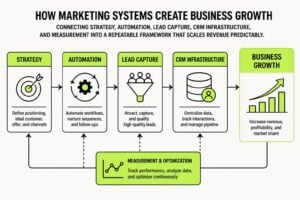
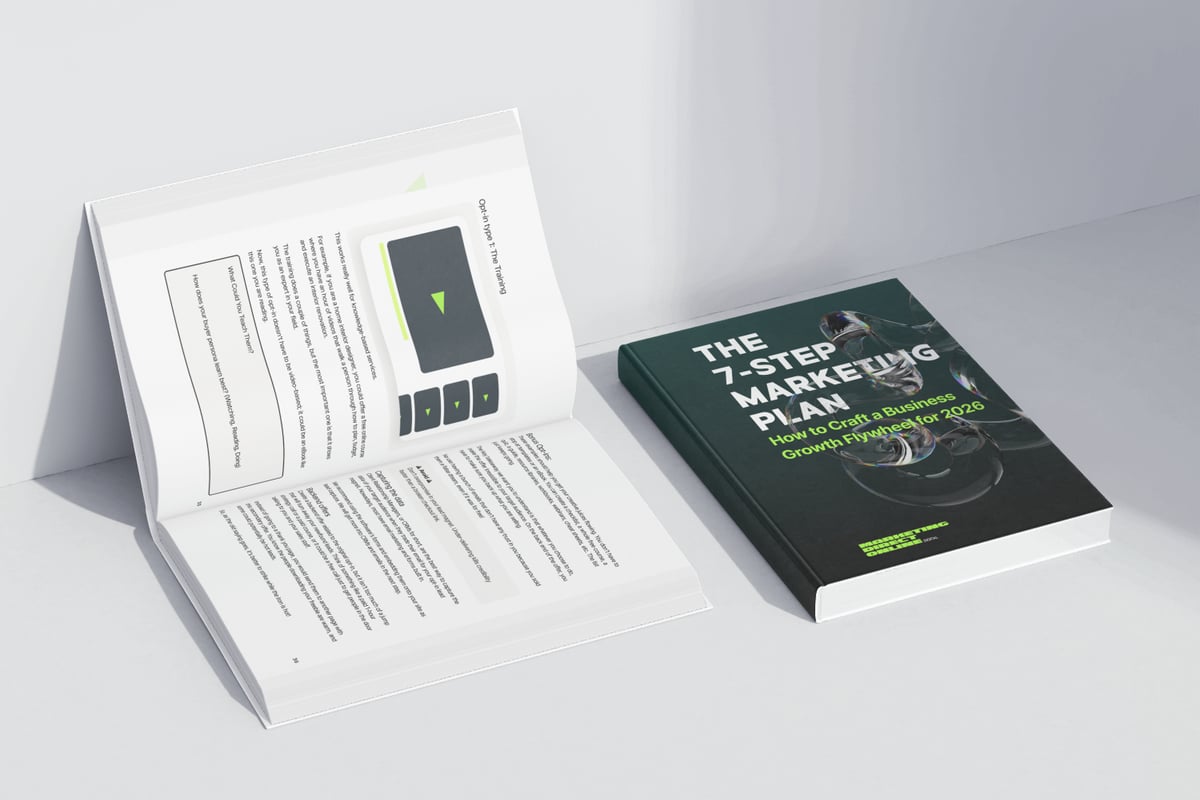
Building this kind of system is what we do. A 7-step marketing plan provides the framework to map your buyer journey, create opt-in offers, and build CRM infrastructure that captures and converts leads systematically.
Integration Points That Matter
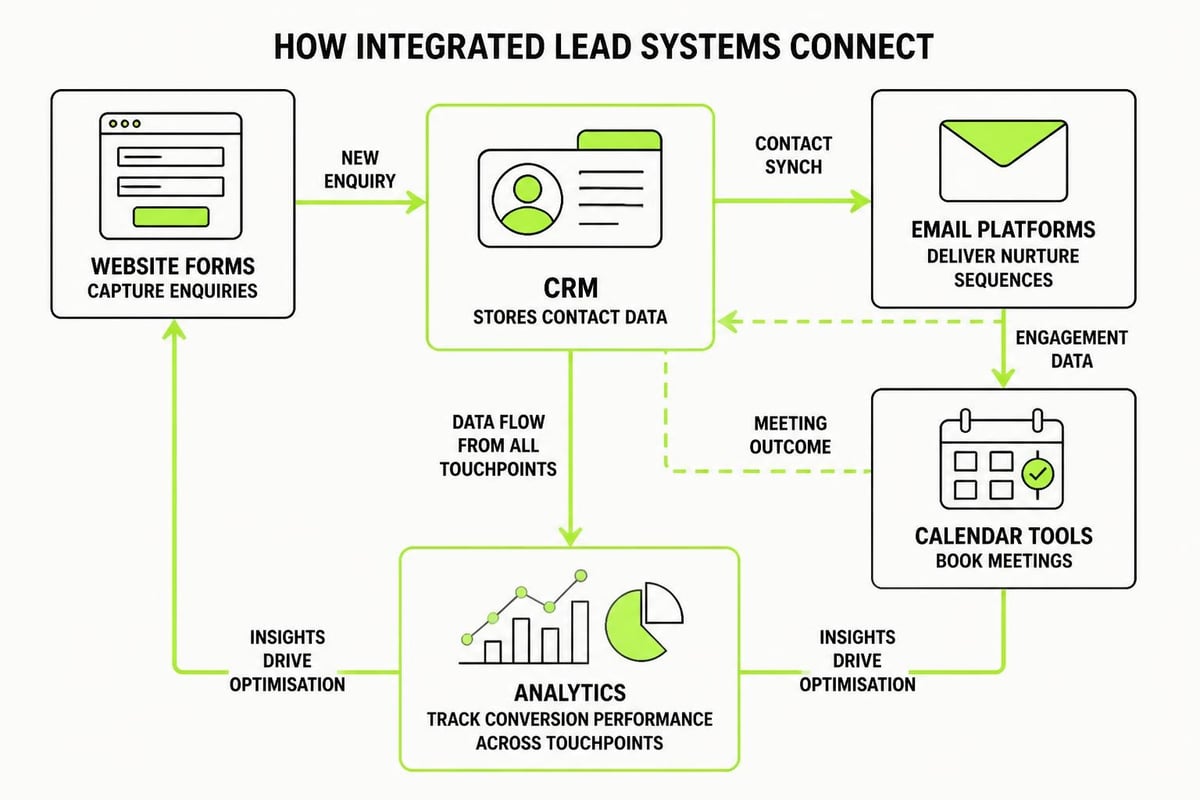
Lead management and sales funnel automation systems only work when everything connects. Your website form needs to talk to your CRM. Your CRM needs to trigger email sequences. Your email platform needs to update lead scores based on engagement.
Critical integrations include:
- Website forms to CRM (instant contact creation)
- CRM to email platform (sequence triggering)
- Email platform to CRM (engagement tracking)
- Calendar tool to CRM (meeting tracking)
- Analytics to CRM (source attribution)
Most modern platforms handle this through native integrations or tools like Zapier. The goal is zero manual data entry. When someone books a discovery call, the system should automatically create a deal, send calendar invites, add them to a pre-call sequence, and notify your team.
Choosing the Right Tools
You don't need enterprise software to build effective lead management and sales funnel automation systems. You need tools that match your volume, complexity, and team size.
For service businesses handling under 500 leads monthly, consider:
- CRM: HubSpot (free tier works), Pipedrive, Copper
- Email Automation: ActiveCampaign, ConvertKit, Mailchimp
- Forms: Typeform, Gravity Forms, HubSpot Forms
- Scheduling: Calendly, Acuity, HubSpot Meetings
- Analytics: Google Analytics 4, CRM native reporting
HubSpot’s guide to lead management systems covers platform selection in detail, but the honest answer is that any system you'll actually use beats the perfect system you'll abandon. Start simple, prove ROI, then expand.
What Automation Can and Can't Replace
Automation handles repetition, not relationships. It sends the email, but you write the copy. It scores the lead, but you define the criteria. It triggers the task, but you make the call.
Where automation excels:
- Immediate response to enquiries
- Consistent follow-up timing
- Data entry and record updates
- Segmentation based on behaviour
- Reporting and dashboard updates
Where humans stay essential:
- Complex qualification conversations
- Objection handling and negotiation
- Custom proposal creation
- Trust-building and relationship depth
- Strategic decision-making
The best systems combine both. Automation creates the conditions for successful human interaction. It ensures no lead falls through cracks, every prospect receives timely communication, and your team focuses on conversations that actually close business.
Common Setup Mistakes to Avoid
Building lead management and sales funnel automation systems sounds straightforward until you start. Here's where most businesses stumble:
Mistake 1: Over-automating too early
You don't need 47 email sequences and complex scoring on day one. Start with lead capture, basic qualification, and a single nurture sequence. Add complexity as you prove what works.
Mistake 2: No clear definitions
What makes a lead "qualified"? When does someone move from marketing to sales? Without definitions, your system creates confusion instead of clarity.
Mistake 3: Set-and-forget mentality
Automation isn't passive. Review open rates, conversion rates, and drop-off points monthly. What worked last quarter might not work now.
Mistake 4: Ignoring lead sources
A lead from a referral needs different handling than one from a cold ad. Tag sources, adjust scoring, and customise sequences accordingly.
Mistake 5: No human override
Sometimes automation gets it wrong. Build in easy ways for your team to pause sequences, change stages, or take manual control when context demands it.
Building Your Lead System in Stages
You don't build this overnight. Effective lead management and sales funnel automation systems develop through phases:
Phase 1: Foundation (Weeks 1-4)
- Set up CRM with custom fields and deal stages
- Connect website forms to CRM
- Create basic lead capture on key pages
- Build simple thank-you and welcome sequences
- Define what "qualified" means for your business
Phase 2: Automation (Weeks 5-8)
- Implement lead scoring based on fit and behaviour
- Build 2-3 nurture sequences for common paths
- Automate task creation for sales team
- Set up email integration for engagement tracking
- Create basic reporting dashboard
Phase 3: Optimisation (Weeks 9-12)
- A/B test email subject lines and CTAs
- Refine scoring criteria based on conversion data
- Add conditional logic to sequences
- Integrate calendar booking and meeting prep
- Expand automation to post-sale onboarding
Phase 4: Scale (Ongoing)
- Add advanced segmentation
- Build sequences for different services
- Implement predictive lead scoring
- Expand reporting and attribution
- Train team on system usage and best practices
This staged approach lets you validate each component before adding complexity. You prove ROI at each phase, which makes investment in the next stage easier to justify.
The Data You Actually Need
Lead management and sales funnel automation systems generate endless data. Most of it doesn't matter. Focus on metrics that drive decisions:
| Metric | Why It Matters | Target Benchmark |
|---|---|---|
| Lead-to-MQL Rate | Shows if you're attracting right audience | 20-30% |
| MQL-to-SQL Rate | Indicates qualification accuracy | 30-50% |
| SQL-to-Client Rate | Measures sales effectiveness | 20-40% |
| Average Deal Velocity | How long prospects take to convert | 30-90 days |
| Cost Per Lead | Marketing efficiency | Varies by industry |
| Lead Source ROI | Which channels perform best | 3:1 minimum |
Track these monthly. When lead-to-MQL drops, your targeting or messaging needs work. When SQL-to-client drops, focus on sales process. When deal velocity increases, you've likely improved qualification or nurture effectiveness.
Practical Implementation for Service Businesses
Service businesses have unique needs. You're not selling products with fixed features. You're selling expertise, outcomes, and relationships. Your lead management and sales funnel automation systems should reflect that.
Service-specific considerations:
- Longer sales cycles require extended nurture (60-90 days typical)
- Higher-value deals demand more personalisation
- Custom solutions mean flexible deal stages
- Referrals and relationships matter more than cold traffic
- Trust-building happens through education, not features
This means your automation should deliver educational content, case studies, and proof points rather than product specs. Your sequences should build authority and demonstrate thinking, not push for fast closes. Studies on lead scoring frameworks show that matching scoring to actual business models significantly improves conversion prediction.
Many platforms now offer sales funnel software specifically designed for service businesses, with features like proposal tracking, project stages, and value-based pricing calculators built in.
Beyond Lead Capture: The Full Customer Journey
Lead management doesn't end at conversion. The best systems extend through onboarding, delivery, and referral generation. Once someone becomes a client, automation should:
- Send welcome sequences with next steps
- Trigger project milestone communications
- Request feedback at key moments
- Prompt review and referral requests
- Re-engage for additional services
This creates a closed loop. Happy clients become referral sources, which feeds new leads into the top of your funnel. The system that captured them initially now helps retain and expand the relationship.
Looking at lead generation tools through this lens changes your selection criteria. You're not just filling a funnel. You're building infrastructure for long-term growth.
When to Invest in Custom Development
Off-the-shelf tools handle 90% of needs. But sometimes custom development makes sense:
- Your sales process is genuinely unique
- You need specific integrations not available
- Data security or compliance requires custom hosting
- You're processing thousands of leads monthly
- Your team needs custom reporting or dashboards
Custom doesn't always mean building from scratch. Often it's extending existing platforms with APIs, custom fields, or specialised workflows. The question is ROI: will custom development generate enough efficiency or revenue to justify the cost?
For most service businesses, the answer is no. Better to master existing tools first, identify real gaps, then build specifically to solve them.
Making the System Stick
Technology is easy. Adoption is hard. Your team needs to actually use the lead management and sales funnel automation systems you build. Here's how to make it stick:
- Keep it simple: If the process requires 10 clicks, it won't happen
- Train properly: Walk through real scenarios, not feature lists
- Build in accountability: Review CRM hygiene weekly
- Show wins: Report on closed deals that automation helped capture
- Iterate based on feedback: If something's annoying, fix it
The system serves your team, not the other way around. If adoption is low, the problem is usually system design, not people. Make it easier to use the system than to work around it.
The Compounding Effect
Here's what makes lead management and sales funnel automation systems worth building: they compound. Every lead captured adds to your database. Every sequence you build serves future prospects. Every integration reduces future manual work.
In year one, you build the foundation. In year two, you optimise what's working. By year three, you have a machine that captures, qualifies, and converts leads while you sleep. New team members onboard faster because the system holds the process. You scale without chaos because infrastructure exists.
This is how service businesses move from founder-dependent sales to predictable demand generation. Not through harder work. Through better systems that protect every opportunity and convert attention into revenue.
Building lead management and sales funnel automation systems removes the guesswork from growth. You stop losing leads, start responding faster, and create consistent experiences that build trust. MDO Digital specialises in this exact infrastructure for service businesses. We build CRM systems, automation workflows, and marketing frameworks that turn chaos into structured, predictable growth. If you're ready to protect every lead and scale with clarity, let's talk.