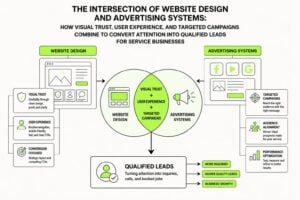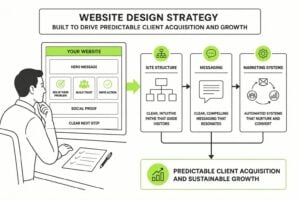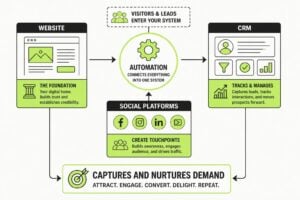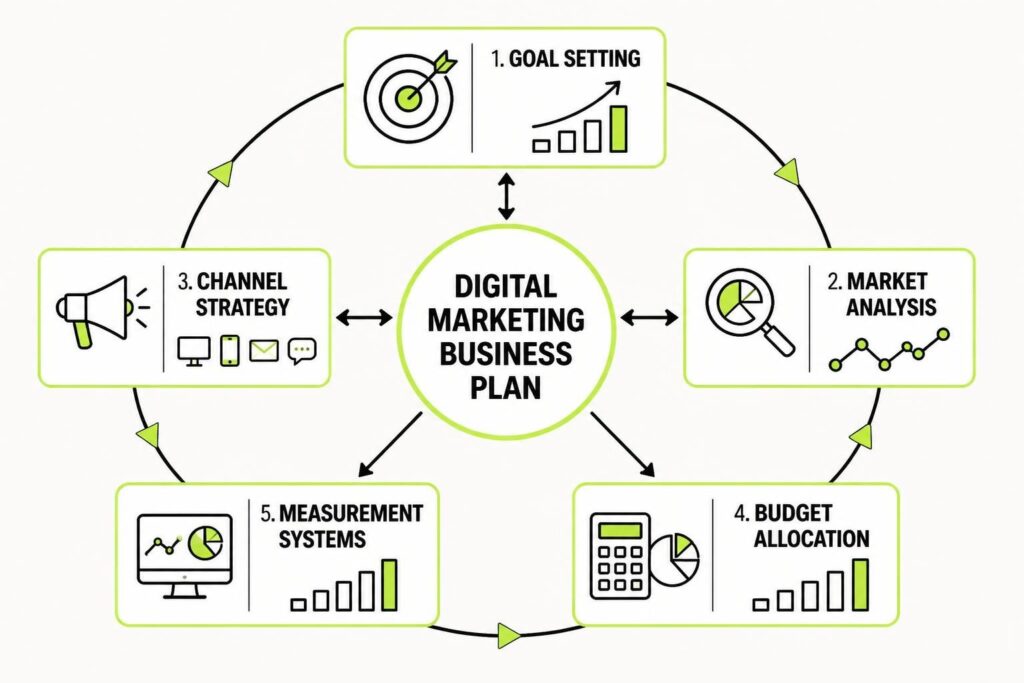
A digital marketing business plan isn't just documentation for the sake of having a plan. It's the operating system that determines whether your marketing creates predictable demand or just burns budget. Most service-based businesses treat marketing like a collection of random tactics. They post on social media, maybe run some ads, update the website when they remember. Then they wonder why leads come in waves instead of steady streams. The difference between chaos and compounding growth is a plan that treats marketing as a system, not a series of hopeful experiments.
Why Most Digital Marketing Plans Fail Before They Start
The average digital marketing business plan looks impressive in a deck but falls apart in execution. It's full of aspirational goals and vague strategies. "Increase brand awareness" sits next to "leverage social media" with no clear connection between activity and revenue.
Here's what actually happens. Someone builds a plan in isolation, probably copying a template they found online. It includes every possible channel because excluding anything feels risky. The budget section contains optimistic numbers with no basis in historical data. Then the plan goes in a folder and daily work continues exactly as it did before.
The core problem isn't the plan itself. It's treating planning as a one-time event instead of the foundation for a repeatable system. A working digital marketing business plan answers three questions clearly:
- What specific outcome are we creating?
- Which activities directly produce that outcome?
- How do we measure whether it's working?
Everything else is decoration.
The Foundation: Business Goals That Connect to Marketing Metrics
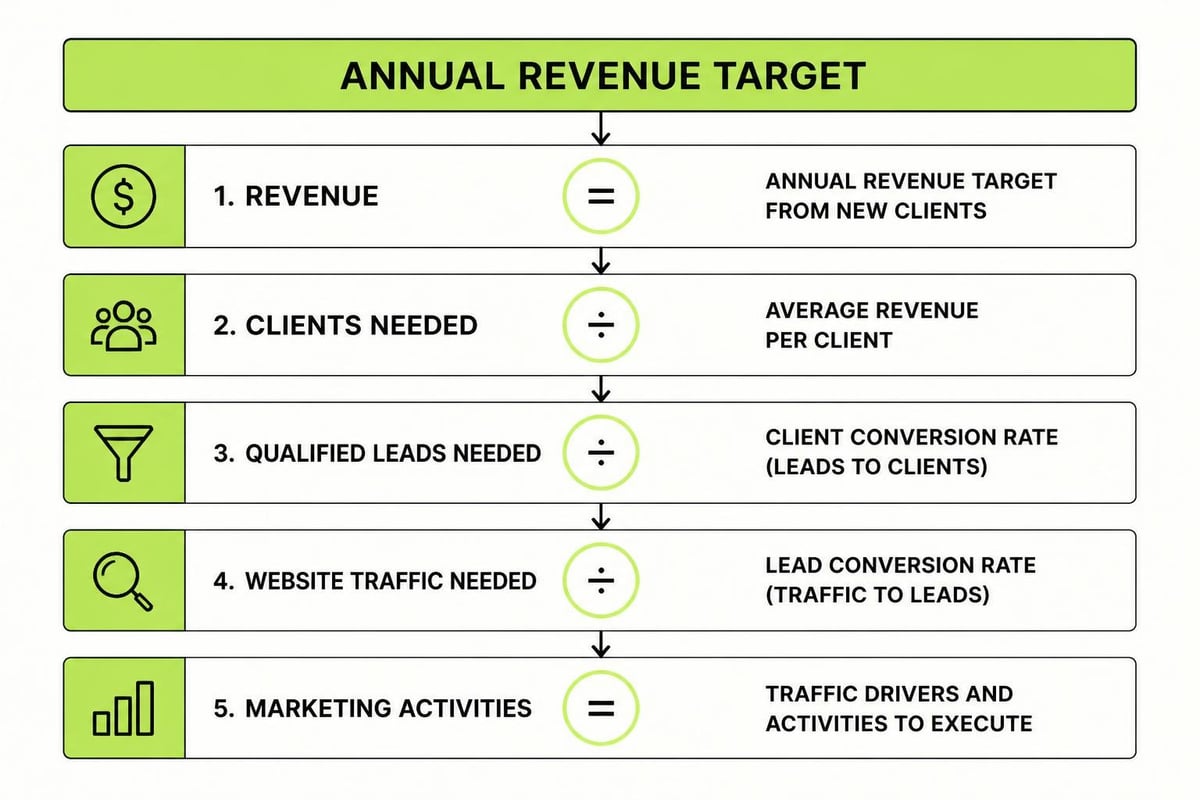
Start with the number that matters. Not website visits or social media followers. Revenue. A digital marketing business plan worth implementing begins with a revenue target and works backwards to the activities that produce it.
Let's say you run a service business targeting $500,000 in annual revenue. Your average project value is $10,000. You need 50 clients. Your close rate from qualified leads is 20%. That means you need 250 qualified leads. If 5% of website visitors become leads, you need 5,000 targeted visitors. Now you have a map.
Converting Business Targets Into Marketing Milestones
| Business Metric | Target | Working Backwards |
|---|---|---|
| Annual Revenue | $500,000 | 50 clients at $10k each |
| Qualified Leads | 250 | 20% close rate |
| Website Visitors | 5,000 | 5% conversion to leads |
| Monthly Traffic | 417 | Divided across 12 months |
This table does more work than most complete marketing plans. It shows exactly what marketing needs to deliver and ties every metric to revenue. When someone asks why you're focused on getting 417 visitors per month, you can trace it directly to the $500,000 goal.
Most digital marketing plans skip this step and jump straight to tactics. They talk about SEO and paid ads before establishing what those tactics need to achieve. That's like planning a road trip by listing every possible route before deciding where you're going.
Market Analysis That Actually Informs Decisions
Market analysis in a typical digital marketing business plan reads like a Wikipedia entry. Lots of industry statistics, demographic data, and competitor observations that don't change what you do tomorrow. Useful market analysis answers specific questions about where your buyers are and what causes them to move.
Here's what to focus on:
- Where are your buyers actively looking for solutions right now?
- What specific problems trigger them to start searching?
- Which platforms or channels do they trust for business decisions?
- What hesitations or objections consistently appear before purchase?
A branding and marketing systems agency working with service businesses might discover their buyers spend time in industry-specific Facebook groups, search Google when they realize their current system isn't scaling, trust peer recommendations over ads, and hesitate because they've been burned by agencies before.
That's actionable intelligence. It tells you to build organic presence in those groups, create content targeting scaling challenges, develop a referral system, and address past agency failures directly in your messaging. Generic market research about the size of the digital marketing industry doesn't.
The comprehensive approach to building business plans often emphasizes broad market analysis, but what moves the needle is specific insight about buyer behavior in your niche.
Channel Strategy: Choosing Based on System Fit, Not Preference
Every digital marketing business plan includes a channel strategy section. Most list every digital channel with a paragraph about how they'll use each one. That's not strategy. That's a wish list.
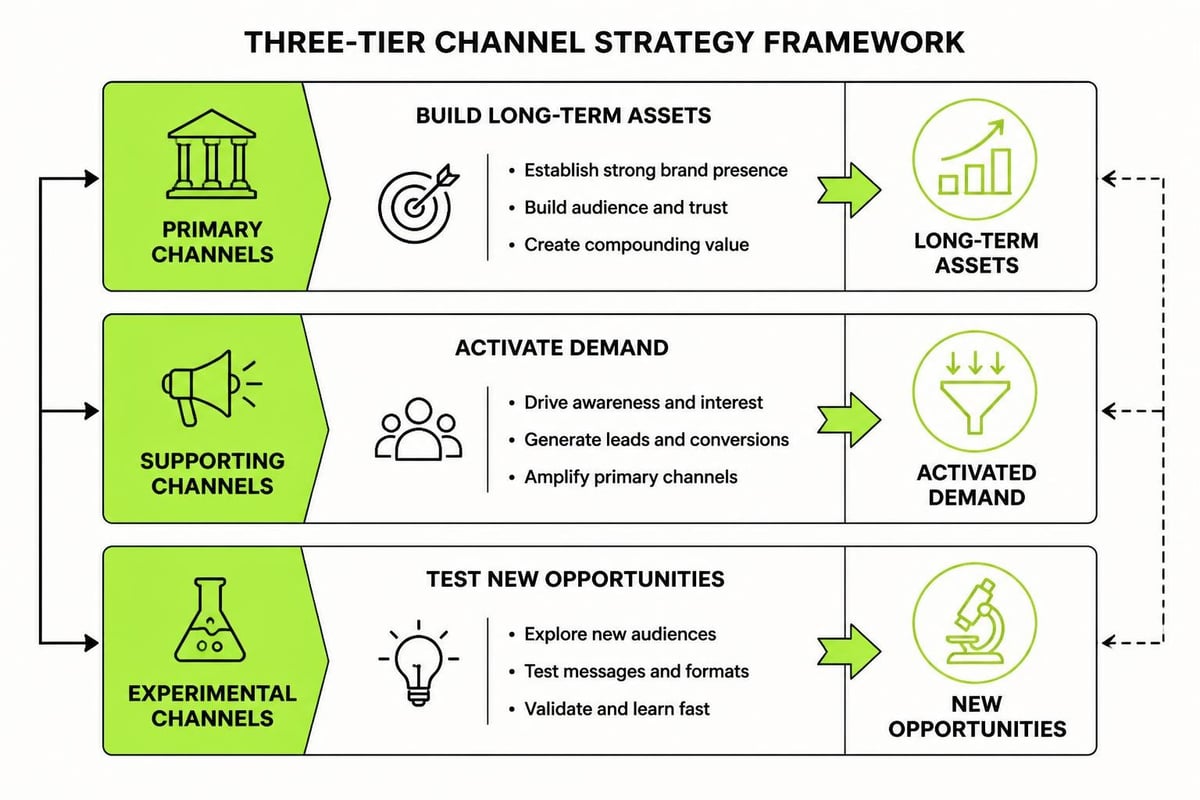
Real channel selection works like this. You have limited time and budget. Each channel requires specific capability to execute well. Some channels compound over time. Others require constant feeding. Your job is to match channels to your resources and goals in a way that creates leverage.
Primary vs Supporting Channels
Primary channels are where you build long-term assets. SEO and content marketing create compounding value. Every article you publish continues working months later. Your website becomes more authoritative over time. The effort you put in this month increases the return on effort you put in next month.
Supporting channels activate and amplify. Paid ads bring immediate traffic. Email nurtures leads through your pipeline. Social media distributes content and builds relationships. They're essential but they don't compound the same way.
A working digital marketing business plan for a service business typically focuses 60-70% of effort on primary channels and 30-40% on supporting channels. You're building an asset that grows in value while using paid and social to accelerate results.
Here's a practical framework:
| Channel Type | Examples | Time Horizon | Compounding Effect |
|---|---|---|---|
| Primary | SEO, Content Marketing, Website | 6-12 months | High |
| Supporting | Paid Ads, Email, Social Media | Immediate to 3 months | Low to Medium |
| Experimental | New platforms, emerging channels | Variable | Unknown |
Allocate 10-15% of your budget to experimental channels. Test things. But don't spread resources so thin that nothing gets done well. The biggest mistake in developing a digital marketing strategy is trying to be everywhere instead of dominating where it matters.
The CRM and Automation Infrastructure Nobody Plans For
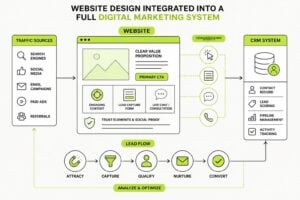
Here's where most digital marketing business plans completely miss the mark. They focus on getting attention but ignore what happens after someone shows interest. A lead comes in through your website. Then what? If the answer involves manual spreadsheets and hoping someone remembers to follow up, you're leaking revenue.
Your digital marketing business plan needs an infrastructure section. Not just marketing tactics but the systems that capture, qualify, nurture, and convert leads. This is where business and marketing development actually happens.
Essential infrastructure components:
- CRM that tracks every lead from first touch to closed deal
- Automated email sequences that nurture leads based on behavior
- Lead scoring that identifies who's ready to buy versus who needs more time
- Attribution tracking that shows which marketing activities produce revenue
- Pipeline reporting that makes forecasting possible
Without this infrastructure, your marketing might generate leads but you'll never know which efforts actually create clients. You can't optimize what you can't measure. You can't scale what isn't systematic.
Building this infrastructure is exactly what separates marketing that feels busy from marketing that drives predictable growth. It's also where the 7-Step Marketing Plan becomes particularly valuable, offering a clear framework for creating systems that move prospects through a structured journey rather than hoping they remember to contact you.

Budget Allocation That Reflects Real Priorities
The budget section in most digital marketing business plans is either wildly optimistic or built by dividing available money equally across all channels. Neither approach works. Smart budget allocation starts with understanding the economics of each channel and allocating based on expected return and strategic priority.
Breaking Down a $5,000 Monthly Marketing Budget
| Category | Monthly Allocation | Purpose | Expected Outcome |
|---|---|---|---|
| Content & SEO | $2,000 (40%) | Long-term asset building | Compounding organic traffic |
| Paid Advertising | $1,500 (30%) | Immediate lead generation | Predictable lead flow |
| Tools & Infrastructure | $800 (16%) | CRM, automation, analytics | System efficiency |
| Testing & Experiments | $700 (14%) | New channels and tactics | Learning and optimization |
Notice the allocation matches strategic priorities. The bulk goes to building long-term assets. Significant investment in paid channels maintains consistent lead flow while organic builds. Tools get proper funding because infrastructure enables everything else. Testing has room to breathe without dominating the budget.
Your specific digital marketing business plan might allocate differently based on your business model and current stage. A new business might put 40% into paid ads to generate immediate revenue while building organic. An established business with strong organic traffic might reduce paid spend and invest more in content. The key is making conscious choices based on your situation, not copying someone else's budget.
Most digital marketing agency business plans include detailed financial projections, and the same thinking applies whether you're planning agency operations or client marketing investments.
Content Strategy That Drives the Entire System
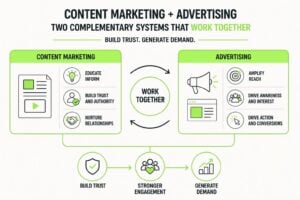
Content isn't a separate initiative in a proper digital marketing business plan. It's the fuel for everything else. Your SEO needs content to target keywords. Your social media needs content to share. Your email nurture sequences need content to send. Your sales team needs content to answer objections.
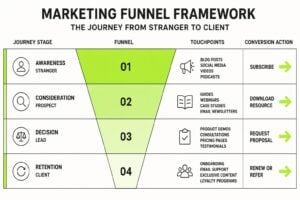
A content strategy within your digital marketing business plan should map content types to specific stages of the buyer journey. Not just "we'll blog twice a week" but strategic content designed to move people from awareness to consideration to decision.
Awareness stage content answers the questions buyers ask before they know they need you. A business owner searching "why am I losing leads" isn't ready to buy CRM infrastructure. They're trying to understand the problem. Content at this stage builds trust and positions you as the guide.
Consideration stage content helps buyers evaluate approaches. Now they know they need a system. They're comparing options. This content explains your methodology, showcases case studies, and demonstrates your expertise in solving their specific problem.
Decision stage content addresses final objections and makes choosing you easy. Detailed service pages, pricing transparency where appropriate, client testimonials, and clear next steps.
Your digital marketing business plan should specify:
- How many pieces of content per month for each stage
- Which keywords or topics each piece targets
- How content distributes across channels
- How you'll repurpose and extend content value
One comprehensive guide can become six social posts, three email newsletters, and a webinar outline. That's not corner-cutting. That's strategic efficiency.
Measurement Systems That Tell You What's Working
The measurement section might be the most important part of your digital marketing business plan and the most commonly done wrong. Generic metrics like "increase traffic 50%" or "grow followers" don't tell you if marketing is working. They tell you if numbers went up.
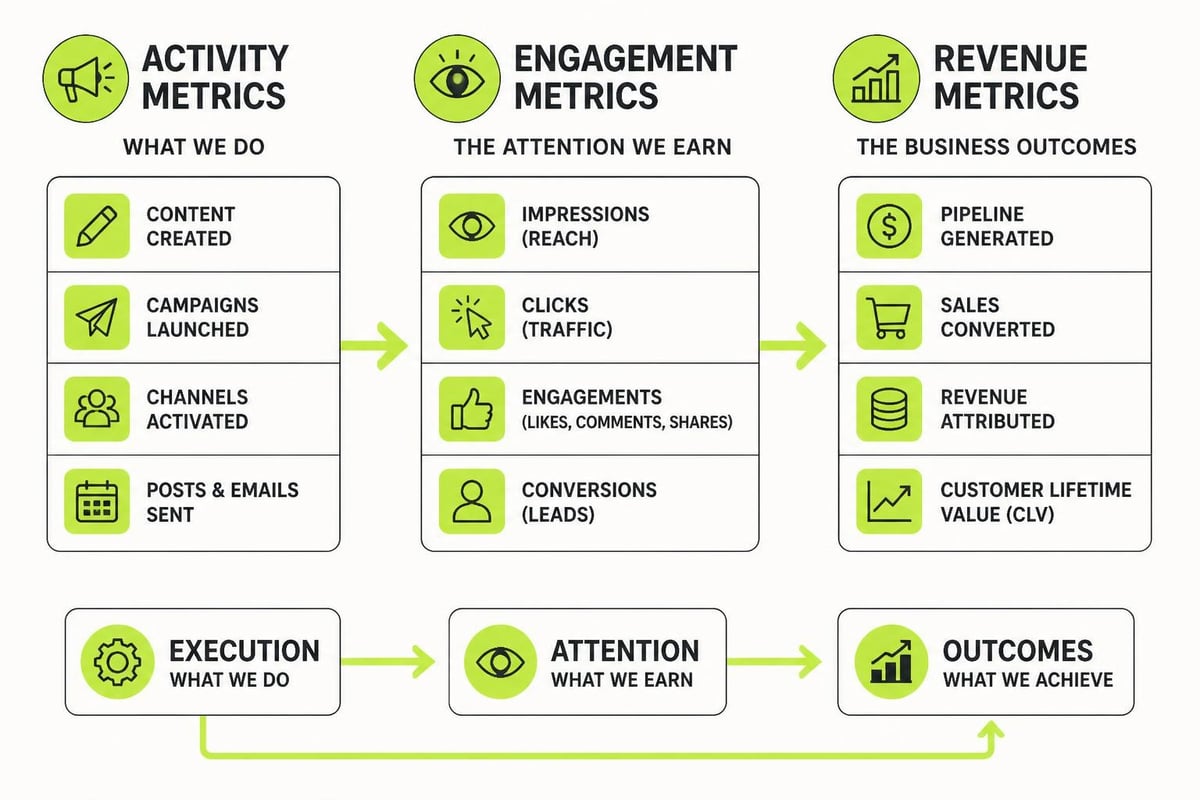
Track metrics in three categories:
Activity metrics show you're doing the work. Articles published, ads run, emails sent. These prove you're executing the plan but don't prove the plan is working.
Engagement metrics show people are paying attention. Traffic, email open rates, social engagement. These indicate your message resonates but don't prove it drives business.
Revenue metrics show marketing creates business outcomes. Leads generated, deals closed, revenue attributed to marketing. These are the only metrics that actually matter.
Most businesses drown in activity and engagement metrics while starving for revenue data. Your digital marketing business plan needs to be explicit about tracking the connection between marketing activity and money in the bank.
Essential Metrics Dashboard
| Metric Type | What to Track | Why It Matters | Target |
|---|---|---|---|
| Activity | Content published, campaigns launched | Confirms execution | 100% of plan |
| Engagement | Website visitors, email opens, form views | Validates message fit | Industry benchmark +20% |
| Revenue | MQLs, SQLs, closed deals, attributed revenue | Proves business impact | Revenue goal achievement |
Set up reporting that tracks these metrics weekly. Not because you'll make major changes every week, but because you'll spot trends before they become problems. If content production is on track but traffic is declining, you have a distribution or quality issue. If traffic is up but leads are down, your conversion path is broken. If leads are up but closed deals are flat, sales needs support or lead quality is off.
The framework for developing marketing plans should always connect back to these fundamental measurements. Without clear metrics, you're flying blind regardless of how sophisticated your tactics appear.
Putting Your Digital Marketing Business Plan Into Motion
A digital marketing business plan sitting in a document does nothing. The value is in execution, and execution requires turning strategic direction into weekly work. Break your plan into 90-day sprints. Each sprint focuses on specific outcomes tied to your annual goals.
Quarter 1 might focus on building infrastructure and foundation. Set up your CRM properly. Build your core website pages. Create your lead magnet and first nurture sequence. Establish baseline metrics. Get the system working before you scale it.
Quarter 2 might emphasize content production and organic growth. Publish consistent, strategic content. Build backlinks. Grow your email list. Start seeing compounding returns from Q1 infrastructure.
Quarter 3 could layer in paid acceleration. Now you have content to send traffic to, a CRM to capture leads, and nurture sequences to convert them. Paid ads amplify a working system rather than trying to be the entire system.
Quarter 4 focuses on optimization and scaling. You have data on what works. Double down on winning channels. Cut or fix what's underperforming. Set targets for next year based on actual performance.
This approach keeps your digital marketing business plan from becoming overwhelming. You're not doing everything at once. You're building systematically, with each quarter creating the foundation for the next. When you review examples of business planning across different industries, the successful ones always show this kind of phased implementation.
Team and Resources: Who Does What
Your digital marketing business plan needs to account for who's actually doing the work. Even if you're a solo operator, being explicit about roles prevents important tasks from falling through gaps.
Common roles in digital marketing execution:
- Strategist (decides what to do and why)
- Content creator (writes, designs, produces)
- Technical implementer (builds, configures, integrates)
- Campaign manager (executes, monitors, adjusts)
- Analyst (measures, reports, recommends)
One person might wear multiple hats, especially early on. The point is ensuring each role has assigned responsibility and allocated time. If your plan requires 20 hours of content creation per month but nobody owns that role, it won't happen.
Be realistic about internal capacity versus external support. Some businesses try to do everything in-house and end up doing nothing well. Others outsource everything and lose the ability to learn and improve. The right mix usually involves owning strategy and critical execution while getting expert help for specialized skills.
If you're working with an agency or contractors, your digital marketing business plan should specify exactly what you're buying and what outcomes you expect. "Social media management" is vague. "Three posts per week, community engagement responding within 4 hours, monthly growth of 10% in relevant followers" is clear.
Adapting Your Plan Without Abandoning the System
Markets shift. Algorithms change. Competitors adapt. New channels emerge. Your digital marketing business plan needs flexibility built in without becoming so flexible it's meaningless.
The difference between adapting and abandoning:
Adapting means you stick to your strategic priorities while adjusting tactics. If Google changes their algorithm and your organic traffic drops, you don't abandon SEO. You adapt your approach based on new requirements.
Abandoning means jumping to something completely different at the first sign of difficulty. Your content isn't getting traction in week three, so you decide to completely pivot to video. That's not adaptation. That's panic.
Build quarterly review points into your digital marketing business plan. Every 90 days, assess what's working and what isn't. Make data-informed decisions about where to double down and what to change. But give tactics enough time to actually work before you judge them.
SEO takes 6-12 months to show full results. If you evaluate success at month two, you'll quit right before it pays off. Paid ads can work immediately but need weeks of optimization to become profitable. Email nurture sequences need enough volume to establish conversion patterns.
Your review process should ask:
- Are we executing the plan as written? (If not, why not?)
- Are our activity metrics on target?
- Are our engagement metrics trending right?
- Are we seeing the expected impact on revenue metrics?
- What external factors have changed that require adjustment?
Document decisions and reasoning. When you look back six months later, you want to understand why you made changes, not just that you did. This builds organizational learning and prevents repeating mistakes. The structured approach to planning helps maintain this discipline across your team.
Integration With Business Operations
Your digital marketing business plan doesn't exist in isolation. It connects to sales, delivery, finance, and operations. The tighter these integrations, the more effective your marketing becomes.
Marketing to sales handoff needs clear definition. What makes a lead qualified? How does information transfer from marketing systems to sales? What response time commitment ensures hot leads don't cool? If marketing generates leads but sales can't follow up promptly, you're wasting marketing investment.
Marketing to delivery connection ensures you're attracting the right buyers. If marketing brings in clients who don't fit your service model, you create delivery stress and potentially bad outcomes. Your ideal client definition should align across marketing, sales, and delivery.
Marketing to finance linkage tracks return on investment. When you know customer acquisition cost and lifetime value, you can make smart decisions about scaling. Spending $2,000 to acquire a $10,000 client with 70% margin is good business. Spending $8,000 to acquire the same client isn't.
These integrations need explicit attention in your digital marketing business plan. It's not just about generating awareness and leads. It's about creating a complete system that turns marketing investment into sustainable business growth. That's the core principle behind everything we focus on at MDO Digital, removing chaos and creating structured systems that compound over time.
A digital marketing business plan is your operating system for turning attention into revenue. It connects your business goals to specific marketing activities, establishes the infrastructure to capture and convert leads, and creates measurement systems that prove what's working. Most importantly, it transforms marketing from a cost center into a growth engine. If you're ready to build marketing systems that remove chaos and create predictable demand, MDO Digital helps service businesses implement exactly this kind of structured approach.