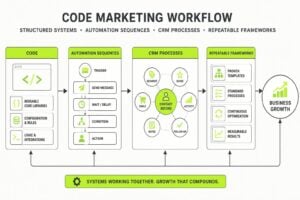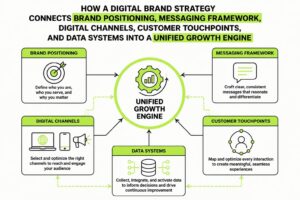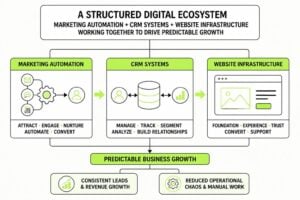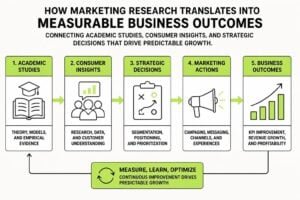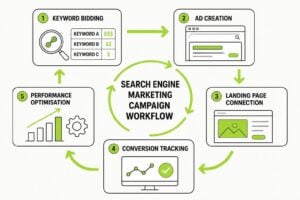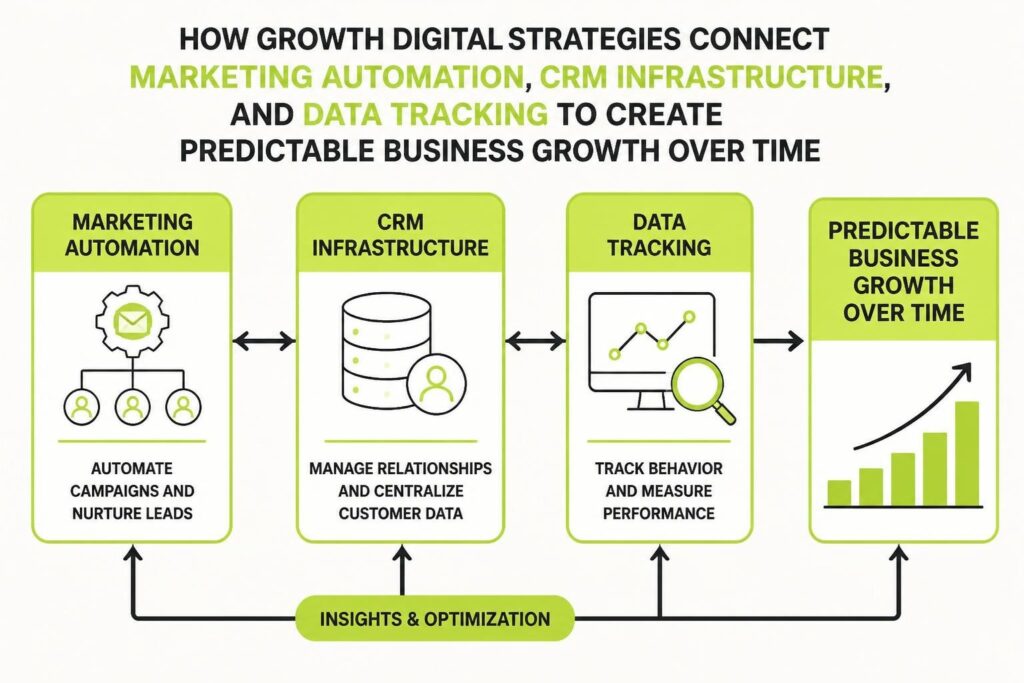
Most service businesses treat growth digital as a channel problem. They chase platforms, tactics, and trends. But sustainable growth doesn't come from adding more noise to the internet. It comes from building infrastructure that captures attention, converts it into demand, and compounds over time. The difference between companies that scale and those that stall isn't creativity or effort. It's systems. Growth digital is the practice of turning marketing from a cost centre into a predictable engine.
What Growth Digital Actually Means
Growth digital isn't a rebranded term for digital marketing. It's a specific approach to building commercial momentum through structured systems. Where traditional digital marketing focuses on channels and campaigns, growth digital focuses on architecture.
The core components include:
- CRM infrastructure that captures and qualifies every lead
- Automation that moves prospects through defined stages
- Data tracking that reveals what actually drives conversions
- Content systems that educate and build trust at scale
- Feedback loops that improve performance week over week
This isn't about vanity metrics. It's about connecting every dollar spent to measurable outcomes. Companies that embrace this approach treat marketing as engineering, not art. They build repeatable processes that generate predictable results.
The Infrastructure Problem
Most businesses operate without proper growth digital infrastructure. They run ads that send traffic to static websites. They collect leads in spreadsheets. They rely on memory to follow up with prospects. This creates chaos.
Without systems, nothing compounds. Every lead is a one-time opportunity. Every campaign starts from zero. Growth becomes a function of how many hours you can personally work, not how well your infrastructure performs.
The evolution of digital marketing has reached a point where infrastructure matters more than individual tactics. Businesses that ignore this reality will keep spinning their wheels, no matter how much they spend on ads or content.
Building a Growth Digital System
Creating effective growth digital infrastructure requires more than tools. It requires thinking about your entire commercial process as a connected system. Each component feeds the next, creating momentum that builds over time.
Step One: Define Your Demand Generation Model
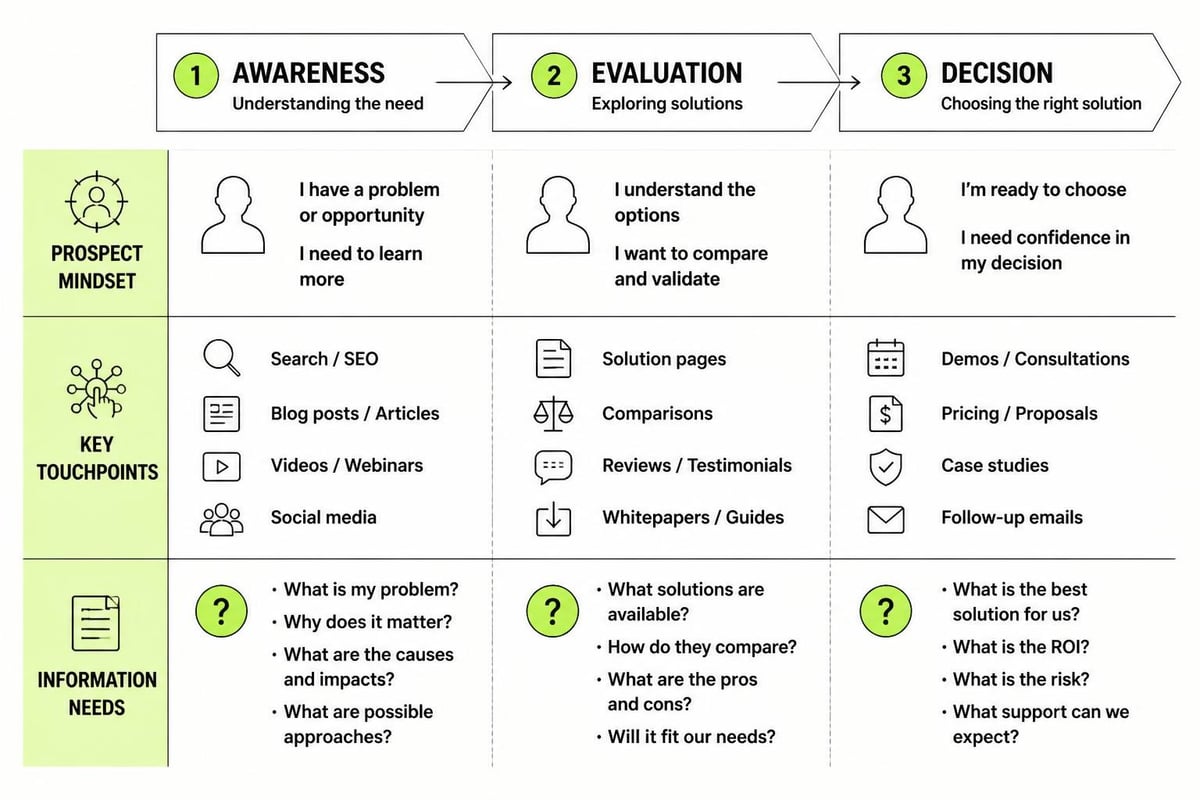
Start by mapping how prospects become customers. Not the ideal path you wish existed, but the actual journey your best clients take. This clarity shapes everything else.
Key questions to answer:
- Where do qualified prospects first encounter your business?
- What information do they need before taking a first step?
- What objections or concerns delay their decision?
- Which touchpoints move them from interested to committed?
- How long does this process typically take?
This mapping exercise reveals where your current process leaks. Most businesses lose 60-80% of potential demand in the gap between first contact and first conversation. Growth digital infrastructure exists to protect those leads and move them forward systematically.
Step Two: Build Your Capture and Qualification Infrastructure
Once you understand the journey, you need systems to capture attention and qualify intent. This is where CRM becomes critical. Not as a database, but as active infrastructure.
| Infrastructure Layer | Purpose | Key Function |
|---|---|---|
| Lead capture forms | Collect contact details | Entry point to your system |
| CRM database | Store and organise prospects | Single source of truth |
| Tagging and scoring | Qualify intent and fit | Prioritise follow-up |
| Automated workflows | Move leads through stages | Maintain momentum |
| Analytics dashboard | Track conversion metrics | Identify bottlenecks |
This infrastructure doesn't just collect information. It actively qualifies prospects, assigns them to the right sequences, and ensures nothing falls through the cracks. The best systems do this automatically, freeing your team to focus on high-value conversations.
Step Three: Create Nurture Systems That Build Trust
Most leads aren't ready to buy immediately. They need education, proof, and time. Growth digital infrastructure includes automated nurture campaigns that deliver value while keeping your business front of mind.
Effective nurture sequences follow a pattern. They educate first, demonstrate proof second, and invite action third. Each email or touchpoint should advance understanding or address a specific concern.
A practical 7-Step Marketing Plan helps businesses structure this approach systematically. It connects goal setting, audience definition, platform selection, and nurture systems into a cohesive framework. Each step builds on the last, creating a repeatable process for generating and converting demand.

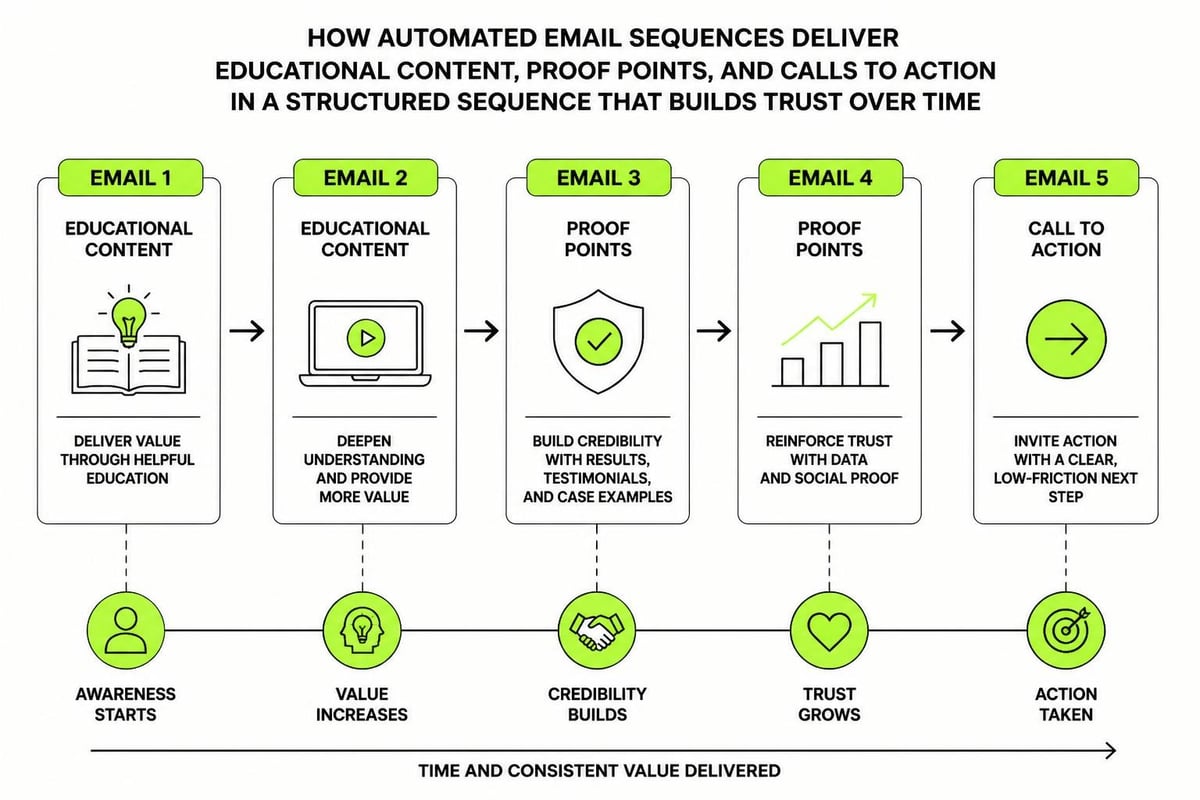
The timing matters as much as the content. Space your touchpoints to maintain presence without creating fatigue. Most effective sequences run 6-12 emails over 30-90 days, adjusted based on sales cycle length and complexity.
Data Architecture for Growth Digital
Systems only improve when you measure what matters. Growth digital requires data infrastructure that connects marketing activity to commercial outcomes. This goes far beyond Google Analytics pageviews.
What to Track
The metrics that drive growth digital aren't always the ones that feel impressive. Forget viral reach. Focus on conversion efficiency and customer acquisition cost.
Essential metrics include:
- Lead capture rate per traffic source
- Cost per qualified lead by channel
- Lead to opportunity conversion rate
- Opportunity to customer conversion rate
- Time from first contact to closed deal
- Customer lifetime value by acquisition source
These metrics reveal system health. When lead capture rate drops, you have a messaging or offer problem. When opportunity conversion stalls, you need better qualification or nurture. Data tells you where to focus.
The challenge is connecting these data points across platforms. Traffic lives in analytics. Leads live in your CRM. Customers live in your billing system. Growth digital infrastructure bridges these silos, creating a unified view of your commercial engine.
Implementing Attribution
Attribution is where most growth digital systems break down. You need to know which activities actually drive revenue, not just which ones correlate with it. This requires both technical setup and analytical discipline.
First-touch attribution shows what creates initial awareness. Last-touch attribution shows what closes deals. Multi-touch attribution attempts to credit every interaction. Each model reveals different insights.
For service businesses, first-touch often matters most. The channel that introduces prospects to your business shapes their entire journey. But don't ignore middle touches. Content, webinars, and case studies build the trust that converts.
Set up tracking that captures source data at lead capture and preserves it through your entire CRM. When someone becomes a customer, you should be able to trace them back to their first interaction. This clarity guides resource allocation.
Content Systems in Growth Digital
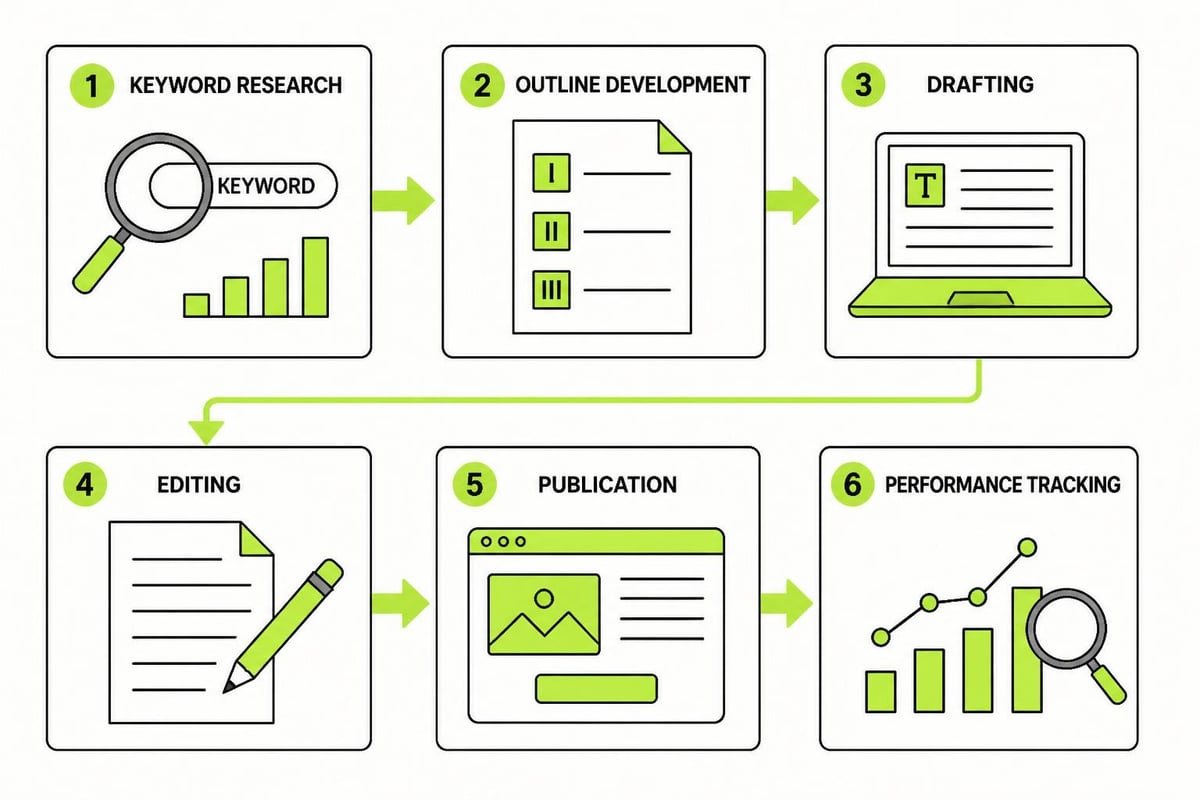
Content isn't separate from growth digital infrastructure. It's fuel for the system. But effective content requires its own processes and standards. Random blog posts and occasional social updates don't move metrics.
Building a Content Engine
A content engine produces consistent output that serves specific functions in your growth digital system. Each piece should have a clear role: attract, educate, qualify, or convert.
Attraction content brings new people into your orbit. It answers questions your prospects are already asking. SEO-optimized articles, helpful tools, and practical frameworks work here. This content should establish expertise without requiring prior knowledge of your business.
Education content builds understanding of the problem and solution categories. It helps prospects recognise why their current approach isn't working and what better looks like. Guides, comparisons, and methodology explanations serve this purpose.
Qualification content helps prospects self-assess fit and readiness. It makes your ideal customer profile clear and gives people permission to opt out if they're not a match. This protects your time and theirs.
Conversion content provides the final proof and clarity needed to take action. Case studies, detailed process explanations, and transparent pricing information belong here.
| Content Type | Primary Function | Distribution Method | Success Metric |
|---|---|---|---|
| SEO Articles | Attract | Organic search | New visitor traffic |
| Email Sequences | Educate | CRM automation | Email to opportunity rate |
| Case Studies | Convert | Sales process | Opportunity to customer rate |
| Comparison Guides | Qualify | Nurture campaigns | MQL to SQL rate |
Many businesses struggle with content production because they lack systems. They create one-off pieces without thinking about how they connect. Growth digital treats content as infrastructure. Each piece serves a defined purpose and plugs into your broader system.
Real-world examples show this approach working across industries. Digital transformation case studies demonstrate how companies use content and systems together to drive measurable outcomes. The pattern is consistent: clear strategy, connected infrastructure, measurable results.
Automation That Protects Momentum
Automation is where growth digital moves from theory to practical advantage. The right automation doesn't replace human judgment. It eliminates manual tasks that slow your system down and create points of failure.
Where to Automate First
Start with lead routing and initial qualification. When someone fills a form, automation should immediately:
- Add them to your CRM with proper source tracking
- Send a confirmation email with clear next steps
- Assign them to the appropriate team member
- Add them to relevant nurture sequences
- Create tasks for timely follow-up
This happens in seconds, not hours or days. Speed matters in conversion. Prospects who receive immediate, relevant communication are far more likely to engage than those who wait.
Next, automate your nurture sequences. Build campaigns that deliver value over time without requiring manual intervention. These sequences should adjust based on behaviour. If someone opens every email, they need different treatment than someone who never engages.
Advanced Automation for Scale
As your growth digital system matures, automation becomes more sophisticated. You can trigger different sequences based on lead score, engagement patterns, or specific behaviours.
Advanced automation examples:
- Move high-scoring leads to priority sales sequences
- Pause nurture when prospects engage with sales
- Re-engage cold leads with targeted content
- Alert sales when prospects visit key pages
- Automatically clean and update contact records
The goal is maintaining momentum without creating work. Each automation should either accelerate conversion or prevent leads from falling through cracks. If it doesn't serve one of these purposes, it's complexity without value.
Leading companies have documented this approach extensively. Forrester’s digital transformation research shows how automation infrastructure drives measurable business outcomes when implemented strategically.
Integration Architecture
Growth digital systems only work when your tools talk to each other. Most businesses operate with disconnected platforms. The website doesn't communicate with the CRM. The CRM doesn't share data with email. Analytics sits in its own silo.
This fragmentation kills momentum. Leads get lost. Data becomes unreliable. Teams make decisions based on incomplete information.
Building Connected Systems
Integration requires both technical setup and strategic thinking. You need to decide what data flows where, when, and why. Not everything should sync everywhere. Focus on integrations that eliminate manual work or improve decision making.
Critical integrations for growth digital:
- Website forms to CRM for instant lead capture
- CRM to email platform for automated nurture
- Analytics to CRM for behaviour tracking
- Payment system to CRM for revenue attribution
- Chat or phone systems to CRM for interaction history
Modern platforms make these integrations relatively straightforward. The challenge isn't technical capability. It's designing the data flow to support your specific processes.
When properly integrated, your system creates a complete view of each prospect's journey. You see every interaction, every piece of content consumed, every conversation. This clarity improves both marketing efficiency and sales effectiveness.
Testing and Optimisation Cycles
Growth digital infrastructure isn't set and forget. It requires ongoing testing and refinement. The best systems include formal cycles for identifying underperformance and implementing improvements.
What to Test
Everything in your growth digital system is a hypothesis until proven. Your lead magnet, your nurture sequence timing, your qualification criteria, all assumptions that need validation.
Start with elements that have the biggest impact on conversion:
- Lead capture offers and messaging
- Email subject lines and send timing
- Landing page copy and design
- Qualification questions and scoring
- Follow-up timing and content
Run structured tests with clear success metrics. Change one variable at a time so you know what drives results. Document what you learn and implement winners permanently.
This testing mindset separates growth digital from traditional marketing. You're not running campaigns and hoping. You're running experiments and learning. Each test makes your system more effective.
Common Infrastructure Mistakes
Most businesses make predictable mistakes when building growth digital systems. Recognising these patterns helps you avoid them.
The biggest infrastructure mistakes include:
- Building on platforms you don't own or control
- Creating complexity before proving basic systems work
- Optimising metrics that don't drive revenue
- Automating broken processes instead of fixing them first
- Neglecting data quality and hygiene
The first mistake is particularly costly. Businesses that build their entire system on rented platforms or third-party tools create fragility. When those platforms change their rules or pricing, your infrastructure breaks.
Own your database. Own your email list. Own your content. Build on platforms you control and integrate carefully with tools you don't. This protects your investment and maintains flexibility.
Moving from Setup to Scale
Once your growth digital infrastructure is operational, the focus shifts from building to scaling. This requires different thinking and different metrics. You're no longer asking if the system works. You're asking how to make it work better and bigger.
Scaling What Works
Identify your highest-performing channels and sequences. What's producing the best leads at the lowest cost? What nurture sequences have the highest conversion rates? Double down on what's proven.
This might mean increasing ad spend on channels that work. It might mean creating more content in formats that convert. It might mean hiring specialists to optimise specific parts of your system.
The key is proportional scaling. Don't just throw more money at things. Ensure your infrastructure can handle increased volume. If you double traffic, can your systems still capture, qualify, and nurture effectively? If not, strengthen infrastructure before scaling input.
Research from companies that have successfully scaled their digital operations shows consistent patterns. Successful digital transformation examples demonstrate that infrastructure comes first, scale second.
Maintaining Quality at Volume
As systems scale, quality becomes harder to maintain. More leads means more variation. More automation means less human touch. More complexity means more potential failure points.
Build quality checks into your scaled systems. Monitor lead quality metrics weekly. Review automated sequences monthly. Audit your CRM data quarterly. These practices prevent degradation over time.
Remember that growth digital isn't about maximising volume. It's about maximising profitable demand. Sometimes the right move is rejecting poor-fit leads earlier or increasing qualification standards. Protect your team's time and your system's efficiency.
The Long Game of Growth Digital
Growth digital infrastructure creates compounding advantages. The longer you run effective systems, the more valuable they become. Your CRM fills with qualified prospects. Your content library attracts organic traffic. Your automation becomes more sophisticated.
This compounds in ways that individual campaigns never do. A good campaign might generate results for weeks or months. A good system generates results indefinitely. Each improvement makes every future interaction better.
The businesses that win in the long term are those that build deliberately. They treat their growth digital infrastructure as core business assets, not marketing expenses. They invest in improvement consistently, not just when growth stalls.
This requires patience and discipline. You won't see dramatic results overnight. But you will see steady, predictable growth that scales with your business. That's the entire point. Moving from chaos to clarity, from reactive to systematic, from hoping to knowing.
When you're ready to build growth digital infrastructure that actually compounds, the work starts with honest assessment. Where are leads falling through cracks today? Which parts of your process rely on memory or manual work? What data are you missing that would improve decisions? Answer these questions first. Build systems second.
Growth digital works when you treat it as infrastructure, not tactics. The businesses that scale sustainably are those that build systems for capturing attention, converting interest, and compounding results over time. If your current approach feels chaotic or unpredictable, you probably need better infrastructure. MDO Digital helps service businesses build marketing systems that remove chaos, protect leads, and create structured growth. We focus on the unglamorous work that actually scales: CRM setup, automation architecture, and data infrastructure that turns attention into predictable demand.