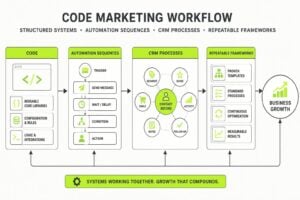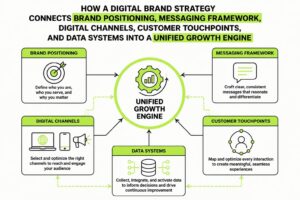
Most service businesses don't need more marketing tactics. They need a plan. A proper one. Not a wish list of things that might work, but a structured system that turns attention into revenue, predictably and repeatedly. When you plan a marketing strategy from the ground up, you're not just deciding where to spend your budget. You're building infrastructure that protects leads, removes chaos, and creates growth that compounds quarter after quarter. This isn't about keeping up with trends or copying what competitors post on LinkedIn. It's about knowing exactly what you're building, why each piece matters, and how the whole thing fits together.
Start with Goals That Drive Decisions
Every marketing plan starts with a number. Not a vague ambition like "grow the business" or "get more leads," but a specific revenue target and the client volume needed to hit it. Work backwards from there.
If you need $500K in new revenue this year and your average project is worth $25K, you need 20 new clients. If your sales close rate sits at 25%, you need 80 qualified conversations. If 10% of leads book a discovery call, you're looking at 800 leads. That's your target. Everything else in your plan exists to hit that number.
Your goals should answer:
- Revenue target for the next 12 months
- Average deal size and sales cycle length
- Number of new clients required
- Lead volume needed to support conversion rates
- Key milestones at 90-day intervals
This clarity changes how you plan a marketing system. You're not guessing. You're engineering a machine with known inputs and outputs. When you know the numbers, you can allocate budget, choose channels, and measure performance with precision.
Define Your Buyer Persona Beyond Demographics
Demographics tell you who someone is. Psychographics tell you why they buy. Most marketing plans waste time on surface-level details like "business owners aged 35-55" and skip the insights that actually drive messaging and positioning.
When you plan a marketing approach, dig deeper. What problem keeps your ideal client awake at 3am? What have they already tried that failed? What objections will they raise before they commit? What do they believe about their industry, their competition, and themselves?
Map the Buyer Journey
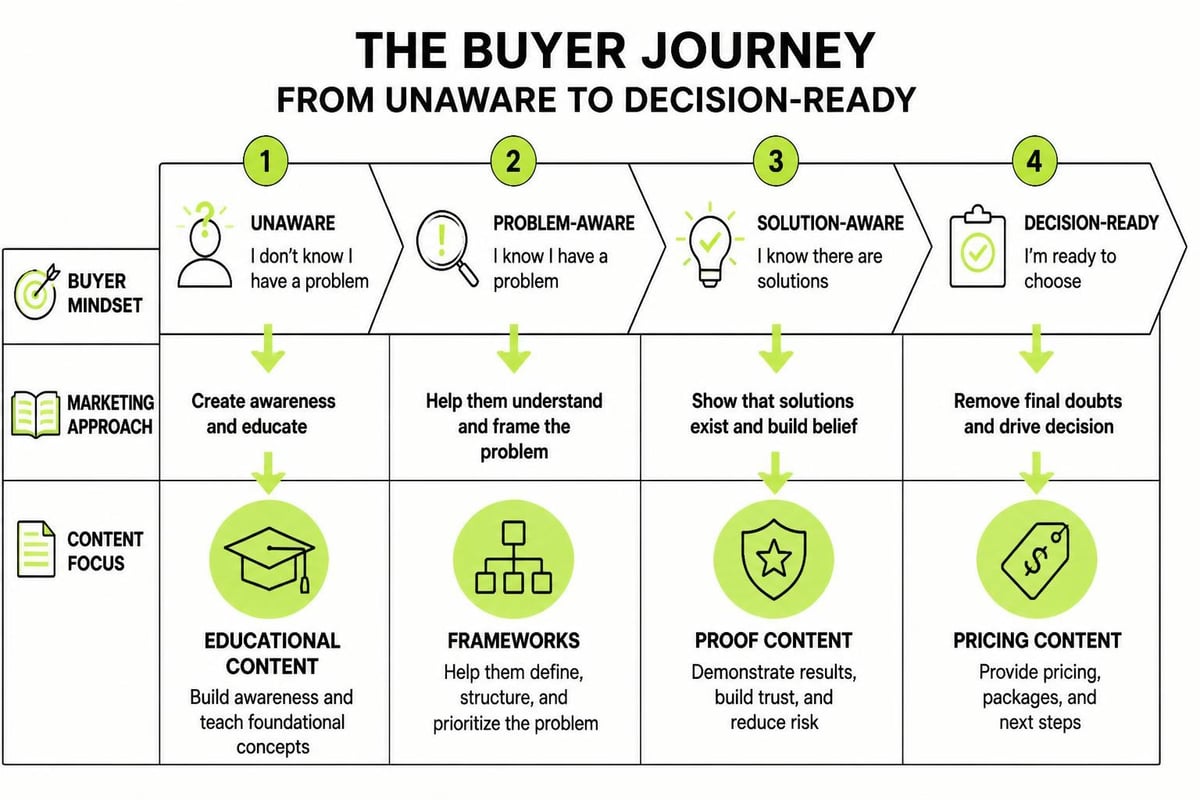
Your buyer persona isn't static. They move through stages, and your marketing needs to meet them where they are.
| Stage | Mindset | Content Need |
|---|---|---|
| Unaware | Doesn't know the problem exists | Educational, thought leadership |
| Problem-aware | Knows the problem, exploring solutions | Frameworks, comparisons, case studies |
| Solution-aware | Evaluating providers | Proof, process, testimonials |
| Decision-ready | Choosing between final options | Pricing, guarantees, quick wins |
Most businesses only create content for the bottom of this table. That's why their pipeline stays thin. When you plan a marketing strategy properly, you build assets for every stage. You meet buyers early, build trust over time, and stay front-of-mind until they're ready to move.
Choose Platforms Based on Behavior, Not Hype
Every year brings a new "must-use" platform. Ignore the noise. The right channel is wherever your buyers already spend time and engage with content relevant to their work.
For most service businesses, that means:
- LinkedIn for B2B and professional services
- Google Search for intent-driven demand
- Email for nurture and relationship-building
- Referral networks for trust-based industries
You don't need to be everywhere. You need to dominate one or two channels where your message lands with people who have the problem you solve. When you plan a marketing mix, start with one primary channel and one supporting channel. Master both before adding more.
The Google Search Central SEO Starter Guide remains the foundation for any business relying on organic discovery. Pair that with a consistent presence on LinkedIn or a well-optimized referral program, and you've got a repeatable system.
Build an Opt-In Offer That Qualifies Leads
Lead magnets fail when they attract everyone and qualify no one. The goal isn't volume; it's fit. Your opt-in offer should filter out tire-kickers and pull in people who match your ideal client profile.
Effective opt-in offers share three traits:
- Immediate value. They solve a real problem right now, not eventually.
- Demonstrated expertise. They prove you understand the nuances of the buyer's challenge.
- Natural next step. They make the paid offering feel like the obvious progression.
Templates, checklists, and frameworks work well if they're specific. A "marketing plan template" is generic. A "7-step marketing plan for scaling service businesses without burning out your team" is useful. It speaks to a specific pain, a specific audience, and a specific outcome.
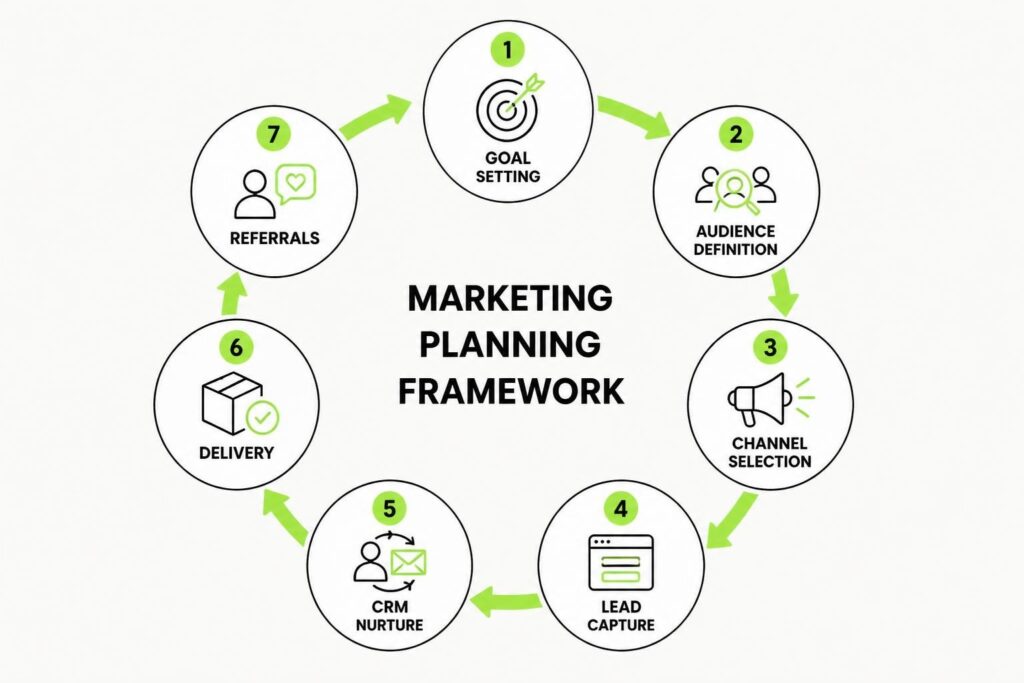
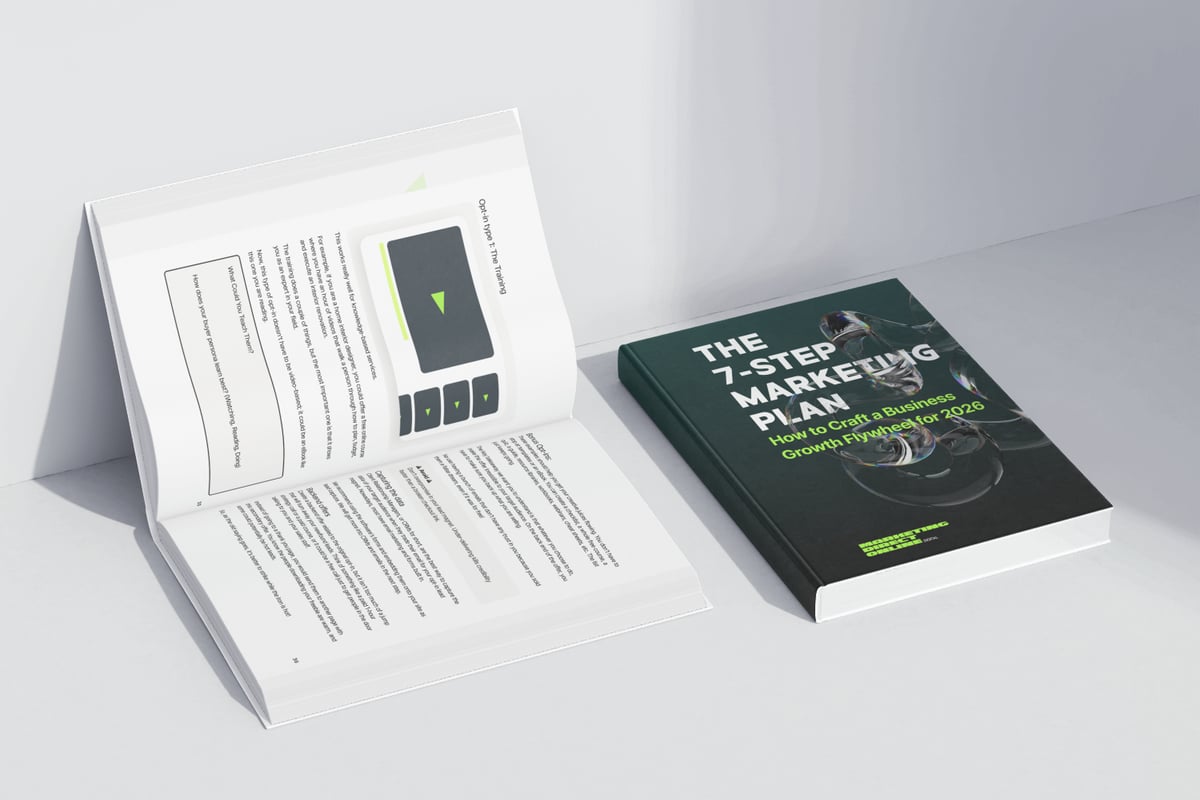
If you're serious about building a system that qualifies leads from the start, the 7-Step Marketing Plan gives you a ready-made framework that covers goal setting, buyer personas, platform selection, lead capture, CRM nurture, delivery, and referrals. It's the kind of asset that doesn't just capture emails but starts the qualification process immediately.
Structure Your CRM and Nurture Campaign
Most leads aren't ready to buy the moment they opt in. That's fine. What's not fine is losing them because you don't have a system to stay in touch until they are ready.
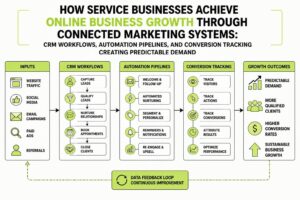
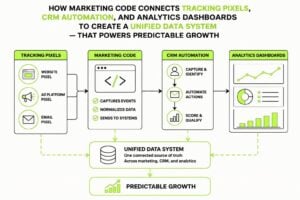
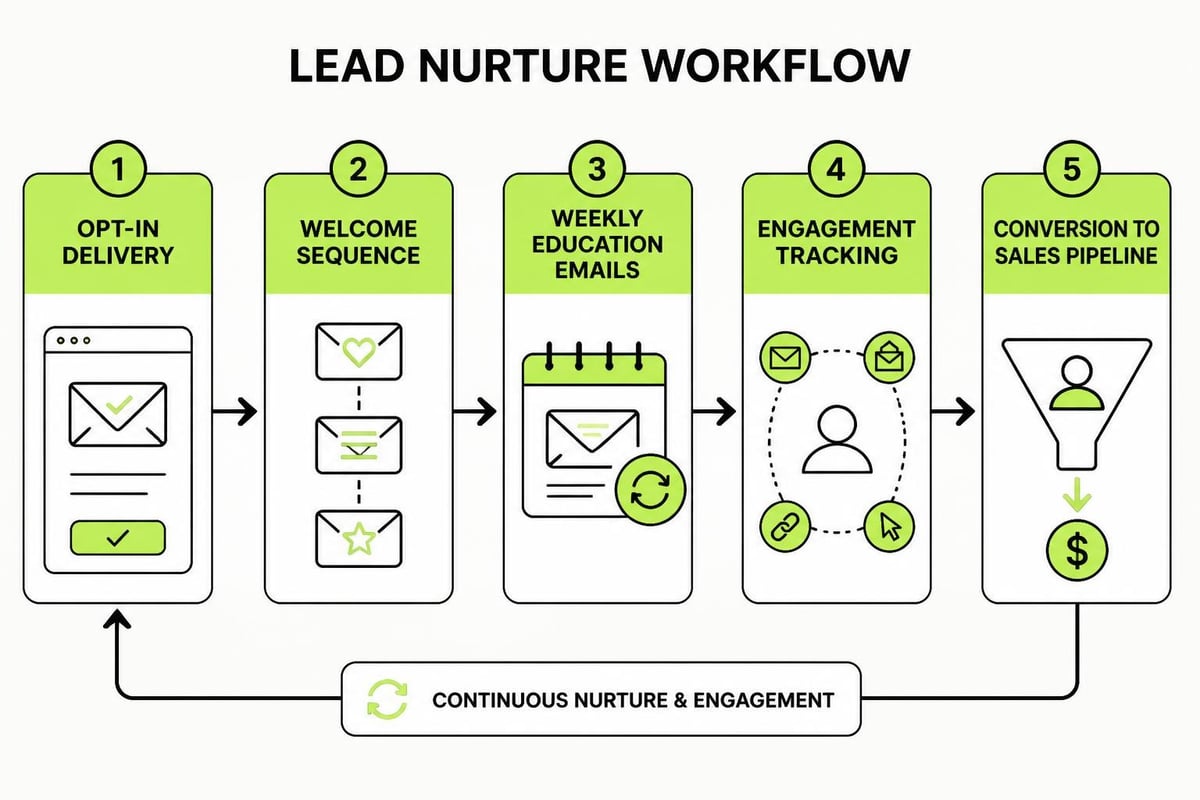
Your CRM is the engine room of a marketing plan. It captures every lead, tracks every interaction, and automates the nurture sequence that turns strangers into prospects. Without it, you're relying on memory, spreadsheets, and hope.
Essential CRM Components
- Lead capture forms connected to your email platform
- Tagging system that segments by source, interest, and stage
- Automated welcome sequence that delivers your opt-in and sets expectations
- Weekly nurture emails that educate, build authority, and stay top-of-mind
- Pipeline view so you can see where every opportunity sits
The brands that scale don't have better offers. They have better follow-up. When you plan a marketing infrastructure, CRM and automation sit at the center. Everything else feeds into it.
For businesses looking to move beyond chaotic spreadsheets and Gmail folders, investing in proper digital branding solutions that include CRM setup and integration is the fastest path to structured growth. It's not glamorous, but it's what separates businesses that grow predictably from those that burn through leads.
Create Content That Moves Buyers Forward
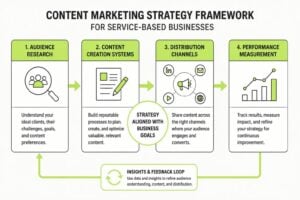
Content marketing isn't blogging for the sake of it. It's building assets that answer the questions your buyers ask at every stage of their journey. When you plan a marketing content calendar, align every piece to a stage, a question, and a conversion goal.
Content types that convert:
- Thought leadership articles that challenge assumptions and reframe problems
- Case studies that show proof and process in real client scenarios
- How-to guides that give away the "what" and sell the "how" (execution)
- Comparison pieces that position your approach against alternatives
- Video walkthroughs that demonstrate tools, frameworks, or systems
The Content Marketing Institute’s 2025 trends report highlights the shift toward depth over volume. Buyers don't need more surface-level content. They need fewer, better pieces that actually solve problems and build trust.
When you plan a marketing publishing schedule, aim for one high-quality piece per week. Promote it across your primary channel, repurpose it into email, and use it in your nurture sequences. One great piece, worked properly, outperforms ten mediocre posts.
Deliver an Outstanding Client Experience
Marketing doesn't stop when someone becomes a client. The experience you deliver shapes referrals, testimonials, and long-term retention. It's also the part most businesses leave to chance.
An outstanding experience is engineered, not accidental. It includes:
- Onboarding sequences that set expectations and eliminate confusion
- Progress updates at predictable intervals
- Proactive communication when issues arise
- Celebration moments when milestones are hit
- Offboarding and feedback loops that capture insights and testimonials
When clients feel looked after, they tell people. When they feel ignored, they leave reviews (or worse, they don't). The businesses that grow through referrals aren't lucky. They've built systems that create remarkable outcomes, then make it easy for happy clients to spread the word.
Systematize Reviews and Referrals
Referrals are the highest-converting channel in service businesses. But most people don't ask for them until they need them, and by then it's awkward. When you plan a marketing flywheel, referrals and reviews sit at the end of the client journey, feeding new leads back into the top.
Build a Referral Engine
| Action | Timing | Tool |
|---|---|---|
| Request Google review | 7 days after project delivery | Automated email with direct link |
| Ask for testimonial | At project close, during debrief call | Simple form or Loom video request |
| Introduce referral program | 30 days post-delivery, once value is clear | Email with referral incentive details |
| Re-engage past clients | Quarterly check-in with value-add content | Segmented email campaign |
You don't need to beg. You need to ask at the right moment, make it easy, and offer a reason. Most clients are happy to refer if you've delivered results and removed friction from the process.
The businesses that treat referrals as a system, not a favor, grow faster and spend less on acquisition. When you plan a marketing strategy with referrals baked in from day one, you're building a machine that feeds itself.
Align Budget and Resources to Priorities
Marketing plans fail when the budget doesn't match the goals. You can't commit to a $100K revenue target with a $500/month ad spend and no one managing the system. The math doesn't work.
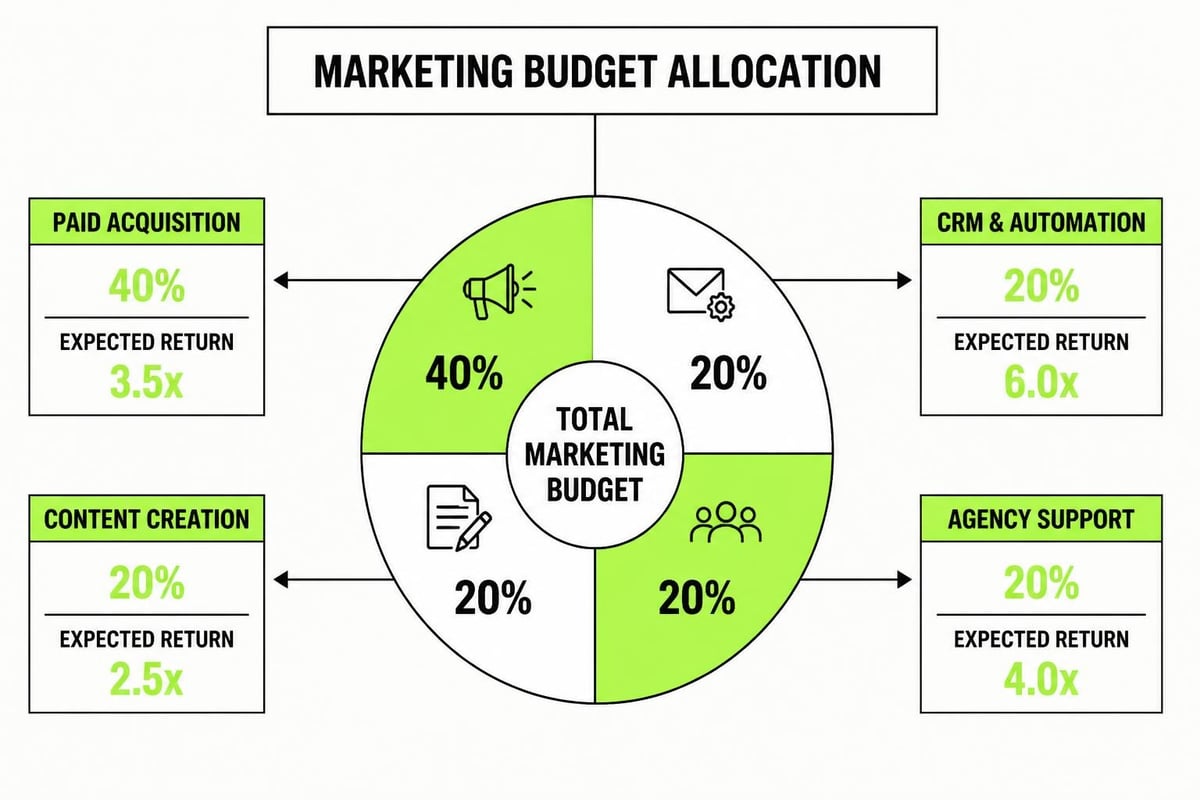
Start by allocating budget to the parts of your plan that drive the most leverage:
- Platform ads (LinkedIn, Google) to generate top-of-funnel leads
- CRM and automation tools to nurture and convert
- Content creation (writing, design, video) to build authority
- Agency or contractor support to execute without burning out your team
For businesses unsure where to start, understanding marketing agency pricing helps set realistic expectations around what different levels of investment deliver. You're not just buying hours. You're buying systems, expertise, and outcomes.
Measure What Matters and Iterate Quickly
A marketing plan without measurement is just optimism. You need visibility into what's working, what's not, and where to adjust. The Harvard Business Review guidance on simplifying marketing strategy emphasizes focus: track fewer metrics, but track them ruthlessly.
Key metrics by stage:
- Awareness: Traffic, reach, impressions
- Engagement: Email open rates, content downloads, session duration
- Conversion: Lead-to-opportunity rate, sales close rate, cost per acquisition
- Retention: Client lifetime value, churn rate, referral volume
Review these monthly. Not in a panic when revenue dips, but as a regular operating rhythm. Look for patterns. If email engagement drops, test subject lines and send times. If lead quality falls, revisit your opt-in offer and qualification criteria. When you plan a marketing review cadence, you catch problems early and double down on what works.
Document the Plan So It's Executable
A plan in your head isn't a plan. It's a vague intention. The businesses that execute well document everything: goals, audience definitions, content calendars, automation workflows, and success metrics.
Use something simple. A HubSpot marketing plan template gives you structure without overcomplicating things. You don't need a 50-page deck. You need a living document that your team can reference, update, and execute against.
Include:
- One-page summary with goals and key metrics
- Buyer persona and journey map
- Content calendar (90 days ahead minimum)
- Channel strategy and budget breakdown
- CRM workflows and automation sequences
- Review schedule and reporting cadence
When the plan is documented, it's transferable. New hires can onboard faster. Contractors know exactly what to deliver. You stop being the bottleneck because the system exists outside your brain.
Integrate Brand and Execution
Marketing plans often treat brand as separate from execution. That's a mistake. Your brand is the lens through which everything is experienced: your messaging, your visuals, your tone, your delivery. When brand and marketing align, every touchpoint reinforces the same positioning, and trust builds faster.
Service businesses especially benefit from tight branding and digital marketing integration. Your website, your email sequences, your proposals, your onboarding flows. They should all feel like they come from the same place, with the same values and the same voice.
Consistency is what separates brands people remember from businesses people forget. When you plan a marketing system, make sure brand isn't an afterthought. It's the foundation.
A marketing plan isn't a document you write once and file away. It's a living system you build, measure, and refine. The businesses that grow predictably are the ones that treat marketing as infrastructure, not inspiration. If you're ready to stop guessing and start building a system that actually generates leads and clients, MDO Digital can help you design the CRM, automation, and brand architecture that turns attention into revenue. No chaos. Just clarity, structure, and growth that compounds.