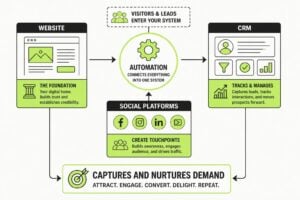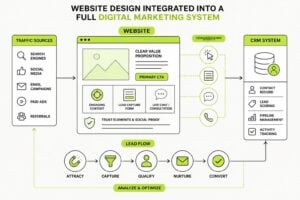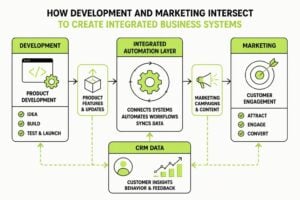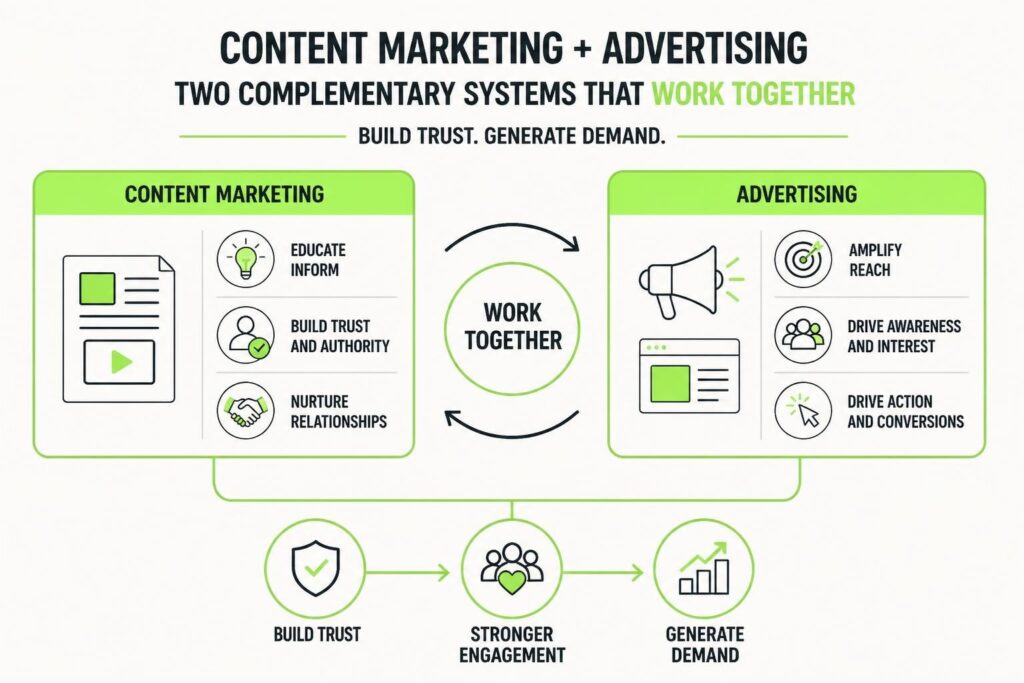
Most business owners treat content and advertising as separate activities. One team writes blog posts and emails. Another runs ads and tracks conversions. But this split creates friction, wasted budget, and mixed messages. The truth is simpler. Content and advertising aren't competing channels. They're two parts of the same system, and when they work together, they compound each other's impact.
Why Content and Advertising Need Each Other
Advertising without content burns money. You pay for attention, drive traffic to a page, and then what? If there's no substance behind the click, people leave. They don't trust you yet. They don't understand what you do or why it matters. Paid traffic needs somewhere valuable to land.
Content without advertising stays invisible. You can write the best articles in the world, but if no one sees them, they don't generate leads. Organic reach takes time. Most service businesses can't afford to wait 18 months for SEO to kick in. Advertising accelerates distribution and puts your content in front of the right people now.
When you combine both, you get leverage. Ads bring people in. Content builds trust and explains your value. The ad does the hard work of interrupting someone's day. The content does the patient work of turning attention into belief.
The Real Cost of Treating Them Separately
Here's what happens when content and advertising operate in silos:
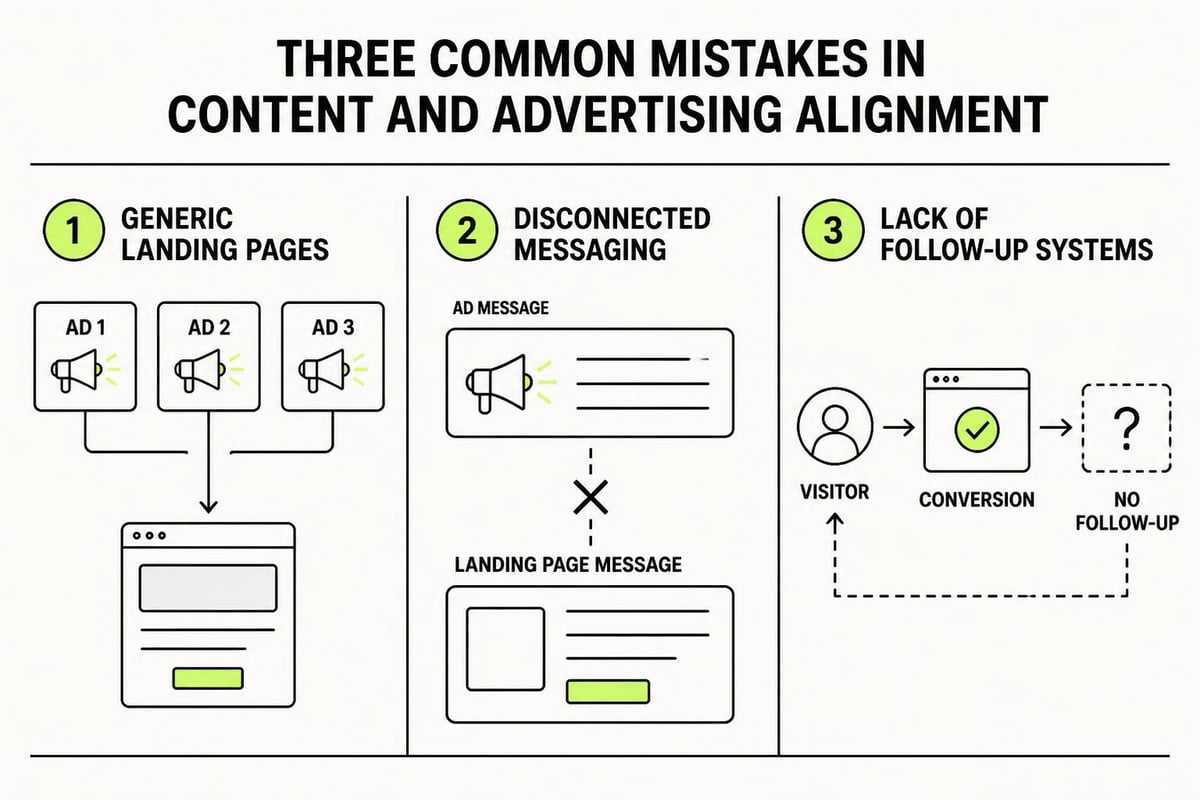
- Your ad copy says one thing, your landing page says another
- You send paid traffic to generic pages that weren't designed to convert
- Your content team has no idea which topics actually drive commercial intent
- Ad spend increases but lead quality stays flat
- You can't tell which message or format actually resonates
This misalignment wastes budget and confuses your audience. People notice when your Instagram ad feels different from your website or email. It signals disorganisation. And disorganisation kills trust faster than almost anything else.
Building a Unified System
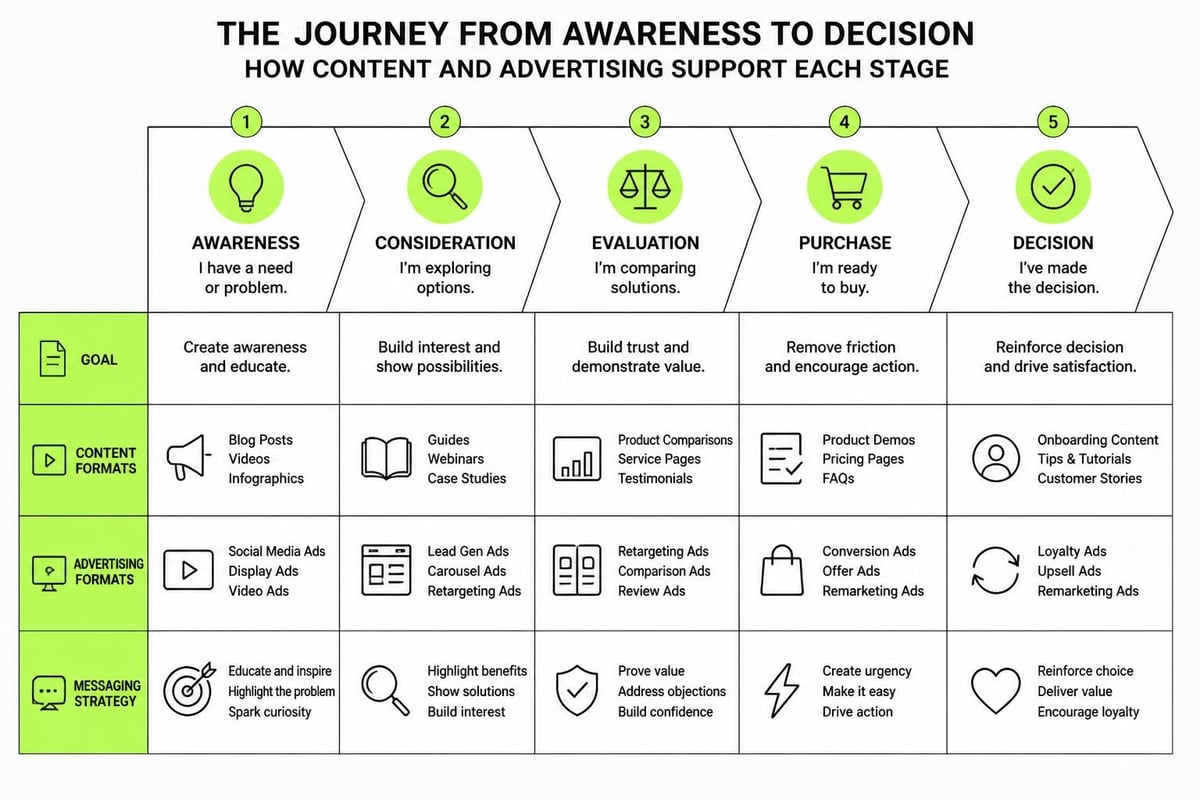
The goal isn't to merge your content and advertising into one blob. It's to connect them strategically so each amplifies the other. Start by mapping out where people enter your world and what they need at each stage.
Someone who clicks a Facebook ad is different from someone who Googles "how to fix my CRM." The ad-clicker might not even know they have a problem yet. The Googler is already looking for solutions. Your content and advertising strategy should account for both, and create pathways between them.
Structuring Your Approach
| Stage | Content Role | Advertising Role |
|---|---|---|
| Awareness | Educational blog posts, guides, frameworks | Targeted ads to cold audiences, brand awareness campaigns |
| Consideration | Case studies, comparison articles, detailed how-tos | Retargeting ads, nurture sequences, lead magnets |
| Decision | Testimonials, process breakdowns, pricing clarity | Conversion-focused ads, limited offers, direct CTAs |
This table isn't prescriptive. It's a starting point. The key is recognising that content and advertising play different roles at different stages, and both need to exist in your system.
When you're running ads to a cold audience, the goal isn't to close a sale immediately. It's to get someone to engage with valuable content that starts building trust. Native advertising best practices emphasise blending ads seamlessly with the platform, so they feel like helpful content rather than interruptions.
Creating Content That Supports Paid Campaigns
If you're spending money on ads, your content needs to justify that spend. This means building landing pages, lead magnets, and nurture sequences that align with what your ads promise.
Start with the ad itself. What's the headline? What problem does it call out? What outcome does it suggest? Your landing page needs to continue that conversation, not start a new one. If your ad says "Stop losing leads in spreadsheets," your landing page better talk about CRM systems and lead tracking, not general marketing tips.
Then build the content around the promise. If your ad offers a free guide, the guide should deliver real value. Not a three-page PDF that could've been an email. A proper framework, worksheet, or step-by-step process that someone can actually use. This is where most businesses cut corners, and it shows.
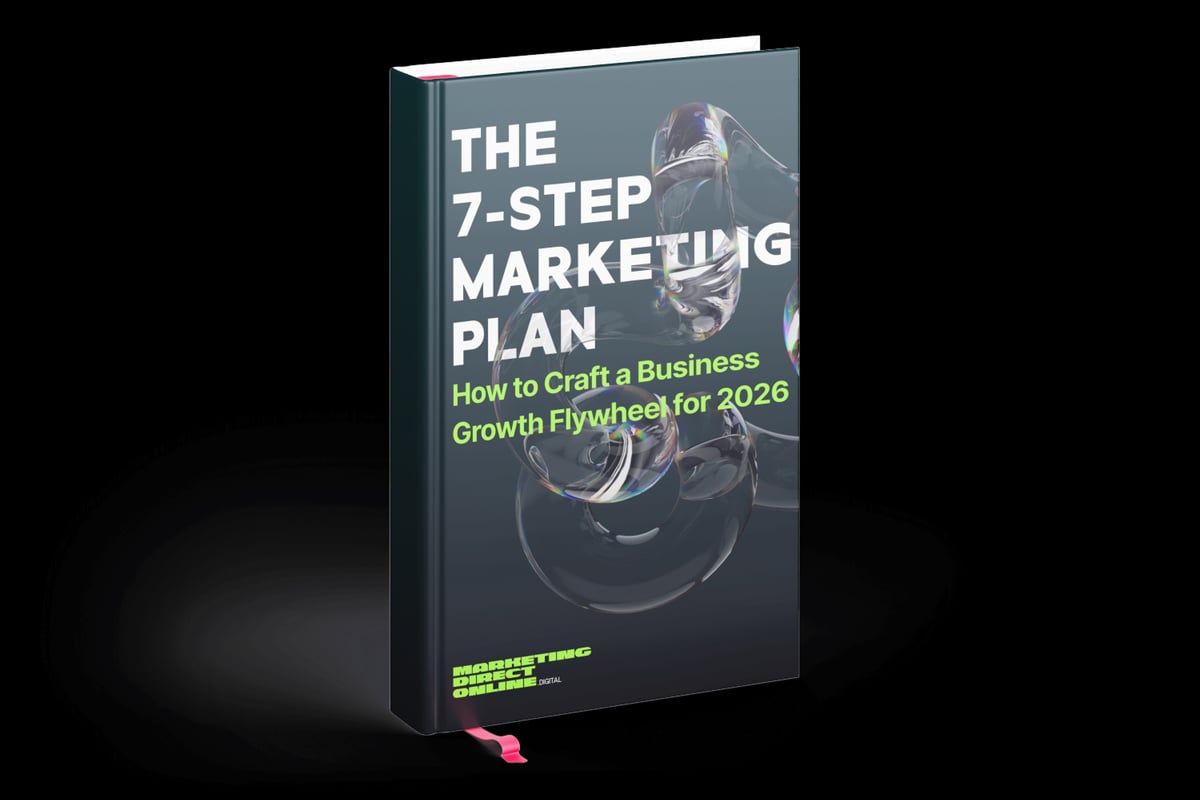
The 7-Step Marketing Plan is a good example of this. It's not just a lead magnet. It's a complete framework that walks you through building a repeatable system, from goal setting to referral generation. Each step feeds the next, and it gives people enough value to trust the business behind it.
What Makes Content 'Ad-Worthy'
Not all content works well with paid promotion. Some pieces are too niche, too long, or too far removed from commercial intent. The best content for advertising:
- Solves a specific, immediate problem that your audience is actively experiencing
- Leads naturally to your service without forcing the connection
- Delivers value quickly so people don't feel tricked after clicking
- Includes a clear next step that moves people deeper into your system
Think of it as a trade. You're asking someone to give you their attention (and maybe their email). In return, you're giving them something genuinely useful. If that trade feels fair, they'll keep engaging. If it doesn't, they'll bounce and never come back.
Using Advertising to Amplify Good Content
Once you've created something valuable, advertising becomes the distribution engine. Organic reach is slow and unpredictable. Paid reach is fast and controllable. You choose the audience, the budget, and the timeline.
But here's where most people go wrong. They boost a post or run an ad without thinking about what happens next. Someone clicks, reads your article, and then… nothing. No follow-up, no retargeting, no path forward.
Every piece of content you promote should have a job. It either captures a lead, moves someone deeper into your funnel, or demonstrates expertise in a way that builds authority. If it's not doing one of those things, don't spend money on it.
Ad Formats That Work for Different Content Types
| Content Type | Best Ad Format | Primary Goal |
|---|---|---|
| Blog post (top of funnel) | Facebook/Instagram single image or carousel | Drive traffic, build awareness |
| Lead magnet (middle of funnel) | Landing page ad with form | Capture emails, qualify leads |
| Case study (bottom of funnel) | Retargeting ad or LinkedIn sponsored content | Demonstrate proof, close deals |
| Video explainer | YouTube or Facebook video ad | Educate and engage quickly |
The format matters less than the match. A case study promoted to a cold audience won't convert. A top-of-funnel blog post sent to someone ready to buy wastes their time. Align the content, the ad, and the audience stage.
Effective advertising relies on clear messaging and strategic placement. You can't fix weak content with a better ad. But you can take strong content and multiply its impact with smart distribution.
Measuring What Actually Matters
You can't improve what you don't measure, but most businesses track the wrong things. Vanity metrics like impressions and reach feel good but don't tell you if content and advertising are actually working together.
Track these instead:
- Click-through rate (CTR): Are people interested enough to click your ad?
- Landing page conversion rate: Once they arrive, do they take the next step?
- Cost per lead (CPL): How much are you paying for each new contact?
- Lead-to-customer rate: Are the leads from this content and ad combo actually closing?
- Time to conversion: How long does it take someone to move from click to purchase?
These metrics show the full picture. An ad might have a high CTR but a terrible conversion rate, which means your content isn't delivering on the ad's promise. Or your CPL might be low, but none of those leads ever buy, which means you're attracting the wrong audience.
Digital marketing demands this kind of clarity. You need to see the whole system, not just individual pieces. When content and advertising work together, the data should show a clear path from attention to revenue.
Common Mistakes and How to Avoid Them
Even when businesses try to align content and advertising, they make predictable mistakes. Here are the big ones:
Mistake 1: Running Ads to Your Homepage
Your homepage is designed to serve everyone. It's broad, general, and tries to cover everything you do. That's fine for people who already know you, but it's terrible for cold traffic. When someone clicks an ad about fixing their email automation, they don't want to land on a page that also talks about branding, web design, and consulting.
Fix: Create dedicated landing pages for each ad campaign. Match the message, the pain point, and the offer.
Mistake 2: Writing Content That Never Mentions Your Service
Some businesses swing too far toward "pure value" and forget to connect the content back to what they sell. You end up educating people who then hire someone else because they didn't realise you offered the solution.
Fix: Make the connection explicit. "This is how you do X. If you need help implementing it, here's how we work."
Mistake 3: Ignoring the Follow-Up
You run ads, capture leads, and then… silence. No email sequence, no retargeting, no human outreach. People forget about you in 48 hours.
Fix: Build a nurture sequence that continues the conversation. Email, retargeting ads, case studies. Keep the relationship warm until they're ready to buy.
Social media advertising foundations stress the importance of leading with value and creating platform-native content. But value without follow-through is just noise.
Mistake 4: Not Testing Anything
You write one version of your ad, pair it with one piece of content, and call it done. If it doesn't work, you assume the channel is broken or your audience isn't ready.
Fix: Test headlines, images, audiences, and content formats. The ad creative best practices guide highlights the value of structured testing to find what actually resonates.
Building a Repeatable Process
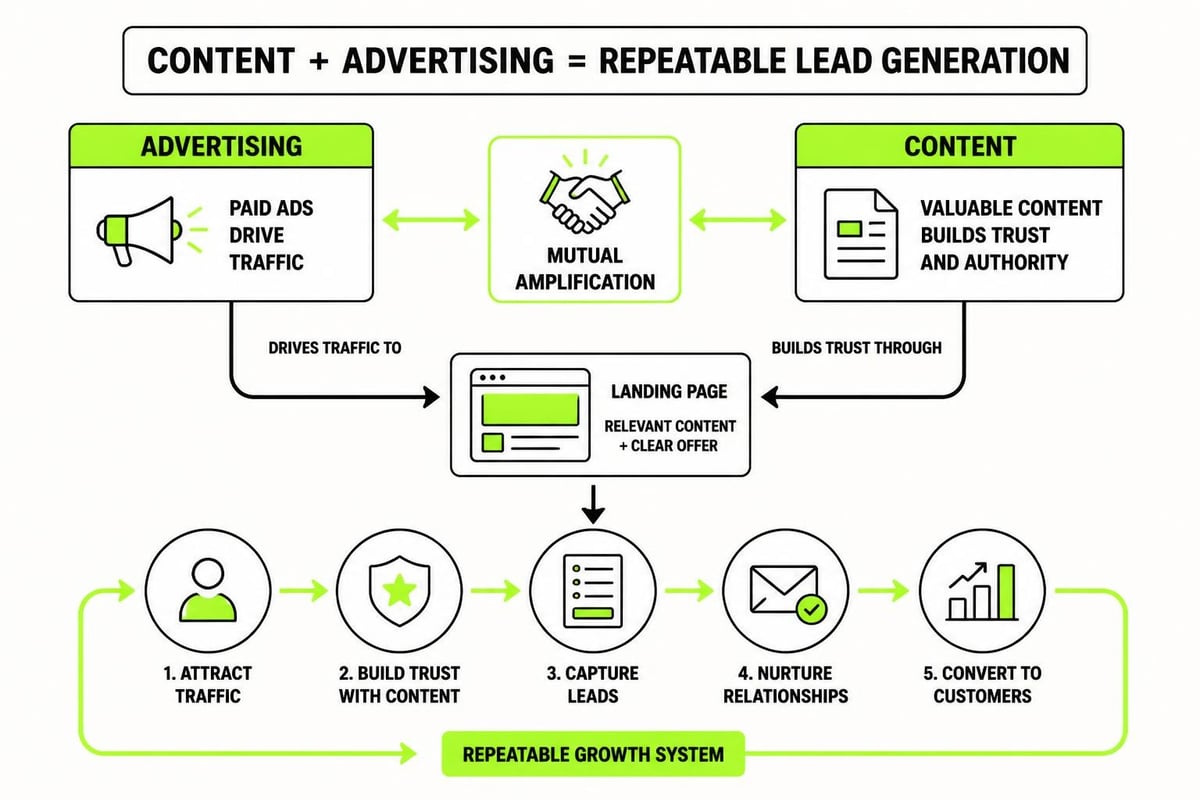
The goal isn't to run one successful campaign. It's to create a system you can repeat, refine, and scale. That means documenting what works, cutting what doesn't, and building processes that don't rely on guesswork.
Start simple:
- Pick one high-value piece of content (guide, framework, case study)
- Build a landing page that expands on the content's core promise
- Write 3-5 ad variations that call out different pain points or outcomes
- Run the ads to a targeted audience and track performance for two weeks
- Set up a basic email sequence that nurtures people who convert
- Measure CPL, conversion rate, and lead quality
- Iterate based on data
Once that process works, you repeat it with new content and new audiences. Over time, you build a library of proven campaigns that generate predictable demand.
Business and marketing strategies that scale are rarely complicated. They're just consistent, measured, and connected to real outcomes.
Adjusting for Platform and Audience
Not all platforms handle content and advertising the same way. What works on LinkedIn doesn't work on Facebook. What converts on Google Search won't convert on Instagram. You need to adjust your approach based on where your audience lives and how they consume information.
LinkedIn: Professional, detailed content works. Case studies, thought leadership, and process breakdowns perform well. Ads should feel native to the platform, less flashy and more business-focused.
Facebook/Instagram: Visual, fast, and benefit-driven. People scroll quickly, so your ad needs to stop them in half a second. Content should be digestible and emotionally engaging.
Google Search: High intent. People are actively looking for solutions. Your content should answer their question clearly and lead them to a conversion point quickly.
YouTube: Longer-form, educational. Video content that teaches something valuable and positions your service as the logical next step.
The key is matching the platform's energy. Digital ad best practices vary by format and channel, but the principle stays the same: respect the user's context and intent.
When to Prioritise One Over the Other
Sometimes you need to lean heavier on content. Sometimes advertising does the heavy lifting. It depends on your stage, budget, and market.
Lean into content when:
- You're early-stage and need to build authority from scratch
- Your market is saturated and trust is the main differentiator
- You have time but limited budget
- Your service is complex and requires education before purchase
Lean into advertising when:
- You have proven content but no distribution
- You need leads fast to hit revenue goals
- You're launching something new and need market validation
- Your organic reach has plateaued
Most service businesses need both. But if you're forced to choose, pick the one that solves your biggest constraint. No traffic? Advertise. No trust? Create content.
Long-Term Thinking
Content and advertising compound over time, but only if you're consistent. One blog post and one ad campaign won't change your business. A year of publishing valuable content, backed by strategic ad spend, absolutely will.
The businesses that win aren't the ones with the flashiest campaigns. They're the ones that show up every week, refine their system, and build trust over time. Marketing design that works is rarely about big creative swings. It's about disciplined execution and steady improvement.
You don't need to be perfect. You just need to start, measure, and adjust. Content and advertising are tools, and tools get better the more you use them.
When content and advertising work together, they create a system that turns attention into trust and trust into revenue. It's not about doing everything at once. It's about aligning your message, your distribution, and your follow-up so each piece strengthens the others. If you're ready to remove the chaos and build a marketing system that actually converts, MDO Digital helps service businesses do exactly that. We design the infrastructure, create the content, and run the campaigns that turn demand into predictable growth.